’Yet to decide if I will re-contest Presidency’ – Ranil says

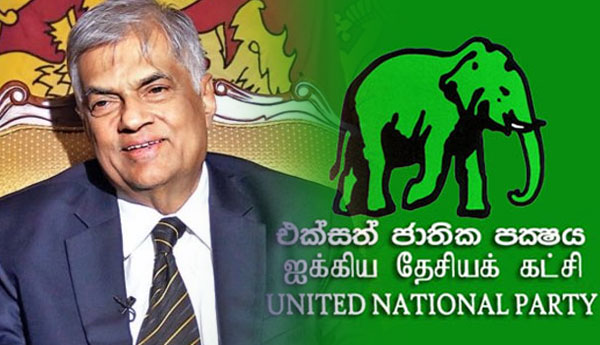
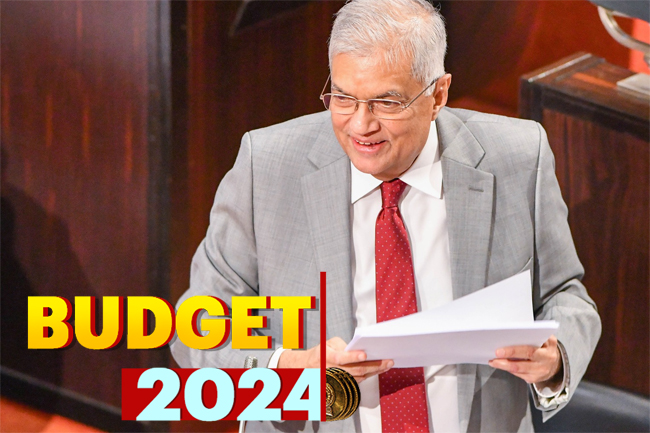
With a Presidential election scheduled for next year, President Ranil Wickremesinghe said he had still not made a decision if he would re contest the presidency as his focus presently was to terminate Sri Lanka from bankruptcy.

Responding to a question by the Daily Mirror at a meeting with the Editors at the Presidential Secretariat last evening, Wickremesinghe did not confirm nor deny his plans of a possible re-contest of the presidency but said he would wait and see.

“My primary focus right now is to terminate Sri Lanka from bankruptcy and then I will decide,” the President said.

When questioned on the future of his political party, the United National Party, Wickremesinghe said that UNP MPs were defeated at the last General Election as they were the only lot that spoke for the truth about the economy.’

Therefore he said the UNP will look at re-grouping and making a comeback before the elections next year.

Explaining how the country planned to exit from bankruptcy, Wickremesinghe said the aim of the government was to limit expenditure, increase efficiency and live within means. He said this was the intention of the budget that was presented on Monday.

The President indicated that the budget was presented with a view of economic recovery and in line with the IMF expectations and the confidence in the country’s economic recovery was apparent with the recent investment made by the US International Development Finance Corporation and Adani Group of India in the Colombo Port West terminal. The President pointed out that such investments would not come if they did not have confidence in the country’s economy.

The President also said that the country should aim at being competitive in international trade as they intend to increase trade opportunities with the RCEP block, India, Bangladesh and the EU.

When asked as to how optimistic he was about the revenue target and projections of the government as there were no new tax proposals included in the Budget, President Wickremesinghe noted that tax collection had increased by 55 percent over the last year and that tax administration and collection would be made more efficient with the establishment of a Revenue Authority.

SLPP claims most of Ranil’s comms. not beneficial

The ruling Sri Lanka Podujana Peramuna (SLPP) Party claimed that most of the committees including Parliamentary committees appointed under the direction of President and Finance, Economic Stabilisation and National Policies Minister Ranil Wickremesinghe do not benefit the people or the country’s economy in any way.

Speaking to The Daily Morning, the SLPP General Secretary and Government Parliamentarian, attorney Sagara Kariyawasam said: “President Wickremesinghe keeps appointing committees, but they don’t deliver any positive outcome to the people and the country’s economy. What we feel is that those committees are aimed at deceiving the people.”

Following the resignation of former President Gotabaya Rajapaksa in the midst of the massive public protests that demanded the same, the SLPP endorsed Wickremesinghe as their candidate for the Parliamentary vote to elect the President. Although the SLPP fully supported Wickremesinghe in his programmes in the beginning, there have been recent instances of SLPPers criticising him over various matters, particularly the granting of more Ministerial posts to non-SLPPers.

Meanwhile, claiming that there were nearly 80 committees operating in the Parliament, Kariyawasam recently said that there were only six committee rooms for those committees to meet. He, being a member of several such committees, said that the lack of committee rooms has hindered the functions of the Parliamentary committees to a greater extent.

Sri Lanka’s Asia-Beating Dollar Bond Rally May Be Approaching End – Bloomberg

A bull run in Sri Lanka’s defaulted bonds may be nearing its end as investors turn skeptical over more gains with a successful debt revamp already priced in.

With a 70% surge, Sri Lanka’s dollar bonds are Asia’s best-performing trade this year following a $3 billion bailout from the International Monetary Fund. The island nation is aiming to resolve its debt restructuring with investors and countries including China by next month.

“Estimated recovery values are in line with market prices, so I don’t see sufficient potential upside from here,” said Carlos de Sousa, portfolio manager at Vontobel Asset Management AG in Zurich, referring to the value of bonds once the government seals a deal with creditors.

Sri Lanka’s turnaround in 2023 —- the currency is up 11% and stocks have surged nearly 30% —- rewarded those who put faith in the South Asian nation after it defaulted in May last year. While it has completed an exchange of local debt, it’s still waiting on a proposal from creditors including India and Japan, and the government has yet to reach agreement with dollar bond investors.

A proposal in October by an ad hoc group of bondholders didn’t receive a favorable response from the nation.

“The government’s rejection of the proposal shows that there is a risk of negotiations dragging out or leading to less creditor-friendly terms,” said Patrick Curran, senior economist at Tellimer Markets Inc., which in October downgraded Sri Lanka bonds to hold from a buy.

He estimates the bonds due 2030 will be worth about 53 cents per dollar in the best case scenario, assuming a 16% exit yield. They were trading at about 51 cents per dollar on Tuesday.

Sri Lanka owes more than $12 billion in overseas bonds, according to the government’s quarterly debt bulletin.

Out of Crisis

Some investors still see room for gains, aided by progress in economic reforms such as boosting tax revenue, softening inflation, and a tentative deal for the disbursement of the next IMF loan tranche of about $330 million.

“Sri Lanka bonds are still relatively attractive because they are in an IMF program and restructuring talks are ongoing,” said Johnny Chen, fund manager at William Blair Investment Management in Singapore. “Eventually, you should reach a middle ground between bondholders and authorities.”

The government set aside $9 billion for bond restructuring in Monday’s budget.

The key for more gains in bonds lies in Sri Lanka’s ability to “deliver or over-deliver” on its fiscal consolidation plans, said Vontobel’s de Sousa.

Posted in Uncategorized

US Ambassador visits Zion Church

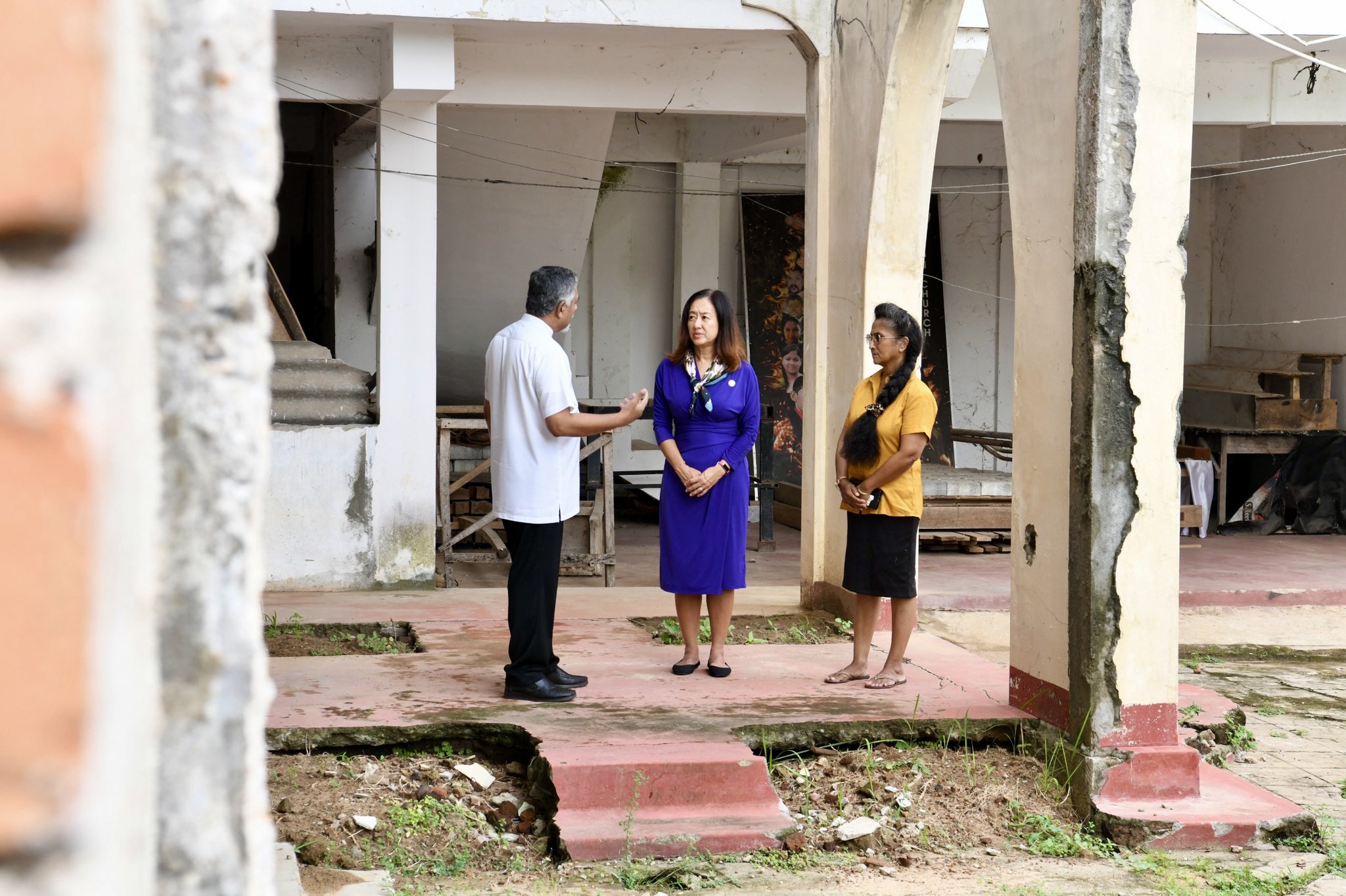
US Ambassador to Sri Lanka Julie Chung made a visit to the Zion Church in the east of Sri Lanka on Monday (13), as part of her visit to the Eastern Province.

In a post on X, formerly known as Twitter, the Ambassador said that she was deeply moved by the visit to Zion church.

She also held a discussion with Pastor Roshan Mahesan about the impact of that horrific day in 2019 that claimed 25, mostly children, and support the community has received to promote healing.

It must also be noted that in recent weeks, envoys from India, China, and Pakistan also paid visits to multiple areas in Sri Lanka’s North and East

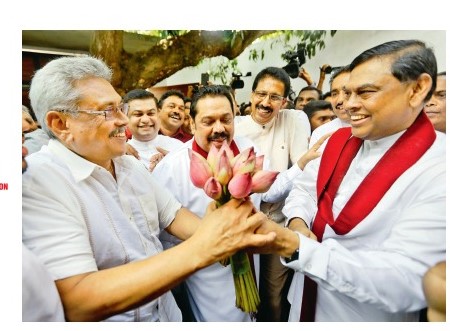
Mahinda, Gota, Basil and others responsible for economic crisis -SC

A five-judge bench of the Supreme Court has determined that a group including former President Gotabaya Rajapaksa had violated the fundamental rights of the general public by mismanaging the economy between 2019 and 2022.

Chief Justice Jayantha Jayasuriya, and Justices Buwaneka Aluwihare, Vijith Malalgoda and Murdhu Fernando delivered the majority decision in the matter while Justice Priyantha Jayawardena dissented.

Other respondents in the case including former Prime Minister Mahinda Rajapaksa, former Finance Minister Basil Rajapaksa, the Central Bank Monetary Board, former Finance Secretary P.B. Jayasundara, and former Central Bank Governor Ajith Nivard Cabraal was also found to have violated the fundamental rights of the petitioners.

The petition filed with the Supreme Court pointed out that a tax relief of Rs. 681 billion for businessmen during Gotabaya Rajapaksa’s tenure as President was the main reason for Sri Lanka’s economic crisis.

They also pointed out economic mismanagement issues including the pegging of the Sri Lankan Rupee against the US Dollar, the delay in securing the IMF assistance, and the repayment of USD 500 million sovereign bonds during a forex crisis.

The petition was filed by Prof. Mahim Mendis of the Open University of Sri Lanka, Former Chairman of the Ceylon Chamber of Commerce Chandra Jayaratne, Julian Bowling, Jehan Kanakaratne and Transparency International Sri Lanka.

The Supreme Court also ordered for the petitioners to be paid Rs. 150,000 each.

Posted in Uncategorized

Sri Lanka has to work its way out of economic crisis on its own: Norwegian Ambassador

Norwegian Ambassador May-Elin Stener who is accredited to Sri Lanka from New Delhi was in Sri Lanka to give credentials and shared her views on bilateral ties in an interview with Daily Mirror. Excerpts of the interview:

Q You came to Colombo to present your credentials. In the meantime you interacted with Sri Lanka leaders including the President and the Foreign Minister. What are the new aspects you discussed during these meetings?

My message has been quite clear that Sri Lanka has a place in the hearts of many Norwegians. We are still with Sri Lanka. We will be covering Sri Lanka with passion and dedication also from the Embassy in New Delhi.

The closing down of the embassy was part of a restructuring of the Foreign Service in Norway. Other embassies and missions were also closed.
We will keep having a special focus on Sri Lanka. We maintain the projects that we have had here in the country. We would also like to discuss with Sri Lanka how we can further the cooperation in particular areas like climate change and the green new technologies – how we can make Norwegian and Sri Lankan companies work together on developing green solutions. The Norwegian Climate Investment Fund has already invested in solar energy in Sri Lanka.

Also, when I met the President and the Foreign Minister, I thanked them for facilitating a very quick credential ceremony for me to take over my charge as Ambassador to Sri Lanka quickly.
I had only been in Delhi for 10 weeks when I delivered my credentials to President Ranil Wickremesinghe here in Sri Lanka. I also think that is a sign of both sides wanting to maintain a strong relationship.

Q How difficult is it for you to look after Colombo from New Delhi?

Our embassy in Delhi has been reinforced. We have staff that will specifically work and cover Sri Lanka.
We are putting more resources into Sri Lanka from Delhi. It gives us an opportunity to look at the overall and holistic picture.
It will of course not be possible for me to be as present as the previous ambassador who was physically here. But we will from the Embassy side have Sri Lanka as an important priority.

Q In the minds of many Sri Lankans, Norway is associated with its role in peacebuilding, and reconciliation apart from its development assistance. Now, because of Sri Lanka’s strategic positioning in the Indian Ocean, the countries look at Sri Lanka from a different perspective. Does Norway still stick to the same role in peacebuilding or has its scope widened further?

Well, the scope has widened over the last years, and I am sure you discussed that also with my predecessors and previous ambassadors.
So, we are now looking into how we can support the communities in their development, how we can work with Sri Lanka on the green transition, and how we can work with Sri Lanka on the business-to-business level.
We have also appointed a new Honorary Consul General here in Sri Lanka.
This is Mr. Mano Sekaram and he is very well-positioned to promote and look after the business-to-business cooperation that we have with Sri Lanka.
He is already cooperating with Norway on the business-to-business level and will help us identify where other Norwegian businesses can cooperate with Sri Lanka.

Q Now, you mentioned the cooperation in investment in green energy. During your meetings with the President and others, was there any concrete decision taken- any special amount of investments placed?

What is important for me is to encourage and support Norwegian companies that would like to invest or do green business in the country. I am not announcing any new investments during my visit, but I did inform the President and others about the recent investment of the Norwegian Climate Investment Fund of US $ 4 million into solar panels here in Sri Lanka. The first floating solar power plant was also launched some time back in cooperation between the University of Jaffna and the Western Norway University of Applied Sciences. The Norwegian Sovereign Wealth Fund also has substantial investments in companies in the country. I discussed this with the President in Kandy and also with the Foreign Minister in a separate meeting we had in Colombo.

Q What kind of assistance can Norway extend to Sri Lanka to overcome its current economic crisis?

Firstly, through our humanitarian support when needed. We provided US $ 1.6 million in humanitarian aid through UN organisations last year.
Secondly, through our development cooperation and programmes in Sri Lanka. Norway’s development assistance is around US $ 5.3 million.
Finally, we follow closely the talks and negotiations with the International Monetary Fund (IMF). As well as the ongoing discussions with big lenders such as India and China on their debt and also with the Paris Club.
Norway is a member of the Paris Club, so we will be discussing with Sri Lanka the best way out of the debt crisis.

Q There is a kind of transition in Sri Lanka. How do you look at this transition actually?

We want to support Sri Lanka out of the crisis. Sri Lanka has to, of course, work its way out of the crisis on its own. But if there are any possibilities for us to support Sri Lanka out of the crisis, we will do that.

Q When we talk about Sri Lanka’s strategic position in the Indian Ocean, you have seen different countries look at it from a different point of view. The US talks about the Indo-Pacific strategy. France is going to invest in Sri Lanka. India and China have strategic interests here. So, how does Norway look at this as a country interested in ocean affairs?

Beyond the view of China, the US, and India on Sri Lanka, we are interested in getting Sri Lanka’s own view on its position and vision. It is for Sri Lanka to carve out its own strategic vision and not for other countries to impose it on Sri Lankans. As a small country in the North of Europe, we are also dependent on international cooperation and multilateralism to carve out our own strategic vision – independent of large powers. This is why, we are very interested in the views of Sri Lanka on its own strategic position and discussed this with the foreign minister
We have also sought advice from Sri Lanka. We are in very different neighborhoods, Norway is far away but is useful for us to listen and learn from Sri Lanka’s own experience. We are both important Ocean countries and rely heavily on the safety and prosperity of our maritime sector.

Q Sri Lanka has taken steps to start a climate university. How does Norway intend to cooperate with that, actually?

Sri Lanka is vulnerable to climate change and there is a great need for research on climate change and solutions. So more international cooperation on climate research is always a good idea. I did not discuss this initiative during my visit, but we will look closer at how Norway can cooperate. In general, we would like to see how Norwegian universities and Norwegian hubs for innovation and technology could support Sri Lankans in their efforts.

Q What do you think about Norway’s traditional role in Sri Lanka’s peacebuilding and reconciliation?

As you know, we don’t have the same role now in Sri Lanka when it comes to peacebuilding, as we had before. But we remain active in promoting and supporting reconciliation. This is crucial.

Q In the post-war context, there are so many things being done. There is a call for reconciliation, a call for addressing accountability issues, and human rights issues. There is a resolution passed in the United Nations Human Rights Council. In that context, how active is Norway?

Well, we are quite active, considering our history here in Sri Lanka, and considering that Sri Lanka has a place in the heart of many Norwegians, we would be following the issues on the international scene very closely.
We had recommendations to Sri Lanka in their last review at the Human Rights Council, Universal Periodic Review and a couple of those recommendations were also supported by Sri Lanka itself, looking at some of the reconciliation and human rights issues here in Sri Lanka.
So, we play an active role there, and we also have roles in supporting community building. We are supporting community building in the North and also looking at the broader picture of how we can support communities wanting to build themselves up after the war.

Q In Sri Lanka there are a lot of non-governmental organisations (NGOs) that operate with Norwegian assistance. Also, the Norwegian development arm- NORAD is in operation. How do you assess their roles?

Well, all the projects that we have here are supported by Norway, whether we call it NORAD, or its embassy, or its Norwegian support. And we are going to continue that support. We have no plans of radically reducing the support that we have had. It’s continuing.

Q Norway has a lot of expertise in the fisheries sector. Norway has extended a lot of assistance in the past. So, in that context, how do you look at that cooperation?

We still have Norwegian projects supporting the fisheries sector. This is an important sector to support. And also, as I mentioned, we are looking more into business-to-business cooperation. And if there are Norwegian businesses and Sri Lankan businesses also in the fisheries sector that can cooperate, this is something that we will encourage.

Q What kind of assistance can Norway extend to Sri Lanka to develop its tourism sector?

Well, Norwegian citizens and Norway are already looking to Sri Lanka in the tourism sector. So, there is already quite a broad range of people-to-people connections and business-to-business cooperation in this area.
And I would recommend that to continue. Sri Lanka is a beautiful and great country to visit. I look forward to visiting frequently in the years ahead.

Posted in Uncategorized

Rishi Sunak’s reshuffle: David Cameron makes surprise return as foreign secretary

David Cameron has been appointed as foreign secretary in a cabinet reshuffle.

The former prime minister, who was given the role while in Number 10 this morning, said he “gladly accepted” the offer from Rishi Sunak, despite having “disagreed with some individual decisions” by his successor.

Speaking to broadcasters, the now Lord Cameron said he accepted bringing back an ex-PM was “not usual”, but he “believes in public service” and has “useful experience” to bring to the table.

He also called his new boss a “strong and capable prime minister who is showing exemplary leadership at a difficult time”, adding: “I want to help him to deliver the security and prosperity our country needs and be part of the strongest possible team that serves the United Kingdom and that can be presented to the country when the general election is held.”

The ex-party leader is no longer an elected politician as he stood down as an MP in 2016, having called the Brexit referendum and his campaign to remain in the EU losing the vote.

But the government has confirmed he will now enter the House of Lords as a life peer, giving him the opportunity to serve as a minister once more.

David Cameron has twice written in the Tamil Guardian.

In 2013, Cameron said:

“Four years after the conflict no one has been held to account for grave allegations of war crimes and sexual violence, journalists are routinely intimidated and thousands of people have yet to find out what has happened to their missing relatives.”

“I want to see that change.”

Read his full piece: Why I am attending CHOGM – David Cameron

In 2015, Cameron wrote:

“I will never forget the faces of those I met in Jaffna.”

“Their stories of unbearable suffering and loss will stay with me forever and continue to drive me in pushing for change. What I saw and heard also underlined why I went there in the first place: to shine a light on the lack of progress and to help bring about international pressure for reform. We owe it to victims and survivors across Sri Lanka to ensure that those responsible are held to account.”

“And we will not forget them.”

Posted in Uncategorized

Budget 2024: President Ranil Wickremesinghe’s speech

President Ranil Wickremesinghe, in his capacity as the Minister of Finance, Economic Stabilization and National Policies, presented proposed budgetary allocations for the fiscal year 2024, in parliament today (Nov.13).

In the 2024 Budget, the Sri Lankan government has projected ambitious revenue and budget deficit targets.

According to President Wickremesinghe, the budget deficit for the fiscal year 2024 is estimated at Rs. 2,851 billion, which is 9.1 as a percentage of the GDP. This is higher than the revised 8.5% of GDP in the current year. The original target for 2023 was 7.9%.

The total expenditure for next year has been set at a record Rs. 6,978 billion, an increase of nearly 33% compared to 2023, with capital expenditure more than doubling and Rs. 450 billion reserved for bank recapitalization.

In the 78th Budget, the Sri Lankan government has allocated Rs. 5,277 billion for recurring expenditures such as subsidies and salary payments. For salaries and wages, Rs. 1,127 billion has been earmarked, and Rs. 1,158 billion for subsidies and transfers.

The Sri Lankan government has also allocated a staggering Rs. 3,000 billion to restructure foreign debt and to repay international sovereign bonds in 2024. He also proposed to raise the debt ceiling by Rs. 3,450 billion to Rs. 7,350 billion, from Rs. 3,900 billion.

The total projected revenue will be Rs. 4,107 billion (including tax revenue of Rs. 3,820 billion). The Head of State said the government’s revenue target for 2023 is Rs. 3,415 billion, however, only Rs. 2,410 billion has been collected in the days that have elapsed this year. “This represents that we have failed to generate the targeted revenue. We have to work hard to collect the targeted revenue.”

He mentioned that until foreign debt restructuring is completed, the foreign financing and loans the country can obtain are constrained.

“Bank overdrafts amounting to Rs. 900 billion have been obtained in the year 2021. Currently, the total overdrafts are brought to a lower level of Rs. 70 billion. According to the new Central Bank Act, money printing is not allowed. Therefore, if we can’t increase government revenue by 10% to 15%, we will end up with an economic hell again. This issue cannot be resolved by simple and sweet promises, as some groups are proposing.”

He also underscored the importance of streamlining tax collection to make sure that high-income people do not slip through. “We have identified several critical issues in our tax system. At present the burden of taxes is placed only on a few slices of the society. Tax evasion happens due to the long-lasting weaknesses and negligence of the tax collection systems.”

President Wickremesinghe said the 2024 Budget has proposed several measures to rectify these issues, highlighting that these proposals need to be implemented gradually. “We will be able to provide more tax concessions in the future when the government revenue is increased through these proposals.”

He proposed that a special penal provision be introduced to prosecute people who have not submitted tax returns and information required by the tax officials.

In addition, the ‘Tax Identification Number’ (TIN) will be made a mandatory requirement to open a current account at any bank, obtain approval for a building plan by the applicant, register a motor vehicle or renew a license by the owner, and register a land or title to a land by the buyer.

Sri Lankan President Ranil Wickremesinghe on Monday (13) presented the budget for the year 2024.

Here are some of the key takeaways from the 2024 Budget that was presented to parliament.

1. Public sector salaries:

The Cost of Living Allowance of Rs. 7,800 will be increased to Rs. 17,800 by Rs. 10,000 from January, 2024.

This allowance will be added to the monthly salary from the month of April. Balance accumulated from January to March 2024 will be paid in installments within a 6 month period, starting from October 2024.

2. Public Pensions:

The monthly Cost of Living Allowance of public pensioners will be increased to Rs. 6,025 by Rs. 2,500.

Budget 2024: 27 Key Highlights

Distress loan facility for all the public servants effective from January 01, 2024.

4. Small & Medium Enterprises (SMEs):

A concessionary loan scheme of around Rs. 30 billion with the support of the Asian Development Bank for SMEs to be further strengthened, encouraged and facilitated.

5. Urban Home Ownership:

Completely stop collecting rent from the low-income families who are living on rent in houses constructed under various urban development programmes.

The full ownership of these houses will be given to those families.

6. Estate Housing:

Government will take steps to grant land ownership and build houses for those living in the estate sector. Rs. 4 billion allocated for this purpose.

7. Education:

“Our country has an outdated education system. It is an education system that produces memorizers”

Several key institutions that will be established under these reforms.

These are the Higher National Council on Education, National Higher Education Commission, and the National Skills Commission.

8. Expansion of Science & Technology Education in Universities

Four new universities are to be established –

(i) Seethawaka Science and Technology University (Lalith Athulathmudali Post Graduate Institute will be incorporated to this University)
(ii) Kurunegala Technology University under the Kothalawala Defence University.
(iii) Management and Technology University
(iv) International University of Climate Change

Rules and regulations to be adopted to convert the following private higher education institutions:

(v) NSBM
(vi) Sri Lanka Institute of Information Technology (SLIIT)
(vii) Horizon Campus
(viii) Royal Institute

9. National Education University:

Establish an Education University focused on education by integrating 19 Colleges of Education.

10. New Technology University

A new Technology University will be established in Kandy under the guidance of IIT University in Chennai, India. India will fully support this endeavour.

11. State Universities:

A programme to enhance State Universities to suit the modern era will be implemented. This program will be commenced at Peradeniya University.

12. Non-State Universities:

Sri Lanka will allow any recognized educational institution in the world to establish universities in Sri Lanka once a set of powerful rules and regulations for the
regulation of non-state universities are put in place

13. English for all:

The aim of this programme is to provide English literacy to all by 2034. Government will allocate Rs. 500 million to start this ten-year programme.

14. Drug Procurement Guidelines:

“Our focus has been on issuing specific guidelines for the procurement of medicines and setting up a separate institution for that purpose. We are taking this step after conducting a detailed study of the government’s medicines procurement process.”

15. Promotions for Medical Officers:

Expedite the arrangements to adopt a promotion scheme that is applicable to both specialists and graded doctors

16. Support for the construction sector:

Government will allow construction companies to construct buildings on those lands according to the plans of the respective government agencies.

After construction, these institutions will pay a monthly rent to the construction company.

Upon recovering the construction cost and receiving corresponding dividends, the full ownership of the building will be handed over to the government agency.

17. Logistics:

Government expects to utilize Colombo Port to meet the supply needs of South West India and Trincomalee Port to meet the supply needs of South East India.

18. Jaffna Water Issue:

‘Pali Aru Water Project’ will be implemented to address the water issue in Jaffna. Rs. 250 million will be granted for the year 2024 for the preliminary activities of this programme.

19. Development of Cricket:

Rs. 1.5 billion will be allocated from the budget for the development of school cricket and for providing necessary facilities to cricket players at the provincial level.

20. Hingurakgoda International Airport:

Rs. 2 Billion will allocated in 2024 for the preliminary activities related to the construction of the Hingurakgoda International Airport

21. Central Expressway:

After external debt restructuring is complete, the second phase of the Central Expressway from Kadawatha to Mirigama will commence, jointly with China. Government to obtain support of Japan for the construction of the section from Kurunegala to Galagedara.

22. Restructuring of debt:

Rs. 3,000 Billion will be allocated for the implementation of foreign debt restructuring and settlement of International Sovereign Bonds under foreign debt restructuring.

23. Increase in the borrowing limit:

Borrowing limit to be increased from Rs. 3,900 billion to Rs. 7,350 billion. This is an increase of Rs. 3,450 billion.

24. Stabilization of financial sector:

20% of the shares of the two large state-owned banks should be given to strategic investors or the public to improve capital and support the future growth of the two state-owned banks to reduce the burden on taxpayers’ funds

25. Investments:

A new joint investment law has been drafted establishing a National Economic Commission that oversees the institutional framework that integrates the functions of the Investment Development Board, Export Development Board, Industrial Development Board, and National Enterprises Development Authority.

President proposes to establish new investment zones centered in Hambantota, Jaffna, Trincomalee, Bingiriya, and Kandy

26. Towards a Digital Economy:

Rs. 3 Billion in 2024 to establish a National Center for Artificial Intelligence to ensure an economic and social transformation, based on the latest trends in digital technology, and artificial intelligence.

27. National Research Policy for Research in Sri Lanka:

“Research and development, technological advancement and innovation, play an important role as a catalyst in promoting economic growth and supporting economic progress and social well-being. I propose to formulate a national research policy based on those facts. I propose to allocate Rs. 8 billion for this purpose.”


Posted in Uncategorized

Sri Lanka ruling party faction sceptical of president’s 2024 budget

An apparent rift between President Ranil Wickremesinghe and a section of the ruling Sri Lanka Podujana Peramuna appears to be widening, judging by comments made by SLPP legislator Namal Rajapaksa on the president’s 2024 budget.

“We must study the budget. He had presented a lot of these proposals in last year’s budget too. They don’t seem to have been implemented,” said Rajapaksa, speaking to reporters after the budget presentation Monday November 13 afternoon.

“Those proposals have been presented again. There is the question of whether these things were implemented at the ground level,” he said, adding that some of last year’s proposals did not become a reality.

“We’re waiting to see if this year’s budget too will be limited to a presentation,” he said.

Rajapaksa said the SLPP supports “pro-people decisions”.

“Our party supports pro-people decisions. We have presented our proposals. Will do so again during the debate,” the MP said.

“Let’s see [whether] the president accepts our proposals and implements them,” he added.

The Hambantota district parliamentarian said the SLPP government was elected by 6.9 million Sri Lankans who had voted for former President Gotabaya Rajapaksa, who was forced to resign following a series of mass protests that came to be known as the Aragalaya, or The Struggle, in 2022. The budget proposals of President Wickremesinghe, who also holds the finance portfolio, must reflect the policies of the SLPP government, according to the MP.

“Through the Aragalaya and Gotabaya Rajpakasa it was distorted, and Mr Ranil Wickremesinghe became president through the Aragalaya and became Finance Minister. He is here as the finance minister of the SLPP government. So our policies should be in the budget proposals,” he said.

“We’ll express our views on that in the debate. Let’s see how we can make it a reality in the future. There is no point telling fairy tales if it’s not practically worked on the ground,” he added.

I never discussed budget proposals with President: MR

Claiming that the Sri Lanka Podujana Peramuna (SLPP) was yet to make a decision regarding the budget for 2024, former president Mahinda Rajapaksa said today that the party would make a decision shortly.

Speaking to the media, he said the SLPP would support the proposals that they can agree upon and would not support those they cannot approve of.

When asked whether the SLPP had discussed the budget proposals with the President, Mr. Rajapaksa said he did not attend any discussions and said he was unaware whether others in the party attended any such discussion.

Responding to another question, he said it was good that the state employees were given an allowance even some months later.