Easter Sunday attacks: Court rejects ownership transfer request from suicide bomber’s brother

A request made to court regarding the gold, gems and other properties seized from the residence of Ibrahim Ilham Ahamed, identified as a suicide bomber in the 2019 Easter Sunday terror attacks, was rejected by the Fort Magistrate’s court on Wednesday (06).

The relevant request was made by Ijas Ahamed, brother of the deceased, who is claiming ownership of the possessions recovered from the residence of Ilham Ahamed, and thereby requested that they be handed over to him, was rejected by Fort Magistrate Thilina Gamage.

On 21 April 2019, Mohamed Ibrahim Ilham Ahamed, a resident of Mahawila Park, Dematagoda, carried out a suicide bombing at the Shangri-La Hotel in Colombo, while his brother Mohamed Ibrahim Inshaf Ahamed, carried out another suicide blast at a hotel in Colombo.

The duo’s father, millionaire businessman Mohamed Ibrahim, and his two other sons, were also accused of concealing information pertaining to the attacks.

Meanwhile, Fort Magistrate Thilina Gamage ordered that the case against eight suspects connected to the terror attacks, including National Thowheed Jamaath (NTJ) leader Zahran Hashim and his wife Abdul Cader Fathima Saadiah, be called before the court on 06 December, as advised by the Attorney General.

Mohomadhu Mashnuk Muhammadu Raila, Mohommadu Ameer M. Ayathulla and Mohommed Mufail, who are currently out on bail, were also present in court today.

Posted in Uncategorized

Channel4: Pillayan slams ex-spokesperson, ready to file a criminal complaint

Sri Lanka’s State Minister of Rural Road Development, Sivanesathurai Santhirakanthan who was mentioned in the Channel4 program on the 2019 Easter Sunday attacks, said that he would be filing a criminal complaint with the country’s police after consulting the Inspector General of Police.

Sivanesathurai Santhirakanthan on Wednesday (6) attempted to file a complaint with the Criminal Investigations Department over the allegations made via Channel4.

“The officials informed me to consult the police chief and hand over the complaint with his approval. I have obtained an appointment for Thursday (7). I will speak with the IGP and hand over the documents,” he told reporters outside the country’s apex crime investigation body.

Speaking in Parliament earlier in the day,Sivanesathurai Santhirakanthan said that Hanzeer Azad Maulana, the individual who makes the allegations on the Channel4 program, worked with him and his organization, and in order to secure asylum and some form of stability in life, he is engaged in the spread of false propaganda.

“He had officially got permission from our organization to migrate with his family, citing that he cannot live here, and needs to solve some issues. After going overseas a year ago, he made this controversial statement. We are well aware of what Channel 4 has done to our country, and our people in the past,” said the State Minister.

“From 2015 to 2020 I was in prison. It is astounding if an act like this can be carried out from within prison walls,” he added.

The State Minister said that Hanzeer Azad Maulana should also be investigated by an international investigation body, as he had admitted that he attended the first meeting with Zaharan.

“Therefore, as the Opposition Leader said, we must call for an international inquiry,” he told the parliament.

Channel 4 video on Sri Lanka not removed as claimed by Namal

The Channel 4 video on the Easter Attacks in Sri Lanka has not been removed as claimed by MP Namal Rajapaksa.

Rajapaksa told Parliament today that the video has been deleted from the Channel 4 website.

However, Ben de Pear, the Founder of Basement Films, which proceded the documentary on the Easter Sunday attacks, said the video is still available on Channel 4.

“To be absolutely clear our @Basement_Films @C4Dispatches is freely available on @Channel4,” Ben de Pear said on X (formerly known as Twitter).

Fromer spokesman of the Tamil Makkal Viduthalai Pullikal (TMVP), Azad Maulana, appeared before Channel 4 and alleged the Sri Lankan military intelligence met the Easter Sunday bombers before the attacks in 2019.

In the Channel 4 Dispatches documentary, aired on the British television station, Maulana alleged that the meeting took place in the East and that he was also present.

Maulana alleged the meeting took place between Easter Sunday bomber Zahran Hashim and head of the State Intelligence Service Suresh Sallay.

The former TMVP spokesman, who has now sought asylum overseas, has shared the information with the UN and the EU as well as other diplomatic missions.

Channel 4 doc: Cardinal wants independent int’l team to probe alleged plot behind Easter attacks

His Eminence Malcolm Cardinal Ranjith has urged President Ranil Wickremesinghe and the government to launch a ‘free, impartial, just, transparent and broad’ investigation into the alleged plot behind the 2019 Easter Sunday bombings in Sri Lanka, unveiled in British television network Channel 4’s controversial documentary.

In a press release today (Sept. 06), the Archbishop of Colombo said this probe should be conducted through an independent international investigation team, assisted by all Criminal Investigation Department (CID) officials who were removed from investigations into the terror attacks, and transferred on political influence.

Cardinal Ranjith emphasized that the investigation should be carried out on the findings outlined in various commission reports already presented and recommendations that are yet to be implemented.

Calling for a probe into the individuals who were accused in Channel 4 exposé of being complicit in the supposed plot hatched to create insecurity in the country, Cardinal Ranjith said ‘their role in this mass murder’ should be examined extensively.

Since these fresh investigations need to be independent, Cardinal Ranjith said all those officials in the police and intelligence services coming under investigation and those in top posts at present should be suspended forthwith to ensure the independence and transparency of the inquiry.

Similarly, DIG Nilantha Jayawardena who was found guilty and fined by the Supreme Court for culpable neglect of duties during the time of Easter Sunday terror attacks and DIG Deshabandu Tennakoon whose neglect of duty during this atrocity had been cited by the Presidential Commission of Inquiry (PCoI) for disciplinary action should both be suspended from service until the new inquiry is over, Cardinal Ranjith’s statement read further.

Referring to Minister Manusha Nanayakkara’s announcement on plans to appoint a Parliamentary Select Committee (PSC) to look into the allegations in the Channel 4 film, the Archbishop of Colombo slammed it as a waste of public funds and time, and an exercise of simply misleading the public. Recalling that despite the appointment of a PCoI and a PSC to probe the bombings soon after its occurrence, the political authorities have not taken any credible, positive action on the recommendations made by these panels.

“For this reason, we do not endorse such a strategy and reject that plan outright.”

Unless a transparent, sincere investigation is launched, Cardinal Ranjith said truth and justice would be meted out to the victims of the Easter Sunday bombings. “We do not believe in mere promises, but we need action, and action that is absolutely independent, transparent and internationally monitored.”

The Archbishop of Colombo expressed his gratitude to the Channel 4 television network for the interest and trouble it took to focus attention worldwide on this alleged plot behind the bombings.

Posted in Uncategorized

Remove Suresh Sallay as SIS Director immediately: NPP

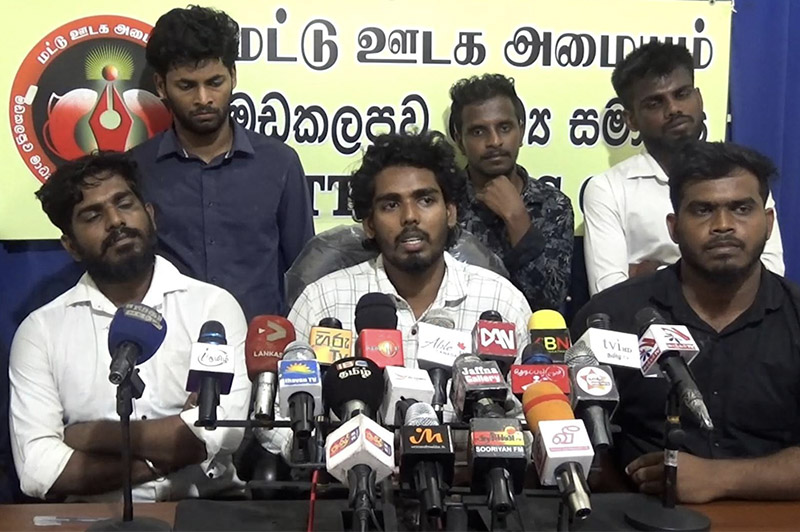
The National People’s Power (NPP) today urged the government to immediately remove Director of the State Intelligence Service, Suresh Sallay and conduct an impartial inquiry against him and Sivanesathurai Chandrakanthan alias Pillayan over the allegations over the Easter Sunday attacks.

NPP MP Vijitha Herath told a news conference that it was absurd to conduct an inquiry while Suresh Sallay who had allegations against him is still in his position as the Director of the State Intelligence Service (SIS).

“As revealed by Mawlana in the Channel 4 video, it is clear that former Eastern Province Chief Minister Pillayan and Suresh Sallay had direct connections with the Easter Sunday bombers.

“Photographs with Gotabaya Rajapaksa, Mawlana and Pillayan have been found. Mawlana himself has revealed the connection with Pillayan. The true accused of the attacks are still at large as investigations have not been directed in the right direction. These exposures reveal the mastermind and the true objectives of the attacks,” he said.

The MP said Suresh Sallay who was accused of his involvement in the attacks, was appointed as the SIS Director by Gotabaya Rajapaksa soon after he took over as the President and added that Sallay’s appointment and the Easter attacks may have inter-connections.

He also said investigations against Gotabaya Rajapaksa should be resumed as he is no longer the President and therefore has no immunity now.

Posted in Uncategorized

’I am the one who told Rajapaksas were involved in Easter Sunday attacks’: Mervyn

In the wake of the video released by Channel 4 on the revelations about the Easter Sunday attacks where it speaks about the involvement of the Rajapaksas, former Minister Mervyn Silva said he was the first to reveal this fact.

“The Rajapaksas, Maithripala Sirisena and several politicians of that time should be taken as the first accused for the Easter Sunday attacks,” he said.

“While not having a strong backbone, Maithripala Sirisena went to Singapore. He knew about the attack after one and a half days. The Easter Sunday attacks were launched because the Rajapaksas wanted to capture power again. The statement made by Archbishop of Colombo Cardinal Malcolm Ranjith is correct, and I respect him. This Easter attack has strong connections with high-profile politicians, and they let that disaster happen to give political power to Rajapaksas,” he said.

“I totally accept what Channal 4 says. However, the Rajapaksas should be responsible for the Easter attacks,” he added.

Sri Lanka to probe Channel 4 video on Easter Attacks

The Sri Lankan Government is expected to investigate the contents that will be made public via a program by UK’s Channel 4 on the 2019 Easter Sunday Terror Attacks, revealed a government minister.

Manusha Nanayakkara, the country’s Minister of Labour and Foreign Employment, told Parliament on Tuesday (5) that the Cabinet had discussed the program that made serious allegations, and it was decided to appoint a Parliament Select Committee to probe the contents of the Channel 4 program.

“At the cabinet meeting, a decision was reached on the appointment of a Parliament Select Committee, and the announcement will be made in due course. In addition, the cabinet also discussed seeking international assistance for any investigation, when necessary. The government will not take a step back from implementing such measures,’ he told the house.

However, the Minister also raised concerns over the timing of the said video by Channel 4, noting that whenever a UNHRC session or UN General Assembly is to take place, such programs are released by Channel 4 ahead of those events.

Posted in Uncategorized

International rights groups slam Sri Lanka’s ‘flawed plans’ for a Truth Commission

Nine international human rights organizations including Amnesty International and Human Rights Watch (HRW) say that there are grave reservations about the Sri Lankan government’s proposed National Unity and Reconciliation Commission.

Issuing a joint statement titled “Sri Lanka’s Flawed Plans for a ‘Truth Commission’” in this regard, they point out that their concerns echo many of those already raised by victims of conflict-related abuses and their families.

The statement claims that Sri Lanka has a long history of convening similar bodies, none of which has provided justice, truth or reparation to the many people who have engaged with them, adding that the latest initiative risks repeating the mistakes of the past, exposing victims to renewed security threats and re-traumatization without any realistic chance of a different outcome.

“There have not been any genuine confidence-building measures or steps to ensure a safe and conducive environment for such a commission to function effectively. There has been no meaningful consultation, including with affected communities”, it said.

In addition, they highlight in the statement that as set out in reports to the United Nations Human Rights Council, existing domestic transitional justice mechanisms such as the Office of Missing Persons are unable to function effectively, and there are ongoing attempts to block prosecutions of crimes under international law.

“The Sri Lankan government should approach transitional justice as a holistic process that includes truth-seeking, investigation and prosecution of international crimes, and effective remedies such as reparations, redress and guarantees of non-recurrence”.

“Any successful transitional justice process requires inclusive consultation with stakeholders, including with victims and civil society organizations, and substantial confidence-building measures to ensure that victims can participate without fear. It must have credibility among affected communities”, the statement asserted.

Furthermore, they highlight that according to the UN High Commissioner for Human Rights, numerous commissions of inquiry appointed by successive governments failed to credibly establish truth and ensure accountability.

The joint statement, which underscores multiple legacy of failed commissions, also noted that there is no indication in the government’s current proposals for a National Unity and Reconciliation Commission, or in the manner and circumstances in which it is being established, to suggest that it will be willing or able to provide truth, justice or reparation where previous commissions have failed.

“Many victims and their relatives have already engaged in multiple similar processes over decades. The current proposals risk further re-traumatization, with little expectation that victims’ rights and needs will be addressed”, it added.

The statement further mentions that;

“The lack of a conducive environment or confidence-building efforts:

In the Northern and Eastern Provinces, which were the most affected by the armed conflict, victims of gross human rights violations such as enforced disappearances and unlawful killings and their families, as well as human rights defenders and activists, face routine surveillance, harassment and intimidation by government security and intelligence agencies. There are severe restrictions on the rights to freedom of peaceful assembly, freedom of expression, freedom of association, and political participation.

Draconian laws – notably the Prevention of Terrorism Act (PTA), which has facilitated torture and other ill-treatment and arbitrary detention, especially of members of minority communities – remain in use. The proposed new anti-terrorism law if enacted as it is currently formulated would retain and even extend many of the PTA’s abusive powers. In the north and east, several state agencies are engaged in a campaign of land grabs targeting the property and the religious sites of minority communities. In this environment, it is not possible to conduct a credible truth-seeking process in which communities that have faced discrimination and violence for decades can participate with confidence and in safety.

Meanwhile, in July this year, the government appointed retired admiral Ravindra Wijegunaratne as High Commissioner to Pakistan, despite a court order for his arrest in connection with the emblematic Navy 11 case in which victims were kidnapped for ransom, tortured and killed. This is indicative of the government’s efforts to ensure impunity for those suspected of criminal responsibility for crimes under international law and gross human rights violations, many of whom continue to hold senior official positions.

A lack of meaningful consultations:

If any future truth-seeking mechanism is to earn the trust of victims and their families, many of whom have lost faith in domestic institutions, it is necessary for the government to hold meaningful consultations and take steps to address their concerns. Instead, hurried meetings hosted by the Foreign Ministry in July this year involved select civil society groups and trade unions but excluded key victim and stakeholder groups, further increasing distrust between the state and victims. A victim-centric approach, where all stakeholders are involved in the formation of institutions to address past violations, is essential to ensure that any mechanism will achieve its goals.

The Consultation Task Force on Reconciliation Mechanisms carried out comprehensive consultations in 2016 and produced a report with recommendations. We deplore the failure to adopt or otherwise take into account those recommendations during the current process.

The failure of domestic institutions: Existing transitional justice bodies, such as the Office on Missing Persons, and the Office for National Unity and Reconciliation, have achieved little or nothing nearly five years since they were established. They have been widely rejected among victim communities. In October 2022, the United Nations High Commissioner for Human Rights told the Human Rights Council, “the Office on Missing Persons and the Office for Reparations – the only two (out of four) transitional justice structures established – have failed to achieve the tangible results expected by victims and other stakeholders.”

International involvement: In a recent media interview, President Ranil Wickremesinghe said the proposed commission would have foreign observers. However, the involvement of international observers in previous commissions did not make them credible or effective. The International Independent Group of Eminent Persons (IIGEP) was appointed in 2006 to act as observers to the Udalagama Commission. They resigned citing a conflict of interest in the proceedings of the commission, a lack of effective victim and witness protection, a lack of transparency and timeliness in the proceedings, a lack of co-operation by state bodies, and a lack of financial independence of the commission. The Paranagama Commission also had an advisory council of international experts, whose role and terms of reference were unclear, and who made no substantial contribution to the commission’s mandate to investigate cases of enforced disappearances. In light of these experiences, the inclusion of foreign observers alone is no guarantee of an effective process, which requires other issues raised by victims to be meaningfully addressed.

Blocking prosecutions:

We are concerned by the President’s remarks that any parallel criminal investigations may undermine the work of the new commission. This is especially concerning given Sri Lanka’s position at its recent Universal Periodic Review by the UN Human Rights Council, where the government rejected recommendations by states to end impunity for human rights violations, abuses and harassment, especially against members of ethnic and religious minority communities, by holding those suspected of criminal responsibility to account before ordinary civilian courts, including security forces and government officials.

Truth commissions should not be instituted as an alternative to criminal investigations and prosecutions aimed at establishing individual criminal responsibility for crimes under international law. Any credible truth-seeking mechanism should have the power to refer crimes under international law for prosecutions before the civilian courts.

The United Nations Human Rights Council, in its resolution on Sri Lanka of 6 October 2022, emphasized the importance of a comprehensive approach to dealing with the past, incorporating judicial and non-judicial measures, to ensure accountability, to serve justice, to provide remedies to victims, to avoid the recurrence of violations of human rights, and to promote healing and reconciliation.”

Furthermore, the relevant international human rights organizations urge the government of Sri Lanka to fully engage with the victims of human rights violations and their families, deliver a transitional justice process that upholds their rights and abides by Sri Lanka’s obligations under international human rights and humanitarian law and demonstrate its commitment to providing truth, justice, reparations and guarantees of non-recurrence by immediately ending human rights violations against victims’ families and communities.

It also seeks the Sri Lankan government to uphold its legal obligation under international law to appropriately prosecute those suspected of criminal responsibility for crimes under international law and gross human rights violations.

Moreover, they request the other states, particularly members of the UN Human Rights Council, and those in a position to influence the Sri Lankan government, to call for an end to ongoing violations and for substantive confidence-building measures to ensure that victims be able to participate in any future reconciliation and accountability process safely and with confidence.

“Foreign governments and the United Nations should engage with any future process in a manner that is transparent, upholds principles of international law, and makes the concerns of victims and their families the priority. Following decades of abuses, some of which continue to this day, the Sri Lankan government needs to take urgent and meaningful steps to earn victims’ confidence”, it concluded.

The relevant statement has been jointly issued by nine international human rights organizations; the Amnesty International, Asian Forum for Human Rights and Development, Franciscans International, Front Line Defenders, Human Rights Watch, International Commission of Jurists, International Federation for Human Rights, International Working Group on Sri Lanka and the Sri Lanka Campaign.

No one is interested in killing Sajith: UNP

UNP General Secretary Palitha Range Bandara While responding to a comment by Opposition Leader Sajith Premadasa on a threat to his life, UNP General Secretary Palitha Range Bandara told a media conference that no one is interested in killing Mr. Premadasa.

“No one is interested in killing Mr. Premadasa. We do not consume beef,” he said.

“However a Samagi Jana Balawegaya (SJB) member who is a Muslim and who often holds media conferences informed me that Mr. Premadasa had decided not to contest the Presidential election. This MP told me that Mr. Premadasa is publicly lying when he says he will contest the Presidential election,” Mr. Rangage Bandara said.

“Also, we have experienced how Mr. Premadasa had behaved in the past. He made Karu Jayasuriya contest the UNP leadership once, then he made Dullas Alahapperuma to contest for the presidency when a vote was taken up to elect a new President when former President Gotabaya Rajapaksa resigned from his post in 2022,” he said.

Suresh Sallay tells court he and his family under pressure

Sri Lanka’s head of state intelligence service Suresh Sallay, who has been linked to the Easter Sunday attacks, has told a court that he and his family are under pressure.

Sallay appeared before a district court on Monday in connection with a defamation suit filed by him against a Catholic priest over the 2019 Easter suicide bombings that killed nearly 270 people, including 11 Indians, PTI reported.

The appearance of Suresh Sallay before the Colombo district court came a day before the UK’s channel 4 TV is scheduled to air a documentary on the bombings.

Nine suicide bombers belonging to the local Islamist extremist group National Thawheed Jamaat (NTJ) linked to ISIS carried out a series of devastating blasts that tore through three Catholic churches and as many luxury hotels on April 21, 2019, killing nearly 270 people, including 11 Indians, and injuring over 500.

The documentary, the excerpts of which are quoted by London-based The Times newspaper, implicates Sallay in alleged complicity with the jihadi group responsible for the suicide attacks targeting Colombo’s five-star hotels and churches during Easter Sunday mass.

In his defamation lawsuit filed against Father Cyril Gamini, Sallay seeks LKR 50 million. He contends that a Zoom discussion, in which Gamini participated, held on October 23, 2021, on the terror attack, contained defamatory statements that tarnished his reputation.

Sallay told the court that the “incriminating comments” made by Gamini had caused considerable discomfort to him and his children, and they felt pressured by the nature of the remarks, according to PTI.

The next hearing of the case is scheduled for January 25, 2024.

The April 2019 Easter attacks led to a significant political change in Sri Lanka. It emerged that the then authorities had ignored prior intelligence on the attack by Indian intelligence agencies. Then president Maithripala Sirisena and the entire top police brass were ordered to pay compensation by court during a hearing of fundamental rights petitions filed by the victims’ relatives.

However, to date, only partial payments of the compensation have been made.