Battle rages between cabinet and state ministers

A ‘mini war’ has broken out between Cabinet Ministers and State Ministers in the execution of their duties.

The State Ministers have complained to President Ranil Wickremesinghe that they have no functions to discharge allegedly due to their ministerial colleagues usurping them. In addition, they have also complained that they have not been issued with good vehicles or other facilities they are entitled to.

The issue has reached serious proportions prompting President Wickremesinghe to summon a meeting tomorrow afternoon (4 p.m.) at the Presidential Secretariat. He will call upon State Ministers to identify their problems.

There are a multitude of reasons confronting the State Ministers. The main one appears to be the absence of any select government institutions under their control, a practice that was previously followed. This was after such bodies were gazetted under the state minister. Consequently, there is also no State Secretary for their ministries. There is only one Secretary for each ministry. State Ministers complain that no minister had been good enough to voluntarily cede any institution under him or her.

Ministers concede that at present, state ministers are not bound by a directive to divest any of their functions as in the past. One angry minister, who did not wish to be named for obvious reasons, said there have been instances where state ministers have shown interest in tenders for projects and other matters involving finances. However, he said, they could not get involved officially. A state minister, who also spoke anonymously, said even ministers resorted to such practices and cited a deal where state land, amounting to 80 acres, had been given by a minister through an irregular practice. True the process has involved Cabinet approval, but irregularities existed, he claimed.

Besides their monthly salaries, both ministers and state ministers are entitled to several perks. Ministers are entitled to two vehicles for their use with the option of picking their own drivers. Both categories are entitled to five different secretaries (a private secretary, a Public Relations Officer, Two Co-ordinating Secretaries, and a Media Officer). Each minister is entitled to 12 security guards, a vehicle for his or her use and a bungalow in Colombo.

There is added significance to tomorrow’s meeting. The Sunday Times learns that President Wickremesinghe is to affect a minor cabinet re-shuffle anytime in the coming weeks. The idea, a government source said, is to replace or shift ministers who have been found wanting in their ministries. This is particularly after reports that their non-performance had caused the public great hardships and led to an unprecedented deterioration of work carried out by their ministries.

Already a vote of no confidence is being moved by the opposition parties against Health Minister Keheliya Rambukwella. Among other matters, they have accused him of “not duly appointing the Board of Directors to the National Medicines Regulatory Authority, importing low quality drugs, importing drugs deviating from the tender procedure, importing drugs at exorbitant prices, being responsible for the scarcity of essential drugs and shortage of laboratory equipment in the hospital system and purchasing of unregistered drugs on the pretext of emergency purchases thereby resulting in deaths and impairments due to their use”. The motion will be debated in Parliament on September 6,7 and 8. There has been widespread criticism about the shortage of medicinal drugs, exodus of specialist doctors and the deteriorating service at public hospitals amidst allegations of mounting bribery and corruption.

With a majority in its favour, the ruling SLPP government led by President Wickremesinghe is sure to have the motion defeated. Its parliamentarians have been told not to undertake overseas visits until the debate is over. Nevertheless, there are a considerable number of SLPP parliamentarians, not to mention their opposition colleagues, who are disenchanted.

How patients are harassed and undergo severe hardships in public hospitals is illustrated by a recent incident. A cancer patient warded at the Teldeniya government hospital required an urgent CT scan before surgery. Hospital staff learnt that the machine at the Kandy General Hospital was not working. So, the staff at Teldeniya arranged an ambulance to take him to the Matale government hospital. When the patient arrived there, it was found that the machine there too was not working. The patient returned to Teldeniya and was discharged with the advice that he should return in a week. A week later, he admitted himself again. He was discharged the next day with the news that there was no CT scan available. Teldeniya Hospital staff telephoned him later and asked that he admit himself again. He was admitted for one day and discharge with the same reason – the CT scans are not working.

Rising gun violence

Another area of public concern, besides the deteriorating health services, has been the worrying law and order situation. Hardly a day passes without a murder being reported to Police Headquarters. In almost all instances, such murders have been carried out with the use of automatic weapons. Other than making pronouncements about persons being arrested, the Police as a whole have not been able to either prevent these incidents or nab those using illegal firearms. To make matters worse, some police top brasses have linked some of the murders to internecine battles between drug cartels. That only confirms that there has been a marked increase in drug abuse. Other than small quantities, there have not been major find of any drug hoards. This has led to allegations, yet to be proved, that drug warlords were in cahoots with some police personnel. Another cause is said to be the tug of war at higher levels where some senior officers are vying with each other to be the head of the Police.

According to a retired senior Police officer, territorial policing which is an essential part of maintaining law and order has come to a virtual standstill. “Particularly during nights, other than traffic policemen, crime prevention activity is much less or literally non-existent,” he pointed out. He said matters took a turn for the worse after last years’ protests (aragalaya) where the vast volume of Police personnel was deployed for static duty guarding fuel stations and other establishments. With that over, the old practices slowed down.

The Presidential Media Division arranged for Public Security Minister Tiran Alles to speak at a news conference. He claimed that the “Police Department is working on a non-political agenda” and argued that “there is no room for underworld activities inside the country.” A PMD statement said: “Minister of Public Security Tiran Alles emphasised that necessary measures have been taken as a responsible government to stop hindrances to the lives of the people. He further stated that the programme to suppress the underworld has already been implemented under the instructions given by President Ranil Wickremesinghe.

The Minister also pointed out that the police department is working on a non-political agenda and is always committed to protecting the law and order of the country at the highest level….

“He added, currently, the Police Department is working on a non-political agenda. All the necessary facilities have been provided. It has been about a year since the current government took office, so not everything can be accomplished within a year. However, the Police Department has undertaken a significant amount of work. The Police Department currently comprises around 85,000 officers. The ministry has developed a special programme to eradicate narcotic drugs from the country. Underworld activities in the South have been on the rise consistently.

Due to this, the Special Task Force, the police, and other security forces jointly started special operations in such areas. As a result, it has been possible to eliminate to some extent the underworld activities in the Southern Province. At present, there are several reports of shootings between groups of underworld gangs. They murder each other. Necessary measures have already been taken to stop such activities of the underworld gangs. Security forces have also been instructed to shoot if necessary. As a responsible government, no activity that harms the lives of the people will be tolerated….”

Minister Alles’ remarks raise more questions than answers. If, as he claims, underworld gangs are shooting each other, how did they obtain their weapons? Just a few years ago, there were fewer than the present, over 600 Police stations. They maintained law and order without the help of the security forces. Despite a so-called special programme to curb drug abuse, there has been a marked proliferation. Another malaise, it has come to light, is the increasing use of political influence and even financial inducements on the police to use their influence to punish people. There has been many instances where courts had to issue orders to arrest police personnel when matters came to light. The latest incident is the alleged killing of a domestic who worked in a Colombo seven household. She died in custody of the Borella Police. The Magistrate’s Court ordered the arrest of those allegedly involved. A Sub Inspector of Police was first arrested. Later, two police constables and a sergeant were arrested, again on the orders of the Magistrate.

There were shocks as living costs showed signs of a further increase. This is the result of this week’s fuel price rise and increase in bus fares. This, no doubt, is an issue that the government would have to address before an election.

OHCHR report on Lanka

On the external front, a matter of importance is next week’s 54th sessions of the United Nations Human Rights Council in Geneva. The report of the Office of the High Commissioner for Human Rights (OHCHR) will come up for interactive dialogue in the forenoon and afternoon of September 11 when the sessions begin. Diplomatic sources said that a copy of the draft OHCHR report has already been forwarded to the government (Foreign Ministry). A formal response from it is due at the OHCHR in Geneva on Tuesday (September 5) with its inputs. That is expected to outline a string of measures that have been adopted, including the ethnic reconciliation process, the implementation of the 13th Amendment to the Constitution, the setting up of the Truth and Reconciliation Commission and the strengthening of the Provincial Councils, land reforms, PTA reforms, prisoner releases, and the introduction of the anti-corruption law.

One of the key areas the OHCHR report will deal with, the same sources said, was its “serious concern” over the shrinking of “democratic space” in Sri Lanka. Reference is being made to curbs on meetings and restrictions on freedom of assembly. It is not immediately clear whether there would be references to the Sri Lanka Accountability Project (SLAP) which is now fully funded and staffed. However, it will be inevitable for the High Commissioner not to report on progress of this most controversial of projects.

Former High Commissioner Michele Bachelet in September 2022 in her written report made several observations and highlighted concerns. Some of the salient points were;

The High Commissioner hopes that the new administration will respond to the popular demand for accountability for economic crimes, including corruption, and abuse of power with a renewed commitment to end impunity. As noted above, the report of the national Consultation Task Force appointed by President Wickremesinghe (when he was Prime Minister in 2016) provides important recommendations for advancing accountability at the national level which remain an equally relevant starting point to this day.
The Human Rights Council should continue to monitor developments closely, and in the absence of tangible results at the national level that ensure justice for Sri Lankan people, Member States should continue to pursue complementary international strategies for justice and accountability for human rights violations, corruption, and abuse of power. The Office of the High Commissioner for Human Rights will continue to accompany the people of Sri Lanka in this vital journey.
Support Sri Lanka in the investigation of economic crimes that impact on human rights and the tracing and recovery of stolen assets.
Of the 42 paragraphs in that resolution, 14 were new inclusions and have been inserted for the first time. Highlighted in the resolution are four new preambular paragraphs introduced for the first time. Among them:

(PP6) Recognising the severe economic crisis which deteriorated in Sri Lanka since late 2021 and the profound impact that this has had on the people of Sri Lanka.
(PP7) Underscoring the importance of addressing underlying governance factors and root causes which have contributed to this crisis including deepening militarisation, lack of accountability in governance and impunity for serious human rights violations and abuses.
(PP8) Recognising the recent efforts of the Government of Sri Lanka to address the ongoing economic crisis and welcoming the staff-level agreement reached between the Government of Sri Lanka and the International Monetary Fund.
Last year’s resolution also drew attention to the protests that culminated with then President Gotabaya Rajapaksa fleeing the country. He later returned. The resolution added five new operative clauses. They are:

Expresses concern at the human rights impacts of the economic crisis, including as result of increased food insecurity, severe shortages in fuel, shortages in essential medicines and reductions in household incomes, whilst stressing the need to promote and protect the rights of the most marginalized and disadvantaged individuals, including daily wage earners, children, older persons, and persons with disabilities.
Remains concerned at continued militarisation of civilian government functions; the erosion of the independence of the judiciary and key institutions responsible for the promotion and protection of human rights; lack of progress in addressing longstanding grievances and demands of Tamil and Muslim populations, surveillance, intimidation, and harassment of journalists, human rights defenders, families of the disappeared and persons involved in memorialisation initiatives, and sexual and gender based violence.
Notes the persistent lack of independence, impartiality and transparency of domestic mechanisms, and that emblematic human rights cases have been undermined through delays and the granting of Presidential pardon to those accused or convicted of crimes relating to grave violations of human rights.
Calls upon the Government of Sri Lanka to address the ongoing economic crisis and help ensure it does not happen again, including by investigating and, where warranted, prosecuting corruption, including by public and former public officials, and stands ready to assist and support independent, impartial, and transparent efforts in this regard

The most controversial provision in resolution 51/L.1/Rev.1 (Operative Paragraph 6), relates to the evidence gathering mechanism under the Human Rights High Commissioner, tasked to a separate secretariat with special funding (now listed as OP8), has been revised to make it stronger. It now says: “Recognises the importance of preserving and analysing evidence relating to violations and abuses of human rights and related crimes in Sri Lanka with a view to advancing accountability, and decides to extend and reinforce the capacity of the Office of the High Commissioner to collect, consolidate, analyse and preserve information and evidence and to develop possible strategies for future accountability processes for gross violations of human rights or serious violations of international humanitarian law in Sri Lanka, to advocate for victims and survivors, and to support relevant judicial and other proceedings, including in Member States, with competent jurisdiction.”

In essence, the 54th UNHRC sessions in Geneva will be a review of last year’s resolution and how the country has performed. Despite apprehensions in some quarters, the outcome is not likely to be of alarming proportions. However, the strength of the High Commissioner’s written report and the seriousness of concerns raised will have significant impact on how and what the UNHRC will do in Sept 2024. Will Sri Lanka remain in the agenda or not will be decided then.

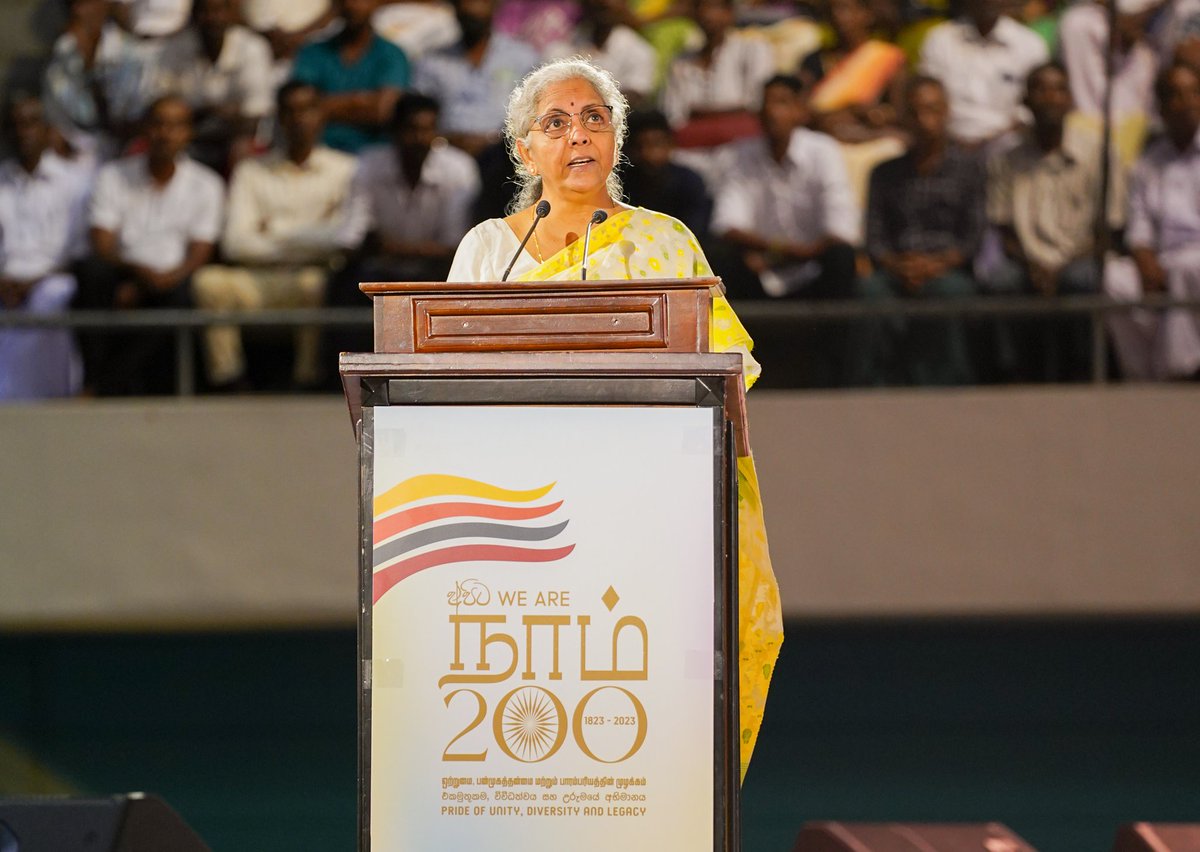
Tamil speaking Muslim lady is Project Director of India’s mission to the Sun

Women’s power at the Indian space agency is slowly coming to the fore and that too in the interplanetary missions. The latest is Nigar Shaji, Project Director for Aditya-L1 mission, India’s mission to the Sun.

A native of Shengottai in Tamil Nadu, the 59-year-old Shaji did her schooling in a government school there.

A bright student, she stood district first in her 10th standard and school first in her 12th standard. Shaji obtained an engineering degree in electronics and communications from Madurai Kamaraj University and did her masters in electronics at Birla Institute of Technology, Ranchi.

She joined the Indian Space Research Organisation (ISRO)’s Satellite Centre, now U R Rao Satellite Centre, in 1987.

At ISRO Nigar went on to make significant contributions to the Indian Remote Sensing, communication, and interplanetary satellite programmes while serving in various positions.

Over the years she was involved in various projects and assumed responsibility for Aditya-L1, the sun probe, eight years back.

“I have been heading this complex project for eight years. It was a challenging project. To place the spacecraft in the halo orbit itself is a major challenge. Further, the payloads were also first of its kind,” Shaji told IANS.

She said her husband, a mechanical engineer, is working in Dubai, a son who has a PhD, is working in Netherlands as a scientist and the daughter is a doctor doing her post-graduation.

Nigar Shaji has served as the Associate Project Director of Resourcesat-2A, the Indian Remote Sensing Satellite for National Resource Monitoring and Management. At present, she is the Project Director of Aditya-L1 mission.

Shaji has published papers in system engineering, image compression, and space internetworking.

Posted in Uncategorized

Anura Yapa to head new alliance?

MP Anura Priyadarshana Yapa has been given the responsibility of heading the new alliance, which has been initiated by MP Nimal Lanza, sources close to MP Lanza said.

The proposal to hand over all responsibilities to MP Yapa including the power of carrying out discussions with various parties was made by MP Lanza and Minister Susil Premajayantha according to sources.

Mr. Yapa was appointed when the group of MPs representing the new alliance met in the Parliamentary complex recently. It was reported that Minister Nalin Fernando has remarked that the leadership of the new alliance had gone to North Western Province.

It is expected that some local politicians from Colombo, Puttalam and other districts will join the alliance.

It was also revealed that SLPP General Secretary Sagara Kariyawasam has rejected the idea of going for a TV debate with Mr. Lanza.

The new alliance has also planned to form its own Bhikkhu organization soon.

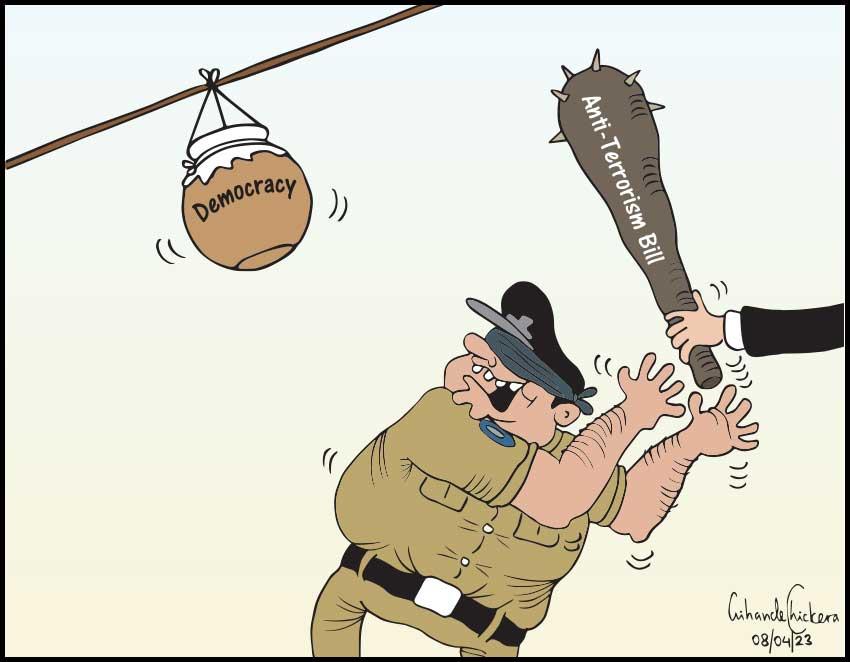
Government briefs diplomats on draft Anti-Terrorism Bill

The Sri Lankan Government briefed diplomats on moves to amend the draft Anti-Terrorism Bill.

A Diplomatic briefing was convened at the Ministry of Foreign Affairs for the Colombo-based diplomatic corps on current developments related to the draft Anti-Terrorism Bill.

Minister of Justice, Prison Affairs and Constitutional Reforms Dr. Wijeyadasa Rajapaksa and Minister of Foreign Affairs Ali Sabry addressed the briefing.

State Minister of Justice Anuradha Jayarathna, Foreign Secretary Aruni Wijewardane, Secretary Ministry of Justice, Prison Affairs and Constitutional Reforms Wasantha Perera and Additional Solicitor General Nerin Pulle were associated with the briefing.

At the outset, Minister Sabry recalled that the Prevention of Terrorism Act (PTA) was amended in 2022 following extensive deliberations with all relevant stakeholders including the civil society, taking into consideration the constructive comments and concerns expressed by domestic and international stakeholders.

Minister Sabry outlined the steps taken by the Government to ensure that the draft anti-terrorism legislation addresses national security requirements while upholding international standards and best practices.

He highlighted the transparent and open consultative process that was followed in in evolving the latest draft, including the consideration of views expressed by the public, civil society and international partners. The Minister informed that, following discussions on the suggested amendments, the Bill will be presented to the Cabinet for approval, and that once it is re-gazetted, any person will be able to petition to the Supreme Court with regard to the constitutionality of the Bill.

Minister Rajapaksa briefed the participants on the initiative taken by the Ministry of Justice to actively reach out to the public to receive further views, pursuant to the decision of the Cabinet. He said that concerns relating to the admissibility of confessions, detentions orders and the definition of terrorism were considered during the deliberations. The Minister explained as to how these concerns have been addressed in the draft legal framework.

Additional Solicitor General Pulle presented the salient features of the draft legal framework and said that the Counter Terrorism Bill of 2018, the report of the Commission of inquiry on Easter Sunday as well as observations made by the Bar Association of Sri Lanka (BASL) and the international community, were among the elements considered in developing the framework. He said the new draft seeks to ensure protection of Fundamental Rights such as freedom of expression and will not include the death penalty, while judicial oversight will be ensured throughout detention. The draft Bill will be subject to approval of the Cabinet and subsequent procedures as per the Constitution.

Following the briefing, the members of the diplomatic corps engaged in a constructive discussion and appreciated the regular briefings to the diplomatic corps on relevant developments in Sri Lanka.

Posted in Uncategorized

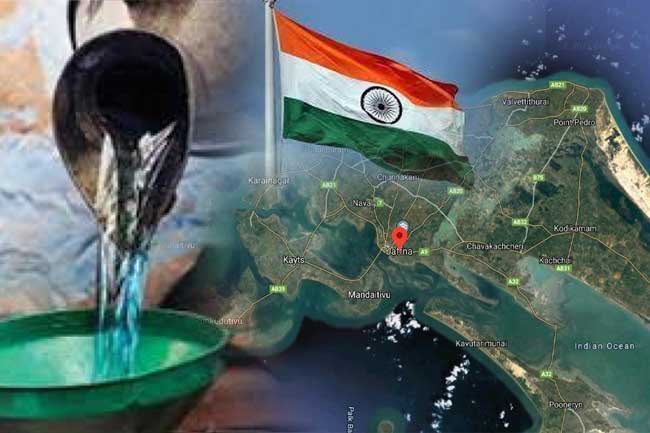
Jaffna, Mullaitivu and Mannar districts form Sri Lanka’s second Coconut Triangle

Jaffna, Mullaitivu and Mannar included to form Sri Lanka’s second Coconut Triangle
Sri Lanka’s second Coconut Triangle was launched in the Northern Province on Saturday (02 Sep.), in view of World Coconut Day.

Accordingly, the Jaffna, Mannar and Mullaitivu districts formed the country’s second Coconut Triangle, which was officially launched at a ceremony held at the Palai Coconut Model Garden in Jaffna.

Sri Lanka’s coconut export revenue has significantly increased in recent years.

Owing to the wide range of benefits associated with Sri Lankan coconuts, an evident increase in demand has been observed, thus, this year, it is anticipated that exports of coconut-based goods will bring in a total of USD 700 million.

Meanwhile, it is anticipated that exports of goods related to coconuts would generate a revenue of USD 2 billion over the next ten years.

The move to develop a second Coconut Triangle was fueled by the fact that local consumption accounts for two thirds of coconut production., while only one third is used for export.

Thus, in order to increase export potential, this situation needs to be altered, which initially prompted the development of the novel Coconut Triangle.

Posted in Uncategorized

Remembering The Disappeared

On the International Day of the Disappeared, 30 August, the International Committee of the Red Cross (ICRC) has called our attention to a deeply-human crisis that persists in Sri Lanka, despite the passing of time and the hope for resolution.

This reminder, coupled with the peaceful protest by the Unity of Families of Missing Persons on Thursday (31 August), serves as a stark wake-up call. It is a call to action, urging us to acknowledge the plight of those who continue to live in the shadows of uncertainty and to demand answers and justice for those who have disappeared.

In Sri Lanka, the issue of missing persons is a heartbreaking reality that transcends ethnicity, community, and time. The ICRC’s message reminds us that families across the country are still grappling with the painful ambiguity of not knowing what has happened to their loved ones. The disappeared individuals were not just numbers; they were fathers, mothers, siblings, and breadwinners and their absence has left a void that cannot be filled.

A recent report, titled ‘Mass Graves in Sri Lanka: History and Legal Framework,’ authored by Sophie Bisping, sheds light on a troubling discovery. Between the years 1992 and 2022, a total of 32 mass grave sites have been identified in Sri Lanka. However, it is disheartening to note that only seven of these sites have undergone excavation thus far. Among the excavated sites are those located in Sooriyakanda, Chemmani, Jaffna, Matale, Kalavanchikudy, as well as two sites in Mannar.

Sri Lanka is sadly renowned for having the world’s second-highest number of cases registered with the United Nations Working Group on Enforced or Involuntary Disappearances. Shockingly, it is estimated that between 60,000 and 100,000 people have suffered the harrowing experience of enforced disappearances since the commencement of the war in 1983.

The pain of enforced disappearances is an indescribable anguish that transcends words. It is a wound that festers deep within the hearts and minds of families who have been thrust into a nightmarish journey of uncertainty, fear, and despair.

The pain is not just emotional; it’s economic, social and psychological. The disappeared often play vital roles in their families, serving as breadwinners, caregivers and emotional pillars. Their absence leaves a gaping void that cannot be filled. Families are left to grapple with financial instability, legal complications and the stigma associated with having a missing relative.

The pain extends to the broader community and society as well. Enforced disappearances undermine trust in institutions, erode the rule of law and breed a culture of fear. They perpetuate a cycle of violence and impunity that reverberates through generations.

International humanitarian law is clear on this matter: people have the right to know what happened to their missing relatives, and authorities have an obligation to provide information and assist in ascertaining the fate and whereabouts of missing persons. This is not just a legal mandate; it’s a moral imperative that transcends borders.

The search for missing persons should be continuous and their families deserve individualised answers. Strengthening national frameworks, improving medico -legal processes and enhancing mechanisms dedicated to establishing the fate and whereabouts of missing persons are crucial steps in this journey. Equally important is the collection and processing of information on missing persons and related events, as well as sites containing human remains or possible remains.

As we reflect on the International Day of the Disappeared, let us not forget that behind every statistic, every protest, and every call for justice, there are individuals with stories that deserve to be heard. Let us honour the memory of those who have disappeared by redoubling our efforts to uncover the truth, provide answers and ensure that the families left behind can finally find closure and live in dignity.

As September has dawned, let it be a reminder that the search for answers and justice for the disappeared in Sri Lanka should never end until every family finds the closure and solace they so desperately seek.

Posted in Uncategorized

Singapore elects Tharman Shanmugaratnam, descendant of Sri Lankan Tamils, as President

Former deputy PM and ruling party candidate Tharman Shanmugaratnam, 66, a descendant of Sri Lankan Tamils, swept to a landslide victory in the Singapore presidential election with 70.4% of the vote, becoming the first non-Chinese to win a presidential election, Singapore media reported Saturday.

He is a fourth-generation Singaporean of Sri Lankan Taml ancestry from the 19th century. He is the son of Emeritus Professor K. Shanmugaratnam, a medical scientist known as the “father of pathology in Singapore”, who founded the Singapore Cancer Registry and led a number of international organisations related to cancer research and pathology.

He easily defeated the two other candidates, both from the majority Chinese community, who polled 15% and 14% respectively.

A highly regarded and distinguished political leader, he made the baffling decision to quit the People’s Action Party (PAP) that has ruled Singapore since independence and run for the largely ceremonial post of president. An economist by profession, he has distinguished himself over two decades as a cabinet minister since 2003, serving as Finance Minister (2007-15) and Deputy Prime Minister (2011-19). Many considered him a likely successor to current Prime Minister Lee Hsien Loong, and believed that he would one day become the nation’s first non-Chinese PM.

He will succeed President Halimah Yacob, who did not run for re-election. The first woman to become President, Yacob, who is from the minority Malay community, stepped in to the presidency uncontested in 2017 as Singapore’s constitution requires that members of the country’s two minorities must serve as president at least once every five terms. President Ranil Wickremesinghe met with President Yacob during his recent visit to Singapore.

Singapore has had two ethnic Indian presidents before – Devan Nair and S.R. Nathan – but they had both been elected in uncontested polls.

Posted in Uncategorized

Sri Lanka pays another $ 100 Mn to Bangladesh; Balance $50 Mn to be paid within this year

Sri Lanka has paid another $100 million in the second instalment out of $200 million loan given by Bangladesh in a currency swap, a Bangladesh Bank spokesperson said on Friday, reported the Dhaka Tribune.

Last month, Colombo paid $50 million in the first instalment of the loan repayment.

Bangladesh lent $200 million from its foreign exchange reserves to Sri Lanka during its economic crisis.

The remaining $50 million is due to be repaid within the current year, said Bangladesh Bank Executive Director and Spokesperson Mesbaul Haque.

Bangladesh extended the dept repayment time to let Sri Lanka time to revive its economy.

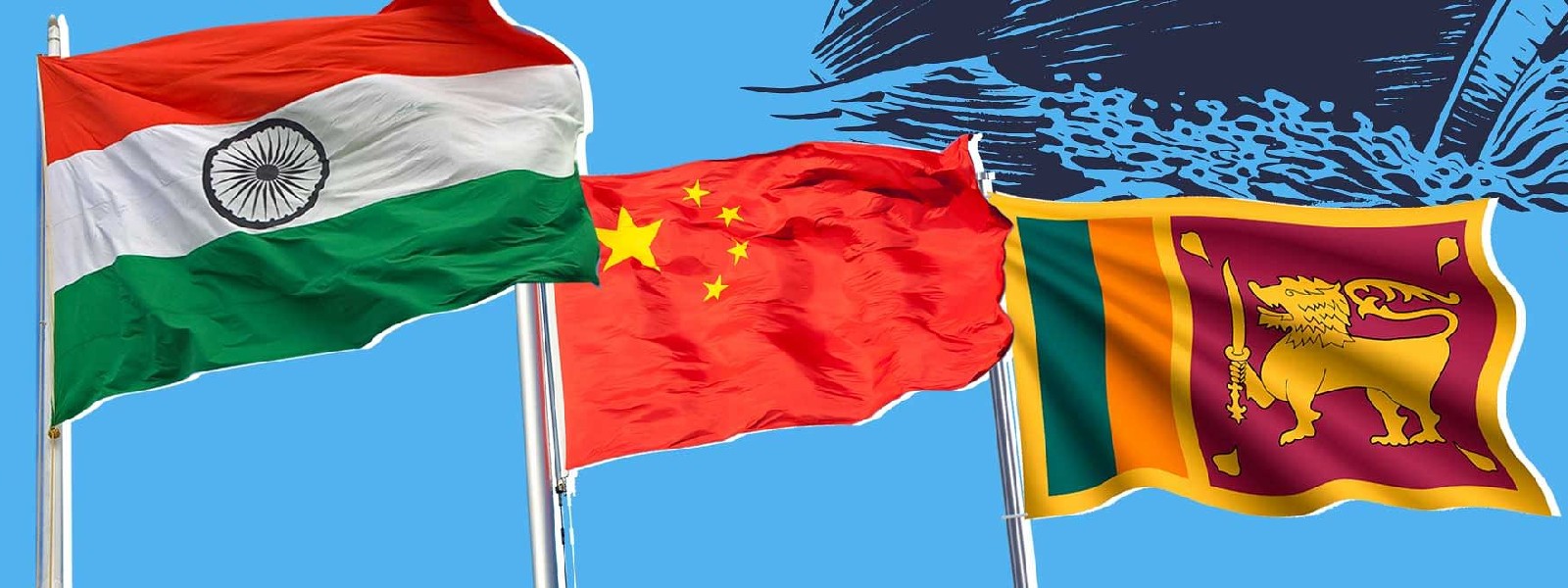
Indian warship in Colombo ahead of Defence Minister visit to Sri Lanka on Saturday (2)

The Indian Naval Ship (INS) ‘Delhi’ arrived at the port of Colombo on a formal visit this morning (01st September 2023). The visiting ship was welcomed by the Sri Lanka Navy in compliance with naval tradition.

INS ‘Delhi’ is a 163.2m long Destroyer manned by a crew of 450 and the ship is commanded by Captain Abhishek Kumar.

The Commanding Officer of the ship called on Commander Western Naval Area, Rear Admiral Suresh De Silva at the Western Naval Command Headquarters this morning.

During the ship’s stay, the crew will take part in several programmes organized by the Sri Lanka Navy, with a view to promoting cooperation and goodwill between two navies. They are also expected to visit some of the tourist attractions in the country.

In addition, INS ‘Delhi’ has made arrangements to open the ship for the visit of school children. Further, training exchanges are scheduled to be held aboard, involving naval personnel from both navies.

The ship is expected to depart the island on 03rd September and she will conduct a Passage Exercise (PASSEX) with a ship of Sri Lanka Navy, off Colombo.

At the same time, the Defence Minister of India, Shri Rajnath Singh is scheduled to visit Sri Lanka on 02-03 September 2023 to review bilateral defence ties.

During the visit, Shri Rajnath Singh will hold talks with President and Defence Minister of Sri Lanka Ranil Wickremesinghe and Prime Minister Dinesh Gunawardena.

The entire gamut of India’s defence ties with Sri Lanka will be reviewed during these meetings. The Defence Minister will also visit Nuwara Eliya and Trincomalee.

​This visit of Shri Rajnath Singh reiterates India’s continued commitment in furthering the existing warm and friendly relations with Sri Lanka. The visit is an important landmark in deepening the enduring bonds of friendship between the two countries in the defence sphere.

Posted in Uncategorized