Your move to implement 13 as an interim arrangement is correct – US Ambassador praises Tamil parties

“While the new constitution you are expecting is unlikely to come now, your move to demand the full implementation of the 13th Amendment is right” – this is what US Ambassador to Sri Lanka Julie Sang said in person to the leaders of the Tamil parties who met her in Jaffna on Wednesday.

The meeting took place at the guest house in Kokuvil. Selvam Adhikalanathan, President of Tamil Eelam Liberation Organization(TELO), President of Tamil Eelam People’s Liberation Organization (PLOT) Th. Siddharthan, Sri Lankan Federal Party (ITAK) Senior Vice President C. V. K. Shivanjanam were present in this meeting.

The party leaders said that the American ambassador who has arrived in Jaffna after about a year showed interest in knowing the political affairs cantered on the North and She also heard the opinions of the parties regarding the chances of winning the presidential election. She also heard about the usurpation of land in the north and the invasion of Buddhism. She also inquired about the activities of a group led by Buddhist monks at Kurundurmalai.

At the meeting, the US Ambassador asked if there were Buddhists in the North.

She also inquired about the current status of land release and release of political prisoners. In addition, in this meeting, issues including the issue of holding the Provincial Assembly elections and the new Anti-Terrorism Act were also discussed. She also heard about Tamil youth leaving the country in large numbers. It was also reported that She asked in detail about the pros and cons of this.

Posted in Uncategorized

UK to provide grants for health support and fellowships to Sri Lanka

British Deputy High Commissioner Lisa Whanstall has called on Prime Minister Dinesh Gunawardena to discuss the commencement of the 2nd phase of UK aid programme to Sri Lanka.

Whanstall visited the prime minister at the Temple Trees in Colombo earlier this week, accompanied by a delegation from Fleming Fund of UK Department of Health and Social Care.

She said the healthcare grants programme, which was halted for the last couple of years due to Covid-19 pandemic, will be resumed in January 2024.

Under this grant assistance will be provided to support to generate, share and use antimicrobial resistance data to reduce drug resistance.

It will support public health surveillance to help improve patient health, inform national health policies and warn emerging threats.

The grant programme will be implemented with the assistance of the Ministry of Health, World Health Organization and other agencies. Under this programme training fellowships will be provided to health sector staff.

The Prime minister thanked the United Kingdom for selecting Sri Lanka as a recipient of this health care programme, which will be immensely useful to advance the health system in the country. He pointed out that Sri Lanka health service is based on the British system and there will not be any difficulty in implementing such health care programmes.

British Council’s Country Director Orlando Edwards presented a set of publications on English language training methods of the Council to the Prime Minister.

Prime Minister Gunawardena urged the Acting High Commission and the British Council to introduce English Language education to youths in rural areas.

Dr Jessica Wallis and Dr Neha Gulati of UK Fleming Fund, Andrew Price of British High Commission and Additional Secretary to the Prime Minister, Deepa Liyanage also took part in the discussion.

Operation Fonny: Shameful Arrest of Ex-Army Chief Fonseka by the Army

Sri Lanka’s one and only Field Marshall Sarath Fonseka is very much in the news lately. The Gampaha District MP and Samagi Jana Balawegaya (SJB) Chairman launched a People’s Revolution protest campaign against waste, corruption, irregularities and mismanagementon August 11, 2023. This has led to strong speculation that the former Army Commander and ex-chief of Defence staff will act independently and throw his hat into the forthcoming Presidential Election ring.
The possibility of Sarath Fonseka being a presidential contender has revived memories of the 2010 Presidential Election. It may be recalled that Gardihewa Sarath Chandralal Fonseka then a four-star General retired from the Army and challenged the then incumbent President Mahendra Percy Rajapaksa at the 2010 Presidential poll as the common opposition candidate.

After a hectic election campaign marred by allegations of fraudulence, abuse of state resources and violence, the poll was held on January 26th 2010. Mahinda Rajapaksa came first with 6,015,934 or 57.88% of the vote Sarath Fonseka came second with 4,173,185 votes, or 40.15%. Mahinda Rajapaksa assumed office again as executive president.

Barely two weeks later on the night of February 8, 2010, the former Army Commander was arrested by members of the very same Army he had led only a few months ago.
When Sarath Fonseka was arrested there was very little media publicity about the manner and mode in which he was arrested.
Though information was scanty at the time of the arrest, this writer was then the first to report the circumstances of the ex-army chief’s arrest in English. This irritated the powers that be and their acolytes very much then. It is against this backdrop therefore that I am revisiting in this week’s column – with the aid of earlier writings – the arrest of Sarath Fonseka 13 years ago.

February 8, 2010

On that fateful night of February 8, 2010, the defeated presidential candidate Sarath Fonseka was in his political office at 1/3 Rajakeeya Mawatte (Formerly Reid Avenue) near Royal College in Colombo 7 discussing political strategies and campaign tactics for the forthcoming Parliamentary polls with a group of political allies.

Among those participating in the discussions were Sri Lanka Muslim Congress (SLMC) leader and MP Rauff Hakeem, Democratic People’s Front (DPF) leader and MP Mano Ganesan, Janatha Vimukthi Peramuna (JVP) leader Somawansa Amerasinghe and JVP Parliamentarian Sunil Handunnetti.
Fonseka’s Media Secretary S.H. A. Silva aka Shah Silva was also a participant. Senaka (SHA) Silva is a former major of the Sri Lanka Army.

The highly confidential discussions were conducted behind closed doors in Gen. Fonseka’s boardroom on the first floor of the two-storyed building.
The security personnel in charge of personal security for Parliamentarians like Hakeem, Ganesan and Handunnetti were waiting below on the ground floor and also in an outer enclosure at the entrance.
Even as these discussions were going on soldiers were preparing to launch a special operation targeting their former commander.
The operation was codenamed facetiously as “Operation Fonny” because Fonseka was nicknamed ‘Fonny’ in the Army. ‘Operation Fonny’s’ objective was taking into custody General Sarath Fonseka RWP, RSP, VSV, USP, RCDS, PSC.

World’s Best Military Commander

Rudiments of the operation to arrest Fonseka were planned by Brigadier Jagath Wijesiri, the then Army Provost Marshall of the military police and the then Colombo Operations Commander Major General Sumith Manawaduge. The top secret operation was sanctioned by the then Defence Secretary Gotabaya Rajapaksa who once described Fonny as the “world’s best military commander”.
It was at 9 p.m. on February 8 that Operation Fonny got underway.

A contingent of over 200 men comprising military personnel from the Military Police Corps and Colombo Operations Command were deployed. The launching pad was the Sri Lanka Corps of Military Police Headquarters at Polhengoda. A team of sleuths from the Police CID also accompanied the soldiers to provide a “non-military veneer” to the exercise.

Soldiers travelling in four buses and eight other vehicles arrived at the Thunmulla Munidasa Kumaratunga Mawatha – Sir Ernest de Silva Mawatha – Rajakeeya Mawatha, three-cornered junction.
Dressed in battle fatigues and adorned with green berets the arms-wielding soldiers spread out rapidly in the area and sealed off all the roads. All vehicular traffic was blocked at vital points. Rajakeeya Mawatha was saturated with military personnel. Fonseka’s political office was cordoned off.

Rajakeeya Mawatha

The time was about 9.40 p.m. when a squad consisting of military police, and military and police CID personnel entered the Rajakeeya Mawatha office premises. A contingent of military personnel swooped down on the premises in a commando-type manoeuvre.

Scores of soldiers took up positions around and inside the building. The gates were locked from the inside.
The Ministerial Security Division(MSD) officers entrusted with the task of ensuring security for opposition parliamentarians were all rounded up and forcibly disarmed. Two officers attempting to run upstairs were ordered to climb down at gunpoint. All of them were herded into two corners and detained. The CCTV cameras were switched off and recording equipment was removed. Some members of the special squad led by Brig. Wijesiri and Maj-Gen Manawaduge proceeded upstairs.

Provost-Marshal

Initially, military police led by Brig. Wijesiru burst into the room where the meeting was going on. Upon entering the room the Provost-Marshal Brigadier Wijesiri introduced himself and asked the politicians to leave the room as the army had been instructed to detain and question General Fonseka and Senaka Silva. The politicians had objected to this high-handed action and politely refused to vacate the room and leave the General to the tender mercies of his erstwhile military subordinates.

At this point, General Fonseka said that if he was to be arrested for questioning then it had to be done in the proper way. He said that the Army could not arrest him as he was no longer in the Army and that only the Police could arrest him.

Fonseka’s media secretary Senaka Shah Silva also spoke in support of the General’s position and emphasised that he too could not be arrested by the Military Police as he was a retired major.
Provost Marshall Brigadier Wijesiri then said that the General had to be taken into custody by the military police for interrogation about certain offences committed by him while wearing the military uniform. Since they were military offences it was the Military Police that was entitled to arrest him, emphasised the Provost Marshall.
A Military Police Officer then rapidly read out his orders outlining the reasons for taking Sarath Fonseka into custody. The charges under which Fonseka was to be interrogated included-
a) Politicking whilst in uniform.
b) Conspiring against the Commander-in-Chief whilst in Service.
c) Harbouring more than 1,500 deserters whilst on service.
d) Corrupt practices relating to military procurements.
Sarath Fonseka then protested vehemently and asserted that he would not leave the office unless and until the Police took him into custody and that the Military Police had no authority to arrest him as he was now a civilian out of uniform.
The Military Police Officers seemed hesitant to proceed further in the face of the defiant stance adopted by Sarath Fonseka who reiterated that he was willing to submit to arrest by the Police but not to the Military Police.

Sumith Manawaduge

Suddenly a fresh group of military personnel entered the room. They were led by Major-General Sumith Manawaduge, commanding officer of Colombo district operations in the army. Gen Manawaduge addressed Fonseka as Sir and told him I am only carrying out orders. Please come with us.
Fonseka reiterated that he was a civilian and could not be arrested by the Military Police. He said he was prepared to surrender to the Police.

Manawaduge then said the Police CID were downstairs and asked him to come. Fonseka retorted:
“Ask them to come up and show proof of their identity”.

At this point, Gen. Manawaduge lost his cool and replied harshly. This led to a heated exchange of words between Manawaduge and his former commander. Both gave as good as they got in the choicest Billingsgate lingo.

Major General Sumith Manawaduge then ordered the soldiers to seize the General and take him into custody. When the military personnel moved towards Fonseka, the ex-army chief shouted out Magey anghata atha thiyanna epa, (Don’t lay hands on my body).

Manawaduge then barked out orders to the military personnel to take hold of Fonseka. At one point he bellowed to hesitating soldiers “Ai balagana inne. Bellen allaganda” (Why are you just watching and waiting, grasp his neck).

Egged on by their commanding officer the soldiers then seized their former commander and tried to pull him out. But Fonseka held on to a table refusing to accompany them. He kept on shouting “Let the Police come. I will come then”.

The ex-army Commander who had experienced many clashes on the battlefront now struggled to prevent his forcible arrest at the hands of soldiers who were under his command only eight months earlier.

He ripped off the name tag of an officer trying to grasp him. Chairs were overturned in the melee. Teacups and saucers and a tray of short eats fell to the floor during the tussle.

Senaka Silva

When Senaka Silva began protesting, Maj-Gen Manawaduge ordered his men to arrest Silva and hand him over to the Police for further questioning. Senaka Silva was taken away separately and reportedly handed over to the police for questioning.
Sumith Manawaduge then ordered soldiers to drag the General (Adagena Yande). The soldiers then grasped the hands and legs of Sarath Fonseka and tried to forcibly drag him along.
The politicians witnessing this disgusting spectacle of an ex-army chief being humiliated in this way remonstrated with the army officers but to no avail as Maj-Gen Manawaduge simply ignored them saying he had his orders.
At one stage some soldiers moved menacingly towards Rauff Hakeem when he was arguing. Rauff Hakeem then told Gen Manawaduge to tell his men not to touch him. “There will be consequences if you touch me”, warned Hakeem. Manawaduge then scolded the soldiers and told them to move away from the parliamentarians.

Forcibly Dragged

The soldiers got hold of their former commander by his hands and legs and dragged him along the floor. Sarath Fonseka kept on shouting and struggling as he was forcibly dragged down the steps from the first floor.

Some of the soldiers dragging the General were seen hitting their former commander in a bid to restrain him. One soldier was seen delivering a powerful punch to the back of Sarath Fonseka’s head.

When the soldiers assaulted him the General retorted through colourful expressions and choice epithets in both the Sinhala and English languages. The battle-scarred General who had survived an LTTE suicide bomb attempt on his life in April 2006 was manhandled roughly by the soldiers.
At one point the struggling Fonseka’s flailing legs smashed into a window cracking the glass panes. After reaching ground level the General was handcuffed and then bodily carried towards a vehicle.

Walked Without Struggling

Fonseka then asked the soldiers to put him down saying he would walk without struggling. Thereafter, a handcuffed Fonseka walked a very short distance to the bullet-proof Land Rover jeep in which he was taken to Navy headquarters. The General was wearing brown trousers and a white shirt at the time of the arrest. He was detained in a chalet within the naval headquarters premises.

Source:D.B.S.Jeyaraj can be reached at dbsjeyaraj@yahoo.com

Sinhala Buddhist monk blocks Tamils from accessing land subject to encroachment by vihara in Batticaloa

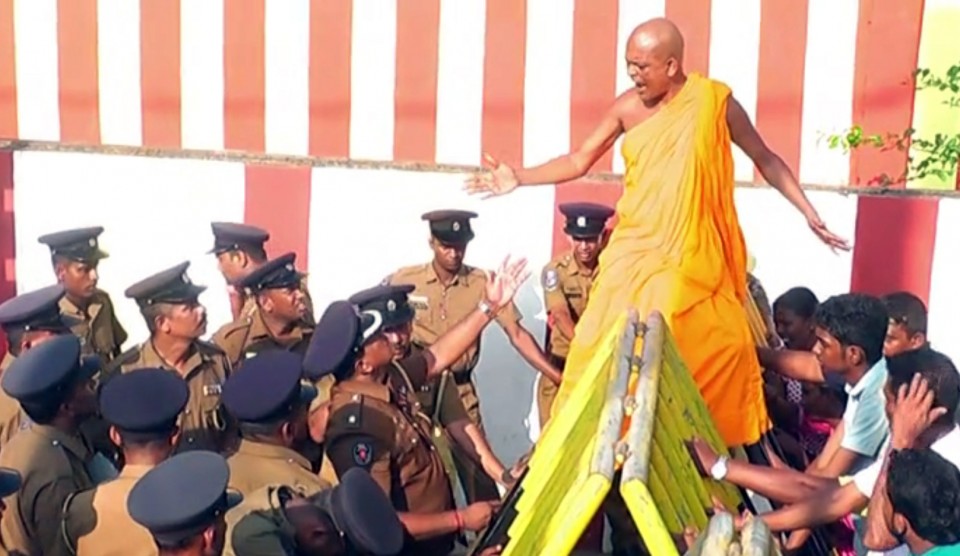
A Sinhala Buddhist monk blocked and threatened a group of Tamils from accessing land which is being encroached upon by a Buddhist vihara in Mayilaththamadu, Batticaloa.

A group of Tamil multi-faith leaders, farmers and journalists went to Mathavanai in Batticaloa today to visit a farmer who’s land is being encroached on by the construction of a vihara. However, upon their arrival a Sinhala Buddhist monk and a group of people associated with him, blocked the Tamils from leaving their vehicles. The group also threatened to set fire to all of the Tamils who were in the vehicle.

Tamil journalists who also went to the area to report on the news, had their cameras and equipment taken off them and their files were destroyed.

This incident follows similar incidents of Sinhalisation across the North-East, where Tamil-owned land has been taken over by Sinhala Buddhists often aided by Sri Lanka’s archeology department and the military.

US calls on Sri Lanka Army to build trust with minorities

The United States had talks with the Sri Lanka Army, during which the need to build trust with minority communities to ensure lasting peace was also discussed.

The US Ambassador to Sri Lanka Julie Chung said that she met the Sri Lanka Army 1 Corps Commander Major General S.B. Amunugama and Staff to discuss the shared commitment to defense cooperation, including Sri Lanka’s efforts to modernize the military.

“Discussed the need to build trust with minority communities to ensure lasting peace,” the US Ambassador said.

The Ambassador, who is on a visit to the North, met a wide range of communities, including civil society leaders in Jaffna to hear their concerns and perspectives.

“Such dynamic voices and partners are essential as we work together to support a democratic Sri Lanka,” the Ambassador said.

Posted in Uncategorized

Mahanayakas want Prez to discuss 13A with them

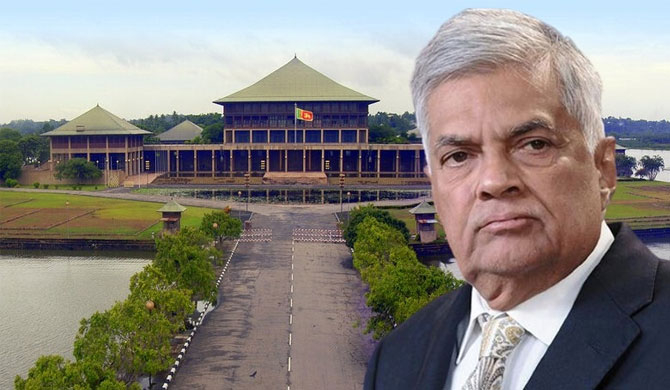
The Asgiri Chapter of the Siam Sect stated that it would be best if President Ranil Wickremesinghe would discuss the full implementation of the 13th Amendment to the Constitution with religious leaders including the Chief Prelates (Mahanayakas) of the main Buddhist sects.

Wickremesinghe, who came to power following the resignation of former President Gotabaya Rajapaksa in July last year (2022), pledged that he would fully implement the 13th Amendment, and work to resolve the issues faced by the people of the Northern and Eastern Provinces.

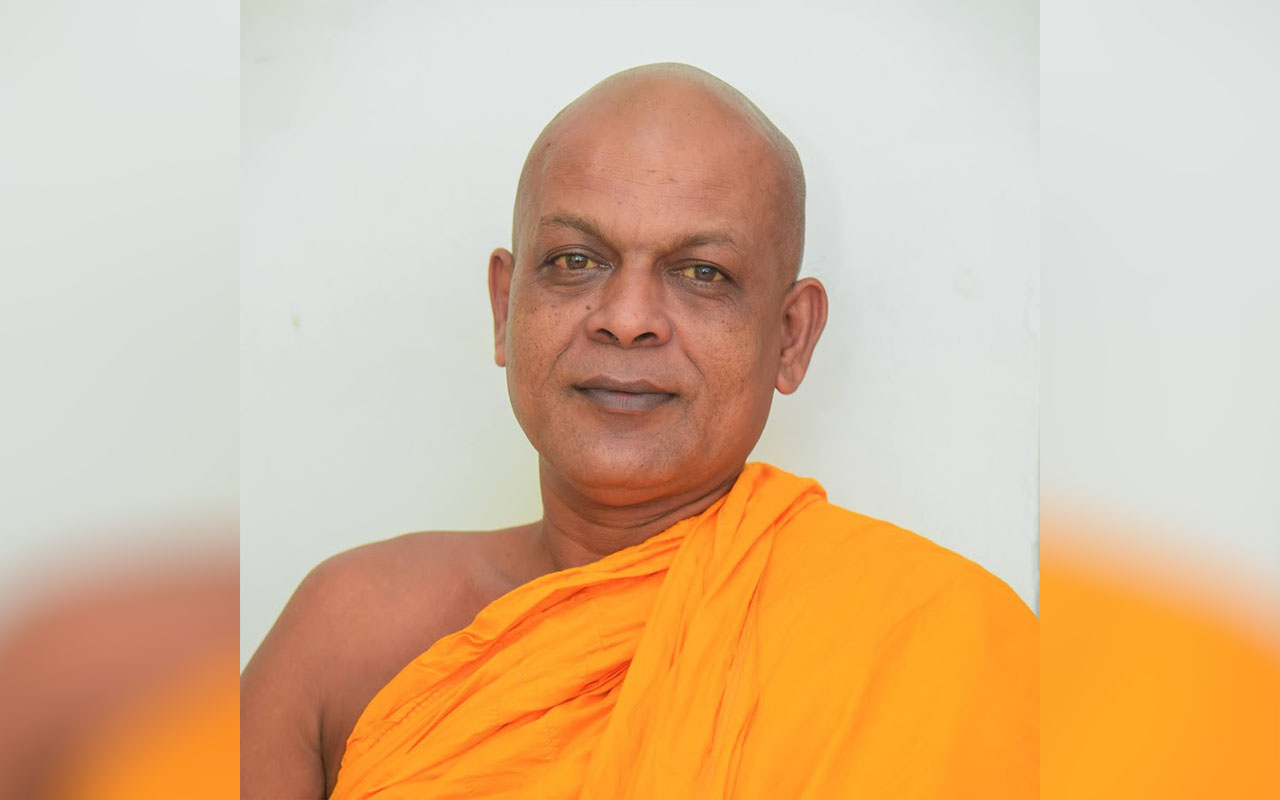
Speaking to The Daily Morning on the matter, Asgiri Maha Viharaya Supreme Sangha Council Secretary Ven. Dr. Medagama Dhammananda Thera said that they were of the view that the 13th Amendment should not be implemented as it may cause various adverse effects, including communal conflicts. “All former Presidents didn’t implement this, and they must have done so for a fair reason. So, we don’t approve of the implementation of the 13th Amendment. However, as the President has expressed his consent to implement it, he should discuss the matter with all religious leaders, including Chief Prelates.”

Wickremesinghe has had several discussions with several parties including Parliamentarians, particularly those representing the Tamil community regarding the 13th Amendment. His preparation has, however, seen opposition from several parties including the ruling Sri Lanka Podujana Peramuna itself, which recently stated that he (Wickremesinghe) did not have a moral right to implement the 13th Amendment, as he is enjoying power based on the mandate given by the people to Rajapaksa.

In February this year, the Chief Prelates of the main Buddhist Sects including Warakagoda Sri Gnanarathana Thera, Thibbatuwawe Sri Siddhartha Sumangala Thera, Makulewe Wimala Thera, and late Dodampahala Chandrasiri Thera had, in a letter addressed to the President, requested him not to implement the 13th Amendment, claiming that the granting of Police and land powers may lead to separatism.

On 29 July 1987, the Indo-Lanka Accord was signed between the then Indian Prime Minister Rajiv Gandhi and then Sri Lankan President J.R. Jayewardene which described the devolution of powers to the Provinces. On 14 November 1987, the Parliament passed the 13th Amendment and the Provincial Councils (PCs) Act, No. 42 of 1987 to establish PCs.

On 18 July 2023, Wickremesinghe assured a group of Tamil MPs that the 13th Amendment would be fully implemented – without Police powers – in the PCs.

Posted in Uncategorized

Indian Envoy meets Sri Lankan MPs in Parliament; Jaishankar joins via video message

India-Sri Lanka relations are expected to be further enhanced in four main areas of Food security, Energy security, Currency Support and long-term investment, said the High Commissioner of India to Sri Lanka, Gopal Bagley said on Monday (23) in Parliament.

The High Commissioner said this while addressing a meeting of the Sri Lanka India Parliamentary Friendship Association held in Parliament under the patronage of Speaker Mahinda Yapa Abeywardena.

The speaker pointed out the importance of strengthening the relations between the two countries through the implementation of exchange programs through the Sri Lanka India Parliamentary Friendship Association and expressed his gratitude for the continuous support provided by India.

External Affairs Minister of India Dr. S. Jaishankar informed the Members of Parliament through a video message that India will continue to support the development activities of Sri Lanka.

Andrew Patrick appointed new British High Commissioner in Sri Lanka

Andrew Patrick presented his credentials to President Ranil Wickremesinghe on August 23, 2023, becoming the new High Commissioner for Great Britain and Northern Ireland in Sri Lanka.

“The last 75 years of our relationship has shown how much our countries can achieve together, and the significant contribution of the Sri Lankan community in the UK,” High Commissioner Patrick said in a statement.

“I look forward to building upon those 75 years through strengthening cooperation to ensure a peaceful and prosperous future for both our countries.”

From 2013 to 2018, Andrew Patrick served as British Ambassador to Myanmar. Previous appointments have included Afghanistan and South Africa.

The High Commissioner is accompanied by his wife, Khin Sandar Win, who comes from Myanmar and is a businesswoman, the British High Commission said.

New envoy notes contribution of Sri Lankans in UK

The new British High Commissioner to Sri Lanka, Andrew Patrick, noted the significant contribution of the Sri Lankan community in the UK.

Andrew Patrick made the comment in a statement issued after presenting his credentials to President Ranil Wickremesinghe today.

“I am both honoured and delighted to be accredited as the British High Commissioner to the Democratic Socialist Republic of Sri Lanka. The last 75 years of our relationship has shown how much our countries can achieve together, and the significant contribution of the Sri Lankan community in the UK,” he said.

The new High Commissioner said that he looks forward to building upon those 75 years through strengthening cooperation to ensure a peaceful and prosperous future for both countries.

From 2013 to 2018, Andrew Patrick served as British Ambassador to Myanmar. Previous appointments have included Afghanistan and South Africa.

The High Commissioner is accompanied by his wife, Khin Sandar Win, who comes from Myanmar and is a businesswoman.

Posted in Uncategorized

India will continue developmental assistance to Sri Lanka in every possible area: Jaishankar

India’s External Affairs Minister S Jaishankar on Wednesday pledged continued development assistance in every possible area to Sri Lanka amid its ongoing economic crisis.

Jaishankar addressed the parliamentarians who are part of the Sri Lanka-India Parliamentary Friendship Association through a video link and emphasised that India was in every aspect working towards strengthening the Indi-Sri Lanka ties.

“India will continue to provide developmental assistance to Sri Lanka in every possible area,” Jaishankar said during his address.

Indian High Commissioner in Colombo Gopal Baglay was also present in Parliament and said that the bilateral relationship is further expected to be enhanced through four main areas: food security, energy security, currency support and long-term investment.

On the occasion, Sri Lankan parliamentary Speaker Mahinda Yapa Abeywardena said that relations could be further enhanced through exchange programmes that could be implemented by using the parliamentary friendship association.

Parliamentarians noted with gratitude India’s economic assistance to Sri Lanka when the island was plunged into its worst economic crisis last year.

India offered Sri Lanka more than USD 4 billion worth of assistance which in the main funded the imports of essentials and fuel.

The economic crisis triggered by forex shortages forced the public into the streets which forced the ouster of former President Gotabaya Rajapaksa.

Source – PTI