Sri Lanka’s Security Anchor Is India In Indo-Pacific Context

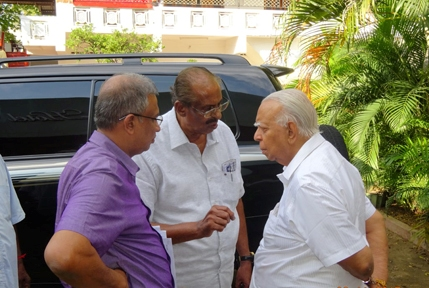
Sri Lanka believes that due to its strategic location and proximity to the Indian mainland, Colombo’s security interests are aligned with that of New Delhi’s, and that is the reason why the island nation identifies India as the “anchor” when it comes to the Indo-Pacific strategic framework in the Indian Ocean, according to Milinda Moragoda, High Commissioner of Sri Lanka to India.

Speaking to India’s ABP Live, Moragoda said Sri Lanka has “learnt to live” with the fact that due to its geographical location it will always be the theatre where the strategic competition between India and China will be played out. However, he said, Colombo shares a special relationship with New Delhi that cannot be compared with other bilateral ties that the country has, due to historical, civilisational, genetic as well as geographical linkages.

“We are engaging, we are working with India clearly and we have always said that when it comes to security interests, India’s security and our security are the same and that’s logical because of where we are located. Within that context we are engaging with anybody who is interested,” Moragoda said, adding that Japan and the United States have shown interest in engaging with Colombo.

“In the Indo-Pacific context, many people come and talk to us. But the anchor is India for security. That is self-evident. But to maintain that understanding, you have to have a high-quality dialogue (between leaders) because in today’s day and age, what we are talking about today may become irrelevant tomorrow because situations move very fast,” he said, adding: “So unless there is very clear communication between leaders, these things will not work and also both being democracies we are complex, that also we need to understand. It’s not just one person making decisions, one has to understand each other that way as well.”

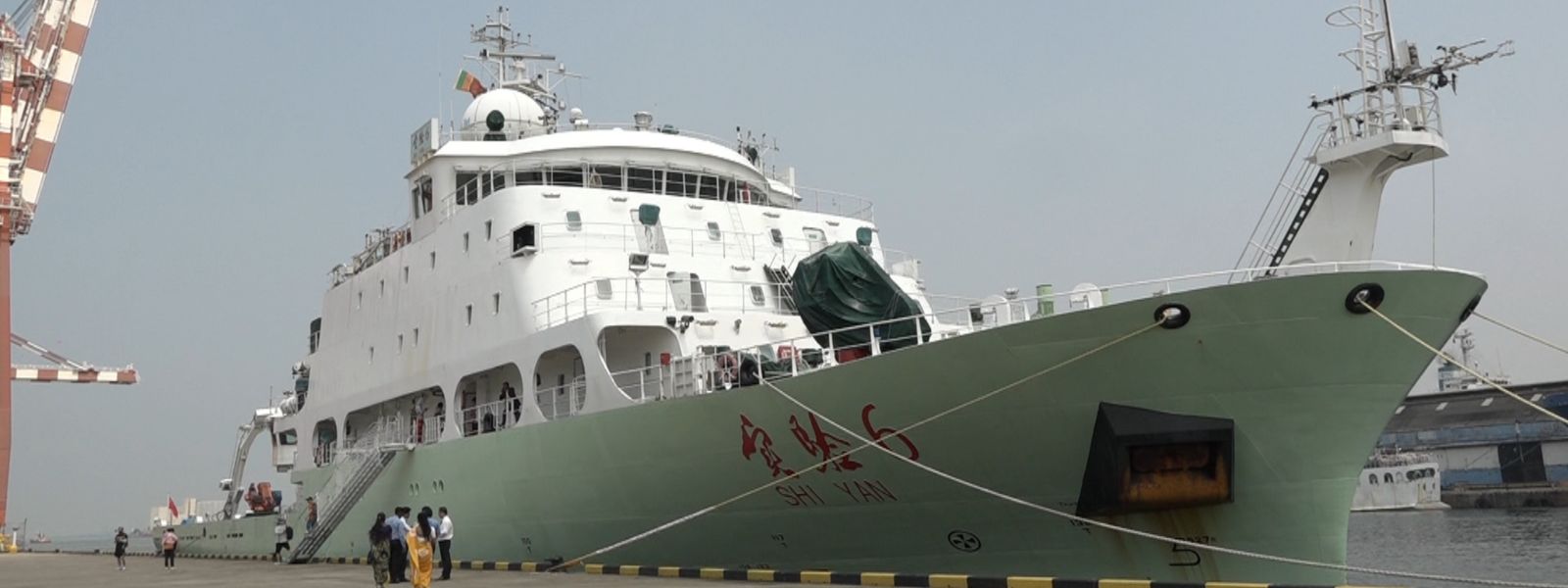
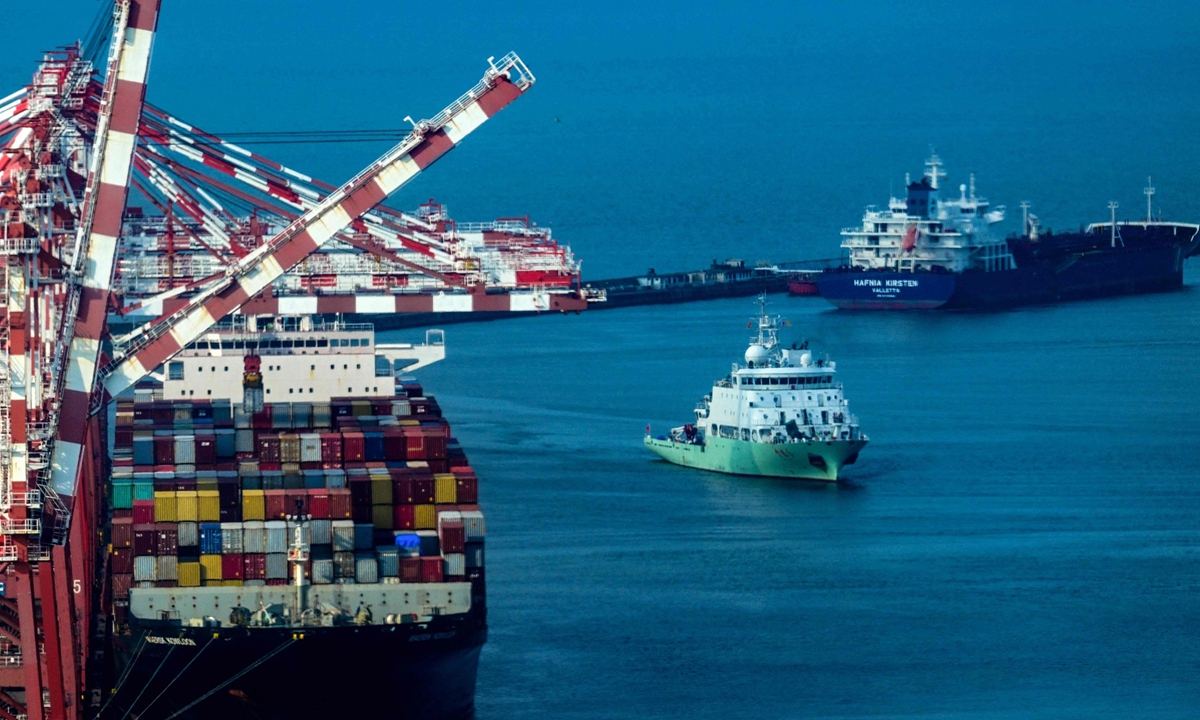
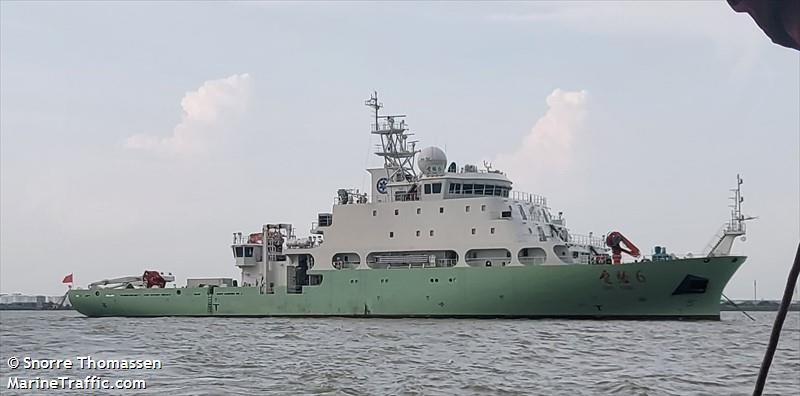
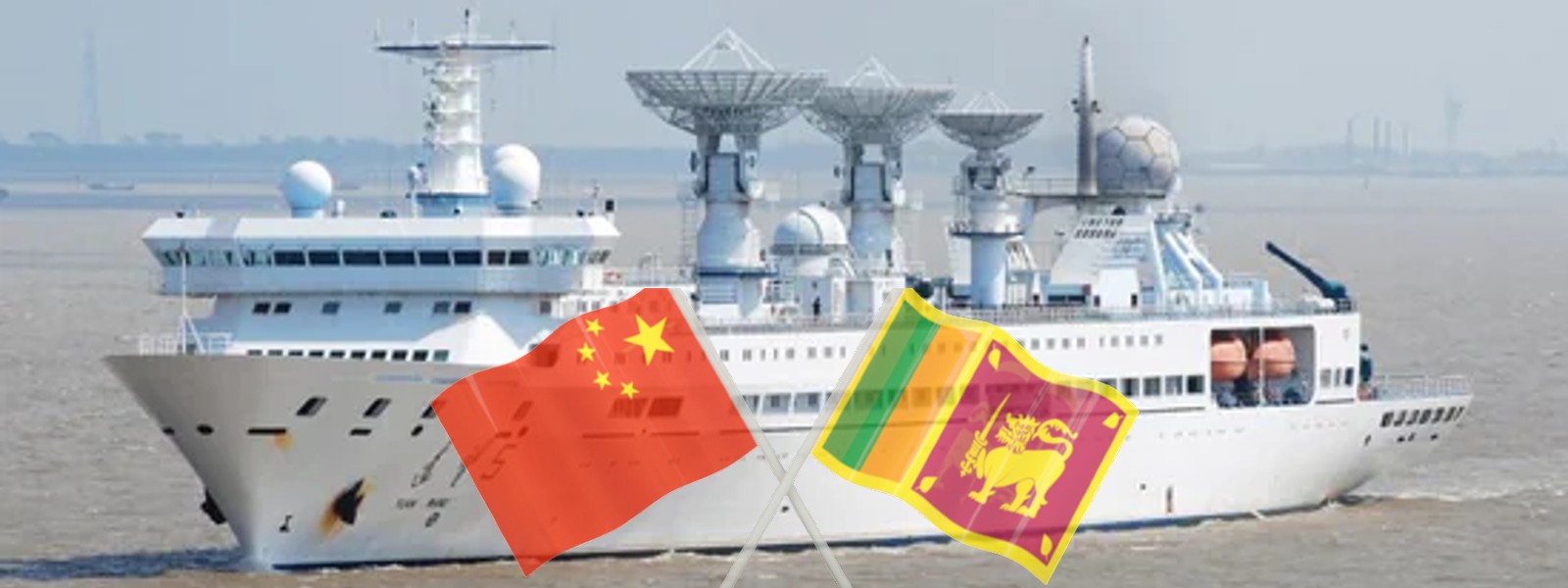
Earlier this month, New Delhi once again raised the red flag as Colombo plans to allow the entry of the Chinese vessel — Shi Yan 6 — into Sri Lankan waters. The ship is expected to dock at the ports of Colombo and Hambantota in October this year. This comes after India expressed similar objections to the visit of a Chinese satellite tracking vessel Yuan Wang 5 to the Hambantota Port in August 2022.

“Sri Lanka has learnt to live with this (India-China strategic concerns over the Indian Ocean island). From Ramayana to today, we have had to deal with different aspects of this… We had people coming from Portugal, Netherlands and the UK. So external factors are par for the course I guess,” the Sri Lanka envoy highlighted.

“We have to deal with that. When it comes to India, you cannot compare the relationship with any other relationship. We are linked genetically and also through civilisation and geographically we are linked,” he added.

According to Moragoda, having a sustained bilateral relationship depends on the “quality of dialogue” between the leaders of the two neighbouring countries.

He said when Sri Lankan President Ranil Wickremesinghe visited India in July, Prime Minister Narendra Modi had a private lunch meeting with him while the National Security Advisor had a breakfast and External Affairs Minister S. Jaishankar held a private dinner interaction with him. This, Moragoda said, shows how much importance India attaches to the relationship.

“The objective is to have a clear dialogue. Crisis do occur, especially in today’s geopolitics it can happen, but it is also important that leaders have high quality dialogue and engagement,” he stressed.

India, Sri Lanka and Maldives jointly operate a minilateral security dialogue, Colombo Security Conclave, aimed at maritime security, countering terrorism, and cybersecurity. This is run by the National Security Advisors. The group’s secretariat has been established in Colombo and soon an office will be set up there with expanded membership, he said.

‘Adani Came In When Nobody Would Invest in Sri Lanka’

Moragoda said when Sri Lanka was reeling under the severe economic crisis and heading towards bankruptcy, it was the Adani Group that came to its rescue, injecting confidence among other investors.

He was referring to Adani’s nearly $700 million investment into building the West Container Terminal of the strategically located Colombo Port, which also has a terminal running parallel to it that is operated by the Chinese.

“When nobody would invest in Sri Lanka last year, he (Gautam Adani) came and they invested. Despite all challenges they have been able to stick to their plan. They are a professional group, they understand ports and know the business very well,” Moragoda said, adding: “From Adani’s perspective it’s a very logical investment but he took the risk at a time when Sri Lanka was basically a bankrupt economy. When nobody was lending, he put his money. That has given others the confidence to come and look at Sri Lanka.”

He said nearly 80 per cent of Sri Lanka’s port business comes from transhipment, out of which 70 per cent goes to India. Thus, for Adani, the investment in building the terminal will prove to be significantly profitable.

Apart from this, he said, ITC is building one of their main hotels outside India in Sri Lanka, which is likely to become operational by the end of this year.

“It’s an iconic building and property and they have invested hundreds of millions of dollars in that. Similarly, many leading Indian companies are interested. The CEO of Tata Group was there recently in Colombo, the airport and oil companies are there. Indian Oil is distributing oil in Sri Lanka. It is looking at laying a pipeline in Sri Lanka as well,” said the envoy.

He denied allegations that Indian investors have faced issues in Sri Lanka previously owing to protests by labour unions and workers. “There is no discrimination. I wouldn’t say that … The way India and China take decisions are different. India is private sector led so the decision making process is different,” Moragoda said.

‘Now We Don’t Need Fish To Eat, We Need Fishing Rod To Catch Fish’

According to the Sri Lanka high commissioner, for his country to achieve economic stability as well as sustained growth, it is imperative that it goes for economic integration with neighbouring India.

“What we require now is not fish to eat, but a fishing rod to catch fish and that’s where India can help us and that’s what India is trying to do. We need a good fishing rod now with which we can catch the fish ourselves and for that investment and economic integration are key,” he said. “We can do economic integration quickly. What we need now is to get the economy to grow. There are going to be many external challenges. While broadening our income stream, we need foreign investment, we need to get into the global supply chains as they have changed also since Covid.”

In an effort to achieve economic stability and widen its sources of income, Colombo is now seeking private sector investments from other countries in order to ramp up growth after the 2022 crisis led to massive protests there by the local population. The country witnessed unprecedented food, fuel and fertiliser shortages in 2022 owing to the policies of the former Gotabaya Rajapaksa government.

Moragoda said India was the first country to step in when the country’s economy was sinking. “We are a democracy, we are a polarised society there is no doubt about it … Given the support India gave last year every Sri Lankan appreciates that. India was not obliged to that and I think all Sri Lankans know that. India anticipated the crisis before the others did. The speed with which India moved was important.”

He explained: “India played a key role with a funding of nearly $4 billion. A lot of support that India had provided was balance of payments support. That means when we were not able to meet the payments of the Asian Clearing Union, you stepped in and paid that money so that was like hard cash and $2 billion was paid there itself. Then there was a currency swap of $400 million and $500 million for oil, so that all has been given. Then $1 billion was given as a credit line, which is a mixed credit line and the rest is left and is being used for medicines.”

Without India’s support, Moragoda said, “there would have been a serious crisis” in Sri Lanka

“India then took the lead in talking to the IMF, talking to the World Bank and even countries like Japan suggesting that Sri Lanka should be given the opportunity to come into an IMF (International Monetary Fund) programme. Then when the debt restructuring had to be done because the IMF would not move unless there is debt sustainability, India presented a letter of financial assurance and they were the first to do it. India said they would support the debt sustainability model that the IMF put forward,” he said.

“Now we have to look at the growth because our economy has shrunk. We are stabilising but the economy is not growing. So obviously people are getting poorer. We need to have growth, for which we need investments. That is why when President (Wickremesinghe) was here he talked of connectivity, economic integration and investment. This is to benefit from India’s growth and for us to be able to latch on to that,” he explained.

Moragoda said this is also one of the reasons why Sri Lanka wants to enhance the existing free trade agreement (FTA) with India, which will give them more market access while enabling them to gradually open up their economy.

“It’s not that we are starting from zero. Idea is to now enhance it in both ways. We have to now open up our economy. Our economy was closed right after the crisis. We don’t import any motor vehicles at the moment but at some stage we would have to do that. We have an understanding with the IMF that we would quietly open up the economy and that’s what we are doing. Basically the idea is how we can broaden the agreement,” he said.

According to the high commissioner, while Sri Lanka has been able to obtain a $3 billion bailout package, the country is also making efforts to increase its sources of income.

“Over 80 percent of the revenue the government earns is spent on government salaries and pensions. It is a huge government service where over 1.5 million is employed and another 500,00 pensioners. So nearly 2 million people out of a population of 22 million relying totally on government salaries,” he said.

He added: “So for everything else we only have around 20 percent to spend on sectors such as education, health and defence among others. Before the crisis, over 70 percent of our revenue was going on the interest we borrowed for the next year. So this had a cumulative effect. Then we had a long period of war which damaged not just the society but also the economy.”

Tamil Leaders Need To Show ‘Flexibility’ on 13th Amendment Issue: Moragoda

On the contentious issue of implementing the 13th Amendment of the Sri Lankan Constitution, which seeks to grant equal rights to the minority Tamil community in that country, Moragoda said the Tamilian political leaders need to show some “flexibility” now that the Wickremesinghe government is working towards resolving it.

For the past couple of months, President Wickremesinghe had been meeting Tamilian leaders in his country to arrive at a solution and get a Parliamentary consensus on the issue.

“In a democracy, it is a challenge. Different groups have different views. Everything is too much at a conceptual level. President is also talking about the development of the east and northeast. When you look at Trincomalee, it is going to be key for the development of the East. The oil pipeline will help them,” he said.

The high commissioner added: “Then the power grid (plan), a major chunk of the power production that is going to come will be from the north-western coast of Sri Lanka which is going to be for the northern province. So unless we think like that no big development can take place. We have to have development there.”

Return Of Rajapaksas Can’t be Ruled Out

Despite the massive unpopularity of the previous Gotabaya Rajapaksa government, which was overthrown in the wake of people’s protests owing to the economic crisis of 2022, the Rajapaksas will be allowed to contest the next Sri Lankan Presidential elections in 2024, said Moragoda.

“We are democracy… The current government has a Rajapaksa representation in it… There are several family members of the Rajapaksa in it. We are a democracy and the outcome is up to the people finally. Demonising individuals, I think, is fashionable these days but I don’t think that is going to answer the question. End of the day it is for the people to decide and that’s how Sri Lanka has functioned all along,” he said.

Last year, Sri Lanka witnessed some unprecedented violence against the Rajapaksa regime, which was headed by the then President Gotabaya Rajapaksa. The 73-year-old had to flee Sri Lanka in July 2022. After hiding in Maldives, Singapore and Thailand, he came back to the country in September that year. In the meantime, Wickremesinghe was made the President of Sri Lanka.

“Next year we will have elections. Presidential elections are due after August next year. For the moment, the focus is on stabilising the economy and at every step President Wickremesignhe is getting the backing of the Parliament in whatever he is doing, including the 13th Amendment. In a democracy, elections will have to take place and it is expected to take place in the second half of next year. Of course, in a democracy you cannot say anything for sure. But this is what is the decision as of now,” Moragoda said.

As the country witnessed its worst ever political violence, protesters went on a rampage in capital Colombo and areas around it in May 2022, demanding changes in the government’s disastrous economic policies. The protesters even burnt down the ancestral home of the Rajapaksas in Hambantota while properties of other ministers were also destroyed.

“Basically, our society is a society full of grievances. It’s polarised, fractured, fragmented around grievances. It’s a small country but that’s what it is about. And these grievances keep exploding from time to time. This was one such explosion,” said Moragoda.

“Our democratic model has to be able to absorb this. This is a challenge. And everybody thinks they are right. Burning down somebody’s house or killing someone is not right. Leaders have to know how to manage that. But in a small country, one would think we can find a solution, but it has eluded us,” he said, adding: “We’ve had a very violent history. In the last 75 years, we have been fighting wars, we have had insurgencies, so we need to find solutions but they have to be incremental and not through a revolution. We do not support revolutions.”

Posted in Uncategorized

Shi Yan 6: China research ship requests Sri Lanka port call

China has requested permission for a research ship to dock in Sri Lanka, Colombo said Tuesday, following a visit by a spacecraft-tracking vessel last year that sparked security concerns from neighbouring India.

Sri Lankan foreign ministry spokeswoman Priyanga Wickramasinghe said Beijing had sought permission for the Shi Yan 6 to dock, but that no date had been set and the request was being processed.

Chinese state broadcaster CGTN calls the Shi Yan 6 a “scientific research vessel” crewed by 60 that carries out oceanography, marine geology and marine ecology tests.

Last year, India raised concerns over a Sri Lanka port call in Hambantota by Chinese research vessel Yuan Wang 5, which specialises in spacecraft tracking and which New Delhi described as a spy ship.

India is suspicious of China’s increasing presence in the Indian Ocean and its influence in Sri Lanka, seeing both as firmly within its sphere of influence.

Sri Lanka is strategically placed halfway along key east-west international shipping routes.

Last year, Colombo attempted to address New Delhi’s concerns by asking China not to engage in any research activities while in Sri Lankan waters.

The Hambantota port has been run by the Chinese since 2017, when they took on a 99-year lease for $1.12 billion, less than the $1.4 billion Sri Lanka paid a Chinese firm to build it.

China last year said it was “completely unjustified for certain countries” to cite “security concerns” to pressure Sri Lanka.

China owns 52 percent of cash-strapped Sri Lanka’s bilateral debt, and Beijing’s support is crucial for Colombo’s efforts to restructure its foreign loans.

Colombo defaulted on its $46 billion external debt in April 2022, and must restructure its finances as part of an International Monetary Fund bailout.

Source: AFP

13-acre land given to China undervalued – Jayasekara

State Minister for Ports and Aviation Premalal Jayasekara yesterday (23) alleged that the Ministry of Ports and Shipping, under Minister Nimal Siripala de Silva, had leased 13 acres within the Colombo Port to China’s CM Port to construct South Asia’s biggest logistic centre, without calling for tenders, procurement or government evaluation of the land.

The CM Port also runs the Colombo International Container Terminal (CICT) and the State Minster alleged that the transaction was facilitated by a Chinese business figure, who secured the land at a seemingly low cost to construct the mega logistic centre.

Expressing concerns over the leasing of the land, the State Minister warned that this development poses a potential threat to national security and expressed worries that the revenue generated from the Port’s operations over the next 35 years would be diverted to the Chinese operators of the facility.

The construction work on the logistic centre has not commenced as yet according to sources.

He claimed that the land was undervalued, because land evaluation was not carried out by the State, but by a private party who undervalued the 13-acre plot at a time when there is a high demand for land inside the Port.

He said he would expose the matter at the next press conference and that he, as the State Minister who is aware of corruption, was in the process of gathering inside information to bring it to the notice of the authorities. He claimed that he has been sidelined without any job given to him and he merely signs documents of requests for jobs and opportunities which are then forwarded to Minister de Silva.

He said the 13 acres, located between the East Container Terminal and the West Container Terminal, has been given to the Chinese for a song.

Further, he alleged that certain senior officials were reportedly involved in rampant corruption at the Ports ministry. Notably, the land that was leased for 35 years sans a tender process, proper procurement procedures, or a thorough evaluation was a serious matter of concern.

The State Minister said however, the striking paradox is where some trade unions, typically vocal about corruption and the sale of national assets, have remained silent regarding this issue.

Further, Jayasekara alleged that there had been proposals concerning the usage of this land since 2016. However, the leasing took place without transparent processes before it was given to China, he claimed.

China donates USD 6.2Mn worth highly-developed military automobiles to SL Army

The Chinese Ministry of National Defence handed over 11 highly-developed military automobiles, worth 6.2 million US dollars, to Sri Lanka to be deployed for both internal security and special duties by the Sri Lanka Army.

Acting Defence Minister Premitha Bandara Tennakoon officially accepted the fleet of Emergency Command and Communication System Vehicles from the Chinese Ministry of National Defence, during a ceremony at the Army Headquarters.

These vehicles embedded with ultra-modern communication devices have been originally designed for military purposes.

Following the acceptance of military-to-military donation from the Defence Attaché (DA) of the Embassy of China in Sri Lanka, Senior Colonel Zhou Bo, Minister Tennakoon handed over the vehicles to Defence Secretary, General Kamal Gunaratne, who in turn symbolically presented the keys to Army Commander Lt. Gen. Vikum Liyanage.

The Sri Lankan defence top brass along with the Chinese Embassy officials inspected the vehicles at the venue and Chief Signal Officer of the Sri Lanka Army Maj. Gen. Sugath Rathnayake and Chinese DA in Sri Lanka Senior Colonel Zhou Bo placed their signatures on an MoU between the two countries during the session.

Additional Secretaries, Senior Officials of the Sri Lankan Defence Ministry, Senior Army Officers and Assistant Defence Attaché of the Embassy of China in Sri Lanka were also present at the event.

Oppo. to take health ‘crisis’ to Sept.’s UNHRC

Opposition Parliamentary groups led by the Samagi Jana Balawegaya (SJB) are to inform the United Nations Human Rights Council (UNHRC) session, to be held next month (September), about the crisis that has arisen in the country’s health sector.

The country’s health sector is currently in a state of crisis due to several issues such as the shortage of pharmaceutical drugs and medical equipment, the frequent deaths due to the alleged use of substandard drugs, the migration of medical professionals including medical specialists, and the various issues faced by healthcare professionals.

Speaking to The Daily Morning yesterday (22), SJB Parliamentarian, Dr. Kavinda Heshan Jayawardhana said that he, together with Opposition MP, attorney Wasantha Yapabandara, had visited the United Nations (UN) Office in Colombo yesterday to hand over a letter regarding the health sector crisis in the country. “The people including us have been urging the Government and the other relevant authorities for months to look into this crisis and provide immediate solutions, but, they are playing with the people’s lives without heeding any of our demands.” He said that handing over a detailed letter on the matter to the UN Office in Colombo yesterday was the initial step in reaching the international community to get them to pressurise the Government to solve the health sector crisis. “We will be informing all the relevant international organisations regarding the Government’s lack of interest in ensuring the people’s right to life. Importantly, a few Opposition MPs will be attending the UNHRC session to be held in Geneva, Switzerland in September in order to brief the attendees about the situation.”

The serious economic crisis that emerged in the country rapidly turned into a health crisis, and caused shortages of many types of drugs and medical supplies. While the situation was subsiding to some extent with the support of donations from several parties such as the World Health Organisation, the country saw the import of substandard drugs and the relevant authorities such as the Health Ministry and the National Medicines Regulatory Authority have been accused of not having acted to prevent such. There have been several deaths of patients due to allergies caused by such drugs. Against that backdrop, the issue of medical professionals leaving the country emerged, and the same has resulted in severe shortages of staff at Government hospitals.

Posted in Uncategorized

Govt. urged to hold LG polls

Opposition political parties and civil society organisations said that the Wickremesinghe-Rajapaksa government should conduct the much-delayed Local Government elections without trying to deceive the public.

PAFFREL Executive Director Rohana Hettiarachchi said that there was no point in conducting workshops for Local Government officials in the absence of people’s representatives. The civil society activist said so responding to the conclusion of a three-day workshop for LG officials in the Southern Province. Hettiarachchi emphasized that he didn’t find fault with having workshops. The issue is the government has indefinitely put off both Local Government and Provincial Council polls.

The workshop in the Western Province was conducted two weeks ago. On both occasions Provincial Councils and Local Government State Minister Janaka Wakkumbura attended the closing ceremony.

The three-day workshop for the Northern Province would be conducted in the third week of September.

The NGO ‘One Text Initiative’ provided the funds for the project carried out by Sri Lanka Institute of Local Governance.

JJB MP Vijitha Herath said that the government couldn’t deceive the public by such worthless exercises

Posted in Uncategorized

SL’s struggle with Investment Complexity – Corruption takes the lead

Sri Lanka’s strategic positioning abutting the world’s major trade arteries and in close proximity to key markets in the region makes it a leading investment destination. The successive governments, more or less, have made various attempts to attract investments. The country is still at a loss despite its enormous potential. Things have moved at a snail’s pace, leaving people largely at the receiving end in a land with promise. The failure on the part of the successive governments to unleash the potential is a serious matter to be focused on.

The World Bank has estimated Sri Lanka’s untapped potential at around US $ 10 billion, an amount sufficient to generate as many as 142,500 jobs for the youths. In one of the recent address, Faris Hadad-Zervos, World Bank Country Director for Maldives, Nepal and Sri Lanka, said that tapping this missing potential requires liberalizing trade and attracting more and better investments.

“I am glad to see the budget speech announcement that para-tariffs will be gradually phased out. This will ultimately need to be followed by a broad reduction in tariffs to increase competitiveness and export orientation. In parallel, a streamlined institutional and legal framework is required to improve the regulatory and policy environment to attract and retain investment. We are pleased to see Sri Lanka moving in this direction with a plan to put in place a comprehensive stand-alone ‘Investment Law’ to facilitate all aspects of the investment life cycle,” he said in his speech now posted online.

Complaints are however galore from diplomatic circles about what is called ‘Sri Lanka’s complex investment climate’. Bureaucratic red tape, commission–seeking politicians, technocrats and public servants, complex land laws, the absence of policy consistency even on vital matters such as taxation and foreign currency regulation stand in the way of attracting much-needed investments. The whole problem is now like a web of creepers, and the government has to take a lot of pain to untangle it.

In one example, a diplomatic source said that there are a number of Australian companies with live investment proposals that have not been approved because of the complex investment environment. For them it is hard to navigate the labyrinth.

“These cases have all been ongoing for many years, so the companies are very frustrated,” the source said.

In another instance, Sri Lanka has not pursued investment proposals sent by a team of Chinese investors. A source familiar with them said Sri Lanka failed to generate sufficient confidence and the lethargy displayed is unexplained.

“Also, the social unrest last year, the crash of the economy and the currency and the general difficulty of doing business in Sri Lanka did not help,” the source said.

The abrupt cancellation of tenders awarded, at times, is yet another reason for the erosion of investor confidence. The cancellation of the Light Rail Transit project is an example in this regard. The current government made a great deal of diplomatic efforts to convince the Japanese government in this regard. The project is now slated to be resumed.

The government has initiated some steps to improve the investment climate. The restructuring of the state-owned enterprises (SOEs) is one of them as otherwise misallocation of resources in favour of them affects competitiveness in an open market.

The Foreign Direct Investments (FDI) have largely been focused on tourism, real estate, mixed development projects, ports, and telecommunications in recent years. The country ranks 99 in the ease of doing business index. According to Transparency International’s 2022 Corruption Perceptions Index (CPI), Sri Lanka scored a 36 on a scale from 0 (“highly corrupt”) to 100 (“very clean”).

It means that there is a lot for Sri Lanka to improve the investment climate. It is always politicians who are slandered for corruption. Equally responsible for corrupt practices are bureaucrats whose connivance is needed for politicians to indulge in fraudulent activities.

Singapore and Sri Lanka discuss regional stability

Singapore and Sri Lanka today discussed regional stability during a meeting between Ranil Wickremesinghe and Singapore’s Minister for Defence Dr Ng Eng Hen.

Dr Ng Eng Hen called on President Wickremesinghe who is in Singapore for a two-day working visit.

During the meeting, Dr Ng and President Wickremesinghe discussed geopolitical developments and the importance of regional stability for small maritime countries.

“The meeting demonstrates the friendly defence ties between Singapore and Sri Lanka,” the Singapore Defence Ministry said.

Earlier, Wickremesinghe had a call with Singapore President Halimah Yacob.

“We had a fruitful discussion, covering food security, renewable energy, regional economic cooperation, amongst others. Our friendship is anchored by strong people-to-people ties and cooperation across various sectors. There is much scope to deepen our ties. I wish President Wickremesinghe a productive visit in Singapore,” President Halimah Yacob said in a brief statement.

Joining the President on this are Sagala Ratnayaka, Chief of Presidential Staff and Senior Advisor on National Security, Ruwan Wijewardena, Senior Advisor on Climate Change and Dr. R.H.S. Samaratunga, Senior Advisor on Economic Affairs.

Status of 15% of Sri Lanka’s IMF commitments ‘unknown’: “Lack of Visibility on Govt’s Progress in IMF Programme”

The share of Sri Lanka’s 100 trackable commitments in the International Monetary Fund (IMF) programme for which no data has been made available to assess progress — despite passing the agreed deadline —has increased from 9% in March to 15% in July, according to Verité Research.

The lack of information to make a reasonable assessment about these commitments, the think tank notes, highlights a growing lack of visibility on the government’s progress on the IMF programme.

What can explain the increase in “Unknown” progress?

The findings are based on the IMF Tracker of Verité Research, which tracks the programme’s progress and classifies commitments as “met”, “not met”, or “unknown” on verifiable criteria.

Verité Research points out that the rise in the number of commitments, on which the achievement is “unknown”, could mean one of two things. One, the government has failed to meet these commitments and is not making the information public to delay the recognition of failure. Two, the government does not see the public or parliament as important stakeholders in programme implementation — and is uninterested in providing them with critical information.

Can Sri Lanka pick-up the rate of progress?

Sri Lanka had verifiably met 35 of the 57 commitments on the IMF programme that were due to be completed by the end of July; up from 33 in June. In July, the parliament approved the Central Bank of Sri Lanka Bill and the Anti-Corruption Bill. These bills were originally due to be approved in April and June 2023, respectively. This means that Sri Lanka is moving forward slowly and with a significant delay against the agreed timelines.

Since March, when Sri Lanka started off well with 25 commitments already completed, the average rate of verifiable completion has been less than three per month. There are 71 commitments due to be completed by the end of September, when the IMF conducts its first review of the programme and would normally disburse the second tranche of funding. To get there, Sri Lanka needs to verifiably complete 18 commitments a month in August and September.

In evaluating progress, any policy-related action that lacks public disclosure of their completion status even two months after the due date is deemed not met. Consequently, the commitment set for April regarding the “completion of the asset quality review component of the diagnostic exercise for the two largest state-owned banks and the three leading private sector banks” has been reclassified from “unknown” to “not met.” A total of seven commitments were classified as “Not Met” at the end of July.

Posted in Uncategorized

Sri Lanka pays back $50 million to Bangladesh

Bangladesh has received the first instalment of $50 million from the $200 million loan taken by Sri Lanka in September 2021.

The financial assistance was extended by the Bangladesh Bank to Sri Lanka to address a pressing foreign exchange reserve crisis experienced by the South Asian country then.

Md Mezbaul Haque, executive director and spokesperson of the Bangladesh Bank, on Monday said that the first payment from Sri Lanka was received on August 17.

He also said that Sri Lanka was expected to pay back another instalment by August 30.

The Bangladesh Bank foresees the repayment of the entire $200 million loan by September, he added.

Under the terms of a currency swap agreement, Bangladesh provided this monetary support to Sri Lanka in three distinct tranches.

The first tranche of $50 million was sent on August 19, the second instalment of $100 million on August 30 and the rest $50 million in September of 2021.

On August 19 in 2021, the BB released $50 million as the first tranche and another $100 million as the second instalment on August 30 in 2021 and the third tranche worth $50 million on September 21 in the same year.

The initial tenure of the currency swap agreement was set at three months while the agreement contained a rollover condition, allowing Sri Lanka to extend the period of repayment of the financing facility.

Source: New Age