Sri Lanka’s Dangerous Domestic Debt Restructuring

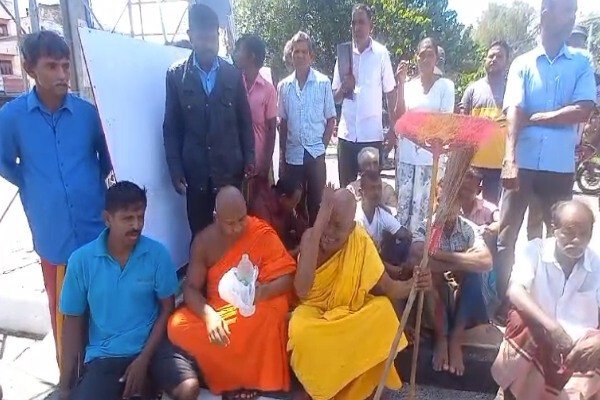
COLOMBO – More than a year after the mass protest movement known as the Aragalaya ousted Sri Lanka’s President Gotabaya Rajapaksa and his brother, Prime Minister Mahinda Rajapaksa, Sri Lankans have once again taken to the streets.

The impetus for the resurgence of public discontent is the recent bailout agreement between the International Monetary Fund and President Ranil Wickremesinghe’s government. The deal, which aims to address the country’s ongoing balance-of-payments crisis, offers Sri Lanka less than $3 billion over four years – a tiny fraction of what the country needs to meet its debt-servicing requirements and just one-sixth of its foreign-exchange earnings, which amounted to roughly $18 billion in 2022.

In exchange for this emergency loan, the IMF imposed a series of conditions that have significantly exacerbated Sri Lanka’s wage and cost-of-living crises. The mandated shift to market exchange rates, in particular, immediately led to a sharp currency devaluation, causing imported fuel and food prices to skyrocket and contributing to a 165% increase in electricity tariffs between June 2022 and February 2023.

As fiscal restraints were imposed, the economy continued to spiral down, with GDP shrinking by 7.8% in 2022 and 11.5% in the first quarter of 2023. This has had an adverse impact on employment, livelihoods, and the viability of small and medium-size enterprises. Consequently, real wages fell by 30-50% in 2022 and have remained stagnant.

Despite paying lip service to the importance of combating corruption and curbing illicit financial flows, the IMF plan falls short of tackling these issues effectively. Although it includes a modest increase in corporate income taxes, it neglects the possibility of imposing wealth taxes. Moreover, its focus on highly regressive measures, such as nearly doubling the value-added tax to 15%, means that the bulk of additional revenues will be generated through indirect taxes that disproportionately affect ordinary people.

The current wave of protests is partly a reaction to the government’s decision to comply with the IMF’s demand to restructure both external and domestic debt. Instead of focusing on lowering the external debt to a sustainable level, however, the agreement aims to bring down total debt, thereby reducing the haircut imposed on foreign creditors to just 30%.

This has exacerbated the crisis and is difficult to justify. In countries that do not issue global reserve currencies, there is a clear distinction between domestic and external debt. Governments can and do service domestic debt using their own currencies, the supply of which is controlled by their central banks. By contrast, foreign currency-denominated debt necessitates either foreign-exchange earnings or new borrowing.

Sri Lanka’s crisis is largely the result of the country’s inability to service its external debt due to insufficient foreign-currency reserves. Since 2016, the government has preferred to take on new international loans, primarily from private lenders, to repay its foreign creditors, including bilateral and multilateral lenders. In early 2022, the government chose to default on its foreign loans rather than explore alternative solutions.

But restructuring domestic debt in an economy already in decline is both painful and unnecessary. Sri Lanka’s domestic debt is held by various entities, including the central bank, commercial banks, and pension funds. Given that the country’s banking system is already severely weakened, pension funds will almost certainly bear the brunt of the expected adjustment.

This will have a significant impact on the retirement savings of workers who have already been hit by massive price increases. By reducing the interest rates on sovereign bonds held by Sri Lanka’s largest pension funds from more than 20% to 12%, and then to 9% from 2025 until maturity, the government aims to reduce its interest burden by 0.5 percentage points of GDP annually.

Recent estimates by Ahilan Kadirgamar suggest that this will result in a 30% decline in the value of retirement funds a decade from now. Moreover, these pension funds, often holding the only financial assets of working people, will be subject to a 30% tax on their returns – higher than the tax rate applied to many in the corporate sector.

Many workers whose life savings are invested in these retirement funds earn wage incomes well below the minimum taxable rate. This includes workers who face numerous intersecting deprivations stemming from gender and ethnic discrimination, such as women employed in the garment industry and tea-plantation workers, especially those from minority Tamil groups.

These groups have already experienced an alarming decline in living standards. Nearly 56% of Sri Lanka’s 22.2 million people are now grappling with multidimensional vulnerabilities, with women and girls being the hardest hit. Official estimates suggest that roughly 43% of children under the age of five suffer from malnutrition, as do a growing number of pregnant and lactating women.

By targeting the meager pension funds of Sri Lanka’s wage workers, the government’s domestic-debt restructuring plan is likely to exacerbate existing class, gender, and ethnic inequalities. With their hard-earned savings eroded, poverty-level workers will be pushed further into destitution.

Meanwhile, the adjustment process relies heavily on the unpaid labor of women who continue to provide care in the face of austerity and diminishing social services. The plight of working-class Sri Lankan women underscores the clearly gendered effects of the county’s debt crises and the government’s approach to tackling them.

A genuine resolution to Sri Lanka’s prolonged economic crisis would require a dramatic change in strategy. To bring about a robust economic recovery, the government and the IMF must focus on improving the lives of working people rather than imposing on them the burden of adjustment.

Source:project-syndicate.org

Posted in Uncategorized

Russia donates 352MT of sunflower oil consignment to Sri Lanka

The Russian Federation has handed over a consignment of sunflower oil to Sri Lanka, in an emergency operation to support those affected by the economic crisis in Sri Lanka, the Russian Embassy in Sri Lanka announced.

Accordingly, the cargo addressed to the people of Sri Lanka containing the consignment of 352 Metric Tonnes of sunflower oil fortified with vitamins A and D has been ceremoniously handed over to Sri Lanka, with the participation of the Russian Ambassador to Sri Lanka Levan S. Dzhagaryan.

The event reportedly took place at the Veyangoda Economic Center premises yesterday (Sep. 12).

The oil consignment which was delivered to Sri Lanka as a humanitarian aid and gift from the Russian people will contribute to the fight against hunger and obstacles of neocolonialism of the Western powers, the Russian Embassy in Sri Lanka said.

The donated consignment of sunflower oil will be distributed in Sri Lanka through the World Food Programme

GR to back new political party?

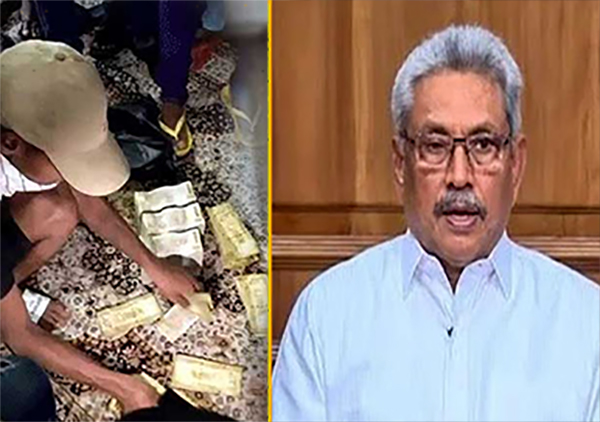
Former President Gotabaya Rajapaksa who has maintained a stark silence since his resignation in July last year is now eyeing to recapture and strengthen his failed image through a new political party which is now led by one of his close aide’s and media owner who declared his entry into politics yesterday.

The Daily Mirror learns that Gotabaya Rajapaksa who has been given all the privileges and facilities as a former President despite being forced out of office by the citizens, is reportedly backing the Mawbima Janatha Party which was recently purchased by his close aide Dilith Jayaweera.

According to sources in the Elections Commission, the Mawbima Janatha Party recently changed its constitution and elected new office bearers after Jayaweera took over the party.

The party is also now open to accepting new members and it is learnt that a hunt is on for educated individuals, an attempt similar to Rajapaksa’s Viyathmaga.

Gotabaya Rajapaksa’s latest attempt to clear up his image comes after the Daily Mirror had reported in Oct.2022, that a team put together by a media personality and business tycoon were visiting the villages which he had visited under the ‘Gama Samaga Pilisandara’ programme when he was President, and these members were speaking to the people to clear the former president’s image.

The residents of those villages were also being informed that Rajapaksa had been misled and those to blame were those close to him including his family members.

Opinion polls were also conducted in these villages to gather the people’s feedback on Gotabaya Rajapaksa, to test the waters if there is any public trust remaining for the former president.

Now in his latest attempt, it is learnt that Gotabaya Rajapaksa will give his blessings and back the Mawbima Janatha Party which is led by Jayaweera as the country gears up for the Presidential Election which will be held next year.

Senior leader of the Mawbima Janatha Party, Hemakumara Nanayakkara told the Daily Mirror that the Mawbima Janatha Party and the Aramuna organization of Dilith Jayaweera had joined hands to contest future elections as the Mawbima Janatha Party and said they were working together towards that end.

He also said they will contest the upcoming Presidential election as well.

Sri Lanka completed 19.4% of UNHRC commitments – Verite

Sri Lanka has completed 19.4% of the measures it committed to implement under the United Nations Human Rights Council (UNHRC) resolution 30/1 as of end-August 2023, according to the UNHRC Monitor published by Verité Research.

However, 61.1% of the commitments in the resolution – which was co-sponsored by Sri Lanka – have seen ‘poor’ or ‘no’ progress, eight years since it was adopted in October 2015.

The ‘UNHRC Monitor’ of Verité Research is the first and only monitor of its kind which objectively tracks the implementation of Resolution 30/1.

Resolution 30/1 contained 36 distinct actionable commitments. Of these commitments, 7 (19.4%) are classified in the UNHRC Monitor as ‘complete’, 7 as ‘partial progress’ (19.4%), 18 as ‘poor progress’ (50%), and 4 as ‘no progress’ (11.1%).

These commitments fall into five broad thematic categories: rights and rule of law (15 commitments), transitional justice and reconciliation (9), security and demilitarization (7), international engagement (3) and power sharing (2).

The seven completed commitments are: (1) engage in broad transitional justice processes; (2) establish the Office on Missing Persons; (3) establish the Office for Reparations; (4) sign and ratify the International Convention for the Protection of All Persons from Enforced Disappearances; (5) criminalise enforced disappearances; (6) continue engagement between the Government of Sri Lanka and the OHCHR; and (7) cooperate with special procedure mandate holders.

There are seven commitments that remain partially fulfilled, including: (1) publish previous presidential commission reports and (2) issue Certificates of Absence to families of missing persons.

Some of the key commitments which remain at ‘poor progress’ since 2015 are: (1) restore normality to civilian life; (2) investigate attacks on journalists, human rights defenders, religious minorities, and civil society; (3) hold perpetrators of these attacks to account; and (4) prevent such attacks in the future.

The commitments to set up a judicial mechanism with a special counsel and foreign participation, to investigate violation of human rights and international humanitarian law has remained at ‘no progress’ since February 2018. Since 2015, successive governments have also not made any progress on the commitment to review the Public Security Ordinance.

At the 34th UNHRC session held in March 2017, the Sri Lankan government co-sponsored resolution 34/1 – which reaffirmed the Resolution 30/1 commitments. At the 40th session in March 2019, the government co-sponsored Resolution 40/1, which also reaffirmed its commitments to reconciliation envisaged in Resolution 30/1.

However, in February 2020, the Sri Lankan government informed the Office of the High Commissioner for Human Rights (OHCHR) of its decision to withdraw from co-sponsorship of Resolution 40/1 of 2019, and its preceding resolutions 34/1 of March 2017, and 30/1 of October 2015.

Verité Research has released analyses of progress in fulfilling the commitments in Resolution 30/1 in June 2016, March 2017, February 2018, March 2019, February 2020, February 2021, March 2022, February 2023 and August 2023.

Source: Verite Research

Posted in Uncategorized

US calls for victim centered reconciliation initiatives in Sri Lanka

The United States has called for victim centered, inclusive, impartial, transparent, and independent reconciliation initiatives in Sri Lanka.

The US Ambassador to the UN in Geneva, Kelly Billingsley told the UN Human Rights Council at its 54th Session the US appreciates the HRC’s continued attention to Sri Lanka.

“As it navigates its economic recovery, we recognize Sri Lanka’s strengthened reforms, including anti-corruption legislation. We also welcome the government’s release on bail of over 100 individuals held without trial under the Prevention of Terrorism Act,” she said.

The US Ambassador also commended initial progress on land returns but noted concerns about other land grabs in the North and East.

“We remain concerned about tensions at religious sites in minority communities, government pressure on civil society, and the absence of local elections since 2018. We encourage meaningful consultations in finalizing the Anti-Terrorism Act and hope these discussions help bring the law into alignment with international best practices,” the Ambassador said.

Billingsley urged Sri Lanka to ensure transitional justice institutions operate credibly and effectively.

“Governments that ensure freedom of expression and peaceful protests enjoy greater peace and stability,” she added.

The Ambassador also asked how best the UN can support the Sri Lankan Government and people to develop a credible reconciliation process and pursue accountability.

Posted in Uncategorized

President Ranil discusses future political agenda with Basil Rajapaksa – sources

A meeting focusing on future political agendas is believed to have taken place between President Ranil Wickremesinghe and the National Organiser of the Sri Lanka Podujana Peramuna (SLPP) Basil Rakapaksa, as per political sources.

The duo are believed to have discussed several matters of concern, including the country’s political agenda for the future, the upcoming budget, and providing of relief, for nearly one hour, political sources claimed.

The two parties had not met since of late, after President Wickrmesinghe reportedly did not respond fairly to a request made, seeking ministerial portfolios for a group of SLPP MPs.

Gazette issued declaring railway services as essential service

An Extraordinary Gazette notification has been issued on the directive of President Ranil Wickremesinghe, declaring railway services as essential services.

Accordingly, the public transport services for passengers or goods and the provision and maintenance of facilities for transport services by railway lines have been declared as essential service with immediate effect under the Essential Public Service Act.

Earlier today, Minister of Transport Bandula Gunawardane said that he would request the President to declare the railway services as an essential service from midnight today (Sep. 12), and issue a Gazette notification accordingly, in order to safeguard the law and peace and the public security of the country.

However, Gunawardena mentioned that “a country that has fallen into trouble due to ‘trade union terrorism’, and is unable to recover, will not survive further if this situation continues”.

At least 20 scheduled train services were cancelled this morning due to the strike action launched by the Locomotive Operating Engineers’ Union since midnight yesterday (Sept. 11).

As a result of the trade union action, passengers were seen train surfing due to overcrowding, and many others were left stranded at railway stations, whereas a fatal incident of a 20-year-old falling off the train roof after knocking against the roof of the Horape railway station was also reported.

According to reports, the critically injured youth has died on the spot.

Posted in Uncategorized

UNHRC tells Sri Lanka to get its act together

Accountability is central to secure Sri Lanka’s present and future, said Nada Al-Nashif, the United Nations Deputy High Commissioner for Human Rights on Monday (11).

“While it remains the obligation of the Sri Lankan authorities to acknowledge past violations and undertake credible accountability measures, this Council and the Member States can play an important and complementary role in advancing accountability,” she said during the 54th session of UN Human Rights Council in Geneva.

She said that delays in holding local government elections and in reconstituting Provincial Councils under the 13th amendment have limited people’s right to political participation and the free expression of voters.

She said that the Government economic recovery policies should be guided by its obligations under the International Covenant on Economic, Social and Cultural Rights to protect the most vulnerable.

The international community, including international financial institutions, should keep supporting Sri Lanka in its recovery, in line with obligations around international cooperation and assistance, by providing the fiscal space needed while pressing for genuine progress in governance, transparency and accountability, she said.

She went on to note that the measures restricting the right to protest will only generate more tension in the country as they prevent people from expressing their grievances and engaging in critical debate.

Truth-seeking alone will not be sufficient and must be accompanied by a clear commitment to accountability, including through an independent ad hoc special court, she said.

She said that the High Commissioner has repeatedly recommended the Government of Sri Lanka to establish a follow-up, independent and transparent investigation into the Easter Sunday attacks with international assistance and the full participation of victims and their representatives.

“The report provides an analysis of concerns with some forthcoming legislation, in particular the proposed Anti-Terrorism Bill that will replace the Prevention of Terrorism Act (PTA) and the new law to regulate media broadcasting. It urges a moratorium on the use of the PTA in the meantime, and for the review of long-standing PTA cases to be expedited,” she added.

UN HRC54: UK Statement on Sri Lanka

Statement on report of OHCHR on promoting reconciliation, accountability & human rights in Sri Lanka. Delivered by UK Ambassador to the WTO & UN Simon Manley.

Thank you Madam Vice President,

Deputy-High Commissioner, let me thank you for your report and update.

The UK welcomes Sri Lanka’s initial commitments to implement devolution in line with the constitution, to address land issues, and to advance governance legislation. It is important that these commitments are matched by tangible progress on the ground.

We also note longstanding commitments to replace the Prevention of Terrorism Act, and urge the Government to ensure terrorism legislation is consistent with Sri Lanka’s international obligations. We encourage too the further release of long-term detainees.

We call on Sri Lanka to safeguard the rights to freedom of peaceful assembly and association, and to freedom of expression. The right to freedom of religion or belief must be respected, and communities must be allowed to remember their loved ones.

The discovery of another mass grave [in Mullaitivu] highlights the urgent need for an adequately resourced, independent, and transparent approach to dealing with the past.

Justice, accountability, and reconciliation are at the heart of our approach and we hope in Sri Lankans. We acknowledge commitments to make progress in transitional justice and urge Sri Lanka to ensure any process carries the support of victim communities, builds upon past recommendations, and meets international standards.

Thank you.

Published 11 September 2023

UN human rights office approached for information on 10 Sri Lankans

The UN human rights office has been approached by State authorities from various countries for information on 10 Sri Lankans accused of committing human rights abuses.

While noting the Government’s rejection of resolutions 46/1 and 51/1, United Nations Deputy High Commissioner for Human Rights Nada Al-Nashif noted that an accountability project was established by her Office to collect, consolidate, analyze, and preserve relevant information and evidence and provide support to relevant judicial and other proceedings, including those in Member States, with competent jurisdiction.

She told the UN Human Rights Council today that the project is receiving a steady increase in requests from competent State authorities, including in relation to 10 named individuals to date.

“The project has made significant progress in developing a repository of information and evidence and based on identified gaps and priorities for further investigations. It is also actively engaging with civil society, including victims’ representatives,” she told the Council as it commenced its 54th Session in Geneva today.

The Deputy High Commissioner said that accountability is central to secure Sri Lanka’s present and future.

“While it remains the obligation of the Sri Lankan authorities to acknowledge past violations and undertake credible accountability measures, this Council and Member States can play an important and complementary role in advancing accountability,” she added.

The Deputy High Commissioner said that her office remains committed to supporting the Government and people of Sri Lanka in advancing reconciliation, and accountability as well as the full enjoyment of human rights.

She also noted that the economic hardship, tensions around economic and structural reform policies and the delay of local elections continue to give rise to protests. Land acquisition in the north and east for expansion of military installations, Buddhist heritage conservation at Hindu or Muslim sites, and forestry protection has also escalated tensions.

“Our Office continues to receive cases of misuse of tear gas and water cannons during demonstrations, affecting protestors and media personnel. Initiatives by victims to memorialise their loved ones have also been obstructed,” she said.

The Deputy High Commissioner said that the measures restricting the right to protest will only generate more tension in the country as they prevent people from expressing their grievances and engaging in critical debate.