Sri Lanka says UN human rights report a ‘grave distortion and misinterpretation’ of reality

Responding to the oral report on Sri Lanka at the first meeting of the 54th Regular Session of the Human Rights Council in Geneva on Monday, Sri Lanka has rejected the report and its recommendations, claiming that is does not reflect the actual situation in Sri Lanka, and instead gravely distorted and misinterpreted the ground situation within the country.

Speaking further in this regard, the Permanent Representative of Sri Lanka to the United Nations in Geneva, Himalee Arunatilaka noted that it is “regrettable” that the Office of the Human Commissioner of Human Rights (OCHCR) has “chosen to ignore the democratic resilience of the country and its institutions demonstrated in the past year”.

She stated that Sri Lanka remains deeply concerned about the ever-increasing mandate of the OCHCR, in making sweeping and intrusive comments on all aspects of economic, financial, political, electoral, domestic, budgetary and development policies, adding that the nation strongly objects to “pronouncements on policy matters that are essentially domestic for any sovereign country and are outside the framework of this council”.

Albeit the UN report’s claims that Sri Lanka’s economic recovery is yet to materialize one year after the country’s turbulent anti-government protests and its most severe economic crisis, Arunatilaka highlighted that those who are mandated and possess the required expertise, both domestically and internationally, remain confident in Sri Lanka’s prospects.

Commenting on the report’s references to targeted sanctions, the diplomat stated that Sri Lanka rejects all such references, which are “based on incorrect and unsubstantiated sources, contravening the process of natural justice of universality, impartiality objectivity and non-selectivity”, emphasising Sri Lanka’s commitment towards pursuing tangible mechanisms on human rights through our domestic institutions, having made significant progress in this regard.

Speaking further on these said mechanisms, she pointed out that certain independent domestic mechanisms have made tangible progress, citing the Office on Missing Persons, Office for Repatriations and the Office for National Unity and Reconciliation as examples of this said progress.

Moreover, the Permanent Representative of Sri Lanka highlighted other such examples, including the Anti-Corruption Act which strengthened the financial and functional independence of the Commission to Investigate Allegations of Corruption or Bribery (CIABOC), and the ongoing deliberations pertaining to the Anti-Terrorism Bill with the aim of bringing it in line with international standards.

Thus, rejecting all recommendations and conclusions put forward by the UN report in concern, Sri Lanka urged that the written observations submitted countering the report also be given “equal visibility” as the OHCHR report.

Meanwhile, commenting on UN Resolutions 46/1 and 51/1, which have repeatedly been rejected by Sri Lanka, Arunatilaka asserted that the nation vehemently refuses to cooperate with the resolution in question, deeming them ‘intrusive and polarising’.

“We recall that the majority of member states either opposed or abstained from voting on these resolutions in fundamental disagreement with their unacceptable content, in particular the so-called evidence gathering mechanism, the establishment of which remains unprecedented”, the diplomat said in this regard.

Speaking further on Resolutions 46/1 and 51/1, Arunatilaka characterized them to be ‘intrusive and polarizing’, adding that they are upheld only by a handful of countries for reasons “unrelated to human rights and based on their vote-bank domestic politics”.

Highlighting that Sri Lanka has repeatedly pointed out that this is an “unproductive and unhelpful drain on the resources of the council and its member,” she stated that Sri Lanka will not cooperate with it.

Arunatilaka noted, however, that the nation will continue to engage constructively with other mechanisms of the council which have proved productive to the people of Sri Lanka, such as the Universal Periodic Review (UPR) process.

EU demands concrete actions from Sri Lanka

The European Union (EU) has called for concrete actions by Sri Lanka while taking note of plans for reconciliation mechanisms.

In a statement delivered at the 54th Session of the UN Human Rights Council, the EU reaffirmed its commitment to Human Rights, reconciliation and accountability in Sri Lanka.

“While the EU recognizes the challenges Sri Lanka has been facing due to the economic and financial crisis throughout last year, we underline the need for upholding all human rights, including the rights to freedom of opinion, expression and assembly, as well as the effective and equal fulfilment of economic, social and cultural rights of all persons in Sri Lanka, including persons in vulnerable and marginalized situations,” the EU said.

Recognizing the positive course of action over the past months, leading the country towards economic stabilisation, the EU continued its call for reconciliation, accountability and resolving the many cases of enforced disappearances.

“We take note of plans for reconciliation mechanisms, and the President’s dialogue with Tamil political parties as well the promise to stop land acquisitions for archaeological, forestry or security purposes. However, these still need to be turned into concrete actions,” the EU said.

The EU also called on Sri Lanka to enable the right of peaceful assembly and refrain from any use of force against peaceful demonstrators.

“We call upon Sri Lanka to suspend the Prevention of Terrorism Act until it is in full compliance with international human rights law and standards, and also call for accountability and immediate action to end impunity,” the EU said.

The EU encouraged the Government of Sri Lanka to remain engaged with the UN and international partners, and to fully cooperate with the High Commissioner.

The EU said it will continue to support Sri Lanka’s efforts towards a fully inclusive dialogue on governance, rule of law, democratic renewal, as well as human rights.

Posted in Uncategorized

Ransomware Attack Hits Sri Lankan Government Offices, Leading to Severe Data Loss

The Information and Communication Technology Agency of Sri Lanka (ICTA) has revealed that a ransomware attack between May 17 and August 26, 2023, has impacted several government offices falling under the purview of the President’s Office, Cabinet Office, Ministry of Education, and Ministry of Health.

Sampath de Silva, the Director of Strategic Communications at ICTA, confirmed the severity of the data loss incident, particularly affecting government entities using the “gov.lk” email domain. This breach has raised significant concerns regarding the security of crucial government information exchanged via the Lanka Government Network (LGN) and its “mail@gov.lk” email domain.

According to de Silva, approximately 5,000 email addresses may have been affected by the ransomware attack, highlighting the vulnerability of the government’s digital infrastructure. Shockingly, there was no offline backup for the critical two-and-a-half-month data period, exacerbating the damage caused by the cyberattack.

Even the online backup system was compromised, leading to the loss of vital emails and sensitive information during this extensive timeframe. The incident underscores the pressing need for enhanced cybersecurity measures within government agencies.

In response to this security breach, Sampath de Silva announced that two crucial measures are being urgently implemented to prevent future data loss. Firstly, daily offline backup processes are being initiated to ensure the preservation of essential data even in the face of cyber threats. Secondly, there are plans to upgrade the relevant applications to the latest versions equipped with enhanced defenses against virus attacks.

Perpetrators behind Easter Sunday attacks can be forgiven: Cardinal

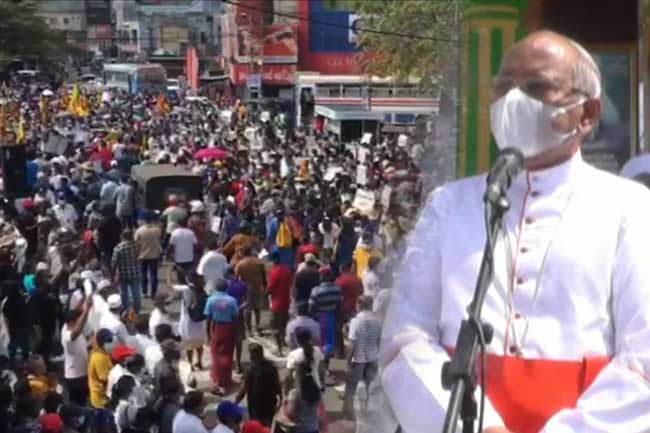
Archbishop of Colombo Cardinal Malcolm Ranjith over the weekend stressed that the perpetrators behind the Easter Sunday bomb attacks can be forgiven if they accept responsibility and repent.

“We are ready to forgive the perpetrators of the Easter Sunday attacks if they accept responsibility and repent. Following the Truth and Reconciliation Commission in South Africa, those who were involved in racial riots came and repented their wrong doings. The then President of South Africa Nelson Mandela forgave all wrong doers after they repented. We are also willing to forgive the perpetrators of the Easter Sunday attacks if they repent,” Cardinal Ranjith said during a church service.

“Those who have alledged to have engineered the Easter Sunday bomb attacks should display their honesty by resigning from the post they are holding. Honesty is not hiding behind politicians. One should not be afraid to embrace the truth,” he added.

He said the Church only wants to know the truth.

Posted in Uncategorized

Reports on Easter attack investigations to be submitted to Parliament – President

The reports pertaining to the two investigations into the Easter Sunday terror attacks in 2019 will be presented to the parliament before any final decisions are made, President Ranil Wickremesinghe said.

Accordingly, upon completion of the two investigations into the series of bombings, the reports from the Parliamentary Select Committee and the Presidential Commission of Inquiry will be presented to parliament before any final decisions are made, the President’s Media Division (PMD) reported.

Meanwhile, the Head of State has decided to appoint a committee chaired by a retired Supreme Court judge to inquire into the recent allegations made by UK’s Channel 4 in their recent exposé on the Easter Sunday bombings.

The PMD further noted that the government also intends to appoint a Parliamentary Select Committee to investigate the allegation levelled by a former Attorney General, claiming that there is a mastermind behind the attacks.

Posted in Uncategorized

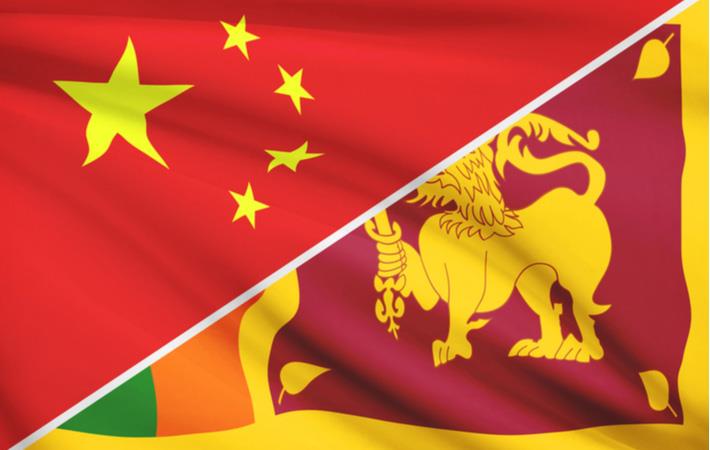
China’s BYD Auto to set up electric car facility here

BYD Auto, one of the largest manufacturer of electric cars in the world, and a subsidiary of Chinese conglomerate BYD Co. Ltd, is likely to set up an electric car manufacturing facility in the south of the country, according to a highly placed political source.

The publicly listed company is headquartered in Shenzhen, Guangdong, China. BYD Co. Ltd. will very likely finalise this deal when President Ranil Wickremesinghe visits China next month, the source told the Business Times on Thursday.

BYD Co. Ltd (Build Your Dreams) founded by Wang Chuanfu in February 1995 is the largest electric car manufacturing company in the world and the world’s second-biggest behind Tesla. BYD is the first automaker in the world to have full expertise and intellectual property in the three core technologies of electrical vehicles—batteries, electric motors and electronic controls.

The source also added that the plant will most possibly be set up in Hambantota as it will be easy for them to ship the cars out for export.

In the recent months many Indian and Chinese films are looking at Sri Lanka for potential investments, sources added.

Already India’s Reliance Industries is tying up with a biscuit manufacturer to export biscuits. Industry sources said that it will be contract manufacturing by the Sri Lankan biscuit manufacturing facility for India’s Reliance Industries.

Some Indian funds are also looking at renewable energy projects largetly in the solar energy sector. Renewable industry officials said that two teams from India are expected to arrive to discuss on this sector. Officials also said that the education sector is another interest area for both Indian and Chinese investors.

Posted in Uncategorized

Sri Lanka needs truth, but not (yet) a Truth Commission – Alan Keenan

Impunity has a long history in Sri Lanka. The country is haunted by the ghosts of injustices occurring in both the distant and recent past. Traumatic centuries of Western colonialism left a brutal legacy scarcely acknowledged by the states at fault. 2023 marked the 40th anniversary of Black July – the days of state-sanctioned mob violence that, in 1983, killed some 3,000 Tamils, forced hundreds of thousands into exile, destroyed considerable property and plunged the country into full-scale war. More recent still are the unanswered crimes of the bloody final months of the 26-year civil war that ended in 2009. As government forces cornered the Tamil Tigers in the island’s north, eventually defeating the rebels, they also killed tens of thousands of civilians. Mothers of the thousands of missing, many of whom surrendered to the army and were never seen again, have been protesting continuously for more than five years, demanding (but not receiving) information about the fate of their children. The war saw atrocities committed by armed groups claiming to be defending either Sinhalese, Tamils or Muslims. Mass graves – remnants of government campaigns against both Sinhalese and Tamil insurgencies – dot the island. They continue to be discovered.

As members of the UN Human Rights Council prepare to convene in Geneva starting on 11 September, the challenge of impunity in Sri Lanka will be on the agenda, with the UN High Commissioner for Human Rights due to report on the human rights situation in the country. For more than ten years, the Council has pushed Colombo to hold accountable perpetrators of atrocities during the civil war and in the years since, as well as to address the underlying governance problems that led to hostilities. It is the only international forum in which Sri Lankan leaders have been pressed to take the steps needed to move beyond the cycles of bloodshed that have bedevilled the country for too long. But this crucial venue could disappear in September 2024 unless a majority of members vote for a resolution that renews the basis for the Council’s regular engagement on these issues.

In present circumstances, a truth and reconciliation commission would have little to no chance of success.

Colombo is working to make sure this engagement lapses. Eager to move out of the international spotlight, the government has been taking steps that it hopes can forestall renewal, including by promising to set up an ostensible truth and reconciliation commission that, in present circumstances, would have little to no chance of success. The Council’s members should not allow themselves to be misled. Instead, they should use the year between the forthcoming Council session and the one in 2024 to urge Sri Lanka’s government to create the conditions needed for any such commission to do its job effectively – as well as to address the other concerns the Council has identified. Absent changes responsive to the Council’s requests, members should vote to continue its oversight.

A Struggle for Accountability

Since late 2022, Sri Lanka’s president and foreign minister have been saying they would form a “truth and reconciliation” commission of some kind to deal with the legacy of the civil war, which from 1983 to May 2009 (low-level clashes had begun earlier, in the late 1970s) pitted the Sri Lankan state against the Tamil Tigers. The supposedly reform-minded government led by President Maithripala Sirisena, in power from 2015 to the end of 2019, promised the Human Rights Council it would create a “truth-seeking mechanism” as one of four transitional justice processes. But it never made good on that pledge, or on many others, and the Council has kept up its pressure. Under a successor Council resolution, adopted in October 2022 and still in force, the government is asked to address a range of longstanding governance and human rights concerns, including by “ensuring investigations into, and accountability for, grave violations of human rights” and “promot[ing] healing and reconciliation”.

Against this backdrop, and in order to demonstrate its seriousness about dealing with the civil war’s litany of abuses, Sri Lanka’s current government, led by President Ranil Wickremesinghe, has returned to the unfinished business of a truth commission. In May, the cabinet approved a proposal to create a National Unity and Reconciliation Commission (NURC) – which officials also refer to as the Truth-Finding Mechanism – with the intent of presenting legislation formally setting up the body to parliament later in the year. The initiative, reportedly modelled in part on the South African Truth and Reconciliation Commission, comes on the heels of highly publicised study trips by Sri Lanka’s justice and foreign ministers to South Africa, which followed visits undertaken by senior officials from the three previous Sri Lankan administrations.

Yet it is not at all clear what all this activity will yield. The Sri Lankan state has struggled from its early years in the post-World War II period to acknowledge (much less atone for) repeated periods of state and state-sanctioned violence, beginning with the first anti-Tamil “riots” in 1958. When pressed, Colombo has relied on ad hoc commissions. While these bodies have sometimes gathered a considerable amount of factual information, they have rarely generated any recognition from the state of its responsibility. Nor have they made a dent in the systematic impunity with which the state commits its abuses.

Absent a major course correction by the state, there are strong reasons to doubt that anything would be different this time around.

Absent a major course correction by the state, there are strong reasons to doubt that anything would be different this time around. Rather than responding to the demands of victims, survivors and their families, or the larger community of human rights advocates, the NURC initiative is driven entirely by the government. The government has had only limited conversations with survivors, victims’ families or even the civil society elites with whom it normally makes more of a show of consulting on such issues. These meetings came only after it had announced the NURC’s design.

It is widely believed in Sri Lankan political circles that the government’s principal interest in such a commission is to influence opinion at the UN Human Rights Council. Since 2012, the Council has passed an unbroken series of resolutions calling for reconciliation, accountability and improved human rights protections in Sri Lanka. With the exception of Sri Lanka’s decision to co-sponsor Resolution 30/1 in 2015, governments in Colombo have chafed at Council oversight and resisted making the reforms it has called for. The government has made clear it is keen to see the current council resolution on Sri Lanka be the last. The president’s secretary told civil society organisations in July that “if this effort is successful, there will be no need for the country to go to the UN Human Rights Council in Geneva for another year”.

The effort could indeed be successful if the traction it is gaining with important outside actors is any indication. The Japanese government has endorsed Colombo’s plans and the South African government continues to advise its Sri Lankan counterpart on the matter. The desire of these and other governments to encourage Sri Lankan initiatives to address the civil war’s legacy and build trust among communities is welcome. Still, Sri Lankan activist and survivor organisations are correct to worry both that the proposed NURC is not right now positioned to succeed, and that Colombo’s campaign to promote it could well lead the Human Rights Council to stop applying pressure for much-needed reform.

A History of Disappointments

Scepticism about the NURC initiative runs deep in Sri Lankan civil society. Among other things, the doubts reflect a lack of confidence in President Wickremesinghe, who was prime minister when the government first promised the Council it would establish a truth commission in 2015, the first year of Sirisena’s presidency; that promise was never kept. Moreover, when invited in 2017 to receive the report of a national consultation on transitional justice that his own government had commissioned, Wickremesinghe declined. This same administration, jointly led by President Sirisena, also refused to establish the special war crimes court it had told the Council it would create. Despite initial hopes, the two transitional justice institutions that Colombo did set up in response to international pressure – the Office on Missing Persons (OMP) and the Office for Reparations – were left under-resourced and too politically weak to offer any meaningful truth, justice or reparations.

The failures of these transitional justice initiatives were just the latest in a long history of the Sri Lankan state making promises and establishing flawed domestic mechanisms to reduce international pressure for deeper reforms. For example, in 2008, international observers troubled by blatant conflicts of interest and a lethargic pace of work resigned from the Udalagama Commission, which President Mahinda Rajapaksa had appointed to investigate seventeen separate massacres and assassinations in the first years of his administration. Three years later, in 2011, the government appointed the Lessons Learnt and Reconciliation Commission (LLRC), which had a mandate to look into the events of the civil war’s final stages and propose ways to promote “national unity and reconciliation”. This latter commission was widely seen as an effort to buy time and avoid an international probe of war crimes. Although it generated surprisingly robust recommendations – including calls to investigate government links to enforced disappearances – it downplayed military responsibility for civilian deaths, and none of its key recommendations were adopted. The follow-up inquiries it spawned led nowhere.

To date, there is no sign the government intends to discard practices that have preserved impunity and protected state power in Sri Lanka for decades. Instead, the evidence points to continued repression without accountability. Political activists across the island continue to be arrested and detained under the Prevention of Terrorism Act (PTA), which the government has proposed replacing with an even more draconian law. Police and army surveillance of Tamil civil society and families of those disappeared in the north and east during the civil war remains intense. The president and senior ministers regularly promote a distorted, politicised narrative that presents 2022’s historic protest movement – which led President Gotabaya Rajapaksa to resign – as a threat to democracy.

More than four years on, there has been no credible or independent probe of the 2019 Easter Sunday suicide bombings that killed 270 people, including 45 foreigners.
Meanwhile, the police and military continue to obstruct investigations into enforced disappearances – including by crippling the OMP – and a series of high-profile political murders and massacres cited in multiple Human Rights Council resolutions. More than four years on, there has been no credible or independent probe of the 2019 Easter Sunday suicide bombings that killed 270 people, including 45 foreigners. Instead, the lead police investigators were fired, arrested or forced into exile. Recent televised allegations from at least two insiders that military intelligence officials loyal to the Rajapaksas were complicit in the bombings have sent shock waves through the political establishment and strengthened the case for a transparent, independent inquiry with international involvement. (The main alleged culprit, who is now head of the State Intelligence Services, has denied the accusations, as has Gotabaya Rajapaksa, the ex-president.)

In such circumstances, there is little chance that the proposed truth and reconciliation commission will be able to engage in the free and open discussion of injustice and abuse of power that would be required in order for it to do its job. Recent government promises to stand up an “internationally recognised accountability process” are by themselves not credible absent major steps to enable it to work, as discussed below. Nor will it help to include international observers in the commission’s work – an idea the government has floated to build confidence in the body’s integrity – if the state remains as determined to maintain impunity as it has been in the past.

Against this backdrop, many fear the NURC will also come at a cost to the victims it is ostensibly meant to assist. The government has over and over again encouraged victims to tell their stories of pain and loss to the succession of insincere or disempowered commissions and other mechanisms it has set up, exploiting their hope that some trace of their missing loved ones might emerge. A member of the 2016 consultation process explained that a common sentiment expressed by those attending the public meetings was “overall exhaustion” from dealing with so many arms of the state supposedly serving the interests of justice – from permanent investigating bodies, such as the police, to ad hoc commissions. This person noted that it was “impossible not to be moved by the palpable grief, desperation and pain of countless family members who spoke of their loss and efforts to find answers, justice and other forms of redress”. Yet those commodities remained in short supply.

A Better Way

While it may be too late to block or insist on a fundamental reset of the NURC initiative, the Wickremesinghe administration’s desire for international approval gives influential governments – including those that have indicated various degrees of support for the proposed commission – considerable leverage. These states should make clear that their public endorsement of the NURC will depend on the government heeding the requests of victims, survivors and their advocates that key confidence-building measures be made prior to its launch. Among the actions the government should take to create the conditions for truth-telling and justice are:

implementing key recommendations of past commissions of inquiry – especially the LLRC and various disappearances commissions – aimed at challenging the culture of impunity. These recommendations include conducting credible investigations into the fate of the hundreds who remain missing after surrendering to the army in May 2009; creating more effective safeguards against arbitrary arrest leading to disappearance; and establishing an independent public prosecutor separate from the Attorney General’s Department;

releasing to victims’ families and their advocates – with due protection for the confidentiality of personal information – all relevant government documentation about the status of OMP, police and military investigations into disappearances and key human rights cases;

developing a plan for reviewing and categorising records from past commissions to ensure that the large volume of information already gathered from victims and other witnesses can be made accessible to and used by a new truth commission, should it be established;

in the service of creating conditions in which all Sri Lankans can engage safely in political speech, ending the use of the PTA and other laws to silence dissenters, and halting surveillance of civil society – especially victims’ groups in the north and east;

reactivating police and court actions on high-profile abductions and political killings and removing from office those senior police and military officials who are credibly alleged to have blocked investigations;

agreeing to international assistance in key investigations, including the exhumation of mass graves;

and, lastly, launching a public campaign explaining to both Sinhala and Tamil-speaking citizens why the country needs a genuine truth-telling process and what is being done to create the conditions for its success.

In the absence of meaningful progress toward these goals, outside actors that have engaged with Colombo on the NURC’s establishment, as well as other member states, should make clear that conditions for its success are not yet in place. Until they are, and until the full suite of key concerns identified in Geneva have been addressed, continued oversight by the Human Rights Council will be warranted. In the absence of such conditions, any ostensible truth and reconciliation commission will almost surely fail to deliver truth or reconciliation – and could even make them harder to achieve.

Posted in Uncategorized

Pakistan says relationship with Sri Lanka growing stronger

Pakistan says its relationship with Sri Lanka is getting stronger by each passing day.

The High Commission of Pakistan, Colombo (Sri Lanka) organized a reception to celebrate 58th Defence Day of Pakistan at a hotel in Colombo.

Sri Lanka’s Secretary of Defence, General (Retd) GDH Kamal Gunaratne WWV RWP RSP USP ndc psc, graced the occasion as the Chief Guest.

Defence Advisor of Pakistan, Colonel Muhammad Farooq Bugti, while welcoming the guests, highlighted the indomitable spirit and sacrifices of the armed forces in defending the country against a three times large adversary in 1965.

He also underscored the role of the armed forces in eliminating the scourge of extremism and terrorism from Pakistan and bringing peace and stability in the country.

The Defence Advisor reiterated that Pakistan armed forces are fully prepared to thwart any aggressive design against Pakistan while upholding principles of peace and diplomacy.

The High Commissioner of Pakistan Major General (Retd) Umar Farooq Burki, HI (M) thanked the respected guests for attending the reception.

In his remarks the High Commissioner said that the Defence Day of Pakistan holds a significant place in the history of Pakistan, for it was on this day in 1965, when valiant Armed Forces and the entire nation stood united to thwart the nefarious design of their adversary.

It also reminds the supreme sacrifices made by the armed forces and the people of Pakistan in defeating an adversary who enjoyed overwhelming numerical and technological advantage.

He also paid homage and tribute to Martyrs (Shuhada) and Ghazis, brave men and women of our Armed Forces of Pakistan. He emphasized that the world has also witnessed the resolve of Armed Forces of Pakistan in a protracted fight against terrorism and bringing peace and stability in the country. He underscored that the Armed forces of Pakistan and the nation renew its pledge and commitment to defend every inch of the motherland.

On Pakistan-Sri Lanka friendship, the High Commissioner highlighted that the relationship between the two countries are time tested and gained strength in all spheres and domains over the years.

He highlighted that more than 7000 officers and soldiers from Sri Lankan Armed Forces have been imparted training by Pakistan Armed Forces besides provision of military hardware and equipment to Sri Lankan Armed Forces at the time of need. He added that the relationship between the countries are getting stronger by each passing day.

General (Retd) GDH Kamal Gunaratne Secy Defence said that Pakistan has been a true friend of Sri Lanka.

He recalled that Pakistan has rendered unconditional support to Sri Lanka for the elimination of the most ruthless terrorist outfit in the world. While underscoring strong relations between the two countries, he said that a friend in need is a friend indeed. The Government and people of Sri Lanka will never forget the morale and material support provided by Pakistan without any strings/ conditions attached with it.

He added that Pakistan and Sri Lankan Armed Forces have maintained close cooperation, especially in domain of military training and hardware at the time of need. He wished a sustainable peace and economic prosperity to people of Islamic Republic of Pakistan who have rendered countless sacrifices in last twenty years against terrorism.

A short documentary highlighting the professionalism and sacrifices of Pakistan Armed Forces to defend the motherland was also displayed for the audience. Later on, a cake commemorating the Pakistan Defence Day was jointly cut by Chief Guest, the Secretary Defense, Chief of Defense Staff, Commanders of Tri-Services, High, DG SIS, Commissioner of Pakistan and Pakistan Defense Advisor.

The reception was attended by General Shavindra Silva, Chief of Defense Staff, Lieutenant General Vikum Liyanage, Commander of Sri Lanka Army, Vice Admiral Piryantha Perera, Commander of Sri Lanka Navy, Air Marshal R A U P Rajapaksa, Commander of Sri Lanka Air Force, DG SIS, Ambassadors/ High Commissioners from friendly nations, Senior Serving and Retired Officers of Sri Lankan Armed Forces, Defense Advisors/ Attachés, Officers of Pakistan High Commission, a large number of guests from different spheres of life and representatives of media.

Parliamentary debate on Easter attacks and National Security scheduled for next week

The Adjournment Debate on the Easter Sunday attack and National Security at Present has been scheduled to be taken up on September 21 and 22.

Accordingly, the parliament will convene from September 19 to 22 and time from 9.30 a.m. to 10.30 a.m. has been allotted for Questions for Oral Answers.

On Tuesday (Sept. 19), Regulations under the Registration of Persons Act and Regulations under the Colombo Port City Economic Commission Act published under Gazette Extraordinary No. 2334/47 have been scheduled to be taken up for debate from 10.30 a.m. – 5.00 p.m. Thereafter, time has been allotted from 5.00 p.m. to 5.30 p.m. for Questions at the Adjournment Time.

On Wednesday (Sept. 20), Regulations under the Forest Conservation Ordinance (Chapter 451) published under the Gazette Extraordinary No. 2346/02 will be taken up for debate from 10.30 a.m. to 5.00 p.m.

On Thursday (Sept. 21) and Friday (Sept. 22), the Adjournment Debate on Easter Sunday Attack and National Security at Present by the Opposition will be taken up for debate from 9.30 a.m. to 5.30 p.m. In addition, the Resolution under the Essential Public Services Act is also scheduled to be passed without debate.

Sri Lanka’s Defence Ministry rejects allegations on Easter attacks

Sri Lanka’s Ministry of Defence has rejected the allegations raised over the Easter Sunday attacks in a documentary published by Cahnnel 4.

The Defence Ministry reiterated that no terrorists involved in the Easter Sunday attacks have ever been on the Government payroll.

“In the wake of this catastrophe, the Sri Lankan Government, its Law Enforcement Agencies, Security Forces and international investigation agencies launched exhaustive investigations. Over the years, these investigations, both local and international, have consistently pointed to ISIS-affiliated group members led by Zahran Hashim as the architects of this horrifying tragedy,” the Defence Ministry said in a statement.

The Defence Ministry noted that the Channel 4 documentary audaciously shifts the blame on the Easter Sunday Attack onto Major General Suresh Sallay, the present Director General of the State Intelligence Service of Sri Lanka.

“Major General Suresh Sallay served at the Sri Lanka High Commission in Malaysia as Minister-Counsellor from December 2016 until December 2018. He left for India on 3rd January 2019 and returned to Sri Lanka on 30th November 2019 after completing the National Defence College Course in Delhi. This officer was never in Sri Lanka during the period mentioned in the Channel 4 video documentary. Furthermore, during the said period (December 2016 to November 2019), this officer was not employed in the Intelligence and Security Apparatus of the country, nor did he hold any official responsibilities in those fields,” the Ministry of Defence said.

The Ministry of Defence also reiterated that no terrorists involved in the Easter Sunday attack have ever been on the government payroll.

Sri Lanka also noted that a comprehensive investigation conducted by the Australian Federal Police (AFP) and by the Federal Bureau of Investigation (FBI) in the United States, along with the subsequent verdict rendered by the US Department of Justice, have reaffirmed the findings of local investigations.

The Ministry of Defence said that Channel 4 will be held unequivocally accountable for any unforeseen actions or repercussions stemming from their “unfounded, malevolent, and poorly substantiated claims” made in the video documentary.

Posted in Uncategorized