Iran, Sri Lanka stress enhancing banking, trade ties

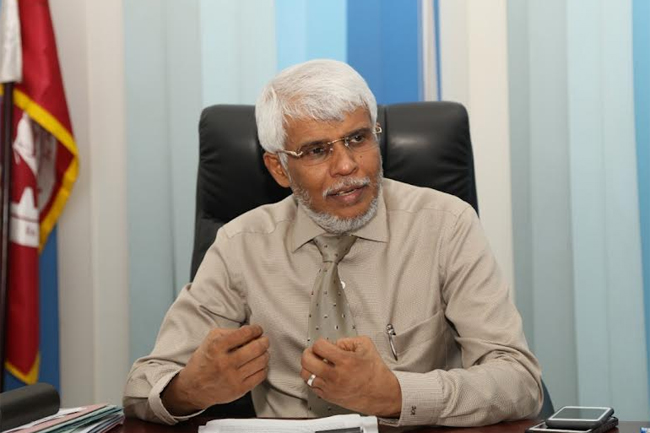
In a meeting between Governor of the Central Bank of Iran (CBI) Mohammad-Reza Farzin and Minister of Foreign Affairs of Sri Lanka Ali Sabry in Tehran, the two sides stressed the need for the development of monetary and banking relations between the two countries as a prerequisite for the expansion of bilateral economic ties.

In the meeting on Sunday, Farzin referred to the important role of the Asian Clearing Union (ACU) in the development of trade relations between the two countries, saying: “The ACU is a very suitable platform for the development of trade and monetary relations between the two countries and this platform can also be used to settle payments.”

The CBI governor proposed the formation of a specialized banking and monetary working group between the central banks of the two countries, noting that, “The formation of this working group can play an important role in speeding up and facilitating banking cooperation. Meanwhile, it can also be used to develop monetary and banking relations as well as cooperation and economic exchanges.”

Farzin announced CBI’s approval of the agreements made between Sri Lanka and other economic institutions in Iran, adding that the central banks of the two countries should guide monetary platforms and exchange processes in order to develop economic relations.

He pointed out that Iran has been able to establish stable trade relations with its business partners despite the U.S. sanctions without causing any problems for the other parties.

“Iran is now fully prepared to cooperate with Sri Lanka in order to expand monetary and trade relations within the ACU framework,” the official asserted.

Sabry, for his part, pointed to the long-standing and continuous relations between the two countries and announced his country’s readiness to increase the level of trade with Iran.

“The establishment of a bilateral banking committee between Iran and Sri Lanka to follow up on relevant issues and facilitate commercial affairs will definitely lead to the development of bilateral cooperation,” he said.

The Sri Lankan official went on to say that the Central Bank of Sri Lanka is following up on the measures within the ACU framework.

He also appreciated Iran’s support to Sri Lanka in the International Monetary Fund (IMF).

The ACU was established in 1974 as a payment arrangement through which participants settle payments for intra-regional transactions among the participating central banks on a net multilateral basis, according to ACU’s official website.

ACU currently has nine members including India, Iran, and Pakistan.

Source: Tehran Times

Posted in Uncategorized

Trincomalee is the gateway to the future development of Asia’ – Prime Minister

The Prime Minister Dinesh Gunawardena mentioned that the right to land should be allowed in spite of its ownership while indicating Trincomalee as the gateway to the future development of Asia.

Addressing the Trincomalee district program of ‘New Village – New Country’ National Integration Participatory Development Program held at Trincomalee district Secretariat on Saturday (05), the Premier said Trincomalee is the closest place to look at the countries beyond the Bay of Bengal.

He said it is very important to prepare a district development plan involving all the divisional secretaries to convert the future industries that can be created by utilizing the port into the development of the people of the area.

Speaking on the occasion the Prime Minister said:

Now the new harvest is coming to the market. Suggestions were put forward to make it more efficient for our institutes to enter into competition and purchase by declaring a better price. It is certain that the issues of obtaining the necessary financial provisions can be resolved by the President. A number of issues related to farmers were eased in order to allow them to produce food ten months ago.

The international community is ready to support us while we are in a position to rise again through this challenge. The President was able to remove the withhold of many projects. It is informed to restart those projects. A prearrangement is required from GA to divisional secretaries in order to support it. These projects are related to food security projects.

Loans as well as seeds are given to farmers with the objective of increasing harvest. The Government make arrangements to buy the harvest. But all the records show that 38% of the harvest is wasted. After investments, hard work, and borrowings the harvest is wasted without being able to bring it to the city or the market. That is another serious problem in our country. It should be rectified gradually and expeditiously. This supply chain and network should be interconnected and move properly. Then the farmer as well as the consumer can be assured of food safety. Divisional Secretaries should pay special attention to this matter.

The President took a decision to temporarily cultivate unused lands. We are the owners of a land that bears fruits sixty to ninety days. If the crops get water on time whatever you plant will bear fruit. That is why we are repeatedly advising the government mechanism to support the interest in cultivating different crops.

Regardless of land rights, the government’s decision to allow the rural farmers who are interested in cultivation of land should be successfully implemented.

In 1957 when my father, Mr. Philip Gunawardena was the Minister of Agriculture, he started the Kantale Sugar Factory with the help of Czechoslovakia. We must go back to the heart of the national economy.

Trincomalee is the gateway through which Sri Lanka can bequeath the future development of Asia.

Trincomalee is the closest place to look at the countries beyond the Bay of Bengal. Accordingly, you should be determined to take part in preparing the development plan. It is very important to prepare a district development plan involving all the divisional secretaries to convert the future industries that can be created by utilizing the port into the development of the people of the area.

It’s ready to set up a program to develop special industries, agriculture and fishing industries in the Eastern coast and projects for export.”

The Premier also engaged in a friendly conversation with farmers in Kawantissagama in Trincomalee during his visit to Eastern Province to attend ‘Aluth Ratak – Aluth Gamak’ District Development Programme during the weekend.

Eastern Province Governor Senthil Thondaman, State Ministers Ashoka Priyantha, Janaka Wakkumbura, Members of Parliament Kapila Athukorala, A.L.M. Ataullah, M.S. Taufik, Yadamini Gunawardena, Adviser of the President Dr. Suren Batagoda, Secretary to the Ministry of Administration Ranjith Ashoka, District Secretary of Trincomalee and other government officials and organization representatives participated.

Sri Lanka in talks with Singapore company to transform Colombo

Sri Lanka is in talks with a Singapore based company to transform Colombo and give it a new look.

President Ranil Wickremesinghe said that the vision to transform Colombo into a beautiful city is already in motion, with plans provided by Surbana Jurong.

Surbana Jurong Group is a global urban, infrastructure and managed services consulting firm, with over 70 years of track record in successful project delivery. Headquartered in Singapore, the group has a global talent pool of 16,000 across Surbana Jurong and its member companies AETOS, Atelier Ten, B+H, KTP, Prostruct, RBG, SAA, Sino-Sun and SMEC, based in more than 120 offices in over 40 countries. They include architects, designers, planners, engineers and other specialists driven by progressive thinking and creative ideas to help shape a better future.

President Wickremesinghe said that apart from Colombo, Surbana Jurong is also actively involved in creating a tourist zone from Verugal Aru to Batticaloa and Arugam Bay areas, contributing to the growth of the tourism industry.

President Ranil Wickremesinghe made these remarks at an international conference on Architecture, which was organized by the Royal Institute of British Architects (RIBA) Chapter in Sri Lanka, in collaboration with the American Institute of Architects (AIA) and the Italian Embassy of Sri Lanka, on the theme: “Architecture: A Lasting Impact,” held at Cinnamon Grand, Colombo.

The President said that the focus on expanding the tourist industry is expected to create opportunities for non-government universities in Sri Lanka. The recent enactment of the new act, allowing provincial councils to establish universities, marks the beginning of this endeavour. There is a growing need for skilled professionals, including engineers, architects, IT specialists, and others, with the demand estimated to be at least 10,000 engineers alone.

To address these requirements, discussions are underway with Japan, which has shown a willingness to assist in the past. Despite some challenges posed by the recent crisis, the commitment to progressing these plans remains strong, with the hope of securing the necessary support to meet the country’s developmental needs.

“Envisioning the future, the potential for architects to participate in the development of the Port City holds significant promise. A notable portion of the Port City land is under Government ownership and is slated for diverse utilization. The involvement of the private sector in this initiative offers an added avenue to harness architectural expertise. This exploration requires collaborative dialogues involving relevant chambers and stakeholders,” the President said.

He said that these emerging opportunities symbolize valuable prospects for Sri Lanka adding that seizing these chances has the potential to establish a notable standing for the nation.

“It’s imperative to acknowledge that as India’s progress persists, architectural possibilities might also arise there. Those with established recognition could potentially tap into this market, mirroring the engagement of architects in Africa for house design,” the President added.

The President acknowledged that his expertise lies primarily in the field of the economy and not architecture. As the discussion revolves around architecture and the lasting impression it creates, the President opted not to delve into the topic extensively. It was emphasized that ancient architects achieved the task of leaving a lasting impression through their work.

The President said that the Government is looking to involve private companies in building homes and structures.

“The Government land that’s worth more than the buildings can be used for this purpose and to relocate people from there and give the land to private companies to build affordable homes and apartments. This will also free up space in Colombo for other developments. It’s like a cycle – more buildings, more possibilities. Imagine what could happen if they repurpose places like Welikada Prison or even the railway area. Some buildings on Mount Mary can be kept, but the rest can be used for new projects. Many areas could benefit from this. And the cost of land today makes it feasible. The Treasury is working on the details, so starting maybe next year or the year after, as the economy gets stronger, this could become a reality,” he added.

The President said that the Government is actively engaged in the promotion of tourism, with a target of increasing the number of tourists from 2.5 million to 5 million, and potentially up to 7.5 million.

The restoration of historical structures to create smaller boutique hotels and the revitalization of larger hotels in various regions across the country represents a significant focus area. This ambitious goal involves doubling the existing capacity. It’s important to note that the majority of this expansion will be realized through the construction of new buildings or the renovation of existing ones, thereby offering yet another avenue for the involvement of architects.

The re-planning of Kandy Town to potentially extend its boundaries up to Teldeniya, along with considerations for incorporating Peradeniya and potentially Talatu Oya, are subjects currently under committee deliberation. Similarly, Galle is engaged in evaluating the enhancement of its urban landscape, particularly the sea frontage.

Additionally, the President said that it is likely that other regions, such as Nuwara Eliya town, will also require reimagining and redesigning in new locations.

Iran says ready to share scientific, technological knowledge with Sri Lanka

Iran has voiced readiness to share its scientific and technological knowledge and expertise with “friendly” countries, including the South Asian island nation of Sri Lanka.

Iranian President Ebrahim Raisi made these remarks on Sunday in a meeting with Sri Lanka’s Foreign Minister Ali Sabry in Tehran.

According to a communique issued by his office, Iran’s president emphasized the need to activate the joint commission for economic cooperation between the two countries.

He said the island nation in the Indian Ocean has huge potential for progress and prosperity while cautioning it against “colonial and self-serving foreign interventions.”

The Sri Lankan foreign minister, for his part, expressed his country’s interest in expanding cooperation with Iran in various fields, according to the statement.

On Saturday, Sabry held talks with his Iranian counterpart Hossein Amir-Abdollahian on bilateral, regional and international developments, the Iranian Foreign Ministry said.

Amir-Abdollahian expressed Tehran’s interest in holding the meeting of the Iran-Sri Lanka joint economic commission and joint consular and tourism commissions while calling for closer cooperation between the two sides in cultural tourism, scientific and academic fields.

Sabry, for his part, described his country as the gateway to East Asia, while inviting Iranian companies to invest in Sri Lanka and stressing that “two-thirds of growth in the future will happen in Asia.”

Meanwhile, the two countries also emphasized the need for expanding trade and developing banking cooperation during a meeting between Sabry and Iran’s top banker on Sunday.

Mohammad Reza Farzin, the governor of the Central Bank of Iran (CBI) in his meeting with the Sri Lankan foreign minister emphasized that the development of banking ties is key to the development of economic ties between the two countries.

Relations between Iran and Sri Lanka have been stable since the 1979 revolution, although officials of the two countries have often spoken about the untapped potential of bilateral cooperation.

Source:www.aa.com.tr

Posted in Uncategorized

LNG project: China-Pakistan company out, India in

The Government has decided to cancel a tender awarded to a China-Pakistan consortium to supply Liquefied Natural Gas (LNG) and lay a pipeline network after being selected through an international open competitive bidding process and instead consider an offer by an Indian company.
The China-Pakistan Engro Consortium was selected last year as part of a step towards reducing the cost of power production.

However, last Monday, Power and Energy Minister Kanchana Wijesekera submitted a Cabinet paper titled “Revisiting the National Energy Policy Related to the Development of Natural Gas Infrastructure in the Country,” to suspend the ongoing LNG procurement process.

Accordingly, the suspension covers the Development of a Floating Storage and Re-gasification Unit (FSRU) off Kerawalapitiya on a Build, Own, and Operate basis and a compatible mooring system on Build, Own, Operate and Transfer basis. It also covers the associated projects – the development of Offshore and Onshore Re-gasification Liquefied Natural Gas (RLNG) Transmission Pipeline Network with an Onshore Receiving Facility (ORF) and an associated System from the Floating Storage and Re-gasification Unit (FSRU) to existing and future Kerawalapitiya and Kelanitissa Power Plants on Build, Own, Operate and Transfer (BOOT) basis.

After following the proper tender process, the Cabinet-Appointed Negotiating Committee (CANC) in August last year granted approval to award the tender to the Engro Consortium.

Accordingly, although the Power and Energy Ministry had to submit a cabinet paper to enable the tender to be awarded thus, the ministry delayed the process, Ministry sources said.

The Sunday Times learns that the process had been delayed as the Indian government strongly objected to awarding this tender to the China-Pakistani company.

However, finally, the subject minister had requested cabinet approval to suspend this officially permitted tender, under these circumstances.

The Ministry had instead attempted to award this tender to Petronet LNG Ltd. of India, as an unsolicited procurement, but since the company did not have any experience regarding FSRU, the ministry had rejected the request and said if the Indian government supported the company, they would be able to supply LNG in containers.

“This will badly hamper the investor confidence and no genuine investor will come forward in future to this country,” the official said.

A Ceylon Electricity Board (CEB) top official said, “It will be a costly solution as there would be no competition, with prices being determined by the Indian company”. He said it could have an impact on the electricity tariff which would be increased and all costs would be passed on to the consumers.

The CEB’s Least Cost Long Term Generation and Expansion Plan (LCLTGEP) (2018-2037), which was approved by the Public Utilities Commission of Sri Lanka (PUCSL) in 2018, identifies the need for converting furnace oil and diesel power plants to LNG power plants to reduce power generation costs.

Accordingly, the CEB called for international competitive open tenders from February 18, 2021 to June 25, 2021, and two bidders came forward.

At that point, the US-based New Fortress Energy Company which gave rise to much controversy in 2021, had, without submitting an open bid for this tender, presented an unsolicited proposal to the government. The then Gotabhaya Rajapaksa government which supported this unsolicited proposal had even signed an agreement to sell 40% of the shares of the 300 MW Treasury-owned Kerawalapitiya Yugadhanavi Diesel Power Plant to the New Fortress Energy.

However, due to strong objections to the deal, the agreement had not been implemented up to now.

Against this backdrop, the CANC granted approval on August 4 last year to award the tender to the China-Pakistan Consortium, one of the two companies which had submitted proper bids for the tender.

Posted in Uncategorized

Not holding LG polls a serious issue for democracy – Mahinda Deshapriya

The Chairman of the Delimitation Commission of Sri Lanka, Mahinda Deshapriya states that not holding the Local Government election is a serious issue for the democracy of a country.

He points out that the authorities will take measures to hold at least one election out of the provincial council and local government polls this year, adding that he hopes that at least one of the two currently postponed elections will be held before World Democracy Day falls on September 15.

While speaking to the media following an event held in Polonnaruwa, the former Election Commission chairman further claimed that the Supreme Court has declared that the ruling of the country, which is carried out by governors, secretaries and commissioners without the mandate of the people and their representatives, is unlawful.

Meanwhile, the People’s Action for Free and Fair Elections (PAFFREL) expresses that all the political parties that have ruled the country so far, are responsible for the current economic collapse.

Executive Director of the PAFFREL Rohana Hettiarachchi mentioned that the people should rally in order to create a proper political system in the country.

However, the General Secretary of the United National Party (UNP) Palitha Range Bandara has stated that there is no need to hold an election at this moment.

15 MW of wind power added to national grid in Mannar

Minister of Power and Energy Kanchana Wijesekera stated that 15 Mega Watts of wind power was added to the national grid this morning (Aug 06) in Mannar.

In a tweet announcing this, Wijesekera mentioned that the wind power plant by WindForce and Hiruras Power with 06 wind turbines was constructed with local engineers and commissioned before the scheduled completion date.

Situated in the wind rich Mannar wind belt, this unique project marks a significant milestone in Sri Lanka’s renewable energy journey, WindForce PLC said.

With WindForce holding a 100% stake and a combined capacity of 15MW, this initiative further cements WindForce’s position as a leading player in the renewable energy sector, increasing their total installed capacity to an impressive 245.1 MW, the company said in a statement.

The Hiruras Wind Power Project reportedly consists of two phases: 10MW and 5 MW. The first phase of 10MW, was successfully commissioned on June 12, 2023, followed by the second phase of 5MW, which was commissioned on July 21, 2023, according to WindForce.

The completion of the Hiruras Power (Pvt) Ltd Wind Power Project in Mannar, Sri Lanka, stands as a remarkable achievement and a testament to the potential of renewable energy in the region, it said.

“As the world looks to transition from fossil fuels to cleaner sources of energy, the successful completion of projects like Hiruras underscores the crucial role that innovation, determination, and dedication play in realizing a sustainable and environmentally responsible future”, it added.

Posted in Uncategorized

Sri Lanka inches closer to unlocking $ 1.5 b yuan swap

Sri Lanka is likely to soon have access to the contentious CNY 10 billion (equivalent to $ 1.5 billion) currency swap with the People’s Bank of China (PBC), as the country is on the verge of being in compliance with the three-month import cover required under the terms of the currency swap agreement.

Speaking to The Sunday Morning Business, a high-ranking source at the Central Bank of Sri Lanka (CBSL) pointed out that although the official reserves of the country stood at over $ 3.7 billion as of end-June, this figure included the CNY 10 billion currency swap.

The source revealed that in order to comply with the three-month import cover required under the terms of the currency swap agreement, the official reserves must be calculated without considering the CNY 10 billion.

Accordingly, while conceding that Sri Lanka was yet to be in compliance with the three-month import cover requirement, the source revealed that Sri Lanka was close to meeting it.

This represents a very positive development in this saga, with the currency swap remaining unusable for over 28 months.

The source further said: “Firstly, we have to meet the conditions. We intend to use the funds once we meet the conditions.”

In June 2022, President Ranil Wickremesinghe revealed in Parliament that the CNY 10 billion currency swap with the PBC required a three-month import cover to draw on the swap and that the CBSL would seek to negotiate the condition with the PBC.

Similar assertions were subsequently made by CBSL Governor Dr. Nandalal Weerasinghe.

Amidst Sri Lanka’s economic crisis, this three-month import cover requirement essentially rendered the currency swap unusable and limited its utility to merely propping up the country’s official reserves on paper.

It was reported that the CBSL had made several overtures to amend the terms of the currency swap, which were not favourably received.

In fact, former Governor of the CBSL Dr. Indrajit Coomaraswamy, speaking at a webinar hosted by the CBSL Centre for Banking Studies (CBS) in June 2022, opined that China would not be willing to alter the conditions as it could then be termed a loan facility and thus Sri Lanka would come under pressure from the International Monetary Fund (IMF) and others to include it in the stock of debt to be restructured.

“That would clearly be a disadvantage for China, which is why it is hesitating to remove that condition, which would enable Sri Lanka to use that money,” he stated.

CBSL and PBC entered into the currency swap agreement for CNY 10 billion in March 2021 with a validity period of three years “with a view to promoting bilateral trade and direct investment for economic development” between the two countries.

However, a statement by the CBSL after the swap agreement was signed said that both Central Banks had agreed to use the swap “for other purposes agreed upon by both parties”.

Further splits in SLPP while UNP strengthens itself

This week has seen a clear escalation in political battles among constituents of the government.
Amidst tight security where even fire-fighting equipment was on standby, the United National Party (UNP), in limbo since its humiliating defeat at the August 2020 parliamentary elections, was busy regrouping. Its policy-making body, the Working Committee, met at SriKotha last Wednesday. It decided that the party’s 76th annual convention will be held on September 10 at the Nelum Pokuna Arts Theatre near Viharamahadevi Park.

The party’s General Secretary, Palitha Range Bandara, said yesterday, “After the convention, our party will have some structural differences. We have already set up 132 grassroots-level organisations (Bala Mandalayas). Ranil Wickremesinghe will act as leader of the party and intervene in matters whenever necessary. This is whilst he continues to function as a neutral President.” The UNP and the SLPP will move in their separate ways, he said. “The Working Committee endorsed a decision by our Management Committee for the 76th convention to be held on September 10,” he said.

That development, no doubt, will pave the way for the convention to authorise the UNP to form a broader alliance with like-minded groups, both for the presidential and parliamentary elections thereafter. The UNP’s senior leaders have chosen to seek this arrangement in view of the short time available for a countrywide strengthening of the party machinery ahead of an election. As previously reported, Nimal Lanza, a one-time parliamentarian of the Sri Lanka Podujana Peramuna (SLPP), has already put together a political grouping. He claims that there are 40 MPs supporting his yet-to-be-named group, though it has established an office at 118 Lake Road in Rajagiriya.

This new development has begun to irk sections of the SLPP, particularly the one led by its founder Basil Rajapaksa. Last Sunday, he met President Wickremesinghe. He told him that members of the party were displeased by what Lanza, his one-time friend, was doing. He said he feared this could cause divisions within the party and sought his good offices to restrain him. President Wickremesinghe, a well-informed source said, gave ear to the former Finance Minister’s lament but gave no response. This seems a farcical situation for the frontliners of the SLPP. It was just weeks earlier that SLPP parliamentarian Namal Rajapaksa and his colleague cum relative Nipuna Ranawaka (Matara District) called on former President Gotabaya Rajapaksa. They appealed to him to use his good offices to persuade Sugeeswara Bandara (former President’s Private Secretary) to withdraw from Lanza’s group. However, he continued his role and told friends he would seek nominations at a general election to be a candidate for the Colombo district.

And now, Basil Rajapaksa, who at one time wielded unlimited clout in his party, was appealing to President Wickremesinghe, who leads the government under the SLPP, to save them from Lanza. That is by persuading him to give up his alliance and not to influence members of the SLPP. As previously revealed, Lanza, whose main task is to win them over, operates from an office in the Presidential Secretariat. He reports to President Wickremesinghe regularly on the progress of his mission. The actions of both Namal and his uncle Basil have made one thing clear — the SLPP, in contrast to winning over members, is now strategizing to keep out the ‘feared ones.’

Dinner meeting at Amaraweera residence

Little wonder, Basil Rajapaksa’s Sunday meeting with Wickremesinghe became the subject of discussion last Tuesday night. This was when Lanza was on one of his many missions to win over more members to his group. It was a dinner meeting held at the Mahagamsekera Mawatha official residence of Agriculture Minister Mahinda Amaraweera. “Basil knows what happens when Nimal Lanza gets involved. That is why they are afraid,” quipped Parliamentarian Priyankara Jayaratne. Among those present for the event were Nimal Siripala de Silva, John Seneviratne, Anura Priyadarshana Yapa, Susil Premjayantha, Nalin Fernando, Lasantha Alagiyawanna, and Duminda Dissanayake. Considerable time was spent discussing the situation in the SLPP and the new group. References were also made to some members of the SLPP criticizing others whose views were now different. “We should not worry about such things,” cautioned Anura Priyadarshana Yapa. “They can say these things now. There was a time when they could not walk down the street or even say “paan” or bread. He praised President Wickremesinghe for bringing calm to the country. The dinner where hoppers, string hoppers, and rice were served also focused on other issues in the SLPP. Lanza also told the gathering that he had held talks with former President Maithripala Sirisena, Wijeyadasa Rajapakshe, Other than briefing them on his mission, no decisions were made at these meetings. Tiran Alles and Kumara Welgama. There would be more rounds of talks in the coming weeks, he said.

That constituents in the government are at loggerheads has been taken note of by some parties. Take, for example, Mano Ganesan, Leader of the Tamil Progressive Alliance. At a meeting held at the Jaffna Press Club last Wednesday, he said President Wickremesinghe is cleverly creating divisions within the SLPP and declared that “interesting events would soon follow.” He noted that the SLPP was now surfacing after a lengthy seclusion during the protests (aragalaya) last year. This was through the conduct of meetings which were not necessarily voluntary. He noted that there had also been behind-the-scenes overtures to win over those in the Samagi Jana Balavegaya (SJB).

In a broader sense, the SLPP has splintered into different factions. The BR (Basil Rajapaksa) faction, backed by some 19 to 21 MPs now, contends that Ranil Wickremesinghe has been elected President by Parliament only for the current term. They claim they have not decided yet on whom they will field as their presidential candidate. The other is the Nimal Lanza group that has now successfully garnered the support of 40 MPs, according to his claims. His goal is to form a new political outfit that would eventually become partners in a UNP government. The group will support Wickremesinghe in a presidential election. A third faction, with examples like ministers Prasanna Ranatunga, Ramesh Pathirana, State Minister Shehan Semasinghe is in favour of the SLPP extending support to Ranil Wickremesinghe. In addition to these three groups, the future role of the two one-time SLPP factions, one led by Dullas Allahapperuma and the other led by Wimal Weerawansa, also remain to be factored in.

Not to be outdone, the SLPP has initiated a string of grassroots-level Balamandala meetings and a dialogue with the people to win support. Some of their assertions appear contradictory and make it unclear whether they have changed their stances. For example, Urban Development and Housing Minister Prasanna Ranatunga told his supporters at a meeting in his office at Udugampola, Gampaha that his party would put forward a “trump card candidate” for the presidential elections at the correct time. Many are bound to contest “the impending election,” he said. “However, the SLPP has the largest voter base. We will obtain a clear victory at both the presidential and parliamentary elections,” he added.

Johnston Fernando, a former Cabinet Minister, and an aspirant for a new ministerial position told a Bala Mandala meeting in Polgahawela last week: “Even though it is said that SLPP members cannot return to villages, 70 percent of the Bala Mandala are complete. Our houses were burnt, and our MPs killed but we can rise from the ashes. We will win the presidential election by obtaining over 200,000 votes. We will win the parliamentary election by obtaining over 400,000 votes and will send 11 candidates to parliament from the Kurunegala District. Why are we having these Bala Mandalas when our critics exclaimed and claimed that Pohhotuwa (SLPP) cannot hold meetings in the villages? They declared that we are finished. The members of parliament and ministers of our party are hiding or have resigned, they said. They said they are not to be found. However, what we can say is that we have already completed 70 percent of our Bala Mandala meetings. Our message is that we are ready to face any election and secure victory.” Rohitha Abeygunawardena (Kalutara District) said, “Former President Gotabaya Rajapaksa’s mistake was that he took decisions by only discussing it with four or five people. We call upon President Ranil Wickremesinghe not to do the same thing.”

Proposals on 13th Amendment

Another matter of importance this week is the deadline given to political parties represented in Parliament to submit “suggestions and comments on the implementation of the 13th Amendment to the Constitution. A note in this regard seeking such representation before August 15 has been sent by Presidential Secretary Saman Ekanayake. The move is intended to facilitate a dialogue on the implementation of 13A without Police powers, a commitment made by President Wickremesinghe. Already, Wimal Weerawansa has handed in a set of proposals on behalf of the party he leads, the Utthara Lanka Sabhagaya. The proposals will first go before a committee headed by Prime Minister Dinesh Gunawardena.

On Wednesday, President Wickremesinghe will make a statement to Parliament. It will deal mainly with devolution and matters related to reconciliation.

On July 26, all party leaders were issued copies of a 16-page document. listing out a catalogue of measures adopted or to be adopted by the government. A similar 15-page document was given to all party leaders on June 18 with 15 different subjects. Among the highlights of this publicised document that forms the backdrop for the government’s reconciliation efforts are:

Anti-Terrorism Bill – The Drafting Committee will meet on July 18 to consider proposals made by various stakeholders. Amendments suggested to the Bill will be taken up for discussion by the Committee. After appropriate action, the bill will be gazetted.
Truth Seeking Mechanism and the Bill: The Interim Secretariat for Truth Seeking Mechanism has been established and a Director General appointed. Applications have been called for key staff for the operation of the Secretariat for the purpose of stakeholder consultations, preparation of draft guidelines and policies until the formal mechanism can commence with the passing of the law.
Under the Interim Secretariat, the first Civil Society Stakeholder consultation was held on July 11 with the participation of 60 CSO members at the Presidential Secretariat. The Minister of Foreign Affairs chaired this meeting with the participation of the Secretary to the President. The Interim Secretariat is continuing to engage other stakeholders and UN agencies in its work. The Foreign Minister will brief the EU and other interested parties regularly.

Granting Presidential Pardons to Prisoners involved in LTTE activities: Justice Vigneswaranm MP and Charles Nimalanadan, MP have requested the President to grant presidential pardons to 46 prisoners held under the Prevention of Terrorism Act. These are prisoners involved in LTTE activities. They are under the following three categories: i. Remand Prisoners – 21; ii. Prisoners who have been imposed the Death sentence – three, and iii. Prisoners who have been imposed other sentences 22. It has been decided to consider only prisoners under (ii) and (iii) categories above since the President, in terms of Article 34(1) of the Constitution, may consider any offender (prisoner) who had been convicted of any offence in any court within Sri Lanka for granting a pardon.
In the first instance, 22 prisoners under category (iii) have been considered since special procedure stipulated in the proviso to Article 34 (1) of the Constitution should be followed to grant a pardon to a prisoner who has been sentenced to death. Accordingly, considering recommendations of the Minister of Justice, Prison Affairs and Constitutional Reforms, the President has granted approval to remit the balance sentences of 14 prisoners under category iii and release them.

Establishment of a National Land Commission: Steps are being taken to expedite the establishment of the National Land Commission and a National Land Policy. A draft National Land Commission Law has been prepared in this regard. Accordingly, the Cabinet granted approval on July 4 for the draft to be further studied by the Cabinet Sub-committee appointed for formulating a policy pertaining to the alienation of state land and submit recommendations to the Cabinet.
A Land Policy Act will also be ready by September for the National Land Commission to be guided in its functions within the framework of the Land Commission Act.

Lands to be released by Armed Forces in the Northern Province: Total land area in the Jaffna district is approximately 253,283 acres. Land occupation by security forces in 2009 was 28,812.17 acres (Army 25,293.82), Navy 480,35 and Air Force 1038), comprising 2,488.31 acres of state land and 24,323.86 acres of private lands, amounting to 10.58% of the total area.
About 90- 92% of lands occupied by the security forces and police in 2009 have been released from time to time. Accordingly, 22,918.56 acres have been released (state 817.09 acres and private 22,101.47 acres).

Further, the release of lands is planned under the following categories with the consent of the Army, Navy, Air Force, and Police.

Lands that can be released immediately: Army and Navy have identified 1.36 acres in Jaffna, while Army has identified 12.56 acres in Kilinochchi and 20 acres in Mullaitivu. There is no change in land usage of the Air Force.

Lands can be released in 3-6 months: Army has identified 52.90 acres in the Jaffna district. No change in Navy and Air Force land usage.

Lands that can be released temporarily for specific purposes, agriculture and seasonal crops: the Army has identified a land strip of approximately 289.30 acres from the Army Cantonment in Palaly. There is no change in land usage of the Navy and the Air Force.

Lands that cannot be released: A board headed by a Major General was appointed on July 5, 2023 by the Commander of the Army to study which lands in the Northern Province can be released. Board proceedings are ongoing and the report will be submitted on or before July 22.

Implementation of the 13th Amendment: Constitutional Amendment to safeguard the full powers of the Provincial Council under List 1 (with the exception of Police powers)
To include specified functions in List III in the Provincial Councils List subject to agreement amongst political parties in Parliament.

Bills to be presented to Parliament: Appointment of Divisional Secretaries, Give effect to the powers of the Provincial Council in respect of Education, List 1 Schedule III. A Bill to establish Provincial Boards for Vocational and Technical training, a Bill to empower Provincial Councils to undertake Agricultural modernization and all agricultural grassroots services, a Bill to establish a Provincial Tourism Board, a Bill to raise the limit for industries of national importance from Rs 1 million to Rs 250 million in the Industrialization Act, and a Bill to establish District Development Councils adhering to the 13th Amendment.

These developments come as one of the key players in the All-Party leaders conference, the Tamil National Alliance (TNA) called for “power sharing” in a federal structure, “consistent with the aspirations of the Tamil people.” A statement from Jaffna District TNA parliamentarian Abraham Sumanthiran in Parliament said, “The 13th Amendment to the Constitution is part of the constitution of Sri Lanka, and not a separate appendage. The President and all of us have taken an oath to uphold and defend it. Thus, the non-implementation of any part of the constitution is a violation of the whole. To that extent, we insist on the full implementation of the devolution arrangement currently extant in our constitution. That however will not meet with the legitimate aspirations of the Tamil people. That we need to make power sharing arrangement meaningful has been recognised both locally through various processes from the Mangala Moonasinghe Select Committee until the Constitutional Assembly 2016-2019, under then Prime Minister Ranil Wickremesinghe, during President Maithripala Sirisena’s tenure.

“Nine Provincial Councils that were functioning, albeit with deficiencies, have ceased to be due to a legal snag in the process of changing the electoral system.

The Select Committee on electoral reform under the chairmanship of Prime Minister Dinesh Gunawardena in its Report submitted to Parliament last year has stated that those provincial council elections which have been stalled for more than three years negate the democratic rights of the people and had recommended to hold the election under the PR system that existed previously. It also recommended that suitable legislation be enacted to enable this.….”

On Wednesday, President Wickremesinghe will make clear that only the proposals that are approved by Parliament will be enforced. Quite apart from measures for ethnic reconciliation, he has a long way to go in resolving the issues before him.

The tale of the bridge on the bridge -Daily Mirror LK

During bilateral discussions between President Ranil Wickremesinghe and Indian Prime Minister Narendra Modi on July 21, the two sides had agreed to conduct a feasibility study to establish land connectivity between the two countries for developing access to the ports of Trincomalee and Colombo, apart from connectivity in air, maritime, trade and energy domains.

The joint statement published on the website of the Indian External Affairs Ministry on the same day did not refer to any specific project as land connectivity, despite the two countries having agreed several times on the construction of a 23 km sea bridge linking India’s Dhanushkodi with Sri Lanka’s Talaimannar over the Adam’s Bridge.

Although it is called a bridge, Adam’s Bridge is a chain of limestone shoals between Rameshwaram Island off India’s south-eastern tip and Mannar Island off Sri Lanka’s north-western coast.
However, Indian Foreign Secretary Vinay Mohan Kwatra said after the Sri Lankan President’s visit land connectivity between India and Sri Lanka was proposed by Sri Lankan President Ranil Wickremesinghe.

He seemed to be referring to the proposal made by Wickremesinghe during his second Premiership between 2001 and 2004 to build a bridge over Adam’s Bridge which is sometimes called Hanuman Bridge and Ram Sethu or Sethu.

Mr Wickremesinghe was not the first person to put forward this idea or the proposal to build a bridge between the two countries. The very chain of shoals is considered by the Hindus as a bridge or ruins of a bridge built by Prince Rama whom they believe and venerate as a God. The Ramayana, the Sanskrit epic poem written by poet Valmiki 2,500 years ago, makes mention of that Rama bridge when it relates how Prince Rama with the help of Hanuman’s Monkey Brigade marched into Lanka after making a bridge over the Palk Strait waters, to rescue his wife Sita who was held hostage by Lanka’s King Ravana.

Yet, the Colonial British gave a twist to the popular belief in India on the limestone shoals called it “Adam’s Bridge” and later in 1894, they had a plan to construct a motorable bridge over it which they called “Indo Ceylon Bridge” to link India with Sri Lanka which was then called Ceylon.

However, rail tracks at either end of the proposed bridge were also laid up to Rameshwaram in India (Pamban Bridge) and up to Talaimannar in Sri Lanka, though the bridge was never built.
It was these rail tracks that were later used to expatriate hundreds of thousands of people of Indian origin to India under the Sirima–Shastri Pact of 1964 and Sirima–Indira Pact of 1974.
Despite the Indo-Ceylon Bridge was never built, the idea seems to have been popular in India, especially in its Southern parts. The great Tamil poet (Maha Kavi) Subramania Bharathi who lived during the Indian Independence struggle era composed a poem of which two stanzas proposed to build a bridge to the Sinhalese island by filling the Sethu.

Later this poem was used as a song in the Tamil movie Kai Koduththa Deivam sung by popular singer T.M. Soundrarajan and became a hit in Tamil Nadu and Sri Lanka.

It must be Mr Wickremesinghe who had proposed to build a bridge over these limestone shoals between Dhanushkodi and Talaimannar after the Colonial British did so.

It was during his first visit as the Prime Minister to India from June 8 to 12, 2002. At the end of the visit, a joint statement was issued on behalf of him and Indian Prime Minister Atal Bihari Vajpayee which said.

“It was noted that a preliminary study regarding the proposed land bridge between the two countries has been completed. Both sides agreed to initiate a multi-disciplinary feasibility study envisaging private sector expertise and investment under the guidance of the Planning Commission of India and the Policy Development Ministry of Sri Lanka.”

Twenty-one years after that visit, again both countries announced their agreement to initiate a feasibility study on the same subject during Wickremesinghe’s visit last month to India as President.

However, the proposal was not materialized then as Jayalalithaa Jeyaram, the then Chief Minister of Tamil Nadu opposed the idea. Both Wickremesinghe and Vajpayee left office in 2004 and a Congress Government came to power in India, under Prime Minister Dr Manmohan Singh who promoted another project involving the very Adam’s Bridge or the Ram Sethu.

That project called Sethu Samudram envisaged dredging of the seabed to create an 83-km-long deep-water shipping canal connecting the Palk Bay and the Gulf of Mannar situated between India and Sri Lanka, cutting across the Adam’s Bridge.

The water in the area is shallow, hindering navigation by large ships. The proposed canal would provide ships with a continuously navigable marine route around the Indian peninsula as an alternative to having to go around Sri Lanka. This, the project’s proponents suggest, would cut travel time and boost economic growth.

That project, despite being more advantageous to India, had to be put on hold as, Hindu groups protested it as it suggested damaging the Ram Sethu, a religious symbol.

Then again there were changes in governments in both countries in 2014 and 2015 bringing the BJP and the UNP to power in India and Sri Lanka.

Indian Prime Minister Narendra Modi who visited Sri Lanka in March 2015 recalled Maha Kavi Bharati’s stanza calling for the erection of the Sethu as a motorable highway. Three months later, in June, Indian Road Transport Minister Nitin Gadkari after the signing of the Bangladesh, Bhutan, India, Nepal (BBIN) motor vehicle agreement in Bhutan, announced “The Government is also looking at connecting India and Sri Lanka. The road connectivity, built across Palk Strait, could be a combination of a sea bridge and underwater tunnel.”

India also did the costing of the land bridge project and the Indian news agency, Press Trust of India, reported on September 20, 2015, that Indian Minister Gadkari called on Wickremesinghe who was on a visit to New Delhi to discuss the $5.1 billion Hanuman Bridge project which the Asian Development Bank has agreed to finance.

However, Wickremesinghe denied the reports three days later and in March 2016 in Parliament. The matter had again been in the limelight last month.

Despite India under BJP having expressed willingness to build a bridge to Sri Lanka, it has not abandoned the Sethu Samudram Project yet. Although the BJP government submitted before the Supreme Court that it will not touch the Ram Setu and would find an alternate alignment for the canal, the project remains stayed as the matter is pending before the Supreme Court.

And also, at a time when a debate has been going on whether the limestone shoal is natural or man-made, Earth Sciences Minister of the BJP-led government, Jitendra Singh also stated in Parliament last December “To some extent through space technology, we have been able to discover pieces and islands, some kind of limestone shoals, which of course can’t be accurately said to be remnants of parts of a bridge.

If Indian leaders mustered the courage to face the Hindu protests against the more beneficial Sethu Samudram Project and proceed with it, the road link project might sometimes be undermined. On the other hand, Sri Lankan leaders also have to allay fears of Sri Lankan nationalists that the bridge is inimical to the national security, to go ahead with the project.

Sometimes, the crisscrossing two projects might decide the fate of the governments on either side of the Palk Strait.