Ranil to press ahead with 13A; Expected to address Parliament next week

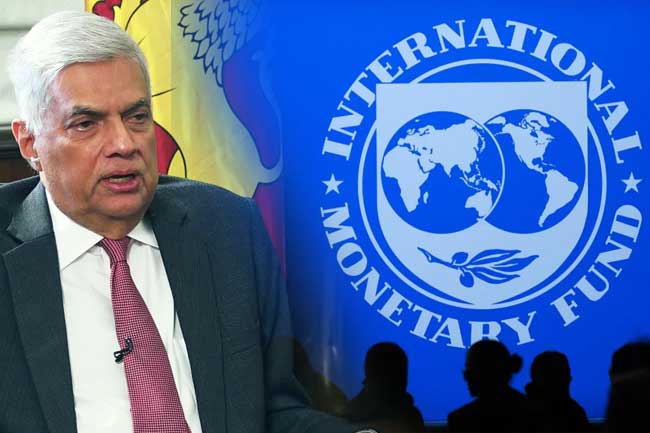
Sri Lankan President Ranil Wickremesinghe plans to press ahead with his quest for the full implementation of the 13th Amendment as part of his reconciliation efforts.

India’s The Hindu website quoting officials from the Sri Lankan President’s Office said that the minority Tamil community in Sri Lanka has been demanding the implementation of the 13th Amendment that provides for devolution of power to it.

The 13th Amendment (13A) was brought in after the India-Sri Lanka agreement of 1987. It created 9 provinces as devolved units with a temporary merger of the Northern and Eastern provinces.

The Hindu website quoted Presidential officials who said President Wickremesinghe would deliver a speech in Parliament next week when it is reconvened for its regular session.

The official from the President’s Office said that the President will outline his plan to implement it with all powers that could be granted to provincial councils.

During an all-party meeting last month, Wickremesinghe had said that all powers, except police powers, could be granted to the councils.

However, the main Tamil party — the Tamil National Alliance (TNA) — was adamant about holding the stalled provincial council elections at the talks.

Posted in Uncategorized

Foreign Minister Ali Sabry to visit Iran

Sri Lanka’s Minister of Foreign Affairs Ali Sabry is scheduled to undertake an official visit to the Islamic Republic of Iran from August 04 to August 07, 2023, the Foreign Affairs Ministry announced.

The official visit will reportedly take place on an invitation from the Minister of Foreign Affairs of Iran Dr. Hossein Amir Abdollahian, the ministry said in a statement

During the visit, the Foreign Minister is scheduled to pay a courtesy call on the Iranian President Dr. Seyyed Ebrahim Raisi and to hold meetings with the Iranian Foreign Minister Dr. Hossein Amir Abdollahian and other senior government officials, with a view to further strengthening the close relations between the two countries, it added.

The Minister is also scheduled to deliver a speech at the Institute of Political and International Studies of Iran, according to the Ministry of Foreign Affairs.

SL ranked 104th among Least Developed Countries in trade facilitation: Verité Research

Sri Lanka ranks 104th out of 125 developing and least developed countries (LDCs) in its implementation of trade facilitation measures over the last six years, a new study by Verité Research has found.

Alarmingly, 21 out of 35 LDCs have a higher rate of implementation than Sri Lanka, which has progressed only marginally from a rate of 29% in 2017 to 31.5% in June 2023.

Sri Lanka has also claimed to have less capacity than LDCs to implement trade facilitation measures. For example, the country has stated that it cannot implement over 69.3% of the trade facilitation measures without external assistance.

By contrast, developing countries and LDCs on average claim to require external assistance to implement only 21.7% and 40% of trade facilitation measures, respectively. Of the 125 LDCs and developing countries party to the World Trade Organisation’s Trade Facilitation Agreement (WTO TFA), only 10 countries (including Sri Lanka) have requested external assistance to implement over 69% of trade facilitation measures.

The study by Verité Research compared Sri Lanka’s progress in trade facilitation against its regional competitors, other developing countries, and least developed countries. Country-wise information published by the World Trade Organisation in its trade facilitation database was used for this comparison.

The database contains the commitments and notifications on the progress of the implementation of trade facilitation measures, by countries that are signatories to the WTO TFA.

Verité Research proposes three steps Sri Lanka can take to outperform LDCs and catch up with its peers. It also identifies 10 trade facilitation measures Sri Lanka can prioritise and implement without delay.

The first step is for Sri Lanka to take action to implement measures on its own, without delaying implementation by waiting for external assistance. For example, the country claims it cannot promptly publish information on trade procedures, taxes, fees etc., in a non-discriminatory and easily accessible manner, without external assistance.

However, 54% of the LDCs and 80% of the developing countries state that they have already implemented this, or can implement it on their own, without external assistance. This stance taken by Sri Lanka reflects poorly on the country and sends a negative signal to potential traders and investors.

The second step is to provide high-level leadership to overcome the resistance of government agencies to trade facilitation implementation and to influence the allocation of necessary resources to facilitate implementation. The National Trade Facilitation Committee (NTFC) of Sri Lanka, established to spearhead the implementation of trade facilitation measures, is co-chaired by the director general of Sri Lanka Customs and the director general of the Department of Commerce.

This is in stark contrast to countries like Vietnam, India, and Bangladesh, (all three have made better progress than Sri Lanka) where the NTFC is chaired by the deputy prime minister, cabinet secretary and minister of commerce, respectively.

The third step is the publication of the trade facilitation action plan and instituting a mechanism to monitor and report progress. For example, India has published its trade facilitation action plan online and has instituted a robust system to monitor its progress. As a result, the country has not only fully implemented all the trade facilitation measures included in WTO TFA, but is moving beyond WTO TFA by implementing additional measures to further facilitate trade.

Hill-country Tamils continue march to press for demands

A march by plantation Tamils to mainly demand citizenship rights has reached Madhu on the fourth day as it makes it way from Thalaimannar to Matale.

The agitation that started on 28 July when a set of 11 demands were made to the government, ends on 12 August.

Malaiyaha Tamils are taking the same route their ancestors took 200 years ago to reach the hill-country, where they have since been working mainly as tea estate labourers.

They are seeking the support of other communities to win their demands.

Among these demands are the recognition of their history, struggle and economic contributions, a separate identity but with equal rights and access to education, health and social security.

A reasonable payment for their work, workplace dignity, protection and equal salaries for men and women, land, livelihood and housing rights and the protection and promotion of their culture are also included.

Central Bank of Sri Lanka clarifies speculations on authorizing INR as a designated currency

The media release read that the CBSL from time to time, authorizes selected foreign currencies as designated foreign currencies with a view to facilitating international trade and cross-border banking transactions.

Commencing May 1979, the CBSL has occasionally recognized designated foreign currencies.

According to the CBSL, at present, 16 currencies – Australian Dollar, Canadian Dollar, Chinese Renminbi, Danish Kroner, Euro, Hong Kong Dollar, Indian Rupee, Japanese Yen, New Zealand Dollar, Norwegian Kroner, Pound Sterling, Singapore Dollar, Swedish Kroner, Swiss Franc, Thai Bhat and US Dollar – have been authorized as designated foreign currencies under the provisions of the Banking Act and the Foreign Exchange Act, with the latest inclusion being the INR in August 2022.

Posted in Uncategorized

Wimal slams Prez, warns of dire consequences

INR as currency for trade settlements:
National Freedom Front (NFF) leader Wimal Weerawansa has accused President Ranil Wickremesinghe of trying to make Sri Lanka an Indian state ‘economically’ by allowing the Indian rupee (INR) to be used as a currency for trade settlements between the two countries. If Indian and Sri Lankan Customs sign an agreement in this regard, Sri Lanka will become an Indian state, Weerawansa has warned.

Following Wickremesinghe’s visit to New Delhi, the two countries declared the move had forged stronger and mutually-beneficial commercial linkages, and agreed to operationalise India’s Unified Payment Interface or UPI based digital payments for further enhancing trade and transactions between businesses and common people.

Addressing a public rally at Bokundara, Piliyandala on Sunday (30), MP Weerawansa pointed out that President

Wickremesinghe had finalised four agreements including the one on INR ascurrency for trade settlements between the two countries without at least discussing them in Parliament.

The former Minister asked what is the purpose of having sectoral oversight committees when such far reaching decisions were taken without proper consultations.

MP Weerawansa alleged that the UNP leader was exploiting the current economic-political-social crisis to advance his personal agenda.

Posted in Uncategorized

Japan, China Lock Horns Over Aid Diplomacy

Japan and China have locked horns over aid diplomacy to emerging and developing countries in key maritime locations. The Japanese government has condemned China’s so-called debt trap financing in which developing countries are saddled with debts and China obtains the rights to use ports and other local infrastructure.

The Japanese government aims to help such emerging and developing countries move away from their dependence on China.

Foreign Minister Yoshimasa Hayashi, who is currently on a tour of southwestern Asia, was invited to the private residence of Sri Lankan President Ranil Wickremesinghe on Saturday morning and had a meeting with him over breakfast.

Hayashi expressed his hope for further progress in Sri Lanka’s debt restructuring process and underscored the importance of transparent, fair restructuring that involves all creditor countries. Wickremesinghe replied that he would exercise utmost care regarding transparency and fairness.

The foreign minister stressed the involvement of “all creditor countries” because China does not participate in the creditor committee, in which creditor nations discuss Sri Lanka’s debt payment plans following the country’s default on its debt last year.

Japan is co-chairing the committee with France and India, and is closely watching Chinese moves so that China will not steal a march on other creditors by presenting repayment conditions favorable to itself.

Sri Lanka has a significant amount of infrastructure built with loans from China.

One such facility is the 350-meter-tall Lotus Tower, a landmark in Colombo. About 80% of its total construction costs of $88 million, or about ¥12.3 billion, was financed by Chinese loans.

The number of visitors has topped 1 million since its opening to the public in September last year, but the local Daily Mirror newspaper reported that foreign visitors to the tower accounted for only 2% of the total. The plan was for its construction costs to be recovered through the admission fees paid by foreign visitors, which were set at 13 times the rate paid by local residents.

The Port of Hambantota in southern Sri Lanka is a prime example of a debt trap. The port was built with a huge amount of Chinese loans as one of key programs in the Belt and Road Initiative, a massive China-led infrastructure project.

But the Sri Lankan government was unable to repay the loans and handed over the rights to operate the port to a Chinese state firm on a 99-year lease.

According to Japan’s Finance Ministry, Sri Lanka had bilateral external public debts totaling $10.1 billion, or about ¥1.4 trillion, as of December. Of that figure, $4.1 billion dollars (about ¥570 billion) was owed to China, while $2.7 billion (about ¥380 billion) was owed to Japan.

Sri Lanka is geopolitically important for both Japan and China. The country is located on a sea-lane that 90% of Japan-bound oil tankers pass through. It is essential for Japan to strengthen its relations with Sri Lanka to realize a free and open Indo-Pacific, which is advocated by the Japanese government.

Sri Lanka is also considered one of the bases of China’s String of Pearls strategy, which positions the Indian Ocean as a key strategic position in the marine traffic.

Maldives, which is also part of Hayashi’s current tour, is in a similar situation. The country started its infrastructure development under China’s Belt and Road Initiative. However, its tourism industry was seriously hit by the coronavirus pandemic, leading to fears that Maldives may find it difficult to make debt payments to China.

Maldives is trying to reduce its dependence on China, and it aims to strengthen ties with Japan through Hayashi’s visit.

But Japan’s budget for official development assistance has been declining since its peak of ¥1.1687 trillion in fiscal 1997. Its ODA budget for fiscal 2023 stands at ¥570.9 billion.

“In terms of economic clout, Japan can’t beat China. It’s important for Japan to show its partners that it’s willing to get involved on a long-term basis,” said Etsuyo Arai, director of the South Asian Studies Group, Area Studies Center, at the Institute of Developing Economies, Japan External Trade Organization.

Source:japannews.yomiuri.co.jp

Sri Lankan envoy bats for land connectivity By Suhasini Haidar/The Hindu

Land connectivity is essential for the growth of ties between India and its neighbouring island, said the Sri Lankan envoy in India, pitching for connectivity projects resembling the “Channel tunnel” from the U.K. to Europe as a possible future initiative if environmental concerns are cleared.

Speaking about Sri Lankan President Ranil Wickremesinghe’s visit to India in July, where the two countries unveiled an “Economic Partnership Vision” statement that includes maritime, air, energy, trade and people-to-people connectivity, High Commissioner Milinda Moragoda said Sri Lanka’s hopes of benefiting from India’s economic growth and coming out of its current economic crisis hinged on being able to build causeways, bridges, pipelines, electricity transmission lines and landing infrastructure so as to increase travel to and from India.

“Building any causeway or highway across the streets will require environmental impact assessments, and there is a process for that”, Mr. Moragoda told The Hindu in an interview. “If Sri Lanka is looking at this idea of piggybacking on India’s growth story we have to have [land] connectivity,” he added.

13th Amendment

When asked why concerns expressed by India over implementation of the 13th amendment for devolution of power to Tamil majority areas was not, however, included in the joint statements made during the visit, the Sri Lankan envoy said President Wickremesinghe had discussed his latest proposals with Prime Minister Narendra Modi.

“Prime Minister [Mr. Modi] expressed his views and President [Mr. Wickremesinghe] expressed Sri Lanka’s position. So that conversation will continue,” said Mr. Moragoda, pointing out that eventually the resolution of the Tamils’ issue would have to be found “within Sri Lanka”.

The vision statement released after President Wickremesinghe met Mr. Modi in Delhi on July 21 refers to plans for a feasibility study on land connectivity “at an early date”.

“Both leaders have decided to establish land connectivity between Sri Lanka and India for developing land access to the ports of Trincomalee and Colombo, propelling economic growth and prosperity in both Sri Lanka and India, and further consolidating millennia-old relationship between the two countries,” it said. However, the envoy declined to comment on whether this would involve using the Ram Sethu, or the Adam’s Bridge that connects Tamil Nadu to Mannar Island, which has been the focus of protests by religious and environmental groups, in any way.

Private Investments

In addition, the envoy said that as Sri Lanka doesn’t have refining capabilities, an oil pipeline could help the island’s needs, especially if connected to the oil tank farms in Trincomalee which are also part of the MoUs signed during President Wickremesinghe’s visit. The projects agreed to during the visit most closely mirror a number of MoUs signed during Mr. Wickremesinghe’s previous visit in 2017, when he was Prime Minister under then Sri Lankan President Maithripala Sirisena. Those MoUs, including the plan for India to refurbish energy and port facilities in the eastern city of Trincomalee eventually did not make headway and were delayed due to internal political turmoil in Sri Lanka. When asked about timelines for the execution of the projects agreed to during this visit, Mr. Moragoda said the emphasis now is on encouraging private investments.

“When you talk of timelines for initiatives like this in democracies, it’s more complicated. One understanding between the two leaders is to try to encourage the private sector to be more engaged on both sides, which could be more time-sensitive and successful,” he explained. He added that the purpose of the Sri Lankan President’s visit, the first to India since he took over in June 2022, to “chart the way forward” for Sri Lanka’s economic recovery, as the economic vision statement had done, and to thank Mr. Modi and India for the support to Sri Lanka during its debt crisis.

In the past week, Colombo has received visits from French President Emmanuel Macron, Japanese Foreign Minister Yoshimasa Hayashi and an official from the Communist Party of China (CPC) Central Committee, all of whom also offered to help Sri Lanka as it works out a debt restructuring programme with the International Monetary Fund by the end of the year. Mr. Moragoda said economic revenue streams would have to be upgraded for a recovery, and hoped particularly for Indian investment and Indian tourists to contribute to that.

TNA MPs meet with Indian envoy in Sri Lanka

A group of parliamentarians representing the Tamil National Alliance (TNA) has called on the Indian High Commissioner to Sri Lanka, Gopal Baglay this morning (Aug 01).

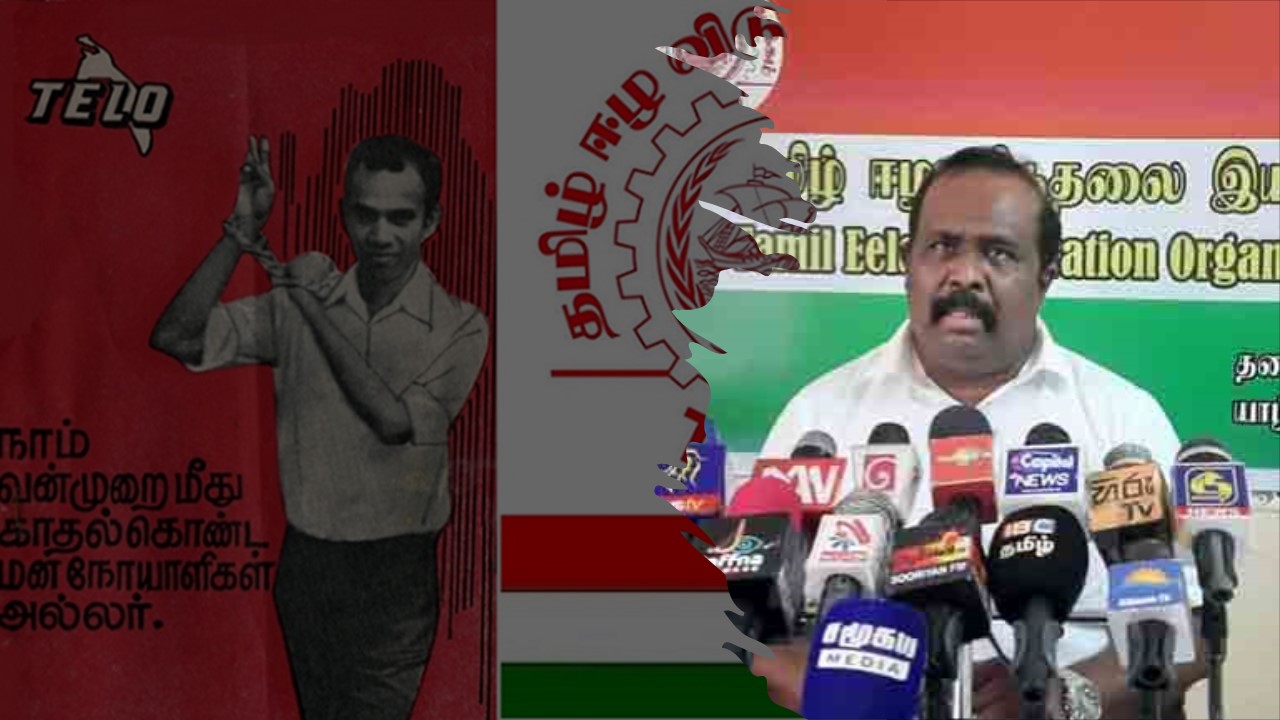
The discussion has reportedly taken place at the official residence of the Indian envoy, with ITAK leader R. Sampanthan and TELO Leader Selvam Adikalanathan in attendance.

At the invitation of High Commissioner Baglay, the TNA parliamentarians joined the meeting during which the implementation of the 13th Amendment to the Constitution, division of police powers several other issues were discussed at length.

The meeting comes days after President Ranil Wickremesinghe’s India visit and the all-party conference in late July.

During Wickremesinghe’s two-day official visit to New Delhi, Indian Prime Minister Narendra Modi urged him to implement the 13th Amendment to the Constitution and ensure a ‘life of dignity and respect’ for the Sri Lankan Tamil community.

Meanwhile, at the all-party conference convened on July 26, the Head of State had s tressed the significance of discussing the 13th constitutional amendment with all parties, as it is a matter that affects the entire country.

Posted in Uncategorized

Late Vijaya Kumaratunga’s statue in Dehiwala damaged

The statue of late actor-turned-politician Vijaya Kumaratunga, which is established in front of Dehiwala Public Market, has reportedly been damaged.

Police said that part of the left side of the statue’s face has been damaged.

When inquired by Ada Derana in this regard, the OIC of Dehiwala Police stated that although information was received about some unidentified person who had pelted stones at the statue, the alleged act of vandalism has not been confirmed yet.

Furthermore, he added that the part of the statue may have collapsed naturally.

He also expressed that the police have not yet inspected the CCTV footage since no complaint was received so far regarding the incident.