Opposition divided on 13A?

Opposition parties expressed different ideas on devolving power to Provincial Councils in the aftermath of the All Party Conference which was held on Wednesday.

Main Opposition Samagi Jana Balawegaya (SJB), TNA and United Republican Front led by Patali Champika Ranawaka called for the holding of Provincial Council elections while MP Venerable Athuraliye Rathana Thera came up with a totally different idea.

SJB General Secretary Ranjith Madduma Bandara said the President should hold the Provincial Council election even under the proportional representation system. “We are ready to support the government on an amendment to the Provincial Council Act so that the election can be held immediately,” he told a media briefing.

MP Ranawaka said the government can hold the Provincial Council election even under a mixed system, if the delimitation issue is resolved within a month. “Also devolving power to Provincial Councils could be done according to the current situation. The need today is to have tamil speaking policemen and not devolving police powers to Provincial Councils. Even Wellawatta police needs tamil speaking policemen,” he said.

Venerable Rathana Thera highlighted that the President has called for the all party conference to fulfill his political ambition. “President seemed to be worried on the next election. All he should do is to present a manifesto which comprises his idea on devolving power,” he said.

Posted in Uncategorized

China’s top option for next naval base is Sri Lanka -bangkokpost.com

BEIJING: Sri Lanka tops the list of nations that may host a Chinese naval base in the coming years as Beijing seeks to expand its maritime capabilities, according to a new report.

The South Asian nation’s Hambantota port is the most likely spot for a base given the US$2.19 billion China has already invested there, according to an assessment by the AidData research project at William & Mary university in Virginia.

Sites in Equatorial Guinea, Pakistan and Cameroon were listed as the next possibilities over the next two to five years.

“China’s single largest port investment anywhere is at Hambantota, and Beijing exercises direct control over the facility,” said AidData, which released the report on Thursday. “Coupled with its strategic location, the popularity of China among elites and the population, and Sri Lanka’s alignment with China in UNGA voting, Hambantota is our top candidate for a future base.”

For years, observers have tried to parse the extent that China uses its economic clout to advance its military ambitions. The Asian nation has the world’s largest navy by number of warships, and its construction and engineering companies are busy building port facilities around the world. It provided loans and grants worth nearly $30 billion from 2000-2021 to build or expand 78 ports in 46 countries, the AidData report said.

Despite frequent speculation about Chinese bases in the works, Beijing has established just one overseas military facility, in the East African nation of Djibouti. AidData said China invested $466 million in the Djibouti facility from 2000-2021, placing it No. 12 on its list.

Still, the Pentagon has raised concern that it was considering more overseas military logistics facilities in locations including Thailand, Indonesia and Pakistan. The United States also identified a military facility in Cambodia that it says will be China’s first overseas base in the Indo-Pacific region, something the government in Phnom Penh has repeatedly denied.

The Defense Ministry in Beijing did not immediately respond to a request for comment about the AidData report.

Commercial imagery company BlackSky said this week that recent photos showed a China-funded naval base in Cambodia has neared completion. The facility includes new piers able to support aircraft carriers.

Leaders in Colombo have said they will not allow the Hambantota port to host any foreign armed forces. A Chinese entity took over the facility in 2017 when Sri Lanka could not repay the loans that helped build it.

AidData also said that China could pursue a base in Gwadar, Pakistan, citing the two nations’ close ties. The report also found a high concentration of Chinese port investments in Africa, ranking Bata, Equatorial Guinea, as the second most likely spot for a naval base after Beijing committed $659 million to a port there.

13A should be discussed with all, not just Tamil MPs – President

Sri Lankan President Ranil Wickremesinghe noted that the need for inclusive discussions on the 13th Constitutional Amendment during the All-Party Conference.

President Ranil Wickremesinghe had emphasized that this matter affects the entire country & should be addressed with the participation of all political parties, not just limited to Tamil Party MPs.

The All-Party Conference got underway at the President’s Office in Colombo on Wednesday (26) evening.

The primary aim of the conference is to apprise party leaders representing Parliament about both the National Reconciliation Program & the North & East Development Plan.

The President’s Media Division said that the President emphasized the need to address the existing shortcomings if the Provincial Council system is to be sustained in the future .

Sri Lanka’s political sphere is once again debating the 13th Constitutional Amendment, while people continue to protest citing various issues that have gone unresolved.

Cabinet Spokesperson and Minister Bandula Gunawardena noted that the President had stressed that a decision on the 13th Amendment to the Constitution would be reached only after discussing the matter with the parliament and the party leaders.

The 13th Amendment to the Constitution of Sri Lanka was an outcome of the India-Sri Lanka Peace Accord of July 1987, signed by then Indian Prime Minister Rajiv Gandhi and then Sri Lankan President J.R. Jayawardene.

It was an attempt to resolve Sri Lanka’s ethnic conflict and led to the creation of Provincial Councils.

It assured a power sharing arrangements, and there continues to be a discord over the non provisions of certain powers to the Provincial Councils.

None of the provincial councils in Sri Lanka are in operation, and the powers of these Provincial Councils are exercised by the governors appointed by the President.

The 13th Amendment to the Constitution was a matter discussed during President Ranil Wickremesinghe’s visit to India last week.

President Wickremesinghe said a decision can be reached on the powers if all parties are in agreement.

Following his return to Sri Lanka, President Ranil Wickremesighe called for an all party meeting in Colombo to discuss national reconciliation.

Opposition Leader Sajith Premadasa said he would attend the meeting on behalf of the people, but would not fall prey to political schemes.

Tamil political parties in Sri Lanka are sharing different views over the all-party conference.

Leader of the Tamil National Alliance R. Sampanthan told News 1st that he would attend the meeting on Wednesday (26), however, leader of the Tamil National People’s Front, Gajendrakumar Ponnambalam said he would boycott the meeting.

The Jathika Jana Balavegaya decided to boycott the all-party conference, noting that the President has failed to fulfill the promises made so far with regard to the national issue.

Sri Lanka and India in ‘meeting of minds’ over security

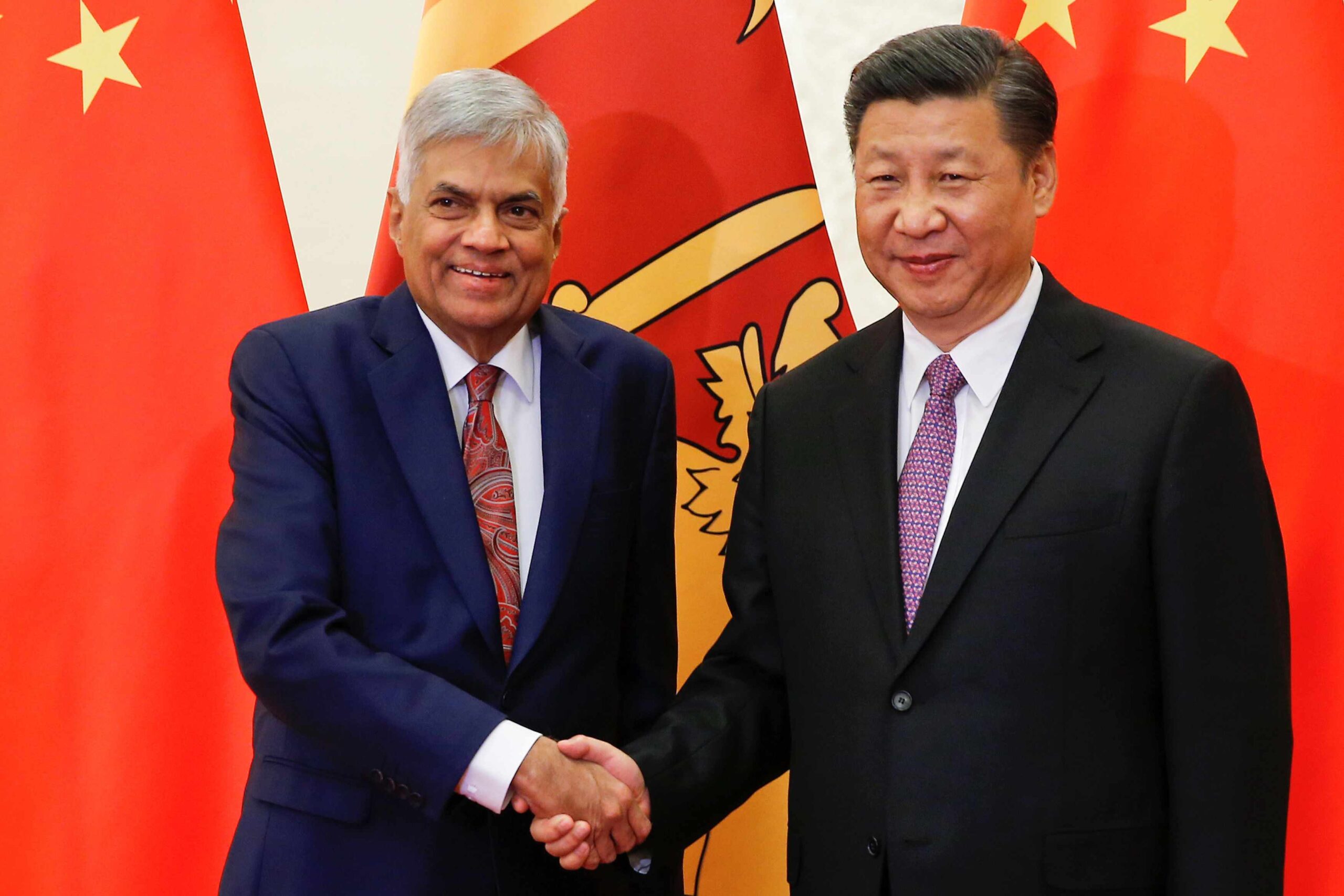
Leaders of India and Sri Lanka were on the same page over regional security following President Ranil Wickremesinghe’s latest visit to New Delhi, an official source said amid fears of China’s growing influence in the Indian Ocean region.

Wickremesinghe addressed India’s security concerns over China’s increasing footprint in Sri Lanka and vowed to fast track connectivity between the two Indian Ocean neighbours, the source said.

“The president reiterated his broad assurance that Sri Lankan territory will not be used against India,” the source said. “There is a meeting of the minds on security.”

Wickremesinghe had a one-on-one luncheon meeting Prime Minister Narendra Modi on the last day of his visit, but official sources indicated that they had taken head on the question of Chinese presence.

According to a transcript of Indian Foreign Secretary Vinay Kwatra’s press conference soon after the visit, the top Indian diplomat fielded questions about China’s submarine visits to Colombo in 2014 and another port call by a vessel they consider a spy ship in August last year.

“Sri Lankan side did convey to us their sensitivity and respect for our security and strategic sensitive concerns relating to what happens in our maritime domain,” Kawtra said.

“Our challenges that we face in maritime domain are in many ways shared challenges and both sides will continue to monitor developments, naturally closely consult on issues that have a bearing on the security of both countries and particularly India’s security and concerns of India’s security and sensitivity.”

New Delhi raised concerns when the Chinese vessel, Yuan Wang 5, sought permission to dock at Hambantota in August. The port call by what China calls a “scientific research” vessel went ahead. Sri Lanka responded by asking China not to carry out any “scientific research” while in Sri Lankan waters.

In a clear move to reassure New Delhi, the Sri Lankan government announced on July 18, two days before Wickremesinghe’s visit, a new “standard operating procedure” for future port calls by foreign research vessels and military craft. The government did not give details.

Wickremesinghe had addressed India’s fears about Beijing’s intentions in June too during a visit to France, dismissing speculation about Chinese military bases in Sri Lanka.

“No, we have no military agreements with China,” he told the France24 TV network. “There won’t be any military agreements. I don’t think China enters into one.

“We are a neutral country, but we also emphasise on the fact that we cannot allow Sri Lanka to be used as a base for any threats against India.”

During his talks in Delhi, Wickremesinghe pledged to speed up the ferry service between Nagapattinam in India and Kankesanthurai, in northern Sri Lanka and hopefully start a regular service by November.

The two sides also want to increase the frequencies and airports between the two countries while there is also increased cooperation in the energy sector. An electricity grid connection and a petroleum pipe are being studied.

Tamil aspirations

On Sri Lanka’s ethnic conflict, New Delhi reiterated its call for a political solution that meets the aspirations of the minority community, the official said.

“…India continues to look forward to a political solution that addresses the aspirations of the Tamil community, of course aspirations for equality, justice and self-respect within the framework of united and prosperous Sri Lanka,” Kwatra said.

Prime Minister also clearly expressed India’s belief that a “meaningful devolution of powers and the full implementation of the 13th amendment (to the Sri Lankan constitution) are essential components of addressing and facilitating the reconciliation process in Sri Lanka.”

“This has been our consistent position, and this was put forward during the meeting between the two Leaders,” he added.

Daughter of Sri Lankan immigrants wins Australia’s biggest literary prize

A daughter of Sri Lankan immigrants has won Australia’s biggest literary prize, the Miles Franklin Literary Award.

Australian-Tamil lawyer Shankari Chandran won the $60, 000 prestigious Miles Franklin Literary Award for her novel, “Chai Time at Cinnamon Gardens”.

The award was announced at a ceremony at The Ovolo Hotel in Sydney on Tuesday.

“It’s such an honour to win the Miles Franklin Literary Award, honestly, I’m still in shock. To be recognised among my Australian writing peers in this way is extraordinary. It means so much to me that ‘Chai Time at Cinnamon Gardens’, a novel that explores what it means to ‘be Australian’, has been recognised in this way, ” Chandran said in a statement.

Set in a Western Sydney suburb, the novel follows the lives of residents at an aged care facility run by a Sri Lankan native who fled the country in the eighties to escape civil war.

In the process, it explores themes of war, genocide, racism, family, love, as well as friendship.

Praising Chandran’s novel, the judges said in a joint statement: “It treads carefully on contested historical claims, reminding us that horrors forgotten are horrors bound to be repeated, and that the reclamation and retelling of history cannot be undertaken without listening to the story-tellers amongst us.

“With enormous skill Chandran recounts a solemn history, largely through a cast of squabbling, endearing elders, and invites us to open our hearts and minds: ‘If you read the literature of a country…you will understand it; you will fall in love with it’.”

The 2023 judging panel comprised of author and literary critic, Bernadette Brennan; literary scholar and translator, Mridula Nath Chakraborty; book critic, James Ley; NSW Mitchell Librarian and Chair, Richard Neville; and author and editor, Elfie Shiosaki.

Chandran’s parents, both doctors, fled Sri Lanka as the country stood on the precipice of civil war, first to the UK where the author was born, then to Australia three years later, The Guardian reported.

She grew up in suburban Canberra, in constant dialogue with herself about where she fitted in and the terms under which acceptance was granted, the report said.

Chandran has spent two decades working as a lawyer in the social justice field, on national and international program design and delivery, according to her website bio.

She continues her work in social impact for an Australian national retailer, and is based in Sydney.

Her unpublished political thriller, “Unfinished Business”, will be published as an Audible Original in 2024. (IANS / Colombo Gazette)

Posted in Uncategorized

Sri Lankan born Tamil Gary Anandasangaree appointed Canadian Minister

Sri Lankan born Tamil MP Gary Anandasangaree has been appointed as a Cabinet Minister in the Canadian Government.

The MP has been appointed as the Minister of Crown-Indigenous Relations.

He was first elected as the Member of Parliament for Scarborough—Rouge Park in 2015. He has previously served as Parliamentary Secretary to the Minister of Justice and Attorney General of Canada, as Parliamentary Secretary to the Minister of Crown-Indigenous Relations, and as Parliamentary Secretary to the Minister of Canadian Heritage and Multiculturalism (Multiculturalism).

Minister Anandasangaree is an internationally recognized human rights lawyer and community activist who has advocated tirelessly for education and justice.

He has served as Chair of the Canadian Tamil Youth Development Centre, President of the Canadian Tamils’ Chamber of Commerce, and counsel to the Canadian Tamil Congress. He was also a board member of the Youth Challenge Fund, a member of the Toronto Police Chief’s Advisory Board, and a member of the United Way Newcomers Grant Program.

Minister Anandasangaree managed his own law firm in Scarborough, Ontario, specializing in business, real estate, and international human rights law. As a passionate advocate for human rights, he regularly represented Lawyers’ Rights Watch Canada at the United Nations. He also served as a strong advocate for local youth, intervening in cases of wrongful student expulsion and suspension.

In honour of his devotion to community service and local advocacy, Minister Anandasangaree has received both the Queen Elizabeth II Golden Jubilee Medal and the Queen Elizabeth II Diamond Jubilee Medal. He also received the Osgoode Hall Law School “One to Watch” Gold Key Award and the South Asian Bar Association’s Young Practitioner Award.

Minister Anandasangaree holds degrees from Carleton University and Osgoode Hall Law School. He is married and has two children, Bairvai and Sahanah.

Posted in Uncategorized

French President Emmanuel Macron to visit Sri Lanka tomorrow

President of France Emmanuel Macron is scheduled to visit Sri Lanka on Friday (July 28), French media reported.

On the occasion of this historic visit to the island nation, a first by a French president, Macron will call on his Sri Lankan counterpart Ranil Wickremesinghe, according to leading French newspaper Le Monde.

This visit is deemed an opportunity for the two countries to deepen bilateral relations and to discuss regional and global challenges.

The French president, who was on an official visit to New Caledonia from Monday to Wednesday, is traveling to Vanuatu and Papua New Guinea before arriving in Sri Lanka.

Meanwhile, the Foreign Affairs Minister of Japan, Hayashi Yoshimasa will be undertaking an official visit to Sri Lanka on July 28 and 29.

During the visit, the Japanese foreign minister is scheduled to have official discussions with his Sri Lankan counterpart Ali Sabry at the Foreign Affairs Ministry in Colombo and pay courtesy calls on President Wickremesinghe and Prime Minister Dinesh Gunawardena.

The Japanese foreign minister will be accompanied by Senior Foreign Policy Coordinator Murakami Manabu, Director General Southeast and Southwest Asian Affairs Arima Yutaka, Director General International Cooperation Endo Kazuya, Deputy Press Secretary Okano Yukiko from the Ministry of Foreign Affairs, Japan and a 22-member delegation consisting of officials of the Ministry of Foreign Affairs of Japan.

The delegation will also visit one of the Japanese Official Development Assistance (ODA) sites in Sri Lanka, the Foreign Affairs Ministry said.

13A – President stresses need for inclusive discussions

President Ranil Wickreme-singhe yesterday called for inclusive discussions on the 13th amendment to the constitution

He made this appeal while addressing the all-party meeting chaired by him to discuss the National Reconciliation Program together with the North-East Development Plan.

The meeting, which took place last evening at the President’s Secretariat, saw the participation of leaders and representatives from both Government and opposition parties in parliament.

Addressing those gathered the President stressed that confining discussions on the 13th Amendment solely to Tamil parties is inadequate. He emphasised that this matter has far-reaching implications and impacts the entire nation, making it essential to engage all stakeholders in the dialogue.

During the meeting, President Wickremesinghe reflected on the limitations of his authority as well as that of the previous seven Executive Presidents. He emphasised that the power to pass new laws to address existing problems solely rested with the Parliament.

While he expressed his commitment to bringing forth relevant proposals for the betterment of the country, he asserted that the responsibility of implementing these proposals lies with all the representatives in the Parliament. He acknowledged that he alone couldn’t achieve the necessary changes with his single vote, emphasising the importance of collective effort and cooperation among all parliamentary members.

The President also drew attention to the geographical distribution of provincial councils, with seven out of the nine being situated in areas predominantly inhabited by the Sinhalese community. Acknowledging the importance of maintaining the provincial council system, he highlighted the significance of addressing the shortcomings that have been encountered thus far.

To improve the system, he put forth a suggestion that involved granting provincial councils more authority over certain subjects currently under the central government’s jurisdiction. This would include empowering them to oversee grassroots activities such as agriculture and tourism.

Wickremesinghe urged all parties to engage in collective discussions regarding the provision of police powers to the Provincial Councils, as specified in the 13th Amendment of the Constitution.

Additionally, President Wickremesinghe proposed a novel arrangement that would enable members of the Provincial Councils to hold concurrent positions and be appointed as Members of Parliament. Similarly, members of Parliament would have the opportunity to serve as members of the Provincial Councils.

Prior to the meeting with Wickremesinghe, the ruling party held a crucial meeting with its leader Mahinda Rajapaksa at his official residence in Colombo. Addressing the media following the party meeting, Sri Lanka Podujana Peramuna (SLPP) General Secretary Sagara Kariyawasam said the mandate received by former President Gotabaya Rajapaksa was to introduce a new constitution and protect the country’s unitary status.

“At this juncture, the economy must be prioritised,” he said firmly. “We hope to express our view that bringing in unwanted issues now is unsuitable,” he added.

The all-party meeting was attended by Prime Minister Dinesh Gunawardena, Speaker Mahinda Yapa Abeywardena, Opposition Leader Sajith Premadasa, Former President Maithripala Sirisena, ITAK Leader and Member of Parliament R. Sampanthan,ITAK spokesman M. A. Sumanthiran,TELO Leader Selvam Adikalanathan,PLOTE Leader Sitharthan, General Secretary of the Sri Lanka Podujana Peramuna and Member of Parliament Sagara Kariyawasam and Members of Parliament including Dallas Alahapperuma, Wimal Weerawansa, Gevidu Kumaratunga, Vasudeva Nanayakkara, Udaya Gammanpila, Rear Admiral Sarath Weerasekera, Athuraliye Rathana Thero, Weerasumana Weerasinghe, Anura Priyadarshana Yapa, C.V. Vigneswaran, and Lakshman Kiriella among others. The National People’s Power and several other parties however chose to not attend the meeting.

JVP Declines Participation in All-Party Conference on Tamil Issue

The Janatha Vimukthi Peramuna (JVP) has announced its decision not to participate in the all-party conference summoned by President Ranil Wickremesighe to address the problem for Tamils. The conference, slated to discuss crucial issues such as devolution of power and the full implementation of the 13th Amendment to the Constitution, will convene today (26) with President Wickremesighe presiding over the proceedings.

Former Member of Parliament Sunil Handunnetthi, representing the JVP, made the announcement, expressing the party’s decision to abstain from participating in the conference. The JVP’s stance adds a significant dimension to the upcoming discussion, as the party has been known for its strong positions on governance and constitutional matters.

The all-party conference assumes particular importance as it aims to address pressing concerns in the Northern and Eastern region of Sri Lanka, especially those pertaining to devolution of power and the constitutional arrangements. The full implementation of the 13th Amendment has been a topic of contention in the country, and this conference is seen as an opportunity for diverse political parties to engage in dialogue and seek common ground on these critical issues.

Posted in Uncategorized

SJB will attend All Party Conference : Sajith

The Samagi Jana Balawegaya (SJB) will attend the All Party Conference called for by President Ranil Wickremesinghe today, Leader of the Opposition Sajith Premadasa said.

“We have decided to attend the All Party Conference for the sake of the nation,” Mr. Premadasa said at a gathering in Bibile.

“However will leave the dicussions if we feel that the conference is merely a political exercise,” he said.

“We have been told that there will be an All Party Conference but the agenda is yet to be notified. Also, we would like to say that the ruling party members should come to an agreement with all relevant matters before the proposed meeting takes place,” he also said.