AG says Ketagoda’s motion on LG bodies unconstitutional

The Attorney General’s Department yesterday informed the Supreme Court that specific provisions of the Private Member’s Motion submitted by Sri Lanka Podujanaa Peramuna (SLPP) MP Jayantha Ketagoda, which aimed to re-convene dissolved Local Government bodies without holding elections is in violation of the constitution.

The bill proposed by the MP aimed to amend the Municipal Ordinances pertaining to urban councils and municipal councils, granting the subject minister the authority to recall Local Government Institutions for a period of time as deemed necessary.

An Additional Solicitor General representing the Attorney General in court said that if the bill is to be passed, it must be done through a special majority in parliament and requires a public referendum.

The Additional Solicitor General made the announcement regarding the bill when 27 petitions filed against the proposed legislation by MP Jayantha Ketagoda were brought up for examination. The petitioners are seeking an order from the Supreme Court declaring the bill unconstitutional. Ketagoda’s proposal has faced strong criticism from various parties, with many condemning it as a significant threat to the people’s sovereignty, which is safeguarded in the Constitution.

40 Years After The Anti-Tamil Pogrom Of July 1983: Root Causes Remain Unaddressed By Lionel Bopage

Enough has been written about the anti-Tamil pogrom of July 1983, and everyone knows who the perpetrators were. It remained the darkest chapter in Sri Lanka’s history till the end of the armed conflict in May 2009. However, pre-1983 history had seen many campaigns of anti-Tamil violence in 1956, 1958, 1961, 1964, 1974, 1977 and 1981. The anti-Tamil pogrom of July 1983 set the stage for the two-and-a-half-decade-long civil war. And the UNP regime led by then President JR Jayewardene set the strategic framework for simultaneously eliminating the political threats posed to his autocracy by the LTTE in the north and east and the JVP in the south.

This strategy ultimately resulted in the death of about two hundred thousand people, mostly civilians, and the displacement of hundreds of thousands of people who became refugees in their own country and overseas. It gave rise to many thousands of war widows, orphans, and victims of psychological and mental scars. Entire villages with women and children were wiped out. This carnage was unleashed to forcefully establish the dominance of the privileged Sinhala ruling elite over the rest of the populace.

The root causes of the national question that gave rise to this carnage have not yet been addressed by the successive governments of the last forty years. The prelude to it all was a series of discriminatory policies and laws the successive regimes implemented against the non-majoritarian communities, specifically against the Tamil community. Before proceeding to the main objective of this article, it is necessary to provide an abridged context in which the pogrom was launched.

Via the Ceylon Citizenship Bill 1948, the first regime of independent Sri Lanka disenfranchised a million of Malaiyaha[1] workers of Indian origin. Its alleged intent was to facilitate the acquisition of citizenship, but the actual political intent was to deny citizenship to the Malaiyaha workers. This was because they mostly voted for the left oriented candidates. The enormous contribution many generations of Malaiyaha workers had made to the country’s economy was disregarded. Unfortunately, the country, in particular the Sinhalese, is yet to fully appreciate the massive contribution they are continuing to make.

Thus began the de-democratising politics of the country. Since then, the process of disempowering the Tamil community through legislation, state violence and terror proceeded at the expense of building a Lankan nation and identity. Some believe that this process was pursued to reduce the Tamil population, and their parliamentary representation, in order for the Sinhalese to procure a two-thirds majority in the then Ceylon’s House of Representatives. By doing so, it was hoped that Tamils will not be able to prevent the parliament from adopting any policies that will affect them. However, the competition between various political parties in the South followed a process of ethnic outbidding – a process of compartmentalising communities by their ethnolinguistic and religious backgrounds. To do so, they pledged adopting more and better anti-minority, pro-Sinhala slogans. Sadly, this process continues to date.

Historically speaking, the Sri Lanka Freedom Party established by Mr. SWRD Bandaranaike, and its coalition regime, did start this process with its opportunistic Official Language Act of 1956. Commonly known as the Sinhala Only Act, it replaced English with Sinhala and excluded Tamil in official use. There are still many people who do not realize that this Act compelled Tamils to learn Sinhala in order to obtain, retain or receive a promotion in employment. Prior to that they were learning Sinhala at schools on their own volition. The Act also placed the Sinhalese at a disadvantage by turning them mono-lingual and thus, restricting generation after generation of Sinhalese of their upward mobility. Even now, only those affluent families can afford to send their kids to international schools or overseas to receive an education in English.

The Bandaranaike-Chelvanayakam and Dudley-Chelvanayakam Pacts signed between the Government of Sri Lanka and the Tamil political leaders were unilaterally abrogated by the government due to pressure from the extremist Sinhala Buddhist nationalists. They have no regard for the plural nature of the Lankan society. For them the country is solely a Sinhala-Buddhist nation. Thus, for the ruling elite and those in opposition, ethnic, linguistic, and religious chauvinism provided a secure way of coming to power and retaining power.

Sinhalese were continuously relocated from the South to areas where Tamils were dominant – with state-aided programs – causing demographic change for pro-Sinhala electoral advantage. And discrimination continued in favour of the Sinhala ruling elite. In 1972, the regime led by Mrs. Sirimavo Bandaranaike introduced a new Constitution that favoured Sinhalese and Buddhism, and a policy of standardization for university entrance. As a result, Tamil students were required to gain higher marks for university admissions than their Sinhalese counterparts.

These discriminatory measures were implemented in an ongoing environment that involved violence. In the fifties, the Bandaranaike regime used mob violence to suppress satyagrahas and non-violent protests by Tamils. In 1958, the mob violence led to about 300 deaths. Using this as a pretext, the Bandaranaike regime declared emergency and deployed army to the north and the east of the island. Strict orders were given to Colonel Richard Udugama as the Commander to clear the militant elements, even by shooting them[2]. In a similar manner, in 1977, Mr. JR Jayewardene’s regime sent Brigadier Tissa Weeratunga to Jaffna with instructions to ‘wipe out terrorism within six months’. Both Udugama and Weeratunga were allegedly responsible for many atrocities committed in the pre-eighties in the north and east.

The parliamentary representation of the Tamils was unable to address the issues their constituencies were facing. At the 21 July 1977 General Elections, in the south the Jayawardene-led UNP regime was elected to power with a five-sixths majority, while in the north and east, Mr SJV Chelvanayakam led Tamil United Liberation Front (TULF) took the Vaddukoddai Resolution to the electorate, asked for a mandate to establish a separate state, called Tamil Elam, and received an overwhelming mandate. Mrs. Bandaranaike’s Sri Lanka Freedom Party lost all but 5 seats, and Mr. Amirthalingam became the Leader of the Opposition by a quirk of fate – an unthinkable and unacceptable outcome for the majority Sinhalese. This set the stage for the August 1977 anti-Tamil violence, the worst against Tamil civilians until then, hard on the heels of the regime change. The government did little to control this violence as it was state sponsored. And democratic ways of expressing a people’s will was under serious threat.

Under these circumstances, the Tamil youth believed that all democratic means of achieving their legitimate rights and aspirations had been closed, and armed struggle is the only way. The intent of the militant Tamil youth was to free their people from the discrimination they had been subjected to for so long. As such, the taking up of arms by Tamil youth represents nothing more than the failure of the post-independent Ceylon/Lanka to address the most significant issue of building the Lankan nation by uniting communities rather than dividing them along their ethnolinguistic and religious backgrounds.

The first attack on the army was in October 1981, which appears to have been carried out to coincide with the welcome parade arranged for the new Army Commander Tissa Weeratunga, who was promoted to the post for the state terror he had committed in Jaffna. Since then, attacks on army convoys and patrols were on the rise. Whenever the security forces could not track down the attackers, they turned on the civilians. This sort of attacks on civilians has been nothing new. History shows that during many conflicts worldwide, irrespective of who the attackers were, civilians are the ones who bear the brunt of the violence.

In 1983, the infectiously anti-Tamil political leadership within the UNP regime made the situation worse. The pogrom was not spontaneous, but a carefully planned violent attack on Tamils. It was meticulously planned by ministers like Cyril Matthew, monks like Alle Gunawansa Thero who was a close associate of President J R Jayawardene, and other extremists. Most of the time ministers like Cyril Matthew maintained their own armed squads and were operating above the law. One can observe that this trend continues to date. The irony is the Liberation Tigers grew in strength, with many youngsters fleeing the south due to the pogrom joining their ranks.

Prior to the pogrom, there was violence against Tamils in Vavuniya, Trincomalee, and at the Peradeniya campus in Kandy. In May 1983, an army convoy was ambushed and the security forces went on rampage. They shot dead 51 innocent civilians at various places in the Jaffna Peninsula. During another such ambush in June in Vavuniya, the Navy retaliated similarly. Colombo was abounded with rumours that the government was going to wreak a final solution to sort out the Tamil militancy. When 13 soldiers were killed by the LTTE ambush in Thirunelveli on 23 July, the regime found the excuse to launch their long thought-out plan.

The government not only proscribed the LTTE and other similar organisations but the JVP, the NSSP, and the CP were also proscribed in July 1983, initially under the emergency laws. Later on, the proscription continued under the PTA. This took away fundamental rights of those who were arrested. They could be held without charge or trial for up to 18 months, and confessions obtained under duress were made admissible in Court. This was an extension of what the Bandaranaike regime did in 1972 by establishing the Criminal Justice Commissions Act. The regime’s policy was to somehow or other terrorise the Tamil populace into submission.

I, too, was detained in July 1983, allegedly for leading the anti-Tamil pogrom! Prior to that many JVP comrades in Colombo briefed me as to what happened during the pogrom, such as the use of electoral lists to trace the whereabouts of Tamils, organising mobs to attack them, and transporting them in vehicles belonging to the Ceylon Transport Board and other state agencies. I myself already witnessed what those mobs did in the streets of Colombo.

During my detention I provided the horrific information I had about the ministers and monks who were at the forefront of the pogrom to the CID investigators. Instead of investigating those who were really involved, they endeavoured to change my political affiliation from the JVP to the UNP, led by Mr Jayewardene. Political authorities must have asked them not to arrest those really involved in the violence. There were a few arrests in Kandy and Nuwara Eliya, but the Police were asked to release them.

During the pogrom that lasted from July 25 to 29, a total of 53 Tamil political detainees held in the Welikada Prison were also massacred (35 prisoners on 25 July, and 18 prisoners on 27 July). To my knowledge, there have been no effective investigations whatsoever about the Black July pogrom or any of the previous violence launched against Tamils in different parts of the island. There were several mechanisms established that might have addressed some of the issues to a certain extent, such as the Presidential Truth Commission[3], the Lessons Learnt and Reconciliation Commission, the Office on Missing Persons, the Office for National Unity and Reconciliation etc. However, nothing much fruitful has eventuated from these mechanisms.

Most of these mechanisms became ineffective due to the partisan nature of the established mechanisms, political interference, and disregard for any positive recommendations made. The Commissions have been heavily criticised by international human rights groups, the UN Panel of Experts, and civil society organisations due to their limited mandates, alleged lack of independence, and their failure to meet minimum international standards or offer protection to witnesses. This raises the question of whether these mechanisms have been established to be used as tools by the government to prevent an independent international investigation of the most horrible abuses that occurred.

Five thousand or more Tamil civilians were barbarously killed with several hundred made to disappear. Thousands injured and some of them killed while undergoing treatment. Mobs have set Tamil people alight while being alive. Many hundreds of women had been raped. Tens of thousands properties such as homes, businesses and industries belonging to Tamils were attacked, destroyed and set on fire while the security forces were looking on. Over two hundred thousand civilians including business leaders, professionals and others became displaced and had to seek refuge elsewhere[4]. More than a hundred thousand fled to India as refugees, some of them still living in Indian refugee camps under squalid conditions and extreme difficulties.

Despite President Jayewardene and his regime laying the blame for the pogrom on the Sinhalese people[5], many Sinhalese risked their lives to find shelter and save Tamils who had been the victims of the mob attacks by the extremist elements. The nationalists of the extreme kind, and chauvinists, would have been supportive of the violence, but the majority seemed to have become powerless bystanders. However, under the international gaze (especially for India and its people), the regime first attempted to shift the blame on the Sinhalese people as a whole[6], and then on some of the leftist political entities.

The regime did not stop the process of de-democratisation. The sixth Amendment[7] to the Constitution was enacted on 8 August. The parliamentarians that represented the Tamil people in the north and east of the country were forced to cease serving as Members of Parliament.

The main reason for the non-occurrence of mob violence after 1983 was the escalation of the state’s war efforts. One could consider the whole July 1983 episode as an exercise launched by the state to escalate and legitimize its war in the north and east of the country. Since the pogrom days, the occurrence of brutal events in the northeast became more frequent and continuous. The armed conflict came to an end with the defeat of the LTTE in May 2009.

Sri Lanka is a signatory to the UN Convention on the Prevention and Punishment of the Crime of Genocide. The Convention defines Genocide as “an act committed with intent to destroy, in whole or in part, a national ethnic, racial or religious group”. Those who say that there was no genocide in Sri Lanka has never presented any facts or pertinent arguments to debunk the widely held belief. The definition does not refer to the numbers killed, but the intent of the processes undertaken – such as making people to disappear and killings that were carried out in state prisons, setting the Jaffna Public Library ablaze , destroying cultural and religious symbols of the Tamil people, and the policies implemented to creating conditions to prevent the survival of a community – such as economic blockades curtaining the supply of essential needs of life.

None of such incidents are known to have been properly investigated and the perpetrators punished, rather almost all defendants were released on some spurious technical grounds. If we holistically look at the discriminatory policies and activities adopted by successive governments, they will definitely fall within the scope of the definition of genocide. The anti-Tamil pogrom planned and executed in July 1983, and other actions taken and not taken by the governments since then, fall within that scope.

One million Tamils were displaced since the pogrom. Most of them settled overseas, largely in Western countries. They were mainly professionals and experts in diverse spheres of knowledge such as medicine, engineering, accounting, teaching, law, science and commerce. Sri Lanka lost their valuable contribution to its socio-economic, health and infrastructure development. Many countries gained from Sri Lanka’s loss with such professionals making a vast contribution to the prosperity of their adopted countries. It is not only the Tamil youth that attained such a transformation but also the Sinhala and Muslim youth who encountered state terror.

What enduring loss the pogrom has caused to the peoples of Sri Lanka! Is there any wonder that Sri Lanka has become such a failed state?

During an official visit to Australia in February 2017, Mr Ranil Wickremesinghe, the current President and then Prime Minister, asked the Lankan diaspora, both Sinhalese and Tamils, to come back and help Sri Lanka to revive. One wonders if he had any idea about the damage the 1980s regime, of which he was part and parcel as a minister, had done to these people in terms of the trauma inflicted on the first Tamil generation and the second Sinhala generation – who had to flee their motherland fearing death and destruction.

Is it justifiable for the government of Sri Lanka to simply ask for their return, without first addressing the state of affairs in the country and make appropriate conditions for their return? Many of them have been yearning to return to their land of birth and serve the people and the country. But the conditions are not ripe yet. The state needs to ensure that all citizens of Sri Lanka irrespective of their caste, creed, ethnicity, language and religion will be treated with equality and dignity in an environment of tolerance, understanding and safety.

The economic dividends many people in the South expected did not materialise but percolated upwards. The state has not entirely compensated for the colossal damage the pogrom had inflicted. With nearly a million Tamil people relocating, a majority of Tamils in the country live outside the north and east. Most of the advocates for separation appear to be operating from the overseas. And authoritarianism, family bandyism[8] and cronyism are once again attempting to masquerade as patriotism.

With the fundamentalists and extremists escalating ethnic and religious tensions once again aimed at diverting people’s attention away from the current poly-crisis, it is difficult to predict what the future holds. After the Holocaust, not many believed that fascism would survive. But all over the world the dark spectre of fascism and Nazism is raising its ugly head once again with a hue and cry. With the ruling elite and their henchmen trying to find new enemies in Sri Lankan and overseas, one cannot expect a rebuilt and reconciled nation in the near future.

All decent people working towards a better, fairer, and reconciled future for themselves and their future generations will hope that there will never be another pogrom like July 1983. Nevertheless, there is an intrinsic danger of recurrence of the likes of the July 1983 pogrom, and all Sri Lankans should be conscious of the need for eternal vigilance in this regard.

As I have pointed out to the Truth Commission in October 2001[9]:

“In approaching the issue of reconciliation and nation-building, it is critical to appreciate the fact that human rights violations did originate with colonialism and evolved to the current extent during the last five decades since the independence. Under all circumstances special privileges, oppression and exclusion result in the revolt of the oppressed at the first opportunity available. The oppressive state then resorts to force to maintain its unjust rule. Repressive regimes are needed to prop up doctrines of racial superiority, pursuit of narrow interests and special privileges for any one family, class, religion, language or race all premised on the exclusion of the majority of Sinhala, Tamil, Muslim and other peoples.

“The discriminatory regime against its vast majority of peoples and its violent consequences are not an aberration by a few individuals or groups. It has been systematic, deliberate and a matter of policy. Over the years, a system of government has been built in which there is no accountability and transparency; security considerations and military operations are given the highest priority. These circumstances resulted in curtailing individual and group rights of all peoples.

“Therefore, the basic premise in correcting those historical injustices is for the majority of Sri Lankans to pay allegiance to developing, with appropriate consultation and without harming the interests and rights of individuals and groups, a democratic constitution and a culture of tolerance, respect, fairness, equality and dignity of individuals and groups that goes with the constitution. The civic society has to take responsibility for promoting and utilising to the maximum effect the rights that have been attained, and ensure that transparent and accountable government becomes the realpolitik.”

Conclusion

The anti-Tamil pogrom of July 1983 harmed the Tamil people who lived in the South simply because they were Tamils. The intention was to destroy the economic base of Tamils in the South, specifically in Colombo and other urban centres, and for the Sinhala ruling elite to acquire that base. Neo-liberal political and economic greed has no bounds. Nevertheless, we need to strive for the right of any citizen of Sri Lanka to live wherever they chose to if they can afford.

The pogrom was, among other things, a reflection of the economic war of the Sinhala ruling elite to destroy the economic bases held by other nationalities, whether they are Tamil or Muslim, or Chetty. The pogrom, and its extension of nearly 25-year armed conflict, destroyed the Tamil economic base in the South as well as in the North. And successive governments employed their powers for direct oppression. So, why should one be surprised when the Tamil community demands devolution, decentralization, and even separation?

The country has sunk to the rock bottom of economic crisis and moving deeper and deeper into debt with the acquiring of more and more foreign loans. Large chunks of these debts include monies borrowed for the financing of the long and destructive civil war. Already the state has mortgaged future generations to diverse creditors, both domestic and overseas. Despite the impermanent respites like the one Sri Lanka is passing through now, the burden will be back with utmost severity. The state has no genuine intention of resolving the national question and as such, the economic crisis, as the two are intertwined, and are of use to the ruling elite to maintain their corrupt practices.

The ‘Aragalaya’ protest movement last year, was an expression of the aspirations of the majority of Sri Lankans for democratic and better governance and an inclusive and tolerant society. Those aspirations are yet to be realised with the state building vast barriers to curtail their vision for Sri Lanka. Still, I believe there will be many opportunities to fight for achieving their goals. But ending the colonial constructs that all successive regimes have been making use of to thwart peoples legitimate aspirations is the first step. Such aspirations need to include tolerance, reconciliation, transparency, accountability, inclusivity, and protection of everyone’s human rights.

Unless the people decide to get rid of the colonial constructs imposed upon them in respect of economy and the form of the state, the future will continue to remain gloomy.

[1] Poor and illiterate Tamil plantation workers of Indian origin brought to the island by the British to do slavish work in their tea estates.

[2] Kumarasingham H. 2013, A Political Legacy of the British Empire: Power and the Parliamentary System in Post-Colonial India and Sri Lanka, Ch 6, 168

[3] The commission estimated nearly 300 people were killed and 18,000 properties destroyed and recommended compensation. To my knowledge, no compensation has been made and not a single criminal proceeding followed.

[4] The total loss has never been assessed.

[5] Dissanayake T. D. S. A. 2004, War or Peace in Sri Lanka. Popular Prakashan, 78.

[6] Saying that it was a spontaneous reaction of the Sinhala people against the killing of the 13 soldiers in Jaffna.

[7] 3. “(1) No person shall, directly or indirectly, in or outside Sri Lanka, support, espouse, promote, finance, encourage or advocate the establishment of a separate State within the territory of Sri Lanka.” https://www.lawnet.gov.lk/sixth-amendment-to-the-constitution-2/

[8] A term commonly used in Sri Lanka in the past, to refer to ruling clans such as the Bandaranaike and the Rajapaksas.

[9] Cooke M C 2011, The Lionel Bopage Story: Rebellion, Repression and the Struggle for Justice in Sri Lanka, Agahas Publishers, pp. 525 – 563

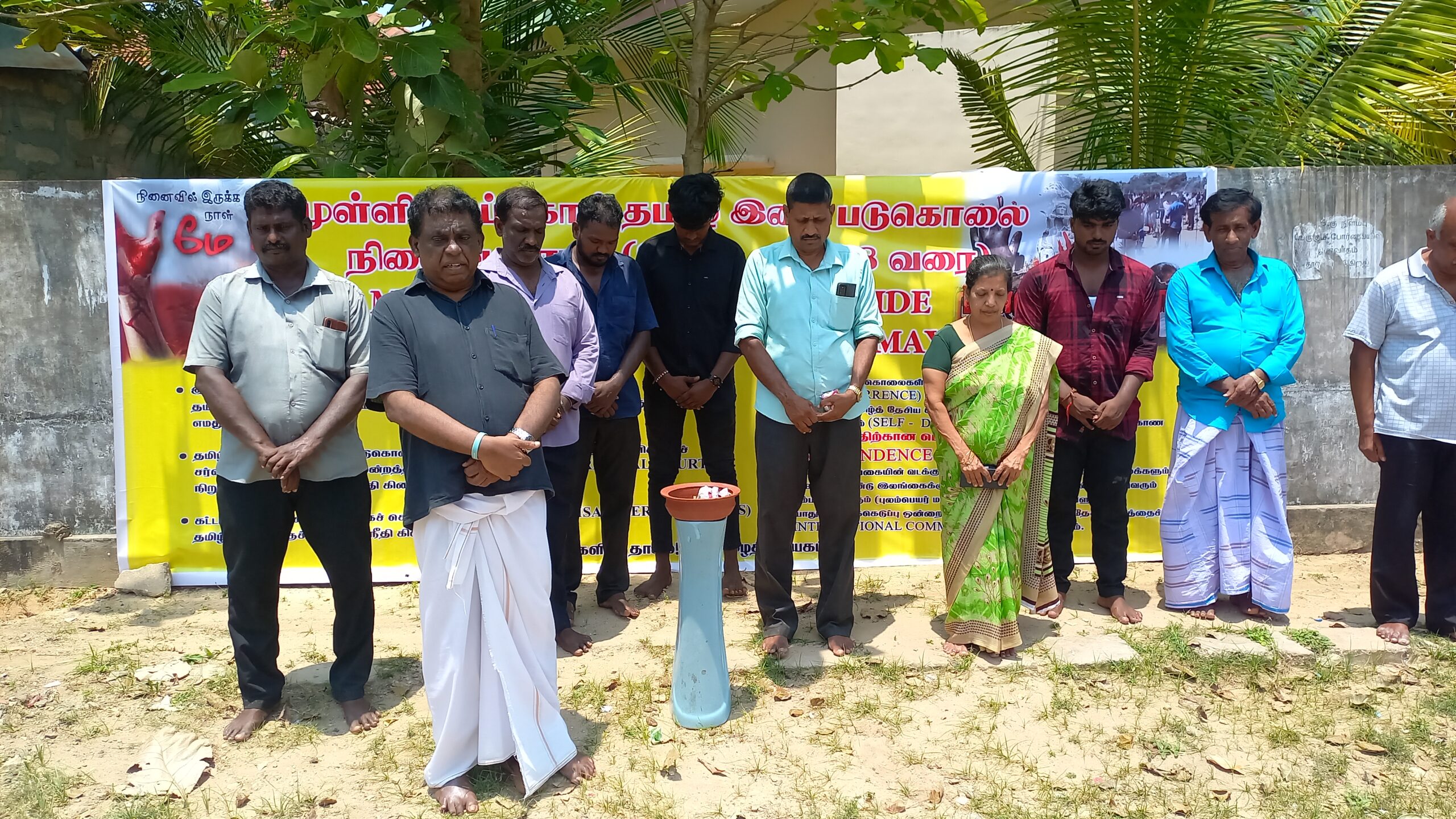
University of Jaffna students commemorate Black July

Students from the University of Jaffna held a commemoration event to remember the thousands of Tamils that were murdered by state-sponsored Sinhala mobs during the 1983 anti-Tamil pogrom.

The students and staff at the university lit a flame and paid floral tributes to mark 40 years since the massacre.

A black flag was also hoisted at half mast at the university entrance.

Between 23rd July and 30th July 1983, Sinhala mobs targeted Tamil homes and businesses, looting and ransacking property. Driven from their homes, particularly in Colombo, over 3000 Tamils were massacred, whilst thousands more were effectively deported by the state to the North-East.

Eye witness reports described mobs chasing Tamils down the street with knives and setting them alight alive. Hundreds of women were raped. Tamil political prisoners TELO founders Thankathuari and Kuttimanei locked up in Welikada jail, deep within the island’s south, were also targeted as prison guards allowed Sinhala inmates to slaughter them.

Posted in Uncategorized

Canadian Prime Minister remembers Black July victims and renews calls for accountability for human rights violations in Sri Lanka

Canadian Prime Minister Justin Trudeau issued a statement today to mark the 40th anniversary since the 1983 anti-Tamil pogrom where thousands of Tamils were killed by state-sponsored Sinhala mobs.

In his statement, Trudeau said:

“The brutality of Black July escalated tensions in what became a decades-long armed conflict that led to the death of tens of thousands of people, and trauma that communities continue to endure today.”

“On this sombre day, we join Tamil-Canadians and Tamil communities around the world to remember the victims, honour the survivors, and recommit ourselves to always stand against hate and violence,” he added.

Trudeau also highlighted that after Black July, thousands of Tamils fled Sri Lanka to find safety in other countries. He noted that at the time, the Canadian government estbalished a Special Measures program in 1983 and “1,800 Tamil people chose to come to Canada to build a new life – creating one of the largest Tamil diasporas in the world.”

Yesterday, Trudeau met with Tamil victim-suvivors to listen to their testimonies from Black July.

“I had the opportunity to meet with many Tamil-Canadians to hear their tragic memories of Black July, join them in honouring the memories of those lost, and thank them for the many important contributions they have made – and continue to make – to our country,” he said in his statement.

President convenes APC on July 26

President Ranil Wickremesinghe will convene an All Party Conference (APC) on July 26 to make the Party Leaders aware about the programmes implemented and programmes expected to be implemented with regard to the national reconciliation.

Leaders of all political parties and independent groups representing Parliament have already been invited to participate in this conference which will be held on July 26 at the President’s Office.

The President has presented a comprehensive proposal for reconciliation and devolution and for furthering the multifaceted aspects of the development plan in the North and he has invited all the party leaders in the Parliament to work with consensus for the sake of national unity regarding these measures.

President Ranil Wickremesinghe previously emphasised that he has submitted the best proposal related to solving the problems of the people of the North and East, and that the Tamil party leaders should decide whether to take it forward or not.

The President emphasized that the government has not in any way raised any preparation for the integration of the Northern and Eastern Provinces or any discussion about it and that the purpose of this programme is not to get political benefits but to solve the problems of the Tamil people in the North East.

The President intends to fully implement the 13th Amendment of the Constitution only if all the Party Leaders representing the Parliament agree to a full division of powers.

The President is of the opinion that the agreement of all the Party Leaders representing the Parliament is necessary for granting the Police powers mentioned in the 13th Amendment of the Constitution and for that a 2/3 majority in the Parliament is also required.

After the completion of the preliminary work on the division of powers, bills regarding the running of the affairs of the provincial councils are also to be submitted to the Parliament. Under the 13th Amendment of the Constitution of the Republic, the power to make decisions regarding certain subjects is transferred to the Central Government and those subjects must be declared legally.

The draft for the Office of National Unity and Reconciliation has been forwarded to the Attorney General to examine its constitutionality and it is to be submitted to the Parliament soon and the National Action Plan on Reconciliation drafted by the Office of National Unity and Reconciliation (ONUR) will also be submitted to the Cabinet soon, the President stated in the discussion held on the July 18 with Tamil Parliamentarians representing the North and East.

(sundayobserver.lk)

Posted in Uncategorized

No final decision by EU on GSP+

The European Union will make its final decision on the continuation of the GSP + concessions for Sri Lanka when their review for this year concludes.

Until a final announcement from the EU is made the bloc has allowed for the existing concessions to be continued temporarily for another four years.

Once the final decision of the EU is announced that some analysts believe could happen any time closer to the end of this year or even in January 2024, the existing concessions will cease and the new decision will become effective.

Joint Apparel Association Forum (JAAF) spokesman Yohan Lawrence points out that this is favourable for Sri Lanka as this would mean the current scheme gets rolled over for another four years.

“It probably works in our favour,” he said adding that it is possible there would be another review cycle again.

The EU in a twitter post on July 19 stated “As negotiations for our new GSP+ arrangement are still ongoing between the EU’s co-legislators, the European Commission has proposed a four year extension to the current scheme until 31 Dec 2027 so that countries like Sri Lanka, don’t lose their preferential access in the interim.”

Posted in Uncategorized

Jeevan to consult hillcountry MPs over utilisation of Rs. 3 bn Indian grant

CWC General Secretary and Water Supply and Estate Infrastructure Development Minister Jeevan Thondaman yesterday (23) said that he intended to consult lawmakers representing the hill country regarding Indian grant of Sri Lanka Rs 3 bn exclusively for the Indian origin Tamil community here. The new entrant to parliamentary politics said that their proposals would be submitted to New Delhi through the High Commission here.

Minister Thondaman said so in response to The Island query as to how he intended to proceed in the wake of the grant announced by Indian Prime Minister Narendra Modi during talks with the Sri Lanka delegation, led by President Wickremesinghe. Minister Thondaman, who had been on Wickremesinghe delegation, said that the Indian grant would be utilized primarily to uplift education and health sectors.

The CWC contested the last general election on the SLPP ticket.

The Indian High Commission in Colombo quoted Foreign Secretary Vinay Kwatra as having told the media in New Delhi, soon after the conclusion of talks at Hyderabad House, India would implement a development package exclusively centered for the Indian origin Tamil community.

Kwatra said: “This year, as you would all know, marks the 200 years of the arrival of the Indian origin Tamil community in Sri Lanka and to commemorate this significant moment of history the Prime Minister announced that the Government of India will be implementing a development.”

Minister Thondaman said that their focus would be particularly on the education sector. According to him, the Delhi discussions covered the 13th Amendment to the Constitution, energy and economic development, and development of Indian Origin Tamil Community. “I highlighted that providing infrastructure facilities alone will not empower the up country but providing quality education will provide sustainable transformation.”

Tamil Progressive Alliance (TPA) leader Mano Ganeshan issued a statement appreciating the grant announced by Premier Modi.

Posted in Uncategorized

“Black July” One of the darkest days in Sri Lanka’s history

Today (23) is a day that brings back the memories of one of the darkest days in Sri Lankan History.

Today (23) marks 40 years since “Black July” a day on which Sri Lankans who had been living in peace and harmony for thousands of years were divided and pitted against each other, all for the selfish political goals of a few.

The violence that gripped Sri Lanka on a day like today, 40 years ago split our society in half and changed the course of our nation forever.

The violence on that day claimed the lives of many of our brothers and sisters and the destruction to property on that day was immeasurable.

The events that led up to this bloodshed are written in Sri Lanka’s history books and one thing that is clear is that this day of violence was not an isolated incident.

This bloodshed was the result of the political decisions of Sri Lanka’s post-independence leaders, which divided and shattered Sri Lanka’s society.

These political decisions were made to serve the selfish political aspirations of a few and not for the greater good of Sri Lanka.

The rulers consolidated their power while their families’ places in Sri Lanka’s political sphere were assured.

What happened to the people of Sri Lanka?

The people were divided while the economy was in tatters. Thousands of innocent people lost their lives. While this incident was a direct result of the selfish political aspirations of a few, we must not forget the brave Sri Lankans who worked against this violence and bloodshed.

While a few in power worked to sow the seeds of hatred, there were those who protected their fellow citizens at great risk of their own safety.

The story of those who risked their lives to protect their fellow brothers and sisters amidst the chaos speaks volumes of what true Sri Lankan patriotism and brotherhood should be.

Sri Lanka is a stark example of what happens to a nation divided on religious and racial grounds.

The only hope for a better Sri Lanka is to move forward as one people, united in our ambition to become a developed nation.

Posted in Uncategorized

First two Sinopec fuel shipments to arrive in August

The first two shipments of fuel under the agreement with China’s Sinopec are due to arrive in Sri Lanka next month, State Minister of Petroleum D.V. Chanaka revealed.

Accordingly, Chanaka stated that the two shipments are expected to arrive in the first week of August.

Meanwhile, he assured that a Maximum Retail Price (MRP) will be stipulated by the Government to all fuel companies under the price formula from August.

Sri Lanka signed a contract agreement with Sinopec in May this year, in response to the ongoing foreign exchange crisis.

Under the new deal the Chinese firm will be given a 20-year licence to operate 150 fuel stations and will also be able to invest in 50 new fuel stations.

Meanwhile, steps will be taken to replace the fuel price formula with a maximum retail price, thereby creating a fuel competitiveness that benefits the country, State Minister D. V. Chanaka said.

The State Minister also said that it is expected to take a decision regarding the QR code after discussing it with all the parties in the future.

He expressed these views today (23) during a press conference themed ‘Collective Path to a Stable Country’ held at the Presidential Media Centre (PMC).

State Minister of Power and Energy D. V. Chanaka further commented;

The Ministry of Power and Energy was one of the hardest-impacted ministries during the country’s economic crisis. There was an era of oil queues. After President Ranil Wickremesinghe took office, Minister Kanchana Wijesekera took up the challenge of solving the fuel crisis.

There were no dollars in the country at that time. Only two of the 28 fuel suppliers registered with the Ceylon Petroleum Corporation offered to provide fuel to the country. Such was the situation then.

The country’s dollar reserves began to stabilize thanks to President Ranil Wickremesinghe’s sound economic policy. On the other hand, in accordance with Minister Kanchana’s management strategy, it was possible to supply fuel to customers in accordance with the quantity of dollars available in the country by using the QR code.

The fuel queues started to shorten two or three days after the QR code was implemented. The percentage of fuel delivered by QR code is currently being gradually increased.

As the State Minister, Minister Kanchana assigned me four key duties, including ensuring a consistent flow of fuel and boosting competitiveness.

It was decided to establish a fuel procurement program for a year rather than just a few months in order to ensure a steady supply of fuel. Previously, while soliciting bids for fuel, the fuel was purchased based on the amount of room that was available in our warehouses. An effort was made to research the Singaporean system instead.

Later, tenders were called in lieu of the conventional procedure on days when the price was the lowest in the world.

Previously, there were no arrangements to maintain buffer reserves. So far, steps have been taken to maintain a reserve of 30,000 litres of fuel including petrol and diesel. We are in charge of additional 60 million dollars in addition to the money needed for daily expenses.

After studying the existing methods in the world, a new method was introduced in this country. Accordingly, we no longer pay any advance. Fuel tankers coming to Sri Lanka should be fully stocked in our warehouses. After that, the necessary purchases for the week are made with the dollars available in the Ceylon Petroleum Corporation.

There are several advantages here. Risk fees were completely eliminated. This new system has the potential to save 300 million dollars per year.

We previously only paid late fees. But as of right now for the first time, we have earned 13 million dollars in late fees from fuel companies only in the first half of this year. The first installment of 3 million dollars is being collected before the 18th. The remaining amount of 10 million dollars will be fully recovered from the suppliers.

In order to increase fuel competitiveness, agreements have been reached with three major internationally registered companies. This will increase competition and offer a sound remedy for the current dollar issue.

By the first week of next month, a ship of Sinopec Company is scheduled to arrive in Sri Lanka. Sri Lanka signed a contract agreement with Sinopec in May this year, in response to the ongoing foreign exchange crisis.

Until now, the fuel price formula existed only for Ceylon Petroleum Corporation. Instead, steps will be taken to set a maximum retail price using the price formula to affect all companies through this new system.

Thus, the Ministry will decide only the maximum retail price in the future. The companies will then be able to provide fuel at a price of their choice subject to the maximum price. This will create competition among fuel companies resulting in reduced fuel prices.

A Reflection On Forty Years Since The ‘Black July’ Anti-Tamil Pogrom In Sri Lanka By K. Mukunthan

The cause-and-effect of 1983 anti-Tamil pogrom

It is forty years since the 1983 anti-Tamil pogrom (‘Black July’) in which an estimated 3,000 Tamils died, hundreds of thousands displaced, and millions worth of Tamil properties destroyed. A crime of monumental proportion to which no one was ever held responsible. During the peak of the violence, J.R. Jayewardene, the president at that time, said, “I am not worried about the opinion of the Jaffna (Tamil) people; now we cannot think of them, not about their lives or their opinion………. really if I starve the Tamils out, the Sinhala people will be happy” – supposedly reflecting the mood in the South of the country and exposing his own attitudes towards the non-Sinhala populace.

Undoubtedly, Black July was the tipping point on Tamil people’s history in Sri Lanka. It is no exaggeration that almost every Tamil was made to feel they did not belong to the country, and they would always be second class citizens. Even for their basic physical security, they were transported to the North-East of the country where they had historic links and were the majority.

‘Black July’ did not happen in a vacuum. In fact, there was an air of inevitability about it. The seeds were planted decades earlier – discriminatory Citizenship Act, Official Language Act and educational policies, colonization schemes that altered the demography in Tamil majority areas, abolition of power-sharing pacts under hardline Sinhala Buddhist pressure, the burning of the Jaffna Public Library, enactment of the Prevention of Terrorism Act (PTA) and ensuing routine police and army brutality, and many other anti-Tamil riots of a lesser scale.

The impact of ‘Black July’ was immediate, global, and far reaching. Every Tamil who could find a way to leave the country left. The incipient armed resistance grew big enough to fight a protracted war that lasted two and a half decades with devastating consequences to all. Militarized Sri Lanka grew more authoritarian where human rights were violated without conscience, impunity reigned, and corruption became endemic. The International Community, and India in particular, started to play an ever-increasing role in Sri Lankan affairs, often with charitable intentions.

The longer term impacts

Today, Sri Lanka is economically nearly bankrupt. The excessive violence committed by the armed forces to end the war in 2009 has been a subject of much international scrutiny. A few Sri Lankan top political and military leaders are personae non gratae in many countries. Sri Lanka is often cited as a country that was so promising only a few decades ago but managed to squander everything. Without oversimplification, most of Sri Lanka’s ills can be attributed to a single source – its inability to manage a pluralist society without pandering to majoritarian chauvinism. In effect, what should have been an immense strength, became its defining failure.

Forty years may be a short time in a country’s history, but this is typically half the lifetime of an average person. Many a youth who fled Sri Lanka after ‘Black July’ are now grandparents in some corner of the world. ‘Black July’ was the exodus moment for the Tamil people in Sri Lanka, with nearly one-third of Tamils from North-East Sri Lanka origin – loosely defined as ‘Tamil Diaspora’ – now living in many countries across the world with transformational impact on both, those who left and others who are left behind.

Tamil diaspora phenomenon

Tamil Diaspora settled in most western countries could be characterized as one of the success stories among the recent migrant communities. Building on their inbuilt values of education and hard work, they have many notable achievements – professionally, economically, and through social and political impact in their new home countries. On top of it, they have shown immense passion and commitment to maintaining and passing on their linguistic, religious, and cultural traditions to the next generation. And there was the added incentive – the will to cherish and enhance their identity in countries that did not impose the obstacles they faced in their birth country.

But this romantic notion of migrant success is only part of the story. There are many who lead unsettled and difficult lives – whether as refugees in Indian camps or in other countries without legal certainties or, working physically demanding jobs in harsh climates to meet the economic demands of theirs and the loved ones they left behind. Older people often lead lonely lives in unfamiliar environments with unfulfilled dreams of spending their old age in a homely, village environment. Also, the challenges faced by the young generation caught up between different cultural norms and value systems are not trivial.

Tamil people in Sri Lanka

Compared to those in the diaspora, Tamil people living in Sri Lanka face exceptional challenges. Their areas are de-populated and many lead limited social lives, with their relatives and friends already moved overseas. Parents living alone in their old age with no children to look after has become the new normal. For young people, opportunities are limited, with their regions near the bottom in terms of economic development and educational achievements. The impact of militarization and war related displacements and disappearances continue to haunt them. A generation that took the brunt of the war is still languishing in unpalatable conditions.

In terms of political rights and empowerment, the sense of being second-class citizens in their home country still lingers. The promises given by different Sri Lankan Governments related to accountability, transitional justice, political resolution, and reconciliation remain just that. The political outcome Tamil people achieved after decades of struggle – power devolution through Provincial Councils – remain ineffective with no political will on the part of the Government for full implementation.

A multi-faceted, pragmatic approach

Sri Lanka appears to be a country that resists meaningful change even after historic events such as ‘Black July’, end of war in May 2009, and the Aragalaya resistance in response to the unprecedented economic crisis. Perhaps, only slow and progressive changes are what is possible in an intransient political system that has dominated the country for decades. What the Tamil community, including those in the diaspora, can do under such circumstances?

For the Tamil diaspora, the influence and leverage we can have on our governments’ Sri Lanka policies (including at the UN) are fundamental to our advocacy efforts. But what has often been overlooked is the need to engage with all key stakeholders in Sri Lanka and develop a deeper understanding of the aspirations and fears of each community.

Tamil politics for the past several decades has been driven by the fear of losing its uniqueness and identity in the land where they have been living for centuries. It is also a fact that despite being the dominant majority, the Sinhalese community also suffers from a feeling of insecurity due to certain historical and geographical considerations. There also appears to be some paranoia about Tamil diaspora, with no sympathetic consideration given for their hardship and suffering due to displacement and migration.

We believe it is the responsibility of all communities and their leaders to take steps to reduce both the fear and insecurity of the other. It is in this matter that many politicians have not only failed but, in fact, exploited peoples’ fear for their own political benefits.

It is also unfortunate that ethnic and religious harmony in Sri Lanka has been viewed almost exclusively through a political prism, and the role of the civil society and religious leaders in promoting them has been rather marginal.

Tamil diaspora engagement

Forty years after Black July, Tamil diaspora is confident and capable, and many among them are willing to explore different ways of contributing to the betterment of the Tamil people, and indeed all communities living in Sri Lanka.

While the possibilities are varied, many believe that with genuine and progressive inter-religious and civil society dialogue, including with the participation of Tamil diaspora, Sri Lanka can inch towards a truly pluralist country – a country where no community feels fearful of losing its identity or pride of place, and ‘Black July’ will appear only in history books, never to be repeated.

*Dr. K. Mukunthan is a Director of Global Tamil Forum (GTF) where he is a Senior Member of the Strategic Initiatives Team.