Govt. finally allows Chinese ship visit

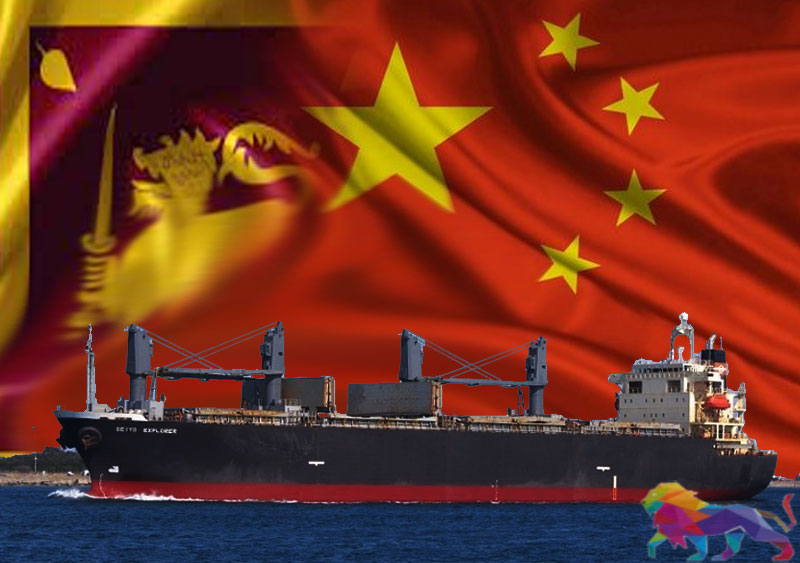
Chinese research vessel Shi Yan 6 would arrive in Sri Lanka in late November, Foreign Minister Mohamed Ali Sabry said on Monday (09). The Foreign Ministry had granted approval for the arrival of the ship, he added.

“The ship is expected to arrive in Sri Lanka on 25 November. Initially, they wanted to come in October. We asked them to come in November. They again asked if they could come in late October. We have maintained our position that they must come in late November. This is the situation, now.”

The Minister said that the Sri Lankan government had a lot on its hands now and that it needed to marshal all its resources to deal with the sensitive issues pertaining to the Chinese ship visit.

“We held an international conference of environmental ministers last week. We will have an IORA meeting this week, and we have to accommodate representatives of 34 countries. President Ranil Wickremesinghe will go to China next week. Then a French delegation will be here. We have requested the Chinese to come thereafter,” the Foreign Minister said, adding that there was a lot of pressure from India and several other parties.

“We can’t deny there is pressure from multiple sides. This is a complex matter, given geopolitics. There will be controversies within and outside Sri Lanka. We need to be ready to deal with these pressures. We need to have all the resources at our disposal.”

Minister Sabry said there is a struggle among major powers. Sri Lanka sits at a strategic location in the Indian Ocean.

“We need to balance everything. This is not easy. We need to maintain good relations with everyone involved.”

China has been a friend of Sri Lanka, and relations with the middle kingdom are extremely important to Sri Lanka, Minister Sabry said.

“We have not changed our stance. We have given them a date.”

India views the arrival of Chinese ships from a different angle, he said.

“Prime Minister Sirimavo Bandaranaike before the the UN General Assembly, in 1964, said that the Indian Ocean and the skies above it would be declared a Zone of Peace. This is what we want. We won’t do anything that violates the peace in the Indian Ocean. We have tough choices, and we have to make the best decisions for the country.”

Minister Sabry said that as a sovereign nation, Sri Lanka could decide whether to allow a vessel to enter one of its ports, and discussions with the Chinese were based on that.

The Minister, however, refused to divulge whether Indian officials had directly reached out to him and expressed disapproval for allowing the Chinese research vessel to arrive.

“We can’t reveal everything. China is a close friend. We have repeatedly said we will not discriminate against China for any reason. India is also important to us. They helped us greatly last year. The West is also important to us because 80 percent of our exports go there. I don’t make decisions on my own. We all talk and decide what the best course of action is.”

Minister Sabry also said that the Foreign Ministry has not in any way influenced academics from Ruhuna University to be involved with Shi Yan 6. Initially, it was reported that academics from Ruhuna University would board the ship. However, last week, Prof. Disna Ratnasekera of the China Sri Lanka Joint Centre for Education and Research (CSL-CER) of the University of Ruhuna told the media that they were not involved with the research carried out by the vessel.

“We have not told the university anything. The decision was probably taken by the university,” he said

However, the National Aquatic Resources Research and Development Agency (NARA) Chairman Prof. Jayantha Wijeyaratne said NARA was involved in the research carried out by the ship and that geophysical and seismic survey vessel Shi Yan 6 would be in the possession of NARA and that those data will be considered property of the Sri Lankan government. Prof. Wijeyaratne said NARA would mainly focus on research related to the quality of water, not the seabed.

Minister Sabry added that Victoria Nuland, Acting United States Deputy Secretary of State, had not informed him that the US was disappointed that Sri Lanka had granted permission for the Chinese research vessel to come.

“China, India, and the US have a big power rivalry going. There are a lot of suspicions. They worry that other countries are collecting information about them. We don’t want to get involved with any of this.”

Posted in Uncategorized

Easter attacks trial prosecution testimony commences

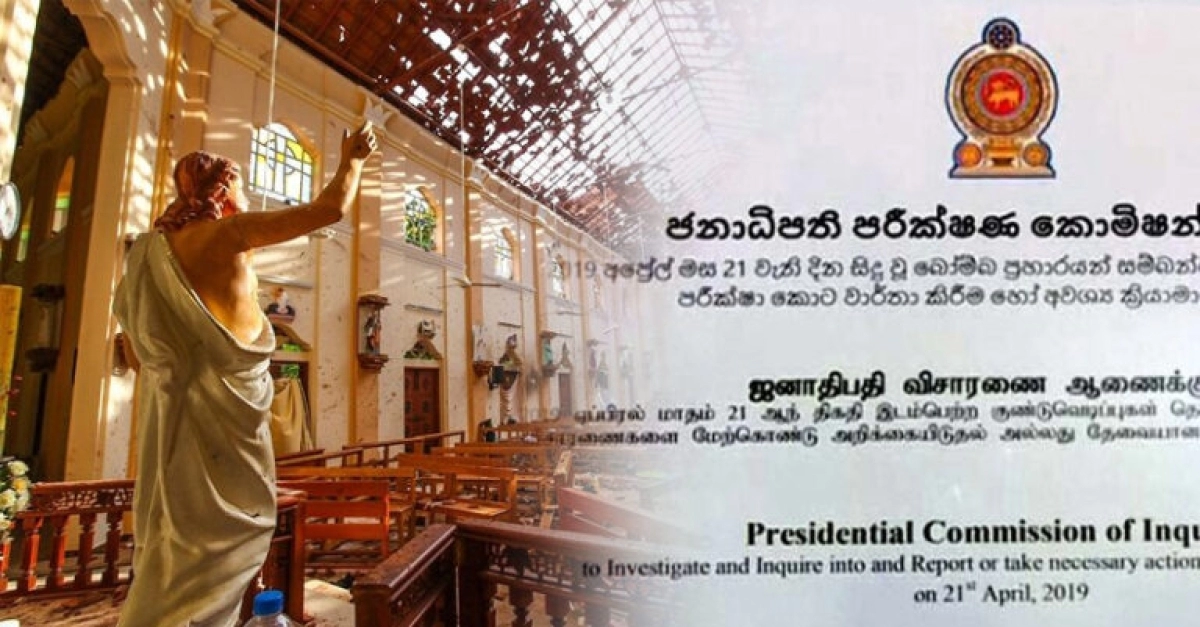
The hearing of testimony for the prosecution, in the case filed against 25 accused, including Naufer Moulavi, who have been charged with the explosion of bombs targeting Catholic Churches and star class hotels, on Easter Sunday (21 April 2019) and conspiracy to set off bombs, commenced before the Trial-at- Bar of the Colombo High Court, yesterday.

The High Court Bench comprised Judges Damith Thotawatta, Amal Ranaraja and Navaratne Marasinghe. ASG Haripriya Jayasundera, prosecuted on behalf of the Attorney General’s Department.

Before the commencement of the hearing of testimony, ASG Jayasundera delivered the opening statement and she requested the Court to mete out justice on behalf of the scores of victims, of the Easter Sunday carnage.

She then noted that during the hearing of testimony, the prosecution would seek to explain to the Court, the manner in which the 25 accused had spread extremist views across the country, prior to the blasts, along with how they had coaxed certain people to take part in the suicide blasts, the way in which they had gathered and collected explosives and how the carnage, had been planned meticulously.

ASG Jayasundera then stated that the prosecution will also be submitting to Court, statements that had been recorded from the 25 accused, as per Provisions of the PTA and the Code of Criminal Procedure Act, CCTV Camera Footage, along with evidence from specialists.

The prosecution informed the Bench, that in the aftermath of the carnage, the Attorney General, at the time, had filed charges against the 25 accused, before the High Court, on 10 August, 2021.

She further added that upon the demise of the 17th defendant in the trial, the prosecution had amended the charge sheet, filed against the defendants and that to date charges were being sustained against 24 of the accused.

Ishanka Hansamali, who had worked as a receptionist at the restaurant, ‘Table 1’ at Shangri-La Hotel and who had been named as the 943rd witness to the prosecution, then testified.

She mentioned that on the day, which was Easter Sunday, special cuisine had been put on display at the restaurant for both locals and tourists alike and observed that at around 10.15 a.m., the loud noise of an explosion had been heard, from the side of the restaurant.

The witness explained that the restaurant, where she had been stationed, had been separated into four sections called A, B, C and D and that the first explosion, had taken place between the C and D sections.

She added that after the first explosion, the people had begun to run helter-skelter having become afraid for their lives and that a second explosion had then taken place near the lift of the restaurant.

After that, the prosecution showed the witness, four photos and she then identified Zahran Hashim, who was in one of the photos and stated that on the day of the incident he had been behind her and that she had not known him as Zahran, at the time.

Later, further hearing of testimony was put off to today, (11) and the prosecution informed the Court, that they will be submitting CCTV Camera Footage, captured from the hotel premises, as evidence.

The Court had also summoned DIG P. Ampawila and Chief Inspector Saman Perera, to testify for the prosecution and the judges advised them to be present to give evidence, when noticed again.

Abolition of executive presidency should be tied to early general election – Opposition

The Opposition is agreeable for the abolition of the executive presidency if parliamentary election could be held instead, top Opposition spokesperson Prof. G.L. Pieris said.

The former External Affairs Minister mentioned this when The Island asked whether the rebel SLPP group, styled as Nidahas Janatha Sabhawa, would seek a consensus with Opposition parties in that regard.

The presidential election is scheduled to be conducted by October next year and the parliamentary poll the following year.

Prof. Peiris said the main Opposition Samagi Jana Balawegaya (SJB) and the JVP agreed that the abolition of the executive presidency and the next Parliamentary elections should be held simultaneously. “This is a very clear and emphatic stand.”

Prof. Peiris ruled out any agreement on the postponement of the presidential election, under any circumstances. Responding to another query, the top academic said that in terms of the Constitution President Ranil Wickremesinghe could call a general election any time after completion of half of the five-year term of a Parliament.

If the Wickremesinghe-Rajapaksa government was genuinely interested in pursuing that option, the issues could be discussed and agreement reached on a formula acceptable to all to advance the general election and the simultaneous abolition of the executive presidency, the National List MP said.

The ex-Minister said that Wajira Abeywardena, in his capacity as lawmaker and Chairman of the UNP, recently called for the postponement of the presidential election on the basis the government lacked sufficient funds to meet basic public needs if funds were diverted for the conducting of the presidential poll.

Prof. Peiris asked the SLPP to disclose its stand on the UNP’s move. Having elected the UNP leader as the President, the SLPP couldn’t remain silent as the executive sought to deprive the people of their franchise, Prof. Peiris said.

“The bottom line is that MP Abeywardena wouldn’t have said so unless the top management decided on a particular strategy,” MP Pieris said, urging the government to accept their challenge.

JVP leader Anura Kumara Dissanayake said that the government seemed to be thinking of postponing presidential polls on some pretext till the parliamentary polls next year. Lawmaker Dissanayake, too, said that the abolition of executive presidency should be tied to having parliamentary polls.

Meanwhile, addressing the media at the rebel SLPP group’s Nawala Office on Monday (09), Prof. Peiris alleged that the so-called Online Safety Bill and the new Anti-Terrorism Law were meant to create an environment conducive for the government to contest whatever national election. Describing them as political tools, Prof. Peiris warned against moves to suppress political dissent. The ex-Minister vowed to press ahead with their campaign to have the long overdue Provincial Councils and Local Government polls.

Prof. Peiris said that the government should be ashamed over its failure to name a new IGP before the second extension granted to C.D. Wickremaratne expired on Monday (09) at a time the underworld was on a killing spree. The internationally renowned academic questioned the failure on the part of the President to pick a suitable person to head the Department amidst deepening turmoil.

The academic alleged that the government was obviously much more determined to suppress the parliamentary Opposition than eliminating the underworld. Almost daily shootings in Colombo, its suburbs and provinces indicated that law enforcement was on the verge of collapse while various government spokesmen boasted, both here and abroad, of what they were capable of.

Ali Zahir Moulana appointed to Nazeer Ahmed’s vacant MP seat

Ali Zahir Moulana Seiyad of the Sri Lanka Muslim Congress (SLMC) has been appointed as a Member of Parliament for the Batticaloa electoral district, by way of an Extraordinary Gazette notification.

The Election Commission of Sri Lanka on Wednesday (11 Oct.) issued an Extraordinary Gazette notification, announcing Moulana’s appointment to the post, following the disqualification of former minister Ahamed Zainulabdeen Nazeer’s parliamentary seat.

The Secretary General of Parliament has informed the Election Commission, under Section 64 (1) of the Parliamentary Elections Act, No. 1 of 1981, that a vacancy has occurred in the membership of the Ninth Parliament by reason of Mr. Ahamed Zainulabdeen Nazeer ceasing to be a Member of Parliament.

The Gazette states that the Returning Officer, for the said Electoral District was directed by the Election Commission under Section 64(1) of the Parliamentary Elections Act, No. 1 of 1981 to fill this vacancy as provided for under paragraph 13 (b) of Article 99 of the Constitution.

Accordingly, the Returning Officer has made a return to the effect that Mr. Ali Zahir Moulana Seiyad was declared elected as a Member of Parliament for the said Electoral District and has submitted the report to the Election Commission, the gazette stated.

Taking to ‘X’ (formerly known as Twitter) in this regard, Ali Zahir Moulana said “This judgement sets a critical precedent to the political establishment – strengthening the ideologies & principles of political parties, fortifying the doctrines of maintaining a civilized, orderly democracy & most importantly consolidating the absoluteness of our Constitution”.

The former State Minister, who is a senior member of the Sri Lanka Muslim Congress (SLMC), had previously served as a Batticaloa District MP under the United National Party (UNP).

Sri Lanka’s projections not in IMF World Economic Outlook; Full Recovery still NOT assured

The much awaited World Economic Outlook of the International Monetary Fund will be released on Tuesday (10).

However, Sri Lanka’s projections for 2023–28 are excluded from publication owing to ongoing discussions on sovereign debt restructuring.

The analysis and projections contained in the World Economic Outlook are integral elements of the IMF’s surveillance of economic developments and policies in its member countries, of developments in international financial markets, and of the global economic systems.

“In a more global perspective, Pierre-Olivier Gourinchas, Economic Counselor and Director of the Research Department, IMF stressed that structural reforms at the right time are key, and the first generation of reforms will help unlock more growth based reforms.

On Sri Lanka, Daniel Leigh, Division Chief, Research Department, IMF pointed out that Sri Lanka must continue with its sustained reforms, and current reforms have started to bear fruit.

He went on to note that despite securing some degree of stability, full recovery for Sri Lanka is still not assured.

At the same time, the World Economic Outlook of the International Monetary Fund reports that the baseline forecast is for global growth to slow from 3.5 percent in 2022 to 3.0 percent in 2023 and 2.9 percent in 2024, well below the historical (2000–19) average of 3.8 percent.

Advanced economies are expected to slow from 2.6 percent in 2022 to 1.5 percent in 2023 and 1.4 percent in 2024 as policy tightening starts to bite.

Emerging market and developing economies are projected to have a modest decline in growth from 4.1 percent in 2022 to 4.0 percent in both 2023 and 2024. Global inflation is forecast to decline steadily, from 8.7 percent in 2022 to 6.9 percent in 2023 and 5.8 percent in 2024, due to tighter monetary policy aided by lower international commodity prices.

Core inflation is generally projected to decline more gradually, and inflation is not expected to return to target until 2025 in most cases.

Posted in Uncategorized

Another IMF team to visit Sri Lanka next week

Another team from the International Monetary Fund is expected to visit Sri Lanka next week.

Minister of Justice, Prisons Affairs and Constitutional Reforms Dr. Wijeyadasa Rajapakshe said the team will hold extensive discussions on the second tranche of the Extended Fund Facility for Sri Lanka.

The discussions will focus on the country’s tax policy and other economic factors.

He said that officials are hoping to reach a final decision on the matter later next week.

Posted in Uncategorized

London Stock Exchange listed company hails Sri Lanka court ruling

A London Stock Exchange listed company has welcomed the court ruling against Sri Lanka’s Environment Minister Naseer Ahamad.

Capital Metals (AIM: CMET), a mineral sands company approaching mine development stage at the high-grade Eastern Minerals Project in Sri Lanka said it was to note that the Supreme Court in Sri Lanka has determined a decision by the Sri Lanka Muslim Congress to expel Minister Naseer Ahamad from its party membership to be legally valid.

As a result of his expulsion, Ahamad has lost his parliamentary seat and therefore his position as Minister of Environment with responsibility for the Geological Survey and Mines Bureau (“GSMB”).

Ahamad and the Chairman of the GSMB, whom the Minister appointed to the position, were named by the Company as respondents in the Company’s legal proceedings instituted in the Court of Appeal of Sri Lanka, seeking the intervention of the Court in respect of the notice of cancellation of the Company’s Industrial Mining Licences (“IMLs”) issued by the GSMB.

As previously announced, the conduct of Ahamad and the Chairman of the GSMB is also under scrutiny from the Committee on Public Enterprises in Sri Lanka which has appointed an independent sub-committee to investigate misappropriation, as has been widely reported in Sri Lankan media.

“This is a positive development resulting in the removal from office of the minister we believe to be primarily responsible for the illegal interference with our licences. This, together with the recently approved change in mineral licensing procedures, which transfers certain responsibilities to the Board of Investment, should bode well for our situation but also more generally for the country as it takes steps to improve governance,” Greg Martyr, Executive Chairman of Capital Metals plc said.

He says his company continues to await the outcome of their statutory appeal against the attempted cancellation of their licences which was heard by the Secretary of the Ministry of Environment two weeks ago and are confident of a positive outcome.

Capital Metals plc is a British company listed on the AIM segment of the London Stock Exchange and one of only a few foreign investors in Sri Lanka’s mining industry.

After investing US$11 million in exploration and development activities including detailed environmental assessments between 2017 and 2022, the Company’s Sri Lankan subsidiary, Damsila Exports (Pvt) Limited, was issued an initial two licences in August 2022 to mine heavy mineral sands in the Eastern Province, containing industrial minerals including ilmenite, rutile, zircon, and garnet.

SJB will not support electoral reforms: Marikkar

The Samagi Jana Balawegaya (SJB) today said it will not support the proposed parliamentary electoral system.

SJB’s official spokesman and Member of Parliament S.M. Marikkar came up with this remark in response to a report stating that Minister of Justice Wijedasa Rajapaksha is to submit a Cabinet Paper to amend the parliamentary electoral system.

“The Government obviously needs the Opposition’s support to get the legislation approved in Parliament. We, the SJB will never support the electoral amendment as it is a trick by the government to postpone the general elections,” Marikkar said.

“The Government can only postpone the general elections as there is no legal provisions to postpone the Presidential election. President Ranil Wickremesinghe is going to play J.R. Jayewardene by trying to postpone the general elections. Late Jayewardene contested the Presidential election and then held the referendum to postpone the general election. Wickremesinghe is also trying to play a somewhat similar game,” he added.

“The SLPP should be aware of these tactics of President Wickremesinghe,” he also said.

China Exim Bank reaches preliminary debt deal with Sri Lanka: report

The Exim Bank of China, the top Chinese lender to Sri Lanka has reached a “preliminary” agreement with the island, a media report said, raising prospects making progress on restructuring the defaulted island’s debt.

The debt agreement was reached at the end of September, Bloomberg Newswires quoted Chinese Foreign Ministry Spokesman Wang Wenbin was quoted as saying in Beijing on October 10.

Sri Lanka has to make progress acceptable to the International Monetary Fund to unlock a second 330 million dollar tranche and continue to be eligible for budget support loans from the Asian Development Bank and World Bank.

China is also talking to Sri Lanka’s other creditors known as the Paris Club, the spokesman was quoted as saying.

It is not clear whether the “preliminary” agreement on restructuring is acceptable to the IMF as sufficient progress.

Related Sri Lanka’s external debt restructure ‘progress’ decision by IMF exec board

Sources familiar with the talks said there appeared to be a ‘softening’ of China’s stance of late.

Out of 6,850 million dollars owed to China, the Exim Bank had loaned 3,992 million dollars.

China Development Bank had loaned another 535.2 million dollars classified as bilateral. The CDB gave another 2,185 million term loan classified as a commercial credit.

“All creditors are engaging positively with us,” State Minister for Finance Shehan Semasinghe said last month.

“We expect decisions from all our creditors. For us earlier the better.”

Related Sri Lanka expects restructuring decisions from all creditors: Minister

Sri Lanka’s Western lenders, known as the Paris Club has a well-oiled mechanism to restructure debt, which is a ‘done deal’ according to those familiar with the workings of the organization.

Sri Lanka President Ranil Wickremesinghe is expected to visit China shortly.

Posted in Uncategorized

SJB statement on Policy Platform

The Samagi Jana Balawegaya (SJB), Sri Lanka’s main Opposition Party, is preparing a policy platform and manifesto that it says, shall seek to implement in the near future.

Issuing a statement, the SJB said its policy platform is being developed through close interaction and continuous dialogue with varied and relevant stakeholders.

“Thus far the SJB has engaged numerous worker unions, business chambers, entrepreneurial associations and professional organisations. The project to generate a viable plan for sustainable economic growth and human development in Sri Lanka requires a multi-pronged approach that considers the overlapping issues related to education, healthcare, business regulation, taxation, security and defence, social welfare and pensions, all with facets that are interrelated; Public Policy must consider such intersections. Sri Lanka’s foreign policy must be informed by both strategic imperatives and local political/ social dynamics which shape Sri Lanka’s relationships within the region as well as perceptions about our nation-state beyond. Sri Lanka’s education system must match the needs of the 21st-century technological era and complement Sri Lanka’s human capital development needs and industrialisation drive while addressing demographic challenges,” the statement said.

The SJB pointed out that for too long, Sri Lankan policy has veered from one extreme to another, captive to the whims of singular leaders and cabals of special interests.

“There has been no discernible overall strategy and whatever strategy has emerged has been reactionary, based on short-term necessity rather than longer-term strategic imperatives. In this regard, the recent evaluation by the International Monetary Fund (IMF) regarding Sri Lanka’s progress has shown that international institutions are cognisant of Sri Lanka’s governance deficits and the impact of this deficit on policymaking and strategising. The Geopolitical context that Sri Lanka finds itself in, lacking a clear narrative to project, as evidenced by our President’s recent performances abroad, adds to the complexities around developing an overarching economic and social policy.

“This context, specific to the Indian Ocean region and the wider Western Pacific, requires subtle and delicate negotiation; managing our relationships while protecting our interests has never been more complex. With this in mind, the SJB’s policymaking team and wider membership will participate in a workshop under the title: “Policymaking & Governance: Navigating Geopolitical and Economic Challenges”, organised by the National Council of Professionals,” the party said.

The workshop will be highlighted with a keynote address by Canadian Academic and Public Intellectual, Dr. Irvin Studin; President of The Institute for 21st Century Questions, a leading Canadian think tank.

Dr. Studin is a much sought-after strategy consultant in Canada and has been an advocate for altering Canadian geopolitical and political strategy, criticising many facets of modern Canadian state discourse and strategy. He has participated in and contributed to various works of public policy development and was a member of the team that developed Canada’s first-ever national security policy, in 2004. During the John Howard premiership, Dr. Studin was the principal author of Australia’s 2006 national counter-terrorism policy and also worked in local government in Ottawa, Canada and Canberra, Australia.

Dr. Studin has a master’s degree from the University of Oxford and earned a PhD from the University of York in constitutional law, he also founded a magazine called the Global Brief and co-founded the Institute for 21st Century Questions in 2014. He has also held positions at the University of Toronto as well as being a visiting professor at leading schools of public policy in North America, Europe and Asia including the Lee Kwan Yew School of Public Policy in Singapore.

Dr. Studin has been an advocate of education reform in response to the disruptions to children’s academic routines around the world, warning that this may constitute one of the most under-appreciated social disasters that is developing as a result of the global pandemic. Dr. Studin has also been critical of Canadian geopolitical strategy and the nature of its relationships with its close neighbour the USA as well as traditional allies such as the UK and those in Western Europe, specifically what he calls the consolidation of the colonial position; allowing local electoral imperatives driven by diasporic affections and affinities to set the Canadian International agenda.

The SJB emphasised that the Canadian dynamic might be useful in informing Sri Lanka’s own position in terms of its immediate neighbourhood and strategic alliances. Understanding how to position itself within the unfolding geostrategic maze is critical to succeeding in this new era.

“Sri Lanka is already far behind, having allowed policy to be determined by decades-old frameworks during a time that requires intense collaboration with our partners in the region. The SJB seeks to formulate and fine-tune its strategic perspectives by utilising the knowledge and experience of intellectuals and policy experts such as Dr. Irvin Studin,” it said.

The SJB said that under a future SJB Government, Sri Lanka will begin the challenge of addressing the ethical decay in our institutions and the governance deficits that plague society and hinder our economy.

“This workshop forms a small part of the SJB’s policymaking process and is intended to inform its members and officers of the intricacies and challenges of policymaking,” it added.