SLPP motion on LG Election to Parliament

Parliamentarians representing the government have proposed to appoint a Select Committee to investigate if the Election Commission had violated its privileges when announcing the local government election.

The Sri Lanka Podujana Peramuna made this proposal although the Opposition had opposed it.

The proposal will be tabled in Paliament on Tuesday (18).

Sri Lanka now implementing 2020 UNP mandate, not SLPP’s 6.9 mn: UNP chairman

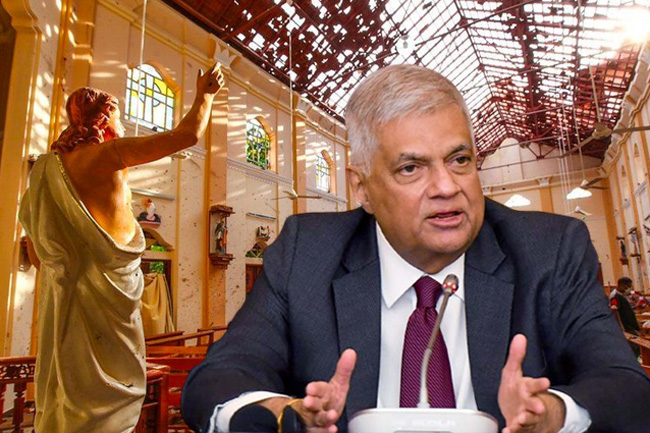
President Ranil Wickremesinghe’s United National Party (UNP) has claimed its 250,000-vote mandate has effectively superseded the 6.9 million-vote mandate received by his predecessor Gotabaya Rajapaksa, amid speculation that sections of the Sri Lanka Podujana Peramuna (SLPP) are not as enamoured by Wickremesinghe as others in the ruling party.

UNP Chairman Vajira Abeywardena speaking at an event on Monday July 17 said what is being implemented at present is the “250,000 agreement” rather than the “6.9-million agreement”.

Abeywardena was ostensibly referring to the 6.9 million votes received by Rajapaksa at the 2019 presidential election and the paltry 249,435 votes received by the UNP at the 2020 parliamentary election, in which Sri Lanka’s ‘grand old party’ suffered its worst ever defeat. The once-mighty UNP managed to secure only one national list seat in parliament, now occupied by Abeywardena after party leader Wickremesinghe was elected president by parliament in July 2022 with overwhelming SLPP support.

One major reason for the UNP being routed at the 2020 poll was the mass exodus of UNP members at all levels to the newly formed Samagi Jana Balawegaya (SJB) led by former UNP deputy leader Sajith Premadasa who is now opposition leader.

“Raise your hands if you were in a petrol or cooking gas queue. Those of you who raised your hands are no longer in a queue, so give a round of applause to President Ranil Wickremesinghe with both your hands,” Abeywardena told his audience of UNP members, recalling the seemingly endless queues for essentials in 2022 during the country’s worst currency crisis in decades.

“What are we doing these days? Is it what the people approved? No. 6.9 million people approved one. Is that what’s being implemented now? No. We’re implementing the 250,000-vote agreement. That agreement is under way. That is the truth. You can’t continue to function on a lie.”

Rajapaksa in 2019 and the SLPP in 2020 both ran on a decidedly nationalist platform that had positioned itself as a counter to what their camp had deemed the UNP’s “neoliberal” agenda. The UNP’s pro-Western, pro-privatisation and generally small-government outlook provided ample fodder to the SLPP and its allies that were riding a wave of patriotism that had come in the wake of the 2019 Easter Sunday bombings.

However, following the financial crisis of 2022 which triggered massive protests resulting in the ouster of Rajapaksa and a change of government into a more fiscally-conservative and arguably “liberal” avatar of Rajapaksa’s SLPP government, the UNP’s “agenda” does seem to be at play, in complete contrast to the mandate secured by Rajapaksa in 2019. Consequent to Sri Lanka’s agreement with the International Monetary Fund (IMF), the restructuring of state-owned enterprises (SOEs) and a host of other reforms are now being implemented by an impossible and somewhat shaky but politically expedient alliance between Wickremesinghe and the SLPP.

Meanwhile, Premadasa’s SJB, which is now the main opposition, has been accused by its critics of embracing populism in the face of a slow rise in the president’s popularity, at least among the urban middle classes.

SJBMP Harsha de Silva himself has acknowledged this popularity.

“President Wickremesinghe may have gained some popularity in the last few months. I’m not going to take that away from him. But that doesn’t mean that the UNP has gained anything significant,” said de Silva, speaking to EconomyNext on June 28.

The SJB on July 04 rebuffed another invitation from President Wickremesinghe to work together with his administration, demanding instead that he dissolve parliament soon.

SLPP stalwart Mahindananda Aluthgamage meanwhile told reporters on July 09 that Wickremesinghe has not indicated any intention to dissolve parliament yet. The SLPP has also decided to support President Wickremesinghe over the next two years, he said, amid speculation that there is division within the party over continued support for the president.

“As a party, we have decided to support the president in the next two years to rebuild this country,” said Aluthgamage.

The MP, who was Agriculture Minister in ex-President Gotabaya Rajapaksa’s cabinet, said the party made the best decision available to them at the time when it decided to back Wickremesinghe’s bid for the presidency in 2022.

Aluthgamage’s comment comes amid reports that a number of SLPP seniors are disappointed that cabinet positions continue to evade them. This is in addition to at least two prominent members of the party being absent from a crucial parliamentary vote on Sri Lanka’s domestic debt restructuring (DDR) programme.

Meanwhile, Wickremesinghe’s UNP seems quietly confident of a return to form after being nearly annihilated at the last parliamentary election in 2020.

UNP assistant leader Akila Viraj Kariyawasam told a gathering on July 09 that political parties will rally behind Wickremsinghe as part of a UNP-led coalition.

“The dark curse that had fallen on the country is gradually being lifted. Political parties are not coming as one party anymore. They’ll be a UNP-led party,” he said.

Kariyawasam had previously said that Sri Lanka’s next election will likely be a presidential poll, which is due in November 2024, though an early presidential poll has not been ruled out.

Main opposition Samagi Jana Balawegaya (SJB) leader Sajith Premadasa has already welcomed an early presidential election. Premadasa told the SJB Working Committee on May 16 that he intends to form an SJB-led alliance of opposition parties in the event of an early presidential poll, which will require a constitutional amendment.

The SLPP, meanwhile, has seen some fragmentation since the ouster of former president Rajapaksa, with these splinter groups largely ready to throw its weight behind opposition leader Sajith Premadasa.

Dilan Perera, a member of one of the SLPP’s breakaway factions said in June that Sri Lanka’s opposition parties must rally behind a leader they can all agree to support at a future presidential election with the next favourite agreeing to be prime minister in a common workable arrangement.

Ban on five Islamic organisations among 11 lifted under strict conditions

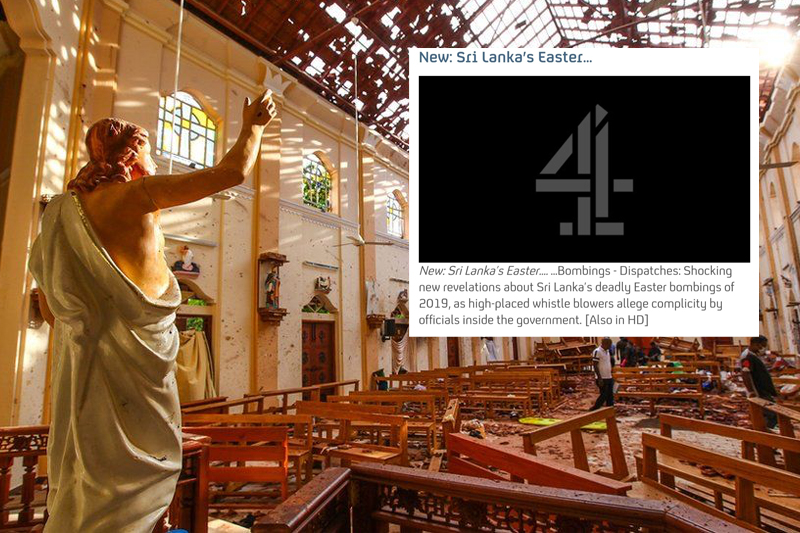
The Government has decided to conditionally lift the ban on five Islamic organisations out of 11 organisations which were banned following the Easter Sunday terrorist attacks on April 21, 2019.

Former President Gotabaya Rajapaksa issued a gazette notification in April 2021 banning these five organisations along with six others under the Prevention of Terrorism Act.

The ban on the five organisations is being lifted in line with recommendations by a committee comprising experts from investigative and intelligence agencies after a probe lasting more than a year, and following talks between representatives of these groups and government authorities.

The ban on five groups was lifted considering the current peaceful situation in the country, subjected to conditions with the aim of religious reconciliation.

Accordingly, the ban on the following Islamic organisations will be lifted subject to strict conditions: Jamiyathul Ansaari Sunnathul Mohomadiya (JASM), Sri Lanka Thawheed Jamma’ath (SLTJ), All Ceylon Thawheed Jamma’ath (ACTJ), Ceylon Thawheed Jamma’ath (CTJ) and United Thawheed Jamma’ath (UTJ).

Nevertheless, the expert committee has recommended that even after the ban is lifted, authorities should keep a close watch on the activities of these organisations, their funding and education programmes.

If there is any kind of threat to the national security from these organizations in the future,the committee has recommended to strictly implement the law and reimpose the ban.

Posted in Uncategorized

Party Leaders approve appointing a select committee to probe ex-election EC members

Party Leaders today approved a motion to appoint a select committee to ascertain whether the privileges of MPs have been violated by the actions of former members of the Election Commission and to make suitable recommendations.

The Parliament media unit, which quoted Secretary General Kushani Rohanadeera said party leaders approved the motion when they met Speaker Mahinda Yapa Abeywardene at the chair.

It has also been decided to have a debate on the matter later in the day.

The motion was initially handed over to the speaker by 14 members of Parliament on the pretext that the former members of the Elections Commission, N. G. Punchihewa, S. B. Divaratne, N. M. Mohammed, K. K. P Pathirana and P. S. M. Charles are accountable to the House as per provisions of article 104 B (3) of the constitution and that they have exercised their duties as interim members as per article 30 (4) of the 21st amendment to the constitution.

It was reported that the main opposition party, the SJB has objected to the setting up of the committee, arguing that no one can interfere with the independent commissions. Chief Opposition Whip Lakshman Kiriella said his party opposed the move.

No investor yet for debt-ridden SriLankan Airlines

No investor has so far come forward in response to government plans to privatize the debt-ridden SriLankan Airlines.

Government sources said this has prompted a new plan by the finance ministry for the national carrier to go public with assistance from the World Bank.

SriLankan owes Rs. 316,570 million to state banks, the CPC and other service providers.

It has a 5,600-strong permanent staff, in addition to 500 contract and casual workers.

Some of its departments have a surplus of employees, including 300 managers, while there is a shortage of manpower in certain categories.

In the past three years, 50 pilots had left service with 22 in arrears to meet a requirement of 290.

All of its fleet of 24 aircraft has been obtained on lease, and six of them have been taken out of service due to a non-availability of engines and other spare-parts.

Srilankan has to pay around 700,000 US dollars a month per leased aircraft.

Two aircraft in use for 23 years had been returned.

A voluntary retirement scheme introduced during the coronavirus pandemic has not addressed the surplus segment of employees.

Meanwhile, aviation minister Nimal Siripala de Silva said the carrier will continue with foreign pilots even if all the local pilots leave service.

Speaking to the media, he also said the chosen investor will have the freedom to take administrative decisions during the restructuring.

Posted in Uncategorized

SJB to submit no-confidence motion against Health Minister

The Samagi Jana Balawegaya has announced its intention to submit a no-confidence motion against Health Minister Keheliya Rambukwella, which will be handed over to the Speaker of Parliament this week.

Kavinda Jayawardena, Assistant Secretary of the party, stated that he will initiate discussions to garner support from all parliamentary parties in this matter. Efforts are underway to engage all parties represented in Parliament to gather collective support for the motion.

Posted in Uncategorized

Wimal says he will reveal more about the “international conspiracy”

Wimal Weerawansa, once a firebrand of the left and now the leader of the Uttara Lanka Sabhagaya, a political party yet to be registered, wants President Ranil Wickremesinghe to probe what he terms an “international conspiracy” during the protests or aragalaya last year.
“We will seek a meeting to make this appeal after learning more details about the sinister plot,” he told the Sunday Times. The first account of his claims was contained in a 135-page booklet titled “The hidden story of nine” which he published in April this year. He declined to provide details saying they “could be misrepresented.” They would have to be first presented to President Wickremesinghe to establish a Presidential Commission of Inquiry. He said the President was aware of the revelations in his booklet and had acknowledged them during a speech when he was in London recently. “We do not want other parties to dilute the evidence we have,” he argued.

He said he had originally made the request for such a commission from former President Gotabaya Rajapaksa before he went out of office. However, that appears to have been misconstrued. That was how he appointed a three-member Board of Inquiry, he said. He was alluding to the panel chaired by Admiral of the Fleet Wasantha Karannagoda and comprised onetime Army Commander, General Daya Ratnayake and Air Force Commander Roshan Gunathilake, who is ranked Marshal of the Air Force.

As reported in these columns on May 7, a state agency has already conducted preliminary investigations into the allegations in the 135-page book which was printed in Sinhala. Weerawansa said that Russian and English copies of the book were now in print. There would be 10,000 copies more of the Sinhala version. He said he hoped to have them released by next month. The Russian copies make clear that more material linked to the United States connection has now been garnered. Weerawansa, a source said, had again made critical references to the alleged involvement of the United States Ambassador in Sri Lanka, Julie Chung. However, she has continued to flatly deny the accusations and describe them as “false.”

Julie Chung offers prayers

The idea behind a state agency probe on his initial revelations, a government source said, was to ascertain the veracity of claims made on matters related to national security and similar issues. As reported earlier, when Gotabaya Rajapaksa held office as President, Weerawansa was considered a close confidant. Both he and his party were also opposed to the United States. A decisive beginning of the Aragalaya (protests) was the events that took place outside the Mirihana private residence of former President Gotabaya Rajapaksa on March 31 last year. They left 40 persons including 24 policemen injured and 54 were arrested.

Here are extracts of those aspects as claimed by Weerawansa in his book:

“President Gotabaya and the rest at home had felt the threat of death. The President’s Private Secretary Sugishwara Bandara had told his close friends and some members of the Rajapaksa family that they were risking death.

“By this time there was a close rapport between US Ambassador Julie Chung and President Gotabaya Rajapaksa. After the violence, the Ambassador called on the President. She had told him she sympathised with him about the pressure he had come under and said her prayers were with him. She went on to offer prayers in front of him. The President on the following day describing the incident to a Minster had given the impression that he was taken up by the gesture.

“Though President Gotabaya did not quit after the Mirihana incidents (involving his private residence) he moved to the President’s House on the advice of the security chief. The protests were spreading, and clashes were taking place near fuel stations. US Ambassador Chung in a twitter message on April 2, 2022, defended the right for peaceful demonstrations and said she was closely monitoring the situation and thereby setting the stage for protests at Galle Face. The slogan here was Gota Go Home. The question was posed by journalists as to who would replace Gotabaya, but the response was it could be thought of, after he is sent home……”

Weerawansa also made a string of allegations against former Army Commander and now Chief of Defence Staff, General Shavendra Silva. He has, however, denied them strongly. In one instance, he has filed legal action in courts against Weerawansa.

Weerawansa claimed, “There is a great public interest in what we have revealed so far. We will tell President Wickremesinghe what more has happened. In the national interest, it is imperative that they are probed.” He said we now know more about “the plans to form a caretaker government with certain persons being thrust to important positions. “Some of what we know has fallen into place,” he said. “Recently, the US Central Intelligence Agency (CIA) chief was in Sri Lanka with some 20 others. We want the people to know what is going on.”

Once a vociferous defender of the SLPP government where he was a Cabinet Minister, Weerawansa together with colleague Udaya Gammanpila was sacked from the Cabinet by the then President Gotabaya Rajapaksa. A source familiar then with the presidential household explained the reason for the sacking. Gotabaya Rajapaksa was quoted as saying that he had been advised by a very close relative in the family to remain united with his brothers, much like a stack of firewood or daramitiyak bound together. Hence, he had decided to sack the duo on the request of younger brother Basil Rajapaksa.

Weerawansa’s Uttara Lanka Sabhagaya is backed by parliamentarians Jayantha Samaraweera, Nimal Piyatissa, Uddika Premaratne, Gamini Waleboda, Mohamed Muzzamil, Udaya Gammanpila, Vasudeva Nanayakkara, Weerasumana Weerasinghe, Professor Tissa Vitharana and Gevindu Kumaratunga.

Complete joke

Weerawansa also commented on another controversial issue now before Parliament. He described as a “complete joke” a move to appoint a Parliamentary Select Committee (PSC) to probe how Sri Lanka went bankrupt. “To me, it is clearly a move to whitewash Basil Rajapaksa, who was the finance minister in the SLPP government. Otherwise, why has the SLPP General Secretary Sagara Kariyawasam been named as the Chairman of the PSC? Why have members who are close backers of Basil Rajapaksa been included in the PSC?” he asked.

Weerawansa revealed that the Uttara Lanka Sabhagaya will attend the first meeting of the PSC, if it ever holds sittings, to lodge its protest. “Thereafter, we will express our displeasure over their appointment and walk out. We will not take part in any of their proceedings because they are biased and the exercise is designed to help none other than Basil Rajapaksa,” he said. This is an attempt to make a joke of Parliament. Another such move by a Basil Rajapaksa loyalist is to empower ministers to decide to extend the life of local councils, he claimed.

The Parliamentary Select Committee to probe Sri Lanka’s bankruptcy, according to recent developments, will be bereft of any opposition parliamentarians. JVP Spokesperson Vijitha Herath told the Sunday Times, “I resigned from the PSC on bankruptcy. The fourteen member select committee has nine parliament members representing the government. All these members are associates of the person responsible for the bankruptcy of the country — Basil Rajapaksa.

“Therefore, we do not believe that this committee would serve any purpose or find reasons for the bankruptcy and recommend remedial actions.

“It is useless to stay in such a committee which would have biases. The majority members would cover up the actions that made the country bankrupt.

The Speaker had appointed Sagara Kariyawasam, as the chairman of the select committee. He (Sagara Kariyawasam) is also a key Basil Rajapaksa loyalist, and the remaining eight members too are persons responsible for the economic breakdown and bankruptcy of the country. The rest of the government representatives are Pavitharadevi Wannarachchi, D.V Chanaka, Mahindananda Aluthgamage, Jayantha Ketagoda, Major Pradeep Udugoda, Sanjeewa Edirimanna, Nalaka Bandara Kottegoda and Professor Ranjith Bandara.

“Allowing them to investigate bankruptcy is a joke, these members could conceal the real reason for bankruptcy of the country. They will waste time and the tax money of the people,” he pointed out.

SJB moves

The news of the PSC also resonated elsewhere. A controversial former Cabinet minister, who had been discussing the matter with a group, had declared that he would not hesitate to “topple the government” for being ignored a long time from being appointed a cabinet minister. When the news reached a government top runger, a message went back that his son who is in a Sri Lanka mission abroad and another in a secretariat in Colombo would have to find jobs. The politico not only retracted his earlier position but also is now on the frontlines garnering support for a no faith vote on a present Cabinet minister over shortages. The main opposition Samagi Jana Balavegaya (SJB) is also opposed to the composition of the PSC.

SJB General Secretary Ranjit Madduma Bandara said, “We withdrew from the PSC because its members were among those who contributed to bankruptcy. The committee comprises supporters of a former minister, and they will favour him. It’s like asking from a thief’s mother whether her son is a thief like the Sinhala adage ‘horage ammagen pena ahanawa wagey’. As the main opposition party, we cannot stay in such a disgraceful select committee.

“We have planned to set up an opposition’s parliamentary select committee to investigate the bankruptcy of the country soon. We are inviting all the opposition parties to join our cause against corruption by taking part in our own select committee, Madduma Bandara said.

This select committee would have members from the common opposition as well as other opposition parties. “Our party too has a committee on bankruptcy at the party level. That committee, which is led by Mujibur Rahuman, consists of 10 to 15 members of parliament as well as other politicians in the party.

“The SJB is calling for local council elections. We even went to the Department of Elections on Wednesday (July 12, 2023) to discuss having early elections and to complain of the delay. We will protest. We are also taking legal actions and would relentlessly pressure the government to hold elections and allow democracy to prevail.”

Other than these issues, the only other opposition member in the PSC is Shanakiyan Rasamanickam of the Tamil National Alliance (TNA). He told the Sunday Times, “Personally, I am not in favour of serving in the PSC. It is headed by a loyalist and supporter of Basil Rajapaksa who is 90 percent responsible for the bankruptcy. Therefore, my belief is that with this conflict of interest the committee would not be looking into how the bankruptcy occurred.

India visit of President

It is against this backdrop that President Ranil Wickremesinghe undertakes a brief visit to New Delhi on Thursday. Accompanying him are his Chief of Staff and National Security Advisor Sagala Ratnayake, Presidential Secretary Saman Ekanayake, and Ministers Douglas Devananda, Jeevan Thondaman, Kanchana Wijesekera, Foreign Secretary Aruni Wijewardena, and officials of the Ministry of Foreign Affairs.

Vinod Jacob, India’s Deputy High Commissioner in Sri Lanka and now promoted Ambassador to Bahrain, told the Sunday Times, yesterday that “India-Sri Lanka relations have scaled new heights in the past 14 to 16 months. On the Indian side, the guidance is provided by Prime Minister Narendra Modi’s Neighbourhood First policy. The success of this dynamic policy is writ large across the entire matrix of the bilateral partnership. As the Foreign Secretary of India, Vinay Kwatra said a few days back in Colombo, our objective is to ensure that the forthcoming visit of President Ranil Wickremesinghe to India is a huge success. Both sides are working hard to ensure substantive outcomes.”

Other than the India visit by President Wickremesinghe, the government’s priority of the Domestic Debt Optimisation (DDO) in different spheres continues to receive important attention. A leading international economist, Dr Shantha Devarajan responses to queries from the Sunday Times on how the economy has shaped since last year in a box story on this page. In another development, the government has refused a visa for Canadian parliamentarian Gary Anandasangaree to visit Sri Lanka. He is the son of Veerasingham Anandasangaree, a Tamil parliamentarian from the north.

Posted in Uncategorized

Indian Origin Tamils seek India’s support only for their social progress: Mano Ganesan

The Tamil Progressive Alliance (TPA) leader Mano Ganesan has said that his party wants India’s support for the social advancement of the people of Indian Origin in Sri Lanka and not for their political goals.

The TPA has changed the usual practice of demanding political support from the Indian government and asking the Government of India to speak to the Government of Sri Lanka on their behalf. In a tweet, the TPA leader and MP said that his party’s delegation had submitted requests to the High Commissioner of India in Sri Lanka Gopal Baglay earlier this year, seeking a Teachers Training College for Science, Technology, English and Maths; a Nurses Training College for Hill Country women, and also a University College.

Ganesan expressed the hope that, during next week’s visit of President Ranil Wickremasinghe to New Delhi, the Indian prime minister Narendra Modi will favourably consider these social progress requests from the TPA.

“We have decided to restrict our demands from India to social progress assistances only. India has its own shared obligations and moral responsibilities towards the Indian Origin Malaiyaga Tamils in Sri Lanka. This derives from the 1964 Sirimavo-Shastri repatriation Pact. This agreement had weakened our community. It can be redone now only by social progress assistance on affirmative principles. Our people are the most underprivileged, marginalized and vulnerable segment in Sri Lanka. We seek full citizens’ privileges within Sri Lanka. We wish that India will address this issue in the sprit of the 1964 pact.”

“President Wickremasinghe has assured that he will nominate a presidential committee to talk to political party representatives of the recent Indian origin Hill Country Tamil community. We have such discussions with Leader of Opposition Sajith Premadasa too. Hence, our discussions on our national political aspirations will be conducted within Sri Lanka,” Ganesan said.

Posted in Uncategorized

Cinnamon Air launches scheduled flights to Jaffna from Colombo

Cinnamon Air, Sri Lanka’s premier domestic airline, recently launched scheduled flights to Jaffna, which will provide travellers with easy access to the most popular city in the northern region of the island along with an exceptional travel experience.

Scheduled flights to Jaffna commenced from June 16, 2023, with weekly departures from Bandaranaike International Airport (BIA) and Sigiriya Airport to Jaffna International Airport every Sunday, Tuesday, Wednesday and Friday. At the same time, Cinnamon Air will resume daily scheduled flights to Trincomalee and Batticaloa from BIA.

As the only domestic airline to offer scheduled flights from its dedicated domestic terminal at BIA, Cinnamon Air has meticulously designed its scheduled flight service between Colombo and Jaffna in order to meet the needs of discerning travellers who need a quick, seamless, cost-effective and reliable transport option. While these scheduled flights ensure speed and comfort, the careful synchronisation of departure times with arrival times of major international airlines substantially reduces transit times for connecting passengers.

In order to maximise the utility of the service for travellers, Cinnamon Air’s scheduled flights to Jaffna from Colombo are routed via Sigiriya, providing swift access to Jaffna from Sri Lanka’s Cultural Triangle. The stopover in Sigiriya enables tourists who are exploring the cultural heritage of Sri Lanka in regions such as Polonnaruwa, Habarana and Dambulla to widen their exposure to the diverse Sri Lankan culture by easily travelling to Jaffna.

Furthermore, the resumption of scheduled flights to the East Coast destinations offers speedy travel to the coastal tourist attractions in Trincomalee and Pasikudah (through Batticaloa).

In addition to scheduled flights, Cinnamon Air continues to offer exclusive charter flights to Jaffna (and all other aerodromes in Sri Lanka). These private charter flights provide unparalleled speed, comfort and flexibility to travellers.

Commenting on the new development, Cinnamon Air Chief Executive Officer Sean Dwight said, “We are committed to providing the quickest and most convenient mode of transport in Sri Lanka with a memorable travel experience and the introduction of scheduled flight service to Jaffna is the latest example of that commitment. Our flights offer hassle-free access to Jaffna, which generally requires a drive of more than eight hours to reach, while our flight time is only an hour.”

The launch is timed to coincide with the expected influx of travellers to Jaffna during the upcoming Nallur Festival, especially from India.

“We believe that the availability of our scheduled flights can provide a swift and enjoyable mode of travel.

As a key player in Sri Lanka’s tourism industry that provides a unique experience to foreign travellers visiting Sri Lanka, we are continuously seeking ways to enhance the image of Sri Lanka by enabling tremendously convenient access to popular destinations in the country.”

Cinnamon Air, owned and operated by Saffron Aviation (Pvt.) Limited, is a joint venture between Sri Lanka’s largest listed conglomerate John Keells Holdings PLC, MMBL Leisure Holdings (part of the Mercantile Merchant Bank group) and Phoenix Ventures (parent of the Brandix group). In addition to scheduled flights, Cinnamon Air also offers charter services to and between all airports and water aerodromes in Sri Lanka.

Northern Railway Line operational after 6 months

The Department of Railways has reopened the Anuradhapura-Omanthai stretch of the Northern Railway Line, following the conclusion of its construction activities which took place over a span of six months.

The railway line between Anuradhapura-Omanthai which has a distance of 62 km was repaired with the aid of Indian loans and the amount spent was Rs. 33bn.

The railway department stated that with the reconstruction of the railway line, trains will be able to run at a speed of 100 kmph.

The Department also announces that the Jaffna Colombo train seat reservation service has been resumed.

Deputy General Manager (Traffic) of the Department of Railways M. J. Indipolage says that following the reopening of the Northern Railway Line, the Yal Devi train commenced its journey from Mount Lavinia to Sammanthurai at 5.10 am on Saturday, and that the Uththara Devi train will commence its journey from Colombo Fort to Kankasanthurai at 11.50 am.

He adds that the night postal train is also scheduled to commence its journey from Colombo Fort to Kankasanthurai, at 8 pm. The Deputy General Manager (Traffic) says that a train is also due to leave Kankasanthurai at 1.40 pm on Saturday (15).

Arrangements have also been made for a postal train to depart from Kankasanthurai at 7 pm.

He adds that starting from the 16th of July, train journeys from Kankasanthurai to Colombo Fort will commence at 5.40 am.

Accordingly, a total of 6 train journeys, 3 trains from Colombo Fort and Mount Lavinia and 3 from Kankasanthurai to Colombo have been scheduled.