Ponnambalam awaits probe outcome before he takes legal action against his arrest

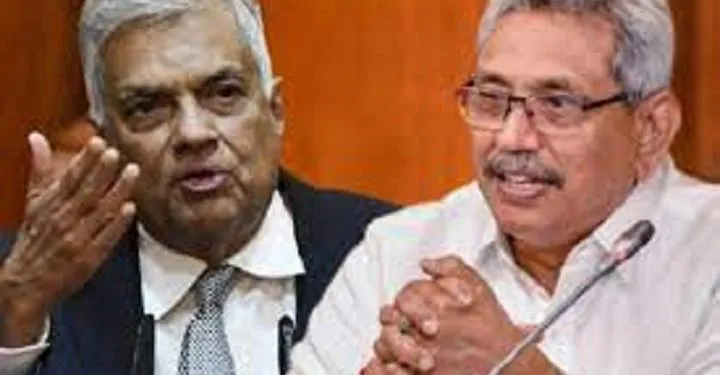
After raising a breach of Parliamentary privilege in the House this week, Jaffna district Parliamentarian Gejendrakumar Ponnamablam is awaiting three separate bodies to conclude their probes into an incident involving two police officers in civvies, before he considers further legal action against his arrest which he claims is “illegal and arbitrary”.

A Magisterial inquiry, a probe by the Parliamentary Privileges Committee and an investigation by the Human Rights Commission (HRC) are currently underway over the incident last week.

“Since the charges levelled against me are criminal in nature by the police who are also the main party in this case, I’m waiting for the final verdict from the Court,” MP Ponnambalam told the Sunday Times.

When Mr Ponnambalam was produced on Wednesday in the Kilinochchi Magistrate Court the court called for a report from the Senior Superintendent Of Police (SSP) on the conduct of the police after observing contradictions in the B report and the video evidence submitted by the police.

Last Friday (June 2), when the Jaffna Parliamentarian — who has refused security provided to MPs from the Ministerial Security Division (MSD) since he was elected to the House — met a local youth club members in Vadamarachchi East, he did not expect any controversy that would result in his arrest days later. To cover the expenses of conducting ten tournaments in the region, the MP had handed over a cash donation to the club as well.

A heated argument had broken out between the MP and two individuals who turned out to be police intelligence officials when the MP had demanded some form of identification since he was alerted by one of the attendees that one of them had a concealed weapon on him.

The MP claimed another police official who was inside the school located adjacent to the playground assaulted him and aimed a loaded gun at him during the argument.

The whole incident went viral on social media platforms.

The following day, two of his party officials were taken into custody and released on bail later by Maruthankerni police under charges of obstructing police from carrying out their duties.

On Wednesday, the MP was arrested at his Queen’s Road residence in Colombo under similar charges of obstructing police duties. He was produced in the Kilinochchi Magistrate court and granted bail.

The two police officials who were involved in the incident gave a four hour long statement to the regional office of the Human Rights Commission in Jaffna.

There were heated exchanges after Mr Ponnambalam raised a privilege issue under Parliament (Powers and Privileges) Act No 5 of 1978 in the house over his arrest on Thursday. Public Security Minister Tiran Alles said he had called for a report from the police and that he had watched videos of the incident. It is clear based on their contents that Mr Ponnambalam had not behaved like a Member of Parliament during that incident, the minister claimed.

Mr Alles said two police officers in civvies of the police special branch had visited the location where the MP was holding a meeting after being informed of it by officers who were providing security for the nearby GCE Ordinary Level examination centre. He said that they had clearly identified themselves as police officers, though he accepted they may not have shown their identity cards straight away.

Mr. Alles said the video clearly showed Mr Ponnambalam chasing after one of the officers and grabbing him by the collar of his shirt and by his hand. He said the officer is seen shaking off the hand and running away. The video next shows the MP in a heated argument with police officers who were at the nearby examination centre.

“My point is, you might know that they are officers. I don’t. I can’t take their word for it,” said Mr Ponnambalam in response to the minister. “If they come to a place and if they are trying to act in the name of police they must first establish themselves as police officers. You can’t come in civvies and claim you are police.” Mr Ponnambalam alleged that the officers refused to produce their identity cards when asked to do so.

Minister Alles countered that one of the officers who was verbally abused by the MP was next to an officer who was in uniform, who stressed that they were police. He said Mr Ponnambalam’s behaviour was not acceptable. “As the minister in charge of police, I just can’t tolerate that kind of thing and I cannot tell the police not to take action.”

“It is quite clear to me now that the police were acting on your advice,” the AITC leader said to the minister. He rejected accusations that his meeting was disturbing candidates sitting the O/Level exam because the centre in question was not even an examination centre but a coordinating centre. Moreover, the incident happened at 3.30 p m. The final exam for that day had finished by 3 p.m. islandwide, he pointed out. The entire incident was orchestrated by the two officers who came to disturb his meeting in civvies, he said.

Raising a point of order, Tamil National Alliance (TNA) MP M.A. Sumanthiran questioned Minister Alles as to what was the hurry to arrest Mr Ponnambalam this week when Parliament sessions were going on. The Parliament Powers and Privileges Act clearly states that an MP cannot be prevented from attending Parliament, he pointed out. “The police under you knew very well that he was in Colombo to attend Parliament. What was this hurry to arrest him and take him all the way to Kilinochchi?”

Minister Alles said the police had been looking for Mr Ponnambalam on June 5 to record a statement. “You say he came to Colombo to attend Parliament. On the 6th, he did not attend Parliament though he was in Colombo.”

Mr Ponnambalam countered that he did come to Parliament on the 6th at 5 .pm. to hand over his letter regarding a breach of privilege to the Secretary General. “The Speaker knew of all of this,” he added.

The arrest of the Jaffna Parliamentarian saw widespread condemnation locally from local political parties and diaspora groups this week.

SLPP’s MR, District leaders boycott Ranil’s meeting

Ruling Sri Lanka Podujana Peramuna (SLPP) Leader and Government Parliamentarian Mahinda Rajapaksa and a number of SLPP District Leaders have boycotted a discussion called by the SLPP backed President Ranil Wickremesinghe on Monday (12) on the grounds that the latter does not have the power to call SLPP members for such meetings, The Daily Morning learned.

The President had called the Cabinet of Ministers, Rajapaksa, SLPP General Secretary and Government MP and Attorney Sagara Kariyawasam, and other SLPP District Leaders for a discussion at the Presidential Secretariat on Monday. However, the meeting had been attended by only the Cabinet, and Government MP Mahindananda Aluthgamage.

Speaking to The Daily Morning yesterday (13), Kariyawasam said that they had been invited for a discussion by the President, but that the SLPP, as a party, had taken a decision not to participate in it as the President does not have powers to call SLPP members for meetings. “Earlier, we told Wickremesinghe not to call SLPP members for meetings. That is because he does not have powers to call our Party members. If he needs to have a discussion with SLPP members, he should inform us (SLPP), and then we can get our members to meet him. He did not listen to us, and again called SLPP members. So, we, as the SLPP, decided not to attend the meeting.” Commenting further, he said: “He had called Rajapaksa as the SLPP Leader, me as the SLPP General Secretary, and other District Leaders including Hambantota District Leader and Government MP Chamal Rajapaksa and Kurunegala District Leader and Government MP Johnston Fernando. The invitation had been made by way of telephone calls. However, only the Cabinet had attended it. Out of the SLPP District Leaders, it was only Aluthgamage who had participated in it.”

Earlier, on 29 May, the President had called Prime Minister Dinesh Gunawardena, the Cabinet, a selected number of State Ministers, former Cabinet and State Ministers who are SLPP’s District Leaders, and representatives of the United National Party for a discussion at the Presidential Secretariat. SLPP members including Kariyawasam had attended that meeting, and the political programmes of the two parties had been discussed during it.

US Treasury Secretary praises India’s support to SL

India’s proactive actions have been critical in supporting Sri Lanka’s reform efforts, US Treasury Secretary Janet Yellen said on Tuesday.

Yellen made this comment during the US- India Business Council Ideas Summit in Washington DC.

“During the past six months, we have made progress across a number of areas. Debt distress in the developing world continues to pose a risk to macroeconomic growth and stability. Much more needs to be done to provide timely and comprehensive debt treatments. But we have taken steps forward on urgent cases like Sri Lanka – where India’s proactive actions have been critical to supporting the authorities’ reform efforts. We are continuing to push for urgent action in other cases as well,” she added.

Posted in Uncategorized

The practicality of promises made to the UNHRC By P.K.Balachandran/Daily Mirror

The UN Human Rights Council’s 53rd session will begin On June 19. An oral assessment of the rights situation in Sri Lanka will be made by the Human Rights High Commissioner Volker Türk on June 21. As usual, the Sri Lankan government is going all out to present the case that it has been making sincere efforts to deliver on the promises it had made earlier.

Last week, the President’s Media Division announced an “Action Plan” for ethnic reconciliation that had been drafted at a meeting chaired by President Ranil Wickremesinghe. The plan includes the establishment of a Truth and Reconciliation Commission of Sri Lanka (TRCSL); the establishment of a National Land Council, and the formulation of a National Land Policy; and the enhanced operations of the Office of Missing Persons (OMP), including their digitization and the issuance of Certificates of Absence for individuals who had disappeared.

But there is nothing new in these decisions. These tasks have been on the agenda for a long time though with little or no progress to show. The most glaring is the idea of setting up a Truth and Reconciliation Commission of Sri Lanka (TRCSL). This idea pops up only when there is a temporary need to mollify the international human rights lobby and is forgotten thereafter.

At a meeting in Pretoria in March, Minister of Justice Wijedasa Rajapakshe and the Minister of Foreign Affairs Ali Sabry discussed with Rolf Meyer and Ivor Jenkins, the contours of the proposed TRC in Sri Lanka inspired by the South African TRC that functioned between 1995 and 2003. Sabry tweeted to say that he got “some very insightful inputs,” and added that “a credible and transparent domestic TRC could be the solution to deal with intrusive and agenda-driven attempts.” He was decrying the UNHRC’s attempts to impose on Sri Lanka mechanisms for achieving ethnic reconciliation based on retributive justice dispensed by a judicial process with foreign participation.

Past Attempts

This is not the first time that Sri Lanka is trying to set up a TRC. It has been attempted before, but only to be abandoned because Sri Lankan society is too divided to make it work. A TRCSL was mooted in 2015, 2018, and 2022 because of pressure from the UNHRC, but was not followed up.

On October 16, 2018, a conceptual framework was submitted to the Lankan cabinet. The concept paper said that the TRC of Sri Lanka (TRCSL) will be established by an Act of Parliament. Justifying this, the concept paper said: “Despite the appointment of numerous ad hoc commissions of inquiry during the past (like the Paranagama Commission, the Lessons Learnt and Reconciliation Commission, the Udalagama Commission, Mahanama Tillekeratne Commission) due to failure to implement recommendations made by those Commissions, it has not been possible to successfully prevent recurrence of conflict, or build confidence amongst all the people of Sri Lanka in the efficacy of measures to ensure non-recurrence, advance national unity and reconciliation or identify and undertake administrative reform interventions that may be necessary.”

The concept paper further said that the proposed Act of Parliament would, inter alia, incorporate statutory provisions to appoint a Monitoring Committee which will “enable all Sri Lankan citizens, irrespective of race or religion, including families of police and security forces personnel, civilians in villages that came under attack by terrorists, security forces personnel and police personnel, and all affected persons in all parts of the country, to submit their grievances suffered during any phase of civil disturbances, political unrest or armed conflict that has occurred in the past, to the proposed TRCSL.”

“The proposed TRCSL should have sufficient administrative and investigative powers, including those granted to Commissions of Inquiry. This includes powers to compel the cooperation of persons, State institutions, and public officers in the course of its work. While the TRCSL will not engage in prosecutions, it should be vested with sufficient investigative powers. But the TRCSL’s recommendations shall not be deemed to be a determination of civil or criminal liability of any person.”

The concept paper was referred to the Defense Ministry, but it went no further. In March 2020, the UNHRC reported that the TRC proposal had not made any progress. However, in March 2023, at the invitation of the South African High Commissioner in Sri Lanka, Ministers Wijedasa Rajapakshe and Ali Sabry flew to South Africa to study the South African TRC.

Road Blocks

The delay in the implementation of laudable ideas by Sri Lanka could be attributed to the political and ethnic conditions here. These are not conducive for getting a favorable result from a TRCSL. Sri Lankan society is sharply divided ethnically on issues of right and wrong during the 30-year armed conflict. Unlike the majority Sinhala-Buddhists, the minorities, especially the Tamils, demand retributive justice, and not mere restorative justice which the TRC in South Africa attempted and the Lankan variant hopes to follow.

One of the major disadvantages in Sri Lanka in comparison with South Africa is the absence of an over-arching and towering national leader to move the masses in any particular direction. From 1995 to 2003, when the TRC was functioning in South Africa, it was overseen by icons like President Nelson Mandela and TRC chairman Bishop Desmond Tutu.

TRCSA: Partial Success

However, even under very favorable conditions, the South African TRC (TRCSA) was only a partial success, says Samara Auger, author of “Healing the Wounds of a Nation: The Truth and Reconciliation Commission of South Africa.”

Auger says that the TRCSA collected over 21,298 victim statements and over 7000 offenders applied for amnesty. Of these 7000, 1167 were granted full amnesty and 145 partial amnesty. The TRCSA released an interim report in 1998 and a final report on March 21, 2003.

The final report of the TRCSA said that justice is defined not as punishment but as “reparations to victims and rehabilitation to perpetrators.” This was based on the South African native concept of “Ubuntu” according to which sufferings are not “individual” but “collective”, that everyone suffers equally, regardless of class, race or religion. Therefore, people should seek “collective redemption, forsaking revenge in exchange for peaceful alternatives.”

But “Ubuntu” was resisted by the Blacks who thought that equating them with the Whites was grossly unfair. Despite its outstanding leaders, South African society was ethnically divided. A survey of 3700 South Africans conducted in 2000 and 2001 found that 68% of all races found it hard to understand one another and 56% found the other race untrustworthy. Less than one fifth wanted to be friends with members of another race.

However, more Blacks than Whites accepted that the TRCSA promoted reconciliation according to a poll done by Jeremy Sarkin-Hughes, 70% Blacks, 61% Asians, and 37% Whites providing moderate to strong approval of the TRC’s work.

In Sri Lanka, ethnic differences are entrenched. There are sharp differences on what was right and what was wrong during the ethnic conflict. A TRC under these conditions might open wounds rather than heal them. The other question is: Would there be a consensus on restorative justice instead of retributive justice?

More Practical Steps

The more practical alternative would be to take the following steps: release those Tamils jailed for years without cases being filed against them; punish perpetrators of atrocities who are facing credible charges; release public lands acquired by the Security Forces and prevent encroachments on lands by government departments on specious grounds; boost the economies of the war-affected areas North and East.

Ranil to be backed by extensive alliance at presidential polls, says Akila

Incumbent Ranil Wickremesinghe will be backed by an extensive alliance when he contests the next presidential polls, said deputy leader of the UNP Akila Viraj Kariyawasam.

He was addressing a party meeting at Dodamgaslanda.

Meanwhile, SLPP breakaway MP Prof. Charitha Herath said a SJB-led alliance will represent the opposition at future elections.

Herath said his group already has 13 MPs and that a dialogue is on with several others from SLPP to obtain their support as well.

Posted in Uncategorized

SLPP not happy with President summoning District Chiefs

Reports suggested that the District Leaders of the SLPP decided NOT to attend the meeting summoned by the President on Monday (12) evening.

It was earlier reported that the President had summoned the Cabinet Ministers, State Ministers, SLPP District Leaders and others for a meeting at the President’s Office.

The meeting had commenced at 6 PM, and after around an hour, the MPs and Ministers vacated the President’s Office.

It was reported that the SLPP had decided not to involve its District Leaders for the meeting.

The SLPP had noted that the President has the power to summon Cabinet Ministers, and State Ministers, and expressed dismay over the summoning of District Leader earlier.

It noted that if such a meeting is being called for, the SLPP must be informed.

Party Internal Sources said that summoning SLPP District Leaders for a meeting via the President’s Office cannot be approved, and that is the stance of the Sri Lanka Podujana Peramuna

Posted in Uncategorized

Sri Lanka president recognising Tamil Buddhism positive step: opposition MP

Sri Lanka President Ranil Wickremesinghe publicly recognising Tamil Buddhism is a positive step, opposition MP Mano Ganesan said.

The MP tweeted Tuesday June 13 morning that recognising Tamil Buddhism as historical fact is “the key to many deadlocks”.

Ganesan was commenting on remarks made by President Ranil Wickermesinghe recently in what appeared to be an exchange of words with Director General of the Department of Archaeology Prof Anura Manatunga.

Minister for Buddhasasana, Religious and Cultural Affairs Vidura Wickremanayake confirmed to EconomyNext Monday evening that Manatunga had handed in his resignation. The minister did not provide a reason for the official’s resignation, but it followed the president’s rather public calling out of Archaeology Department officials regarding land acquisition by the department in the country’s north and east, allegedly under the pretext of preserving heritage sites.

A video recording of the exchange went viral on social media on Monday, with some including a number of his critics praising Wickremesinghe for setting the record straight on the matter while others criticised the president for publicly reprimanding a government official and professing to give him a history lesson.

ITAK MP Shanakiyan Rasamanickam who was present at the meeting tweeted that the now-resigned Director General of Archaeology is only part of the problem. He accused the minister in charge of being the “brain behind most of these illegal measures carried out by the DG”.

“However, we look forward to the new national plan for archaeology conservation and restoration which the president has promised,” the MP said.

Historian Shamara Wettimuny tweeted that ethnicity was not ‘fixed’ until the 19th century in the way it is understood and categorised today.

“Meanwhile, there was plenty of religious syncretism between Hindu and Buddhist practices (and this remains today, despite such denial),” she said.

Posted in Uncategorized

Minister discusses progress of Adani’s renewable energy project in Mannar and Pooneryn

Minister of Power and Energy Kanchana Wijesekara has discussed the progress of the 500 MW Renewable Energy Project in Mannar and Pooneryn with Anil Sardana, the Managing Director and the CEO of Adani Transmission Ltd and the project management team, this morning (June 12).

The discussion was held at the Ministry of Power and Energy today.

In a tweet, Minister Wijesekara mentioned that the challenges, road map and the timeline for the project completion were discussed during the meeting.

He said that they also discussed the commitment by Adani Green Energy to complete the project by December 2024.

“We discussed the challenges, road map & timeline for the project completion & the commitment by Adani Green Energy to complete the project by Dec 2024”, he said.

Posted in Uncategorized

Archaeology DG quits

Days after being severely criticised by the President during a meeting, Director General of the Department of Archaeology, Professor Anura Manatunga, tendered his resignation to the Secretary of the Ministry of Buddhasasana, Religious and Cultural Affairs.

President Ranil Wickremesinghe, during the said meeting on 8 June, asked Prof. Manatunga, when an issue pertaining to the allocation of lands to an archaeological site came up, “Are you trying to teach me history? Or do you want me to teach you?”

Several Tamil politicians from the North and the East, including MPs M.A. Sumanthiran, S. Sritharan, Shanakiyan Rasamanickam and ITAK General Secretary Mavai Senathirajah met Wickremesinghe to discuss various issues related to the Tamil people. During the meeting a team from the Department of Archaeology, headed by Prof. Manatunga, also spoke about the acquisition of lands that they claimed were heritage properties in Thannimurippu and Thiriyaya in the Eastern Province.

During the discussion, the President posed several questions to Prof. Manatunga regarding the alleged acquisition of a massive 300,000-acre land, without the approval of the Archaeology Department. The Professor clarified that they do not have the authority to own such lands, but there is an issue concerning land in the Eastern Province where they have only demarcated the area without taking it over.

The Archaeology Department explained that some portions of the land were originally designated as forest and wildlife areas, but they are currently occupied by a Buddhist temple. They assured that they would revisit the site to take necessary action. The President expressed concern over the occupation of such a large land by a temple on state-owned land. The Professor reiterated that they have not claimed any ownership of the land in question.

The President further questioned whether the Archaeology Department could teach him Sri Lanka’s history, or if he should be the one teaching them. This particular discussion gained significant attention on social media platforms.

The acquisition of land by the Archaeology Department in the North and East has sparked controversy in the region in recent times.

During the meeting the President informed Archaeology Department to follow Cabinet policy and to refrain from seizing lands belonging to the public and to remove border marker stones.

While the specific reasons for Professor Manatunga’s resignation have not been disclosed, Buddhasasana Minister Vidura Wickramanayaka confirmed that he has submitted his resignation letter to the Ministry Secretary.

Seven Sri Lankan fugitives under INTERPOL red notice list

Seven Sri Lankan fugitives are among 6,872 fugitives listed under the INTERPOL’s red notice list, recent statistics have shown.

Out of the seven, four Sri Lankans are listed as ‘wanted’ in Sri Lanka while the other three Sri Lankan fugitives have been issued red notices upon requests made by foreign countries over crimes they had committed in their territories.

A red notice is a request to law enforcement authorities worldwide to locate and provisionally arrest a person pending extradition, surrender, or similar legal action, Interpol sources explained.

According to Interpol statistics posted on its website, four Sri Lankans, 38-year-old De Soyza Jagamuni Sujeewa alias Kosgoda Sujee, Nadaraja Sivarajah (49), Munisamy Tharmaseelan (50) and Viknarasa Selvanthan (35) are wanted by Sri Lankan law enforcement authorities.

The red notices were issued on Kosgoda Sujee over a murder case and on Nadaraja Sivarajah for aiding and abetting to assassinate late Minister Lakshman Kadiragamer. Tharmaseelan is wanted over possession of two hand grenades and 200 rounds of live ammunition while Selvanthan was charged over robbery and murder. Meanwhile, three Sri Lankan nationals, Kumarasamy Navaneethana (52) fromVavuniya is wanted by Romania over a murder while Mohamed Powmi (61) from Elabodagama is wanted by India over counterfeit currency and Manickavasagar Vijayarajah (41) from Jaffna is wanted by Canada over first degree murder.

Meanwhile, the Interpol has issued yellow notices on five other Sri Lankans. Yellow notices are issued to help locate missing persons, often minors, or to help identify persons who are unable to identify themselves. Accordingly, the Interpol noticed that Balakrishan Niresh (31) had disappeared in Vavuniya on January 27,2022 while Weebadde Ralalage Saman Wijesiri (68) disappeared in October 13, 2018.

Also, Gayindu Kithmuka Madurapperuma (20) had disappeared in Colombo when he was 5-years-old.