Sri Lanka local currency rating likely to be upgraded after DDR: Fitch

Sri Lanka’s sovereign local currency rating is likely to be upgraded after a restructuring of domestic debt, Fitch Ratings said, while lifting the outlook on state-run Ceylon Electricity Board to positive from stable.

Fitch downgraded Sri Lanka’s local currency issuer default rating from ‘CC’ to ‘C’ after a domestic debt exchange on selective bonds was announced.

Fitch Downgrades Sri Lanka’s local rating to ‘C’ after DDR

Fitch confirmed a ‘B(lka)’ rating of state-run CEB which has been de-linked of the government, along with lifting of the outlook.

“The Positive Outlook reflects the likely upgrade of the Sri Lankan sovereign’s Long-Term Local-Currency Issuer Default Rating (IDR) to reflect the sovereign’s prospects following the completion of a domestic debt exchange (DDE),” Fitch said.

“We will equalise CEB’s ratings with that of the sovereign if the sovereign’s Long-Term Local-Currency IDR is upgraded to above ‘CC’, in line with our Government-Related Entities (GRE) Rating Criteria, resulting in a rating upgrade on the national scale.”

AG delivers body blow to govt. plan to resurrect dissolved LG bodies: SJB

The main Opposition, the SJB, yesterday said that the Attorney General had observed that the government’s attempt to reconvene dissolved local government bodies through a private member’s bill was unconstitutional.

Addressing the media at the Opposition Leader’s Office in Colombo, Chief Opposition Whip and Kandy District MP Lakshman Kiriella said that the Attorney General had informed the Secretary General of Parliament that the private member’s bill presented to the House through SLPP backbencher Jayantha Ketagoda contained clauses that were inconsistent with the Constitution and some of them would have to be passed by a two-third majority in Parliament besides being approved by the people at a referendum.

“The Attorney General has observed that the draft bill, titled Pradeshiya Sabha (Amendment) by MP Ketagoda, has clauses inconsistent with the Constitutional provisions governing sovereignty and fundamental rights of the people.

The AG has also observed that the clause 2 of the draft bill is inconsistent with Articles 3, 4, 21(1) and 14(1) of the Constitution and will require a special majority of Parliament and approval by the people at a referendum in terms of Article 83 of the Constitution,” Kiriella said, quoting from the AG’s letter to the Secretary General of Parliament.

“This is another attempt that has backfired on this government. They wanted to get their men reappointed to local government bodies without holding elections. The government, which puts off elections, claiming that it had no money will have to raise funds for a referendum if it is to secure the passage of Ketagoda’s Bill.

“The private member bill by MP Ketagoda was nothing but a move to give a boost to the SLPP grassroot members who are in disarray after the Aragalaya protests and the economic crisis. We know that the SLPP leaders have promised their grassroots level members that those who had been in the local councils would be reappointed without elections and asked them to campaign hard to revive the SLPP.

Army corporal arrested for sexually harassing Turkish woman

An army corporal was taken into custody on suspicion of sexually harassing a young Turkish woman who was travelling in a bus to Dambulla.

The suspect is a resident of the Melpitiya area in Matale.

Investigations revealed that a group of three young Turkish women and a young Pakistani man were on their way from Kandy to Dambulla by bus when the suspect caressed the body of one of the women who was sitting next to him.

The young Pakistani man with the help of the conductor and the passengers apprehended and handed over the suspect to the Dambulla police.

The suspect is to be produced before the Dambulla magistrate today.

Posted in Uncategorized

Elections (Special Provisions) Bill gazetted

A Bill to grant provisions to extend the time period to submit an Election petition and to increase fines pertaining to elections has been gazette.

The gazette notification in this regard has been issued by the Minister of Justice, Prison Affairs and Constitutional Reforms.

Accordingly, the gazette proposes to amend the Local Authorities Elections ordinance (Chapter 262), the Parliamentary Elections Act, No. 1 of 1981, the Presidential Elections Act, No. 15 of 1981 and the Provincial Councils Elections Act, No. 2 of 1988.

Sri Lanka Railways: Trains that drain the Treasury

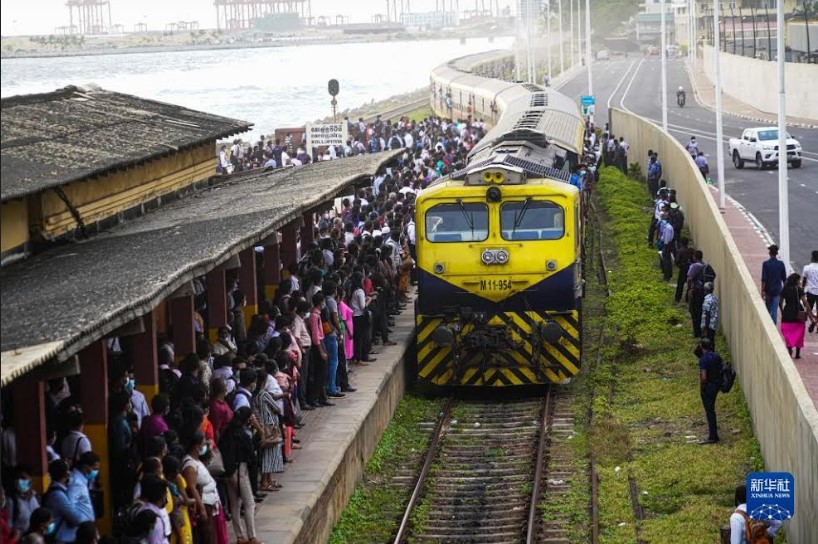
An enduring feature of tourism in Sri Lanka has been the Westerners’ fascination with the Sri Lanka Railways (SLR). Foreigners go into raptures over SLR’s old-world carriages, its quaint British-era stations and its scenic routes. The journey into the past, which is what a journey on SLR is, kindles nostalgia among seniors and is an altogether new experience for young backpackers.

Indeed, there is much that is charming about the SLR. But it also has glaring flaws, that might lead to irredeemable decay if not corrected now. Currently, the SLR is a museum piece but it cannot be one forever. It is badly in need of modernization both to survive and to play a meaningful role in developing Sri Lanka.

The lack of modernization has had a telling effect on the financial health and technical competence of the SLR. Not a day passes without a derailment or the cancellation of some service.

Johan Georget, a transport specialist at the Asian Development Bank (ADB) which is funding modernization, sums up the state of the SLR succinctly and fairly. He says: “Sri Lanka Railways was established in 1858, but has received comparatively limited investments since the 1970s. Consequently, the sector still operates very manually, and in many aspects, SLR can be considered as a heritage railway.”

“With this perspective, the work of SLR employees is truly admirable in managing to successfully operate and maintain the railway network every day, with generally old equipment and limited funds, in a tropical climate that is harsh on the infrastructure.”

The lack of funds combined with the absence of meaningful initiatives on the part of successive governments, has resulted in a very poor exploitation of SLR’s potential.

The SLR accounts for only 6% of the passenger traffic and 0.7% of the freight in the island. In its early years, when it was primarily a freight carrier and the lorry revolution had not taken place, the Ceylon Government Railways (as SLR was then known) accounted for 35% of passenger traffic and 80% of the goods traffic.

Lorries started being used for ferrying goods when the limitations on lorry transport were lifted in 1951. As a result, railway development stalled, says GWS Sisira Kumara, a top SLR official, in his paper in the Economic Review dated August-September 2011. Sisira Kumara argues that Lankan governments should have given priority to rail transport because it is cheaper than road transport.

He puts it this way: “A train consumes 200 litres of fuel for a 50 km journey, while the bus needs 10 litres for a 50 km journey. But to transport 1800 passengers, 30 buses and 300 litres of fuel will be required. The manpower required for running the buses will be 60 while the train will require only four. The 300 trains in the SLR are equivalent to 9000 buses.” Trains are also environment friendly while buses pollute the atmosphere.

However, traders and passengers preferred road transport because this had a wider reach. And being under private ownership, unlike the SLR, road transport operators were flexible. As a result, the SLR became progressively weak financially.

Ravi Ratnasabapathy of the Advocata Institute says that the SLR has been losing money since 1947. “The expenditure of the railways exceeded costs by 10% in 1950. But by 1968, this had grown to 52.4%. The wages policy of the government and the policy limitations imposed by the government in the pricing of passenger and goods transport were factors that contributed to this situation. This has not changed much. In 2016 costs exceeded revenues by 49.4%,” he says.

Successive governments have kept passenger fares low as social welfare became the dominant creed in the mid-1950s.

“Fares per km range from 50 cents to a maximum of Rs.2.00 for 2nd and 3rd class travel. 1st class fares range from Rs.1.60-3.60 per km. Revenue does not cover even salaries. Salaries exceeded revenues by 31.89% in 2016. Based on the current operating and cost structure fares would need to double just to meet recurring expenses,” Ratnasabapathy points out.

The SLR has huge assets, but these are idling. Lease arrears not collected amounted to Rs.1.8 bn at the end of 2016. The Auditor General noted that lands of about 12,000 acres belonging to the SLR had remained idle for about 150 years without being given on lease or being utilized, Ratnasabapathy points out.

The perpetual financial crunch has badly affected the maintenance, renewal and development of the rolling stock and other technical facilities. According to the Transport Ministry, 65% of the rolling stock is over 30-35 years old. Because of technical difficulties, only 42% of the trains run on time.

Due to bad rolling stock and inadequate facilities, accidents are frequent. Sunday Times said that almost 200 people died in train-related accidents in 2022. The statistics covered deaths due to crossing rail tracks, suicide, and collision at level crossings. More than 400 suffered minor to severe injuries. Daily Mirror reported that there were 117 derailments in 2022, up from 111 in 2021. And in the first of 2023 itself, there had been 54 derailments.

ADB’s Help

The Asian Development Bank (ADB) approved a US$ 160 million loan to modernize the operations and improve the efficiency of the SLR. The ADB’s project would: (I) improve the operational efficiency of the railway network by addressing key operating bottlenecks with the modernization of the telecommunications, ticketing, operations headquarter, and train control center systems; (ii) upgrade the railway workshop at Ratmalana, and procure rolling stock and track maintenance equipment; (iii) improve railway safety mainly through the construction of housing blocks to support the future resettlement of encroachers, and the improvement of Colombo Fort and Maradana stations; and (iv) upgrade the Sri Lanka German Railway Technical Training Center (SLGRTTC); and (v) support project implementation capacity and readiness, notably for the future modernization of the Kelani Valley line and other suburban lines.

Be that as it may, the SLR, on its own, should take certain steps, Ratnasabapathy says. He recommends the adjustment of fares and tariffs to better reflect costs and improved services; leasing of more real estate and advertising space at market prices, and partnering with the private sector to provide freight and ancillary services such as catering, courier, real estate management. Even maintenance of toilets could be privatized.

The SLR currently partners with the private sector to provide a luxury carriage on selected routes. But this could be expanded to provide additional services at peak times to cater to office commuters, Ratnasabapathy says. Idle lands could be redeveloped in partnership with private developers. Stations could be used to accommodate shops and restaurants. The SLR should cease to be a “drain on the Treasury”.

But fair play must be ensured in privatization, he insists. There should be competitive public tendering. The public should be informed about the arguments for contracting a public-private partnership, the scope and terms of the contract, and its estimated value so that the public are assured that things are above board.

“Some PPP contracts can be extremely complex and public officials may be overwhelmed. Capacity building within the public sector in this area is essential. Setting up an independent PPP advisory unit within the government, staffed by competent people, is advisable. Judicious use of external advisors may be necessary, depending on the nature of the contract. Above all, there should be post-implementation monitoring to ensure that value is delivered,” Ratnasabapathy says.


Posted in Uncategorized

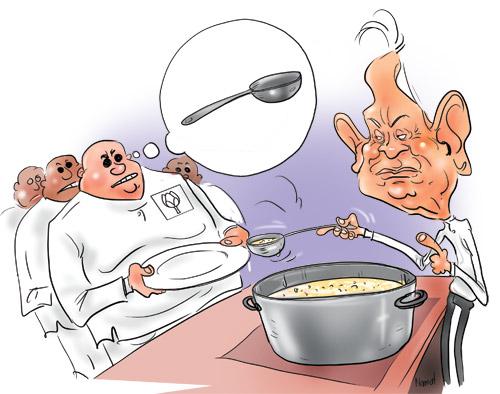
SLPP MPs adamant on Cabinet posts, reject alternatives attached with perks

In a bid to appease some senior MPs of Sri Lanka Podujana Peramuna (SLPP) who insist on Cabinet portfolios, the government has proposed to set up a separate body called ‘high post committee’ comprising them and assign responsibilities to them along with perks such as vehicles and allowances, Daily Mirror learns.

However, the SLPP MPs remain adamant that they won’t settle for anything less than Cabinet portfolios.

An MP who insisted on anonymity told Daily Mirror that these MPs were called for meetings of the proposed ‘high post committee’ but they never turned up in protest.

“We were called for meetings on Monday last week and on Monday this week. But, none of us went,” the MP said.

In another alternative, the government offered positions to the family members of these MPs, along with perks such as vehicles and allowances, but it too had been turned down.

Daily Mirror learns that President Ranil Wickremesinghe is not prepared to increase the size of the Cabinet any more. The President can have a Cabinet of 30 in terms of the Constitution. Still, there are vacancies to appoint eight more ministers.

Another informed source said that a senior SLPP politician has conspired to topple the government during a critical vote in Parliament.

Posted in Uncategorized

‘Growing trend’ of MPs exploiting parliamentary privileges deeply concerning – BASL

The Bar Association of Sri Lanka (BASL) says there is a “growing trend” of Members of Parliament exploiting parliamentary privileges.

In a press release issued in light of the recent trend of pressure being exerted over the judiciary, the BASL raised deep concerns about the MPs exploiting parliamentary privileges by making statements in the House for matters which are sub judice (being considered by a court or judge).

Referring to a recent statement made by MP Sarath Weerasekara in parliament on July 07, the BASL deemed it “unfounded” and a “brazen attack” on the judiciary and the social fabric of the country.

Accordingly, the association went on to emphasize the importance of allowing the judiciary to operate independently, free from external pressures, threats or any interference, for a vibrant democracy to exist.

Noting that any interference in the judicial process sets a dangerous precedent, which must be strongly condemned, the BASL urged the government and the opposition to respect and observe the independence of the judiciary.

Posted in Uncategorized

SL Foreign Ministry Secretary Meets Indian Counterpart

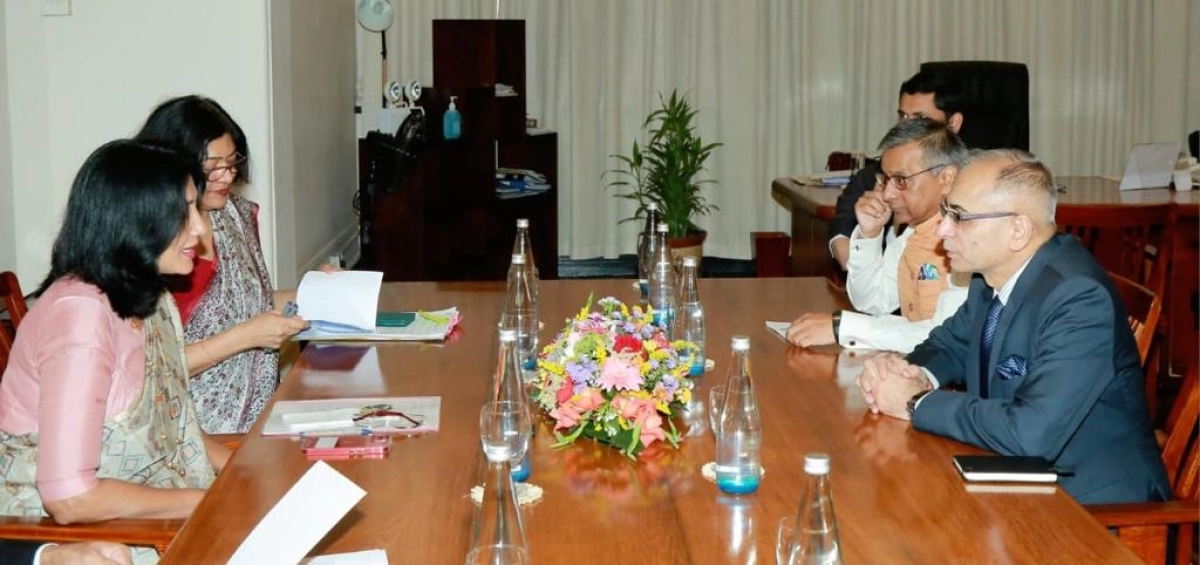
The Secretary of the Foreign Ministry of Sri Lanka, Aruni Wijewardene, held a significant meeting with her Indian counterpart, Vinay Mohan Kwatra, earlier today at the Ministry of Foreign Affairs. Mr. Kwatra, the Indian Foreign Secretary, is currently on a two-day visit to Sri Lanka, emphasizing the importance both countries place on strengthening their bilateral relations.

During the meeting, Secretary Wijewardene and Secretary Kwatra discussed various matters of mutual interest, aimed at enhancing cooperation and deepening ties between Sri Lanka and India. The exchange of views encompassed a wide range of topics, including economic partnerships, regional security, cultural exchanges, and people-to-people connections.

As part of his visit, Secretary Kwatra is scheduled to engage in meetings with several senior government officials, further cementing the longstanding friendship and collaboration between Sri Lanka and India. These discussions aim to foster closer coordination on key regional and international issues, as well as exploring avenues for increased trade, investment, and cultural exchanges between the two nations.

Posted in Uncategorized

Sri Lanka ‘okays’ passenger & cargo service to India through KKS Port

Sri Lanka has granted approval for the commencement of passenger and cargo service to India through the Kankesanturai Harbour.

The approval was granted by Minister of Ports and Shipping Nimal Siripala de Silva.

However, the approval or the service has not been granted by India thus far.

Minister de Silva said once India grants approval for the service, the transportation of passengers and goods to India through the Kankesanturai Harbour can take place within six months.

According to officials, the primary objective of the project is to develop the Jaffna city and the Kankesanturai Harbour.

Although the service was scheduled to commence earlier this year, due to various issues, the commencement was delayed.

Human Rights Council adopts UPR outcomes for Sri Lanka, Pakistan & Japan

The Human Rights Council adopted the Universal Periodic Review outcomes of Pakistan, Japan, and Sri Lanka on Monday(10).

In terms of Sri Lanka, the Vice-President of the Council said that out of the 294 recommendations received, 173 enjoyed the support of Sri Lanka, and 121 were noted as well.

In the presentation of the report, it mentioned that there were a significant number of recommendations pertaining to the Prevention of terrorism act, and the Government had undertaken to repeal the act as a voluntary pledge.

It added that Sri Lanka remained committed to pursuing efforts to achieve tangible progress in national reconciliation through domestic mechanisms with the assistance of international partners.