Sri Lanka’s farmers learn lessons from organic debacle -FT.COM

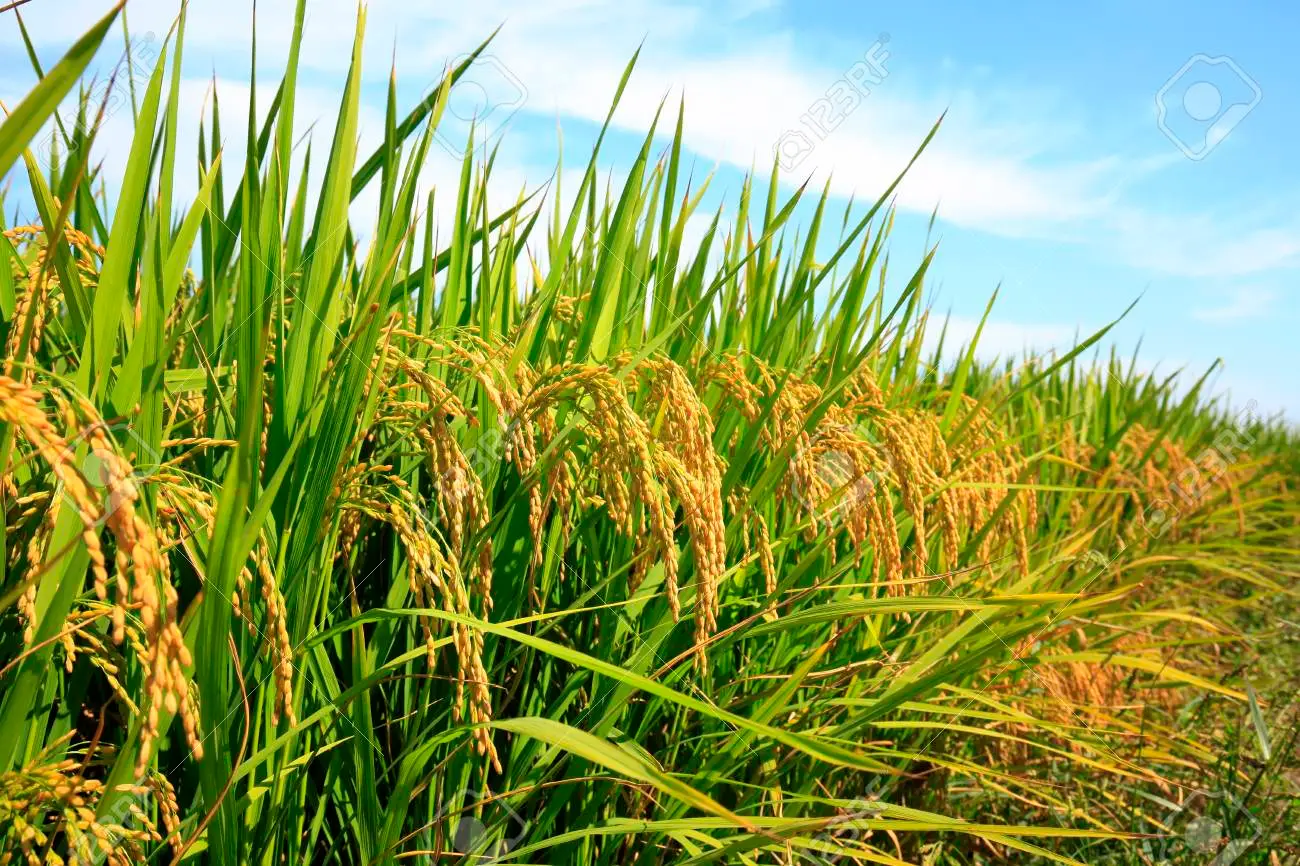
When former president Gotabaya Rajapaksa abruptly banned chemical fertiliser imports in mid-2021, he turned Sri Lanka into a case study for how not to do organic farming.

The restrictions — which caught agricultural officials and farmers by surprise — sparked chaos in the agricultural sector. The lack of alternatives led to sharp drops in output, with harvests of rice and other crops falling. This, in turn, stoked a severe economic crisis, which culminated in the country’s default on $40bn in foreign debt last year. The once-fertile island is now dependent on food grants and imports to manage a hunger crisis.

Even though Rajapaksa reversed the ban about six months later, fertiliser supplies in Sri Lanka never normalised. Russia’s invasion of Ukraine in 2022 pushed up prices globally, while a lack of foreign currency in Sri Lanka led to severe shortages and rationing of imported fertiliser. A bag of urea that cost Rs1,500 ($4.65) shot up to as much as Rs40,000 before falling to a subsidised price of Rs10,000 ($124), says Ahilan Kadirgamar, a sociologist at the University of Jaffna.

Farm organisers and agricultural experts in Sri Lanka say that — even if many farmers have no intention of ever going “organic” again — the disruption to chemical fertiliser supplies has highlighted the importance of finding alternatives to help insulate them from future shocks. And a number of small-scale initiatives and pilots to explore those alternatives are now under way across the country.

“What farmers are doing on the fertiliser front is they’re experimenting,” says Kadirgamar, who is also chair of a rural co-operative federation. “They’re trying to use less fertiliser, or a mix of organic compost and fertiliser, but there’s no sort of conclusive direction in terms of how they’re going to go forward.”

Some of these schemes predate Rajapaksa’s fertiliser ban. Kadirgamar says that four co-operatives in Sri Lanka’s north started running small organic compost factories from 2018 onwards, using ingredients such as dried leaves and cow dung to create natural fertilisers.

The idea was never to replace chemical fertilisers, Kadirgamar says, but to reduce dependence on them. He adds, however, that demand form alternatives is trending higher as farmers try to offset the high cost of fertiliser, and some co-operatives are considering producing more organic compost. “From the farmers’ point of view, it’s just about survival,” he says.

While on the campaign trail to become president in 2019, Rajapaksa had railed against the dangers of chemical fertilisers to human health and the environment. But few expected the import ban, which some critics say was motivated not by environmental concerns but by an ill-advised attempt to stem falling foreign currency reserves.

If that was the aim, it failed, and the country’s bankruptcy fuelled mass protests that forced Rajapaksa out of office in July last year. The turmoil attracted worldwide attention, and was seen in some quarters as a cautionary tale about the risks of rethinking farming — with Tucker Carlson, then a host on Fox News in the US, calling Sri Lanka a “victim of ESG”.

JM Soorasena, who grew up in a farming family and is now president of the country’s Agriculture and Environment Professional’s Cooperative Society, acknowledges Rajapaksa’s move was damaging for advocates of sustainable farming methods, like himself.

“They didn’t have any good plan, they didn’t have any infrastructure,” he says of the government, adding that officials still “don’t know how to practice” organic farming.

Shamila Rathnasooriya, a co-ordinator with rural non-profit organisation Movement for National Land and Agricultural Reform (Monlar) says that, after the ban: “Farmers didn’t know how to do organic agriculture and they were seeing a drop in yield. Due to this experience, farmers don’t believe in organic agriculture.”

Monlar is now trying to change that, and works with about 2,000 farmers across the country to teach them alternative farming methods.

It distributes seeds for crops such as suwandel, an indigenous variety of rice, and green gram or vegetables that Rathnasooriya says are well suited to the country’s climate. It then trains farmers in organic farming methods such as preparing jeevamrutham, a fertiliser made from cow dung, cow urine, sugar and flour that is used in neighbouring India.

Rathnasooriya says Monlar encourages participants to start by testing the techniques on half an acre of their land, and to expand it if they see good results. If successful, he says, farmers enjoy a “similar amount of harvest, and they see the multiplication and improvement of micro-biodiversity”.

Ultimately, though, these efforts remain small scale. Kadirgamar says there is little sign that industrialised agricultural businesses in Sri Lanka are following suit, even if the ban also showed “they need to be much more careful in [fertiliser] use”.

Either way, Soorasena says the future of fertilisers in Sri Lanka will be tied not to sustainability, but to politics. With nearly a third of the country’s workforce engaged in agriculture, subsidising chemical fertilisers is a useful vote winner, he argues. “It’s not economical, but political.”

Posted in Uncategorized

Foreign fuel suppliers to enter Sri Lanka’s retail market in a month

Sri Lanka’s Minister of Power & Energy Kanchana Wijesekera said that 450 fuel stations have been categorized into 3 separate groups of 150 to be made available to the new foreign fuel service operators.

At the meeting with the owners & management of fuel stations, it was revealed that the new foreign fuel service operators will enter the Sri Lankan fuel market within a month.

Sri Lanka’s Minister of Power & Energy Kanchana Wijesekera met with owners & management of fuel stations at the Foundation Institute in Colombo on Thursday (4) morning.

The minister tweeted that he met the first two groups of owners & management of Fuel stations that will be made available to new suppliers.

Both sides had discussed dealership allocation to new suppliers, categorizing mechanism, new agreements, pricing formulas, benefits of new suppliers, dealer margins, government policy & regulations.

Sri Lanka awarded retail fuel licenses to three foreign firms, namely, China’s Sinopec, United Petroleum Australia and US-based RM Parks, which is in collaboration with Shell.

The cabinet granted approval to allocate 150 dealer-operated fuel stations for each new supplier, and for A further 50 fuel stations to be established by each selected company.

Sri Lanka can prosper if it achieves debt sustainability: IMF official

Sri Lanka can be put on the path to prosperity if it achieves debt sustainability, an International Monetary Fund (IMF) official said, noting that the island nation must also confront the challenge of restructuring domestic debt without hurting financial stability.

IMF Asia and Pacific Department Director Krishna Srinivasan speaking at an event on Wednesday May 03 said the Sri Lankan government is working on resolving some of these issues and will “flesh out a strategy.”

“Hopefully very soon. That’s the next step,” he said.

Srinivasan was addressing the media on the regional economic outlook on Asia and the Pacific.

The official also noted that inflation has come down in Sri Lanka, albeit from having gone “through the roof”.

The ongoing IMF programme, Sri Lanka’s 17th, is one which emphasises macroeconomic stabilisation and bringing down inflation, he said, adding that inflation is a tax on the poor.

“Fiscal consolidation is based on revenue based consolidation. That’s partly because Sri Lanka has among the lowest in terms of revenue mobilisation, tax collection. And that goes back to the policy mistake they made pre-pandemic, wherein they cut taxes across the board, whether it’s VAT, corporate tax, and personal income tax. So the [IMF]-supported programme is a revenue-based consolidation [programme] which provides stability to the economy,” he said.

Srinivasan was referring to widely criticised tax cuts that were introduced soon after the election of then President Gotabaya Rajapaksa in late 2019. However, a recent IMF-backed hike in progressive personal income tax in Sri Lanka has been met with resistance from a minority of the working population that earns more than most Sri Lankans but are well-organised and are backed by the country’s leftist and left-leaning parties.

Srinivasan also noted that Sri Lanka was a quintessential case of a country running twin deficits.

“You had a large increase in the fiscal deficits, putting pressure on the external accounts, reserves falling, exchange rate falling,” he said, adding that this prompted the country to approach the IMF for a fresh programme.

The IMF programme also relies on Sri Lanka reining in inflation and addresses governance and corruption issues, he said.

“It’s the first country in Asia which has had a deep diagnostic on the issue of governance and corruption and that will feed into the programme going forward,” said Srinivasan.

In early April, Sri Lanka gazetted a new anti-corruption bill in a bid to address corruption vulnerabilities, a prerequisite for the much-needed 2.9 billion US dollar extended fund facility that came with the IMF programme.

Srinivasan said the programme will see a floor established on how the country should support its poor and vulnerable and to “make sure that the fiscal support they provide is temporary and targeted to the people who need it most.”

“It’s a very comprehensive programme and fiscal consolidation by itself will not be enough,” he added.

On inflation, which is on a downward trend and is predicted by the Central Bank to reach a single digit level by year end, the IMF official acknowledged that inflation has come down but from high levels.

“So this is again a work in progress. Inflation has to come down durably because – let’s not forget, inflation is the worst kind of tax on the poor and the poor and the vulnerable are hurting the most. So you want to get inflation under control. That’s something which, again, in terms of monetary policy, with support of fiscal policy – [that the authorities have] to bring inflation down to levels which are reasonable,” he said.

Sri Lanka must also make good-faith efforts to reach a debt agreement with its creditors, whether bilateral or private, said Srinivasan.

The country’s foreign minister, Ali Sabry, told Channel News Asia on Wednesday that the government is optimistic (“fingers crossed”) that the South Asian nation, still recovering from its worst currency crisis in decades, is on track to completing its debt restructuring programme before the IMF reviews its programme in September.

“We’re confident that just like we managed to secure debt restructuring assurances from our friend and creditors, we should be able to restructure it,” said Sabry.

Commenting on Sri Lanka’s growth trajectory, Srinivasan said the country has made a mild recovery after a contraction of 8.7 percent in 2022 followed by a 3 percent contraction in 2023.

“But the issue will be for Sri Lanka to implement the programme well so that debt can be made sustainable, which is a big difference from previous programmes, and the country can be put on the path to prosperity,” he said.

Recalling that Sri Lanka’s debt was assessed by the IMF to be unsustainable, Srinivasan said before the programme could be approved by the IMF board, Sri Lanka had to embark on a “path towards restoring sustainability”, which includes restructuring debt to all creditors – private creditors, official creditors, and to some extent, domestic debt, for the simple reason that debt sustainability is quite a big challenge in Sri Lanka.

“But when you restructure domestic debt, you have to make sure that you also safeguard financial stability. These are issues on which the government is currently working and [unclear whether he said ‘will’ or ‘we’ll’] flesh out a strategy on that, hopefully very soon. That’s the next step,” he added.

China strengthens grip on Sri Lanka’s Colombo port By P.K. Balachandran/The Diplomat

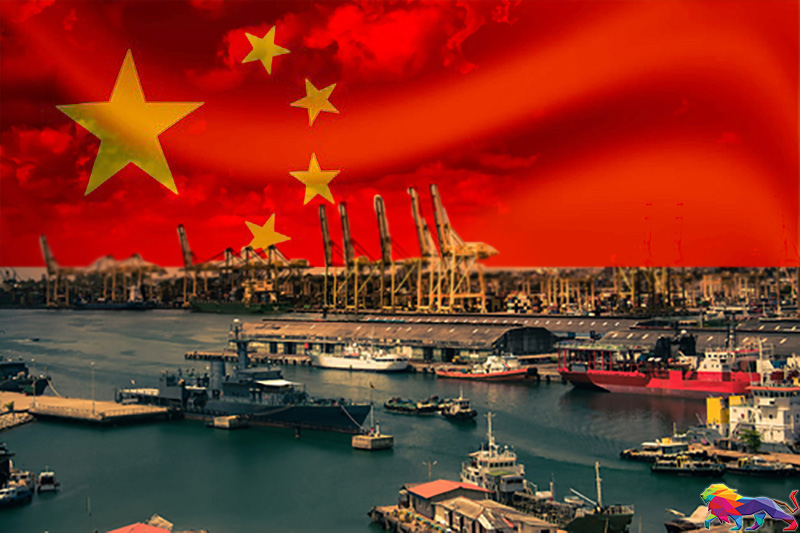
China is strengthening its grip on Colombo port after securing an agreement to build, operate, and transfer a warehousing hub within the port. The China Merchants Port Holdings Company (CMPH) will have an 85 percent stake in the warehouse facility and will operate it for 50 years. The Sri Lankan government assigned the $392 million project to CMPH, a Chinese state-owned enterprise, without open tendering.

The CMPH already has an 85 percent stake in the Colombo International Container Terminal (CICT), a star performer among Sri Lankan and South Asian terminals. The CMPH also controls Hambantota port in southern Sri Lanka, in which it has an 85 percent stake and enjoys a 99- year lease. According to CMPH chairman Miao Jianmin, the latest deal will bring its total investments in Sri Lanka to over $2 billion, making the company the single largest foreign investor in the island nation.

Another Chinese company, China Harbor Engineering Company (CHEC), is partnering with Access Engineering Ltd. of Sri Lanka and the Sri Lanka Ports Authority (SLPA) to build the Eastern Container Terminal in Colombo port. The CHEC is also the builder of Colombo Port City, which is designed to be an international financial hub.

A ‘Done and Dusted’ Deal

Shipping sources in Colombo said that they had advocated for the government to award the Colombo port warehousing project on the basis of an open tender. Instead, the government unilaterally gave the project to the CMPH, according to these sources. No other Sri Lankan or foreign party had raised this issue; as a result, the deal “is done and dusted,” as Rohan Masakorala, CEO of Shippers’ Academy in Colombo, put it.

For the purpose of setting up the warehouse, to be called the South Asia Commercial and Logistics Hub, the CMPH has set up a fully-owned subsidiary, Fortune Centre Group Limited (FCGL).

The FCGL gets the rights to name the chairman and managing director/chief executive officer, as well as appoint five directors to the project company. Access Engineering, a Sri Lankan construction company, and the SLPA, the two local collaborators, can name one director each.

The issued share capital of the FCGL will be $84 million. FCGL agreed to contribute, in cash, $58.8 million, representing 70 percent of the total. Access Engineering and SLPA each agreed to contribute $12.6 million (15 percent of the total).

Under the agreement, SLPA is not allowed “to grant any third party the right to carry out port-related logistics or warehousing services at the Port of Colombo at a rate lower than the royalty fees payable by the project company,” filings by China Merchants Port show, according to Sri Lanka’s The Sunday Times.

At the end of 50 years, the hub company “shall hand back” the leased site and “transfer all assets of the logistics center to SLPA,” the Sunday Times reported.

China Merchants Port called its stake in the logistics complex “a giant leap forward’’ for its influence in South Asia.

Geopolitical Implications

The warehousing project has an international strategic dimension, especially for India. After the Mahinda Rajapaksa government gave the CICT project to China in September 2011, India felt a pressing need to have a foothold in Colombo port because of its strategic and economic interest in the Sri Lankan port.

Colombo port handles 60 percent of India’s transshipment cargo and India-linked cargo, in turn, accounts for 70 percent of Colombo port’s total transshipment volume.

Since India views Sri Lanka as “an unsinkable aircraft carrier 14 miles off [India’s] coast” as the Indian diplomat Shivshankar Menon put it, India is wary about a strong Chinese presence in Colombo port. In fact, the India-Sri Lanka Accord of 1987 had anticipated a foreign presence in the ports of Sri Lanka decades ago. The accord made Sri Lanka promise that it would not allow its ports to be used by forces inimical to India. India did not have China in mind at that time, however; the bugbear then was the United States.

Following the entry of China as the principal infrastructure builder in Sri Lanka from 2011 onwards, India woke up to the need to keep China away from its doorstep. Along with its Quad ally, Japan, India fought hard to secure the contract to build and operate the East Container Terminal (ECT) in Colombo port to balance the Chinese presence there.

But the government of Gotabaya Rajapaksa reneged on an earlier promise to hand over the project to India and Japan. Gotabaya cited an electoral commitment not to give the ECT away to foreign entities and wriggled out of the pledge.

However, due to mounting pressure from India to make up for the loss of ECT, the government gave the West Container Terminal (WCT) project to the Adani Group of India. But Adani was allowed only a 51 percent stake, and not 85 percent as in the case of China Merchant Port’s stake in the CICT.

India did not hide its discomfort over the burgeoning influence of China in Sri Lanka under the stewardship of former President Mahinda Rajapaksa, who was perceived in New Delhi as anti-India and pro-China.

In July 2014, the Sunday Times reported that the Rajapaksa government had approved a proposal for the state-owned China National Aero Technology Import-Export Corporation (CATIC) to set up an aircraft base maintenance center in Trincomalee to repair and maintain Chinese-built aircraft in the Sri Lankan Air Force. It was to be built at a cost of $40.3 billion.

But apparently after India raised objections, Colombo reversed course. Then-Foreign Minister G. L. Peiris told Parliament: “No such decision has been taken to permit the establishment of an aircraft base maintenance center in Trincomalee.”

China’s control of ports in Sri Lanka is a particularly sensitive issue for India due to the potential for the facilities to be used by military vessels. In November 2014, a Chinese submarine and warship docked in Colombo. Seven weeks earlier, a Chinese submarine, a long-range deployment patrol vessel, had called at the same port ahead of a visit to Sri Lanka by Chinese President Xi Jinping. Both times India expressed serious objections.

Sri Lankan President leaves for London to attend coronation of King Charles III

President Ranil Wickramasinghe left Bandaranaike International Airport at Katunayake early Thursday (04) for England to attend the coronation ceremony of King Charles III.

Eight other people have also left with the President and they have left for Dubai first at 03.15 this morning on Emirates flight EK-649.

The group will leave for England later in another flight from Dubai.

The coronation of King Charles III is scheduled to take place at 11 am on Saturday (06) at Westminster Abbey.

President Ranil Wickremesinghe will participate in this coronation ceremony on an invitation of the British royal family.

After the coronation ceremony, the President is scheduled to return to the island on the morning of the 8th.

Posted in Uncategorized

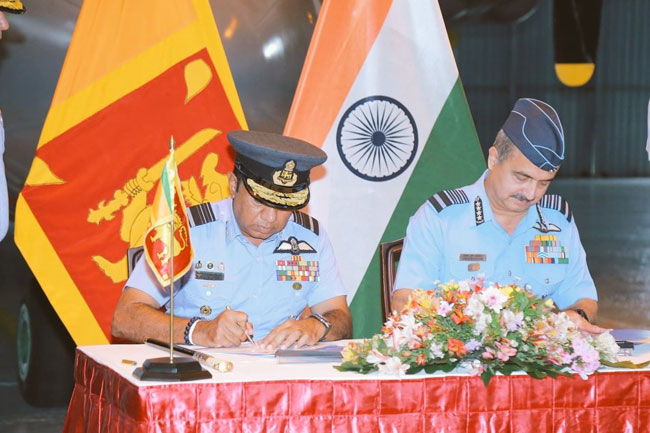
Indian, Sri Lankan air forces to conduct joint air drill

India and Sri Lanka will conduct a joint air drill soon, State Minister of Defence Pramitha Bandara Tennakoon said.

He told the Daily Mirror that basics for such a joint exercise was discussed with Chief of the Air Staff of the Indian Air Force, Air Chief Marshal Vivek Ram Chaudhari who is in Sri Lanka.

Air Chief Marshal Chaudhari arrived in Sri Lanka on 01 May 2023 on a four-day official visit.

During his visit, he called on the tri-forces commanders, President Ranil Wickremesinghe, Prime Minister Dinesh Gunawardena, the State Defence Minister and Defence Secretary.

During these discussions it was revealed that the two Air Forces would conduct a joint exercise on disaster management in the last quarter of this year on Sri Lanka waters.

Air Marshal Choudhury said India would build a ‘Friendship Auditorium’ at the Sri Lanka Airforce Base in Trincomalee as a symbol of the close cooperation between the two Air Forces.

He also said India would increase collaboration to further strengthen the National Defence College in Sri Lanka.

Posted in Uncategorized

China Merchants Group to build Hambantota Port into major logistics & industrial base

The Chairman of the China Merchants Group (CMG), China’s largest diversified conglomerate, who was on a visit to Sri Lanka says the Group’s latest investment plans will up its accumulated investments in the island to reach nearly 2 billion US Dollars.

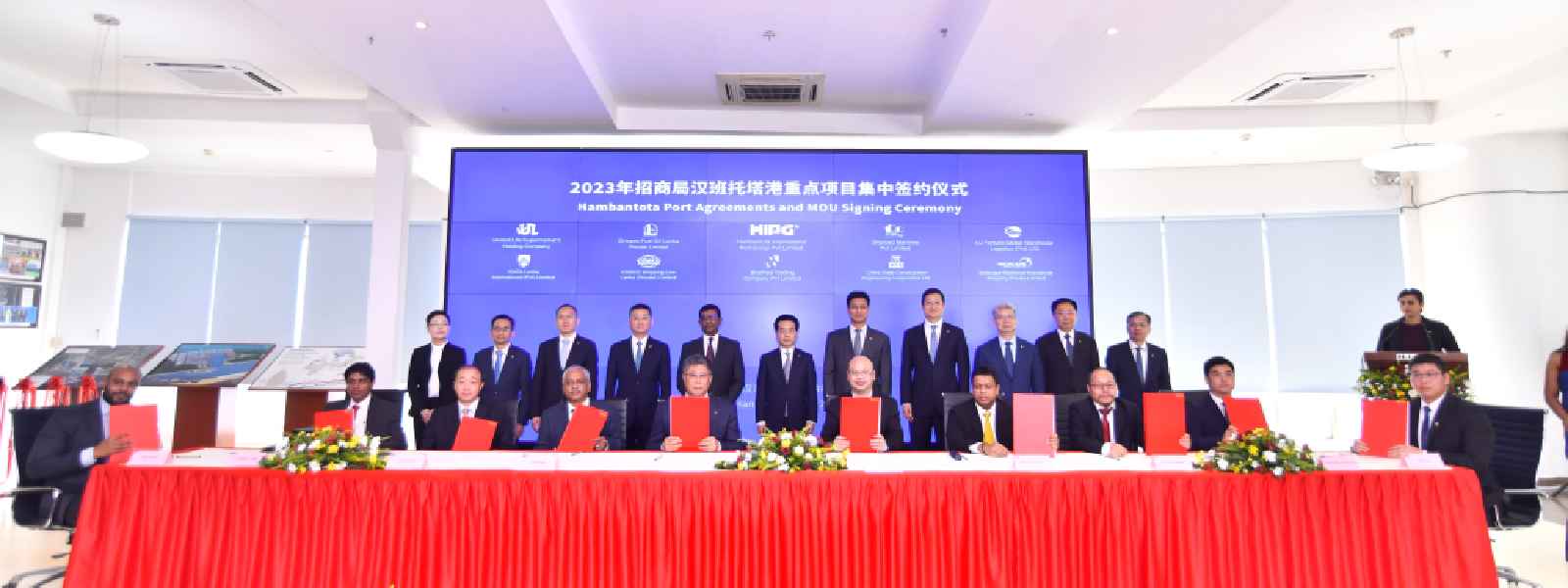
Chairman Miao Jianmin, who is on his first visit to the country, attended a signing and ribbon cutting ceremony held at the Hambantota International Port for 15 projects. The China Merchants Group which entered the Sri Lankan market in 2008, accumulated a total investment of 1.68 billion US dollars as at the beginning of 2023. The Group has just signed another investment agreement with the Sri Lankan government, with plans to invest 400 million US dollars to build a modern logistics centre in Colombo. The new development will up CMG’s accumulated investment in Sri Lanka to reach over 2 billion US dollars, making it the largest foreign investment enterprise in the island.

“On this fertile land, we will write an extraordinary chapter together, and promote Hambantota Port to move forward and become a new bright spot and driving force in Sri Lanka and the Indian Ocean,” the CMG Chairman said.

The project signing event held at the Hambantota Maritime Center Sky Lounge, included MoUs, commercial agreements, office lease and land lease agreements. The partnering organisations present were Bhathiya Trading Company, COSCO Shipping Lines Lanka, Shipload Maritime, United Life Supermarket, HXZA Lanka International, Lu Fortune Investment, China State Construction Engineering Corporation, Sinopec Fuel Oil Lanka Limited and Inchcape Mackinnon Mackenzie Shipping.

Expressing full confidence in the development of Hambantota International Port, Chairman Miao Jianmin said that CMG will continue to increase investments in Sri Lanka and establish extensive cooperation with everyone. The China Merchants Group brings to Sri Lanka, their rich experience in port and park management coupled with advanced technology. The Group plans to build Hambantota International Port into an important logistics centre and industrial base on the island as well as the Indian Ocean region.

With a 150 year history, the China Merchants Group is a diversified conglomerate with key business areas focused on transportation and logistics, comprehensive finance, urban and park development. The Group’s most recent interests include emerging industries such as healthcare and testing.

In addition to the signings, HIP celebrated three projects in the industrial park that have reached completion. A ribbon cutting ceremony was held for the completed phase 1 of the INSEE warehouse by Siam City Cement, the covered bonded warehousing facility by Hambantota Port & Logistics Services and the plug-and-play, park-in-park facility by Shenzhen Xinji Group.

The event also marked the commencement of Phase II of the INSEE Warehouse by Siam City Cement (Lanka) Limited as well as the state-of-the-art yacht building facility by SeaHorse Yachts (Pvt) Ltd.

Vice Presidents of CMG Deng Renjie and Feng Boming and Wang Xiufeng, CEO of CMPort, subsidiary of CMG and HIPG’s global partner were present at the event. Johnson Liu, CEO of HIPG and Ravi Jayawickreme, CEO of HIPS were also in attendance.

Court allows AG to amend charge sheets against Swiss Embassy staffer

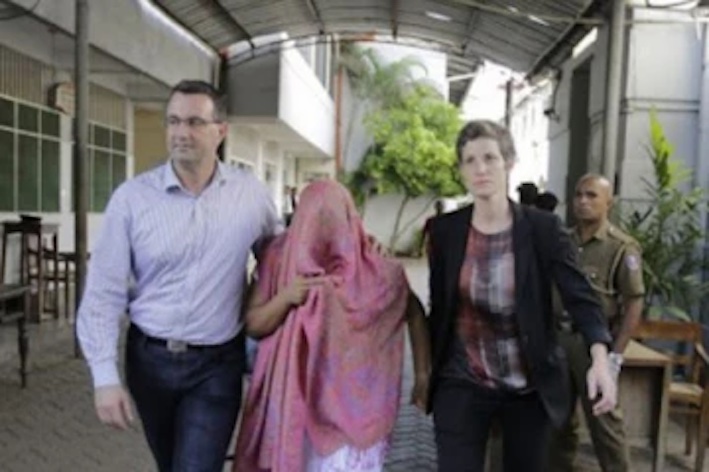
The Colombo High Court has permitted the Attorney General to amend the charge sheet filed against Garnia Bannister Francis, a local employee of the Swiss Embassy in Colombo who was allegedly abducted in 2019.

The court order was issued by Colombo High Court Judge Namal Walalle when the case was taken up in court this morning (03 May).

Accordingly, Judge Walalle had approved the Attorney General’s request to amend the charge sheet filed against Francis, after which it was decided that the case would be heard on 15 June.

On 16 December 2019, Francis was arrested by the Criminal Investigation Department (CID) and produced before the Colombo Chief Magistrate’s Court on the directions of the Attorney General, after she was named a suspect for a case of exciting disaffection against the Government and fabricating false evidence to be used in a future judicial proceeding.

She was later released on bail under two personal bonds of Rs. 500,000 each on 30 December.

Francis was accused of filing a false complaint at the Cinnamon Gardens Police in 2019, claiming that she had been abducted near St. Bridget’s Convent in Colombo and sexually harassed on 25 November, by an armed group who arrived in a white van.

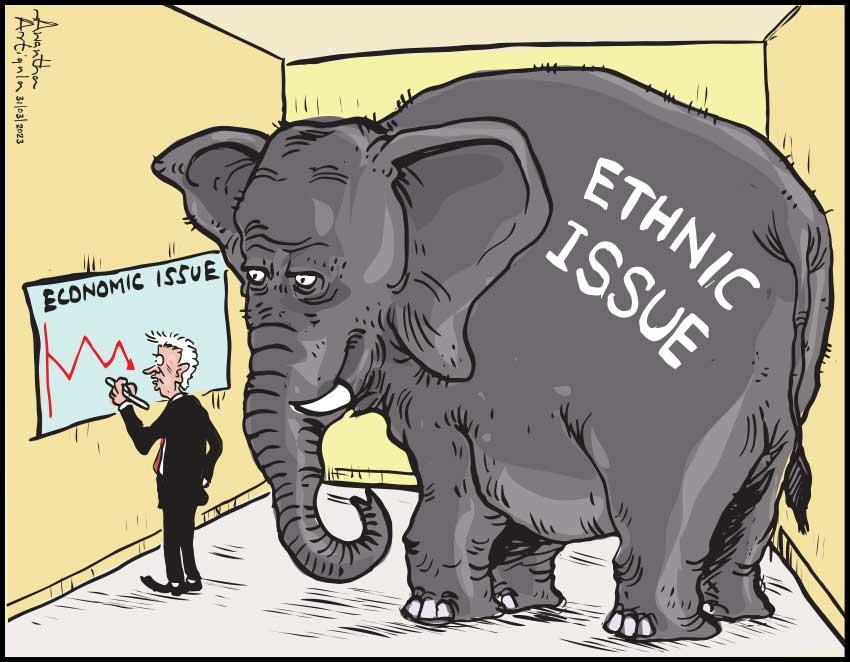
President Ranil Wickremesinghe renews old pledge to resolve Sri Lanka’s ethnic question

Sri Lankan President Ranil Wickremesinghe said he hoped to reach “a mutually agreeable solution” on the island nation’s long-pending ethnic problem by the end of the year, renewing an old promise.

“My intention is to address the ethnic problem in the country while implementing the agreement with the International Monetary Fund. We are currently in discussions, and I hope to reach a mutually agreeable solution by the end of this year,” he said in his May Day address, of his talks with the Tamil political parties. “It is important for us to move forward while respecting and protecting the rights of all communities including the majority Sinhalese, Tamil, Muslim, and Burgher minorities without marginalising anyone. We are all committed to achieving this goal,” he said.

This is the second time that Mr. Wickremesinghe has made the pledge after his ascent to Presidency last year. He had promised to resolve the country’s persisting ethnic problem by February 4 this year, when Sri Lanka marked its 75 th year of Independence, but failed to meet the deadline he set for himself.

The Tamil National Alliance (TNA), the main parliamentary grouping of legislators from the north and east, participated in the talks with the President, despite initial reservations stemming from past attempts. The TNA also presented a set of five actionable points to the President, pertaining to land and police powers, and devolving more administrative powers to the provincial councils, and is awaiting action for months now.

Fourteen years after the end of a devastating civil war, Sri Lanka is still faced with the problem that drove the country into decades-long strife. Apart from their historic struggle for self-determination, and their persisting demand for truth and justice for war-time civilian deaths and disappearances, Sri Lanka’s Tamil community continues to battle several challenges, including an escalating attack on their lands.

Political call

Meanwhile, President Wickremesinghe is mulling early presidential polls next year and has reportedly reached out to different Tamil and Muslim parties, seeking their support, Opposition legislator Mano Ganesan told The Hinduin a recent interview.

In his May Day address, Mr. Wickremesinghe also underscored the need to “move forward with a new Constitution that reflects our shared values and aspirations.” Although Tamil parties have voiced scepticism over the President’s outreach, he said: “To the Tamil parties, I say that it is futile to distance oneself from this endeavour. If we are to address the issues faced by the Tamil community in this country, let us collaborate within this system, particularly in the Parliament as part of the government.”

Source:The Hindu

Posted in Uncategorized

IAF chief meets Sri Lanka’s top military leaders, exchange views on matters of bilateral importance

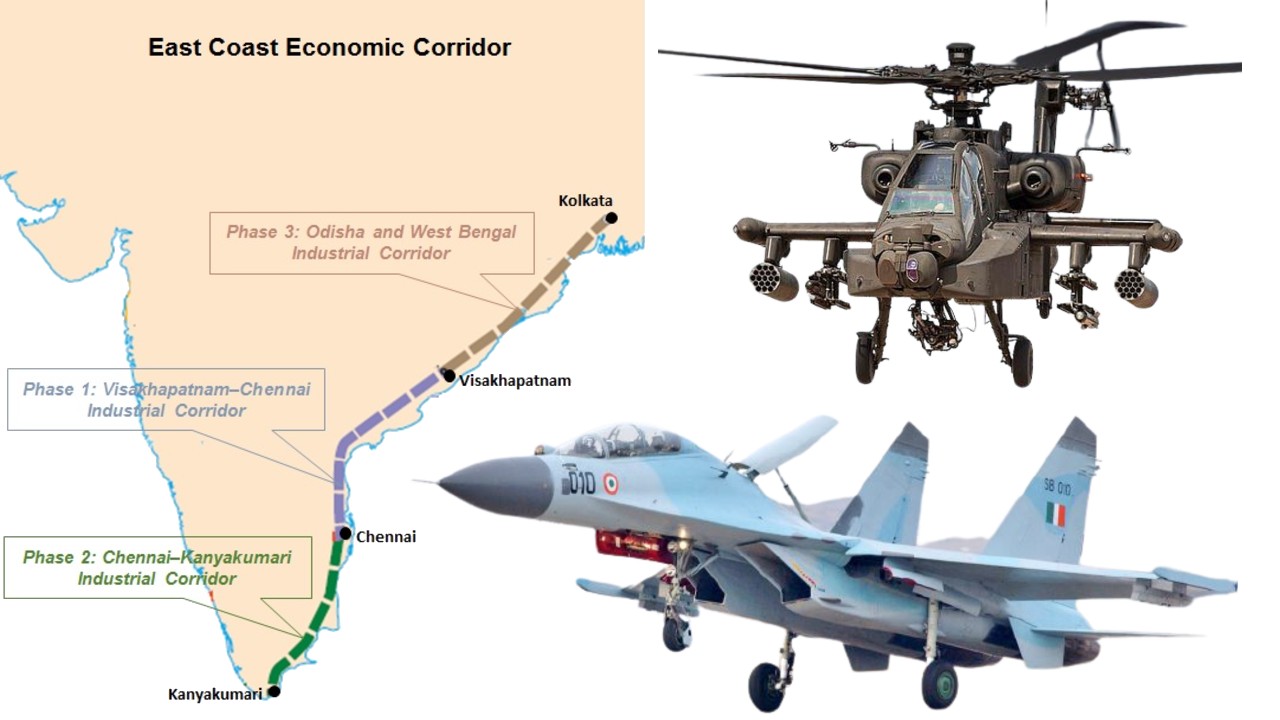
Chief of Air Staff, Air Chief Marshal V R Chaudhari on Tuesday met Sri Lanka’s top military leaders and exchanged views on several matters of bilateral importance, while recalling the longstanding friendship between the two countries, amid China’s growing influence in the island nation.

Air Chief Marshal Chaudhari, who arrived here on Monday on a four-day official visit to Sri Lanka, called on the Commander of the Sri Lankan Air Force (SLAF), Air Marshal Sudarshana Pathirana at Air Force Headquarters here.

As part of India’s commitment towards capacity building of Sri Lanka Armed Forces, Chief of Air Staff of the Indian Air Force presented AN-32 propellers to ensure high operational readiness of the aircraft held with Sri Lanka Air Force.

“Air Chief Marshal VR Chaudhari #CAS @IAF_MCC donated AN-32 propellers to Commander @airforcelk at Katunayake Air Base on behalf of Government of India. Highlights India’s resolute commitment towards capacity building of SriLanka Armed Forces,” the the Indian High Commission in Colombo tweeted.

The Chief of the Air Staff is visiting Sri Lanka at the invitation of Air Marshal Pathirana. He was received upon arrival by the Commanding Officer SLAF Station Colombo, Air Commodore Suresh Fernando, and was presented a Guard of Honour which was conferred by the Colour Squadron of the SLAF, Sri Lanka’s News 1st channel reported.

He also met with the Commander of the Sri Lanka Navy, Vice Admiral Priyantha Perera at the Navy Headquarters, Colombo.

Upon his arrival, he was welcomed at the portals of the Navy Headquarters in compliance with naval tradition.

“Visit of Air Chief Marshal VR Chaudhari #CAS @IAF_MCC to Sri Lanka: Day 2 engagements in the morning. Meeting with Air Marshal Sudarshana Pathirana, Commander @airforcelk. Meeting with Vice Admiral Priyantha Perera, Commander @srilanka_navy,” the Indian mission tweeted.

Air Chief Marshal Chaudhari also met with Maj. Gen Senarath Yapa, Commandant National Defence College, Sri Lanka and delivered a talk on the transformation of the Indian Air Force to the senior Sri Lankan Armed Forces officers attending the College, it added.

He also gifted books worth 10 million Sri Lankan Rs to the prestigious.

During the discussions, the two sides exchanged views on several matters of bilateral importance, whilst recalling the longstanding friendship between the two countries.

After his arrival here on Monday, Air Chief Marshal Chaudhari sought the blessings of Lord Buddha at the sacred Gangaramaya Temple in Colombo.

The visit will enhance the existing professional ties and bonds of mutual cooperation between both nations, an official statement said.

“The visit symbolises strong relations and close cooperation between the two friendly neighbours, with Sri Lanka being accorded the status of ‘Priority One’ partner by India. Underlining the strong bonds of friendship between the two services,” the Indian mission said in a statement Monday.

“The visit of Chief of Air Staff, Indian Air Force would strengthen the existing relations between the two countries and facilitate discussions on common security challenges and enhancing capacity and capability building initiatives towards ensuring Security And Growth for All in the Region (SAGAR), as propounded by Prime Minister Narendra Modi,” the statement said.

In February 2021, at the invitation of the Commander, Sri Lanka Air Force, a 22 aircraft contingent of the Indian Air Force participated in the 70th anniversary celebrations

In addition, the Indian Air Force was the first responder by deploying its assets expeditiously for providing 12T medical supplies in May 2020 and 100T nano fertilisers in November 2021.

In August last year, Vice Chief of Indian Navy Vice Admiral S N Ghormade paid a two-day visit to Sri Lanka and handed over a Dornier maritime surveillance aircraft to the island nation’s Navy to further boost bilateral defence partnership.

Sri Lankan President Ranil Wickremesinghe was present at the handover ceremony which took place as India celebrated the 75th anniversary of its independence. The ceremony to hand over the aircraft also happened a day before Yuan Wang 5, a Chinese missile and satellite tracking ship docked at Sri Lanka’s Hambantota port.

India’s concerns come amidst China’s growing influence in Sri Lanka – which is currently struggling to come out of a severe economic crisis.

Beijing has loaned billions of dollars to Sri Lanka as part of its Belt and Road Initiative (BRI) to build infrastructure in Asia. However, some of the infrastructure projects under the BRI have not worked in Sri Lanka’s favour.

In 2017, for example, China Merchants Port Holdings took a majority share with a 99-year lease in Hambantota port – where the Yuan Wang 5 was docked – after Colombo struggled to repay the debt incurred to build it.

Source – PTI