Pakistan’s inflation outpaces Sri Lanka as Asia’s fastest

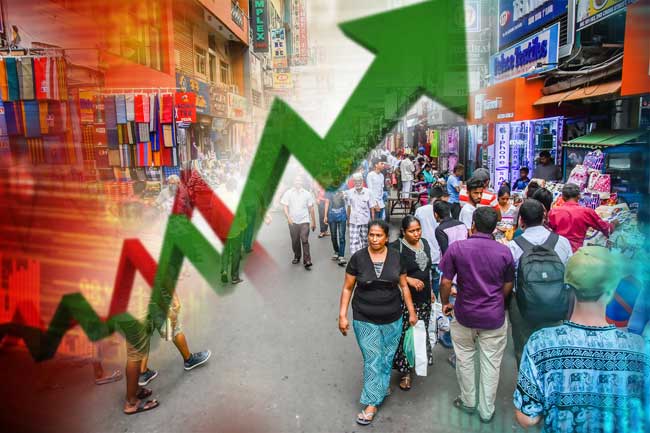
Pakistan took the crown for Asia’s fastest inflation from Sri Lanka as a weaker currency and rising food and energy costs drove price gains to a record in April.

Consumer prices rose 36.4% in April from a year earlier, the highest since 1964, according to data released by the statistics department Tuesday. That compares with a median estimate for a 37.2% gain in a Bloomberg survey and a 35.4% increase in March.

The data shows Pakistan’s inflation outpaced price gains in Sri Lanka that eased to 35.3% in April and is starting to show signs of recovery from an economic crisis. The Pakistani rupee is one of the worst performing currencies globally so far in 2023, declining 20% to the dollar, and making imported goods more expensive.

Transport prices climbed 56.8% while food inflation quickened 48.1% in April from a year earlier, data showed. Clothing and footwear prices gained 21.6% and housing, water and electricity costs rose 16.9%.

Pakistan’s inflation is expected to rise further after authorities raised taxes and fuel prices to meet the IMF’s conditions for the revival of a $6.5 billion loan program.

The bailout funds would be crucial for helping Pakistan to pay for essential imports like food and fuel and to avoid a default next month. However, the IMF is seeking financing assurances before restarting aid.

To rein in price pressures, the State Bank of Pakistan hiked its benchmark interest rate last month to 21% — the highest since central bank data going back to 1956. Rising inflation could keep borrowing costs elevated for the South Asian nation that struggling with a slow recovery after last year’s floods.

The central bank’s next monetary policy review is due on June 12.

High prices are adding further pressure on Prime Minister Shehbaz Sharif who is also grappling with a political crisis. His rival Imran Khan is seeking early elections and has threatened to return to street protests if his demands are not met.

Source – Bloomberg

Sri Lanka requests for a downgrade to obtain cheaper loans from ADB

Minister of Foreign Ali Sabry says a request was made from the Asian Development Bank to reclassify (reverse graduation) Sri Lanka enabling the country to get access to greater concessional financial facilities.

The request was made during a meeting between Foreign Minister Ali Sabry and Vice-President-Operations of the Asian Development Bank Shixin Chen in Seoul, South Korea.

Last December, the World Bank approved Sri Lanka’s request to access concessional financing from the International Development Association.

The IDA financing, which is offered at low interest rates, enabled Sri Lanka to implement a government-led reform program to stabilize the economy and protect the livelihood of people facing poverty and hunger.

The request was a result of Sri Lanka’s sustained deterioration in economic and social conditions, which reduced income levels, reversed poverty gains, and affected its access to financial markets.

Through IDA support, the World Bank provides concessional financing, technical assistance, and policy advice as Sri Lanka implements reforms to drive recovery and enhance the country’s economic prospects, especially measures directed towards the poor.

Posted in Uncategorized

Will domestic debt restructuring put the EPF at risk?

Experts opine that a great deal of attention needs to be given to pension funds like the Employees’ Provident Fund if any action is being taken concerning domestic debt, when implementing the agreements reached with the International Monetary Fund.

They point out that if a large amount of the debt obtained from the EPF is slashed in the process of restructuring domestic debt, it would negatively impact the beneficiaries.

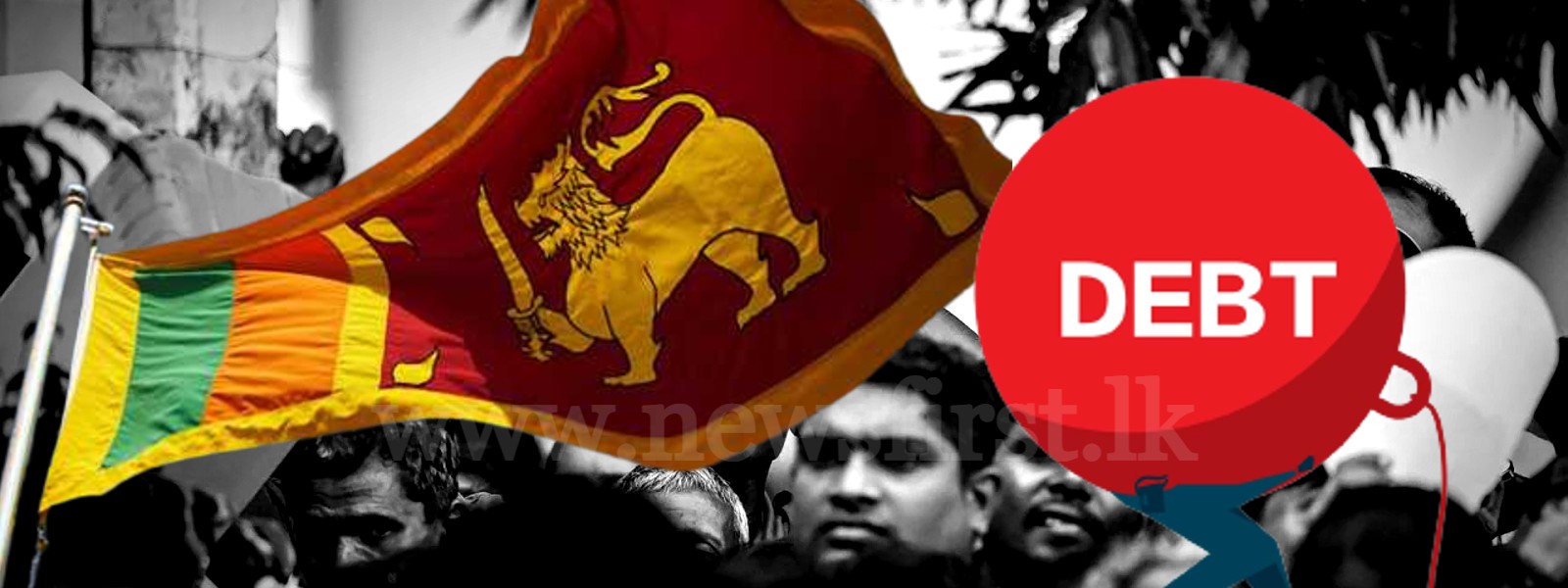
A week ago, Sri Lanka’s President told Parliament that the island nation’s total debt was 83.6 billion US dollars, with foreign debt at 41.5 billion US dollars and domestic debt at 42.1 billion US dollars.

On the 12th of April 2022, the Central Bank Governor and the Finance Secretary speaking to reporters said that Sri Lanka will temporarily suspend foreign debt payments to avoid a hard default.

It’s been over a year since Sri Lanka decided to suspend foreign debt payments.

According to the program implemented by Sri Lanka in collaboration with the International Monetary Fund, the ability to repay debt has become a key condition for restabilizing the country’s economy.

For that, it is expected that a significant part of the total amount of debt taken by Sri Lanka will be slashed, while a concessionary program will be introduced to for the repayment of another portion of debt,

Foreign Minister Ali Sabry, PC said Sri Lanka hopes to reduce the debt obligation by USD 14 Billion.

The necessary measures that will be taken, with regard to foreign debt, are still in the discussion stage.

In the meantime, the government has now focused its attention towards domestic debt.

According to the Governor of the Central Bank, domestic debt optimization is expected and the necessary measures that are required, are still in discussion level.

The Central Bank explained that the measures that would be taken regarding the amount it has borrowed from treasury bills as optimization.

Although it can be explained in the sense of optimization, the exact steps that would be taken have not yet been explained.

In the meantime, the central bank has announced that there is an opportunity to voluntarily decide and take steps regarding treasury bonds.

According to the data presented to the investors by the Governor of the Central Bank and the Secretary of the Ministry of Finance last March, by the end of 2022, the government had borrowed USD 11.4 billion dollars through treasury bills.

The highest percentage of treasury bills of 62.4% was borrowed by the Central Bank.

The total amount of debt the government borrowed through treasury bonds was 24 billion US dollars.

42.7 percent of it was obtained from pension funds, including the Employee Provident Fund.

According to the report of the Auditor General who investigated the bond transactions, the loss to the Employee Provident Fund from the bond scam at that time was 8.7 billion rupees.

Experts point out that measures should be taken to prevent such a situation from occurring again.

Starting the IMF debate, the President gave an assurance in the parliament and at the United National Party May Day rally on May 1st that he would act in a manner that would not harm the Employees’ Provident Fund.

It should be appreciated.

However, when News 1st contacted the EPF Department, it said that the government has not called for any discussion with regard to domestic debt restructuring.

The Employees’ Provident Fund is currently the largest and most widespread Social Security Scheme in Sri Lanka and can be considered as a little ‘Peace of Mind’ for the employees of Private Sector firms, State Sponsored Corporations, Statutory Boards and Private Business.

The aim of the EPF is to assure financial stability to the employee in the retirement stage of life and to reward the employee for his or her role in the economic growth of the country.

Therefore, isn’t it important to make decisions regarding the EPF with a more comprehensive discussion and proper planning?


India warns Sri Lanka applicants on fake e-visa websites

India’s High Commission (embassy) in Sri Lanka has applicants against a series of fake websites offering e-visa services.

“It has been noticed that some fake / fraudulent web URLs (list enclosed) are offering Indian e-Visa,” the High Commission said in a statment.

“Therefore, applicants are advised not to use these fake URLs for obtaining Indian e-Visa.”

The statement listed 125 websites with names ranging from www.indiaimmigration.in and indianevisagov.in to .com, .org and .sg webistes.


Posted in Uncategorized

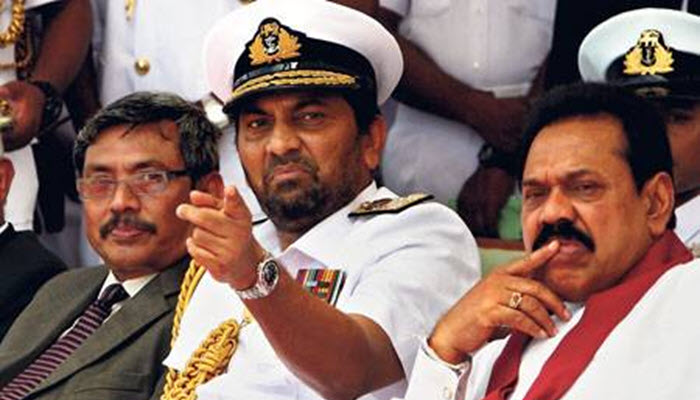
Karannagoda challenges Julie Chung

In a strongly-worded letter to US Ambassador Julie Chung, North Western Province Governor Wasantha Karannagoda yesterday accused the envoy of infringing upon his human rights with the recent decision to designate him and his family.

“Wrongful imputations made by you has seriously affected my “honour and reputation” earned over a period of over 45 years of unblemished Government service. Your action is directly violating my rights under article 17 of the ICCPR cited above and I intend to seek redress through the legal process for gross violation of my human rights in terms of applicable Law in Sri Lanka,” the letter said.

The former Navy Commander also stated that the Secretary of State had not notified him of any allegations made against him. “He (The Secretary of State) has not sought my observations on any of these imputed allegations.”

Citing the recent Daily Mirror news article titled “Wasantha’s ban; Julie Chung informs Sabry in advance”, Admiral of the Fleet Karannagoda stated in his letter, “the purported designation has not been notified to me being the person affected, although you hastened to inform the Minister “in advance” and followed up by releasing it to the media.”

He also said that the purported designation has been made in total violation of the Principles of Natural Justice recognized and respected by all civilized Nations and in total violation of the “Due Process of the Law”.

“…your hasty communication to the Minister made “in advance” and the subsequent media release has been done for a collateral purpose, of giving publicity, in this country, of a wrongfully imputed “significant corruption and/or gross violation of human rights” on my part.,” it said.

“Aforesaid imputation constitute serious attack on my “honour and reputation” in violation of article 17 of the ‘INTERNATIONAL COVENANT ON CIVIL AND POLITICAL RIGHTS,” the letter added.

Posted in Uncategorized

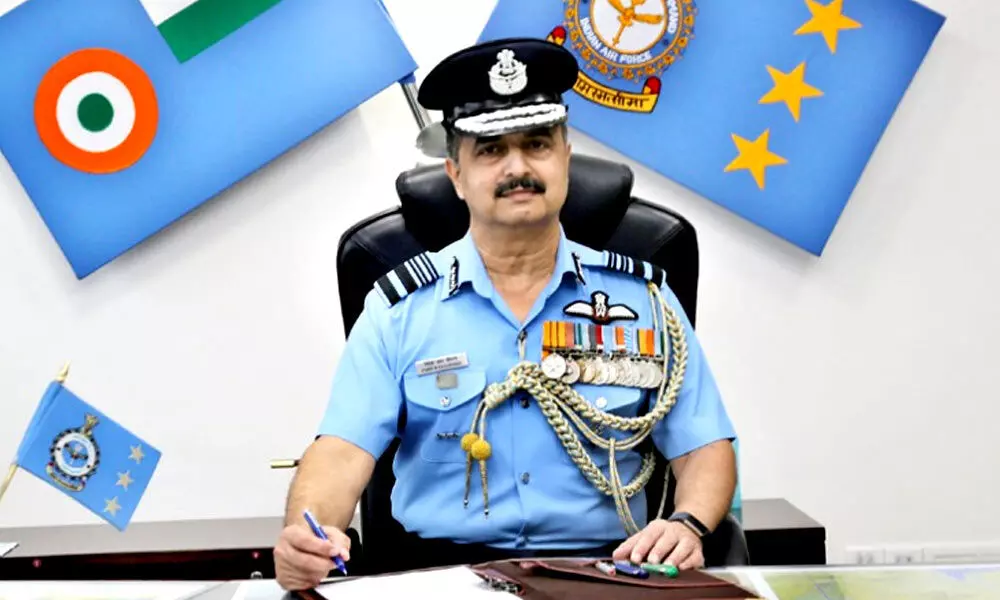
IAF chief embarks on 4-day visit to Sri Lanka

Chief of Air Staff, Air Chief Marshal VR Chaudhari on Monday embarked on a four-day visit to Sri Lanka to explore ways to boost bilateral defence ties amid concerns in India over China’s attempts to expand its influence over the island nation. Air Chief Marshal Chaudhari is scheduled to meet with the top political and military leadership of the country.

The defence ministry said the IAF chief is scheduled to meet the Sri Lankan president and the prime minister, state minister of defence, chief of the defence staff, defence secretary and the commanders of the country’s air force, army and navy.

The Chief of Air Staff is visiting Sri Lanka following an invitation of the Commander of Sri Lanka Air Force, Air Marshal SK Pathirana.

During the visit, he will also interact with student officers of Sri Lanka’s National Defence College and visit the Sri Lankan Air Force Academy.

“The visit of the Chief of Air Staff will enhance the existing professional ties and bonds of mutual cooperation between both the nations,” the defence ministry said in a statement.

Navy Chief Admiral R Hari Kumar visited Sri Lanka in December last year.

In August last year, Vice Chief of Indian Navy Vice Admiral SN Ghormade paid a two-day visit to Sri Lanka during which India handed the island nation a Dornier maritime surveillance aircraft.

The aircraft was given to Sri Lanka from the inventory of the Indian Navy to help the country meet its immediate security requirement.

India has been supporting various capacity building measures of the Sri Lankan defence forces, including providing indigenously constructed Offshore Patrol Vessels (OPVs).

Posted in Uncategorized

Eight injured in shooting near Colombo harbour

At least eight persons including three women have been admitted to the Colombo National Hospital due to a shooting by a security guard near Gate 06 of the Colombo harbour, police said.

They said the shooting was carried out by a security guard of a road construction site of the Expressway.

Police said a tense situation had prevailed when a group of people at Bloemendhal Street tried to prevent two people who had come to steal iron from the relevant road development site.

According to the investigations, a security guard at the site opened fire on the mob when they attempted to grab a firearm from another security guard.

It was reported that four of the inured sustained minor injuries.

The Foreshore Police is investigating.

Posted in Uncategorized

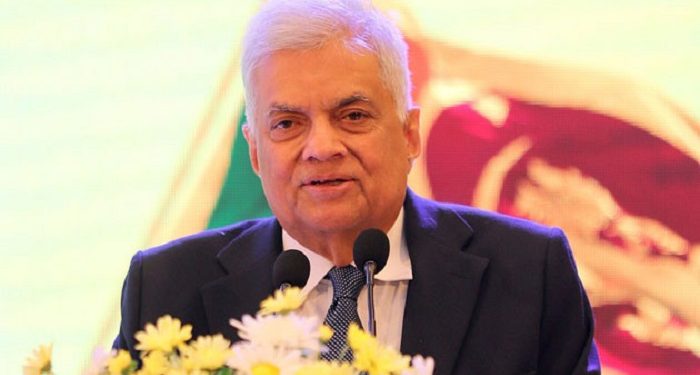
2048: A year of development for Sri Lanka, says President

Sri Lankan President Ranil Wickremesinghe said that he would work to create the political and economical changes called for by the youth in the country.

He was speaking at the UNP May Day rally in Colombo on Monday (1) morning, at the Sugathadasa Indoor Stadium.

The went on to note that five youth members would be appointed to the Parliament Select Committees and the Sectoral Oversight Committees, and the appointments would be made in May.

President Ranil Wickremesinghe in his Labour Day statement on Monday (1) said he expects to reach an agreement this year to solve the country’s long-drawn ethnic issue with the Government’s commitment to policies that benefit all communities in Sri Lanka.

President said, “My motivation was not rooted in politics, but in properly managing the country’s economy and alleviating the burdens on its citizens. For this reason, I took on the role of the presidency, as I had faith in my ability to revive the economy and work alongside supportive ministers to achieve these outcomes.”

President Wickremesinghe noted that as the country approaches the centenary of independence in 2048, the goal should be to become a country with a developed economy, just like India aims to achieve in 2047 and China in 2049. “Let 2048 be the year of development for Sri Lanka. We are not only building this economy for the present generation but also for the youth and children of the future,” he said.

The President said that in order to address the issues faced by the Tamil community in this country, it is futile for Tamil political parties to distance themselves & called on all parties to work together towards building a new, competitive, and sustainable economy that is inclusive and just for all communities in Sri Lanka

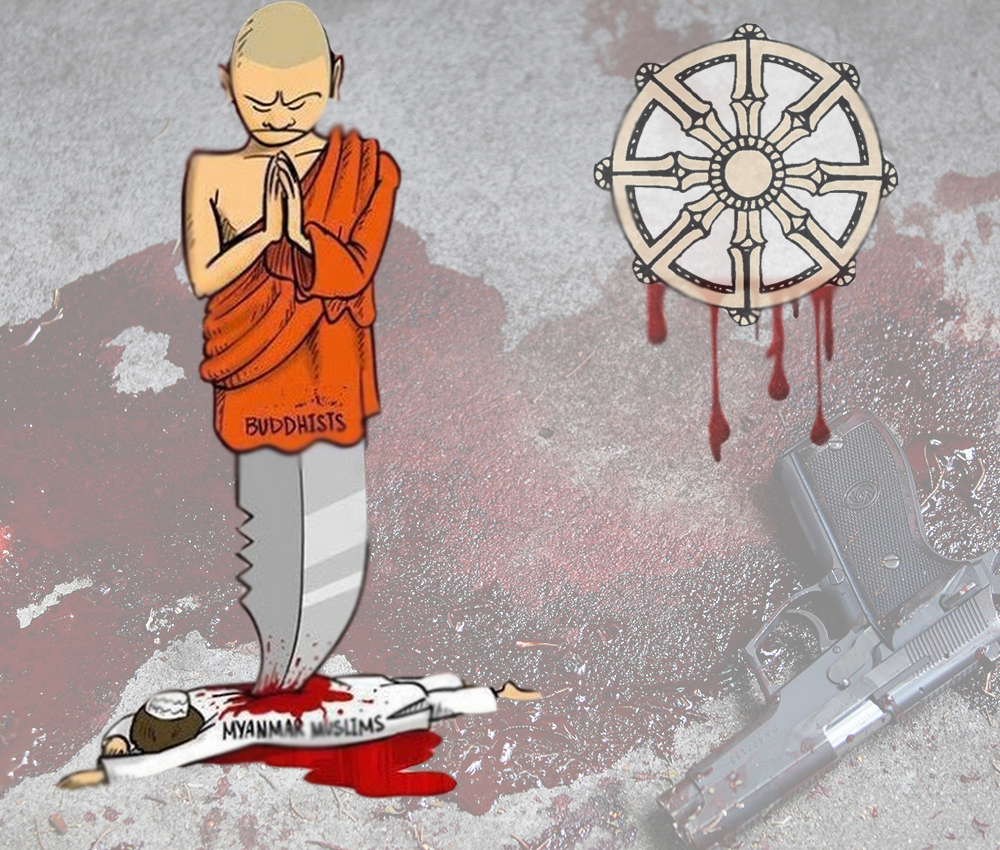
Political Buddhism & Corruption: The Unholy Twins Dr. Ameer Ali

Buddhism is an imported product in Sri Lanka, but political Buddhism is native to the soil. Buddhism is a blessing to humanity and was born out of the enlightenment of its founder who shunned political power and palace life. On the contrary, political Buddhism was born out of love for that power and its pomposity. Its sole intention was to claim and own the entire island, which is home to a number of ethnic, religious and linguistic communities, all of whom except the Vedda community are foreigners. Which one of these communities came first is yet to be discovered. However, Gautama would be turning in his grave to see how his sublime teachings, philosophy and way of life had been twisted and tarnished by his so-called followers in a country where he is believed to have visited more than once and left an indelible footprint.

Political Buddhism had its genesis in the 19th century and was part of the cultural awakening ushered in among Sinhala Buddhists, Tamil Hindus and Muslims to counter and arrest the spreading influence of Christianity. Within the Buddhist community that awakening also carried the germs of struggle for political independence from centuries of colonial rule. However, in that anti-colonial and anti-British agitation Buddhist leaders like the celebrated national hero Anagarika Dharmapala and his disciples also included an element of ethnic cleansing, which at that time targeted the Muslim minority. The 1915 Sinhalese-Muslim riots were the product of that inclusion. Although it failed in that objective, colonialism came to an end in 1948, and from then on political Buddhism began to play a deterministic role in almost every branch of the country’s development.

“Political Bhikkhus”, are a hybrid community of preachers who mixed politics with Buddhism and it was introduced by none other than the scholar priest Walpola Rahula in his vision to create forever a Sinhala Buddhist majoritarian rule in this country. That vision saw its first manifestation in 1948 when the Ceylon Citizenship Act was passed, which disenfranchised overnight an entire community of Indian Tamils on whose blood and sweat, Ceylon earned and Sri Lanka still earning most of its foreign exchange. Unlike the father of Singapore Lee Kwan Yew, who having witnessed where ethnonationalism was leading Ceylon, eschewed that evil from day one of his country’s birth in 1965, the father of Independent Ceylon DS Senanayake embraced it and allowed political Buddhism to occupy the driving seat.

Political Buddhism soon fathered counter ethnonationalism among other communities. The birth of the Federal Party in 1949 was a direct response to political Buddhism and its Sinhala ethnonationalism. In the same vein, one could also argue that the formation of Sri Lanka Muslim Congress in 1981 was a direct response to Tamil and Sinhala ethnonationalism. After more than seven decades of unchallenged reign, political Buddhism, is yet to realize the damage it had done not only to the millennial peace and tranquility of this island, but even more disastrously to the economy and wealth creation. Communities remain disconnected and are riven by divisions from inside and out. The collective synergy required to build a strong and vibrant economy in a competitive world is therefore absent. It is a pity that a number of local but respectable economists, political scientists, academists and intellectuals are still ignoring to note the pernicious effect of political Buddhism on the economy of the country.

One intermediary that links political Buddhism with economic decline is the evil of corruption. The subversive influence of corruption on national economies has been widely studied and well documented. The general conclusion is that corruption is a silent killer of resourceful economies. It is like cancer which, if left undetected early, will soon kill the patient. Corruption leads to inefficiency and waste, uneven distribution of wealth, transfer of funds to foreign banks and tax havens, overburdens the cost of running legitimate businesses, fall in profitability and increase in prices. Ultimately, it would be the poor consumers who would have to bear the full brunt of uncontrolled corruption.

The cancer of corruption has a long history in post-independence Sri Lanka. Political Buddhism, in order to achieve its primary objective of Sinhala-Buddhist hegemony, was prepared to turn a blind eye towards corruption and perhaps considered it as a necessary evil. Thus, it became almost an unwritten convention that as long as the political leaders and public servants commit to protect and promote the interests of Buddhism and Sinhala-Buddhists they were free to do whatever they like. Accountability virtually disappeared from the country’s political and administrative dictionaries. Even the constitution is found to be lax on this vital issue. Incidents of corruption in the name of economic development proliferated. Even if someone were to be charged for corruption, the country’s judiciary is so politicized that any culprit with right connections could get away free. While RW is talking about introducing legislation to eradicate corruption it has come to light that a sum of $250 million had been transferred to the foreign account of an individual called Chamara for him to sabotage any effort to file litigation against X-Press Pearl in Singapore courts.

Now, having vowed to rebuild a bankrupt and corrupt economy to which he himself had contributed as Prime Minister in the Yahapalana Government (remember the Central Bank bond scam), President Ranil Wickremesinghe, obviously under pressure from IMF, is trying to cleanse the country of corruption and at least mellow down the corrosive influence of political Buddhism. The tragedy is that the corrupt ones and those championing the cause of political Buddhism are in government already and that was why the aragalaya youth demanded system change and shouted “No 225”. Would RW dare to investigate his corrupt colleagues before aiming at a clean future? Likewise, on political Buddhism, his attempt to find solution to the so-called national question by implementing the 13th Amendment has already provoked the ire of political Buddhists, and few of the demagogues inside the parliament are threatening to provoke the most unprecedented riot in history if RW were to implement that amendment.

As if to reassure its commitment to political Buddhism, Rajapaksa’s SLPP has elected a scholar Bhikkhu as leader of the party, while the JJB of political Bhikkhus has also sent warnings to RW not to compromise on Buddhist supremacy. Even the tri-forces are imbued with the ideology of political Buddhism. Systematic land encroachments in Tamil and Muslim density areas, the so-called archaeological excavation task force to dig for Buddhist ruins in the north and east of the country, stealthily erected Buddha statues in the dead of night and in the precincts of Hindu temples and mosques, and more daringly the outright confiscation of a mosque in Mahara and turning it into a recreation centre for the prison police are the handy work of political Buddhism.

In the meantime, RW-IMF’s economic repair plan has not been released in full, but the parliament has approved it with only 120 of the 225 voting in favour. The opposition parties had accused the President for not releasing the entire plan for them to make an informed choice. As they say, devil is in the detail. At the same time, the CBSL chief has indicated that there would be “near term challenges” to the financial sector as a result of debt restructuring. This is the biggest unknown factor and the cost of debt restructuring would spread beyond just the finance sector. The other unknown is the state of the economies of Sri Lanka’s trading partners. IMF and WB prognosis about future prospects of growth in those economies is far from reassuring, because of rising interest rates to counter increasing inflation. That would mean fall in consumer and investment demand, which is not good news for Sri Lanka’s exports. If so, would the domestic market be able to compensate for this loss and be an efficient substitute to promote growth? IMF reforms do not promise that.

All this boil down to that one single issue, i.e., system change. NPP at least is insisting on this. But it has to explain to the voting public what it means by that and what are some of the salient features of the new system to be introduced. The most sensitive issue would be the place of political Buddhism. Sinhala Buddhist masses need to be educated of the un-Buddhist character of political Buddhism, and why it should be given up as the guiding ideology of politics in this country. The new system requires a new constitution based on secular democratic principles, which should promote a new political culture. It is on that foundation a new economic model needs to be introduced.

* Dr. Ameer Ali, Murdoch Business School, Murdoch University, W. Australia

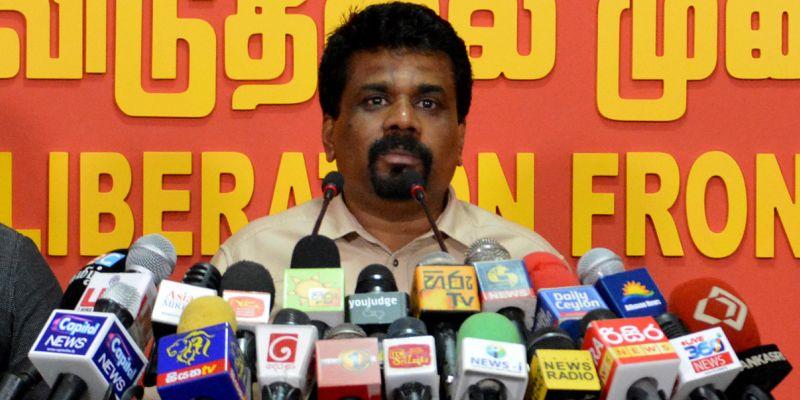
We can take this country forward with strength and blessings of the people: AKD

Claiming that Sri Lanka has come to a decisive juncture and a power struggle in its history, JVP leader Anura Kumara Dissanayake said today that they would definitely win that struggle.

Speaking at the JVP May Day Rally in Colombo, he said the present crisis situation in the country cannot be resolved through mere reforms or laws and that it could only be done by passing power to the people from the corrupt rulers.

He said the JVP had been able to bring together people across the country from north to south and east to west, whereas other parties have been restricted either to the north or the south.

“Wherever we go, people talk about us. They trust us. Sri Lankans living overseas also support us as never before,” he said.

Dissanayke said people do not believe that these rulers would take this country even an inch forward from this crisis and added that the most important aspect of taking the country forward is the trust and the bond between the people and the government.

“People of all sectors have lost faith in this government today. Farmers, fishing community, professionals and the public reject this government. They trust us the most. We can take this country forward with the strength and blessings of the people,” he said.

Posted in Uncategorized