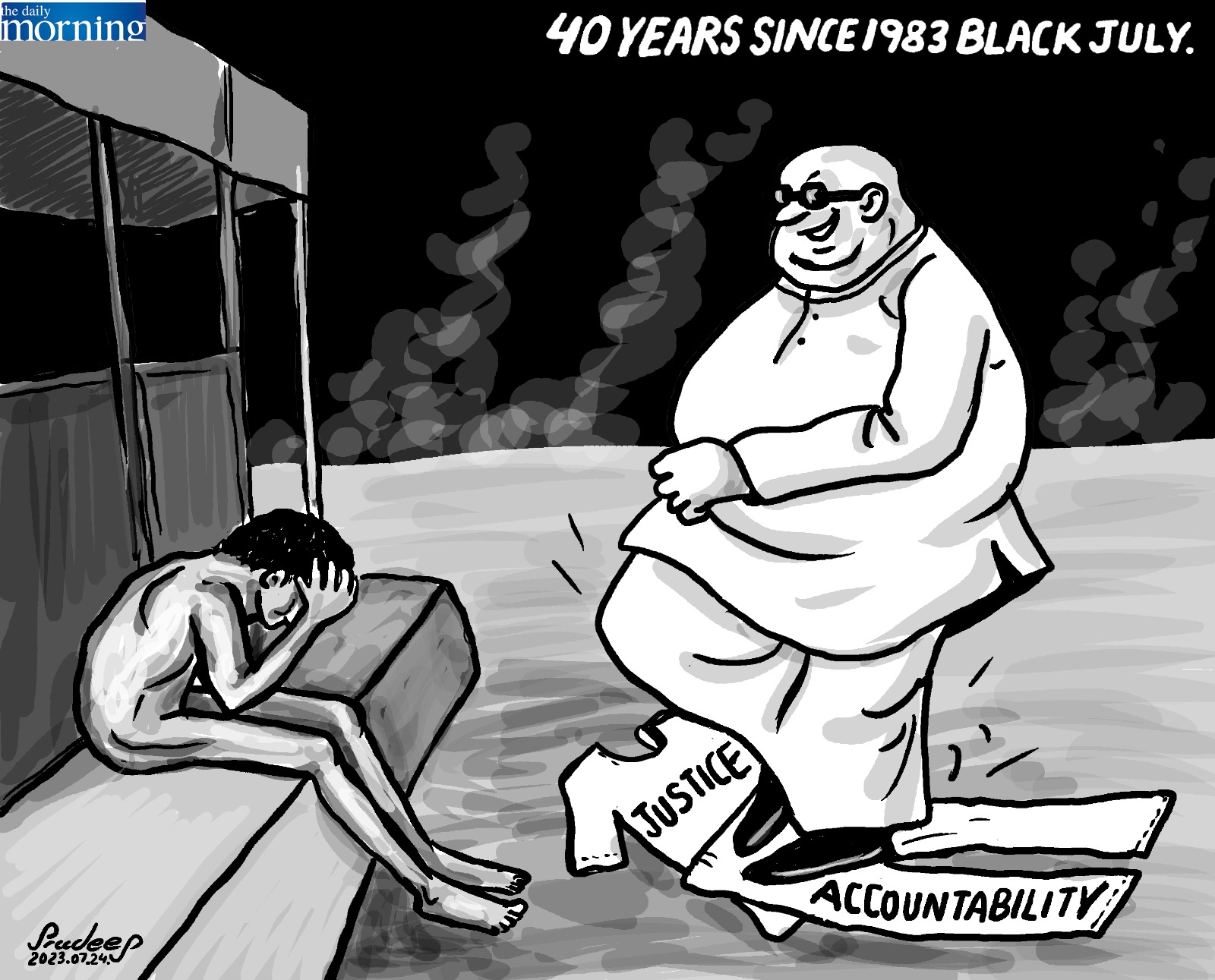
Enough has been written about the anti-Tamil pogrom of July 1983, and everyone knows who the perpetrators were. It remained the darkest chapter in Sri Lanka’s history till the end of the armed conflict in May 2009. However, pre-1983 history had seen many campaigns of anti-Tamil violence in 1956, 1958, 1961, 1964, 1974, 1977 and 1981. The anti-Tamil pogrom of July 1983 set the stage for the two-and-a-half-decade-long civil war. And the UNP regime led by then President JR Jayewardene set the strategic framework for simultaneously eliminating the political threats posed to his autocracy by the LTTE in the north and east and the JVP in the south.
This strategy ultimately resulted in the death of about two hundred thousand people, mostly civilians, and the displacement of hundreds of thousands of people who became refugees in their own country and overseas. It gave rise to many thousands of war widows, orphans, and victims of psychological and mental scars. Entire villages with women and children were wiped out. This carnage was unleashed to forcefully establish the dominance of the privileged Sinhala ruling elite over the rest of the populace.
The root causes of the national question that gave rise to this carnage have not yet been addressed by the successive governments of the last forty years. The prelude to it all was a series of discriminatory policies and laws the successive regimes implemented against the non-majoritarian communities, specifically against the Tamil community. Before proceeding to the main objective of this article, it is necessary to provide an abridged context in which the pogrom was launched.
Via the Ceylon Citizenship Bill 1948, the first regime of independent Sri Lanka disenfranchised a million of Malaiyaha[1] workers of Indian origin. Its alleged intent was to facilitate the acquisition of citizenship, but the actual political intent was to deny citizenship to the Malaiyaha workers. This was because they mostly voted for the left oriented candidates. The enormous contribution many generations of Malaiyaha workers had made to the country’s economy was disregarded. Unfortunately, the country, in particular the Sinhalese, is yet to fully appreciate the massive contribution they are continuing to make.
Thus began the de-democratising politics of the country. Since then, the process of disempowering the Tamil community through legislation, state violence and terror proceeded at the expense of building a Lankan nation and identity. Some believe that this process was pursued to reduce the Tamil population, and their parliamentary representation, in order for the Sinhalese to procure a two-thirds majority in the then Ceylon’s House of Representatives. By doing so, it was hoped that Tamils will not be able to prevent the parliament from adopting any policies that will affect them. However, the competition between various political parties in the South followed a process of ethnic outbidding – a process of compartmentalising communities by their ethnolinguistic and religious backgrounds. To do so, they pledged adopting more and better anti-minority, pro-Sinhala slogans. Sadly, this process continues to date.
Historically speaking, the Sri Lanka Freedom Party established by Mr. SWRD Bandaranaike, and its coalition regime, did start this process with its opportunistic Official Language Act of 1956. Commonly known as the Sinhala Only Act, it replaced English with Sinhala and excluded Tamil in official use. There are still many people who do not realize that this Act compelled Tamils to learn Sinhala in order to obtain, retain or receive a promotion in employment. Prior to that they were learning Sinhala at schools on their own volition. The Act also placed the Sinhalese at a disadvantage by turning them mono-lingual and thus, restricting generation after generation of Sinhalese of their upward mobility. Even now, only those affluent families can afford to send their kids to international schools or overseas to receive an education in English.
The Bandaranaike-Chelvanayakam and Dudley-Chelvanayakam Pacts signed between the Government of Sri Lanka and the Tamil political leaders were unilaterally abrogated by the government due to pressure from the extremist Sinhala Buddhist nationalists. They have no regard for the plural nature of the Lankan society. For them the country is solely a Sinhala-Buddhist nation. Thus, for the ruling elite and those in opposition, ethnic, linguistic, and religious chauvinism provided a secure way of coming to power and retaining power.
Sinhalese were continuously relocated from the South to areas where Tamils were dominant – with state-aided programs – causing demographic change for pro-Sinhala electoral advantage. And discrimination continued in favour of the Sinhala ruling elite. In 1972, the regime led by Mrs. Sirimavo Bandaranaike introduced a new Constitution that favoured Sinhalese and Buddhism, and a policy of standardization for university entrance. As a result, Tamil students were required to gain higher marks for university admissions than their Sinhalese counterparts.
These discriminatory measures were implemented in an ongoing environment that involved violence. In the fifties, the Bandaranaike regime used mob violence to suppress satyagrahas and non-violent protests by Tamils. In 1958, the mob violence led to about 300 deaths. Using this as a pretext, the Bandaranaike regime declared emergency and deployed army to the north and the east of the island. Strict orders were given to Colonel Richard Udugama as the Commander to clear the militant elements, even by shooting them[2]. In a similar manner, in 1977, Mr. JR Jayewardene’s regime sent Brigadier Tissa Weeratunga to Jaffna with instructions to ‘wipe out terrorism within six months’. Both Udugama and Weeratunga were allegedly responsible for many atrocities committed in the pre-eighties in the north and east.
The parliamentary representation of the Tamils was unable to address the issues their constituencies were facing. At the 21 July 1977 General Elections, in the south the Jayawardene-led UNP regime was elected to power with a five-sixths majority, while in the north and east, Mr SJV Chelvanayakam led Tamil United Liberation Front (TULF) took the Vaddukoddai Resolution to the electorate, asked for a mandate to establish a separate state, called Tamil Elam, and received an overwhelming mandate. Mrs. Bandaranaike’s Sri Lanka Freedom Party lost all but 5 seats, and Mr. Amirthalingam became the Leader of the Opposition by a quirk of fate – an unthinkable and unacceptable outcome for the majority Sinhalese. This set the stage for the August 1977 anti-Tamil violence, the worst against Tamil civilians until then, hard on the heels of the regime change. The government did little to control this violence as it was state sponsored. And democratic ways of expressing a people’s will was under serious threat.
Under these circumstances, the Tamil youth believed that all democratic means of achieving their legitimate rights and aspirations had been closed, and armed struggle is the only way. The intent of the militant Tamil youth was to free their people from the discrimination they had been subjected to for so long. As such, the taking up of arms by Tamil youth represents nothing more than the failure of the post-independent Ceylon/Lanka to address the most significant issue of building the Lankan nation by uniting communities rather than dividing them along their ethnolinguistic and religious backgrounds.
The first attack on the army was in October 1981, which appears to have been carried out to coincide with the welcome parade arranged for the new Army Commander Tissa Weeratunga, who was promoted to the post for the state terror he had committed in Jaffna. Since then, attacks on army convoys and patrols were on the rise. Whenever the security forces could not track down the attackers, they turned on the civilians. This sort of attacks on civilians has been nothing new. History shows that during many conflicts worldwide, irrespective of who the attackers were, civilians are the ones who bear the brunt of the violence.
In 1983, the infectiously anti-Tamil political leadership within the UNP regime made the situation worse. The pogrom was not spontaneous, but a carefully planned violent attack on Tamils. It was meticulously planned by ministers like Cyril Matthew, monks like Alle Gunawansa Thero who was a close associate of President J R Jayawardene, and other extremists. Most of the time ministers like Cyril Matthew maintained their own armed squads and were operating above the law. One can observe that this trend continues to date. The irony is the Liberation Tigers grew in strength, with many youngsters fleeing the south due to the pogrom joining their ranks.
Prior to the pogrom, there was violence against Tamils in Vavuniya, Trincomalee, and at the Peradeniya campus in Kandy. In May 1983, an army convoy was ambushed and the security forces went on rampage. They shot dead 51 innocent civilians at various places in the Jaffna Peninsula. During another such ambush in June in Vavuniya, the Navy retaliated similarly. Colombo was abounded with rumours that the government was going to wreak a final solution to sort out the Tamil militancy. When 13 soldiers were killed by the LTTE ambush in Thirunelveli on 23 July, the regime found the excuse to launch their long thought-out plan.
The government not only proscribed the LTTE and other similar organisations but the JVP, the NSSP, and the CP were also proscribed in July 1983, initially under the emergency laws. Later on, the proscription continued under the PTA. This took away fundamental rights of those who were arrested. They could be held without charge or trial for up to 18 months, and confessions obtained under duress were made admissible in Court. This was an extension of what the Bandaranaike regime did in 1972 by establishing the Criminal Justice Commissions Act. The regime’s policy was to somehow or other terrorise the Tamil populace into submission.
I, too, was detained in July 1983, allegedly for leading the anti-Tamil pogrom! Prior to that many JVP comrades in Colombo briefed me as to what happened during the pogrom, such as the use of electoral lists to trace the whereabouts of Tamils, organising mobs to attack them, and transporting them in vehicles belonging to the Ceylon Transport Board and other state agencies. I myself already witnessed what those mobs did in the streets of Colombo.
During my detention I provided the horrific information I had about the ministers and monks who were at the forefront of the pogrom to the CID investigators. Instead of investigating those who were really involved, they endeavoured to change my political affiliation from the JVP to the UNP, led by Mr Jayewardene. Political authorities must have asked them not to arrest those really involved in the violence. There were a few arrests in Kandy and Nuwara Eliya, but the Police were asked to release them.
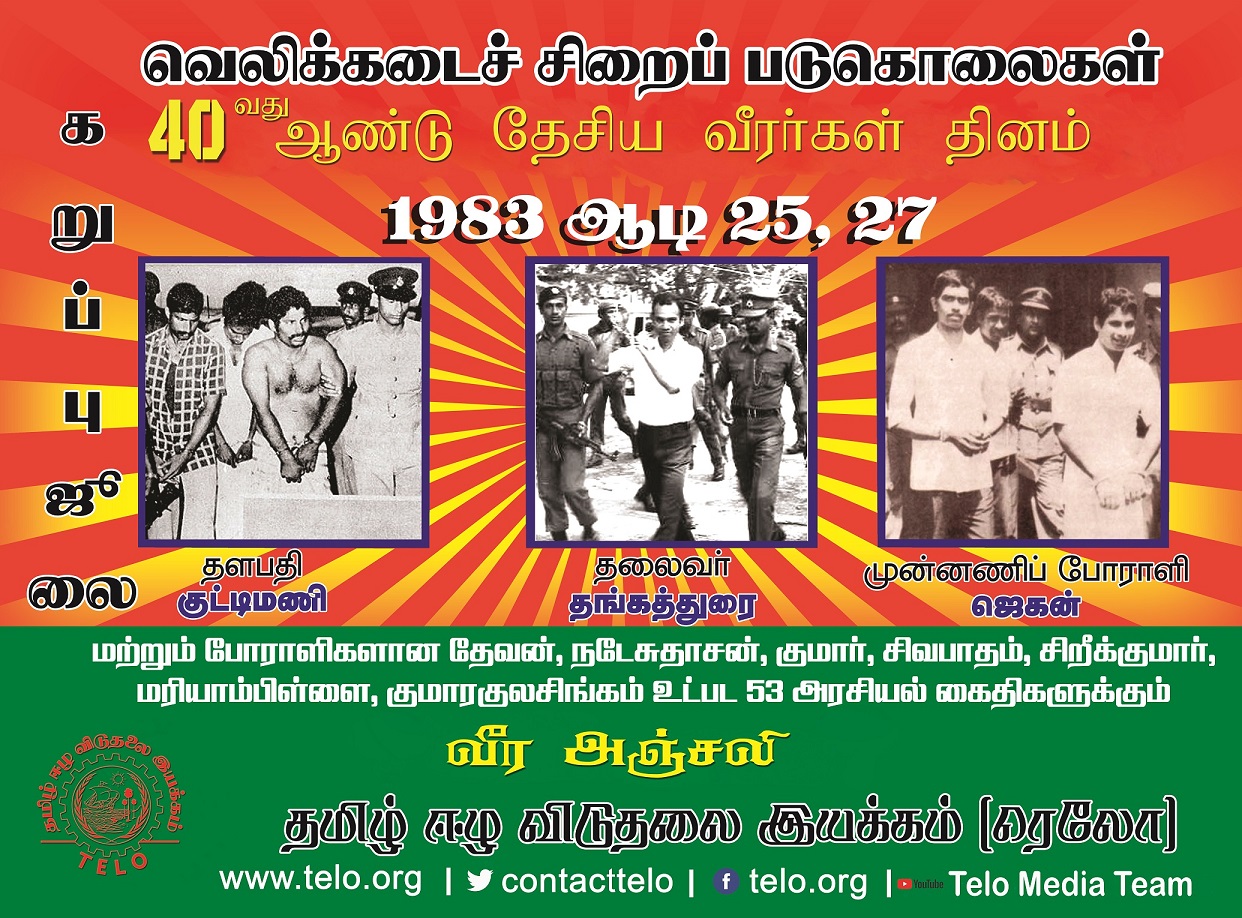
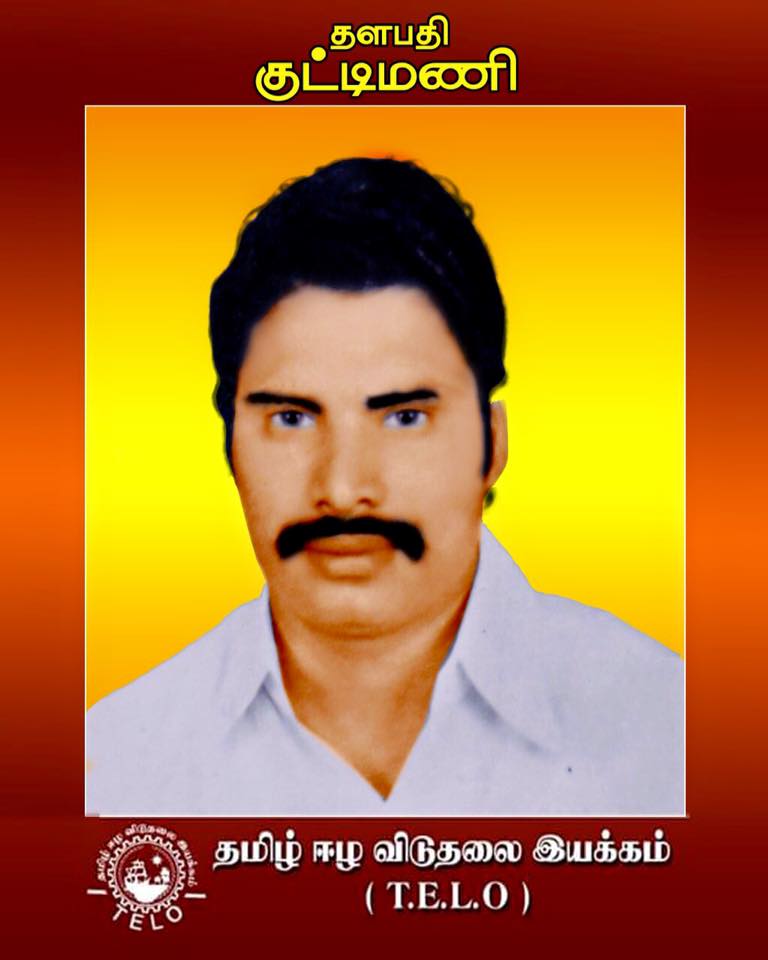
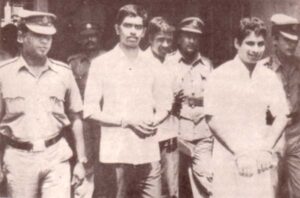
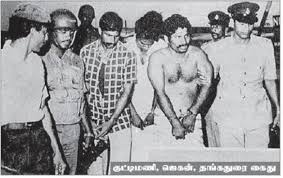
During the pogrom that lasted from July 25 to 29, a total of 53 Tamil political detainees held in the Welikada Prison were also massacred (35 prisoners on 25 July, and 18 prisoners on 27 July). To my knowledge, there have been no effective investigations whatsoever about the Black July pogrom or any of the previous violence launched against Tamils in different parts of the island. There were several mechanisms established that might have addressed some of the issues to a certain extent, such as the Presidential Truth Commission[3], the Lessons Learnt and Reconciliation Commission, the Office on Missing Persons, the Office for National Unity and Reconciliation etc. However, nothing much fruitful has eventuated from these mechanisms.
Most of these mechanisms became ineffective due to the partisan nature of the established mechanisms, political interference, and disregard for any positive recommendations made. The Commissions have been heavily criticised by international human rights groups, the UN Panel of Experts, and civil society organisations due to their limited mandates, alleged lack of independence, and their failure to meet minimum international standards or offer protection to witnesses. This raises the question of whether these mechanisms have been established to be used as tools by the government to prevent an independent international investigation of the most horrible abuses that occurred.
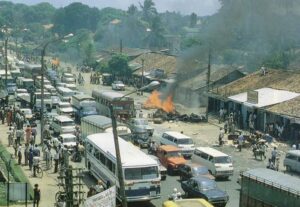
Five thousand or more Tamil civilians were barbarously killed with several hundred made to disappear. Thousands injured and some of them killed while undergoing treatment. Mobs have set Tamil people alight while being alive. Many hundreds of women had been raped. Tens of thousands properties such as homes, businesses and industries belonging to Tamils were attacked, destroyed and set on fire while the security forces were looking on. Over two hundred thousand civilians including business leaders, professionals and others became displaced and had to seek refuge elsewhere[4]. More than a hundred thousand fled to India as refugees, some of them still living in Indian refugee camps under squalid conditions and extreme difficulties.
Despite President Jayewardene and his regime laying the blame for the pogrom on the Sinhalese people[5], many Sinhalese risked their lives to find shelter and save Tamils who had been the victims of the mob attacks by the extremist elements. The nationalists of the extreme kind, and chauvinists, would have been supportive of the violence, but the majority seemed to have become powerless bystanders. However, under the international gaze (especially for India and its people), the regime first attempted to shift the blame on the Sinhalese people as a whole[6], and then on some of the leftist political entities.
The regime did not stop the process of de-democratisation. The sixth Amendment[7] to the Constitution was enacted on 8 August. The parliamentarians that represented the Tamil people in the north and east of the country were forced to cease serving as Members of Parliament.
The main reason for the non-occurrence of mob violence after 1983 was the escalation of the state’s war efforts. One could consider the whole July 1983 episode as an exercise launched by the state to escalate and legitimize its war in the north and east of the country. Since the pogrom days, the occurrence of brutal events in the northeast became more frequent and continuous. The armed conflict came to an end with the defeat of the LTTE in May 2009.
Sri Lanka is a signatory to the UN Convention on the Prevention and Punishment of the Crime of Genocide. The Convention defines Genocide as “an act committed with intent to destroy, in whole or in part, a national ethnic, racial or religious group”. Those who say that there was no genocide in Sri Lanka has never presented any facts or pertinent arguments to debunk the widely held belief. The definition does not refer to the numbers killed, but the intent of the processes undertaken – such as making people to disappear and killings that were carried out in state prisons, setting the Jaffna Public Library ablaze , destroying cultural and religious symbols of the Tamil people, and the policies implemented to creating conditions to prevent the survival of a community – such as economic blockades curtaining the supply of essential needs of life.
None of such incidents are known to have been properly investigated and the perpetrators punished, rather almost all defendants were released on some spurious technical grounds. If we holistically look at the discriminatory policies and activities adopted by successive governments, they will definitely fall within the scope of the definition of genocide. The anti-Tamil pogrom planned and executed in July 1983, and other actions taken and not taken by the governments since then, fall within that scope.
One million Tamils were displaced since the pogrom. Most of them settled overseas, largely in Western countries. They were mainly professionals and experts in diverse spheres of knowledge such as medicine, engineering, accounting, teaching, law, science and commerce. Sri Lanka lost their valuable contribution to its socio-economic, health and infrastructure development. Many countries gained from Sri Lanka’s loss with such professionals making a vast contribution to the prosperity of their adopted countries. It is not only the Tamil youth that attained such a transformation but also the Sinhala and Muslim youth who encountered state terror.
What enduring loss the pogrom has caused to the peoples of Sri Lanka! Is there any wonder that Sri Lanka has become such a failed state?
During an official visit to Australia in February 2017, Mr Ranil Wickremesinghe, the current President and then Prime Minister, asked the Lankan diaspora, both Sinhalese and Tamils, to come back and help Sri Lanka to revive. One wonders if he had any idea about the damage the 1980s regime, of which he was part and parcel as a minister, had done to these people in terms of the trauma inflicted on the first Tamil generation and the second Sinhala generation – who had to flee their motherland fearing death and destruction.
Is it justifiable for the government of Sri Lanka to simply ask for their return, without first addressing the state of affairs in the country and make appropriate conditions for their return? Many of them have been yearning to return to their land of birth and serve the people and the country. But the conditions are not ripe yet. The state needs to ensure that all citizens of Sri Lanka irrespective of their caste, creed, ethnicity, language and religion will be treated with equality and dignity in an environment of tolerance, understanding and safety.
The economic dividends many people in the South expected did not materialise but percolated upwards. The state has not entirely compensated for the colossal damage the pogrom had inflicted. With nearly a million Tamil people relocating, a majority of Tamils in the country live outside the north and east. Most of the advocates for separation appear to be operating from the overseas. And authoritarianism, family bandyism[8] and cronyism are once again attempting to masquerade as patriotism.
With the fundamentalists and extremists escalating ethnic and religious tensions once again aimed at diverting people’s attention away from the current poly-crisis, it is difficult to predict what the future holds. After the Holocaust, not many believed that fascism would survive. But all over the world the dark spectre of fascism and Nazism is raising its ugly head once again with a hue and cry. With the ruling elite and their henchmen trying to find new enemies in Sri Lankan and overseas, one cannot expect a rebuilt and reconciled nation in the near future.
All decent people working towards a better, fairer, and reconciled future for themselves and their future generations will hope that there will never be another pogrom like July 1983. Nevertheless, there is an intrinsic danger of recurrence of the likes of the July 1983 pogrom, and all Sri Lankans should be conscious of the need for eternal vigilance in this regard.
As I have pointed out to the Truth Commission in October 2001[9]:
“In approaching the issue of reconciliation and nation-building, it is critical to appreciate the fact that human rights violations did originate with colonialism and evolved to the current extent during the last five decades since the independence. Under all circumstances special privileges, oppression and exclusion result in the revolt of the oppressed at the first opportunity available. The oppressive state then resorts to force to maintain its unjust rule. Repressive regimes are needed to prop up doctrines of racial superiority, pursuit of narrow interests and special privileges for any one family, class, religion, language or race all premised on the exclusion of the majority of Sinhala, Tamil, Muslim and other peoples.
“The discriminatory regime against its vast majority of peoples and its violent consequences are not an aberration by a few individuals or groups. It has been systematic, deliberate and a matter of policy. Over the years, a system of government has been built in which there is no accountability and transparency; security considerations and military operations are given the highest priority. These circumstances resulted in curtailing individual and group rights of all peoples.
“Therefore, the basic premise in correcting those historical injustices is for the majority of Sri Lankans to pay allegiance to developing, with appropriate consultation and without harming the interests and rights of individuals and groups, a democratic constitution and a culture of tolerance, respect, fairness, equality and dignity of individuals and groups that goes with the constitution. The civic society has to take responsibility for promoting and utilising to the maximum effect the rights that have been attained, and ensure that transparent and accountable government becomes the realpolitik.”
Conclusion
The anti-Tamil pogrom of July 1983 harmed the Tamil people who lived in the South simply because they were Tamils. The intention was to destroy the economic base of Tamils in the South, specifically in Colombo and other urban centres, and for the Sinhala ruling elite to acquire that base. Neo-liberal political and economic greed has no bounds. Nevertheless, we need to strive for the right of any citizen of Sri Lanka to live wherever they chose to if they can afford.
The pogrom was, among other things, a reflection of the economic war of the Sinhala ruling elite to destroy the economic bases held by other nationalities, whether they are Tamil or Muslim, or Chetty. The pogrom, and its extension of nearly 25-year armed conflict, destroyed the Tamil economic base in the South as well as in the North. And successive governments employed their powers for direct oppression. So, why should one be surprised when the Tamil community demands devolution, decentralization, and even separation?
The country has sunk to the rock bottom of economic crisis and moving deeper and deeper into debt with the acquiring of more and more foreign loans. Large chunks of these debts include monies borrowed for the financing of the long and destructive civil war. Already the state has mortgaged future generations to diverse creditors, both domestic and overseas. Despite the impermanent respites like the one Sri Lanka is passing through now, the burden will be back with utmost severity. The state has no genuine intention of resolving the national question and as such, the economic crisis, as the two are intertwined, and are of use to the ruling elite to maintain their corrupt practices.
The ‘Aragalaya’ protest movement last year, was an expression of the aspirations of the majority of Sri Lankans for democratic and better governance and an inclusive and tolerant society. Those aspirations are yet to be realised with the state building vast barriers to curtail their vision for Sri Lanka. Still, I believe there will be many opportunities to fight for achieving their goals. But ending the colonial constructs that all successive regimes have been making use of to thwart peoples legitimate aspirations is the first step. Such aspirations need to include tolerance, reconciliation, transparency, accountability, inclusivity, and protection of everyone’s human rights.
Unless the people decide to get rid of the colonial constructs imposed upon them in respect of economy and the form of the state, the future will continue to remain gloomy.
[1] Poor and illiterate Tamil plantation workers of Indian origin brought to the island by the British to do slavish work in their tea estates.
[2] Kumarasingham H. 2013, A Political Legacy of the British Empire: Power and the Parliamentary System in Post-Colonial India and Sri Lanka, Ch 6, 168
[3] The commission estimated nearly 300 people were killed and 18,000 properties destroyed and recommended compensation. To my knowledge, no compensation has been made and not a single criminal proceeding followed.
[4] The total loss has never been assessed.
[5] Dissanayake T. D. S. A. 2004, War or Peace in Sri Lanka. Popular Prakashan, 78.
[6] Saying that it was a spontaneous reaction of the Sinhala people against the killing of the 13 soldiers in Jaffna.
[7] 3. “(1) No person shall, directly or indirectly, in or outside Sri Lanka, support, espouse, promote, finance, encourage or advocate the establishment of a separate State within the territory of Sri Lanka.” https://www.lawnet.gov.lk/sixth-amendment-to-the-constitution-2/
[8] A term commonly used in Sri Lanka in the past, to refer to ruling clans such as the Bandaranaike and the Rajapaksas.
[9] Cooke M C 2011, The Lionel Bopage Story: Rebellion, Repression and the Struggle for Justice in Sri Lanka, Agahas Publishers, pp. 525 – 563




 21 Jul 1983 – The Times:
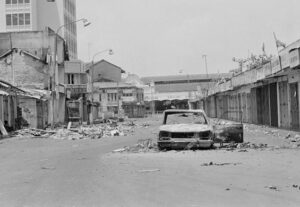 26 Jul 1983 – The Daily Telegraph:
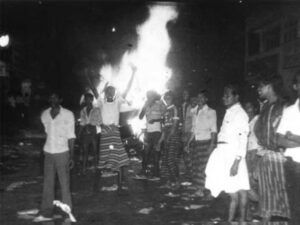 27 Jul 1983 – The Times:
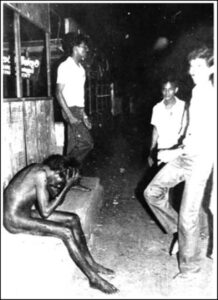 27 Jul 1983 – The Times :
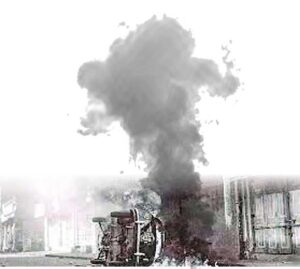 28 Jul 1983 – The Times :
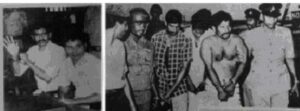 29 Jul 1983 – The Times :