India gets more space as Sri Lanka amends aviation law

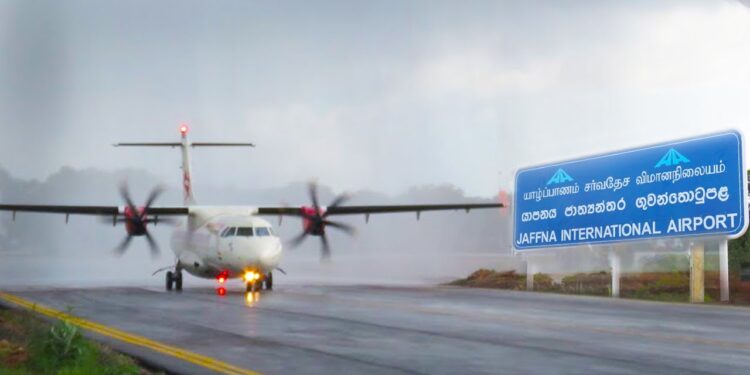
The Sri Lankan cabinet has given the go-ahead to amend the country’s civil aviation law to allow public-private partnerships in the aviation sector, a development that may open up opportunities for Indian companies.

Sri Lanka may allow the participation of private companies in ground handling at the airports at the initial stage, said people familiar with the matter.

In December 2022, the Indian High Commissioner to Sri Lanka, Gopal Baglay, had said that India was ready to work with the Sri Lankan government in upgrading and expanding the facilities at the Palaly international airport in Jaffna. It would especially benefit the small and medium segments of the business, apart from strengthening the traditional ties between the people of the two countries, he had said.

Recently, SriLankan Airlines said it will start operations from additional three cities in India, including Ahmedabad, to attract more Indian customers. At present, it operates in nine Indian cities. FitsAir, Sri Lanka’s first privately owned international airline, inaugurated its flights on the Colombo-Chennai sector in February. Chennai is its first destination in India.

Easter Sunday carnage: Cardinal accuses political leaders of hiding truth

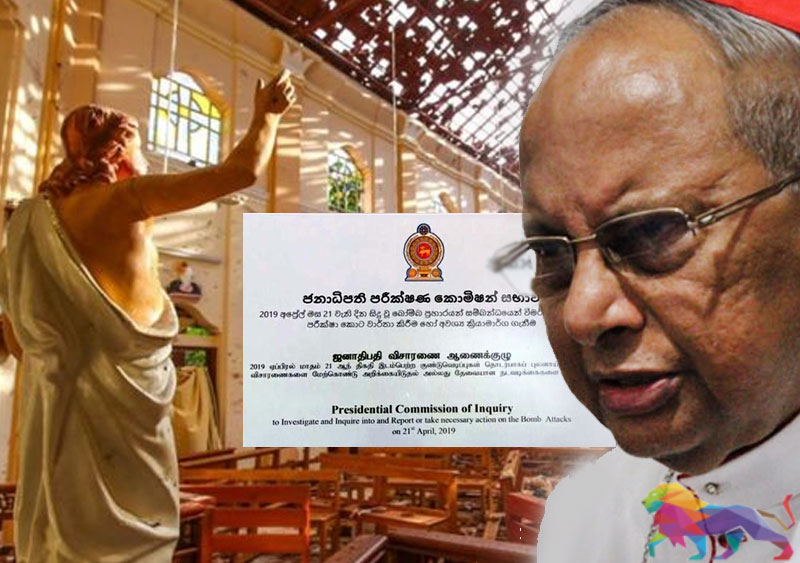
Colombo Archbishop Malcolm Cardinal Ranjith yesterday said the politicians who had ruled the country since the Easter Sunday carnage had been party to a conspiracy to hide the truth about the tragedy.

Addressing the media at the Bishop’s House in Colombo, the Cardinal said: “We recall vividly the statement made in earlier times by the former Attorney General that behind these attacks, there was a grand conspiracy. It is clear to us and to many others that the attacks were a plot to gain political power. Even the Parliamentary Select Committee appointed at that time by the Yahapalana government affirmed so in its report.

“It is clear for its future wellbeing, the citizens of this country who are upright and just, need to know that up until now what has happened is that, like it was for the Easter Sunday murders, so also there have been in the recent past many political murders, kidnappings, disappearances as well as setting up of religious and ethnic conflicts and violence in this country ignoring the principles of the rule of law and justice for the sole purpose of obtaining political power or hold on to it with the help of criminal elements who have been protected and sustained by them.

“This corrupt political culture adopts the policy of getting the people in this country to forget all these serious crimes by seeking to bury those in the sands of time and erase them from their memory. Our attempt is to show to these state sponsored criminals that we will not stop our efforts at exposing the truth behind the Easter attacks so that we may expose this evil strategy of theirs and ensure that justice is done.

“It is our belief, that if we let go of this effort it will create a bad precedent for the country.

“This country by now possesses a deeply corrupt political power base and some corrupt officials handling legal matters who manipulate the rules to justify such behaviour which would shield and protect political criminals. And so, in such a set up one could engage in such criminal activities even in the future in order to come to power or hold on to power by rousing up base feelings of racialism and religious bigotry among the people, cause such mass murders like the Easter-Sunday carnage and achieve power.

“That is the background in which there is a strong need to find out the truth behind the Easter attacks and to bring the master minds and criminals behind it to justice. Else some of these criminals who are now free and are enjoying political protection may be tempted to carry out such attacks again in order to obtain power even in the future.

“It is four years now, since the tragic murder of 272 innocent worshippers in Churches and visitors in Hotels on the fateful day, Easter Sunday 2019. Yet it has not been possible for us, up to now, to identify the perpetrators behind these attacks and to bring those responsible to book.

“It is clear that the Presidents as well as the politicians who ruled this country since then, as well as the present President and his government and some corrupt state officials have been and are part of an attempt to hide the truth behind these attacks in order to protect the culprits.

“Hence, we call upon all our citizens, irrespective of their racial or religious differences to unite with us to create a strong human chain, on Friday, 21st April, calling for truth and justice for the Easter attack victims.”

Sri Lanka opposition MP Mano Ganesan yet to decide on future course of action

Sri Lanka opposition MP Mano Ganesan, who recently made an abortive attempt to bring President Ranil Wickremesinghe’s United National Party (UNP) and the main opposition Samagi Jana Balewagya (SJB) together, said his own party has yet to decide on a future course of action in the event of an invitation to form a national government.

In a telephone interview with EconomyNext on Monday April 17, Ganesan said the Tamil Progressive Alliance (TPA), which he leads, will decide when the time comes.

“We are part of the SJB-led alliance. We’re a separate party. We will decide at two levels: at the TPA level and at the SJB alliance level. We haven’t decided anything yet,” he said.

The Colombo district MP said President Wickremesinghe had told him in a recent one-on-one meeting that he would extend an open invitation to all parties represented in parliament to either join the government or to support its International Monetary Fund (IMF) backed reforms from the opposition. This invitation will likely be made after Sri Lanka’s agreement with the IMF is debated in parliament, some days after April 25 when parliament is set to reconvene after the National New Year holidays.

“He told me that any party can decide if they wish to join the government or to remain in the opposition and still work with the government by participating in the committees, which he said will be established for the implementation of the IMF reforms and other programmes,” said Ganesan.

Reforms such as privatisation will be among matters discussed at the committee level, the MP said.

“The World Bank is going to give us a loan, with minimum interest. That would be useful for the monthly cash transfers for low income groups,” he added by way of an example.

Asked if the president had mentioned cabinet portfolios, Ganesan said it’s still too early for such discussions, noting that the question of taking up cabinet positions would only arise in the event opposition parties decided to join the government.

“Right now, it’s just a general call,” he said.

Commenting on his efforts to reunite the UNP and the SJB, which broke off from the UNP in the wake of the 2019 presidential election, Ganesan said SJB and opposition leader Sajith Premadasa and party secretary general Ranjith Madduma Bandara had communicated to him their refusal to agree to such an alliance.

“When I try to bring about unity and amity between two parties, if one party refuses to agree, I can’t stop them,” he said.

On Monday, UNP general secretary and former MP Palitha Range Bandara hit out at Premadasa for not supporting the government’s reform initiatives, amid seemingly unrelenting speculation that a number of SJB parliamentarians plan to cross over to the government. Though party spokesmen have flatly and loudly rejected these reports, SJB MP Nalin Bandara hinted last week that some crossovers could be expected, although it won’t be any kind of mass exodus. The SJB legislator, in fact, invited Wickremesinghe’s UNP to join a new SJB-led alliance that he said is on the cards.

Political analysts have noted that though differences between Wickremesinghe and Premadasa may be irreconcilable at present, the president and a number of SJB frontliners share largely similar worldviews, particularly when it comes to the question of reforms.

MP Ganesan reiterated the TPA, which comprises the Democratic People’s Front (DPF) led by him, the National Union of Workers (NUW) and the Up-Country People’s Front (UCPF), has yet to decide. He, however, remains critical of certain aspects of the Wickremesinghe administration.

While he acknowledges that some level of stability has been achieved over the past few months with some normality restored in the country, Ganesan attributes much of it to Sri Lanka’s decision to stop repaying debt, which he said has resulted in a surplus.

It is this surplus, plus India’s decision to extend a line of credit to its crisis-hit neighbour, that has led to the relative level of stability, he said.
“But at the same time, I have to agree that there has been an increase in revenue from tourism with more tourists coming in and in foreign remittances, which are good developments that are happening because a relative normalcy is prevailing in the country,” he said.

He insisted however that the reasons for this apparent return to normal is not exactly due to what the government says it is.

“Maybe in part it is down to the government managing, but there is a surplus of foreign reserves being used to bring in oil, food and medicines. India is also helping. They gave us four billion dollars, one billion of which was left unused.

“India extended the time limit on that at the government’s request. Those factors are helping us stay normal. Otherwise there would be scarcity,” he said.

Ganesan said the TPA welcomes the new anti-corruption bill, proposed as part of its commitments to the IMF in exchange for the international lender’s 2.9 billion dollar extended fund facility.

“We have always been demanding anti-corruption. The country has fallen due to three reasons: corruption, wastage and mismanagement. These three ills should go away,” he said.

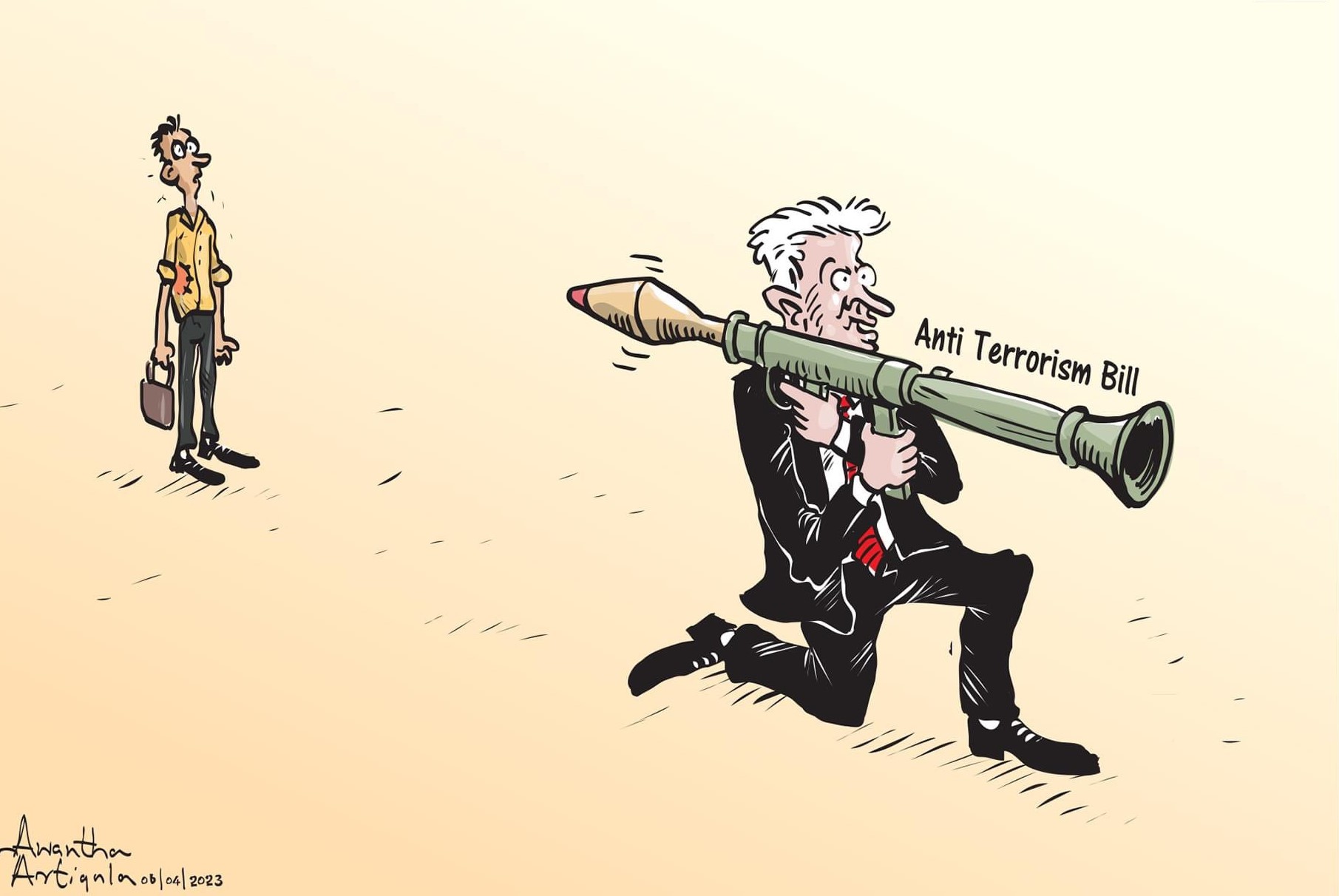
The TPA is opposed to the new anti-terrorism legislation that the government plans to bring in. The party leader said he personally expressed to President Wickremesinghe his opposition to the anti-terrorism bill in its current form, which he claimed is worse than the widely criticised Prevention of Terrorism Act (PTA).

“Both Sri Lanka and the rest of the world have asked the government to repeal the PTA. But in the guise of repealing it, they’re bringing in a bill that’s even more dangerous.

“I have met the president and told him directly not to do that. He said he’ll consider it,” said Ganesan.

He added that the bill, which has yet to be taken up in parliament, should be amended with its problematic clauses removed.

“If that is done, we will support it, not otherwise,” he said.

“Any government in Sri Lanka having legislation to counter tourism is a reasonable thing. But it cannot be draconian. We shall wait and see what kind of bill the government brings in,” he said, adding that the president had told him that he is open to suggestions.

The MP has been spearheading a move to bring about a ‘Tamil caucus’ of parliamentarians representing Sri Lanka’s Tamil-speaking communities. Commenting on its progress, Ganesan said in addition to the TPA’s three constituent parties that largely represent Indian-origin Tamils, three other parties have expressed their support: the Tamil Eelam Liberation Organisation (TELO) led by MP Selvam Adaikalanathan, the Democratic People’s Liberation Front (DPLF) led by MP D Sidhdharthan and the Tamil Makkal Kootani (TMK) formed in 2018 by MP C V Wigneswaran.

“We’re waiting for a response from the Illankai Tamil Arasu Kachchi (ITAK). Its leader Mavai Senathirajah spoke to me two days ago. He said they will positively consider it and come back to me after the holidays. Let’s see

“This is a first step. I have only written to four parties, out of which three have agreed. Once that is agreed, we will then call other Tamil parties and also the Muslim parties. We want all Tamil speaking parties in parliament as a caucus,” he said.

Ganesan stressed, however, that the proposed Tamil caucus will be expressing its collective aspirations within an undivided Sri Lanka.

“We express our collective views within an undivided, one Sri Lanka, where we want to share political power and wealth,” he said.


Posted in Uncategorized

No musical shows, political meetings at Galle Face Green from 20 April

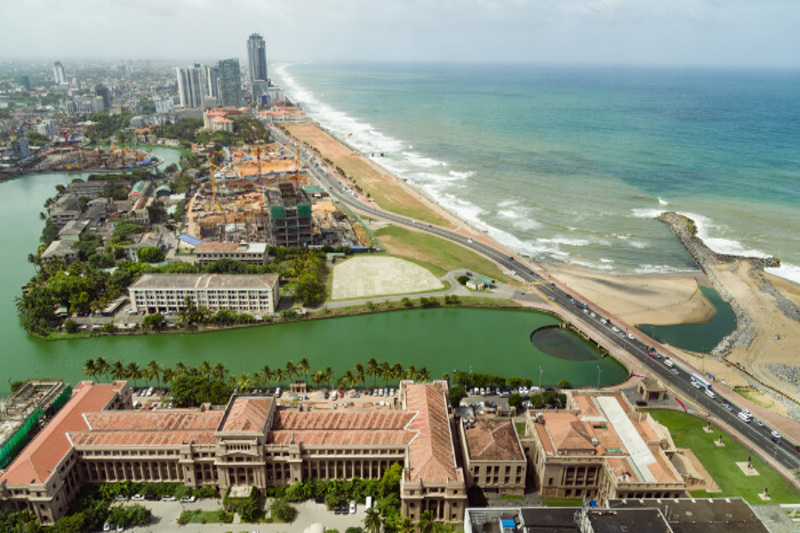
The Cabinet of Ministers has decided not to grant permission to use Galle Face Green for shows, political meetings or other activities that will damage the beauty of the grounds from the 20th of April.

The Sri Lanka Port Authority has undertaken to develop the Galle Face Green as a social responsibility (CSR) project, and the Authority has spent about 220 million rupees for the development work that has been done so far, a statement on cabinet decisions said.

The Cabinet noted that 6.6 million rupees have been spent for the repairs of property damage that have occurred during last year’s Aragalaya protests alone.

The Galle Face Green is supposed to be maintained so that the public can spend their free time, but the grounds are often damaged by musical performances and other activities involving large gatherings of people, making it difficult to maintain the beauty and scenic nature of the premises.

Therefore, with effect from 20th April, the Cabinet of Ministers has decided not to grant permission except for religious activities to use Galle Face Green for musical performances, political meetings or other activities that damage the beauty of the grounds.

LG polls should precede presidential election – G.L.

The local government polls should precede the presidential election, stresses constitutional expert Prof. G.L. Peiris.

The Freedom People’s Congress (FPC) MP told the media today (17) the law permits presidential election to take place only between September 18 and October 18 next year.

A successor president cannot call an election after four years, except through a parliamentary resolution with a two-third majority passage, said Prof. Peiris.

The constitution cannot be changed for petty political gains, and any change should have a public mandate, he noted.

Speaking further, the MP warned the proposed anti-terrorism bill will evaporate media freedom.

There was no transparency whatsoever in the government’s talks with the IMF, and the pact with the global lender would not be supported by any FPC MP, he added.

Posted in Uncategorized

President to make fresh clarion call for all-party national government

President Ranil Wickremesinghe is expected to make a fresh call for the formation of an all-party government when Parliament takes up the debate on the IMF bailout programme next week, a senior opposition party leader said on Monday.

In March, the International Monetary Fund (IMF) approved a $3 billion bailout programme to help Sri Lanka overcome its economic crisis and catalyse financial support from other development partners, a move welcomed by Colombo as a “historic milestone” in the critical period.

“He (Wickremesinghe) will make an open invitation to all political parties to join the national government when the Parliament meets on April 25 to debate on the IMF bailout programme,” Mano Ganesan, the leader of the Tamil Progressive Alliance, told the media.

President Wickremesinghe, also the country’s finance minister, is keen to win the approval of the 225-member assembly for the IMF bailout package, which is a timely antidote to Sri Lanka’s economic travails. In July last year, Wickremesinghe urged lawmakers from all political parties to put their differences aside and work towards lifting Sri Lanka out of the throes of the economic crisis.

The Sri Lanka Podujana Peramuna (SLPP) party led by the powerful Rajapaksa family voted for Wickremesinghe, the leader of the United National Party (UNP), as the president in July last year. Wickremesinghe currently heads a cabinet of SLPP ministers. Sri Lanka is in the midst of its worst economic crisis since its independence from Great Britain in 1948, triggered by a severe paucity of foreign exchange reserves.

In April last year, Sri Lanka declared its international debt default due to the forex crisis. Earlier this month, Sri Lanka’s election commission said the local body polls, which were scheduled to be held on April 25, were postponed indefinitely due to an acute shortage of funds.

Source: PTI

Posted in Uncategorized

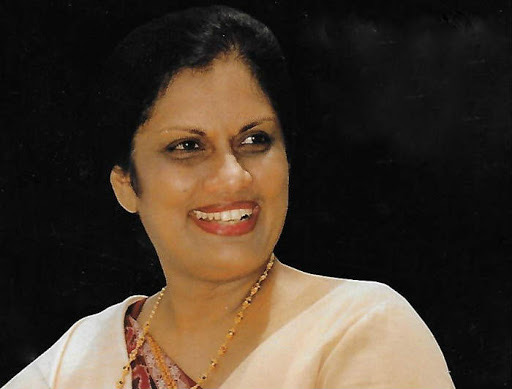
After 75 Years of Independence Sri Lanka has become a “failed state” says Chandrika Kumaratunga By Meera Srinivasan/The Hindu

Despite possessing enviable social indicators at the time of Independence in 1948, Sri Lanka, at 75, is a “failed state”, former President Chandrika Bandaranaike Kumaratunga said on Sunday.

“Seventy-five years is a long time for a nation to achieve considerable progress. Even after 450 years of destruction by colonial rulers, at Independence, Sri Lanka possessed some of the best socio-economic indicators. Today, at 75, Sri Lanka is a failed state,” she said, delivering the UNESCO Goodwill Ambassador Madanjeet Singh Memorial Lecture of 2023, in an online event, organised by the South Asia Foundation and the Asian College of Journalism, Chennai.

“We are incapable of managing the affairs of the state,” said the 77-year-old former head of state, who hails from one of Sri Lanka’s most powerful political clans.

“The government has declared bankruptcy — a very rare situation for any country in the world; the economy is in tatters; peasant agriculture and small and medium industries are struggling to survive, or have already closed down; tourism sector is at an all-time low; large industries are retrenching employees and new jobs will be a long time coming,” Ms. Kumaratunga said. The situation “compelled” Sri Lanka to seek an IMF facility coming with “ very stringent” conditions, she said

While President Kumaratunga has earlier blamed the Rajapaksas for the country’s economic collapse, she underscored corruption and Sri Lanka’s failure at “essential nation building” as key factors leading to the current crisis.

“Widespread corruption at every level”, had become the “gospel of Sri Lankan politics”, and had seeped down the major pillars of democratic governance, including the judiciary, the police, and the public service. Further, independent Sri Lanka failed to “weld together” the diverse ethnic and religious communities to form a united pluralistic state, Ms. Kumaratunga said.

Historically, the island’s majority Sinhala-Buddhist community had felt discriminated against by the colonial rulers. “Although Independence gave the majority community an opportunity to correct this, sadly that did not happen,” she added.

“The solution they adopted was to arrogate all the privileges of economic and social development exclusively to themselves. The just resolution of the minorities’ question would have been to guarantee equal rights to all citizens and a system of political power-sharing with the minorities. We have failed to do this for 75 years,” the two-time President said.

Sri Lanka’s present Constitution, introduced by President J.R. Jayewardene in 1978, “is not a democratic one”, Ms. Kumaratunge contended, recalling how her own draft proposals for a new Constitution in 2000, widely considered progressive, could not be taken forward owing to lack of support.

Outlining the “root causes” for Sri Lanka’s failures, she said that while the country functions as a modern, emerging economy financially, it is “mired in the practices of a backward, semi-feudal society”, in the social and cultural spheres. “Eleven out of the 14 people that have governed Sri Lanka until now have hailed from five families,” she said, in an apparently self-critical reference to the country’s famous ruling clans, including her own family. All main political parties invariably played the “ethno-religious card” in every election, she added.

Referring to last year’s historic street protests, Ms. Kumaratunga said “a cataclysmic socio-political upheaval shook the nation to its very core”.

“An entire nation, young and old rose up, demanding radical changes in the existing system of governance, of the ethics and values of leaders. Citizens of all ethnic, religious communities, irrespective of political affiliations, came together spontaneously, without any known leaders to demand a new country, a better Sri Lanka,” she said, calling for a “total overhaul” of governance, with new, principled leaders.

Posted in Uncategorized

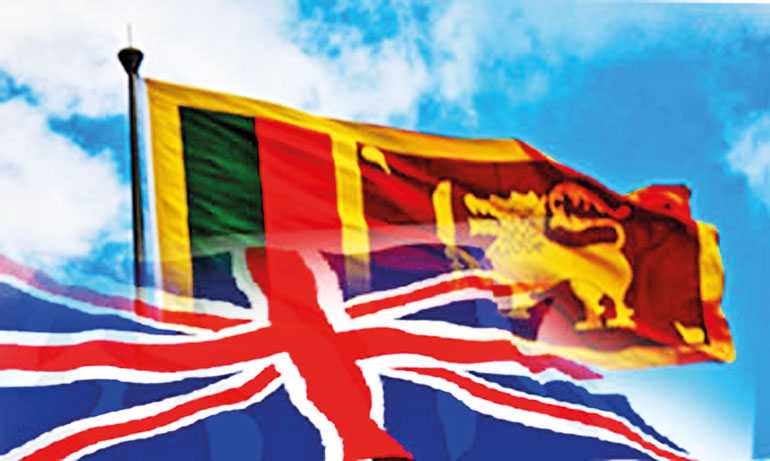
Sri Lanka and UK to convene Strategic Dialogue on 18 April in London

Foreign Secretary Aruni Wijewardane will participate in the inaugural UK-Sri Lanka Strategic Dialogue at Foreign Secretary level on 18 April 2023 at the Foreign Commonwealth and Development Office (FCDO) in London, Foreign Affairs Ministry announced.

UK Minister of State in the FCDO Anne Marie Trevelyan will open the dialogue, which will be conducted with the participation of Sir Philip Barton, Permanent Undersecretary of the FCDO.

The inaugural Strategic Dialogue is convened at the invitation of the FCDO at the important juncture of the 75th anniversary of diplomatic relations between Sri Lanka and the United Kingdom this year.

The Strategic Dialogue will provide a forum for both sides to discuss the multifaceted relations between the two countries.

On the sidelines of the dialogue, Foreign Secretary Wijewardane will have a bilateral meeting with Assistant Secretary General of the Commonwealth Prof. Luis G. Franceschi and interact with members of the All-Party Parliamentary Group (APPG).

Posted in Uncategorized

SLPI concerned over implications on freedom of expression by ATA

The Sri Lanka Press Institute (SLPI), its constituents and affiliated organisations are deeply concerned over the proposed Anti–Terrorism Act (ATA) and its implications on freedom of expression.

The ATA was published on 22 March 2023 (Gazette notification dated 17 March 2023), and was drafted to replace the Prevention of Terrorism Act (Temporary Provisions) Act No. 48 of 1979 (PTA).

The SLPI is of the opinion that the presented bill has several controversial elements that are not conducive for the media community.

The proposed bill consists of an overbroad and vague definition of “acts of terrorism” that can be interpreted in a manner which curtails the freedom of expression.

The broad powers vested within the proposed bill enables the criminalisation of speech that is likely to be understood as an encouragement or inducement to commit or prepare for terrorism, with the burden of proof on the defendant to show that was not their intention.

These offences also apply to those who publish, distribute, sell, or transmit publications that could be interpreted as materials supporting acts of terrorism.

According to the Bill, confidential information could be any information having an ‘adverse impact’ on ‘national security/defence’ which includes ‘any information not in the public domain’. Therefore, the broad and vague classification of ‘confidential information’ could place media personnel in a precarious position in the due course of executing their duties, as many offences which fall under the criminal law could now be reframed as ‘terrorist offences’.

It is evident that the Constitutionally guaranteed fundamental rights of citizens, in terms of freedom of speech and expression, freedom of assembly and association, and freedom to dissent are threatened through the proposed ATA. While the SLPI understands the need to amend the PTA, it also endorses caution in making amendments that could undermine democracy and good governance.

Sri Lanka given more time to repay Bangladesh’s $200m loan

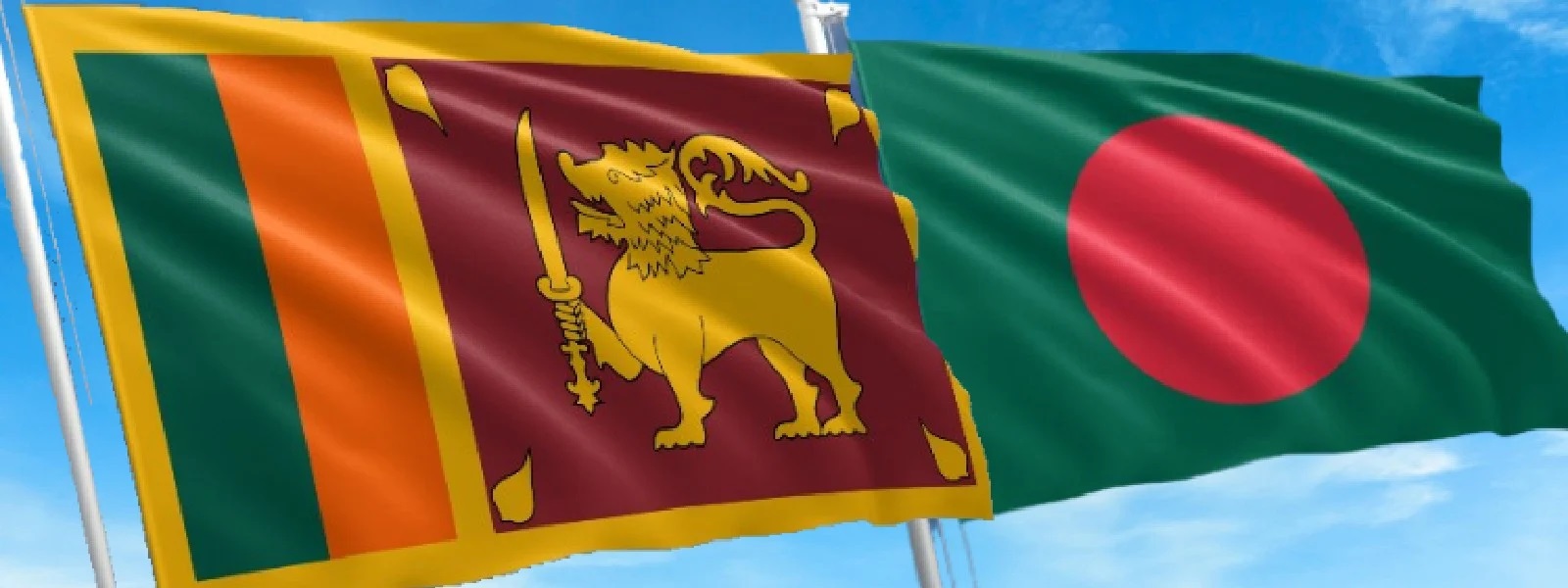
Bangladesh has extended the repayment period of Sri Lanka’s $200 million loan it had given by six more months.

Earlier, the Sri Lankan central bank sought time from Bangladesh to make the first installment of the $200 million credit by March this year, hoping that it would be able to restructure its debt by then.

However, the restructuring was not done.

Now, Sri Lanka is seeking six more months and said it would make its first installment by August this year and another installment by September, said Bangladesh Bank Governor Abdur Rouf Talukder while speaking to a group of journalists after a meeting with P Nandalal Weerasinghe, governor of the central bank of Sri Lanka, at the 2023 Spring Meetings of the World Bank Group and the International Monetary Fund (IMF) in Washington on Friday.

The Sri Lankan governor confirmed that it would need no further extension, Talukder said.

When a loan repayment period is extended, it is not free of cost. It adds more interest, he also said.

Sri Lanka, facing its worst economic crisis in history, borrowed the fund in May 2021.

Colombo could not start repaying the loan and announced its external debt default in April of 2022 amid a deepening crisis.

The loan repayment period has been extended thrice.

As per the agreement with Sri Lanka, Bangladesh was supposed to receive an interest payment of Libor plus 2% if the amount was returned in three months.

The Libor, the acronym for London Inter-Bank Offered Rate, is a benchmark interest rate at which major global banks lend to one another in the international interbank market for short-term loans.

The three-month Libor averaged around 0.53% in 2021.

Last month, Sri Lanka secured a $2.9 billion programme from the IMF to tackle its huge debt burden.

The country owes $7.1 billion to bilateral creditors, with $3 billion owed to China, followed by $2.4 billion to the Paris Club, and $1.6 billion to India, said Reuters on Friday.

The government also needs to renegotiate more than $12 billion of debt in eurobonds with overseas private creditors, and $2.7 billion on other commercial loans.

Source – Dhaka Tribune