No more announcements of LG polls dates – election chief

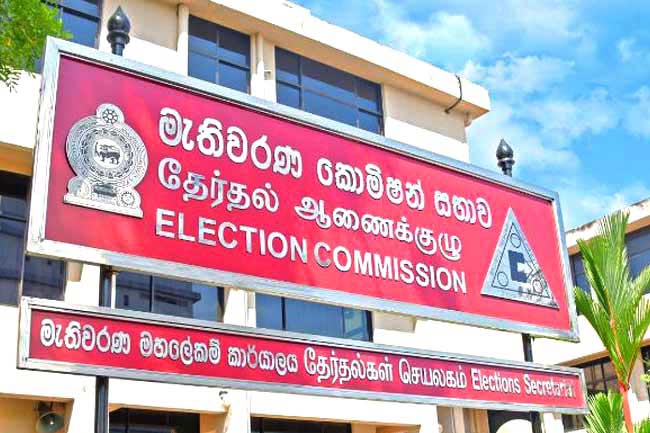
No more dates will be announced for the local government polls until funding and other requirements are made available, said Election Commission chairman Nimal Punchihewa.

He has told Neth News the EC had discussed matters with all the official authorities, with none left.

The election was postponed on April 11 for the second time.

Meanwhile, delimitation commission chairman Mahinda Deshapriya expects the LG polls to take place before either August 12 or September 15.

He has told ‘Mawbima’ that nominations already accepted would be unaffected by the delimitation process that has been finalized.

Nothing has been reported about a cancellation of the nominations accepted, he said.

Posted in Uncategorized

Paris Club says aims to start Sri Lanka debt negotiations

PARIS : The Paris Club of creditor governments aims to start negotiations to restructure Sri Lanka’s debt, the group said on Friday after a creditor committee was set up this week.

The Paris Club said the Japanese and Indian finance ministers along with its president and representatives of Sri Lanka set up a creditor committee on Thursday on the sidelines of the spring meetings of the International Monetary Fund and World Bank in Washington.

Creditor committees lead talks about the terms for a future debt relief deal.

“The Paris Club intends to keep the momentum and start the restructuring negotiations in coordination with all relevant stakeholders, to ensure fair burden sharing, transparency and comparability of treatment,” it said in a statement.

It added that all public sector creditors were welcome to participate in the process.

Sri Lanka last month secured a $2.9 billion IMF programme to tackle its suffocating debt burden and its worst economic crisis in more than seven decades.

(Reuters)

ATA a threat to journalists – IFJ

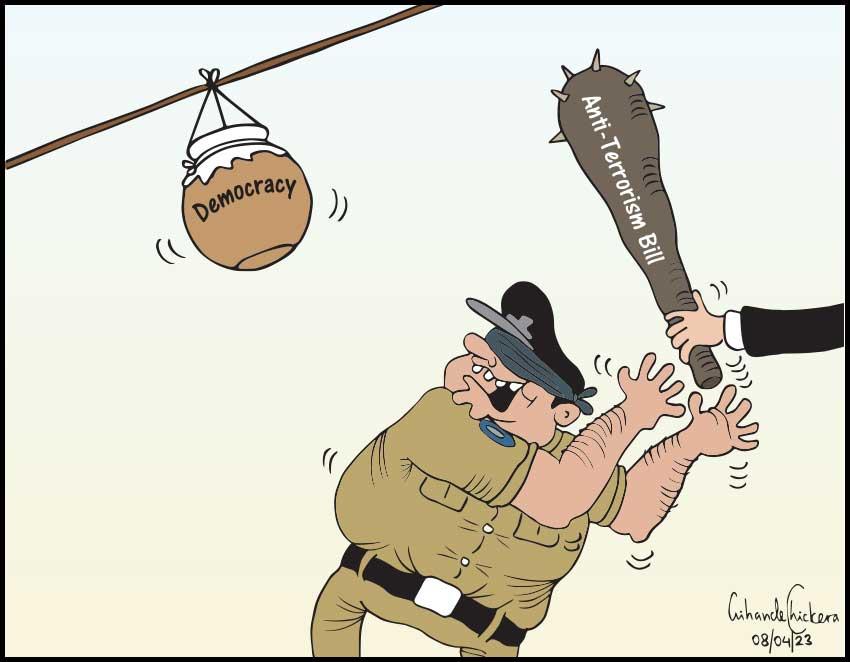
The new Anti-Terrorism Act (ATA) proposed by the Sri Lankan parliament, designed to replace the existing Prevention of Terrorism Act (PTA) of 1979, threatens to further exacerbate restrictions on the right to assembly and gravely curtail freedom of expression and press freedom, the International Federation of Journalists (IFJ) said in a statement.

The International Federation of Journalists (IFJ) joins its Sri Lankan affiliates, the Sri Lankan Working Journalists Association (SLWJA), the Federation of Media Employees Trade Union (FMETU), and the Free Media Movement (FMM), in strongly condemning the bill and urging Sri Lankan authorities to withdraw the proposed draft and repeal the punitive PTA.

Under the proposed ATA, the president would have the power to invoke proscriptive orders, restricting organisations labelled ‘terrorist’ from accessing funds or maintaining membership.

The president would also have the power to order curfews, declare places ‘prohibited’, instate rehabilitation programs, and obtain restriction orders that prohibit movement and activities, all conducted outside of the court system.

If passed, journalists, media workers and their representative unions and organisations who are deemed critical of the Sri Lankan government face legal persecution under undemocratic and arbitrary ‘terrorist activities’, the statement added.

Party Leaders To Meet In Parliament On April 20 To Make Final Decision On Presentation Of Anti-Terrorism Bill

A party leaders’ meeting in Parliament has been scheduled for April 20th to discuss the presentation of the Anti-terrorism Bill, according to a statement by the Communication Department of the Parliament.

The meeting will be chaired by Speaker Mahinda Yapa Abeywardena and will be the first party leaders’ meeting held after the New Year. All party leaders have been requested to attend the meeting, which will be followed by the first parliamentary session on the 25th.

The Anti-Terrorism Act is expected to be presented in Parliament on that day, although a final decision will be made at the party leaders’ meeting on the 20th. The bill was initially scheduled to be presented on April 4th but was postponed due to opposition from several parties, with some requesting a delay to allow time to challenge the bill in court.

‘Ripe for abuse’: Amnesty calls for influence from Biden on SL Anti-Terrorism Bill

Amnesty International (AI) has condemned Sri Lanka’s proposed Anti-Terrorism Act (ATA), claiming that it ‘categorically fails on every human rights benchmark’.

This observation about the proposed Act was made by AI Asia Advocacy Director Carolyn Nash, who called upon U.S. President Joe Biden to send a clear message to his Sri Lankan counterpart, President Ranil Wickremesinghe, that the legislature in question must be ‘overhauled entirely or scrapped altogether’ if he, Joe Biden, valued the rights of the Sri Lankan people.

She further raised concerns that in the event both the administration and Congress continue to remain silent as this draft law advances, they will allow the Sri Lankan government to further cement its ability to suppress dissent.

“The proposed legislation is an insult to civil society in Sri Lanka, who have advocated for decades for legal reforms to protect human rights. This is far from a good faith effort on the part of the Sri Lankan authorities to improve or replace a bad law – it is an effort to shore up the government’s ability to target and silence their critics”, she said.

The government of Sri Lanka has been using the draconian Prevention of Terrorism Act (PTA) to detain and torture critics and minorities for over four decades.

International condemnation of the PTA led the government of Sri Lanka to commit to repealing the law. The ATA, published on 22 March, is the replacement legislation the government has proposed after another bill brought in 2018 was shelved after widespread condemnation.

Meanwhile, AI South Asia Researcher Thyagi Ruwanpathirana also highlighted several discrepancies within the proposed law, saying;

“The drafters of the ATA have not taken into account the benchmarks laid out by UN experts in order to come up with a counter-terror law that would start to bring the legislation in line with international law. The offenses in the anti-terror bill remain broad, vague, and subjective. They are ripe for abuse. Even offenses under Sri Lanka’s ICCPR Act are now made terror offenses.

It’s clear after the mass protests last year, the state has become even more willing to misuse counter terrorism offenses in order to target activists. This is reflected in new offenses created that seek to classify acts of civil disobedience as terror offenses.

This provision is dangerous and facilitates torture, especially in a context that is already rife with allegations of torture in custody”.

The ATA still retains certain PTA provisions to enable prolonged detention (up to one year without charge), which can be extended by the High Court on the request of the Attorney General.

It also provides the police with access to those who are already indicted and in judicial remand and enables suspects to be removed from remand custody for the purpose of conducting further investigations under the authority of an order made by a Magistrate.

The Bill empowers the military to carry out arrests without warrants,, and retains unchecked powers of the executive, including to proscribe persons and organizations without judicial oversight.

Penalties include the death penalty, which Amnesty strongly opposes.

Posted in Uncategorized

We endeavoured to merge UNP, SJB – Mano

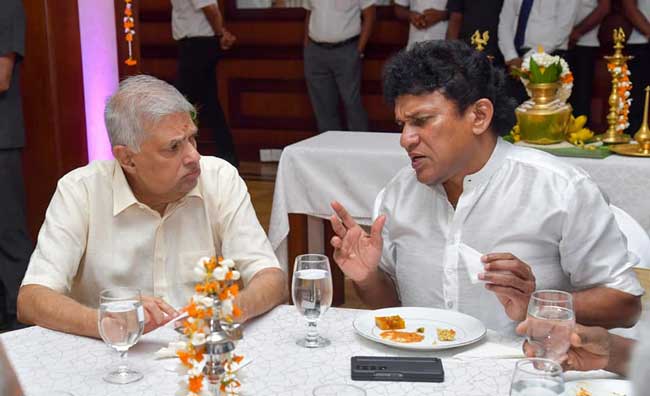
Whilst stating that he together with MP Rauff Hakeem initiated an effort to bring UNP and SJB under one umbrella, MP Mano Ganesan said they had to abandon the idea since the SJB leadership did not respond.

“It is true that Rauff Hakeem and I had initiated a path to bring UNP and SJB under one umbrella. Later we had to abandon the initiative as SJB did not respond,” Ganesan told the Dailly Mirror.

“However the subject of “premiership” never popped up in our discussion. All media reports claiming that the President had sent messages to opposition leader Sajith Premadasa offering Premiership were false and baseless,” he added.

Posted in Uncategorized

IMF ‘will not get involved’ in SL debt restructuring negotiations with creditors

Director of the Asia and Pacific Department of the International Monetary Fund (IMF), Krishna Srinivasan has stated that the debt relief Sri Lanka currently awaits is expected to contribute USD 17 billion to close the Balance of Payments (BOP) financing gap from 2023 – 2027.

Speaking at the World Bank Group and IMF Spring Meetings, Srinivasan stated the IMF aims to restore debt sustainability and the BOP pressures even after the programme ends.

Thus, he explained that while the debt relief programme will cover nearly USD 17 billion of Sri Lanka’s USD 24 billion financing gap, the rest of the funds are expected to be covered by International Financial Institutions (IFIs).

He noted, however, that the process according to which the restructuring will happen, or how the required relief will be provided, must be negotiated between Sri Lanka and its creditors, stating that the IMF ‘does not get involved’ in this process.

He explained that Sri Lanka will be required to negotiate the matter with its creditors, and the form in which the debt relief will be provided, including principle haircuts, extension of maturity and interest reductions.

Sri Lanka is expected to outline a blueprint later this month, which will provide a basis for engaging with their creditors pertaining to the debt restructuring process.

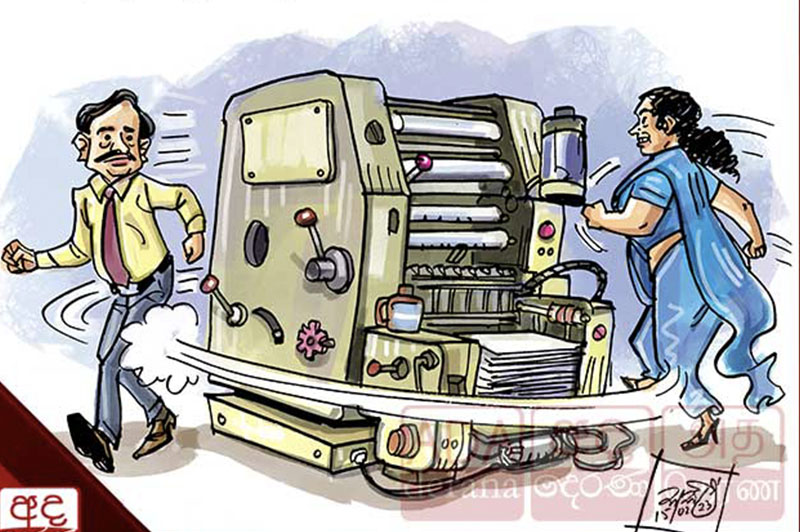
Printing process relating to LG election stopped: Printing Department

The Government Printing Department has stopped all printing processes related to the 2023 Local Government (LG) election, Government Printer Gangani Kalpana Liyanage said.

She said the decision was taken due to the required funds not being released by the Treasury.

So far, postal ballot papers and other related documents have been printed at a cost of Rs. 50 million, she said.

She claimed that due to funds not being released, the department is unable to pay the allowances of the employees as well.

Several written requests have been made in this regard but there has been no response from the Treasury yet, she said.

Proposed anti-terror bill labelled tyrannical, undemocratic – IFJ

The new Anti-Terrorism Act (ATA) proposed by the Sri Lankan parliament, designed to replace the existing Prevention of Terrorism Act (PTA) of 1979, threatens to further exacerbate restrictions on the right to assembly and gravely curtail freedom of expression and press freedom, the International Federation of Journalists (IFJ) stated.

Issuing a statement, the IFJ said it joins its Sri Lankan affiliates, the Sri Lankan Working Journalists Association (SLWJA), the Federation of Media Employees Trade Union (FMETU), and the Free Media Movement (FMM), in strongly condemning the bill and urging Sri Lankan authorities to withdraw the proposed draft and repeal the punitive PTA.

On March 17, the Sri Lankan government announced its intention to replace the country’s current draconian terrorism act with the new ATA. The proposed legislation has been criticised by trade unions, human rights organisations, civil society, legal experts, and press freedom advocates, who have identified the bill’s potential to crack down on dissent and civic space amidst ongoing instability across the island.

The law would expand the legal definition of terrorist offences beyond international guidelines and include the infliction of serious damage to any place of public use, the obstruction of essential services, and participation in an unlawful assembly deemed by the government to be connected to ‘terrorism’. The law would also criminalise the distribution of materials or services that allow others to possess ‘terrorist publications’ and the publication of words or signs that may be understood by members of the public to conduct, encourage, or induce a terrorist offence, among many new and arbitrary charges.

Non-judicial detentions, previously only invocable by the Minister of Defence, could now be requested by a Deputy Inspector General Of Police, the third highest rank in the Sri Lanka police force. Abuses of power historically recorded under the PTA may be increased as law enforcement would be sanctioned to create ‘approved places of detention’ outside of Sri Lanka’s court structure, which has previously allowed for police torture of the arbitrarily detained. All arrests would occur before any formal charges were submitted.

The IFJ stated that under the proposed ATA, the president would have the power to invoke proscriptive orders, restricting organisations labelled ‘terrorist’ from accessing funds or maintaining membership. The president would also have the power to order curfews, declare places ‘prohibited’, instate rehabilitation programs, and obtain restriction orders that prohibit movement and activities, all conducted outside of the court system. The Attorney General may also compel those charged under the ATA to produce guilty testimonies, as the AG may relieve an individual charged under the act for up to 20 years if they conduct conciliatory actions.

The legislation has been announced after decades of local and international criticism surrounding human rights abuses, often directed towards journalists, and ethnic and religious minorities, that were conducted under the PTA by successive Sri Lankan governments. According to Prime Minister Dinesh Gunawardena, the bill is expected to be presented to the Sri Lankan Parliament in late April and could come into law as early as May 2023.

Dharmasiri Lankapeli, the General Secretary of the FMETU, said: “This so-called Anti-Terrorism Act (ATA) has provisions more draconian and tyrannical in nature compared to its predecessor PTA. […] The government has been compelled to put off the presenting of the ATA bill to Parliament due to vehement opposition by people, including lawyers’ organizations, civil organizations, trade unions, and media organizations. We, the FMETU, call on all those who uphold the values of democracy and rule of law to rally against this government’s attempt to arm itself with oppressive powers against people.”

The FMM said: “Although the national security of a country is an essential issue for the sovereignty, territorial integrity and security of the citizen, Free Media Movement strongly condemns the government’s imposition of laws to deprive citizens of freedom of expression and speech under the guise of national security. The Free Media Movement raised its voice against the cases where the government tried to violate the freedom of expression of the citizens through the arbitrary laws brought by the government earlier, such as the Prevention of Terrorism Act. The Free Media Movement recognizes that many of the inhuman and arbitrary clauses in the proposed Anti-Terrorism Act are preventing citizens, especially human rights activists, from expressing their free opinion and criticizing the mal behaviour of state institutions.”

The SLWJA said: “The SLWJA expresses grave concern regarding the Government of Sri Lanka’s proposed Anti-Terrorism Act (ATA). The SLWJA believes that the proposed ATA is even more dangerous than the PTA as it could label, delegitimise, and ultimately dehumanise those the government considers to be its political enemies. The SLWJA urges the Government of Sri Lanka to engage in meaningful dialogue with civil society and the international community to address the concerns regarding the proposed ATA.

The IFJ said: “The proposed Anti-Terrorist Act is a condemnable and dangerous alternative to the already flawed PTA, threatening to further undermine freedoms of expression, press, and assembly in Sri Lanka. If passed, journalists, media workers and their representative unions and organisations who are deemed critical of the Sri Lankan government face legal persecution under undemocratic and arbitrary ‘terrorist activities’. The IFJ strongly condemns the proposed ATA and urges the Sri Lankan authorities to immediately withdraw the bill and amend the existing draconian PTA.” (NewsWire)


Posted in Uncategorized

Political parties to lose recognition over delayed financial statements

Sri Lanka’s Election Commission has decided to call for a report on the political parties that have failed to submit their financial statements.

The Election Commission said this decision was reached on Tuesday (11).

The Election Commission said that a decision was made to call for a report as certain political parties have failed to submit their financial statements for 2021.

It added that the respective political parties were informed to submit the 2021 Financial Statements within 14 days, and the deadline was last week.

Accordingly, the Election Commission has decided to terminate the recognition awarded the said political parties to be recognized as accepted political parties in the country, due to the failure to submit the financial statements.