Talks underway for a new political alliance

Several parties in the opposition have decided to form a new political alliance.

Kumar Welgama, Rajitha Senaratne, Patali Champika Ranawaka and SLPP breakaway faction are presently holding talks on a possible union among them, ‘Deshaya’ reports.

Their plan is to leave the main opposition and contest elections together, said a spokesman for parties at the talks.

Meanwhile, the government too, is holding discussions on campaigning for future elections.

The president has chaired a preliminary meeting with leaders of government affiliate parties and ministers.

Prime minister Dinesh Gunawardena, MP Vajira Abeywardena and senior presidential advisor Sagala Ratnayake attended the talks.

The president urged all to have proper coordination with a single-most objective.

SLPP general secretary Sagala Kariyawasam said a steering committee should be appointed after talks with each affiliate party, a proposal also endorsed by minister Susil Premajayantha.

Sri Lanka elected Vice President of UN General Assembly

Sri Lanka has unanimously been elected as a Vice President of the 78th session of the United Nations General Assembly (UNGA).

Accordingly, Mohan Peiris, Permanent Representative of Sri Lanka to the United Nations, will assume the relevant position for the Asia Pacific region from 2023 September to 2024 September.

Sri Lanka was amongst the 21 countries unanimously named as Vice Presidents by all 193 member states in accordance with the following pattern; six representatives from the African states, five from the Asia Pacific states, one representative from the Eastern European states, two representatives from Latin American and Caribbean states, two representatives from Western Europe and other states and five representatives from the permanent members of the Security Council.

Morocco, Bolivia, Congo, Estonia, Gambia, Iceland, Malaysia, Iran, Senegal, Singapore, Suriname, Uganda, Uzbekistan, Zambia and the Netherlands are also amongst the 21 Vice Presidents who were elected for the 78th UNGA session due to take place from 12 – 25 September.

Posted in Uncategorized

Election Commission opposes political appointments to monitor LG bodies

The Election Commission of Sri Lanka has expressed its discontent towards the recent decision to appoint a representative of the Chairman of the Regional Development Committee to monitor local government institutions.

Accordingly, Chairman of the Commission, Attorney-at-Law Nimal. G. Punchihewa noted that the matter would be brought before the Ministry of Local Government, in writing, tomorrow (05 June).

Explaining their reason for concern, Punchihewa noted that such an appointment could politicise local government institutions given that the Chairman himself is a representative of a particular political party.

Thus, he explained that this would be unfair to those affiliated with other political parties.

Further deeming the appointment an unnecessary one, the Election Commission chairman pointed out that the coordination required within local government institutions can be done through municipal commissioners and divisional secretaries.

A rising power; India’s “extended neighbourhood”

Sri Lanka’s international relations and its importance keep surfacing more often than not in recent times. Its economy is being ‘supervised’ by the International Monetary Fund (IMF) while big power dynamics in the Indo-Pacific region have brought the country under the radar of foreign listening posts monitoring its every move. Sri Lanka is truly walking on eggshells.

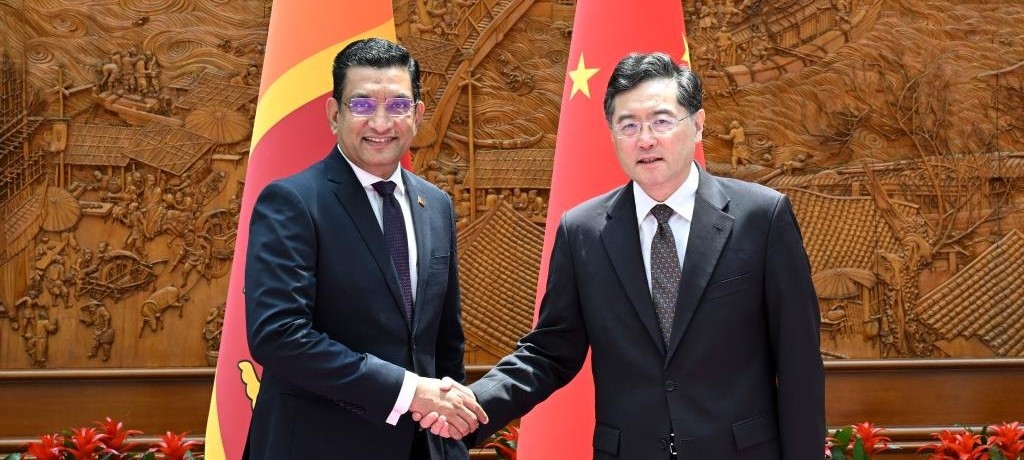
This week, the Chinese Vice Foreign Minister was in Colombo; in India, its Foreign Minister announced how it wants to expand its ‘neighbourhood first’ policy to an ‘extended neighbourhood’; and Sri Lanka went ahead with the UN Nuclear Test Ban Treaty to please those that are calling for a stop to further testing (read Iran and North Korea) even if a host of countries, including nuclear powers like India and Pakistan are refusing to sign it. The latter subject was a hot topic at the recently concluded Hiroshima pro-Western alliance G-7 summit and comes in the backdrop of an escalating conflict in Ukraine with the omnipresent threat of a nuclear war if things take a nastier turn for Russia.

The Chinese Vice Foreign Minister’s visit was a regular one for bilateral talks. The Chinese were thanked for their eventual support in the debt restructuring negotiations and Sri Lanka’s clinching passage through the Paris Club for the IMF Extended Fund Facility. Coincidentally, or otherwise, the Government signed a contract with China’s petroleum distributor to engage in fuel distribution in Sri Lanka.

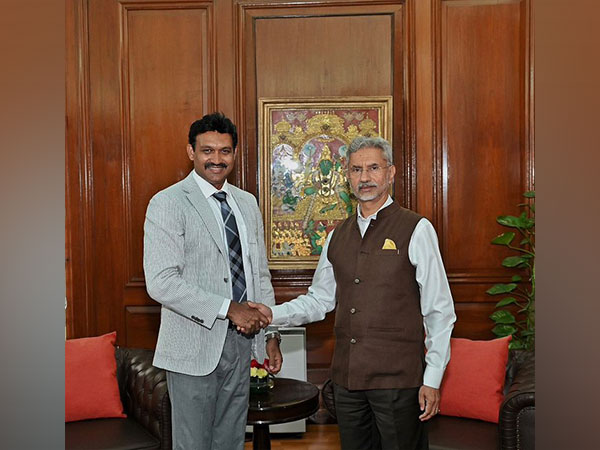
The visit also coincided with comments across the Palk Strait by the Indian Foreign Minister who spoke of a ‘Greater India’, both in influence and ambition as well as in geographical reach with an ‘extended neighbourhood’. The Minister outlined New Delhi’s mission and vision that involves islands in the Indian Ocean, Gulf countries and nations even in South East Asia. With Sri Lanka very much within this arc of influence, already facing challenges of a Greater Indian reach, it is now official that India wants to expand “what should be our neighbourhood”, as the Minister calls it.

Speaking on ‘Modi’s India’ – a “Rising Power”, the title itself betrays New Delhi’s view of the new world and India’s role in it. The Minister said it was time to use the “complex global landscape” to India’s advantage as a global power. He then referred to the example of how “generous” India was in coming to Sri Lanka’s assistance last year. “What we have done for Sri Lanka is bigger than what the IMF has done,” he said, and went on to add that any visitor to Sri Lanka “will note the popular perception that has accrued for that action.”

That, of course, is debatable. Sri Lanka went bankrupt and India bailed it out in its darkest days. How altruistic was its action though, is another matter. It was generally considered in Colombo that while India’s Finance Minister was adopting more open-handed philanthropy, its Foreign Minister was driving a hard bargain demanding MoUs for the Trincomalee oil tanks, Colombo Port terminals and wind farms in the north in return. The IMF’s demands are different, not for real estate in Sri Lanka.

And the narrative continues. The former Governor of the Eastern province (who seems to have had no clue of realpolitik and went ahead to twin the province with a province in China) was sent home by Colombo and replaced with a politician whose first port of call after his appointment was to ‘India House’.

The Indian Foreign Minister took the China issue head-on. He called for “some kind of equilibrium”, a welcome call for better relations. Such an equilibrium will bring peace to the neighbourhood no doubt, and countries like Sri Lanka can rest easy concentrating on trade and economic development with peace in the Indian Ocean without India imitating China’s ‘String of Pearls’ in the same seas. Sri Lanka, the ‘Pearl of the Indian Ocean’ is going to get well and truly entangled in these competing strings.

The islets of Kachchativu and even Delft in the north of Sri Lanka are highly vulnerable to an extended neighbourhood of India. Already, Indian fishermen consider the territorial waters in and around the Palk Strait and the Gulf of Mannar as their ‘legitimate traditional fishing grounds’. The revenue accruing to India from the stolen fish catch is not factored into the balance sheets with Sri Lanka though.

This is what India has wanted to be for years – since testing its nuclear capacity successfully in 1974, and declaring itself a nuclear weapons state 25 years ago. Now it has the added economic muscle to flex. It is asserting itself in total alliance with the United States and the major military and economic powers of the world, having long abandoned the Non-Aligned Movement, and even the regional group, SAARC.

With the US President asking for his autograph, the Australian PM calling him a rock star and the Papua New Guinea leader touching his feet, the Indian PM is only human to feel he is on a trip taking his country to new heights in global recognition. Despite the recent electoral setbacks at home, the PM will be visiting the US and France soon, hosting the G 20 summit and rubbing shoulders with world leaders.

The Nepal PM was in New Delhi this week with a 100-strong delegation to literally mend fences over border disputes, and discuss trade and economic issues which include Indian projects in his country. It would do well for Sri Lanka’s strategic studies fellows to follow the outcome of these talks. China is also present in Nepal, and like in Sri Lanka, India considers this more than an irritant, that of an encroacher in its ‘extended neighbourhood’.

On this weekend of Poson poya, which marks the introduction of Buddhism to Sri Lanka, even Buddhism is being used by both India and China as a tool of diplomatic soft power in Nepal, Bhutan, Sri Lanka and the countries of South East Asia (see related story on Sunday Times 2 Page 3). Covertly, forces are at work to undermine the religion in the Buddhist world.

It is worth recalling that Buddhism spread to Persia in the west and Japan in the east from India centuries ago without conquering armies and bloodshed. Today’s world is different as the Indian Foreign Minister said. Then there were no nuclear weapons, F-16 jets or naval flotillas. In the future, armed conflicts between competing nations will likely be waged from air-conditioned war rooms through computers and Artificial Intelligence. That is the new complex global landscape.

Source: Sunday Times Srilanka

Posted in Uncategorized

Jaffna University suspends 31 students following a clash

Following a clash between two groups of students of the Faculty of Commerce and Management of Jaffna University, 31 second and third year students of that faculty have been banned from classes from today (04) until further notice, the Jaffna University administration says.

According to the University administration two groups of students of the Faculty of Commerce and Management have engaged in a confrontation during a sports meet on 31st May and one student was injured and admitted to the Jaffna Teaching Hospital.

The Kopai Police and the university administration started an investigation regarding the incident and 16 second year students and 15 third year students of the Faculty of Commerce and Management who initiated the clash were banned from classes, the administration said.

The students who have been suspended have been banned from entering the hostels and academic departments of the university and the university administration has notified the relevant departments.

The Administration of Jaffna University added that due to the clashes, all the sports competitions of the university were suspended.

Posted in Uncategorized

Threats made to MP Ponnambalam: Public Security Ministry calls for report

Minister of Public Security Tiran Alles yesterday (3) called for a report into the incident where Tamil National People’s Front Parliamentarian Gajendrakumar Ponnambalam’s life had allegedly been threatened by a Police officer at gunpoint.

When contacted, Minister Alles downplayed the allegations that MP Ponnambalam had been assaulted and stated that a report into the incident had been requested.

Alles also pointed out that the Police had not received any complaints regarding such an incident.

“I am not certain that there was an assault; there is a video of the incident,” Alles added.

Meanwhile, Ponnambalam told The Sunday Morning that he had reported the incident to the Human Rights Commission of Sri Lanka’s branch in Jaffna.

“An individual claiming to be a Police officer assaulted me while I was involved in a meeting with a sports club in Jaffna. Then another Police officer in Police sportswear loaded and aimed his pistol at me. I have already lodged a complaint with the Human Rights Commission of Sri Lanka,” Ponnambalam told The Sunday Morning.

When asked if he had reported the matter to the Police and the Speaker, MP Ponnambalam said that he would report the matter to the Speaker when Parliament commenced, but had not gone to the Police station because he feared for his life.

“A senior Police officer arrived on the scene soon after and dismissed the matter, stating it was not a serious issue. He then requested that I come with them to the Police station – the same station that he said the officers involved in the attack were a part of. I was not willing to risk my safety, so I did not go to the Police station and instead demanded that he conduct an inquiry at the site where there were witnesses.”

Ponnambalam explained that two individuals in civilian clothing had arrived on a motorbike to the grounds where he had been addressing a meeting with members of a sports club.

When those at the meeting had inquired who the individuals were, they had responded stating that they were intelligence officers of the Criminal Investigation Division (CID).

“My research officer had asked for their identities, at which point one of them informed him that they were CID intelligence officers. When I heard this being said, I approached the two individuals and asked them to produce their official identification, which they refused to do. They also insisted that there was no reason for them to show their IDs and that the meeting we were carrying out was illegal.”

He said that after refusing to show their identification, one of the individuals had attempted to flee, prompting him to give chase, but that he had then been assaulted.

“In the course of that conversation one officer attempted to leave the area. I pursued him and continued to ask him for his identity. When he tried to move away I tried to apprehend him, which was when he began to run.”

The MP said that two Police officers had then arrived and demanded the release of the plain-clothed individuals and went on to aim a pistol at him.

“The other individual was surrounded and whilst we were trying to get him to show his identity another two individuals from across the fence, which was a school premises, came out. One was in a Police uniform, the other was in Police sports attire. They shouted across the fence saying that those individuals were Police officers and to let them go.

“When I said that I needed to see their IDs to ensure who they were because they acted in a suspicious way, the officer in sports uniform across the fence began to shout abuse in foul language, at which point I stopped engaging with them and continued to try and get the identity of the officer that we had managed to apprehend. The officer concerned resisted identifying himself and the sports club members began to shout, saying that the officer across the fence in the sports uniform had taken out his pistol and was pointing it at me,” Ponnabalam charged.

Posted in Uncategorized

Preparing for an emergency presidential election?

According to political sources, the government is planning to hold an emergency presidential election early next year.

A senior minister of the Sri Lanka Podujana Peramuna said that President Wickremesinghe’s cabinet members, government party leaders and the district leaders of the Sri Lanka Podujana Peramuna were called to the Presidential Secretariat last Monday to inform them about the government’s program.

The President has stated that the country’s economy, which was at a negative level, has now been brought to the level of zero and that it will be brought to the level of wealth by next September, and has requested the Cabinet Ministers and the leaders of the Podujana Peramuna to go among the people and inform them about this program of the government. .

It is reported that the President has also requested to go to the village and prepare the background for facing any election.

Source:lankadeepa.lk

Posted in Uncategorized

Ethnic cleansing, genocide target Tamils in both North & Upcountry – Activist

Ethnic cleansing and genocide target Tamils not just in the north, but in the upcountry plantations as well, and both should unite and fight together for their rights, says a catholic priest.

Fr. Marimuttu Sathivel, advisor to the movement to protect plantation people, made the call on May 28 at a function in Weerasingham Hall in Jaffna to mark 200 years of history of upcountry Tamils.

He said the Sirima-Shastri pact of 1964 that gave 300,000 Tamils of Indian origin the Sri Lankan citizenship, while sending back others 525,000 to India was an instance of ethnic cleansing.

Other examples he cited were the denial of voting rights for plantation Tamils and the Black July of 1983.

Fr. Sathivel accused Tamil politicians of not representing their people, and called for a people’s movement to take up the fight.

No single political party commands majority voter base, despite cross-party collaboration in Parliament: RW

President Ranil Wickremesinghe said although all political parties in Parliament are united, none of them currently possess a 50% voter base.

He emphasized the need for unity among the parties, not solely for the purpose of elections, but to steer the country towards recovery from the ongoing economic crisis.

The President also highlighted the loss of faith in elections and politics among the majority of the population, including the youth.

During his address at the “2023/2024 National Law Conference” held at the Grand Hotel in Nuwara Eliya, President Wickremesinghe further emphasized that while the re-establishment of law and order, as well as political and economic stability, is crucial, it does not imply that Sri Lanka has completely overcome the crisis. He emphasized the necessity of making significant commitments in the future to ensure the success of the entire process.

Reflecting on the economic challenges faced by the country ten months ago, the President mentioned that it was an unprecedented situation in history. He acknowledged the efforts made by him and his team to alleviate the crisis during that time.

“Regrettably, the majority of our people have lost faith in elections and politics. Whether it is the Parliament, the judiciary, the media, private sector trade unions, or professionals, a vast number of citizens lack trust in the entire system that governs our nation,” the President said.

Civil activists call for UN intervention against media suppression laws

The Citizens of the People’s Struggle movement made a formal request to the United Nations requesting for immediate intervention as the government is attempting to suppress the media via a Broadcasting Regulatory Commission.

General Secretary of the Citizens of the People’s Struggle, Chanaka Bandara said that Sri Lanka is a member of the UN, and must seek immediate intervention of the United Nations with regard to the legislation that the government with Justice Minister Wijeyadasa Rajapakshe is trying to introduce to suppress the people’s democracy.

“Media is the only avenue for the people to exercise their right to information. President Ranil Wickremesinghe and the government is trying to do away with democracy. We wonder if Ranil Wickremesinghe wants to be like Hitler, Mussolini, or even Pol Pot. We do not care if it is Hiru, Sirasa, Derana, Swarnavahini, Rupavahini, or even ITN,” he continued.

“The government is adopting a common policy to suppress the media. The government must understand that it cannot rule dictators forever. The people chased away such rulers,” said Bandara.

Posted in Uncategorized