Gotabaya ordered police records destroyed to stall mass grave probes, report alleges -AP

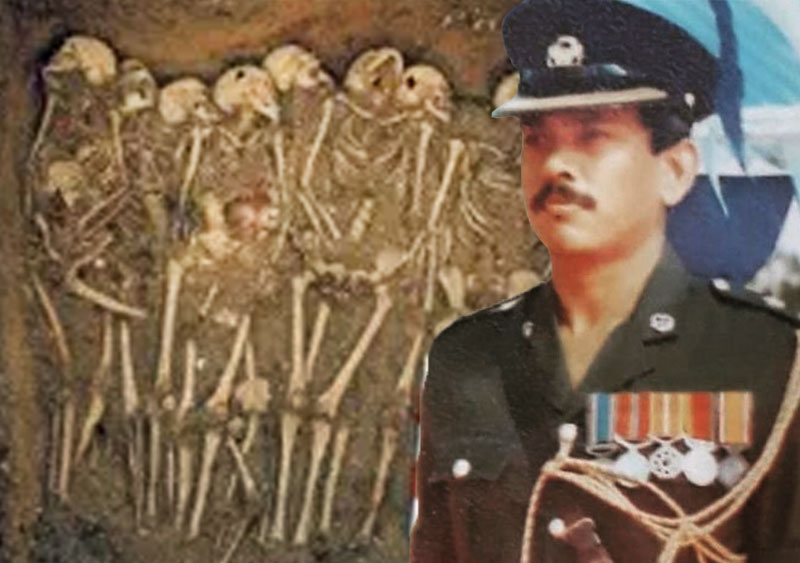
Sri Lanka’s former President Gotabaya Rajapaksa was accused in a report released Thursday of tampering with police records in order to hamper investigations into mass graves discovered in an area where he was a military officer at the height of a bloody Marxist insurrection in 1989.

The report by activist groups including the International Truth and Justice Project, Journalists for Democracy in Sri Lanka and Families of the Disappeared said even though hundreds of remains were unearthed in some 20 exhumations of mass graves in the past three decades, no action has been taken to identify the victims and return their remains to their families.

Tens of thousands of remains could still be buried in undiscovered mass graves, it said.

None of the numerous commissions of inquiry established by successive Sri Lankan governments were mandated to look into mass graves. Instead, efforts to uncover the truth were stymied, the report said.

When mass graves were discovered and investigations began, judges and forensic experts were transferred abruptly, families’ lawyers were denied access to sites, no effort was made to find living witnesses, no post-mortem data was collected and, in the very rare cases where someone was convicted, they were later pardoned, it said.

“It is a story of a lack of political will — an inadequate legal framework, a lack of a coherent policy and of insufficient resources. For the families of the disappeared it is a story of unresolved tragedy; the bereaved are forced to live and die without ever finding their loved ones,” it said.

Rajapaksa’s alleged role in the exhumations of mass graves was an example of political interference, it said.

The report said Rajapaksa, then a powerful defense official, ordered the destruction of all police records older than five years at police stations in the region after mass graves were discovered in the Matale district of central Sri Lanka in 2013.

The mass graves were suspected to date from the time of a violent Marxist insurrection in 1989, when Rajapaksa, as a military officer, was involved in counter-insurgency in the region.

The report called for action against Rajapaksa and senior police officials involved in the alleged hampering of the investigations.

Rajapaksa was elected president in 2019 but was forced to resign last year amid angry public protests over the country’s worst economic crisis in history.

Sri Lanka has faced three major armed insurgencies, including a 25-year separatist civil war, since gaining independence from the British 75 years ago.

An office created in 2017 to trace details of those reported missing in the conflicts received 21,374 complaints including from family members of security forces.

The report recommended enactment of special laws and policies to manage mass graves and exhumations, including their identification, preservation and investigation. It also recommended strengthening forensic capacity in the country, the creation of an independent public prosecution service to ensure that prosecutions resulting from exhumations are conducted in an impartial manner, and the establishment of a skilled unit to look into other potential mass graves.
Posted in Uncategorized

Sri Lanka government must protect freedoms of expression and association – Core Group at UNHRC

The Core Group on Sri Lanka at the UN Human Rights Council (UNHRC) has urged Sri Lankan authorities to protect freedoms of expression and association.

Led by the United Kingdom, the Core Group comprises Canada, Malawi, Montenegro, North Macedonia and the United States.

In a joint statement issued by UK’s Human Rights Ambassador, Rita French, said the Core Group remains concerned by the continued use of the Prevention of Terrorism Act (PTA).

While acknowledging the ongoing efforts to replace the PTA, the Core Group urged the Sri Lankan government to ensure that terrorism legislation is consistent with the country’s international obligations.

The Core Group’s statement also stressed the importance of transparency, accountability, inclusivity and of building meaningfully on past work and recommendations that address the root causes of conflict and impunity.

Sri Lanka should safeguard its representative democracy by maintaining voters’ confidence in the country’s electoral systems and ensuring the independence of its institutions and commissions, the statement read further.

Welcoming Sri Lanka’s initial steps towards addressing concerns around land returns, long-term detentions and corruption, the Core Group said these steps can provide a basis to begin a process to protect the rights of all Sri Lankans, from all ethnic and religious communities.

Further, the Core Group called on Sri Lanka to work with the UN High Commissioner for Human Rights and his office and remain ready to support Sri Lanka in addressing HRC resolution 51/1.

Sri Lanka lifted fuel market conditions ahead of inking agreements with SINOPEC & RM Parks

In response to the foreign exchange crisis and to ensure an uninterrupted fuel supply to consumers without paving the way for more fuel queues in the country, Sri Lanka decided to open its retail fuel market to three foreign suppliers.

However, it is now reported that two prior conditions were amended via a cabinet decision before the agreements were inked.

When Sri Lanka signed agreements with SINOPEC and RM Parks Inc., the Ministry of Power and Energy said that with the inability to provide sufficient foreign exchange for fuel shipments, the Ceylon Petroleum Corporation (CPC) and Lanka Indian Oil Company (LIOC) faced significant challenges that led to fuel queues.

The Ministry said that foreign companies will be allowed to enter the retail fuel market subject to conditions, in order to solve the fuel crisis.

One of the restrictions imposed on foreign companies entering the Sri Lankan market was that those companies were allowed to take the proceeds from the sale of fuel out of the country after one year after the importation of the respective fuel stock.

Apart from this, it was also stated in the preliminary conditions that the conversion of the income into dollars will be allowed after 9 months.

Another condition was that 1 percent of the total monthly sales value of petroleum products brought into the country on a monthly basis would be retained by the ministry or a nominated institution.

However, 4 days before the signing of the agreement with Sinopec on May 22nd, a cabinet paper on May 19th proposed to remove both of these conditions.

Posted in Uncategorized

Cabinet reshuffle soon as some ministers fail to perform

President Ranil Wickremesinghe is expected to reshuffle his cabinet soon following disappointing reports from some of the key ministries and the failure of some ministers to perform, the Daily Mirror learns.

Political sources said that discussions of a cabinet reshuffle have been underway in recent weeks between President Ranil Wickremesinghe and the ruling parties, but the only reason it is being delayed is due to the SLPP’s demand for portfolios.

Sources said that in recent meetings between the President and the SLPP led by Basil Rajapaksa, there have been requests by Rajapaksa and his camp for portfolios for some notable SLPP MPs.

The President however has maintained that portfolios will only be handed to MPs who will be able to perform amidst the existing hardships and economic crisis. Some of the key ministers that are likely to be replaced are the Health Minister and Media Minister.

In recent months, the crisis facing the Health sector has increased due to the shortage of essential medicines and supplies, especially in government hospitals, inconveniencing millions of people.

President Wickremesinghe is also looking to hand over portfolios to some opposition MPs who are already in talks with him when the reshuffle takes place.In the meantime, the SLPP has reiterated that they will continue to support President Wickremesinghe even if he fails to hand over more portfolios to its party members, as the party is most likely expected to back Wickremesinghe’s presidential candidacy in the Presidential Elections next year.

Posted in Uncategorized

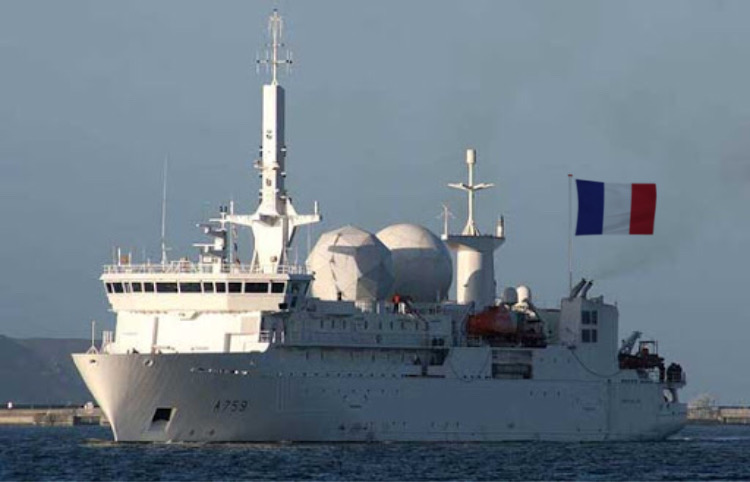
French Naval Ship ‘Dupuy de Lôme’ docks at Colombo Port

The French Naval Ship Dupuy de Lôme arrived at the port of Colombo on a formal visit this morning (21 June).

The visiting ship was welcomed by the Sri Lanka Navy in accordance with naval tradition, the Sri Lanka Navy said.

Dupuy de Lôme, a 102.40m-long electromagnetic research vessel, docked with a crew of 107 aboard the ship, commanded by Commander Augustin Blanchet.

During their stay in the country, the crew of the French vessel will visit some of the tourist attractions in Sri Lanka, while the ship is scheduled to depart the island on Tuesday (27 June).

Navy provides assistance to ‘Pada Yathra’ pilgrims

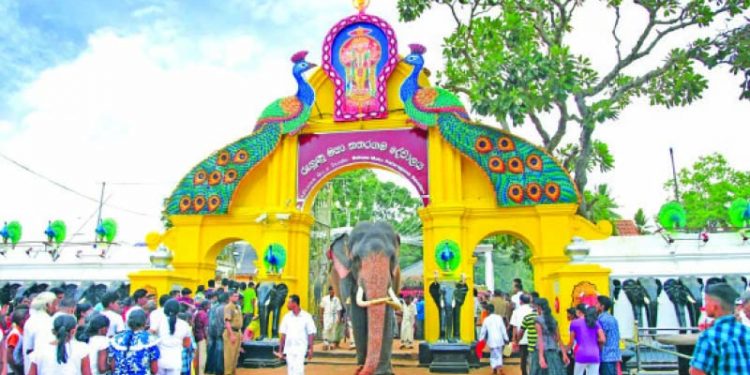
The Navy has been providing assistance to devotees who are taking part in Pada Yathra, the age-old annual pilgrimage on foot from Jaffna to Katragama.

The Navy has been taking care of the needs of the pilgrims walking from the entrance of Kumana National Park to Kumbukkan Oya.

On a directive of the Commander of the Navy, Vice Admiral Priyantha Perera, and under the supervision of the Commander Southeastern Naval Area, the Navy will continue to help pilgrims until the end of ‘Pada Yathra’ on 27 June.

Retired Navy Commander and Chief of Defence Staff Admiral Ravindra Wijegunaratne, former Commander Southeastern Naval Area Rear Admiral Kanchana Banagoda, and newly appointed Area Commander Rear Admiral Nalin Navarathne also joined this year’s ‘Paada Yaathra’.

Posted in Uncategorized

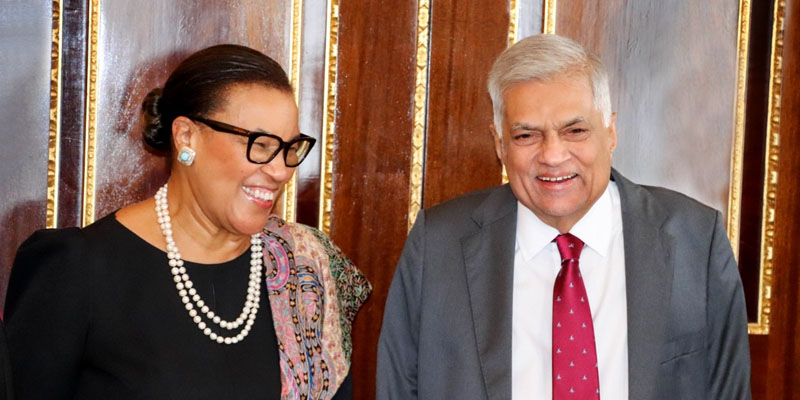
President meets Commonwealth Secretary-General Patricia Scotland in UK

President Ranil Wickremesinghe has met the Commonwealth Secretary-General, Patricia Scotland, during his visit to the United Kingdom.

The President’s Media Division said President Wickremesinghe shared his strategies for addressing climate change and explored the potential involvement of the Commonwealth in these efforts.

The Head of State has also discussed the digitisation programs within the Commonwealth during his meeting with the Secretary General.

SJB to oppose IMF agreement

The Samagi Jana Balawegaya (SJB) has decided to oppose the agreement between the government and the International Monetary Fund (IMF).

The decision has been unanimously taken taken during a meeting of SJB Parliamentary group.

During the meeting, it has been discussed at length that the government has been compelled to agree to all conditions of the agreement. Noting that entering the pact with the IMF should be done in a transparent manner, the MPs have pointed out that this not the case at the present.

Therefore, SJB MPs have unanimously decided to oppose the government’s pact with the IMF agreement, based on several facts including the pact featuring unfavourable conditions for the country and that details of the pact has not been made public.

(Source : Lankadeepa)

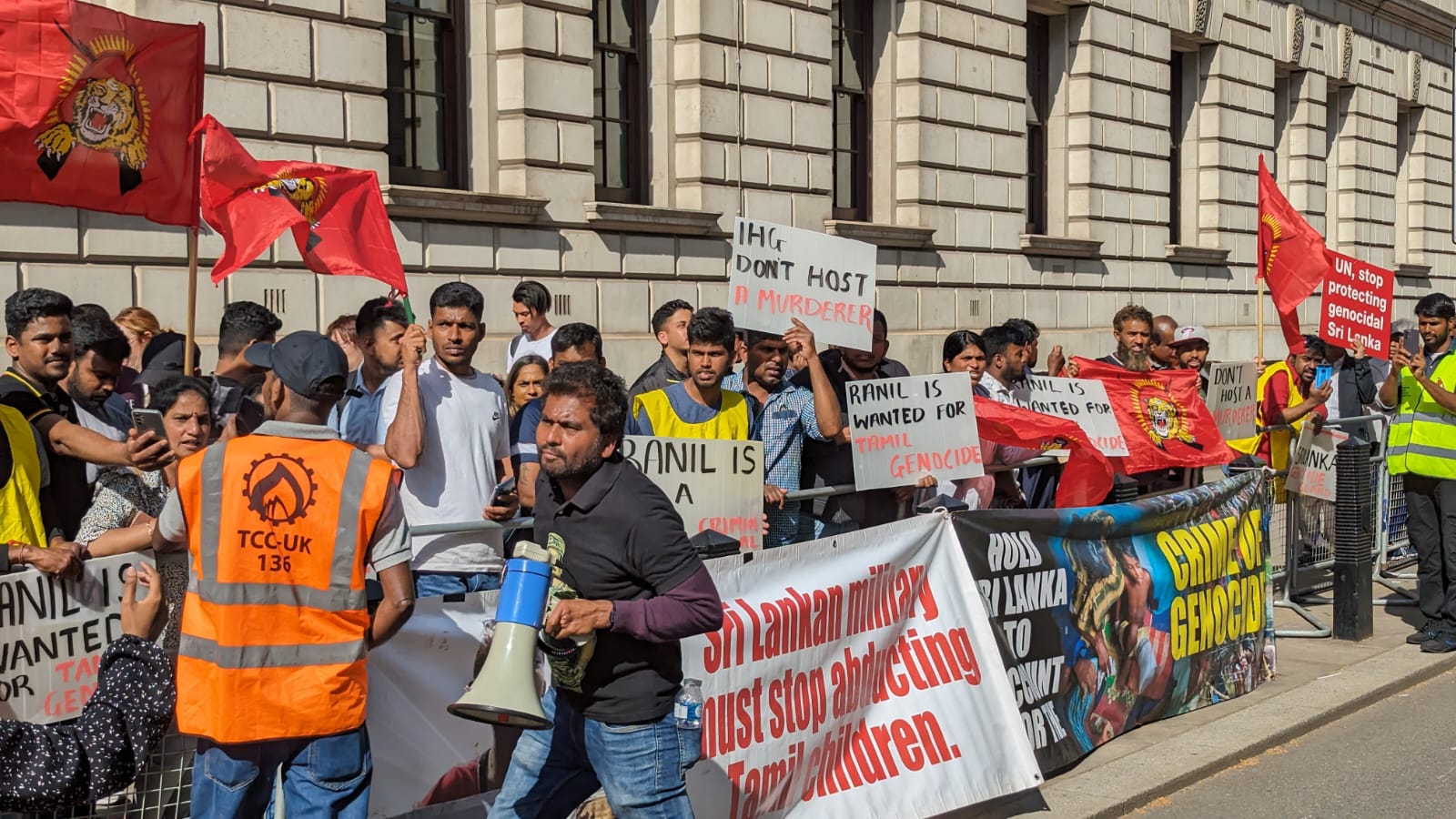
‘Ranil, go home!’ – British Tamils protest Sri Lankan President’s visit to London

British Tamils gathered at One George Street in central London to protest the Sri Lankan President Ranil Wickremesinghe’s visit to London this week.

The protesters chanted “Ranil, Ranil – go home” after he arrived in London over the weekend to attend the 40th anniversary of the International Democratic Union before heading to Paris.

In Paris, Wickremesinghe is reportedly scheduled to meet the creditor countries of the Paris Club to discuss Sri Lanka’s debt restructuring process.