Honoured as Very Important Persons (VIPs), most users of the hallowed gateway to the world, the VIP Lounge at Bandaranaike International Airport, are Members of Sri Lanka’s Parliament.
Officials dare ask questions when they arrive or depart. An added perk for these VIPs is the free refreshments they receive at State expense. This is whilst they relax in the well-cushioned sofas for their baggage to be rolled in or out. That is again for cursory approval by Customs.
At least for once, that changed last Tuesday morning. Flydubai, an Emirati government-owned low-cost airline, was to touch down at the Bandaranaike International Airport just past 9 a.m. Ahead of the arrival of flight FZ 547, a Boeing 737, the Revenue Task Force (RTF), a Customs unit (one of three) that functions from Orugodawatte in Colombo received a tip-off. These three units are manned by some expert Customs top investigators who have laid bare several rackets. Functioning under the direct command and control of the Director General of Customs, the RTF monitors all imports and exports. That is to ensure goods imported into the country are cleared on payment of all levies. They are authorised to carry out surprise checks at airports, courier services, warehouses, and other similar places.
Playing a key role in the RTF team was an officer known for his daring actions. In one instance, he sealed the warehouse of a liquor manufacturing company though the owners had very close connections with the minister in charge. In another, he seized a luxury vehicle gifted by a businessman to the son of a powerful politician, who is also in politics. Customs said that the young politician was aware that duty on the vehicle had not been paid and had been using the vehicle freely.
The RTF team was instructed by Director N. Samaratunga and included Nalin Premaratne, Superintendent of Customs, U. Indrajith, Superintendent of Customs, Nalin Premaratne, Senior Deputy Director of Customs and the Operations were handled by Aruna Amerasinghe, Deputy Superintendent of Customs. Others in the team were two Customs officers, two Customs Guards and two Customs Inspectors. The ten-man team that went to work immediately found that Mohamed Fairoon, described as an “assistant” (or helper) to M.A. Raheem Ali Sabri, Member of Parliament for Puttalam District, had flown to Dubai a day ahead of the MP. He was returning to Colombo last Tuesday with Sabri in the same Flydubai airline flight. Plans were carefully mapped out and put into effect.
A high-ranking Customs source said the three RTF teams are more prone to secrecy due to personal security threats. The source confessed that the personnel in the unit were still “absolutely cautious” and “very nervous” when it came to tip-offs that related to politicians. “They did not wish to take a chance. A small error could be the end of their career,” he noted and pointed out “that the officer concerned, in this instance, was so cocksure. He took “a very high risk but it paid off,” said the senior officer who did not disclose the front runner’s name for reasons of personal security.”
When the Flydubai flight arrived, Fairoon disembarked and went to the terminal building of the Bandaranaike International Airport. He picked up his baggage and walked through Green Channel – one that is meant for those who had no dutiable goods to declare. He was immediately accosted by a Customs officer who had been specially assigned to the area. He also temporarily seized the two mobile phones Fairoon was using. A check on his baggage revealed he had 19 mobile phones (a well-known brand) in his baggage. He was imposed a fine of Rs 100,000 and the phones were confiscated. Later, the two mobile telephones he was using were returned.
At the same time as this was going on, Sabri arrived at the terminal building of the airport and was received by an official of the Sri Lanka Airport and Aviation Services Ltd. This is a customary exercise. Through the VIP lift in the terminal, the officer escorted Sabri to the VIP Lounge. There, he sat on a sofa in the Crystal room, one of two such rooms in the VIP lounge. He had his hand luggage with him. The official had left to ensure Sabri’s baggage was sent to the VIP lounge.
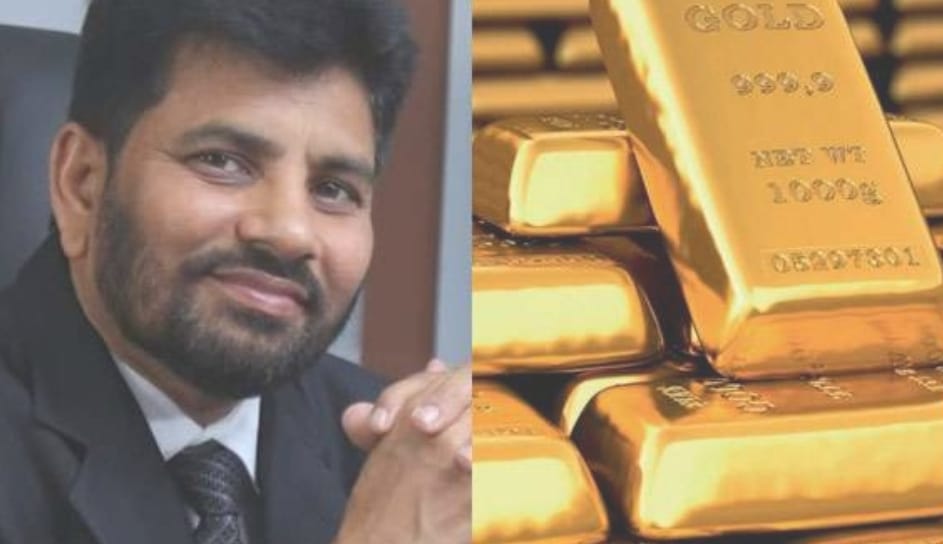
When two pieces of baggage belonging to Sabri arrived at the VIP Lounge, a Customs official said they wanted to examine them. Usually, they are loaded straightaway into a vehicle. He was asked whether there was anything to declare and the reply “I have 40 mobile telephones.” He was asked again whether there was anything else. He said there was some gold. It is then that Customs officers began examining his luggage. They found 2600 grammes of gold. It was in a plastic box sealed with an adhesive tape. In another plastic box, Customs said, they found 800 grammes of gold jewellery. It was sealed with insulating tape. Customs officials thereafter discovered 91 mobile telephones.
They escorted Sabri to one of their offices located just next to the VIP Lounge. There, they recorded his first statement. The Customs source said in the statement Sabri admitted to the gold and the telephones being part of his own baggage. However, there was a contradiction. A receipt of ownership from Dubai Customs, held by Fairoon, had declared that the gold belonged to him. This receipt was authority to carry the gold outside Dubai and is a legal requirement in that emirate. This aspect was also recorded in the statement by Customs officers.
When the recording of the statement was over, Sabri was driven to their office in Orugodawatte by the RTF team. Further interrogation of Sabri took place here. Thereafter Sabri was released only when the fine imposed on him was paid up.
Personnel of the Revenue Task Force examined the passport of Sabri. His name is listed there as Raheem Ali Sabri. He held Sri Lanka Passport No: D 5658824.
The senior Customs official disclosed that he was allowed to make a few telephone calls. He had made a call to the Director General of Customs, P.B.S.C. Nonis. He had sought his release on the grounds that he was a parliamentarian. Sabri, the official revealed, telephoned Saman Ekanayake, Secretary to the President. The latter, he disclosed, had given two sets of instructions to them. One, the official said, was to immediately apprise the Speaker of Parliament, Mahinda Yapa Abeywardena, giving details of the incident. The other, he disclosed, was to “take strong deterrent action” against violations of law and procedures. The Customs launched an immediate inquiry.
It was to make some shocking revelations. Parliamentarian Sabri, now identified as a smuggler, has made six different trips from Colombo to Dubai within just seven weeks since March, this year. Here are the details: Left on (1) March 10, 2023 and returned on March 19, 2023, (2) Left on April 9, 2023 and returned on April 16, 2023, (3) Left on April 26, and returned on May 2 2023, (4) Left on May 5 2023 and returned on May 7, 2023, (5) Left on May 11 2023 and returned on May 14, 2023, (6) May 5 2023 and returned on May 23, 2023. Besides admitting in his statement to travelling from Colombo and returning on the days listed, Sabri’s passport has also been date-stamped as proof of both arrival and departure at the two points.
Also incriminating, the senior Customs official said, were receipts that have been seized from Sabri’s possession. “They included receipts for a quantity of gold he had procured from a dealer in Dubai,” the official disclosed. That included a part of the quantity seized as well as those procured earlier.
On Friday night, Sabri boarded Flydubai flight FZ 570 to Dubai. This will make it his seventh trip to Dubai since March, this year and comes after he was caught by Customs with contraband. It has now come to light that Sabri is also running a business in Dubai secured in his official position as a parliamentarian.
Customs imposed a penalty of Rs 7.4 million on Sabri. It was promptly paid up. The official said that they were empowered to impose penalties that formed three times the value of contraband they detect. “In this instance,” he pointed out, “the fine has been mitigated in terms of Section 160 of the Customs Ordinance. Therefore, he said, “a fine that constituted only ten per cent of the value of the contraband has been imposed. He said this was in conformity with Section 129 of the Customs Ordinance which said:
“129. Every person who shall be concerned in importing or bringing into Sri Lanka any prohibited goods, or any goods the importation of which is restricted, contrary to such prohibition or restriction, and whether the same be unshipped or not, and every person who shall unship or assist, or be otherwise concerned in the unshipping of any goods which are prohibited, or of any goods which are restricted and imported contrary to such restriction, or of any goods liable to duty the duties for which have not been paid or secured, or who shall knowingly harbour, keep, or conceal, or shall knowingly permit, or suffer, or cause, or procure to be harboured, kept, or concealed, any such goods, or any goods which have been illegally removed without payment of duty from any warehouse or place of security in which they may have been deposited, or into whose hands and possession any such goods shall knowingly come, or who shall assist or be concerned in the illegal removal of any goods from any warehouse or Place of security in which they shall have been deposited as aforesaid, or who shall be in any way knowingly concerned in conveying, removing, depositing, concealing, or in any manner dealing with any goods (83, 83 of 1988) (83, 83 of 1988) (83, 83 of 1988) (83, 83 of 1988) (83, 83 of 1988) (83, 83 of 1988) (66, 83 of 1988) Person concerned in importing prohibited or restricted goods, whether unshipped or not, and persons unshipping, harbouring or having custody of such good, to forfeit treble the value or, one hundred thousand rupees (19,Law 35 of 1974) (67, 83 of 1988) liable to duties of customs with intend to defraud the revenue of such duties or any part thereof, or who shall be in any way knowingly concerned in any fraudulent evasion or attempt at evasion of such duties or any part thereof, shall in each and every of the fore-going cases forfeit either treble the value of the goods, or be liable to a penalty of one hundred thousand rupees, at the election of the Director-General.”
According to the senior Customs official, this is the second time a large fine has been imposed by Customs. The previous occasion, he said, was when a container load of cigarettes was detected.
According to another government source, pressure on the Customs came because voting on the expulsion of Janaka Ratnayake, Chairman of the Public Utilities Commission of Sri Lanka (PUCSL) was to take place on Wednesday afternoon. They had wanted Raheem Ali Sabri in Parliament, He, however, voted in support of Ratnayake. He claimed, again in sections of the media, that he did so because both the President as well as the Prime Minister had not helped him. Through this totally outlandish statement, Ali Sabri is accusing the country’s two leaders, the number one and two, of not helping him to smuggle contraband. This remark by itself is not only audacious but is highly unbecoming of a parliamentarian. If he had thrown mud at his own Muslim community, he has added insult to injury with those puerile remarks. There is nothing to prevent a full inquiry by the Criminal Investigation Department (CID) which could, besides other issues, unravel the brains behind the smuggling ring. Ironically, there remains a question of whether the CID itself is up to the task. They have fumbled the investigation into the case of Dinesh Schafter. By the admission of their own bosses, even the probe into the protests (aragalaya) last year is being re-started. They have confessed to this before the Court of Appeal.
Ali Sabri, now a proven smuggler, was elected MP at the 2020 parliamentary elections under a Muslim National Alliance (MNA). However, he entered politics through the All Ceylon Makkal Katchchi (ACMK) led by Rishad Bathiuddin, a one-time cabinet minister. The latter has disowned any responsibility and declared it was a matter for Parliament to decide.
In his defence, Ali Sabri has told sections of the media that the contraband he smuggled to Sri Lanka did not belong to him. He claimed that he was bringing it on behalf of a friend. That makes his case worse. The contraband did not arrive in Sri Lanka under a friend’s name. It was in Ali Sabri’s personal luggage. The Customs have clearly recorded this in their own testimony. However, top Customs officials, the Sunday Times learnt, had told government leaders that they suspect he could be a carrier for a rich smuggling ring that had been sending him on regular runs to Dubai. The senior official declared “We have had information about activities by Sabri in the past but acted very cautiously.” They had claimed that the intelligence information they have received as well as the pattern of operations has raised several questions in this regard. However, as far as the Customs are concerned, about the Ali Sabri smuggling case, the matter is closed since he has paid the fine imposed on him.
On Thursday, 20 opposition political party members met and decided to call upon Ali Sabri to tender his resignation as a Member of Parliament. “We decided that he should resign forthwith since he has brought disgrace upon all MPs,” declared Udaya Gammanpila, leader of the Pivithuru Hela Urumaya. He said Ali Sabri’s conduct was most reprehensible, and he could not remain an MP. He revealed that if Sabri did not heed the demand of the parliamentarians, they would move a resolution in Parliament. Parliamentarian Gammanpila, a former minister, said during President J.R. Jayewardene’s tenure, when then parliamentarian Anura Daniel was caught smuggling gold into Sri Lanka, he was ordered to resign immediately. This, he did. However, a Parliament official said that an MP cannot be removed through a resolution.