US-based RM Parks-Shell Company to begin operations in Sri Lanka in June

The US-based RM Parks-Shell Company is scheduled to begin operations in Sri Lanka in June.

The matter was conveyed by the company during a meeting with local officials.

RM Parks-Shell was one of the four fuel sector companies selected by the government recently to operate in the country.

Accordingly, RM Park-Shell Company will commence business operations of importing, distributing and selling fuel in Sri Lanka in the first week of June after signing an agreement with the Ceylon Petroleum Corporation.

During the meeting with officials of the Ministry of Power and Energy, the Central Bank of Sri Lanka, the Board of Investment, Ceylon Petroleum Corporation and the Petroleum Storage Terminal Limited discussions have been held regarding necessary business licenses, agreements, policies, infrastructure, contractual dates and the timeframe to commence operations in Sri Lanka.

Meanwhile, a team of Sinopec officials and technical experts visited Sri Lanka to finalise the agreements and commencement of operations and the sale of fuel in the country.

Sri Lanka’s centre-left SLFP will vote in favour of IMF deal: former president

The Sri Lanka Freedom Party (SLFP), which now sits in the opposition after it broke ranks with the ruling coalition, will vote in favour of the country’s International Monetary Fund (IMF) programme, SLFP chairman and former President Maithripala Sirisena said.

Speaking at an event on Wednesday April 26, Sirisena said any conditions imposed on Sri Lanka by the IMF that were not agreeable to the country can be renegotiated.

“What is my position on the IMF? The five years of my government was with the IMF. There are certain conditions there that we cannot agree with, which we must renegotiate.

“This Friday, the SLFP will definitely vote in favour of the IMF facility,” he said.

The SLFP is a centre-left party which has now been reduced to a handful of legislators after leading many election-winning coalitions over the decades since its founding in the 1950s. The SLPP, controlled by former President Mahinda Rajapaksa and his family, is an offshoot of the SLFP, a party that has – at least on paper – traditionally resisted what it and its allies have deemed the imperial machinations of the West-led global economic order.

Sri Lanka’s parliament is currently debating the IMF deal after the international lender approved a 2.9 billion US dollar extended fund facility to the crisis-hit island nation.

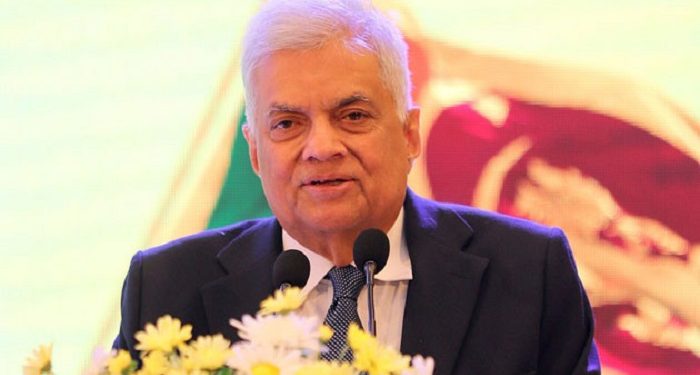
President Ranil Wickremesinghe told parliament Wednesday morning that new legislation will be enacted to facilitate the agreement and proposed reforms.

Sri Lanka is still recovering from the impact of the 2022 currency crisis, its worst in decades, and a number of opposition parties including the main opposition Samagi Jana Balawegaya (SJB) had repeatedly called for immediate negotiations with the IMF for a bailout, which the then Sri Lanka Podujana Peramuna (SLPP)-led government resolutely ignored.

Staff-level agreement was finally reached for a four-year EFF in August 2022, with IMF board approval being granted in March 2023.

It is expected that the IMF programme, Sri Lanka’s 17th so far and likely the first to have at least some of its objectives fully realised, will be passed this Friday with the support of most parties represented in parliament save for a few smaller parties in the opposition.

Presidential plea to Parliament to pass IMF deal

President Ranil Wickremesinghe yesterday made what transpired as a frantic appeal to Parliament to back the critical $ 2.9 billion Extended Fund Facility from the International Monetary Fund (IMF) as critical for the future stability and prosperity of Sri Lanka.

In a special statement delivered to Parliament President Wickremesinghe announced that Sri Lanka is on the path of renaissance and is re-emerging as a success story, with the expectation of support from the entire nation to carry it forward.

Wickremesinghe also spoke about the IMF agreement, which he presented to Parliament. He acknowledged that the country had failed to implement previous agreements with the International Monetary Fund, despite entering into 16 such agreements. However, he emphasised that there is no other active option for Sri Lanka but to sign an agreement with the IMF. President Wickremesinghe reassured the public that the restructuring of local debt would not harm members of the Employees’ Provident Fund. Furthermore, he stated that a social safety net has been implemented to protect low-income people and create financial stability in the country.

“We have entered into agreements with the IMF 16 times in the past, but we have not fully implemented them. On the 17th occasion, when we achieve stability, we must address our long-term weaknesses and move forward with a new program,” the President said during the debate on the latest bailout by the multilateral funding organisation.

“One of the points to address is debt restructuring talks with our bilateral countries and private creditors. We want to restructure these loans, as failure to do so will result in a loss of liquidity. In order for the Government to move forward, the restructuring must be done in rupees or dollars. The Government wants to obtain funds for this service.

“Therefore, we must first negotiate with foreign creditors. We hope to initiate these discussions soon, with domestic debt restructuring also being considered. A final decision has not yet been made, but it is important to discuss this issue. Negotiations cannot be held with terms and conditions already in place. It is easier for us to join negotiations without conditions,” the President said.

He said every aspect must be given special attention to ensure that no one is harmed in the process. “Some banks may express their inability to cope with the program, but it is important for them to accept it in order to move the economy forward. There are concerns that the stock market may collapse, and some may not be able to offer different conditions. However, decisions will be made in Parliament, and appropriate measures will be taken to ensure that no harm is done to anyone, such as the members of the Employees Provident Fund,” Wickremesinghe emphasised.

He also said the Government has initiated necessary programs to support the poor, and the World Bank has provided funding for this. We are currently implementing a program to give aid to those who truly deserve it and remove those who do not. “Our aim is to create financial stability and protect the low-income people,” the President said.

He pointed out that stability alone is not enough for Sri Lanka.

“Actuality, the nominal GDP for 2019 was just $ 89 billion during this period. The gross domestic product will be the same in 2028 as it was in 2019. If we stay with the growth rate of 3%, we can lose the national income of nine years. If we maintain the current growth rate of 3%, we may lose nine years of national revenue. Furthermore, it has been predicted that the Sri Lankan GDP will decrease by around 3% in 2023,” the President said.

“Economic positivity will likely be confirmed in the fourth quarter of 2023. If the economy grew at least 3% or 7% each year starting in 2019, our GDP would be worth $ 110 billion. But if we go to 5%, it will be $ 130 billion. In fact, we believe we will be able to reach 3% or 4% in the first two to three years.

“Following that, we must aim for a growth rate of at least 6% to 7% over this time period. That should be agreed upon by everyone in this House. However, this may be done at 7% or 8%. We have opportunities for that. That is why we are restructuring the entire legal system. Some regulations have to be removed. Some people wonder why corporations are being sold. They can be better run by the private sector. We leave them to the private sector,” Wickremesinghe pointed out.

The President emphasised that Sri Lanka has no other option but the IMF agreement.

“There have not been alternative suggestions. If there is no other alternative, let’s approve this. I also urge the opposition to work together. Let’s get both parties together and pass this,” he appealed to MPs.

“There are policies and initiatives in place for the first five years. Let’s discuss them. There is a national assembly. In particular, there are other committees. Let’s make the entire Parliament a Government to implement this program. Let’s get together for this. There may be differing viewpoints. However, everyone must back this initiative,” he stressed.

He warned that if Sri Lanka doesn’t accomplish this, the country would be betraying the youth.

“Their future has been destroyed. Think about the youth of the country. Don’t just think about grabbing power only. If this program is not done, none of us will be able to survive in another two or three years. So I urge everyone to come together to approve this. After that we will come together and prepare the set of policies required until 2048. I also urge you to provide support to implement the program during the next five years,” President Wickremesinghe urged the Parliament.

Posted in Uncategorized

MoD denies allegations against Shavendra by Wimal Weerawansa

The Ministry of Defence today denied allegations by National Freedom Front (NFF) Leader MP Wimal Weerawansa against Chief of Defence Staff and former Army Commander Shavendra Silva in which he alleged that General Silva supported the conspiracy to create an interim administration in Sri Lanka using the ‘Aragalaya’ anti-government protests in 2022.

Addressing an event, MP Weerawansa had alleged that the first plan by those behind the protests on May 09, 2022 was to assassinate the then Executive President and the defence heads inside the President’s House and that General Shavendra Silva’s visit to India, aroused suspicion.

Deputy National Security Advisor Level Meeting of the Colombo Security Conclave, a security conference organized between friendly countries in the South Indian Ocean region, was held in India on 07 July 2022.

The MoD emphasized that under the directions and approval of the then President of Sri Lanka and the Defence Ministry, General Shavendra Silva participated in the meeting representing the Government of Sri Lanka.

Accordingly, the Ministry of Defence further emphasized that the above statement of the MP is baseless and General Silva was on an official visit to India in July 2022 to attend the meeting of the Colombo Security Conclave with the approval of the then President and Ministry of Defence.(

US envoy disappointed with lies in Wimal’s book

The US Ambassador to Sri Lanka, Julie Chung, has expressed disappointment with the book written by MP Wimal Weerawansa which she says should be labeled “fiction.”

She said that the MP has made baseless allegations and spread outright lies in his book.

“I am disappointed that an MP has made baseless allegations and spread outright lies in a book that should be labeled “fiction.” For 75 years, the US & SL have shared commitments to democracy, sovereignty, and prosperity – a partnership and future we continue to build together,” the Ambassador tweeted.

Weerawansa had alleged that both India and the US had asked former President Gotabaya Rajapaksa to remove then Prime Minister Ranil Wickremesinghe before resigning as President.

However, he said that Gotabaya Rajapaksa had refused to comply.

The MP also alleged that Ambassador Julie Chung had visited Speaker Mahinda Yapa Abeywardena and requested him to take office as President once Gotabaya Rajapaksa resigns.

However, the Speaker had reportedly stated that under the Constitution it is the Prime Minister who will become the next President if the President steps down.

Weerawansa had made these claims in a book released this week.

Posted in Uncategorized

Easter attacks: Church receives full CoI report from Alles

Minister of Public Security Tiran Alles has handed over the complete report of the Presidential Commission of Inquiry (CoI) that investigated the Easter Sunday terror attacks of 21 April 2019, to the Catholic Bishops’ Conference of Sri Lanka (CBCSL).

Speaking to The Daily Morning, an official of the Ministry of Public Security said that the report had been handed over to CBCSL President and Kurunegala Bishop, Harold Anthony Perera, with the approval of the President and Minister of Defence, Ranil Wickremesinghe.

When contacted by The Daily Morning, the National Director of Communications of the CBCSL, Jude Chrishantha Fernando confirmed the receipt of the said report in the form of six compact discs (CDs). “Perera has received six CDs. Alles has informed that those CDs contain the complete report of the CoI. We will make a statement after referring to them,” he said.

The CoI was appointed to investigate the said terror attacks by then President and incumbent Opposition Parliamentarian Maithripala Sirisena. It has made several recommendations including the filing of criminal charges against Sirisena, former Defence Ministry Secretary Hemasiri Fernando, former Inspector General of Police Pujith Jayasundara, former State Intelligence Service Director, Senior Deputy Inspector General of Police (SDIG) Nilantha Jayawardena, former Chief of National Intelligence, retired DIG Sisira Mendis and several others.

The final report of the CoI was tabled in the Parliament on 8 April 2021, but the witness records were not released, reportedly due to legal reasons. In February 2022, all the volumes of the report including the related witness records were handed over to the Speaker of the Parliament Mahinda Yapa Abeywardana. However, several parties including the Church had been accusing the Government of not releasing certain sections of the report, in an alleged attempt to cover up the truth behind the terror attacks.

On 21 April 2019, Easter Sunday, three Churches (St. Sebastian’s in Katuwapitiya, St. Anthony’s in Kochchikade, and the Zion Church in Batticaloa) and three luxury Hotels in Colombo (Cinnamon Grand, The Kingsbury, and Shangri-La) were targeted in a series of coordinated suicide bombings. Later that day, another two bomb explosions took place at a house in Dematagoda and the Tropical Inn Lodge in Dehiwala. A total of 269 people were killed in the bombings, including about 45 foreign nationals, while at least 500 were injured.

Posted in Uncategorized

Sri Lanka in talks for US$350mnn IMF deal linked ADB loan

Sri Lanka’s cabinet of ministers had authorized the Secretary to the Treasury to negotiate a 350 million US dollar loan from the Asian Development Bank, Transport Minister Bandula Gunawardana said.

The ADB loan is linked to a 3.0 billion US dollar International Monetary Fund program. According to the IMF program at least 650 million Us dollars is expected from the ADB in 2023 for budget support.

“It is not only the money from the IMF that comes from the program, there are also other funds,” Minister Gunawardana said.

The loan is to provide economic stability and governance, the statement said.

A 1.5 million dollar technical assistance grant will also be provided. ADB is also supporting Sri Lanka’s power sector reforms and banking sector stability.

Separately, the cabinet also approved taking the next steps to get a 150 million loan from the World Bank to bolster stability in the banking system.

Posted in Uncategorized

Chinese Buddhist diplomacy and Sri Lanka’s predicament

Is China using its soft power diplomacy and Buddhist narratives to lure countries with Buddhist leanings, such as Sri Lanka, to further its Belt and Road Initiatives (BRI)?

The answer is yes; China is using soft power diplomacy to promote the BRI, including appealing to Buddhist countries. China has invested in temples, monasteries, and other Buddhist sites in countries like Sri Lanka and sent Buddhist monks to promote Buddhist teachings. This has allowed China to leverage its relationship with Buddhist countries and gain support for its initiatives.

These are the questions asked by many, but it appears that China’s foreign policy pursuits are also interrelated with religious diplomacy.

A rising power on the world stage, China tries hard to minimize criticism about its policies under the pretense of being a benevolent power. China has been actively promoting the idea that it is a major global player and a responsible and benevolent power. To this end, it has engaged in religious diplomacy with countries around the world. This is to foster better relations with them and deflect criticism about its policies. China has also invested heavily in soft power, using cultural and economic initiatives to gain influence. It has also engaged in international aid projects and promoted its economic development model. This is done to project an image of a responsible and caring power. And expand on its Belt and Road initiative. By expanding on its Belt and Road initiative, China aims to demonstrate its responsible and caring nature to international audiences. It strengthens diplomatic ties and reduces criticism of its policies. The Belt and Road Initiative is China’s ambitious plan to build infrastructure projects in countries across the world. The goal is to create an international Silk Road of commerce and communication, connecting China to the world. By engaging in international aid projects and promoting its economic development model, China hopes to show that it is a responsible and caring power. It is capable of providing assistance to countries in need. This helps strengthen diplomatic ties and reduces criticism of its policies.

At the same time, there are doubts about its legitimacy since it could harbor something sinister at the expense of the people to whom it lends a helping hand. It could use resources from the government or donations to provide such assistance. This has caused some to worry that it takes advantage of people in need. Critics argue that this creates a dangerous cycle of dependency and does not promote self-sufficiency. Others are concerned that it creates an incentive for countries to stay in poverty since it provides a means of support and prevents people from taking responsibility for their own lives.

Eventually, they may use all their power to grab everything poor countries have. This has happened to several African countries.

Recently, the Chinese envoy in Colombo met with Buddhist prelates in Kandy, raising many questions about their sincerity. It is a matter to ponder seriously about the intentions of the Chinese, who are trying to achieve their objectives in various ways. People tend to ask if diplomacy is a bitter pill with a sugar coating. It is a legitimate question, as the Chinese have a long history of using diplomacy to achieve their strategic objectives. In this case, it appears that the Chinese are trying to gain influence in Sri Lanka by offering economic aid and other incentives in exchange for diplomatic recognition and access to resources.

Recently, a ceremony at the Nelligala temple culminated the Faxian Charity Project’s handout spree in Kandy. The project is part of the Belt and Road Initiative, a Chinese foreign policy initiative to promote economic, political, and cultural ties with countries around the world. The project has caused some consternation among local citizens, who have voiced concerns about Chinese influence in the region. Hu Wei, China’s charge d’affaires in Sri Lanka, was present. He warned against allowing the Dalai Lama to visit the island in an interview with the local news website Sri Lanka Mirror. He said he spoke to senior prelates during his Kandy visit. Most of them know that the Dalai Lama is not a pure monk and is trying to play another very negative role in China and Sri Lanka’s relationship.

He also expressed hope that the Faxian Charity Project would soon cover the entire country.

A relatively new instrument of Chinese foreign policy is Buddhist-to-Buddhist diplomacy. Economic collapse in Sri Lanka, as well as societal distress, have provided an ideal setting for its deployment. In addition, Beijing needs new avenues of influence in Sri Lanka after its earlier bets on the island failed, threatening its influence in a place where it has deep economic as well as geopolitical interests. China has therefore sought Buddhist-to-Buddhist diplomacy to gain a foothold in the country. Chinese officials have held meetings with Sri Lankan Buddhist leaders and organized conferences to promote Chinese Buddhism. In addition, they provide financial support to Buddhist temples and Buddhist organizations.

This is also fresh ground for the Sri Lankan clergy, steeped in domestic political machinations but never before so cozy with a major international power. Since political and religious entanglements, particularly in Buddhism, have plagued Sri Lanka in its modern history, China’s Buddhist-to-Buddhist diplomacy cannot but cause concern.

Sri Lankan politics may be thrown into a fraught new dimension as monks vie for more power over the country’s international relations and domestic agenda.

Tabita Rosendal is a Ph.D. student in the Centre for East and South-East Asian Studies at Lund University and an affiliated researcher at the Nordic Institute of Asian Studies (NIAS).

in her paper titled “Belt and Road Buddhism in Sri Lanka?” Writes thus

“Under China’s Belt and Road Initiative (BRI), a curious entanglement of economic investments and Buddhist diplomacy has been carried out in countries like Sri Lanka. This may appear an odd pairing, but it illuminates several interrelated trends in China’s foreign policy pursuits and its rise on the world stage. In recent years, the Chinese Communist Party (CCP) has worked hard to mitigate criticism of its policies and its increasing global presence by portraying itself as a benevolent power intent on improving its neighbors’ lives. To this end, the CCP’s strategic goals are increasingly advanced via “soft power” initiatives to persuade others of China’s harmonious intentions. But what does Xi Jinping’s flagship foreign policy initiative, the BRI, really have to do with Buddhism in Sri Lanka?

Since Sri Lanka’s 1983–2009 civil war, China’s economic presence has been a mainstay in the country. After the BRI’s inception in 2013, Chinese foreign direct investment and state-backed policy loans increased tremendously, particularly represented by port projects in Hambantota and Colombo, both associated with the maritime sphere of the BRI, known as the 21st Century Maritime Silk Road. Yet China is not the only major power with interests in Sri Lanka or the wider South and Southeast Asian regions.

Sri Lanka’s strategic position in the Indian Ocean ensures its relevance to other regional and international powers. This is especially true for those that make up the Quadrilateral Security Dialogue, orQuad,: Australia, India, Japan, and the United States. The race is on to secure access to and use of Sri Lanka’s port placements, transshipment routes, and naval base potential. The Quad considers it crucial to displace China’s presence in the country and contain the CCP’s influence in the Indo-Pacific. So how does Buddhism fit in?

Despite the CCP’s harsh religious repression and control within China’s borders, the Chinese government is increasingly working to disseminate a positive narrative of its religious policies. This is to preserve or enhance its relations with countries that identify with those religions. As a complement to other foreign policy efforts, this strategy is designed to persuade other countries to support Chinese interests without coercion. Buddhist-majority countries like Sri Lanka have become prime targets of this approach.”

In short, China is propagating a contradictory policy in its enduring efforts to spread its wings across the globe. China, while taking harsh steps against religious freedoms within its own territory, follows a policy diametrically opposed to it elsewhere to win over neighbors through religious diplomacy. This is an extension of its soft power without coercion on its part. This is a stark contrast to other nations’ efforts to spread their influence and promote their interests. It shows a willingness to compromise on certain issues to gain increased influence in the international community. It also serves as an example of how countries can use soft power to make their voices heard. By engaging in constructive dialogue, nations can build relationships and exchange ideas. These relationships can lead to mutual understanding and collaboration on potential solutions to global problems. Furthermore, it allows nations to project their values and ideals in a way that is not seen as threatening or aggressive. Instead, it is seen as an invitation to a conversation.

However, what would be the end result? Many countries may walk into debt traps set by them. This may compromise their interests, and China is hoping to make inroads into the global landscape, pushing other powers behind them. This concerns many nations. Sri Lanka should think about what comes next after the Chinese niceties.

Posted in Uncategorized

Debt restructuring talks with India, Paris Club on one platform and China separately – President

Sri Lanka is scheduled to hold debt restructuring talks with the Paris Club, India and China before the discussion with private creditors, President Ranil Wickremesinghe said.

Speaking in Parliament this morning (26 April), the Head of State announced that debt restructuring talks will be held with both the Paris Club and India in one platform, while discussions with China in this regard will be held separately prior to any discussions with private creditors.

Meanwhile, speaking on Sri Lanka’s economic and political crises, President Wickremesinghe highlighted the island nation’s recovery thus far, stating that nearly eight months after the unrest in July 2022, Sri Lanka has now made a comeback.

Thus, he urged the whole country to join in the efforts to resurrect the country.

Why The Anti-Terrorism Bill Should Be Rejected? By Lionel Bopage

The proposed “Anti-Terrorism Act” (ATA) should be considered in the context of Sri Lanka’s post-independent history that is full of abuse of power in political, legislative and judicial matters. One only needs to recall the terror used against peaceful protesters and dissenters against abuse of power and mismanagement of economy in recent times.

Sri Lanka’s track record of fundamental rights violations has been appalling. Many organisations and individuals, both local and international, have continuously expressed serious concerns about this ongoing situation and have urged the government many times to take remedial steps. The United Nations have called upon the government to address the issues of the broad definition of terrorism, prolonged pre-trial detentions and torture, and the targeting of minorities and political dissenters under the present Prevention of Terrorism Act (PTA) which has been in the government’s rulebook since 1979. The PTA did not and could not prevent the armed conflict for which all the precursors were set by successive regimes since independence.

The UN request was to repeal the PTA and replace it with a new law in accordance with international standards that is inclusive, transparent and participative. This requires narrowing down the vast scope targeted by a broad definition of terrorism and providing proper legal safeguards for those detained under such law. It also requires allowing independent monitoring of all places of detention where they are held.

On the contrary, the proposed Bill is designed to reinforce systematic violations of fundamental human rights by further widening the scope of the definition of terrorism, so that those holding political power could use it against any entity or individual whom they wish to silence.

With the President and the security forces given wide powers without the need for proper judicial oversight, it enables detention of people without evidence, arbitrarily proscribe organisations and meetings, and criminalise criticism, dissent and protest. The Minister of Justice has repeatedly stated that no major changes would be made to the Bill, and his recent claim that it will help promote reconciliation among communities is farcical. The international community won’t have a bar of it.

It is in this light that an earnest Appeal to all Members of Parliament of Sri Lanka is made not to enact the proposed Anti-Terrorism Act, and to give democracy and the rule of law the utmost priority. It is high time the government listened to the cry of its citizens and enact laws that are only in the ‘people’s interests’. The said letter, sent yesterday, is as follows:

An Earnest Appeal to All Sri Lankan Parliamentarians

23 April 2023

Hon. Prime Minister, Cabinet Ministers and Members of the Parliament of Sri Lanka

Do not enact the proposed Anti-Terrorism Act

Democracy and the rule of law must come first.

One of the most solemn duties of a parliamentarian is to make new laws and change existing laws – keeping the views and interests of their constituents at heart. Carefully scrutinizing parliamentary bills, debating policies for the common good, and reviewing government decisions, are part and parcel of carrying out this paramount duty.

With the Anti-Terrorism Act bill to be presented to the parliament in the coming week, we ask you to exercise due diligence, conscious of the long-lasting consequences it will have on people’s lives and future generations.

The country has suffered immensely under the current PTA for over four decades. It is incumbent upon all our parliamentarians to right the wrongs of the past and get this bill right. What are the sticking points? There are many, including the following:

* The bill that is brought to replace a ‘bad law’ is in fact much worse than the current one.

* It doesn’t meet the benchmarks stipulated by the UN with respect to counter-terror laws.

* The offences referred to in the bill are wide-ranging, vague and subjective, with potential for abuse and miscarriage of justice.

* A Deputy Inspector General of Police could request non-judicial detentions, and arrests would occur before any formal charges are submitted.

* The President can proscribe persons and organizations without judicial oversight.

* It has the potential to label and delegitimise those the government considers to be its political enemies; dissenters and protesters could be held in jail for unspecified periods.

* The bill lacks provisions to prevent arbitrary arrest, detention and torture, and due process and fair trial guarantees – thus, breaking the government’s pledge to the international community to uphold human rights.

* It grants police and military sweeping powers to stop, question, search, and arrest anyone, or seize any document or object without a warrant, if they believe they have “reasonable grounds”.

* Replacing a bad law with a worse one won’t reap any economic benefits from the EU (GSP+ tariff concession) or other international donors, as claimed by the President. The international community cannot be deceived.

With so many vague provisions, the bill is ripe for abuse and will inflict long-term painful repercussions for society as a whole. In view of these, the bill in its current form must be scrapped.

As politicians holding power, we appeal to you to do the right thing with moral conviction and integrity. This is one such moment we hope that public interest, political honesty, and respect for the rule of law will triumph over self-interest.

PLEASE VOTE NO TO THE PROPOSED ANTI-TERRORISM ACT with courage and conviction.
To do otherwise would suggest that the nation’s collective will had withered when faced with the task of saving it from self-annihilation – socially, politically and economically.

Voice For Democracy in Sri Lanka, International Network

Australia, Canada, Europe, the UK and the USA