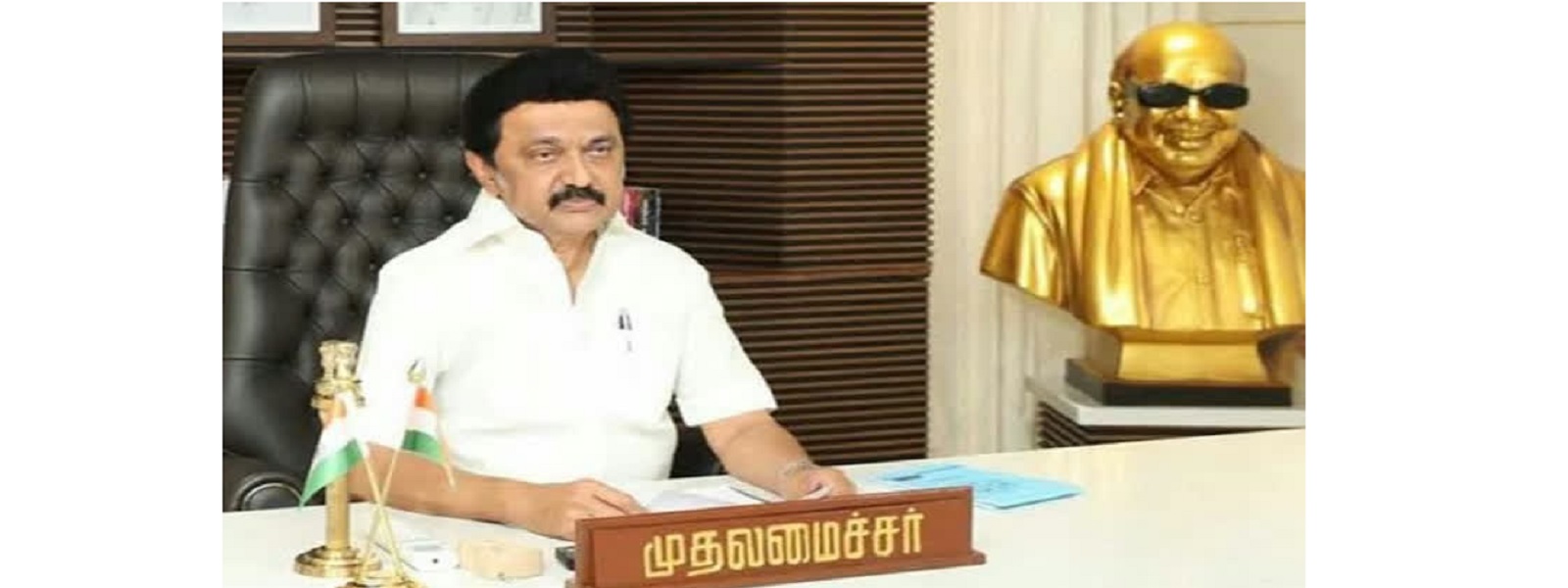
Stalin accuses Sri Lankans of attacking Indian fishermen

Sri Lankans have been accused of assaulting Indian fishermen and also taking away their catch and equipment.

Tamil Nadu Chief Minister M K Stalin raised the allegation in a letter to Indian External Affairs Minister S Jaishankar.

He urged the Indian Government to raise the matter with Sri Lanka to ensure action is taken against those accused and prevent a recurrence of such attacks.

Writing to Jaishankar, Stalin said that while fishermen from Nagappattinam in Tamil Nadu were fishing east of the Thopputhurai area on February 15, about “10 Sri Lankan nationals in three fishing boats surrounded the Indian fishing boat and beat innocent fishermen with an iron rod, sticks and knives.” The Nagappatinam based country craft sailed with a crew of six.

In this attack, one fishermen sustained injuries on his head and left hand while the other five fishermen sustained internal injuries.

The Sri Lankan nationals took away items worth about Indian Rs 2 lakh including a walkie-talkie, GPS equipment, battery and about 200 kg of fish. The injured were admitted to the Nagapattinam government hospital for treatment

Posted in Uncategorized

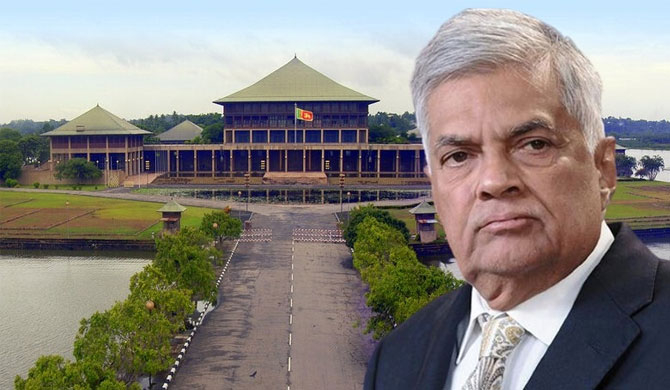
President has power to dissolve parliament from midnight today – GL

Former Minister Prof. G.L. Peiris says that the authority to dissolve the current parliament will be vested with the President from midnight today (Feb. 20).

Speaking at a press briefing, the parliamentarian expressed that they strongly believe the President needs to use that power and dissolve the parliament.

“Today, President Ranil Wickramasinghe receives the legal power to dissolve the current Parliament. We strongly believe that President Wickremesinghe should use that power”, he said.

Prof. Peiris further charged that presently the decisions with regard to whether elections will be held and when the elections will be held are not being decided according to the constitutions or the relevant laws and that they are all being decided at the discretion of one person.

“The Finance Minister is the person who is deciding all of that,” he claimed.

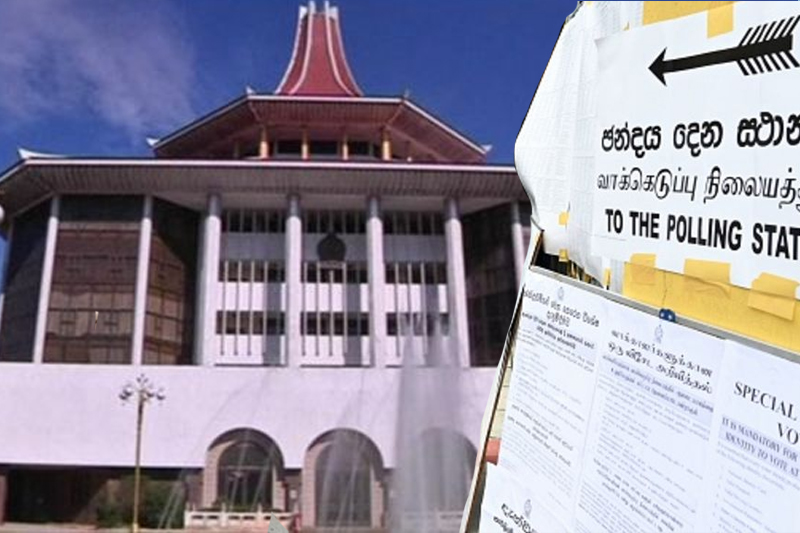
Election Comm. files motion with Supreme Court citing difficulties to hold LG polls

The Election Commission has filed a motion before the Supreme Court citing difficulties including inadequate funds to hold the 2023 Local Government elections on 09 March.

The Election Commission has informed the Supreme Court that the activities related to holding the Local Government (LG) election have been hampered due to the non-availability of sufficient funds and other facilities.

Accordingly, the commission has also informed the Supreme Court that there is a difficult situation to fulfill the pledge given before the Supreme Court that it will take steps to conduct the LG polls as scheduled.

This has been informed in a motion filed by the Election Commission with the Supreme Court.

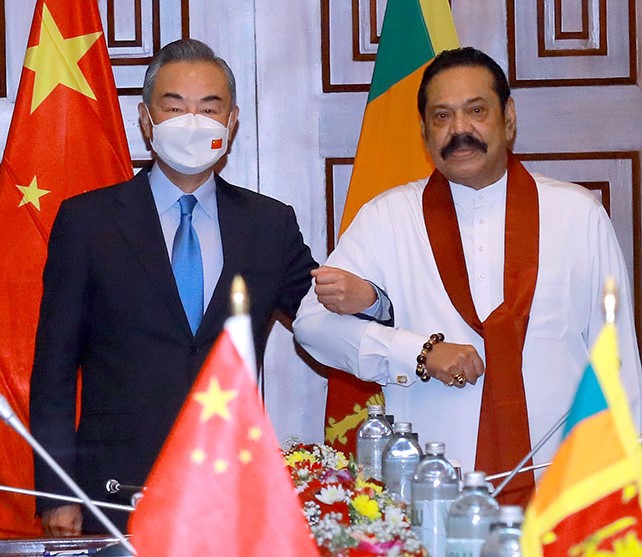
China already offers Sri Lanka debt extension: Foreign Ministry

The Export-Import Bank of China has provided Sri Lanka with a debt extension, China’s Foreign Ministry said on Monday, noting that China is willing to negotiate a medium- and long-term debt disposal plan with the country in a friendly manner, and do its best to promote Sri Lanka’s debt sustainability.

The remarks come as Bloomberg reported that the International Monetary Fund (IMF) is considering approving Sri Lanka’s bailout, even without the formal assurance of debt-restructuring support from China, citing people familiar with the discussions.

In response, Wang Wenbin, spokesperson for the Chinese Foreign Ministry, told a press conference on Monday that China has already provided Sri Lanka with a letter supporting the sustainability of Sri Lanka’s debt, expressing its willingness to extend the debt due in 2022 and 2023.

During the period, Sri Lanka will not have to repay the loan principal and interest of the Export-Import Bank, helping Sri Lanka to ease short-term debt pressure, the official said.

“We are willing to use this window to negotiate a medium- and long-term debt disposal plan with Sri Lanka in a friendly manner, and do our best to promote Sri Lanka’s debt sustainability,” Wang said.

The IMF, World Bank and Group of 20 nations chair India separately held virtual discussions Friday on global sovereign debt ahead of the finance ministers and central bank governors’ meeting in Bangalore this week.

The roundtable included officials from countries that have requested debt treatments under the G20 framework – Ethiopia, Zambia and Ghana – as well as middle-income countries such as Sri Lanka, Suriname and Ecuador, which have faced their own debt problems, Reuters reported.

The roundtable comes amid growing frustration over the slow pace of discussions on debt relief for some nations. Rather than seeking a global resolution, some have tried to blame China.

Chinese observers have urged developed countries to take more responsibility in addressing the debt risks faced by some nations, rather than using China as an excuse to shirk blame.

They pointed out that there are many reasons why some countries become mired in debt – the US Fed’s interest

rate hikes, the global energy and food crises and other issues, warning some in the West to share the responsibility and seek a more “fair and just” solution.

Source – Global Times

Posted in Uncategorized

Tamil journalists demand Petition seeks justice for all slain journalists

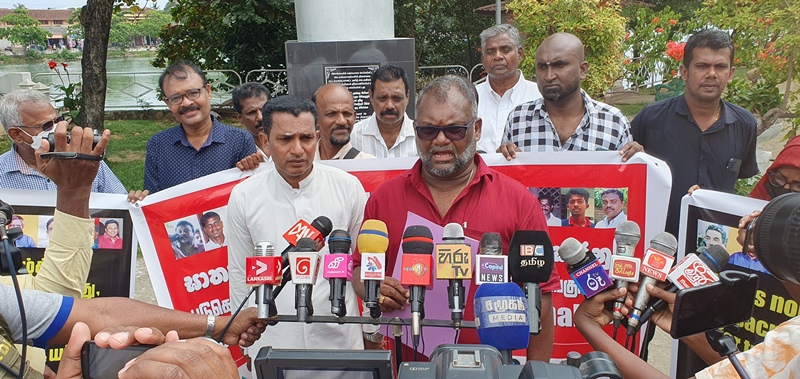
Justice for all slain journalists was the key slogan highlighted during a protest that took place near Gandhi Park in Batticaloa on Saturday(18).

Media clubs in the east and Jaffna and professional web journalists organized the event also attended by southern journalists, politicians, civil society activists and members of the clergy.

On the occasion, a petition containing their demand was handed over to TELO Secretary MP Govindan Karunakaran.

The MP undertook to hand over the petition to president Ranil Wickremesinghe personally when the latter attended House sessions, more frequently than all his predecessors.

Posted in Uncategorized

Jaffna gets State of the Art Cultural Centre from India By D.B.S. Jeyaraj

Jaffna City the capital of Sri Lanka’s predominantly Tamil speaking northern province was described as the cultural capital of the Tamils of Sri Lanka during its halcyon days. The escalation of the ethnic conflict along with the advent of armed conflict transformed life for Jaffna residents as it did for most Tamils of the Island. With the end of the war in 2009, the Tamil people have been coming in from the cold and re-entering the mainstream gradually.

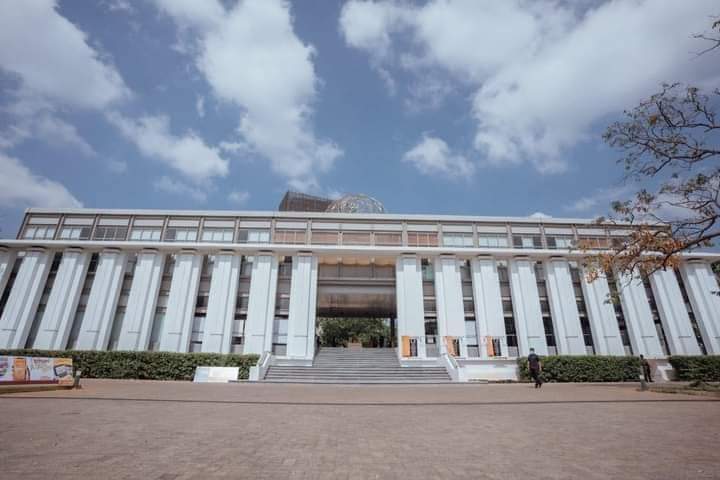
Jaffna too has been getting a facelift in the post-war years. War damaged buildings are renovated, dwellings are re-structured and new residential and commercial establishments are being constructed. A very significant addition to Jaffna’s landcape in recent times is the Jaffna Cultural Centre(JCC). The 55 metre tall Centre will be a new socio-cultural focal point in the City of Jaffna providing modern facilities to nurture and rejuvenate all forms of art and culture and encourage the enhancement of knowledge.

Picturesque Area

The new cultural centre is located in an area of Jaffna city that was described as picturesque in the past. It also had many landmark places, institutions and buildings. Some of these were Jaffna Central College, the courts, St. Peter’s Church, Trimmer Hall, the Old rest house, parts of beach road, the Esplanade, Subramaniam park, Ashok Hotel, The Clock Tower, the Open air theatre, The Old Municipality Building, Town Hall, the iconic public library, the Dutch Fort and precincts, Muniappar Temple, Pullukkulam Pond, Regal Theatre, Post Office, Veerasingham Hall and Durayappah stadium.

The intensification of the ethnic conflict resulted in this picturesque area being affected. One of the earliest casualties was the Public Library housing 97,000 books, manuscripts and rare “Ola books” written on Palmyrah palm leaves. It was burnt down on June 1st 1981 by Police personnel. Then came the shelling from the Fort by the armed forces. As a result many buildings were damaged. The Municipality was relocated to Nallur.

This picturesque, important quarter of Jaffna lost its lustre. It is now returning to its former glory slowly and gradually. The restoration of the destroyed Library was metaphorically and literally, a rise from the ashes. It illustrated the resilience of the Jaffna people. Now the Jaffna Cultural Centre with its towering spire has risen in that picturesque quarter as a symbol of the “new” Jaffna’s spirited attempt to reclaim its rightful position under the Sri Lankan sun.

The Jaffna Cultural Centre (JCC) is located in the heart of Jaffna town, adjacent to the Jaffna Public Library (JPL). It faces the Esplanade to the east and the pond “Pullukulam” to the north.

Foster Arts and Promote Culture

The Jaffna Cultural Centre or JCC is a state-of-the-art facility to foster the arts and promote cultural pursuits. It has 12 floors comprising 2 at Podium level and 10 in the tower with the terrace. Among its features are- a fully equipped auditorium Gallery / Museum spaces, a Learning spire- to facilitate educational activities, studio/gallery/exhibition spaces, multimedia library, public cafeteria and a Public square with public spaces.

In terms of area, the JCC breakdown is as follows- Cultural Museum (including basement): 2,500 Sq M. Auditorium: 2,600 Sq M. Learning Spire: 3,700 Sq M.(Upper typical floors: 180 Sq M each carpet area excluding services) Public Square and Pedestrianized Street: 5,000 Sq M. Forecourt: 2,300 Sq M and Entry Court to Learning Spire: 700 Sq M.

The Jaffna Cultural Centre is a project costing US$11 million. This is equivalent at present to 2,990,791,113.20 Sri Lankan Rupees and/or 677,828,360.00 Indian Rupees The JCC is a munificient and magnificent present from India to Sri Lanka. More specifically it is a very thoughtful gift to the war-battered, emotionally bruised people of Jaffna.

Manmohan Singh Gift

The genesis of the Jaffna Cultural Centre is rather interesting. Although the current Indian premier is being thanked profusely by President Ranil Wickremesinghe for the “wonderful gift,” the JCC was not Narendra Modi’s brainchild at all. The JCC project was conceptualised in 2010 when Ashok K. Kantha was the Indian High Commissioner in Colombo. A Congress-led Government under Prime Minister Manmohan Singh was in power then. Thus the JCC is Manmohan Singh’s gift conceptually.

The envisaged project defined the main activities of the proposed Cultural Centre to be culture, learning and engagement. The Indian High Commission released an initial project document in June 2011. It stated very clearly that the intention was “ to develop a cultural centre in Jaffna as a much needed social and cultural space for the people of Jaffna.” It was also intended to “provide for the cultural rehabilitation and psychological reintegration of the northern society in a post-conflict environment.”

Here are the relevant excerpts –

For the People of Jaffna

“The High Commission of India in Colombo intends to develop a cultural centre in Jaffna as a much needed social and cultural space for the people of Jaffna. It is intended to be part of the social infrastructure and provide for the cultural rehabilitation and psychological reintegration of the northern society in a post-conflict environment.”

The envisaged project defined the main activities of the proposed Cultural Centre to be culture, learning and engagement.
The Indian High Commission released an initial project document in June 2011.
It stated very clearly that the intention was “ to develop a cultural centre in Jaffna as a much needed social and cultural space for the
people of Jaffna”

“The centre is also expected to be an iconic building, a cynosure of cultural activities that will link the northern people to the rest of the country through cultural exhibitions, performances, research and dialogue. This socio-cultural space for the people of the North should help to revitalize the lost cultural landscape of the region and promote ethnic harmony by inducing the appreciation of its cultural heritage by all communities in the country.” “In order to preserve, protect and foster the unique culture as well as the cultural heritage and achievements of the Jaffna district we propose to develop the Jaffna Cultural Centre as an iconic building that will serve as a cynosure of cultural activities not just in northern Sri Lanka but the country as a whole.”

“The centre should become a cultural entity that embodies the co operation and unity of all Sri Lankan communities. By this, it is envisaged that the project would be part of the much needed social infrastructure of the northern province and help them to reconnect to themselves and to the rest of the country.”

Team Architrave

An Architectural design competition was held in 2011. The winner was “ Team Architrave” (teaM Architrave). The Team Architrave is a designer practice in Colombo with a focus on specialist niches in personalized design. It has won 9 Design Awards and 4 Colour Awards from the Sri Lanka Institute of Architects. Among the projects undertaken by Team Architrave are Green House, Long House, Villa Maggona, New Kalametiya Village, School of Dancing, Trincomalee Town Hall new wing, Colombo Town Hall New wing and of course the Jaffna Cultural Centre.

The competition winning design for the JCC was implemented by Team Architrave in collaboration with a team of Sri Lankan engineers. The main contractor was P&C Projects, India who were selected through a competitive tender process. Many specialist Sri Lankan and Indian sub-contractors participated in the construction. Construction commenced in September 2016 and was completed in March 2020.

The principal and leader of Team Architrave is Madhura Srimevan Prematilleke. Madhura as he is known to all, studied at Trinity College, Kandy. He studied Architecture at the Moratuwa University in Sri Lanka and in Helsinki, Finland. Apart from Sri Lanka and Finland, he has worked in India, China, Oman and the Maldives. Madhura was the pivotal creative force behind the Jaffna Cultural Centre project.

Madhura Prematilleke

Intrigued and fascinated by the Jaffna Cultural Centre, I interacted with Madhura Prematilleke to know more about the multiple features of the edifice from an architectural perspective. He very kindly obliged and provided details about the various aspects and dimensions of the JCC. He also answered my related questions. I shall therefore try and present Madhura’s thoughts and views on the Jaffna Cultural Centre in his own words as far as possible.

Architectural Concept

The design for the Jaffna Cultural Centre was based on the twin concepts of “Celebrating the Old and inspiring the New” and providing “A civic space for shared experiences of art and culture.”
The architecture of JCC has a strong and symbiotic relationship with the adjoining Jaffna Public Library (JPL) building, but also provides new public spaces and new iconic landmarks for the City of Jaffna.

Inspiration

JCC is a modern, contemporary building, but strongly inspired by the traditional architecture of Jaffna.The architecture was inspired by the intertwining of cultural/religious symbolism in everyday life in predominantly Hindu Jaffna. Familiar elements such as the tank, the steps leading to the water, the Gopuram (tower) and the Padi (steps)were interpreted in an abstract contemporary sense and adapted to use in public space.
For instance,the edge of the public space leading to the Pullukulam pond and the broad steps leading to it are inspired by the tanks and steps (Padi) of Jaffna temples. The structural form of the timber screen which defines the Learning Spire is inspired by the Gopuram (Sikhara). The spire form in the JCC resembles a Gopuram (tower) of a temple.

Positioning

The positioning of the Jaffna cultural centre is in actuality, a respectful gesture to the adjoining Public Library building.

Firstly, its frontage is withdrawn to tally with that of the Library and the resultant garden is landscaped in continuity with the formal gardens of the Library.

Secondly, a colonnade is introduced which observes the scale, rhythms and materiality of the façade of the library building while the actual new building (which is of steel and glass) is positioned discretely behind this colonnade.

Public Square

The public square is in a sense the heart of the JCC facility. The public square is intended to be a place of spontaneous gathering, exhibition and performance. The square includes a grove of shade-giving Margosa (Neem) Trees, steps forming an Amphitheatre, a café for the Public, and interactive spaces for art and theatre. There is a floating stage on Pullukkulam lake. Also available are “ pockets” of public seating.

The Public Square is a critically important component of the project. It creates a new focal point for public gathering and cultural events in Jaffna and is freely accessible to the public. The amphitheatre brings back to life the open-air theatre which existed at the same location. Cultural events were held and concerts performed at this open-air theatre right up to the outbreak of the war.

The open-air theatre was an important place in the cultural life of Jaffna. It is hoped that this cultural space would soon be re-opened through the JCC square and amphitheatre for free public access and use, unfettered by fences or barriers, in keeping with its original intention.

Inviting the People of Jaffna

The exhibition galleries, Museum, Auditorium and the Learning Spire are arranged around the Public Square. Each building has discrete vehicular/ street entrances, but as public buildings their main points of public entry are through the public square thereby inviting the people of Jaffna to walk in freely and participate enthusiastically.
Various features and aspects of the gallery, museum, auditorium and learning spire would be delved into in detail in a forthcoming article.

D.B.S.Jeyaraj can be reached at dbsjeyaraj@yahoo.com

Petition seeking to postpone LG polls to be taken up on Feb. 23

Retired Colonel W.M. Wijesundera’s lawyers have informed the Supreme Court that it is not necessary to support motion requesting to expedite the petition to postpone the upcoming Local Government elections, Ada Derana reporter said.

Accordingly, the Supreme Court has ordered to take up the matter as scheduled on 23 February, according to the reporter.

The relevant motion was called before the two-member Supreme Court bench consisting of Justices S. Turairaja and Shiran Gunaratne today (Feb. 20).

There, Attorney-at-Law Faisz Musthapha, who appeared on behalf of the petitioning party, mentioned that the Supreme Court had earlier ordered the petition to be called for consideration on February 23.

The attorney further pointed out that they took steps to file a motion requesting the case to be called before February 23, since the postal voting was scheduled to be held on March 22.

The writ petition had been filed by the retired Army Colonel, seeking an order postponing the upcoming LG elections in view of the current economic crisis in the country.

Posted in Uncategorized

Sri Lanka’s Chinese-built port city stirs white elephant fears

As far as many residents of Sri Lanka’s capital are concerned, the last thing their island nation needs in the midst of its worst-ever economic crisis is another beach – the island nation’s 1,340km coastline is blessed with some of the most beautiful beaches in the world.

Yet, Port City Colombo (PCC), a vast new Chinese-built reclaimed commercial zone in Colombo, recently unveiled an artificial beach facing the Laccadive Sea.

“The artificial beach is just greenwashing to attract international investors – sustainability is a convenient buzzword,” Priyangi Jayasinghe, a researcher at Colombo’s Munasinghe Institute for Development, told Al Jazeera.

Jayasinghe is one of many local critics who fear that PCC is another Beijing-funded white elephant in the mould of controversial projects. They include the loss-making Hambantota International Port, which was leased to Chinese state-owned China Merchants Port Holdings Company Limited in 2017 as Sri Lanka struggled to repay its foreign creditors, which include China, India and Japan as well as private lenders.

Critics say PCC, which is being developed on 269 hectares (665 acres) of reclaimed land, is unsustainable and will have negligible benefits for the nation’s ailing economy.

“PCC will make a very minor impact on the Sri Lankan economy. It will be a separate tax-free dreamland when the rest of the country is facing higher taxes to deal with the economic crisis,” Jayasinghe said.

CHEC Port City Colombo, which is developing PCC, rejects the criticism and insists the ambitious development project, funded under China’s Belt and Road Initiative (BRI) to the tune of $1.4bn, will establish a world-class city for South Asia.

CHEC Port City Colombo (Pvt) Ltd is a wholly owned subsidiary of China Harbour Engineering Company (CHEC), which in turn is a subsidiary of China Communications Construction Company Limited (CCCC), a majority state-owned enterprise with headquarters in Beijing.

An aerial view shows the ocean on the left with Colombo city on the right, a road separating the two.

Though scheduled for completion in 2041, construction has finished at parts of the site, including a pedestrian bridge and the artificial beach, which was scheduled to open in December but remains sealed off to visitors.

The project’s credibility received a boost in January from a high-profile visit by the United Kingdom’s former Prime Minister David Cameron. However, many locals, struggling with rampant inflation and food shortages, remain sceptical of more Chinese involvement in Sri Lanka’s economic affairs.

“And that over there is China,” a driver of a tuk-tuk motorised trishaw told Al Jazeera, pointing at the huge construction site for PCC while weaving through the congested midday traffic.

“Every time I return to Colombo, the government has sold a bit more of the nation to China,” Prem Velautham, a Sri Lankan living in the UK who recently visited the site, told Al Jazeera.

In reality, fears of Chinese ownership are based, at least in part, on misconceptions about the facts on the ground.

Much like the Hambantota Port, PCC is not owned by China or a Chinese company but 65 percent of the 178-hectare (440-acre) area of saleable reclaimed land will be held on a 99-year lease by a Chinese majority state-owned company.

“Given Sri Lanka’s role at the epicentre of the ‘debt trap diplomacy’ narrative and the well-documented troubles of the Hambantota seaport, it is not surprising that residents in Colombo or elsewhere are sceptical of flashy projects like this one – they have good reason to be,” Austin Strange, the co-author of Banking on Beijing and an assistant professor of international relations at the University of Hong Kong, told Al Jazeera.

CHEC Port City Colombo has said the project will create 143,375 new jobs and additional economic value of $13.8bn per annum.

“PwC has carried out an economic impact assessment of the Colombo Port City which highlights the significance of this project across multiple economic levers,” a spokesperson for the company said.

Critics question whether those calculations include the full environmental costs.

Vidhura Ralapanawe, a sustainability expert who advised the PCC Commission, the government body tasked with overseeing the development, said the project is car-centric and has not properly taken into account expected increases in demand for energy, water and waste and sewage services.

Ralapanawe also pointed out that a $1.5bn Japanese-funded light rail project that would have served as the main public transport link between PCC and Colombo was cancelled in 2020.

“In 2021, I told the (PCC) commission that the existing sustainability plan was just not good enough – there was no serious focus on sustainability, it was just treated as the icing on the cake,” Ralapanawe, who is executive vice president for sustainability and innovation at the sustainable apparel manufacturer Epic Group, told Al Jazeera.

“What we have now is ‘not much’ in the way of sustainability – this was designed as a city on the cheap.”

A PCC Commission spokesperson rejected these claims as “incorrect” and referred Al Jazeera to the commission’s website, which states: “Port City Colombo follows an integrated approach, for the management of energy, water, and waste, with its sustainability initiatives focused on protecting and preserving the environment.”

When asked by Al Jazeera for more specific details, the commission referred questions to CHEC Port City Colombo, despite the Chinese company stating that the government is to provide the infrastructure for sewage treatment under the Public Private Partnership that covers the development.

The same PPP agreement also makes the government responsible for water supply, energy supply, waste removal and public transport.

Some environmental activists and citizens question whether authorities have the plan or budget for the significant investment required to accommodate PCC, given Colombo’s over-stressed public infrastructure and the abject state of Sri Lanka’s public finances.

CHEC Port City Colombo has estimated the project will increase demand for water by 39,000 cubic metres per day, equivalent to more than 15 Olympic-sized swimming pools, in a country that experienced severe droughts in 1992 and 2001. The developer has said the increased demand will be met by the state water authority and that it is encouraging its private partners to recycle wastewater.

CHEC Port City Colombo has also argued it is “not feasible” to establish a large-scale renewable plant for the project but it is “exploring all avenues to see which specific form of renewable or combination of renewable energy is most feasible”.

The company said a new multi-lane motorway known as the “Outer Circular Highway (OCH)” will meet the development’s transport needs and it will seek to “promote a more pedestrian form of commuting with many sheltered walkways and green canopies”.

While CHEC Port City Colombo has argued that PCC has already generated “significant interest in the international community”, Ralapanawe said foreign firms may be deterred from investing in the project if it does not allow them to meet internal sustainability targets for reducing carbon emissions, waste and water use, and protecting the marine environment.

Many residents in Colombo also express concerns that Chinese investors could take a bigger stake in PCC if the project fails, although there has been no suggestion of such a possibility by either the government or the developer.

“PCC is a case of not thinking things through, on a macro scale,” Ralapanawe said.

SOURCE: AL JAZEERA

Japan’s Mitsubishi, Taisei scale back in crisis-stricken Sri Lanka

Japanese companies like Mitsubishi Corp. and Taisei Corp. are closing offices and canceling contracts in Sri Lanka as its devastating economic crisis makes doing business difficult.

Trading house Mitsubishi says it will close its Colombo office at the end of March, citing “changes in the economic environment.” The office was set up to gather information and to serve as a liaison with the headquarters in Japan.

The company handles engineering, procurement and construction for power plants and trades in steel and chemical products in Sri Lanka. Projects already in progress will continue and be managed by staff in neighbouring countries.

In March 2020, engineering group Taisei won a contract worth 62 billion yen ($462 million at current rates) for the construction of a four-story passenger terminal building, an elevated bridge and more for the second phase of the expansion of Bandaranaike International Airport near Colombo.

As the economic turmoil deepened, the Japan International Cooperation Agency stopped lending to state airport operator Airport and Aviation Services (Sri Lanka), drying up funds for the project. The engineering company is negotiating with the airport operator to cancel the project and is in the process of liquidating the project. It has apparently booked losses on the project.

“We will refrain from commenting on individual projects,” the company said.

JICA is not expected to withdraw funding for the airport construction itself and will likely look for another company to take over. Sri Lankan media have reported that a Chinese company was interested in the project, but the JICA loan is conditioned on participation by Japanese companies.

In addition to the country’s current-account deficit, Sri Lanka’s tourism industry, its main source of foreign currency, has been devastated by the prolonged effects of the coronavirus pandemic. The country went into default in May 2022. After Russia’s invasion of Ukraine, the cost of living increased, especially in prices of imported goods.

Mass protests triggered by the crisis forced President Gotabaya Rajapaksa, who had handed key government positions to relatives, to resign in July. Ranil Wickremesinghe, a former prime minister, replaced him and worked out a deal for a $2.9 billion loan from the International Monetary Fund, but its fiscal woes continue.

Right to franchise: ‘IGP and Govt. Printer have broken the law’

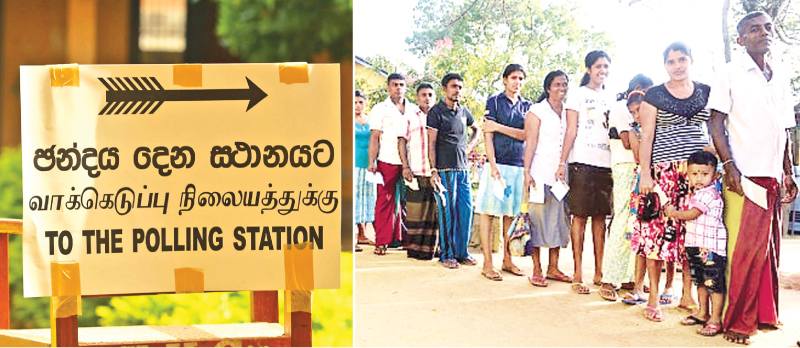
The Election Commission (EC) is to file a motion with the Supreme Court to find judicial recourse to remove obstacles blocking the Local Government Polls from being held on time.

A cloud of uncertainty hangs over the first election to be held after last year’s public protest and civil disobedience campaign – the Aragalaya – succeeded in forcing President Gotabaya Rajapaksa to abandon his presidency, with several State institutions continuing to create bottlenecks, choking ballot progress.

The first election following the political instability is seen as a litmus test for the current administration.

When asked about what measures the Election Commission will take given the ongoing stalemate, Commissioner General of Elections Saman Sri Ratnayake said: “We expect that the Supreme Court will deal with the obstructions that have emerged to block the election from being held according to the schedule. We, as the Election Commission, have no reason to delay elections.”

He said the commission would file a motion regarding the obstructions and leave it to the court to decide on the next step.

“We gave an undertaking to the courts that we would conduct the Local Government Elections. Now we have filed a motion reporting to court on how we are being obstructed from carrying out our duty of holding polls.”

He charged that the Treasury’s claim of lack of funds was suspect as there had been a Cabinet circular revealing a surplus of Government revenue for February.

“A Cabinet circular was issued to the Ministry of Finance stating that there would be a marginal surplus in Government revenue at the end of February, so it is up to the Finance Minister to allocate some of that surplus for the Local Government Elections. That responsibility and power lies with the Minister of Finance, President Ranil Wickremesinghe.”

Ratnayake also said action would be taken against officials who had obstructed the election process.

“Both the Inspector General of Police (IGP) and the Government Printer have broken election law and the commission will decide on what action to take against those two officials.”

Meanwhile, the Bar Association of Sri Lanka (BASL) in a statement charged that there was a concerted attempt to delay the Local Government Polls.

“The Bar Association of Sri Lanka expresses its deep concern over recent attempts by State authorities to disrupt the Local Authorities Elections, which are mandated by law to be held prior to 19 March 2023. The BASL emphasises that all elections are a vital part of Sri Lanka’s democratic process and must not be hindered.

“The BASL notes several decisions by the Government in recent weeks, purportedly aimed at managing public funds, have had the effect of preventing the Election Commission from conducting the elections. These include a demand by the Government Printer for the release of funds prior to the printing of ballot papers and the Secretary to the Treasury claiming that there are no funds available for the elections. This is despite a budget allocation of Rs. 10 billion for the purpose of elections,” the statement read.

Further, the BASL said that any efforts to delay elections must be “defeated” and those responsible held accountable.

“It is the sacred duty of the Government to ensure that funds are provided for the conduct of the elections which are an essential function in the country. The BASL calls on the Government and all State officials to respect the Constitution and the law and ensure that the Local Authorities Elections are held as scheduled, without any further attempts to disrupt or interfere with the process.

“The BASL is of the view that all attempts to interfere with the electoral process must not only be defeated, but all those responsible for such interference must be dealt with in accordance with the law.”