Defence co-operation with Sri Lanka explored at Aero India

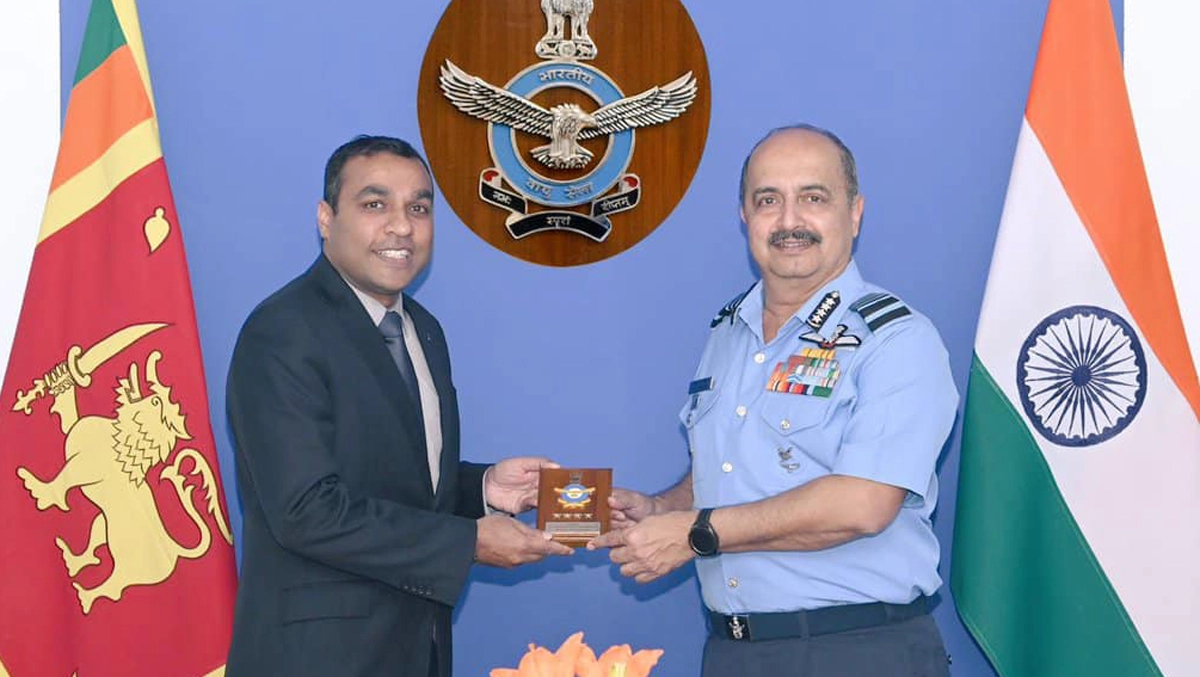
Sri Lanka’s State Minister for Defence Premitha Bandara Tennakoon at an aviation confab has brought out the potential for greater defence co-operation between the two countries, India’s embassy in Colombo said.

Forums like Aero India can be used for defence cooperation through joint ventures, co-development and production whilst investing in research and development, the High Commission quoted Minister Tennakoon as saying.

Minister Tennakoon had been accompanied by a business delegation from Sri Lanka to identify avenues for greater cooperation.

Minister Tennakoon had participated in Aero India 2023 and SPEED- Defence Ministers’ Conclave.

He had also highlighted the importance of a collective response through multilateral efforts like the Colombo Security Conclave to tackle the common security challenges in the Indian Ocean Region.

The minister had met the Chief of Defence Staff and all three service chiefs in addition to Defence Minister Rajnath Singh.

Sri Lanka Armed forces already operating Indian defence equipment like Indra radar, offshore patrol vessels and Army training simulators, the statement said.

India has committed supply a floating dock, Dornier aircraft to build up capacity.

Delayed election is delayed democracy -The Morning Editorial

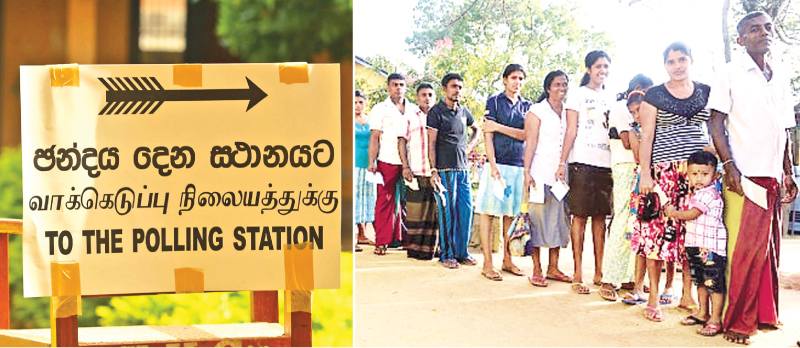
Despite the Government’s claims that it has no fear of elections and that the public still has faith in its capabilities, the indefinite postponement of the postal voting ballot paper distribution of the upcoming Local Government (LG) election, caused by the delay in providing funds for election preparations, could reasonably be interpreted as a sign that the Government is actively attempting to derail the election process.

This development comes against the backdrop of much of the Opposition highlighting the Government’s trepidation and alleging for months that the Government would make underhand attempts until the last possible moment, to delay the election for as long as possible.

In fact, the current administration led by President Ranil Wickremesinghe, which consists mostly of members of the former Government led by then-President Gotabaya Rajapaksa and then-Prime Minister and incumbent Government MP Mahinda Rajapaksa, is inarguably one of the most unpopular governments since Independence. While Wickremesinghe has gradually lost popularity over many years, members of the former Rajapaksa Government have earned the wrath of the people due to their roles in the creation of the economic crisis that erupted in 2022. Facing even an LG election under such circumstances is disadvantageous to the Government, a reality the Government cannot hide from.

However, the myriad reasons for the Government to fear elections do not justify any attempts to postpone elections, as they are meant to provide the people with the opportunity to exercise their voting right and choose who represents them. Therefore, regardless of the prevailing circumstances, the Government is duty-bound to prioritise the people’s interests over its own and ensure that the conduct of the LG election is properly facilitated.

According to the Government, the main challenge that the LG election is facing is the lack of funds. Even though the Government has not directly stated that it is unable to fund the election, it has put forth funding as a monumental challenge on numerous occasions. However, if this is actually the reason for the potential postponement of postal voting, the Government should look into measures that could be taken to overcome this challenge. For example, if the Government is not in a position to provide funds for the election, it could look into providing as many non-financial resources as possible. As a temporary measure, it could also utilise funds that have been allocated for other, non-urgent initiatives. What’s more, as some political commentators have said, obtaining international assistance to conduct the LG election could also be possible because conducting elections on time is part of strengthening democracy, which the Western world has encouraged in countries such as Sri Lanka over the years.

However, the voting public has not witnessed any significant action being taken by the Government apart from lamenting the challenge in funding the LG election. This raises doubts regarding whether the unavailability of funds is a genuine reason or an exaggerated claim to conceal the Government’s unwillingness to face the LG election. If it is an exaggerated claim, it is a serious violation of the people’s right to participate in the democratic process, and this failure or unwillingness to facilitate the LG election will be yet another black mark on the Government. Worse yet, it could push an agitated public on to the streets as their franchise has been denied and their opportunity to vent their frustration at the ballot box has been taken away, resulting in chaotic scenes reminiscent of mid-2022.

Therefore, President Ranil Wickremesinghe and the Government must understand that holding on to power by delaying elections undemocratically would only serve to lower its approval rating, which is not too different from losing elections.

Former President Gotabaya Rajapaksa leaves for China

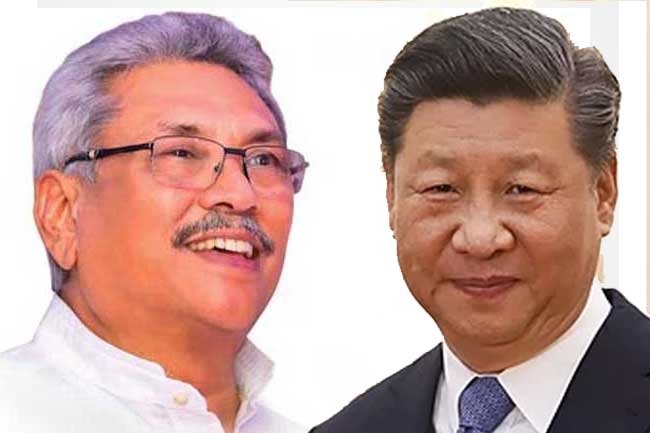
Former President Gotabaya Rajapaksa and his wife Ayoma Rajapaksa have left Bandaranaike International Airport at Katunayake for Kuala Lumpur, Malaysia early this morning (16th) with the expectation of leaving for China, according to airport sources.

They have left at 12.25 this morning on Malaysia Airlines flight MH-178 for Kuala Lumpur, Malaysia.

Airport sources said the former President and his wife have used the airport air cargo terminal to leave Katunayake airport, although he could have used the VIP lounge or the Silk Route or Gold Route facilities that can be obtained by paying money or through the normal air passenger terminal.

Posted in Uncategorized

Half the postal ballot papers already printed, TU claims

Half of the postal ballot papers required for the local government polls had already been printed by the time work had been suspended, claimed a trade union in the Government Press.

Deputy chief of the Samagi Sevaka Sangamaya Nuwan Buddhika also said that unlike on previous occasions, no police protection had been given for the printing process.

Opposition to take legal action

Meanwhile, SJB national organizer Tissa Attanayake said legal action would be taken against state officials who aided the government to postpone the LG polls.

He warned the people would resort to alternative means if the election was put off.

The postponement of the postal voting will affect the LG polls due on March 09, said Attanayake.

JJB leader Anura Kumara Dissanayake said a government by his party would prosecute the officials who were trying to postpone the election.

Addressing a public rally in Moneragala, he said the secretary to the president, treasury secretary and the government printer would definitely have to face court action under a JJB regime for trying to put off the election.

If it comes to the worst, hundreds of thousands of people would be brought to the streets if the election is not given, he also warned.

Indian visas halted at IVS due to ‘security incident’

The outsourced Indian visa application center, IVS Pvt. Ltd in Colombo will remain closed until further notice, the Indian High Commission in Colombo says.

The decision was taken due to a security concern that popped up last night, according to a notice published by the high commission.

As a result, all applicants are requested to reschedule their appointments with IVS Pvt. Ltd accordingly.

The Indian High Commission’s office in Colombo can be contacted for any urgent consular or visa matter.

Posted in Uncategorized

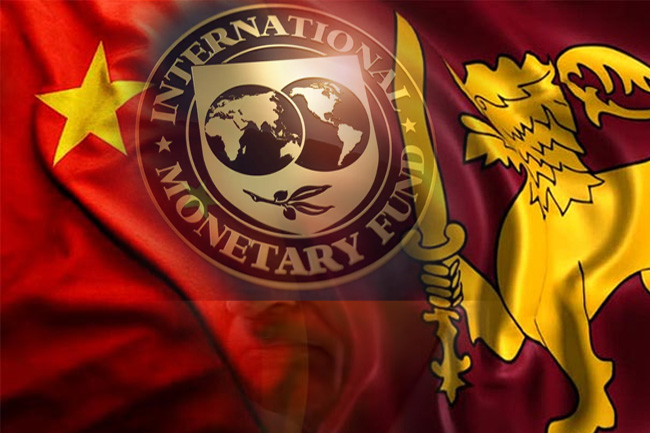
China dithers over IMF’s Sri Lanka debt plan, leaves Colombo in limbo

With China yet to support Sri Lanka debt restructuring based on the debt sustainability analysis (DSA) of the IMF and Paris Club, time is running out on Colombo to secure a much-needed loan to revive the nation from the present economic crisis. Sri Lanka is seeking a USD 2.9 billion-dollar loan from the IMF over four years in eight installments.

While India has agreed to support the Island nation on the basis of DSA, China still has differences over period of loan moratorium and debt restructuring with the IMF’s Executive Board scheduled to meet next month.

Under the circumstances, the IMF can either give loan on arrears and then wait for China to come on board by IMF spring meeting or later this year. Sri Lanka owes nearly USD 7.8 billion dollars to China which includes both bilateral lending from EXIM bank and commercial lending from Chinese development Bank.

Over the years, the Rajapaksas with present President Ranil Wickremesinghe in cahoots, used these loans for sponsoring white elephant projects like Hambantota port, Mattala airport, Norocholai power plant and Colombo port city as a result of which Beijing was given long term tax concessions and a free run of the Island nation.

While China was the favourite destination of the Sri Lankan political leadership since the present millennium, Colombo chose to stay away from India under pressure from Beijing and has still not said yes to the Indian proposal to develop the Trincomalee port. It is another matter that India provided some four billion dollars’ worth of aid including food, petrol and medicine, to Sri Lanka last year to tide over its raging economic crisis.

With Chinese EXIM bank only willing to extend a two year debt moratorium to Colombo as of now, the Sri Lankan economy will hit the rock bottom soon or else IMF will have to give loan on arrears with further stringent conditions. This not only means further political instability in the Island nation and the obvious beneficiary of this ferment will be the Communist parties of Sri Lanka like the JVP.

The political climate of Sri Lanka will remain uncertain but the first indicator of the extent of ferment will be the local elections next month.

Unless the mainstream parties are able to recover from the hit, President Wickremesinghe, who is the lone MP from his party, may not be eager to announce the general elections.

With USD at an all-time high against Sri Lankan rupee and food inflation into double digits, things will get much worse for Sri Lanka before they turn for the better. And this could take at least a decade.

Source – Hindustan Times

Posted in Uncategorized

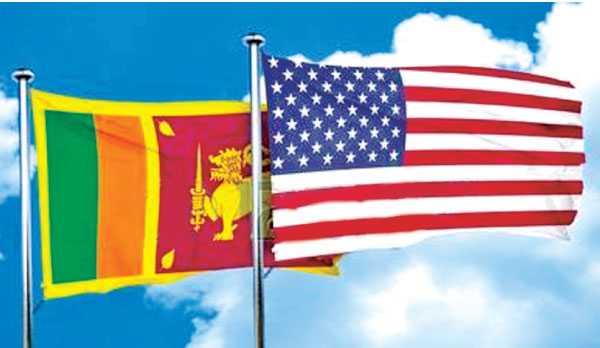
High-level US delegation lands in Sri Lanka for top level defence talks

A 20-member US delegation team comprising high-level defence officials arrived in the country in two special aircraft of the United States Air Force last night at the Bandaranaike International Airport (BIA), the Daily Mirror learns.

The delegation includes US Principle Deputy Assistant Secretary of Defence for Indo-Pacific Security Affairs Jedidiah Royal.

It was reported that the security in and out of the Bandaranaike International Airport and its surrounding areas had been tightened during the last few days due to the arrival of the US delegation team.

The delegation arrived at the BIA aboard Boeing C-17 Globemaster III special aircraft.

An official of the Airport said that this visit was a top level defence discussion.

The delegation was escorted to Colombo from the BIA amid tight security and the lane towards Colombo at the Colombo – Katunayake Expressway had been closed for traffic during their arrival.

It was reported the delegation is scheduled to meet top Sri Lanka security officials during the visit.

Posted in Uncategorized

Postal Vote to go ahead as planned; Election Monitors to take action against Govt. Printer

Postal Voting for the upcoming Local Government Election will go ahead as planned on the 22nd, 23rd, and 24th of February 2023, confirmed the Chairman of the National Election Commission Attorney Nimal Punchihewa on Wednesday (15).

He said that the distribution of the ballot papers for Postal Voting was delayed, though the distribution process was scheduled to commence on Tuesday (14).

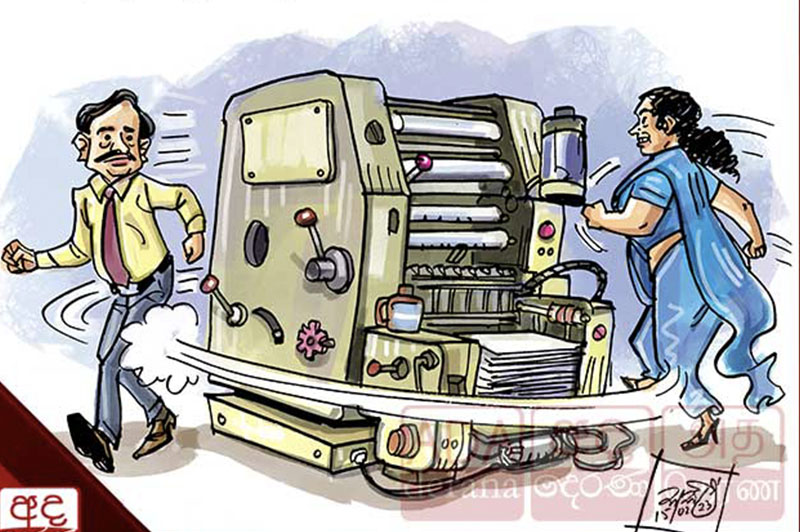
However, the Government Printer said that an issue arose regarding the provision of the ballot papers for the Postal Vote due to funding issues.

In the meantime, the National Election Commission and the Government Printer had engaged in a series of talks and based on those discussions the Government Printers is expected to deliver the ballot papers for postal voting in the coming days.

Moreover, Election Monitors have decided to take legal action against the conduct of the Government Printer for failing to deliver the ballot papers.

Election Monitors said that the Government Printer has taken an unconstitutional decision to not deliver the ballot papers.

Rohana Hettiarachchi, the Executive Director of the People’s Action for Free & Fair Elections (PAFFREL) said the National Election Commission must also take legal action against the Government Printer.

Secure packages containing the ballot papers for postal voting were to be handed over to Sri Lanka Post on Wednesday (15), however as the ballot papers were not delivered, the process was suspended indefinitely as per a decision reached by the National Election Commission on Tuesday (14).

Posted in Uncategorized

Sri Lanka poll monitor deeply concerned over postal vote halt

A Sri Lanka polls monitoring group has expressed “deep concern” over the postponement of postal voting after the state printing unit said it did not have money to print ballot paper.

Sri Lanka’s Centre for Elections Monitoring Election Violence (CMEV) said it was a direct violation of voter rights.

“CMEV expresses its deep concern about the indefinite postponement of the postal voting for the Local Government Election 2023,” the group said in a statement.

“CMEV believes that the disruption of the postal voting could impact holding the Local Government Election 2023 as scheduled on March 9, 2023.

“The Government’s actions have created immense uncertainty for voters regarding the Local Government Election, and this is a direct violation of the right to vote that is guaranteed for all citizens under the Constitution of Sri Lanka.

“CMEV highlights it is the responsibility of the Executive to create an enabling environment for conducting the Local Government Elections, as per the Constitution.”

Sri Lanka President Ranil Wickremesinghe has reported to have asked spending agencies not to carry out work on credit, the CMEV said.

“The conduct of the Government Printer is specifically a violation of Article 104B(2) of the Constitution which states that it is the duty of all authorities of the State to co-operate with the Election Commission to enforce all laws relating to holding elections,” the CMEV said.

“Refusal or failure to carry out this duty is a criminal offence under Article 104GG of the Constitution.

“CMEV specifically urges the Election Commission to exercise its powers under this Article to take action against the Government Printer and any other public authority disrupting the election process.”

The full statement is reproduced below:

Statement on Disruptions to the Local Government Elections 2023

CMEV expresses its deep concern about the indefinite postponement of the postal voting for the Local Government Election 2023. It has been reported that this is due to the Government Printer’s refusal to submit the printed postal voting ballot papers on time to the Election Commission.

CMEV learnt that the Government Printer sent a letter to the Election Commission yesterday, February 13, 2023, informing it that it is unable to process the printing of ballot papers until the full cost for the printing is made by the Commission. This was in line with the President’s recent direction on January 31, 2023, to heads of government authorities to not purchase services on a credit basis.

CMEV believes that the disruption of the postal voting could impact holding the Local Government Election 2023 as scheduled on March 9, 2023. The Government’s actions have created immense uncertainty for voters regarding the Local Government Election, and this is a direct violation of the right to vote that is guaranteed for all citizens under the Constitution of Sri Lanka. CMEV highlights it is the responsibility of the Executive to create an enabling environment for conducting the Local Government Elections, as per the Constitution.

The conduct of the Government Printer is specifically a violation of Article 104B(2) of the Constitution which states that it is the duty of all authorities of the State to co-operate with the Election Commission to enforce all laws relating to holding elections.

Refusal or failure to carry out this duty is a criminal offence under Article 104GG of the Constitution. CMEV specifically urges the Election Commission to exercise its powers under this Article to take action against the Government Printer and any other public authority disrupting the election process.

Should A Country Be Governed By As Sangha Says? By Upali Gajanayake

Prelude

A group of countries governed by religious principles can be seen on the world map even in this 21st century. Ignoring human rights is common in such states dominated by religious leaders. The Taliban regime in Afghanistan is an example of suppression of human rights by religious fundamentalism. Not just under the Afghan mullahs or Iran’s Ayatollahs, there is information released every day in our world about the suppression of civil liberties in all states controlled by religious fundamentalism. Such governments are especially dangerous for ethnic and religious minorities.

Some historians provide evidence that Buddhism has had a massive influence on the state in Sri Lanka since ancient times. They present ancient works including the Mahavamsa as evidence of the decisive influence of Buddhist monks on governance the country. Ven Dr. Walpola Rahula Thero has compiled the book entitled “Bhikshuwage Urumaya” based on those historical evidence. Ven Dr. Rahula argued that even today the Buddhist monks own that historical heritage.

Vidyalankara Manifesto

Ven Rahula not only prepared the theoretical background for the monks to engage in politics, but also, he was an active political monk. Once he was physically attacked by his political opponents for addressing election campaign meetings against UNP. Even some of UNP supporters had said that behind that attack on the group including Ven Dr. Rahula, were the henchmen of the DS Senanayake and JR Jayewardene who represented Kelaniya constituency at that time. The famous Vidyalankara Manifesto was published with the intervention of Dr. Rahula Thero and it was a modern publication that justified the politics of monks.

With the opening of the door by Ven Rahula, a huge number of Buddhist monks were politically baptized during the general elections of 1956. The general election of 1956 was held in an environment with a great enthusiasm among the Buddhist community of the country because of the Buddha Jayanti (2500th anniversary of the Gauthama Buddah’s parinibbāna). In the general election, it was not difficult for the monks with a history of acting as guides of the Buddhist people in terms of taking the voters to the place they wanted. After the collapse of the Sinhalese monarchy, the marginalized Buddhist monks once again took the political license to control the state. It is an open secret that Mapitigama Buddharakkitha had an influence on the Prime Minister even in the case of appointment of the cabinet ministers. The United Monks Front (Eksath Bhikshu Peremuna) which supported the Mahajana Eksath Peramuna (MEP) in the 1956 general election, was operated under the leadership of Buddharakkhita.

The fate of Bandaranaike–Chelvanayakam agreement

The political support of the Buddhist monks came as a boomerang to Prime Minister Bandaranaike when he had to tear up the Bandaranaike–Chelvanayakam agreement when a group of monks surrounded his Rosemead residence. A group of Buddhist monks who pioneered his rise to power were forced to tear up the agreement. The Bandaranaike–Chelvanayakam agreement advocated to create regional councils(Rata Sabha) in Ceylon for giving a certain level of powers to the Tamil people, and was intended to solve the communal disagreements that were occurring in the country at the time. The monks who forced the Prime Minister to tear up the Bandaranaike–Chelvanayakam agreement, also took a hostile approach to the Tamil Language Special Provisions Bill, 1958.

The story of this religious influence in 1950s was ended when the Prime Minister was killed by a monk whom by the Prime Minister called a ‘Cheewaradhariya’ or a robe wearer.

A Monk shot to dead

The behaviour of most of the Buddhist monks shows their reluctance to accept that Sri Lanka is a multinational, multicultural society. The main ambitions of such monks who never understand the gap between religion and the state, is to keep Sinhala language and Buddhism at the forefront of the state. But they are unable to understand the damage done not only to the state but also to their own religious teachings. Meanwhile, their narrow vision is cunningly used to their advantage by many politicians who are greedy for power in Sri Lanka.

1958 was not the only time when Buddhist monks protested efforts to transfer the right to use their language to the Tamil people. It is an objection that has been reported continuously in recent history. The same objection was raised to the Tamil Language Special Provisions Bill, 1966. On 8th of January 1966, in an anti-Tamil demonstration, one Buddhist monk was shot dead by the police. An indelible stain in Sri Lanka’s left-wing political history is the joining of the main left-wing parties in mentioned anti-Tamil campaign on the day 08 January 1966.

Since the Indo-Lanka Agreement of 1987 and the establishment of provincial councils, these monks are taking to the streets against any rights of the Tamil people. Even the false voice of devolving police and land powers to the provincial councils has again provoked them. Other ethnic groups are also vulnerable to the opposition of the above-mentioned groups of monks. For example, recently such protest campaigns were launched targeting the Sri Lankan Muslim community. This is a behaviour that completely betrays the basic teachings of the Buddha. In the Vasetta Sutta, the Buddha preached that although there are differences between different animal groups such as reptiles and birds, all humans are within the same group. The broad picture of common human rights is being distorted by some monks who are driven by communal and religious fanaticism.

The above-mentioned behaviour of many monk groups is not limited to the cultural aspects. Some intervene in subjects they do not know, including economics and agriculture sectors without any quantitative knowledge of those specialist areas. A good example of this is the intervention of Athuraliye Rathana Thero MP in the agriculture sector. Rathana Thero is a person who has not studied the relevant subject has intervened to ban the use of fertilizers and chemicals without any scientific research. His intervention ended with the country suffering a severe food crisis.

Buddhism is a teaching that embodies a philosophy that provides a solid start to an important disciplined existence. Buddha’s Bhikshu community is also an organization established on such a disciplined basis. But today many monks in Sri Lanka work without taking that religious discipline into consideration. Some monks who put pressure on political institutions are now inclined to influence even the judiciary. Former President Maithripala Sirisena has said that it was Athuraliye Ratana Thero who asked him to release a prisoner convicted of murder. And Galagoda Atte Gnanasara Thero was convicted of contempt of court and imprisoned.

A pressure group

Buddhist monks are clearly an influential group in Sri Lankan politics who has their own distinct social and religious aspirations. But today, in a country with multinational and multicultural potential, if the desire of one such group is understood as the general desire of the state, it will cause a great prejudice to the entire society. On the other hand, their slogans are based on a limitation that does not understand the matter at all. They once led people against the federal system, today they are even engaged in an attempt to besiege the parliament even with the false statement of transferring police and land powers to the provincial councils, without proper understanding.

Educated only in greedy so-called political schools where racism is political opportunism, these monks have little understanding of world trends. The Tripitaka and even Buddhist literature make many references to caste, race and the nature of political power. But today’s popular Buddhism has suppressed that valuable Buddhist teachings. Who do they get political advice from? From which political forces? To find an answer for that question, I invite you to look at the main trends of monks’ politics in the last two decades.

(1) Soma force; There is no doubt that Sri Lankan Sinhala–Buddhist society still remembers the late Ven Soma Thero. He gained popularity in the Sinhala society through his sermons. That popularity was more rooted in Sinhala society with his controversial statements made about a Muslim expansion eastern province the country. The Soma-Ashraf TV debate, which was given more publicity by the media, attracted the attention of many people. With the false idea that Soma’s sudden death that happened in Russia was a Christian-influenced murder, the political result was taken advantage of by the Jathika Hela Urumaya lead by Patali Champika Ranawaka. A group of Bhikkhus, including Athuraliye Rathana, entered the Parliament with a racist political agenda, with the slogan of Soma’s death certificate. Patali Champika Ranawaka played a major role in forming the ‘Jathika Sangha Sabhawa’ and providing the necessary theory for it. The late Ven Maduluwawe Sobitha was its founding chairman. The entire monk organization led by Sobhitha directly opposed the decentralization of power.

(2) ‘Kudapola Force’; I will also recall a fact from the 20th century that cannot be forgotten. That is, during the 1985-87 the way the Janata Vimukthi Peramuna used monks to protest the Provincial Council. During 1987-89, JVP had formed an organization called ‘Kudapola Force’ including a number of young Buddhist monks to target monks who supported to the Indo-Lanka accord and provincial councils. The ‘Kudapola Force’ came under suspicion for several murders of monks in 1987-89. (The organization was named as a respect to Ven Kudapola Rahula, an anti-imperialist Buddhist monk who was killed during the British colonial period)

(3) Wirathu warship; Most of the Buddhist monks involved in politics in Sri Lanka today have been ideologically trained by such political organizations. They are internationally similar to groups such as Wirathu Bhikshu, a prominent Muslim dissident in Burma. Ven Galagoda Atte Gnanasara who fostered the anti-Muslim public opinion in Sri Lanka, invited to Bhikkhu Wirathu, to Sri Lanka and organized a warm welcome.

Who is today’s main theorist of anti-decentralization monks? He is Wimal Weerawansa MP, the leader of the National Freedom Front, who publicly challenges decentralization of the power. The analysis of Weerawansa on federal system has become the handbook of anti-provincial council’s monks. Who can challenge Wimal Weerawansa’s so-called comparative studies regarding the various federal systems in the world?

conclusion

Even today we see such narrow-minded monks’ political interference on roads and in public places. Political participation is a right of all citizens in a democratic society. We don’t challenge it, but should the entire state obey the will of any influence group that has only put forward its ethnic or religious ambition without a national vision? Indeed, the serious issue in the country is that one religion has taken over the state. In many countries, this kind of influence has been removed by separating religion from the state.