Sri Lanka health sector to receive $38 Mn grant from Japan

The Japanese government has agreed to provide USD 38 million to Sri Lanka to purchase fuel, mainly diesel, to carry out uninterrupted essential and emergency health services, says the Cabinet Spokesman, Minister Bandula Gunawardene.

Joining the Cabinet press conference held this morning (Feb. 14), the minister pointed out that Japan has agreed to grant five billion Japanese Yen, which amounts to approximately USD 38 million, under the Japan Economic and Social Development Program in order to improve the healthcare delivery system in Sri Lanka by ensuring essential services and transportation facilities.

Accordingly, the Cabinet of Ministers has granted the approval to the proposal presented by the President in his capacity as the Minister of Finance, Economic Stabilization & National Policies, to ink necessary agreements with the Japanese government in order to obtain the said grant.

Posted in Uncategorized

Govt Printer says cannot print LG election ballot papers without funds

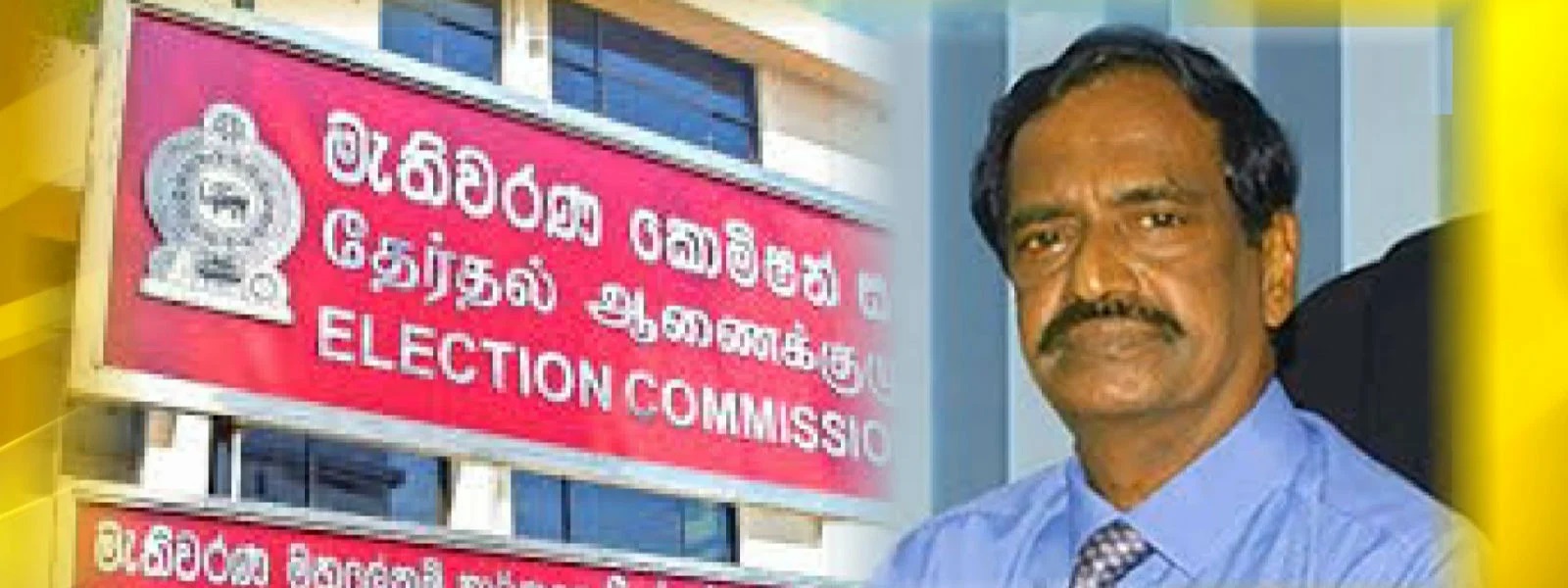
The Election Commission says that the Government Printer has informed the commission in writing that printing work pertaining to the upcoming Local Government (LG) elections cannot be carried out without the due payments.

The commission mentioned that the estimated amount required for this is around Rs. 461 million.

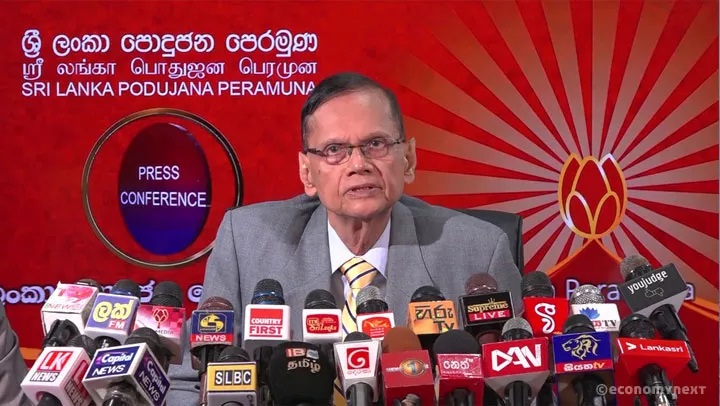
When inquired by Ada Derana, Chairman of the Election Commission Nimal G. Punchihewa stated that attention will be directed towards this during the meeting of political party secretaries which will be held tomorrow (Feb. 14).

LG Poll: 30,000 Postal Voting applications rejected

The National Election Commission said that around 30,000 applications for postal voting for the upcoming Local Government Election were rejected.

The NEC said a majority of the applicants had submitted incomplete applications.

It added that approximately 675,000 applications were submitted for postal voting for the 2023 Local Government Election.

The secure packages containing the postal vote ballot papers will be handed over to the Department of Posts on the 15th of February, and the official ballot papers for the election will be handed over on the 19th of February.

Approximately 200,000 state employees will be assigned to election duty.

Postal voting for the 2023 Local Government Election will take place on the 22nd, 23rd, and 24th of February.

Tamil Nadu BJP leader hails Modi’s intervention in Sri Lanka

Tamil Nadu BJP leader K. Annamalai has hailed Indian Prime Minister Narendra Modi’s intervention in Sri Lanka.

Annamalai, who was in Sri Lanka on a visit, said that Modi has gone the distance in Sri Lanka where no other leader across the world had gone previously.

He said that Prime Minister Modi’s two visits to Sri Lanka in 2015 and 2017 are both historic.

“The wounds of Sri Lanka Tamils are slowly healing. The development projects on a massive scale in the Northern and Central province are completed or are on the verge of completion,” Annamalai said in a post on social media.

He said that the 2015 visit to Sri Lanka by Modi put aside the inefficiencies of the previous UPA Government and reassured India’s intent to deliver on its promises of development.

“There was no looking back ever since then,” Annamalai said.

Annamalai also listed out some of the projects undertaken by India in Sri Lanka since 2015.

He also said that a ferry service will be launched between the Kankesanthurai Harbour in the Northern province and Karaikal and the bidding process for shipping services has commenced.

Annamalai said that Modi considers the health wellbeing of Tamils in Sri Lanka, a shared responsibility.

He also noted that Indian External Affairs Minister Dr S. Jaishankar has constantly nudged the President of Sri Lanka on the implementation of the 13th Amendment to the Constitution in letter and in spirit.

“News on this matter is expected soon and will benefit the people of the Northern province, by large,” he said.

Annamalai said that the subdued Chinese effect in the region is only an outcome of the steps taken by Modi.

How S.W.R.D surrendered to the power of the ‘saffron robes’ BY K.K.S Perera

Mihintale Raja Maha Viharaya Chief Incumbent, the outspoken Ven.Walaha henguna wewa Dhammarathana Thera, a few weeks ago said, young monks in universities behave like Taliban terrorists. He further said they can engage in politics, but not in a way that harms others. He who continued saying, ‘the actions of a few monks create a bad impression in the public minds and reflect severely on the entire Sanghasasana’, was seen leading a fierce Bikkhu demonstration,[that included V-8 class academics] obstructing traffic and, harming road users and confronting senior police officers on duty.

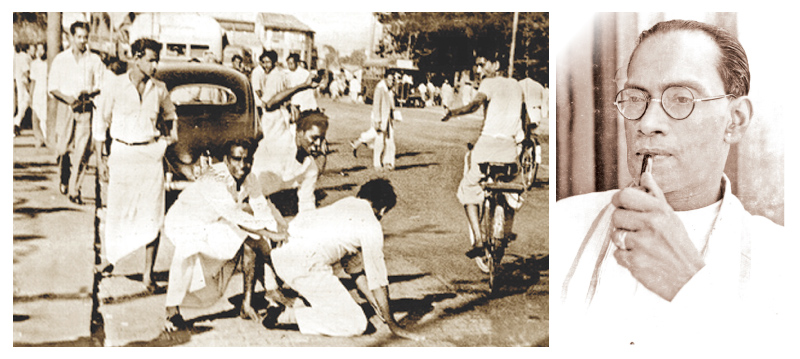
On 9th April 1958, a group of about 200 members of ‘Mahasangha’, led by BaddegamaWimalawanse Anunayake Thera, the chief of Vidyodaya Pirivena, Maligakanda, staged a peaceful protest on the lawn of ‘Tintagel’ the Prime Minister Bandaranaike’s Rosemead Place residence. They demanded that the Prime Minister abrogate the agreement he signed with Northern Tamil leader SJV Chelvanayakam MP-QC. This was the earliest instance where well-meaning endeavours to resolve power-sharing problems, which started off with a positive note, but ended tragically with a moan. A sad but significant instance of past disappointment is the destiny of the highly applauded pact signed by Bandaranaike and the leader of the SJV Chelvanayakam. Regrettably, it was confined to the dustbin of history. Speaking on it Bandaranaike, who blundered by creating communal disharmony through his election slogan, “Sinhala only in 24 hours” said, “In the discussion which the leaders of the Federal Party had with me, an honourable solution was reached. In thinking over this problem I had in mind the fact that I am not merely a Prime Minister but a Buddhist Prime Minister.”

Strangely 100 years ago, the attitudes towards federalism were different. Some Sinhalese supported federalism, while some Tamils were against it. The Sinhalese campaigned for federalism before independence while Tamils claimed federalism after independence, changed in response to the ‘Sinhala governments’ ethno religious policies

Federalism is defined as a political system where power is shared between central and state governments. Sinhalese view federalism as a forerunner to separatism. Most Tamils view it as a means of achieving autonomy. Strangely 100 years ago, the attitudes towards federalism were different. Some Sinhalese supported federalism, while some Tamils were against it. The Sinhalese campaigned for federalism before independence while Tamils claimed federalism after independence, changed in response to the ‘Sinhala governments’ ethno religious policies.
Two advocates of federalism emerged in the 1920s. The Kandyans appearing before Donoughmore demanded it should be divided into three self-governing states, under a central federal government. Second, in 1926; Bandaranaike backed the idea of federalism publishing six articles in the Ceylon Morning Leader. However, both the Donoughmore and Soulberry Commissions recommended a unitary constitution for the country.

The FP and the ACTC jointly formed the TULF and in 1976, the party assumed the ‘Vaddukoddai Resolution’, calling for the creation of Tamil Eelam’. In 1983, all TULF MPs sacrificed their parliament seats having declined to abandon the call for a separate state as forced through the Sixth Amendment by JRJ. LTTE arose as a strong and brutal group resorting to terrorist tactics in fighting for Eelam till their defeat in 2009.

The first meeting between a Tamil delegation comprising Chelvanayakam, Dr E. M. V.Naganathan, and V. Navaratnam, met a government delegation led by Prime Minister, Stanley de Zoysa and two others took place at PM’s ancestral mansion at Horagolla, followed by a second at his residence in Rosemead Place, and a final third was held at the Senate building in July 1957.The B-C Pact was an agreement signed between Bandaranaike and the leader of the main Tamil political party Chelvanayakam on 26th July 1957. It promoted the creation of regional councils as a means to granting a certain level of autonomy to the Tamils and was envisioned to solve the disparities that were occurring at the time. The United National Party strongly opposed the B- C pact saying it will destroy the Sinhala-Buddhist nation, in fact, JR Jayewardene led a march against the pact from Colombo to Kandy on October 3, 1957.

‘Bandaranaike continued his labors to persuade the people that it was the finest solution to the communal issues by equating the pact to the Buddhist doctrine of the middle path. The pact was strongly opposed by sections of the “Sinhala-Buddhist” and was ultimately abrogated by a spineless Prime Minister in April 1958. The tearing up of a copy of the pact in a token gesture in front of the “Maha Sangha” (Buddhist clergy) led to tensions between the two communities, causing a sequence of outbreaks of bloody ethnic violence which eventually paved the way to the 30-year Civil War that accounted for 80,000 human lives. The ‘Maha Sangha’ was not pleased and they insisted that he give them a written assurance that the pact would be abrogated. Sinhala was made the sole official language of the country on June 15, 1956, by a parliament vote of 56 to 29 with the main opposition UNP voting with the government and only the Marxist LSSP, CP, and Tamil parties against the injustice caused to a section of population.

Anti-Tamil violence erupted in several parts of the country. Growing communal violence was heading for a bloodbath. S.W.R.D comprehended that the situation had to be controlled and checked. He agreed that the Tamils had genuine grievances that need to be rectified. The B-C pact was an excellent chance to resolve the problem at its initial stages.

‘Senanayake––Chelvanayakam Pact of 1965’

Dudley, back in politics, won parliamentary elections in 1965. He in search of a lasting solution to Ethnic and Minority issues signed the ‘Dudley––Chelvanayakam Pact’ on March 24, 1965. Political analysts agreed this as a major progressive step towards a unitary and stable Sri Lanka.

Excerpts from the Text of the Pact….

Tamil Language Special Provisions Act to make provision of the Tamil Language of Administration and of Record in the Northern and Eastern Provinces. To amend the Languages of Courts Act to provide for legal proceedings in the Northern and Eastern Provinces to be conducted and recorded in Tamil. To establish District Councils in Ceylon vested with powers over subjects to be mutually agreed upon between two leaders. The government should have power under the law to give directions to such councils under the national interest. The Land Development Ordinance will be amended to provide that citizens of Ceylon be entitled to the allotment of land under the Ordinance.

The main opposition SLFP under Sirimavo, and strangely, the Marxists LSSP and CP joined hands in a massive protest on Jan 8, 1966 [police opened fire killing a monk] against the pact with the blessings of the ‘Maha Sangha’ leading to abrogation of the pact yet it never saw the light of the day plunging the whole country into absolute darkness.

The third attempt by GL Pieris-Thuiruchelvam in 1999 under Chandrika faced the same fate when the Ranil-led UNP Opposition not only tore it, but set fire to it inside the chamber. Both Mahinda Rajapaksa and Maithripala Sirisena promised to fully implement the 13A. After a lapse of 23 years, Ranil himself is trying to implement all the clauses in the 1987-13th amendment supported vaguely by SLPP, SJB, and NPP [pleading for vote], and being opposed only by the Mahasangha and a few Pseudo-patriots parliamentarians, [35 former acolytes of the Rajapaksas]. Provisions, relating to Law and Order, as stated in Appendix1 of List 1 of the 13th Amendment, were introduced in 1987.

While a good portion of the 13th Amendment to the Constitution has been applied, with regard to two matters – the devolution of police and land powers remains pending for 36 years. Provincial Councils List Appendix I in the Ninth Schedule of the Constitution offers the devolution of police. Section 6 of Appendix 1, says, the Inspector General shall assign a DIG for each of the nine Provinces with the consensus of the CM of the Province. Section 11 stipulates that Officers, serving in any Province, shall work under the direction of the provincial DIG who will ‘be responsible to the CM in respect of the exercise of police powers.

Prime Minister Bandaranaike, who once said, that “knotty problems of State had been successfully tackled by invoking the principles and tenets of Buddhism. ‘The Middle Path’, has been my magic wand and I shall always stick by this principle.” However, at 4.15 pm on April 9, 1958, Bandaranaike succumbed to pressures by ‘Mahasangha’, and the Pact was torn into shreds claiming that its implementation had been rendered impossible.

“That foolish man wearing robes shot me”- SWRD Bandaranaike

On 25th September 1959, Somarama was seated on the verandah at Tintagel. The PM first spoke with another monk and moved toward Somarama when gunshots were heard.

Somarama, on April 6, 1961, made a statement to the Chief Magistrate of Colombo, “… Buddharakkitha reassured… that I had nothing to fear. I acceded to their request; I was consenting to kill him … only for the sake of my country, my religion, and my race. That morning, I drank a mixture that I had prepared myself and went to ‘Tintagel’.

“That foolish man wearing robes shot me”-SWRD Bandaranaike’s deathbed address to the nation.
President Wickremesinghe opening the parliament on Wednesday said he will fully implement 13A which was certified on November 14, 1987, giving more autonomy to provinces in an effort to solve the ethnic conflict. Will Wickremasinghe stick by his principle?


Posted in Uncategorized

EC urges not to sabotage LG polls

The Election Commission (EC) is in a struggle to carry out its essential and urgent election duties as the Treasury has given only Rs. 100 million to the EC in spite of demanding Rs. 770 million for its day today tasks, Chairman of the Commission, Nimal Punchihewa charged yesterday.

If the Treasury continues to delay the funding of the EC, the Commission has no option other than reporting to the Supreme Court, Punchihewa added.

“The budget 2023 has allocated Rs. 10 billion for the EC in a special vote in Parliament as the EC is an independent Commission. We are hopeful that the EC could successfully conclude the Local Government (LG) polls with a budget of Rs. 3 or 4 billion by March 9. The Commission last week requested only Rs. 770 million out of Rs. 10 billion for the month of February to carry out immediate tasks related to the March 9 LG polls. The underfunding has put the EC in a severe financial constraint,” lamented Punchihewa.

“The Supreme Court has given the green light to the EC to go ahead with the LG election. Therefore, the EC does not expect any act of sabotage from any outside source or authority. As such, the Treasury and the Finance Ministry have a constitutional and official obligation to transfer sufficient funds to the EC in time to ensure a free and fair election,” Mr. Punchihewa told Daily Mirror.

The EC will have to extend another request to the Treasury for election expenses for the month of March after calculating the cost to complete the election on March 9. The EC requires a minimum of Rs. 3 billion to conclude the LG polls on March 9 as most of the expenses borne by other state establishments like the Police Department, Government Printer and payments to public officials for election duties are made after the conclusion of the election.

Asked by the Daily Mirror whether there would be any change to the status quo of the commission after March 9th, Punchihewa stressed that the EC has a responsibility even after the polls until the issuance of the gazette notification with the names of members elected, political parties and independent groups and wards of each 339 local council bodies.

Posted in Uncategorized

G.L. warns Govt. will be forced to hold Parliamentary polls after 9 March

Parliamentarian Prof. G.L. Peiris on Saturday said the Local Government elections will be held on 9 March as scheduled and the Government will be forced to call for Parliamentary poll soon after.

The MP representing the Freedom People’s Alliance during a press conference held over the weekend said there was a concerted effort to create a sense of uncertainty among the people about the holding of polls.

“This is not a mere Local Government election. It is an election of national importance that will be held on 9 March,” Prof Peiris noted. He also commended the Election Commission for its brave and clear undertaking to hold elections as scheduled before the Supreme Court of Sri Lanka.

According to the MP, this is a great opportunity for the country’s people to express their opinion on the current Government and its activities. “After 9 March there will be a great ripple effect and Parliament will have to be dissolved by mid this year,” he opined. The MP said the Government will be forced to hold Parliamentary elections even with great reluctance.

“It is impossible to find sustainable solutions to any issues faced by the country without a people’s mandate. The Government has no right to stay in power,” he added.

Prof. Peiris said while Governments more often than not support the Election Commission to hold elections, this time around the Government has attempted all tactics possible to obstruct the holding of elections as never before in the country’s history.

He said 23 Opposition parties managed to come together to take action against the Government’s attempts to hamper polls and emerge victorious by defeating these devious plans.

From B-C Pact To Ranil’s New Somersault By Rajan Philips

President Ranil Wickremesinghe’s national reconciliation initiative seems to be spectacularly backfiring on all cylinders. This is terribly unfortunate, not so much for Mr. Wickremesinghe’s presidential future, but for what it might entail for the immediate future of inter-community relationships. On Wednesday, before the President’s “Throne Speech”, a group of Buddhist Monks staged a protest near parliament and even set fire to a copy of the 13th Amendment in front of the media and police barricades. According to TNA MP M.A. Sumanthiran, the English version of the President’s address to parliament was titled, Throne Speech, while the ‘more official Sinhala and Tamil versions had it as Policy Statement. What’s in a name or, for that matter, what’s in an official language? That which is written in one can always be translated into another, and there can be two or more of them.

Just as his reconciliation initiative is backfiring, the President is also backpedaling the scope of his initiative. Already in his Independence Day speech and statement, the President had avoided mentioning 13A, and he continued to censor the term in his ‘Throne Speech’ on February 8. The latest Wickremesinghe speech was limited to a touch of nostalgia – that the President and the TNA leader R. Sampanthan entered parliament together as first time MPs in 1977. That now looks ages ago, and their ages do tell: the President is now 74 and the TNA leader is 90, both past the old biblical prime of threescore and ten. Beyond nostalgia, the President stuck to specifics – specific issues affecting the Tamils in the north and east.

But the TNA was in no nostalgic mood, and its leading spokesman Sumanthiran accused the President of somersaulting. A term that was last used in a Sri Lankan legislature with some frequency in the 1950s by the maverick Tamil MP C. Suntharalingam to taunt his Oxford contemporary, then Prime Minister SWRD Bandaranaike. President Ranil Wickremesinghe often speaks of the circumstances that Sri Lanka was in at the time of independence. He hardly mentions the state of the country a decade after independence. 1958 was different from 1948, and 2023 is different from both. What is unique to 2023 is that the national economy has never been so broken as it is today. And there is no happy ending in sight. As for the country’s other problem, and the President’s laudable but mistimed preoccupation, namely, national reconciliation, there could be little nostalgia now about mid-1950s, only forebodings.

The B-C Pact and the Paddy Lands Act

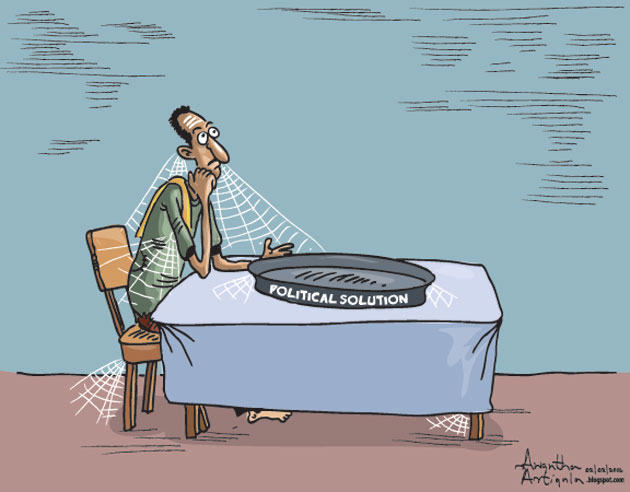
That was when Prime Minister SWRD Bandaranaike launched his reconciliation initiative, bold and statesmanlike, and reached a historic agreement with the leader of the Tamil Federal Party, SJV Chelvanayakam, who also happened to be the Prime Minister’s classmate St. Thomas’s College. That agreement, though abrogated within a year of its signing, has stood the test time as the celebrated B-C Pact and the lodestar for future reconciliation efforts and agreements.

1957: B-C Pact Signed

Its relevance for today’s circumstances is in the comparability, or otherwise, of the difficulties and roadblocks that President Wickremesinghe is facing today to those faced by Prime Minister Bandaranaike 65 years ago. At that time, there were two government initiatives, both unexceptionably positive but politically controversial. One was the PM’s B-C Pact initiative, and the other was the Minister of Agriculture and Food Philip Gunawardena’s Paddy Lands Act. Inadvertently, and unfortunately as it turned out, the two initiatives coincided in their timing and helped in the mutual reinforcement of the political forces opposing the two initiatives.

James Manor recounts those developments in some detail in his biography of SWRD: The Expedient Utopian: Bandaranaike and Ceylon. As it happened, the B-C Pact was accredited on 26 July 1957 and within a year, in May 1958, it was abrogated amidst the first outbreak of communal violence targeting Tamils. The Paddy Lands Act was enacted in 1958, but its sole architect, Philip Gunawardena, left the cabinet and the government the very next year, in May 1959. Four months later, on 26 September, Prime Minister Bandaranaike was assassinated. The island’s sociopolitical innocence was over.

The alignment of political forces for and against the two initiatives was remarkable. Although temperamentally poles apart, Bandaranaike and Gunawardena were each other’s best ally in their coalition government and cabinet. The majority of the cabinet ministers were dead set against Philip Gunawardena and his Paddy Lands Act (PLA). They even staged a cabinet strike, refusing to attend cabinet meetings with Philip Gunawardena. But they could not prevent the passage of the PLA because of its popularity among the Sinhalese.

The B-C Pact, on the other hand, was controversial and opposition to it was orchestrated by JR Jayewardene and the UNP in the south, and GG Ponnambalam and the Tamil Congress in the north. Compounding this was the cabinet split over the PLA, which weakened the Prime Minister’s hand and forced him to give in to the opposition against the B-C Pact. The final act of forcing was the storming of the front lawn of the Prime Minister’s Rosemead Place residence by 100 Buddhist monks.

There was another aspect to political alignments over the PLA and the B-C Pact. Besides the Prime Minister, Philip Gunawardena was the only prominent Minister to support both initiatives. The Left Opposition (the LSSP and the CP) were also in support of both the PLA and the B-C Pact. On the other hand, the Federal Party leader who signed the B-C Pact, was steadfastly opposed to the Paddy Lands Act. Chelvanayakam famously declared in parliament: “I see seeds of communism in this.”

In opposing the PLA, Mr. Chelvanayakam found common ground with GG Ponnambalam, who was stirring the pot against the B-C Pact and ridiculing – ‘Vedhakaran’ (Christian) Chelvanayakam for selling out the Tamils for a pair of guavas and a cup of tea, at Bandaranaike’s Horagolla Walauwa, on a ritually inauspicious moonless day in July. Mr. Ponnambalam was on a long leave of absence from parliament during the enactment of the PLA, but weighed in from outside with an op-ed page article in the Daily News rhetorically bemoaning the destruction of Sri Lanka’s robust peasantry as result of the new legislation. The ideological lines were clearly drawn.

Even though he abrogated the B-C Pact in April 1958, within four months, in August 1958, Prime Minister Bandaranaike introduced and secured the passage of the Tamil Language (Special Provisions) Act, which provided for the use of Tamil for administrative purposes and as a medium of instruction in schools and university. The very same provisions were part of the original Official Language Bill that Mr. Bandaranaike wanted to introduce in 1956, but was forced to jettison it and replace it with the infamous one-sentence Sinhala Only Bill. Let me fast forward to today.

Ranil’s Trap or Somersault?

Whatever may have been the President’s intentions and the method of execution in fast tracking national reconciliation, nothing seems to have worked. The initiative seems to have stirred sleeping dogs into loud barking and the questioning of his motives by practically everyone in parliament. While Sumanthiran has chided him of somersaulting, others from Maithripala Sirisena to Anura Kumara Dissanayake are now questioning the President’s motive behind his sudden focus on 13A. The SJB is on silent mode, except for indicating support for devolution without mentioning 13A.

Sirisena has compared Wickremesinghe’s initiative to carrying a torch that is burning at both ends. He has suggested that every President from JRJ to himself has not tried to fully implement 13A, because it is not easy task when a “majority of Sinhalese Buddhists are against it.” The Mahanayaka Theros said the same thing, but they attributed inaction by former Presidents to their alleged realization that 13A was bad for the country and worse for the Sinhalese. Sirisena is also questioning the President’s timing on 13A given the unprecedentedly “serious issues” the country is facing now.

To JVP/NPP leader Anura Kumara Dissanayake, the current hullabaloo is all the result of President Wickremesinghe setting a trap for the country to “create a disturbance in society” as a diversion from the real problems the people are facing. He avoided answering media questions about the protesting monks, nor did he provide a detailed response regarding the JVP’s position on 13A. It is time Mr. Dissanayake gave a serious speech on the JVP’s position vis-à-vis the non-Sinhala members of the Sri Lankan society, which should also address devolution and the 13th Amendment.

So far this year, Dissanayake has given two significant and substantial political speeches. Early in the new year, he gave a rousing homecoming speech in Tambuttegama, a touching talk by a local boy coming home as a national leader. The English media ignored it. More recently in Colombo, he targeted the business community to win bourgeois credibility for a non-elitist party. The Colombo media lapped it up. AKD owes Sri Lankan politics a third speech – this one on the national question. His first speech addressing the minorities. Without it, his political project will not be a complete project, and Sri Lankan politics at this juncture will also be poorer without it.

That said, AKD and the JVP might be on to something when they insist that President Wickremesinghe is not going to “fully implement the 13th amendment to the constitution as repeatedly assured by him.” AKD goes further, “He won’t bring it. He plays this game every time. He wants to set fire to this country and protect his power.” Mr. Dissanayake might be speaking from his yahapalana experience with Ranil Wickremesinghe when he says that “he (RW) plays this game every time.” But AKD is stretching it when he claims that “he (RW) wants to set fire to this country and protect his power.”

On the other hand, if the country were to end up in flames once again as a result of the simmering controversies over 13A, then the President’s intentions would be irrelevant. The JVP leader is also abdicating his own responsibility when he appeals to “the people of this country not to get caught in this trap.” Anura Kumara Dissanayake owes it to the people to explain his position on devolution and on 13A even if he does not agree with the President’s timing and approach to implementing 13A. As for the President himself, he faces an uphill task in either salvaging his badly damaged initiative, or preventing the current controversy escalating into something worse.

Sri Lanka to buy Russian coal; LCC will no longer pursue Indonesian order

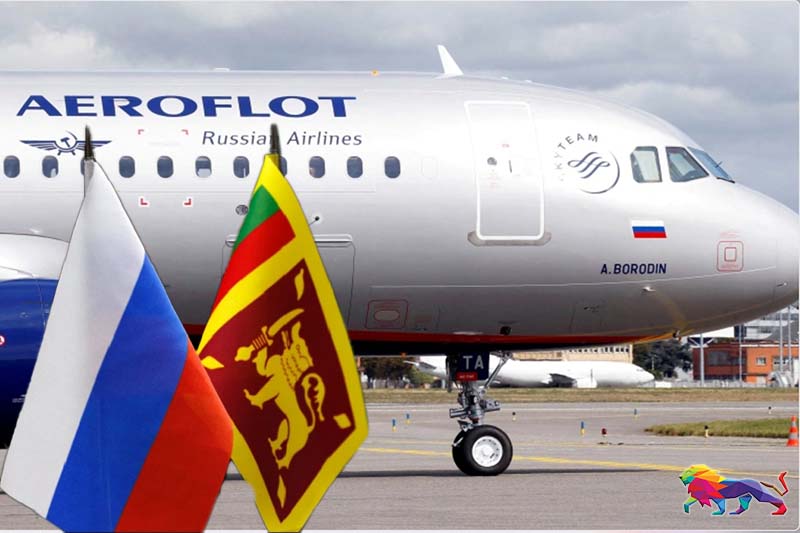
Sri Lanka is to buy 720,000 metric tonnes of Russian coal from two companies–China’s Combasst Industries Development Ltd and Dubai’s Coral Energy DMCC–after an earlier agreement with an Indonesian supplier fell through.

Lanka Coal Company (LCC) will no longer pursue the order from Indonesia’s PT Arista Mitra Jaya. On Monday, the Power and Energy Ministry secured Cabinet permission to buy the stocks from the other two companies shortlisted along with Arista Mitra and Hans Australia Pty Ltd. Hans Australia was later ruled out on the basis of certain terms they required fulfilled.

LCC first placed its order with the lowest supplier Arista Mitra for US$ 240 per ton with 180-day credit. However, the Mandira Bank of Indonesia rejected the usance Letter of Credit (LC) opened by Lanka Coal Company without providing a reason, a Cabinet paper submitted on Monday by State Minister D. V. Chanaka, said.

Arista Mitra then sought to transfer the LC to a third party “where such a transfer is not possible within the context of the contract,” the Cabinet paper said. LCC would, on the Attorney General’s advice, terminate this contract.

The purchasing matter subsequently went to a ministerial sub-committee and the standing Cabinet-appointed procurement committee (SCAPC), after which Combasst Industries and Coral Energy were selected.

Combasst would sell the coal at US$ 230 per MT with 200-day credit, LCC Chairman Shehan Sumanasekara said.

Twenty percent of cargo value would be deposited by LCC in a non-resident rupee account and the balance to the same account, in equal portions. After the credit period, the rupees would be changed into dollars and remitted to the supplier. Combasst’s price was indexed to the Russian Coal Index (RCI).

Coral Energy was selling at a fixed price of US$ 240 per MT, Mr. Sumanasekara said. Under this agreement, there would be no payment until the cargo was discharged at Lakvijaya in Norochcholai, and disbursement would be according to usage (that is, “storage model”).

“This means that, today if the plant requires 5,000 MT despite having one to eight shipments unloaded, we will pay only for the desired quantity,” the Chairman said.

It was anticipated that the coal from Coral Energy would be used for the first time in early June this year.

“Even then, out of the total payment, 80 percent will be disbursed per usage on the same day and there will be a further 120 days of credit for the usage of the balance 20 percent. Both parties have provided the needed credit terms with two different mechanisms,” he said.

LCC had struggled to purchase fuel since its last competitive tender fell apart late last year. The latest companies were selected on the basis of unsolicited proposals after the Cabinet granted approval to this procurement method, alongside permission to make purchases through government-to-government agreements “considering urgent and exceptional circumstances.”

source – sundaytimes

Posted in Uncategorized

Police get only Rs. 50 million out of Rs. 2.8 billion sought for LG polls

Police have so far received Rs. 50 million out of a total of Rs. 2.8 billion it has sought to provide protection for the upcoming local government polls.

Finding this advance payment inadequate, police headquarters has decided to ask the Election Commission for more funding.

Police said it needed Rs. 745 million to acquire vehicles, another Rs. 675 million for fuel and Rs. 500 million for the payment of allowances to its personnel on election duty.