TAMIL NATIONAL HEROES DAY 42 ND REMEMBRANCE DAY

Tamil National Heroes Day 25 & 27 07-2025

Welikada Prison Massacred 42 nd Remembrance Day

எமது போராளிகளின் அர்ப்பணிப்பை அர்த்தம் உள்ள அரசியல் தீர்வை நோக்கி நகர்த்துவோம்

42nd Anniversary of Black July 83, TELO Leaders and Fifty three Tamil prisoners were murdered in the maximum security Welikade prison, In the July 83 anti-Tamil program Sinhala thugs, ruling UNP party cadres, sections of Sri Lankan troopers, and Sri Lanka Police killed more than 3000 Tamils and destroyed property worth billions of rupees.


Posted in Uncategorized

“Black July”: Anatomy of the July 1983 Anti-Tamil Pogrom By D.B.S.Jeyaraj

“All changed, changed utterly” is a powerful line from ‘Easter, 1916’, the famous poem of William Butler Yeats. The poem by W.B. Yeats was about the Irish Easter uprising in 1916, its cruel suppression and how all changed utterly in Ireland. In Sri Lanka “all changed” and “changed utterly” for the Tamil people 40 years ago.The catastrophic events of July 1983 drastically altered the lives of large numbers of Tamils in Sri Lanka.

As is well-known , widespread anti-Tamil violence erupted forty -two years ago during the fourth week of July in 1983.Although the tragic history of post-independence Sri Lanka records that the Tamils of Sri Lanka were subjected to mass –scale mob violence in the years 1956, 1958, 1977, 1981 and 1983, the anti-Tamil violence of July 1983 was the most horrible of them all.

Around 3500-4000 Tamils and some Muslims -mistaken for Tamils- were killed. Thousands were injured. Some of the injured were killed in hospitals. There were over 200,000 displaced persons as a result. 130,000 were housed in makeshift refugee camps. More than 2500 business enterprises ranging from huge factories to petty boutiques were damaged or destroyed. The number of houses and dwellings damaged or destroyed has not been fully estimated yet.

The mass scale deaths, destruction, displacement, deprivation and despair suffered by the Tamils both Sri Lankan and Indian made them characterise those days in July as a dark period in their lives.The extent to which the Tamils were diminished in that month made them call it “Black July”.

The tragic happenings remain vividly etched in memory even after 40 years as the “Black July” of 1983. I have written about the dark events of July 1983 extensively in the past. However, I intend re-visiting the events of that cruel month with the aid of such writings in these columns to denote the 42nd anniversary of the”Black July” terrible pogrom.

Colour

When writing about “Black July” one is conscious of the negative connotations in using the colour “black” to describe something bad and evil and the colour white for pure and good. In this age of “Political Correctness” these usages have been challenged and debunked as insidious vestiges of racism. Wittingly and unwittingly these usages keep promoting racist stereotypes of colour. Nevertheless it is difficult to adopt such a politically correct stance in the Sri Lankan context as the description “Black July” has pervaded national consciousness. Avoiding such reference would be particularly impossible in writing about the tragic incidents of July 1983.

Pogrom

Another point is about terminology.What happened in July 1983 was not spontaneous violence or ethnic riots but a planned pogrom. A “Pogrom” is defined as a form of violent riot , a mob attack, either approved or condoned by government or military authorities, directed against a particular group, whether ethnic, religious, or other, and characterized by killings and destruction of their homes, businesses, property and religious centers.

The word pogrom is of Russian origin and means “to destroy, to wreak havoc, to demolish violently” in the language. Pogrom became commonly used in English after a large-scale wave of anti-Jewish violence swept through south-western Imperial Russia encompassing present-day Ukraine and Poland from 1881-1884. Later more bloodier waves of pogroms broke out from 1903–1906, leaving thousands of Jews dead and wounded.

What happened in July 1983 was that there was a pre-planned conspiracy to launch a systematic, widespread attack against Tamil life, limb and property on a massive scale. All it required was a powerful incident to be the provocative pretext to justify such an attack. The ambush in Jaffna of an army patrol by the Liberation Tigers of Tamil Eelam(LTTE) on 23 July resulted in 13 soldiers being killed. This incident provided the excuse of being the flashpoint of tension that triggered off the anti-Tamil violence that followed.

Sinhala People Blamed by JR

The Sinhala people were collectively blamed for the violence by the then President Junius Richard Jayewardene (JR) and his United National Party (UNP) Government. This was done to deflect blame falling on the Govt.

There is, however, a major flaw in attributing the dark events of Black July ‘ to the Sinhala people on the whole. It is correct that the perpetrators were Sinhala and the victims Tamils. But it was by no means a mass uprising of the entire Sinhala race against Tamils. If that had happened few Tamils would have been left to tell the tale

The majority of Sinhala people was horrified at what happened and forced to be helpless onlookers, while a minority of their ethnicity unleashed havoc in the name of their race and country.The mobs on a burning spree went in search of fuel chanting the slogan “Rata Jathiya Bera Ganna, Petrol Thel Tikkak Dhenna” (To save the race and country give a little petrol and oil)

It is possible that a section of the people who were non –participants may have been supportive of the anti–Tamil violence and sanctioned it by their silence.But most of the Sinhala people were against what happened then. It cannot be forgotten that a large number of Sinhalese protected and saved Tamils often at great personal risk. Many Muslim people too gave shelter and protection to their Tamil neighbours in those dark days.

In this regard it would be useful to look at what happened in 1990 between Tamils and Muslims also. The LTTE evicted the Muslim people en masse from the North in October 1990. The tigers also gunned down large numbers of innocent Muslim civilians during prayer at a Mosque in Kattankudi. There was a massacre in Eravur also. Most Tamils were shocked and mortified by the LTTE’s horrible conduct. But there was little they could do about it because they were powerless against the powerful LTTE. This was the case in July 1983 too. The Sinhala people were powerless in the face of officially sanctioned unofficial mobs.

JR’s Deplorable Conduct

President JR ayewardene’s conduct in July 1983 was most deplorable. Some days before the violence, in an interview to the British newspaper “Daily Telegraph”JR reportedly stated “I am not worried about the opinion of Jaffna people now… Now we can’t think of them. Not about their lives or of their opinions about us. …The more you put pressure in the North, the happier the Sinhalese people will be here.”

Even as the anti-Tamil vilence was continuing, JR addressed the nation via TV on July 28. In that he indirectly blamed the Sinhala people and said the violence was a natural reaction. Instead of reaching out to the victimised Tamil people the then President announced that legislation would be brought to forbid secessionism.This is what JR reportedly stated then –

“Because of this violence by terrorists, the Sinhala people themselves have reacted … the time has now come to accede to the clamour and national request of the Sinhalese people……. other than through bringing legislation to deprive those in positions of influence who campaign for separation of their civic rights, we cannot see any other way by which we can appease the natural desire and request of the Sinhalese people to prevent the country being divided.

Thondaman Refutes JR

A few days later Ceylon Workers Congress (CWC)President and Rural Industrial Development Minister Saumiamoorthy Thondaman also addressed the nation via TV . In that he refuted JR’s allegation against the Sinhala people. This is what Thondaman reportedly said on August 2nd –

“At a time when the community of people of Indian origin has been torn asunder of its roots where it had existed for over 100 years, we are constrained to look at the claim which some make that the recent pogroms are a Sinhalese uprising against us … In our thinking it is the work of well organised groups who had gone on the rampage, rioting, looting and setting on fire … ..It is more than unfortunate that these elements of disaster, these squads of goondas and rabble have been allowed to parade the streets freely causing havoc and inflicting misery of such proportions with impunity”

International Commission of Jurists

In spite of the attempts to rationalise the July 1983 anti-Tamil violence as a “Sinhala backlash to 13 Soldiers being killed by Tamil Tigers” evidence uncovered during the past years have proved conclusively that “Black July” 1983 was a definite Pogrom and not a spontaneous reaction of the Sinhalese . Notwithstanding the efforts of then President Jayawardene to tarnish the Sinhala people as being collectively responsible for this carnage, respected observers such as Paul Sieghart of the International Commission of Jurists exposed the real state of affairs.

As Sieghart himself points out in his report (Sri Lanka: A Mounting Tragedy of Errors) “Clearly this (July 1983 attack) was no spontaneous upsurge of communal hatred among the Sinhala people – nor was it as has been suggested in some quarters, a popular response to the killing of 13 soldiers in an ambush the previous day by Tamil Tigers, which was not even reported in the newspapers until the riots began. It was a serious of deliberate acts, executed in accordance with a concerted plan, conceived and organized well in advance”.

Bishop Lakshman Wickremesinghe and Rev.Soma Perera

The 1983 Black July violence was a watershed in the contemporary history of the Island. Black July aroused the conscience of many Sinhala people. Indeed it cannot be forgotten that a great deal of Tamils escaped danger only because of the courageous protection extended by their Sinhala friends and neighbours.
There were well meaning efforts by several persons to make amends and reach out to Tamils.Notable among which were the initiatives taken by the Anglican Bishop of Kurunegala. Rt. Rev. Lakshman Wickremasinghe and Methodist Church President Rev. Soma Perera.

Rev.Soma Perera wept openly at the Methodist Church Conference and made an emotional speech seeking forgiveness from his Tamil brethren. Rev.Perera however was openly criticized by the well- known legal eagle HL de Silva for this. Some others mocked Rev.Soma as “Somawathie”for his perceived weakness and urged him to wear the saree.

Bishop Lakshman Wickremesinghe the paternal uncle of President Ranil Wickremesinghe and the maternal uncle of former Parliamentarian Rajiva Wijesinghe was away from the Island when black July occurred. After returning home and ascertaining all the facts, Bishop Wickremesinghe wrote his pastoral letter in September 1983. The letter was a brilliantly heart -warming piece of writing that was full of compassion, erudition, understanding and wisdom. Sadly the beloved Bishop passed away in October 83.

The following is an extract from Bishop Wickremesinghe’s pastoral letter –

What Happened at the End of July 1983?

“There are theories and there are facts. Theories vary. Some say that the originators were left-wing groups aided by foreign powers. Others say that the originators were thugs and private hirelings of powerful politicians connected with the Government. Still others say that both these groups were involved for different motives. This is not the place to discuss these rival theories.”

“The facts however cannot be denied. Thousands of Tamils old and young and even little children were assaulted, robbed, killed, bereaved and made refugees. They saw their homes, possessions, vehicles, shops and factories plundered, burnt or destroyed.”

“These people were humiliated, made to live in fear and rendered helpless. Business premises run by Tamils or Indians were selected and burnt. The homes and possessions of Tamils in the professions and government services were also selected and destroyed. On two occasions Tamils were selected and killed in Welikade prison. Such selectiveness indicates a prepared plan of action. “

“It is not that poor Tamils were also not killed or made refugees. They were. It is simply that in their case the mobs did not reveal a method in their madness. But there was more. A large number of people lost their employment as a result of destruction, and these included not only Tamils but Sinhalese and others. Even some kovils, churches and vicarages were not spared.”

“As a result of all this, economic development and foreign exchange suffered an immense loss. Public services were disrupted. Our image abroad was damaged.”

“The people responsible for all this violence and destruction and suffering were mostly Sinhalese. The fact that Ja-Ela, Wattala, Kotahena, Kelaniya and the Galkisse-Wellawatte areas were places where mob-rule was evident points to some Christians being involved. “

“Those Sinhalese responsible were not confined to Buddhists. People other than Sinhalese may also have been part of certain mobs on the rampage. And according to available evidence, the police and armed forces were seen in different places, to be either inactive spectators or active supporters of these mobs who attacked the lives and properties of Tamils.’’

“Sri Lanka” The Holocaust and After”.

One of the best books that came out in the aftermath of the July 83 violence was “Sri Lanka” The Holocaust and After”. It was written by an unknown author L. Piyadasa. It was known that L. Piyadasa was a pseudonym. Who then was L. Piyadasa? I personally thought it was Regi Siriwardene. I asked him about this later but Regi denied he was the author.

The mystery about this remarkable book was cleared up for me when the well – known writer, researcher and Social activist C.R. Hensman passed away. I had read some of Hensman’s books and had met him in the eighties on a few occasions in Colombo at the International Centre for Ethnic Studies, Marga Institute and Centre for Society and Religion. It was after his demise that Hensman’s daughter Rohini informed me that her father was L.Piyadasa.

CR Hensman writing as L.Piyadasa describes the July 1983 violence as a pogrom and makes a solid case against the JR Jayewardene regime for it. The introductory paragraph in the book encapsulates July 83 perfectly-

“Shops, Banks, Offices and Restaurants in the Capital’s crowded City Centre and Main Streets being burnt while the Police looked on. Thousands of houses ransacked and burnt, sometimes with women and children inside. Goon squads battering passengers to death in trains and on station platforms and, without hindrance, publicly burning men and women to death on the streets! Remand prisoners and political detainees in the country’s top prison being massacred. The armed forces joining in and sometimes organizing this pogrom against members of Sri Lanka’s two Sri Lankan minority communities. The nation’s President and top ranking cabinet members publicly justifying the pogrom!” It is clear therefore that in spite of the attempts to rationalise the July 1983 anti-Tamil violence as a “Sinhala backlash to 13 Soldiers being killed by Tamil Tigers”

Response of Senior Ministers on TV

One of the lamentable features of that Pogrom was the abominable response of JRJ and senior ministers on television. Not even one word was uttered in sympathy for the victims of the violence.As stated earlier JR indirectly blamed the Sinhala people and said it was a natural reaction. Instead of reaching out to the victimised Tamil people the President announced that the 6th Constitutional amendment would be brought soon to disawow secessionism.

State Minister Anandatissa de Alwis spoke about a hidden hand, a foreign hand being responsible. He said there was a three stage conspiracy to provoke clashes between the Sinhalese and Tamils, the Sinhalese and Muslims and Buddhists and Christians.

Lands and Mahaweli Development Minister Gamini Dissanayake warned Tamils that it would require 14 hours for Indian troops to come and rescue them but the Sinhalese could destroy them in 14 minutes if they wanted to.

Trade and Shipping Minister Lalith Athulathmudali was sorry that people had to queue up again for essentials as a result of the violence.

Finance Minister Ronnie de Mel gave a lecture in history about Sena and Guttiga the south Indian horse traders who de-throned King Suratissa and reigned in Anuradhapura for 22 years.

Cyril Mathew the Industries and Scientific Affairs minister dubbed as the Industrious minister of Anti-Tamil affairs raised the Indian bogey and saw an alien hand behind the conspiracy that led to the July 83 violence.

His cabinet colleague Rural Industrial Development minister Saumiyamoorthy Thondaman denied it and said elements inside or close to the Govt were responsible. As mentioned earlier Thondaman also refuted JR’s charge about Black July being a spontaneous Sinhala reaction.

Questions About Black July

What was the backdrop against which black July happened in 1983? What was the prevailing political situation in the country when the LTTE ambushed an army patrol near the post box junction in Thirunelvely(Thinnaively( in Jaffna on 23 July 2023? Why did the JR Jayewardene led UNP Govt suppress the fact that the army in Jaffna had gone on the rampage after the attack and killed many innocent Tamil civilians? Why did the Govt bring the bodies of the 13 soldiers killed in Jaffna to Colombo for a mass funeral in Kanatte thereby triggering off anti – Tamil violence? Why did the Govt issue a press release about the LTTE attack and deaths of soldiers despite a very strict media censorship being in force then? These and other related questions would be delved into in detail in the second part of this article.

D.B.S.Jeyaraj can be reached at dbsjeyaraj@yahoo.com

July 1983 Anti-Tamil Pogrom: State-Engineered Violence, Not Spontaneity By Lionel Bopage

Communal violence in Sri Lanka did not erupt overnight. The tragic events of July 1983 were not simply a spontaneous reaction to the killing of 13 Sri Lankan soldiers by Tamil militants. Rather, they represented the culmination of decades of political manipulation, systemic discrimination, and calculated brutality. Evidence points to the direct involvement of ruling party officials in orchestrating the violence, making it a state-sponsored pogrom rather than a sudden outburst of communal anger.

Anti-Tamil violence had been a recurring feature of post-independence Sri Lanka, with significant riots in 1958, 1968, 1977, and 1981. Each cycle of violence reinforced the marginalisation of Tamils, while emboldening hardline Sinhalese elements within the state apparatus.

Colonial Legacy

British colonial rule fundamentally altered Sri Lanka’s social and political structures. By centralising administration, implementing English as the language of administration, education, and law, the British sowed seeds of ethnic resentment. Tamils, particularly from Jaffna, came to dominate civil service positions under colonial rule, fuelling Sinhalese perceptions of favouritism.

Colonial economic policies dramatically transformed the island’s economy by introducing a plantation-based system focused on export-oriented agriculture, particularly coffee and later tea. This shift involved significant land policies, infrastructure development, and labour recruitment from South India to support the burgeoning plantations, and implementation of rigid legal-administrative systems that entrenched divisions. Post-independence, these colonial structures were inherited by a unitary state ill-equipped to address the island’s ethnic complexities, setting the stage for political tension.


Post-Independence Discrimination

After independence, Sinhala nationalist policies further entrenched divisions. In 1948, the newly formed government enacted the Ceylon Citizenship Act, which effectively disenfranchised the Malaiyaha Tamils, also known as Hill Country Tamils, who worked on tea plantations. This act stripped them of their citizenship rights and voting rights, making them stateless.

The 1956 “Sinhala Only” Act marginalised Tamil speakers, drastically reducing their employment and educational opportunities. In 1972, the Constitution granted Buddhism a privileged status, alienating religious minorities. University quotas limited Tamil access to higher education, and state-led colonisation schemes disadvantaged Tamils in land distribution.

Successive Sinhalese-majority governments blocked repeated attempts of Tamil political movements to negotiate greater autonomy. These discriminatory policies bred political frustration among Tamils and contributed to the rise of militant separatism.

Rise of State Repression

By the late 1970s, the government responded to Tamil dissent not with reform, but with heavy militarisation. State repression was institutionalised through emergency regulations and the draconian Prevention of Terrorism Act (PTA), which granted security forces sweeping powers and near-total impunity. Arbitrary arrests, torture, and extrajudicial killings became common in Tamil areas, creating an atmosphere of fear and hostility.

Meanwhile, the government’s failure to prosecute perpetrators of anti-Tamil violence—including MPs implicated in orchestrating the 1981 Jaffna library burning—reinforced a culture of impunity.

Events Leading to July 1983

In the early 1980s, attacks on government forces by Tamil militants increased in response to state repression. On July 23, 1983, the Liberation Tigers of Tamil Eelam (LTTE) ambushed an army patrol in Jaffna, killing 13 soldiers. The government seized upon this incident to mobilise Sinhalese anger while imposing press censorship and restricting journalists’ movements.

What followed was not random rioting but a systematic pogrom. Armed gangs, aided by ruling party politicians, used voter lists to identify Tamil homes and businesses in Colombo and other areas. Security forces stood by or actively participated in the attacks. For several days, Tamil civilians were hunted, raped, burned alive, and massacred, while their properties were looted and destroyed. Even Tamil political prisoners were executed inside the supposedly secure Welikada Prison.

Amidst this horror, many Sinhalese citizens bravely sheltered their Tamil neighbours, offering a rare but significant glimmer of humanity in a time of state-sponsored brutality.

Legalised Suppression and Aftermath

Rather than prosecuting the perpetrators, the government, using the riots as a pretext, banned the Janatha Vimukthi Peramuna, the New Sama Samaja Party, and the Communist Party. This situation paved the way for the disaster that broke out in the South in 1988-89.

Furthermore, President JR Jayewardene introduced the Sixth Constitutional Amendment, criminalising even peaceful advocacy for Tamil autonomy. Tamil politicians were barred from Parliament, and a climate of total suppression was enforced. The events of 1983 catalysed mass Tamil emigration and the solidification of the Tamil diaspora abroad.

Despite calls from international human rights organisations, including Amnesty International and the International Commission of Jurists, successive Sri Lankan governments have refused to conduct an independent inquiry into the pogrom.

A State-Fuelled Civil War

The July pogrom irrevocably shattered the island’s social fabric, propelling the country into a brutal 26-year civil war. Rather than addressing legitimate Tamil grievances, the state doubled down on military repression, further eroding civil liberties and democratic institutions. Efforts at reconciliation have been undermined by weak implementation and half-hearted reforms, while discriminatory attitudes continue to fester.

The enduring legacy of July 1983 is the deep mistrust between communities, compounded by the state’s failure to ensure accountability or justice.

The Challenge of Reconciliation

Decades after the pogrom, Sri Lanka’s governance continues to be defined by majoritarianism, militarisation, and impunity. Even basic commitments, such as the implementation of the 13th Amendment, which promises provincial autonomy, remain unfulfilled. Political devolution is routinely resisted, and the military maintains a heavy presence in Tamil-majority areas.

Sustainable peace requires an honest reckoning with the past. Any credible reconciliation process must involve demilitarisation, accountability for war crimes and communal violence, and genuine political power-sharing. Constitutional reforms must reflect Sri Lanka’s pluralism, providing equal rights and protections to all communities.

Equally important is a commitment to rebuilding intercommunal trust through grassroots dialogue, cultural exchange, and psychosocial support for victims of violence. Civil society must be allowed the space to advocate for peace, without fear of surveillance or repression.

Conclusion

The July 1983 pogrom was not an unfortunate accident of history—it was a calculated expression of state violence that accelerated Sri Lanka’s descent into war. Even today, its lessons remain painfully relevant. A state that seeks peace cannot continue to justify repression, ignore minority rights, or perpetuate historical injustices.

For Sri Lanka to escape its cycles of violence, it must choose accountability over impunity, pluralism over majoritarianism, and reconciliation over revenge. Only then can the wounds of July 1983 begin to heal.

Unfinished Journey From Black July To System Change By Jehan Perera

Tomorrow, July 23, will mark the 42nd anniversary of the anti-Tamil rioting in Colombo and throughout the country that led to the deaths of hundreds and the displacement of tens of thousands of Tamil citizens. The trigger for the anti-Tamil rioting that commenced in Colombo on July 23, 1983, was an LTTE ambush of an army patrol in Jaffna, in which 13 soldiers were killed. The truth about the week that followed in July is still difficult to uncover. Among the unresolved issues is the question of how many died during that week in mob violence when law and order broke down and the government appeared paralysed. Much violence was prevented due to protection given to their Tamil neighbors by Sinhalese and Muslim families. The question of responsibility and accountability for the crimes that were committed in July 1983, and not prevented even when they could have been prevented, echoes today’s concerns about the Easter Sunday bombings of 2019 and the Chemmani mass graves dating back to the late 1990s.

Sri Lanka is not unique among countries that have faced difficulty in dealing with mass crimes that divided their populations and which overwhelmed the capacity of the regular legal system. It is for this reason that the concept of transitional justice was developed, grounded in the recognition that political life is interconnected and that post-conflict societies need institutional mechanisms to establish the truth and promote accountability. The first step in this process is to ascertain what actually happened. Just as the government needs to cope with the challenge of dealing with the truth of the Easter bombing and the Chemmani mass grave, it must also establish the truth about Black July 1983. It needs to identify the causes of the failure of the Sri Lankan state to prevent mass atrocities that took place in full view of the public and the international community and which tarnished the image of Sri Lanka and the Sinhalese community in particular for many years.

In Europe, countries like Spain and Cyprus have faced similar challenges, where atrocities occurred more than fifty to ninety years ago and where only those beyond middle age have any direct memory of them. In Sri Lanka, most people under 50 years of age have no memory or knowledge of Black July. As a result, there is little political demand today for the truth about it. However, if Sri Lanka is to progress as a united country there needs to be reconciliation which requires more than political agreements. A peaceful and united future depends on the present generation building a state that protects, respects and treats as equals all communities regardless of ethnicity, religion, caste, or class. The present government, which is committed to “system change” for which they were voted into power has a special obligation in this regard, as they won the vote of all communities from an electorate that rejected the broken promises of rival political parties.

Forward Looking

Black July needs to be remembered as a time to engage with the truth and to strengthen the collective resolve that such violence will never be permitted again. In this context, the government’s proposed Truth and Reconciliation Commission would need to give a thorough examination of the events of July 1983. The draft legislation says as much. Section 12 of the Bill states that its scope will be “damage or harm caused to persons or property, loss of life or alleged human rights violations … which were caused in the course of, or reasonably connected to, or consequent to the conflict that took place in the Northern and Eastern Provinces during the period from July 24, 1983 to May 18, 2009, or its aftermath”. Indeed, Black July must not be left out of the official process of truth-seeking. If younger generations are to inherit a country based on justice and equal citizenship, they must be given the opportunity to learn the truth about what happened and why.

However, if Sri Lanka is to overcome its past and become a united and inclusive country, it must also do more than examine the past. Reconciliation requires the creation of political structures that address the underlying causes of conflict and exclusion. A peaceful future depends on the building up of a system of governance that protects all communities, regardless of ethnicity, religion, caste, or class. Over the past ten months, significant changes have taken place. The new government has reduced wasteful public spending and curtailed displays of privilege by political leaders. There is visible belt-tightening across state institutions. The political culture that tolerated corruption is changing as prosecutors and courts initiate legal action against former politicians and officials in a manner never seen before.

However, there remains a key area in which the government has yet to deliver the system change it was voted for by the electorate and which it promised to deliver. This is in the area of devolution of power, which would enable multi-ethnic and multi-religious participation in national decision-making. The demand for such participation from the Tamil and Muslim communities predates independence from British colonial rule. The failure to share political power equitably between the ethnic majority and the minority communities lies at the root of the ethnic conflict that led to a thirty-year civil war and episodes of mass violence such as Black July. The LTTE and the broader Tamil militant movement took up arms after the peaceful efforts of Tamil political leaders were ignored. Their goal was to end the domination of minority communities by a centralised state structure that represented the majority.

Provincial Councils

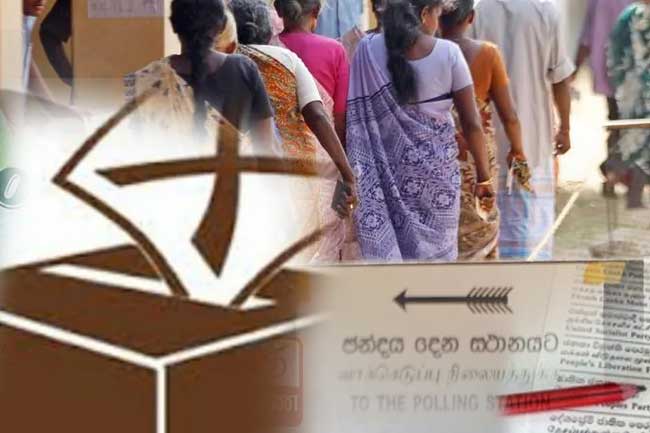
The provincial council system, introduced in 1987, was designed to address the need for power sharing between communities. However, since 2018, provincial council elections have not been held. This means that the second tier of government is non-functional, and the provinces are in practice governed by presidentially appointed governors. According to the election manifesto of the National People’s Power, provincial council elections should be held before the end of the year. If that promise is to be fulfilled, the government must take immediate steps to address the obstacles preventing these elections. It is essential that representatives from ethnic and religious minority communities be empowered to participate in the decision-making process.

The provincial council system is not only about decentralised administration. It is about devolved governance, where elected representatives have real authority to make decisions. Excessive political and economic centralisation has created deep disparities and sustained inequality. More significantly, it has contributed to the sense of political exclusion that fuelled the civil war. In comparative perspective, power sharing through decentralised governance is standard practice in multicultural societies. India, with its size and diversity, and Switzerland, despite its much smaller scale, are both examples of countries where federal or devolved structures have been effective in managing diversity and ensuring local autonomy.

Centralised governance since independence has produced persistent imbalances in both political representation and economic development. While Colombo, as the capital city, has developed rapidly, many provinces remain economically marginalised and politically disconnected from national policy-making. Centralised decisions have often failed to reflect local realities, particularly in sectors such as agriculture, education, and public infrastructure. Reactivating the provincial council system and granting it both fiscal and administrative autonomy would bring governance closer to the people. The need for decentralised governance is especially urgent today, as Sri Lanka continues to face demands from citizens for “system change” and from minority communities for meaningful participation in the political life of the country. This would be the most effective safeguard against ethnic polarisation and separatism, which culminated in tragedies such as Black July.

Over 100 skeletal remains identified so far from Chemmani mass grave

A total of 101 human skeletal remains has been identified from the mass grave at Sittupatti in Chemmani, Jaffna during three weeks of excavations.

Work began there in mid-May this year.

Lawyer for the victims V.S. Niranjan told the media that Defence Ministry permission for a scientific inspection for more skeletal remains is awaited.

On 26 July, the 21st day of second stage excavations, 11 skeletal remains were found, while a total of 90 have so far been dug up.

Toys, schoolbags, feeding bottles and other items unearthed have been handed over to the custody of courts.

On the same day, people of the north and the east launched protests to demand justice and accountability over mass graves found in the country.

Malaiyaha Tamils staged an agitation in support of them in front of the UN office in Colombo.

Posted in Uncategorized

Sri Lanka to market Mannar oil exploration blocks after appointing consultant

Sri Lanka is planning a fresh licensing round for oil exploration blocks in Mannar basin, after appointing a marketing consultant, Power and Energy Minister Kumar Jayakody said.

“The cabinet gave approval to appoint a marketing consultant to attract investors for the area (Mannar basin),” Minister Jayakody told parliament on July 25.

“The required work is being carried out.

“After a consultant or consultancy company is appointed we will being marketing the blocks.”

India’s Cairn found hydrocarbon deposits in a deep sea exploration well but it was deemed too expensive extract at the time.

There were no active exploration licenses at the moment, Minister Jayakody said.

Posted in Uncategorized

Full list of 40 countries with visa-free entry to Sri Lanka

The government has released the complete list of 40 countries whose nationals will be eligible for visa fee waivers when visiting Sri Lanka.

The move, announced by Minister of Foreign Affairs, Foreign Employment and Tourism Vijitha Herath during the inauguration of Hotel Show Colombo 2025 at the BMICH, aims to boost international arrivals and strengthen the recovering tourism sector.

Here is the full list of 40 countries now eligible for visa-free entry:

1. United Kingdom of Great Britain and Northern Ireland
2. Federal Republic of Germany
3. Kingdom of the Netherlands
4. Kingdom of Belgium
5. Kingdom of Spain
6. Commonwealth of Australia
7. Republic of Poland
8. Republic of Kazakhstan
9. Kingdom of Saudi Arabia
10. United Arab Emirates
11. Federal Democratic Republic of Nepal
12. People’s Republic of China
13. Republic of India
14. Republic of Indonesia
15. Russian Federation
16. Kingdom of Thailand
17. Federation of Malaya
18. Japan
19. Republic of France
20. United States of America
21. Canada
22. Czech Republic (Czechia)
23. Republic of Italy
24. Swiss Confederation (Switzerland)
25. Republic of Austria
26. State of Israel
27. Republic of Belarus
28. Islamic Republic of Iran
29. Kingdom of Sweden
30. Republic of Finland
31. Kingdom of Denmark
32. Republic of Korea
33. State of Qatar
34. Sultanate of Oman
35. Kingdom of Bahrain
36. New Zealand
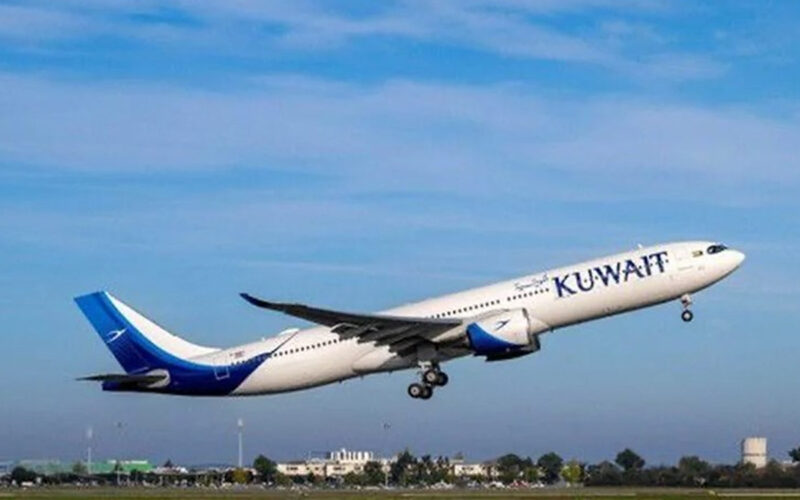
37. State of Kuwait
38. Kingdom of Norway
39. Republic of Türkiye
40. Pakistan

UK Parliamentary delegation engages in High-Level dialogue with Sri Lankan lawmakers

A high-level delegation of Members of Parliament from the United Kingdom, visiting Sri Lanka under the Westminster Foundation for Democracy (WFD) programme, met this week with a diverse group of Sri Lankan legislators, legal professionals, and civil society leaders to advance dialogue on inclusive governance, post-legislative scrutiny (PLS), and democratic reform.

The engagement was jointly organised by the Westminster Foundation for Democracy (WFD) and the Coalition of Inclusive Impact (CII), and held in Colombo with the participation of senior representatives from the British High Commission, WFD, and a broad cross-section of Sri Lankan political and civic leadership.

The UK parliamentary delegation was led by Yasmin Qureshi, MP-Head of Delegation and Chair of WFD, Jamie Stone, MP – Chair, Petitions Committee and Paulette Hamilton and MP – Acting Chair, Health and Social Care Committee.

The delegation was accompanied by British Government officials and representatives of WFD’s global and Sri Lanka-based teams.

Representing Sri Lanka at the forum were MP Shanakiyan Rajaputhiran Rasamanickam, former Minister Dr. Sudarshini Fernandopulle, Attorney-at-Law and former Member of Parliament Mohamed Shafeek Rajabdeen, Attorney-at-Law and senior legal officer of the United National Party (UNP) Shehara Hearth, Attorney-at-Law and legal advisor to the Samagi Jana Balawegaya (SJB) Chamathka Ratnayake, Attorney-at-Law, Vice President (International Affairs & Communications) of the Tamil Progressive Alliance (TPA) Barath Arullsamy and Democratic People’s Front (DPF) Sanjeev Vignarajah, representing WFD Sri Lanka.

The roundtable centred on how post-legislative scrutiny (PLS) can enhance the implementation and accountability of legislation, and how evidence-based advocacy can lead to meaningful policy change.

The UK MPs shared the Westminster experience in supporting legislative oversight and inclusive political reform, while Sri Lankan representatives highlighted the country’s evolving democratic landscape and community challenges.

Speaking at the session, Barath Arullsamy shared a successful policy advocacy initiative achieved through the collaboration of WFD and CII during the previous administration. He recounted a decade-long issue concerning the estate healthcare system, where Estate Medical Assistants (EMAs) were under threat following a government attempt to integrate plantation medical dispensaries into the public health service. The GMOA had opposed continued EMA practice, insisting only registered medical officers be appointed leading to a long-standing stalemate.

“Through research, multi-stakeholder consultations, and direct policy engagement, we were able to influence the Ministry of Health and ultimately secure Cabinet approval to appoint registered medical doctors to 10 key estate hospitals. This was a historic win for thousands of families in plantation areas,” Arullsamy noted, while urging the current Government to implement the Cabinet decision in full.

Participants welcomed the UK Government’s continued support for Sri Lanka’s democratic institutions, especially through the WFD. Special appreciation was extended for the upcoming reforms to the UK Developing Countries Trading Scheme (DCTS), which will expand zero-tariff access for Sri Lankan exports, including garments a critical sector for employment in plantation-linked regions.

Sri Lanka parliament to impeach police chief on August 05

Sri Lanka’s parliament will debate a resolution to remove Inspector General Of Police Deshabandu Tennakoon on August 05, a statement said.

A parliamentary committee earlier this week decided that the Police Chief Tennakoon, had abused power

“This marks a historic moment in our constitutional journey, the first time in the history of the Republic of Sri Lanka that such a Committee has submitted its findings recommending the removal of an Inspector General of Police under the provision of the law enacted by the Parliament,” Wickramarathne read out in parliament.

“This committee has found unanimously that the officer in question is guilty of the allegations brought against him,”

The debate will be held from 1130 am to 1600 pm.

Posted in Uncategorized

IMF’s Fifth Review of Sri Lanka Set for Fall 2025; Program Could See Revisions

The fifth review of Sri Lanka’s IMF-supported Extended Fund Facility (EFF) program is expected to take place in the fall of 2025, according to Julie Kozack, Director of the IMF Communications Department. In the context of international institutions like the IMF, “fall” refers to the season spanning September to November in the Northern Hemisphere.

She was responding to a question posed by News 1st’s Zulfick Farzan during a press briefing on Thursday (24).

This upcoming review follows the completion of the fourth review on July 1st, which unlocked USD 350 million in financial assistance for Sri Lanka, bringing the total IMF support under the EFF arrangement to USD 1.74 billion.

Kozack praised Sri Lanka’s progress, stating: “Sri Lanka’s ambitious reform agenda continues to deliver commendable outcomes. Inflation remains low, revenue collection is improving, and international reserves continue to accumulate.”

She highlighted a 5% post-crisis growth rebound in 2024, and a significant improvement in the revenue-to-GDP ratio, which rose from 8.2% in 2022 to 13.5% in 2024. Debt restructuring is nearly complete, and overall program performance has been strong.

However, Kozack also acknowledged that global trade policy and economic uncertainties pose risks to Sri Lanka’s outlook. These factors will be carefully considered during the fifth review, which will include a comprehensive assessment of the country’s economic conditions and discussions with Sri Lankan authorities.

“The team will make an overall assessment of Sri Lanka’s economy, including any implications from trade tensions or uncertainty,” she said.