LG polls : State Finance Minister responds to interim court order

State Minister assures Finance Ministry will by abide by Supreme Court order
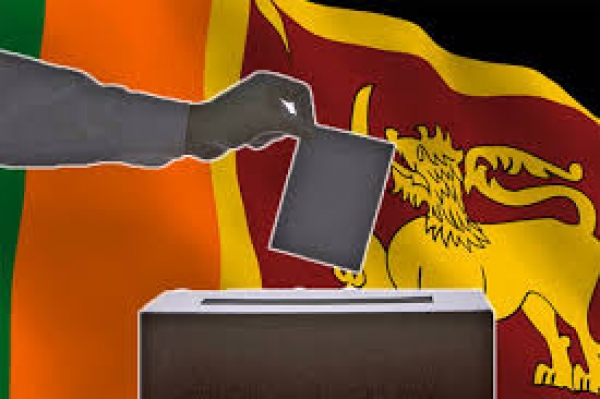
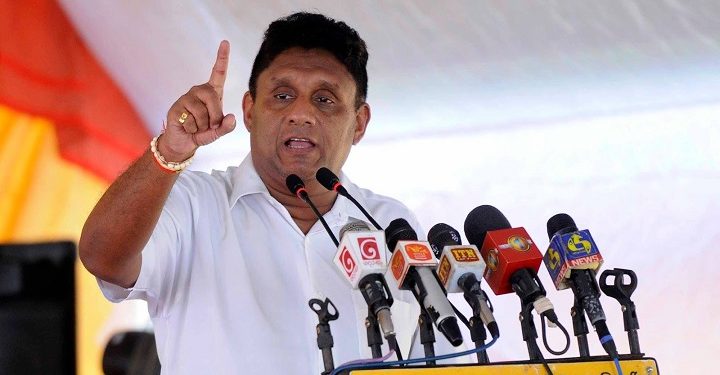
State Minister of Finance Ranjith Siyambalapitiya has assured that the order issued by the Supreme Court barring the withholding of funds allocated for the 2023 Local Government (LG) election.

The Supreme Court yesterday (03 March) issued an interim order preventing the Secretary to the Ministry of Finance form withholding the funds allocated through the 2023 Budget for the LG polls.

The court also issued another interim order preventing the retention of funds allocated for the Department of Government Printing, for the purpose of printing ballot papers.

Meanwhile, the Election Commission of Sri Lanka has decided to convene a special meeting on 07 March in order to reach conclusive date on which the 2023 polls will be held.

Accordingly, all relevant officials including the Secretary to the Ministry of Finance, the Government Printer and the Inspector General of Police (IGP) have been informed to attend the meeting, following an order issued by the Supreme Court instructing that a date for the election be announced before 09 March – the date on which the polls were initially scheduled to be held. .

Why Is Trincomalee Port Still Undeveloped? By P.K. Balachandran/The Diplomat

The natural endowments and strategic value of Trincomalee harbor in eastern Sri Lanka have been well known for a long time. Yet, to date, very little concrete action has been taken to develop and use the port. There has been no dearth of reports and plans, but – except for the partial development of the giant oil tanks in collaboration with India – there has been no development of the port and the hinterland.

According to an Asian Development Bank report, Trincomalee is a large natural harbor with water depths ranging from CD -20 m to CD -40 m. It is also the only entirely sheltered natural harbor in the South Asian subcontinent.

In the Polonnaruwa era of Sri Lankan history (1055-1232 CE) it was a major commercial port. The Western powers sensed Trincomalee’s strategic value in the 18th century. British Prime Minister William Pitt the Younger (1759-1806) said that Trincomalee was “the most valuable colonial possession on the globe” as it gave Britain’s Indian Empire a kind of security that “it had not enjoyed since the Empire’s establishment.” When the British took over Trincomalee in 1796 from the Dutch, Napoleon remarked: “He who controls Trincomalee controls the Indian Ocean.”

The first Indian to write about the strategic importance of Trincomalee for India was the historian and diplomat K.M. Panikkar. In his seminal work “India and the Indian Ocean: an essay on the influence of sea power on Indian history,” published in the 1940s, he stressed the importance of Colombo and Trincomalee ports for the defense of India.

As war clouds gathered in the 1930s, the British turned Trincomalee into an energy hub and built 101 giant oil tanks. Wanting to retain their security assets on the island even after Sri Lanka’s independence, they took the precaution of entering into a Defense Pact in 1947. After these assets were taken back by the nationalist government of S.W.R.D. Bandaranaike in 1957, Trincomalee port and the oil tanks fell into disuse. Successive Sri Lankan governments concentrated on the development of the western coast and the Colombo port for political and logistical reasons.

However, in the 1980s, Trincomalee again attracted the West’s attention. According to Port to Port, a high-level U.N. committee reported that Trincomalee port has “controllable space for the creation of a Free Port” and made recommendations for its use. The Overseas Coastal Area Development Institute of Japan (OCDI) submitted a similar report in 1984, entitled “Master Plan and Development project of Trincomalee Port,” which suggested a container trans-shipment facility and a berth for passenger cruise liners. In 1986, Sri Lanka’s National Aquatic Resources Agency (NARA) also recommended the development of the port.

But in the 1980s, geopolitical factors came into play. A reference in a 1981 Pentagon map to the possibility of a U.S. naval base in Trincomalee raised hackles in New Delhi. India was pro-Soviet and anti-U.S. at that time. When Sri Lanka called for worldwide tenders for the development of the Trincomalee oil tanks in 1982, India suspected that the deal favored bidders with links to the U.S. Navy. The tender was canceled.

In letters exchanged between Indian Prime Minister Rajiv Gandhi and Sri Lankan President J. R. Jayewardene as part of the India-Sri Lanka Accord of 1987, it was stated that Trincomalee (or any other port in Sri Lanka) will not be made available for military use by any country in a manner prejudicial to India’s interests. It was also stipulated that the restoration of the Trincomalee oil tanks will be undertaken by an Indo-Lankan joint venture.

However, due to nationalist opposition to the Accord, it was only in 2003 that the 99 surviving oil tanks were given to the Indian company Lanka Indian Oil Corporation (LIOC) on a 35-year lease. Fifteen of the 99 tanks were refurbished and put to use. But it was not until 2015 that LIOC started its bunkering business at Trincomalee port. Questions over the legality of the 2003 deal, the issue of land rights, the 30-year war, and calls by nationalists to take over the tanks stymied further development.

In 2022, another deal was signed according to which the Ceylon Petroleum Corporation (CPC) got 24 tanks, the joint India-Lankan venture Trinco Petroleum Terminal (TPT) got 61 tanks, and the LIOC got 14. However, in the context of the ongoing financial crisis in Sri Lanka, implementation faces a fresh challenge.

As for Trincomalee port, the Ministry of Shipping and Ports had proposed the creation of ship repair and ship-building and bunkering facilities. An ADB report noted that Trincomalee’s “sheltered bay is ideal for calm water vessel operations such as ship-to-ship transfer, lay-up of vessels, loading and discharging submersible structures and other shipping-related services.” There is no shipbuilding yet, but the “afloat repair service” of the Colombo Dockyard Co. was extended to Trincomalee in 2021.

Facilities in the port badly need to be upgraded. “Due to a lack of adequate lights, buoys, and lighthouses, vessels are only allowed to enter and exit the port during daytime,” the ADB pointed out. But night navigation has now been installed at the Trincomalee harbor, with the assistance of Japan through a 1 billion yen grant.

Rohan Samarajiva of the Colombo-based think tank LIRNEasia wrote in a paper on the Trincomalee port in 2017 that the port has been in the doldrums partly because the Bay of Bengal has not been a hotspot of maritime trade, given the state of economic development of the littoral states (such as Sri Lanka, Bangladesh, and Myanmar). But he saw bright prospects with south India and Bangladesh developing fast. Myanmar’s Sitwe and Kyaukphyu ports should also boost prospects for Bay of Bengal trade, but for this, the security situation in Myanmar’s Rakhine State would need to improve, he cautioned.

Sri Lankan President Ranil Wickremesinghe said in 2022 that it would take another 10 to 15 years for economic activity in the littoral states of the Bay of Bengal to pick up.

Wickremesinghe’s immediate plan is to develop Trincomalee as an energy hub with Indian help. To begin with, Sampur will have a 100 MW solar plant. To develop the hinterland, he has roped in Singapore’s urban development organization Surbana Jurong. He plans to integrate Trincomalee with the North Central and Northern provinces, which have agricultural export potential.

Samarajiva envisioned Trincomalee port developing as a “secondary port” of Sri Lanka along with Hambantota. Colombo will continue to be Sri Lanka’s principal port given its established facilities and the more developed hinterland, which accounts for 42 percent of Sri Lanka’s GDP as against 5.8 percent contributed by Eastern Province, in which Trincomalee is located.

But even to be a secondary port, Trincomalee will have to have better connectivity with Colombo, Samarajiva wrote. In 2018, the ADB had initiated a comprehensive development plan for the Colombo-Trincomalee Economic Corridor (CTEC), but there has been no progress on the modernization of the railway. The port has no railyard of its own.

Samarajiva suggested connectivity in the form of a “dry canal,” or a seamless container rail line between Colombo and Trincomalee. Samarajiva also suggested upgrading the China Bay airport in Trincomalee to serve as a civil airport.

Trincomalee is not located in an arid zone, as it gets more than 50 inches of annual rainfall, Samarajiva pointed out. But as a port and industrial zone, it will have to have a lot of water, he warned. It will also require adequate social infrastructure in terms of housing, educational and medical facilities for the large number of Sri Lankan and foreign personnel who will congregate there as development gets underway.

Even as it faces these problems, another obstacle has come to light, namely, the rumor that the United States and India are aiming to establish a naval base in Trincomalee, triggered by the sudden visit of U.S. Principal Deputy Assistant Secretary of Defense for Indo-Pacific Security Affairs Jedidiah Royal. Though baseless, the rumor has the potential to stall Trincomalee port’s development – as has happened so many times in the past.

“If President wants General Election, hold a General Election” – MP Rauff Hakeem

Parliamentarian Rauff Hakeem challenged President Ranil Wickremesinghe to conduct General Elections, speaking at an event on Saturday (4).

“The President says the Local Government Election is not useful and that a Parliamentary Election is required to change a government. If so, hold a General Election. What we need is an election. If would be better if a General Election was held”, he stated.

Rauff Hakeem stated that the government should allow the people to exercise their franchise at the Local Government elections adding that an election is the solution to the economic woes of the country.

He claimed that “the President is the invisible hand behind moves to postpone the election.”

Posted in Uncategorized

UK calls on Sri Lanka to address the issue of land grabs

The UK’s Permanent Representative to the UN in Geneva gave a statement during Sri Lanka’s Universal Periodic Review (UPR) at the Human Rights Council.

Thank you, Mr President,

We welcome Sri Lanka’s commitments on respect for the rights of those from all religious and ethnic groups. Its recent efforts to foster political inclusion and constitutional reform are particularly welcome. We emphasise the importance of reconciliation, justice and accountability for all communities, independent domestic institutions, the preservation of civil society space and the repeal of the Prevention of Terrorism Act.

We recommend that Sri Lanka:

Allow all its communities freely to commemorate and memorialize victims of the civil war.

Repeal sections 365 and 365A of the Penal Code, end criminalization of same-sex conduct and ensure equality and non-discrimination in relation to sexual orientation and gender identity.

Address concerns around land expropriation in the North and East by government departments, including the Archaeological department, and related restrictions on access to land.

Thank you, Mr President.

Published 28 February 2023

Govt to consult India before signing agreement with Russia

Sri Lanka is considering selecting one of three locations – Trincomalee, Hambantota, or Mannar for the proposed Russian mini nuclear power plant and the Sri Lankan Government intends to consult India before signing an Inter-Governmental Agreement (IGA) with Russia.

Regarding the funding of the project, the Sri Lanka Atomic Energy Board (SLAEB) is of the view that the government ‘may’ go for fully Russian-funded nuclear plants or look for other options like a joint-venture.

Chairman of the SLAEB Prof S. R. D. Rosa, told Ceylon Today on Friday (3) that the Government has expressed its willingness to proceed with the two mini nuclear power plants project as a joint venture, and they intend to hold further discussions about the installation and the relevant factors.

Russia proposed a mini nuclear power plant for Sri Lanka several years ago, but due to the energy crisis the Government revived talks with Russia.

The SLAEB will consult India and select the model similar to the one Russia is installing in Bangladesh with India. India has joint in construction and installation works in the “non-critical” category for the Rooppur Nuclear Power Plant in Bangladesh, Rosatom State Corporation of Russia said. Russia also built the Kundankulam Nuclear Power plant in South India that was commissioned in the year 2013.

The SLAEB Chairman said they will still earmark the nuclear project if it’s an onshore project to be installed either in Mannar, Trincomalee or Hambantota.

He added that whether the proposed nuke plants are offshore on barrages or offshore would be discussed before the agreement is signed and they expect to do it soon.

The Russian Ambassador to Sri Lanka said recently they had already held three rounds of video conferences on various topics such as ammonia and nuclear energy cyclotron with the Sri Lankan officials, for the proposed Small Modular Reactors (SMRs), with a maximum power capacity of 100 MW each. “The response should also include an invitation for a high-ranking Rosatom delegation to visit Sri Lanka for expert-level consultations, the Envoy said on Friday (3).

He emphasised as a first step towards installation of the nuke power plant, the Cabinet had approved the signing of the International Atomic Energy Agency’s (IAEA) recommended by the Vienna Convention on Civil Liability for Nuclear Damage and Convention on Supplementary Compensation for Nuclear Damage.

He added that once that is approved it would be directed to the Cabinet for the next step of getting the IGA approved through the Foreign Ministry and the Ministry of Energy with Russia.

The Chairman added that the IAEA has already approved the installation of nuclear power plant.

The proposed Russian for nuclear power plant was initiated a long time ago and the planned MoU with them in 2018 really did not take off well, the SLAEB Chairman said.

Russian International Affairs Council (RIAC), in its report said that given India’s lack of experience in developing projects outside of India and its long history of nuclear cooperation with Russia, Russia may expect to participate in joint projects with India in third world countries.

By Sulochana Ramiah Mohan

Posted in Uncategorized

Decision on new dates for 2023 LG polls postponed

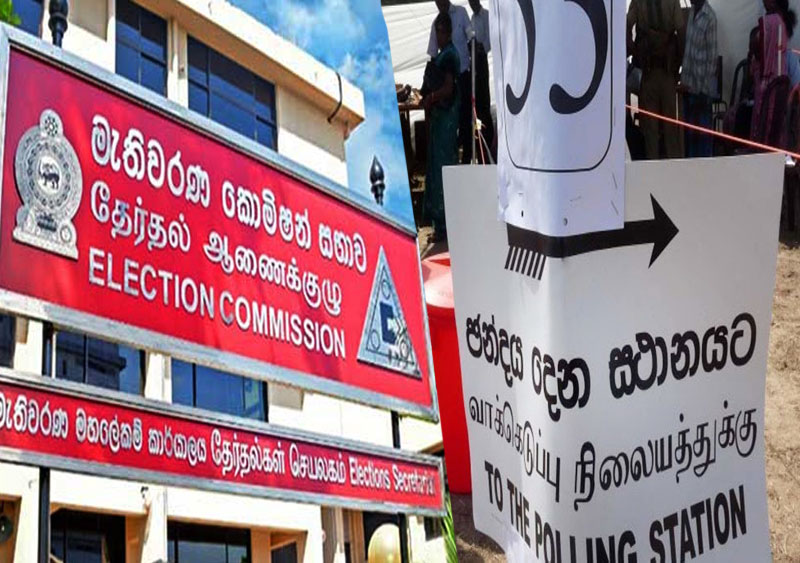
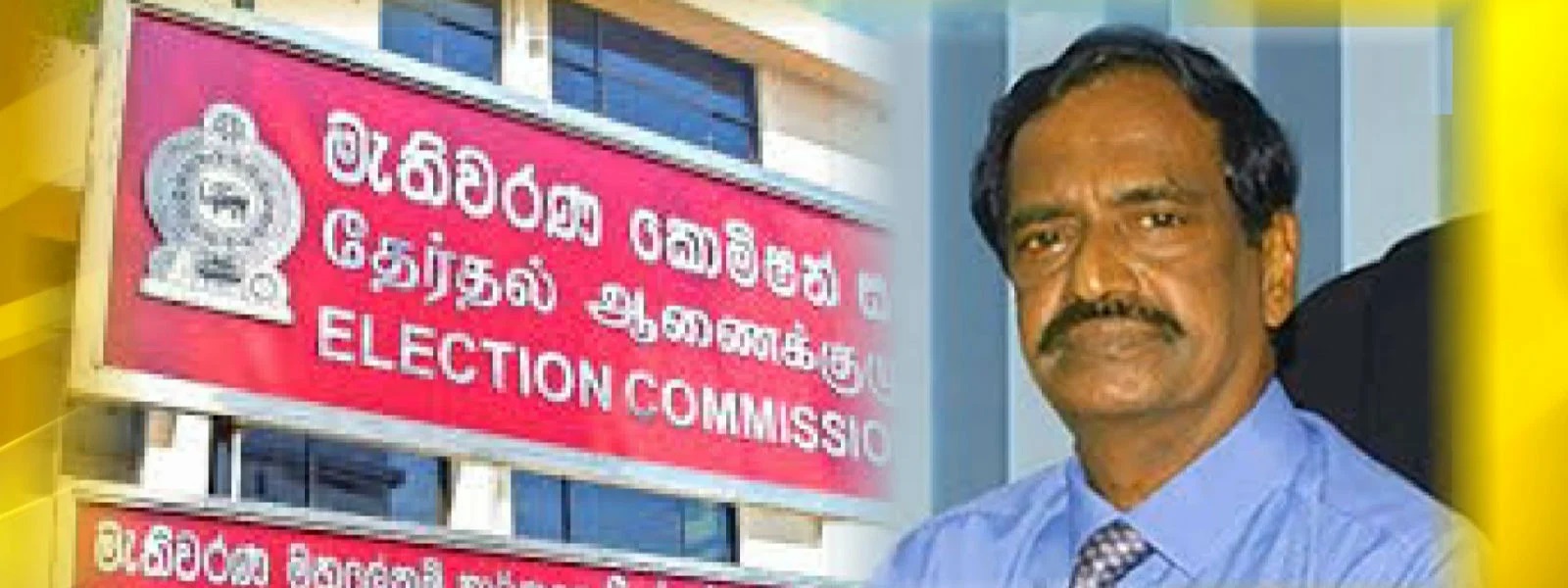
A new date for the 2023 Local Government (LG) election will be announced at the beginning of next week, Chairman of the Election Commission of Sri Lanka, Attorney-at-Law Nimal G Punchihewa stated.

Although initially scheduled to be announced today (03 March), announcing the new election dates was postponed following a meeting held by the members of the Commission this morning.

The postponement comes in the background of an order issued by the Supreme Court in this regard today, instructing that a date for the 2023 polls be announced before 09 March – the date on which the polls were initially scheduled to be held.

The court ordered that the relevant decision be reached following discussion with the Finance Ministry and all other relevant institutions.

On 24 February, the election body announced that the LG polls would not be held on 09 March as scheduled, owing to matters beyond its control.

On several occasions, the Election Commission held subsequent meetings to review the country’s economic situation and several other factors in order to decide on the new dates for the LG polls.

Meanwhile, the Supreme Court issued a court order a short while ago barring the Secretary to the Ministry of Finance from withholding funds allocated for the LG polls through the 2023 Budget.

Posted in Uncategorized

Supreme Court issues Interim Order on funding Local Government Election 2023

Sri Lanka’s Supreme Court on Friday (3) issued an interim order on the country’s Finance Secretary, and the Attorney General who represents the Finance Minister preventing them from withholding any funds allocated by the 2023 Budget for the Local Government Poll 2023.

The interim order was issued after permission was granted to examine an application that was filed by General Secretary of the Samagi Jana Balavegaya Ranjith Madduma Bandara.

The application was taken up in the presence of Supreme Court Justices P. Padman Surasena, Janak De Silva, and Priyantha Jayawardena.

The Supreme Court issued another Interim Order preventing the withholding of any funds from the Government Printer.

The application will be taken up for examination from the 26th of May 2023.

Posted in Uncategorized

EC still keen on holding election

While stating that the primary objective of the Election Commission (EC) is to hold the Local Government (LG) poll, EC Chairman Attorney Nimal G. Punchihewa stated yesterday (2) that at today’s (3) Commission meeting, the members will discuss on a suitable date to hold the postponed election, whereafter, the Returning Officers would decide to schedule the specific date depending on the situation and thereafter gazette the same.

Speaking to The Daily Morning, Punchihewa said: “Returning Officers decide the date of the LG poll, not us. The EC advises them that a particular date is suitable and they make the final decision accordingly and gazette it. However, the scheduling of a suitable date would depend on the prevalent environment”.

When queried regarding whether the election would be scheduled for May as claimed by National People’s Power Leader and Opposition MP Anura Kumara Dissanayake recently or whether it will be further delayed, he said: “Some political parties want to expedite the election and some parties want to delay. These are the requirements of the political parties. But, our role in the EC is to consider a suitable date for the election. We cannot comment on the particular month or date without discussing it.”

Last week, Punchihewa wrote to Speaker of Parliament Mahinda Yapa Abeywardana, requesting him to intervene to urge the Treasury to release the funds required to conduct the LG election. The EC decided at a meeting held last week, to not hold the LG poll on 9 March as scheduled due to reasons beyond the control of the Commission. The EC further stated that a new date for the LG poll would be declared today.

Meanwhile, a two-day adjournment debate has been sought by the Opposition on 9 and 10 March with regard to the postponement of the LG election while the main Parliamentary Opposition, the Samagi Jana Balawegaya (SJB) will submit a resolution to Parliament to take up a vote regarding whether the funds for the LG poll should be released or not.

Posted in Uncategorized

Indian State Bank of completes first commercial trade in Sri Lankan Rupees

The State Bank of India has completed its first non-dollar transaction with Sri Lanka, by paying for exports in Sri Lankan rupees.

The move comes as India looks to bring countries that are short of US dollars into the trade mechanism.

Sri Lanka is still grappling with its worst economic crisis since its independence, triggered by a shortage of dollars.

Sri Lankan banks were allowed to open ‘vostro accounts’ with the State Bank of India to conduct bilateral trade in rupees in recent weeks.

The Reserve Bank of India granted approval to open five vostro accounts for trade in rupees with Sri Lanka.

It is reported that India’s rupee trade settlement mechanism, a means of using rupees instead of US dollars and other big currencies for international transactions, is attracting interest from a number of countries.

Sri Lanka to consider Russian proposal for offshore nuclear power plants

The Sri Lanka Atomic Energy Board said that Russia has put forward a proposal to build a nuclear power plant in Sri Lanka, and has also put forward an agreement for this purpose.

Professor S.R.D. Rosa, the Chairman of the Sri Lanka Atomic Energy Board, said this is a government to government program.

Cabinet approval was given to consider nuclear energy as an alternative to meet Sri Lanka’s future energy needs. In accordance with that decision, a steering committee and 09 action committees have been appointed to study matters related to electricity generation using nuclear energy.

The proposal put forward by Russia for a nuclear power plant in Sri Lanka come in such a backdrop.

It is yet to be decided if this nuclear power plant will be constructed on land, or if it would a barge mounter power plant.

According to a proposal put forward by Russia, a team of Russia experts will operate the power plant, and would also train Sri Lankans within three years in operating the nuclear power plant.

Rosatom, also known as Rosatom State Nuclear Energy, has put forward the proposal and it is a Russian state corporation.

Professor S.R.D. Rosa, the Chairman of the Sri Lanka Atomic Energy Board, said it is possible that Sri Lanka would opt for three small offshore nuclear power plants that would each generate 100 MW.

He added that Sri Lanka is currently studying the agreement Russia has with Bangladesh in order to determine the investments, grace period and repayment period.