Can’t intervene in releasing funds for election: Speaker

Although the Speaker of Parliament Mahinda Yapa Abeywardana yesterday (27) pointed out that there are no legal provisions for him to intervene in releasing funds for the Local Government (LG) poll as requested by the Election Commission (EC) in writing last week, he however, stated that the matter should be decided by the party leaders.

When queried by The Daily Morning as to what steps he would take to release the funds to hold the LG poll as requested by the EC, Abeywardana said: “That has to be decided by the party leaders. There are no legal provisions for me to get involved, and give legal instructions on how they should disperse their money. The duty of Parliament has been done, and after that, the dispersing of the money is part of the Treasury’s job. They must do it, depending on the income that has been collected by them at that time. That is the position, and beyond that if anything has to happen, it has to be in accordance with the Parliamentarians. The authority is with the Parliament, not one or two MPs. Not even the Speaker has anything to do with that. The MPs have to decide.”

When queried as to when he would hold a party leaders meeting, he noted: “That depends on how the party leaders are available, so we will talk to them and see.”

Meanwhile, when queried by The Daily Morning from the Finance Ministry and Treasury Secretary Mahinda Siriwardana yesterday as to whether he had received any request from Parliament or the Speaker to release funds for the LG poll, he said: “No. I have not got any such request from anyone.” When questioned as to whether there would be any funds released for the LG poll expenses, he said: “You have to ask that from the Minister of Finance (President Ranil Wickremesinghe is also the Minister of Finance, Economic Stabilisation and National Policies).”

Last week, the Chairman of the EC, Attorney Nimal G. Punchihewa wrote to the Speaker, requesting him to intervene to urge the Treasury to release the funds required to hold the LG election. The EC decided at a meeting held last week not to hold the LG poll on 9 March as scheduled due to the reasons that have arisen and which are beyond the control of the Commission. The EC further stated that a new date for the LG poll would be declared on 3 March.

Meanwhile, Abeywardana stated that around 1,500 applications have been received by the Constitutional Council to appoint members to the independent commissions.

Sri Lanka’s crisis offers an opportunity to reset its development model

Sri Lanka is at a critical moment in its history. Years of economic mismanagement, weak governance, poor policy choices, and the impacts of external shocks such as the COVID-19 pandemic and the Russian invasion of Ukraine, plunged the country into its worst-ever crisis in 2022.

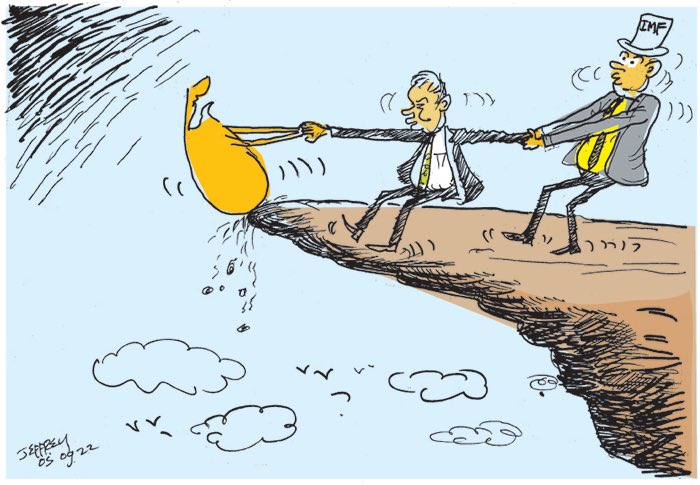
Economic collapse and political instability have devastated lives and livelihoods across the board, dealing the heaviest blow to the poorest and most vulnerable. Regular climate-induced disasters add to Sri Lanka’s fragility. The depth of the crisis has made it clear that Sri Lanka needs a new development model. But the road to recovery is challenging and the necessary fiscal adjustment measures can be painful. Debt relief from Sri Lanka’s creditors and fresh financing from international financial institutions are thus urgent to ensure people don’t lose patience with reforms and the opportunity for a change isn’t lost.

The economic crisis has left deep scars. Poverty nearly doubled in Sri Lanka between 2021 and 2022, climbing from 13 to a staggering 25% (using a poverty line of $ 3.65 per person per day), and is projected to increase by more than 2 percentage points in 2023. In the same timeframe, urban poverty tripled from 5 to 15%. Sri Lanka’s people have been forced to quickly adapt to a new reality where prospects for a good job are limited, incomes are lowered and eroded by inflation, and opportunities for a better future are becoming increasingly rare.

Debt relief from Sri Lanka’s creditors and fresh financing from international financial institutions are urgent to ensure people don’t lose patience with reforms and the opportunity for a change isn’t lost.
In 2022, at least half a million people lost their jobs, most of which were in the industry and services sectors and employed women. Those already classified as poor saw a 65% increase in their cost of living, while the increase was 57% for the non-poor, highlighting the significant loss of welfare for all Sri Lankans.

In times of crisis, people often cope by adopting detrimental survival strategies. For instance, they limit their intake of nutritious foods, forego education and preventive health investments, or take up informal and subsistence work. These negative coping mechanisms can erode decades of progress in human capital with impacts that could last generations. Worsening food insecurity is already translating into an increase in child malnutrition and stunting, which increased from 7.4 to 9.2% between 2021 and 2022.

The international community must help Sri Lanka strike the right balance between pursuing critical reforms to get the economy back on track and ensuring that people have access to safety nets, better jobs, and economic opportunities.

Complementing the Government’s initiatives to stabilise the economy, the World Bank is helping transform economic governance and increase public sector transparency. This will prevent repeating past mistakes through strengthened fiscal oversight and debt management, and by tackling the sources of the heightened financial sector vulnerabilities. And we are helping Sri Lanka transition towards a more private sector-driven and outward-looking economy by supporting SOE reforms, reducing the cost of trade, and making it easier for the private sector to invest.

Although they are necessary, these reforms can negatively impact people if their immediate effects are not mitigated. To prevent further welfare losses, a more effective social protection system is a priority. Our support focuses on redesigning existing cash transfer programs and improving the social registry to provide targeted cash assistance to those most in need. In addition to cash transfers, the World Bank has been supporting the lives and livelihoods of the people by supplying essential goods such as medicines and school meals.

As Sri Lanka recovers, it is essential not only to help people escape poverty and vulnerability, but also to strengthen their resilience to future shocks in an increasingly volatile world.
Strengthening human capital requires building a more inclusive society. The Government is drafting legislation that will strengthen the institutional framework for gender equality and women’s empowerment. These positive developments should help level the playing field for women to participate in the workforce and protect women and girls from gender-based discrimination.

As Sri Lanka recovers, it is essential not only to help people escape poverty and vulnerability, but also to strengthen their resilience to future shocks in an increasingly volatile world. Linking cash transfer beneficiaries to economic opportunities and complementary measures—such as skills training, job coaching, and access to finance—can make Sri Lankans more employable, enabling them to rebuild their assets and improve their economic well-being. These interventions can be catalysed by measures that promote job creation through an improved business environment and access to finance, especially to support small and medium firms that are prevalent across Sri Lanka.

With every crisis comes an opportunity. For Sri Lanka, this pivotal moment is a chance to reset its development model towards green, resilient, and inclusive growth. Sri Lanka has begun its journey towards this goal. What is important now is sustaining the reform momentum, rebuilding trust in public institutions through greater transparency and accountability, and protecting the livelihoods of those most affected by the crisis. Such efforts deserve support from Sri Lanka’s international partners.

This piece was originally published in Daily FT on February 27, 2023

President signs Gazette declaring transport & ports essential services

President Ranil Wickremesinghe has signed an Extraordinary Gazette Notification declaring services related to ports, airports and passenger transport essential services with immediate effect.

The Extraordinary Gazette was issued by the Secretary to the President Saman Ekanayake, by order of the President yesterday (27).

The Gazette states;

By virtue of the powers vested in me in terms of Section 2 of the Essential Public Services Act, No. 61 of 1979, I, Ranil Wickremesinghe, President of the Democratic Socialist Republic of Sri Lanka, do by this Order, considering it necessary that the services provided by any Public Corporation or Government Department or Local Authority or Co-operative Society or any branch thereof being a Department or Corporation or Local Authority or Co-operative Society, which is engaged in provision of the services specified in the Schedule hereto, is essential to the life of the community and is likely to be impeded or interrupted, declare the services specified in the Schedule hereto to be an essential public service for the purposes of the aforesaid Section.

Given at Colombo, on the 27th day of February, Two Thousand and Twenty Three.

By order of the Hon. President,

1. Public transports services for passengers or goods.

2. the discharge, carriage, landing, storage, delivery and removal of articles of food or drink, or of coal, oil or fuel from vessels within any port as defined for the purposes of the Customs Ordinance (Chapter 235)

3. the provision and maintenance of facilities for transport services by road, rail or air, including roads, bridges, culverts, airports, ports and railway lines.

Posted in Uncategorized

JJB candidate, who was admitted to hospital following Sunday’s (26) protest, dies

An individual who was admitted to the Colombo National Hospital following the protest staged by the Jathika Jana Balavegaya in Colombo on Sunday (27) has died.

General Secretary of the JVP Tilvin Silva speaking to reporters in Colombo on Monday (27) said a peaceful protest by the JJB was attacked, and as a result of an attack around 28 people were hospitalized due to injuries.

“Two people were in critical condition. One of them passed away on Monday (27) afternoon. He was one named, Nimal Amarasiri, a candidate for the Nivithigala Pradeshiya Sabha of the Ratnapura District,” he added.

Silva said the government led by Ranil Wickremesinghe should be responsible for the life that was lost, adding that the JJB did not want any confrontation with police and only wanted to protest demanding their right for an election.

European Investment Bank monitoring IMF offer for Sri Lanka

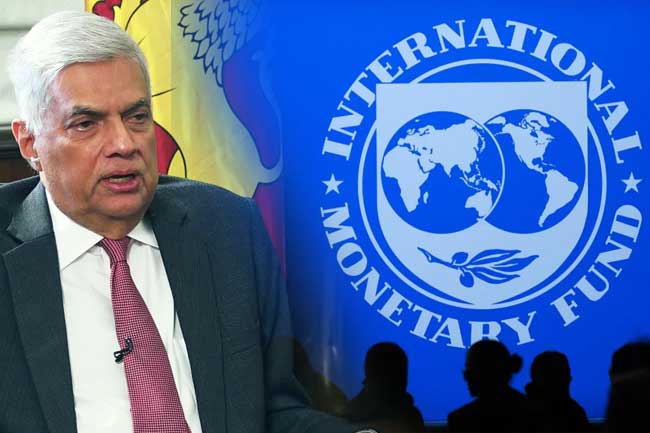
The European Investment Bank (EIB) says it is monitoring the offer made to Sri Lanka by the International Monetary Fund (IMF).

Sri Lanka Ambassador to Belgium, Luxembourg, and Head of Mission to the European Union Grace Asirwatham met with Vice President of the European Investment Bank Kris Peeters in Luxembourg.

Senior Loan Officer, Public Sector Operations, Asia and Pacific, in the Global Partners Department of the EIB Francesco Consiglio, and Head of the Office of the Vice President Anouk Hamers were also associated with the meeting.

Ambassador Asirwatham briefed the Vice President of the EIB on the current economic situation in Sri Lanka and the actions being taken by the Government of Sri Lanka, including the engagement with the International Monetary Fund to ride out the crisis.

Ambassador Asirwatham further briefed the Vice President on the vision of the President of Sri Lanka to develop an export-oriented competitive economy, an environmentally friendly green and blue economy, and a digital economy.

Vice President Peeters responded by saying that the EIB was closely monitoring the progress of Sri Lanka’s economic revival, particularly the IMF’s offer of an Extended Fund Facility (EFF) for Sri Lanka.

Given that the EIB supports a large number of green projects around the world, the Ambassador presented details of Sri Lanka’s ambitious plans to become a green economy by 2050 and the various measures proposed in that direction in the preliminary report on the Sri Lanka Climate Prosperity Plan, including Sri Lanka’s commitment to supporting the Paris goals of limiting global warming, decreasing carbon emissions by 2030, and making Sri Lanka a low-carbon hub, as well as planning to achieve 70% of renewable energy in electricity production by 2030, among other plans.

The Vice President said that the EIB will continue its commitment of Euro 50 million to fund the ongoing Greater Colombo wastewater management project in Sri Lanka. He added that once the IMF’s Extended Fund Facility (EFF) for Sri Lanka comes into force, the EIB may be able to consider new financial commitments to support green projects in consultation and collaboration with the European Commission.

Kris Peeters, who previously served as the Deputy Prime Minister of Belgium, later joined EU politics before being appointed as the Vice President of the EIB.

Posted in Uncategorized

Pakistani Navy Chief meets with President Ranil

Admiral Muhammad Amjad Khan Niazi, Chief of the Naval Staff (CNS) of Pakistan Navy, who is currently on an official visit to Sri Lanka met President Ranil Wickremesinghe at the President’s Office this morning (27) and engaged in a discussion.

During the discussion, emphasis was placed on enhancing the maritime regional cooperation between Sri Lanka and Pakistan, alongside exploring opportunities for the further expansion of maritime activities between the two nations, the PMD said.

Symbolizing this meeting, the Pakistan Navy Chief presented a commemorative gift to President Wickremesinghe.

A group of senior naval officials from both countries attended the event, it said.

Posted in Uncategorized

Army forced to remove erected Buddha statue overnight

Objections raised by the public forced the Army to remove a Buddha statue it had erected near one of its camps in Jaffna.

The Buddha statue was placed under a Bo tree near the Nilavai camp in Achchuveli on the night of February 23.

On the following morning, Tamil people complained to the police and Valikamam East Pradeshiya Sabha against it, noting that the area had no Buddhists.

TELO Jaffna district leader and Chairman of the PS Thiagaraja Nirosh and the police met the Army officials, after which the Buddha statue was removed.

Tamils accuse the military of moving to build temples and settle Sinhalese in their areas in an attempt to change the composition of the population in the north and the east.

Posted in Uncategorized

AKD to play waiting game till election held

Emphasising that it is not difficult for the Janatha Vimukthi Peramuna (JVP)-led National People’s Power (NPP), having waited patiently for 75 years, to wait patiently for another week or a month, NPP and JVP Leader Anura Kumara Dissanayake stated that their goal is to transfer political power, which has been limited to only a few elite families, to the masses, and that all attempts would be made, until the last moment, to achieve this goal democratically and peacefully.

Speaking during a protest organised by the NPP against the postponement of the Local Government (LG) election in Colombo yesterday (26), he said: “President Wickremesinghe is currently harbouring hatred towards the people for not having voted for him in the Parliamentary election in 2020. They thought they could enter Parliament as if by family inheritance. They thought that the people were bound to vote for them, but what happened in the end? The people drove Wickremesinghe out in 2020. Since then he has been angry and hateful towards the people and is taking revenge on them. However, do not have any doubts, We will definitely drive him out. We will form a people’s government. We have waited for 75 years, so can’t we wait for another week or month or so? We will work more and meet people during that week or month too.”

He further claimed that the NPP would not resort to violence to achieve its goals.

“We do not want to create a problematic situation at all. We come in peace. Regardless of the violence President Ranil Wickremesinghe resorts to, we will rally the people peacefully and democratically till the end. Our strength is in peace and democracy. We will definitely defeat you (referring to Wickremesinghe) and your Government within a short period. We have set the goal of transferring power from the corrupt elite class to the people within the next year and a half. We are working towards that goal. Neither Wickremesinghe nor anyone else can push us back by even a single step. That is because others fight for themselves and their families, but our battle is for the people. Therefore, Wickremesinghe can never reverse this and we will definitely win this battle.”

Claiming that Wickremesinghe was under the impression that the highest positions in government, such as the posts of President and Prime Minister were always reserved for elite families such as the Wickremesinghes (a reference to Wickremesinghe’s family), the Rajapaksas (a reference to former President Gotabaya Rajapaksa and former President, Prime Minister, and incumbent MP Mahinda Rajapaksa and their family), the Premadasas (a reference to former President, slain Ranasinghe Premadasa and incumbent Opposition Leader Sajith Premadasa), the Senanayakes (a reference to former Prime Ministers late D.S. Senanayake and Dudley Senanayake and their family), and the Bandaranaikes (a reference to former Prime Ministers, slain S.W.R.D. Bandaranaike and the late Sirimavo R.D. Bandaranaike, former Minister and Speaker of Parliament Anura Bandaranaike, and former President Chandrika Bandaranaike Kumaratunga), Dissanayake said that that era is now reaching its end.

“For the first time in Sri Lanka, the people are lining up for a government of the oppressed people. The LG election was announced in January and was to be held on 9 March. However, it has now been postponed. Why is it? If the power were to be transferred between the Rajapaksas, Wickremesinghes and Premadasas, he would not have hesitated to hold the LG election. However, the beginning of the political transformation in the country was to begin with the LG election. So, Wickremesinghe is postponing it. The President also said that the Opposition (Samagi Jana Balawegaya) had asked him to postpone the LG election to prevent the NPP from coming to power. However, they cannot keep postponing this forever. People are joining us day by day. Today, the Police fired tear gas at us, but we know that on the day this battle ends, the Police and Army will also join us.”

Commenting on the orders issued by the Colombo Fort and Maligakanda Magistrate’s Courts preventing Dissanayake and several others from entering and holding protests in several places in Colombo yesterday, he said: “A total of 26 people, including myself, have been banned from entering several places in Colombo. What has happened to Wickremesinghe? He has been banned from all parts of the country. We (the NPP) can reach the people of the North, East, South, and West without any difference. We can meet people in every corner of the country, be they the farmer, the labourer, the professional, the Buddhist monk, the police officer, army personnel, or anyone else. We can talk and align with all of them. However, Wickremesinghe has been President for eight months. Tell me about a meeting he had with 100 people or a speech he made to farmers or fishermen or some other group. All lands are forbidden lands to him. He has only two spaces, they are the Parliament and the President’s House; the land of the people has been prohibited for him.”

The NPP held a massive protest in the Town Hall area in Colombo against the postponement of the LG election by the President – who is also the Finance, Economic Stabilisation, and National Policies Minister – and the Government led by him, which many parties claimed to be one of the largest protests following the massive “aragalaya” protests which demanded the resignation of then-President Gotabaya Rajapaksa last year (2022). Thousands of NPP and JVP supporters, most of whom were youths, gathered at the Viharamahadevi (Victoria) Park in Colombo last afternoon to protest the postponement of the LG election due to Wickremesinghe not releasing the necessary funds to the Elections Commission (EC).

Posted in Uncategorized

China to train 5,000 security personnel from developing countries over next 5 years

China has revealed plans that it will train 5,000 security personnel from developing countries over the next five years, South China Morning Post reported. The announcement appeared in a paper on Beijing’s Global Security Initiative published earlier this week.

The move comes as the country plans to create more international platforms for exchange and cooperation to address security challenges.

“Beijing plans to create more international platforms for exchange and cooperation to address security challenges in areas such as counterterrorism, cybersecurity, biosecurity, and emerging technologies, to improve governance capacity in non-traditional security,” according to SCMP.

The country will also encourage more exchanges and cooperation among university-level military and police academies. As per a paper by Global Security Initiative (GSI), the move will help China to address global security issues.

Li Wei, an anti-terrorism expert at the China Institutes of Contemporary International Relations (CICIR), told SCMP, “China used to train anti-terrorism police officers and officials in countries such as Afghanistan and Pakistan, and now it will expand the scope of this cooperation. The training and exchanges aim to strengthen efficiency in bilateral and multilateral cooperation, such as in the anti-terrorism field.”

Last year, Chinese President Xi Jinping announced that China would train 2,000 law enforcement personnel from Shanghai Cooperation Organisation (SCO) member countries over the next five years and set up a training base focused on anti-terrorism.

The country also recruited as many as 30 former RAF pilots to defeat western warplanes and helicopters in October 2022. In December 2022, China offered to train 1,500 police and cybersecurity officials from Arab states.

Meanwhile, Western countries who are keeping a close watch on these activities, have sparked concerns about Chinese police practices. Last year, the British government said it was taking steps to stop Chinese recruitment schemes.

“We are taking decisive steps to stop Chinese recruitment schemes attempting to head hunt serving and former UK Armed Forces pilots to train People’s Liberation Army personnel in the People’s Republic of China,” a Defence Ministry spokesperson was quoted as saying by the New York Times.

15 injured during NPP protest hospitalized

Around 15 individuals who sustained injuries during a protest march staged by the National People’s Power this afternoon have been hospitalized.

They have been admitted to the Colombo National Hospital.

Earlier, Police used tear gas and water cannon to disperse a group of protesters at the Ibbanwala junction.

The protest march was organized by the National People’s Power against the purported delay by the government to hold the Local Authorities Election.

Police prevented protesters from entering areas that have been banned by court.

However, since protesters attempted to move forward breaking the Police line, tear gas and water cannon were used to disperse the group.

Meanwhile, several roads adjacent to the Town Hall in Colombo were blocked due to a protest march staged by the National People’s Power.

Accordingly, traffic congestion was also been reported adjacent to the Town Hall and several roads in the vicinity.

Meanwhile, earlier two court orders were issued preventing 26 persons including Parliamentarian Anura Kumara Dissanayake from staging protest marches in Colpetty, Slave Island and Colombo Fort areas as well as the Hospital Square.