China’s humanitarian aid to Sri Lanka’s Eastern Province

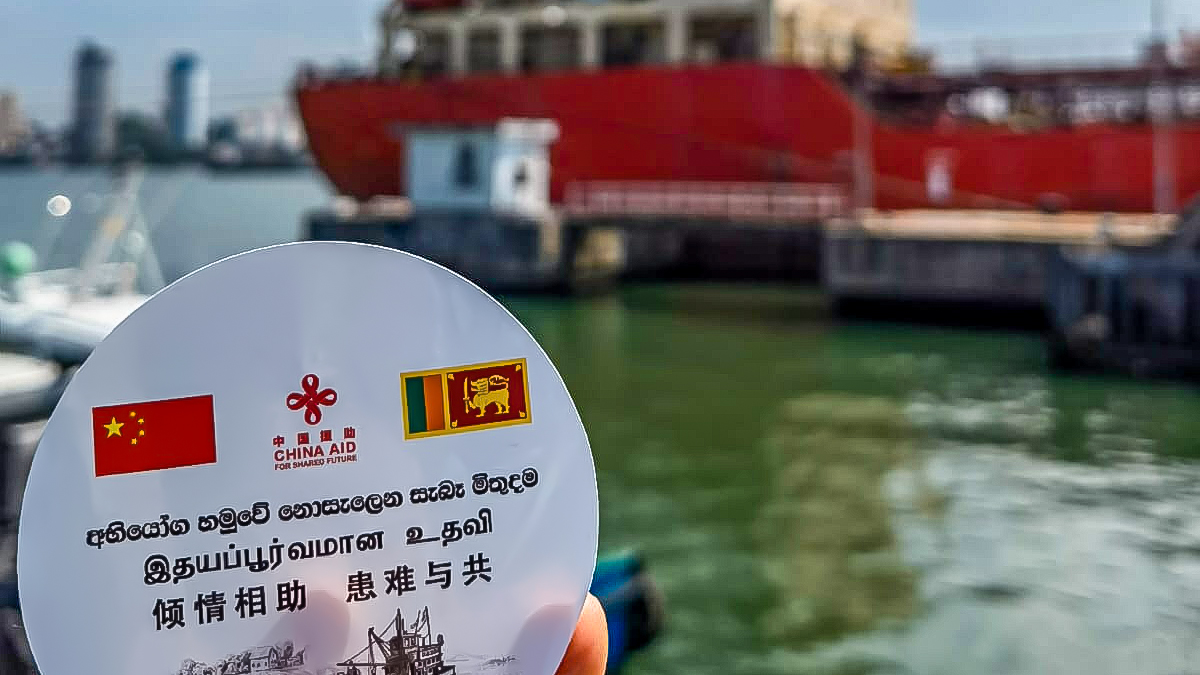
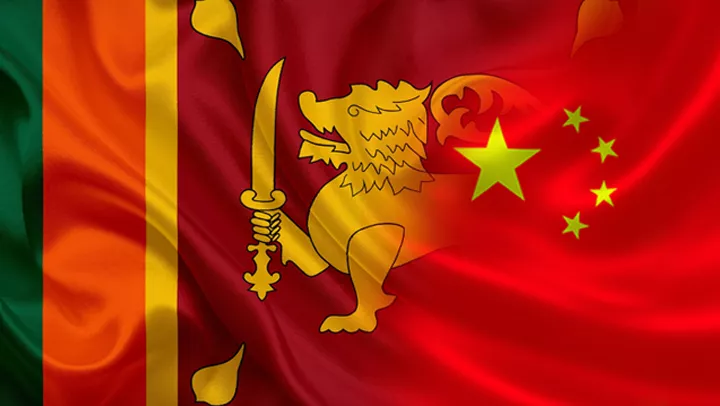
The Deputy Chief of the Chinese Embassy Hu Wei paid a visit to the Eastern Province from 8th to 10th December, to follow up the distribution of China’s recent donations to the island in various ways, including 10.6 million litres of diesel to farmers and fishermen, 9,000 metric tons of rice to students from underprivileged families and 100 sets of solar streetlights donated by China’s Yunnan Province to 38 schools across the Eastern Province.

A Chinese embassy press release said that on the afternoon of 8th December, DCM Hu Wei met with Anuradha Yahampath, Governor of Eastern Province at the latter’s secretariat in Trincomalee. Both sides exchanged ideas on further promoting cooperation between China and the Eastern Province and other topics of mutual interest. They also joined local principals in a hand-over ceremony of the 100 sets of solar streetlights donation.

DCM Hu Wei visited Abhayapura Primary School in Trincomalee and Korakallimadu Sri Ramana Maharishi School in Batticaloa, interacted with teachers and students and gifted rice packs donations and panda backpacks to the pupils. The diplomat also visited the paddy field at Nochchikulam, Trincomalee and the beach in Kaluwankerney, met with local farmers and fishermen and handed over a batch of diesel to them. It was highlighted that the 10.6 million litres of diesel provided by China to Sri Lanka free of cost will benefit 232,749 farmers for harvesting 342,266 hectares of paddy fields in Maha season 2022/23 and all the 3,796 fishing vessels below 40 feet in the island.

On the afternoon of the 9th, the Chinese Embassy delegation was invited by the Batticaloa District Civil Society to Kaluwankerni, an underdeveloped Tamil fishing village in Batticaloa, where the first phase of 10 houses had already been built to help most needy families by the Embassy. DCM Hu had a discussion with the villagers and Batticaloa District Civil Society representatives and officially launched Housing Project Phase II for the villagers.

During the visit, DCM Hu Wei broadly met with local government officials, civil society representatives, farmers, fishermen, housewives, teachers, students and deeply encouraged by their high praise and friendship towards China, especially for the support of PPEs, vaccines, housing, education, rice, medicines, and fuel donation in the past year. Hu reassured them of China’s continued assistance to Sri Lankan people of all communities in the coming months to overcome current challenges.

Posted in Uncategorized

Ranil to discuss devolution, 13A with Sajith in January

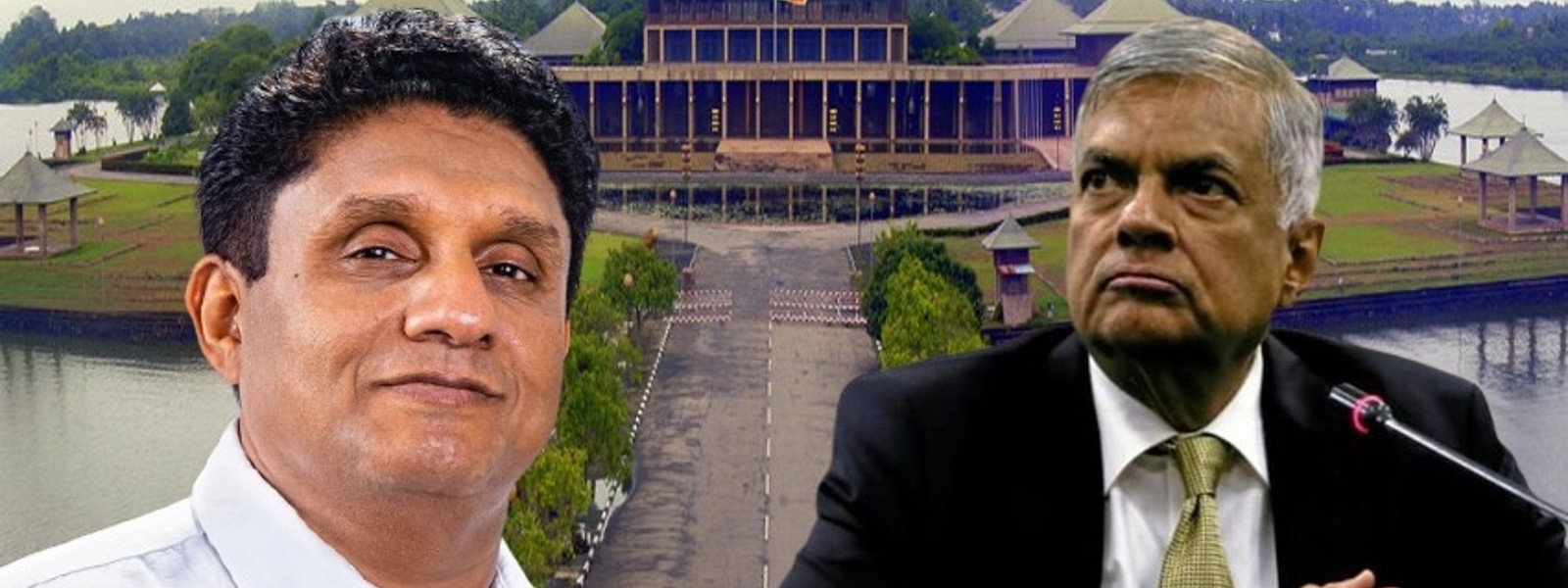
President Ranil Wickremesinghe stated at the all party conference held on Tuesday (13) to resolve the national ethnic question that in January 2023, he will hold discussions with Opposition and Samagi Jana Balawegaya leader Sajith Premadasa regarding the devolution of power and the 13th Amendment to the Constitution based on the seven related Commission reports in the past and the report on Constitutional reforms submitted by a committee led by President’s Counsel (PC) Dr. Romesh De Silva.

President Wickremesinghe emphasised that all political parties should come to an agreement to provide a solution to the ethnic problem by the time of the upcoming 75th independence celebration. “We must all come together to solve the problem in this country. Whether it is called an ethnic problem or something else is not important. We want to provide solutions to these problems. All the political parties came together to find a solution for this and reached an agreement in Parliament. This party leaders meeting was called today for that purpose,” he added.

He further said: “Members of the North have discussed the national issue of the country today. This question can be discussed under two parts. The first is the process of compensating for the missing and locating them. There are many problems that need to be solved regarding the Prevention of Terrorism (Temporary Provisions) Act (PTA), and regarding land. The second is the arrangement required to do legal work related to the devolution of power”. In this regard, Minister of Foreign Affairs M.U.M. Ali Sabry PC and Minister of Justice, Prisons Affairs and Constitutional Reforms Dr. Wijeyadasa Rajapakshe PC are jointly implementing a special programme, President Wickremesinghe said. “Accordingly, we hope to provide a report on the missing persons and political prisoners. After that we can talk about devolution,” he added.

The report of the Commission headed by Supreme Court Justice A.H.M.D. Nawaz to review past human rights related commissions’ and committees’ reports will be printed in about a week. The report includes a number of proposals. “We are also considering the suggestions in previous reports”.

President Wickremesinghe said that several issues have been raised about lands in the North. The relevant Advisor, the Secretary to the Ministry of Lands and the Chief of Defence Staff hope to come to a solution together with the representatives of the people in those areas. Currently, there has been progress here. “As the discussions progress, ideas can be learned. That is why this conference was called to learn the views of all the parties. I suggest that we should come to a solution on this,” he added.

President Wickremesinghe also pointed out: “As we celebrate the 75th independence day, we need to move forward as one nation. The nation has doubts that it will go to war again. Tamil Parliamentarians say that they have given up war. That’s why we have to discuss and solve this problem from one platform,” he further added.

Meanwhile, Ali Sabry PC said that discussions of the Human Rights Council held in Geneva, Switzerland, and international discussions about Sri Lanka are mainly carried out under two factors. “We have taken into consideration the reports of the Lessons Learnt and Reconciliation Commission, the Justice Udalagama Commission and the Judge Paranagama Commission. All those reports have indicated that solutions could be provided for the incidents that happened in the country, but that these solutions cannot be provided under the mechanism of a foreign country. Accordingly, we had promised to provide solutions for this under a local mechanism, but it has not been implemented,” he added.

According to the President, former President Gotabaya Rajapaksa appointed the Justice Nawaz Commission. What was done by that Commission was to prepare the necessary programme to provide solutions for this by incorporating the suggestions of previous commissions.

“We have a responsibility to bring this mechanism in,” he added.

He further said that even the security forces have expressed their interest in bringing this mechanism forward. The security forces say that some units have been branded differently. A situation has arisen where some divisions cannot even go for United Nations operations. They expect to prove their innocence, and if something suspicious has happened, they expect the law to be enforced. “However, we have not been able to follow such a procedure to date. We think that these can be solved through a local mechanism. You can get solutions for this through a Truth Commission. We have discussed this with South Africa as well. It is very good for the North and the South to solve this problem. We will present a Cabinet paper for this. A former Ambassador has been appointed as the Director General of the relevant committee. This is expected to bring many good proposals by uniting all the Sinhalese, Tamils and Muslims living abroad. As the Government, we hope to provide facilities for that,” he explained.

Premadasa meanwhile said that unity is important even for the economic development of a country. “Differences of caste and religion in politics should not be used since people of different communities are living equally in this country. We have to remove such people from politics. We can bring about reconciliation by way of removing such differences and we have to get rid of racism or else we would not be able to create a new world for the future. Everyone should have the feeling that all communities are treated equally and that we can solve all these issues by way of a home grown solution. As we have commenced this programme, we have to ensure that it continues. Hence, we all have to unite to make this all party conference a success”.

Meanwhile, Leader of the Pivithuru Hela Urumaya (PHU) and Opposition Parliamentarian Udaya Gammanpila warned yesterday that the introduction of a federal system, or even discussions regarding such, will cause disruption to the peace and harmony that is prevalent now.

Addressing the media in Colombo, he stated further that this will also cause disastrous effects to the economy which is on the path to recovery.

“In this crisis situation, co-operation and peace amongst the whole population is cruicial. A federal system can be identified as the most determinant and leading fact in terms of causing division among communities in Sri Lanka. We have experienced since 1967, that as soon as such suggestions are brought forward, society becomes alarmed and provoked while the society gets divided into two factions. So, amidst an acute economic crisis, this can be seen as creating a futile problem which would make it even more difficult to find solutions to the more pressing economic concerns. I do not know why the Government is unable to understand this,” said Gammanpila.

Emphasising the importance of maintaining peace and harmony among all ethnic groups at present, he stated that even the introduction of the topic in major forums will cause adverse effects on the country and its economy. “Right now, there is an almost unprecedented level of harmony between all ethnic groups in the country, without any clashes or disagreements. However, the introduction of such a federal system may cause the disruption of this peace and harmony among different ethnic groups. Our stance and belief is that the introduction of a federal system is increasingly damaging to a country which is trying to emerge from an economic crisis,” he said.

Issuing a statement yesterday, the President’s Media Division (PMD) said that President Wickremesinghe is slated to brief the Cabinet of Ministers in February on the progress of the decisions taken at the all-party conference to resolve major issues in the reconciliation process.

President Wickremesinghe recently called for an all party conference during the 2023 Budget debates to resolve the ethnic issue.


Sri Lanka holds delayed third bilateral creditor meeting on debt restructuring

Sri Lanka held the third meeting with its bilateral creditors on debt restructuring, State Finance Minister said, as the island nation’s $2.9 billion International Monetary Fund (IMF) loan has been delayed amid agreement among its creditors are yet to be seen.

Sri Lanka could not hold the third meeting with bilateral lenders scheduled for November 17 citing the creditors need some clarification before the next meeting.

The creditors include geopolitical rivals China and India. No country has so far fully agreed with any of the debt restructuring system, government sources have said.

“We are thankful to all our bilateral creditors who participated at the 3rd meeting of officials on Sri Lanka’s debt treatment process which was held today,” State Finance Minister Shehan Semasinghe said in a twitter message.

“We appreciate the progressive and constructive engagements. Further wish to reiterate that we will maintain an equal, comparable and transparent debt treatment policy.”

Government sources have said Sri Lanka is now eyeing January deadline for the IMF board approval to secure $2.9 billion loan.

They say lack of consensus among Sri Lanka’s creditors over debt restructuring and some pending reforms in loss-making state owned enterprises (SOEs) have resulted in the delay.
Sri Lanka held its first meeting with bilateral creditors on October 14 and the second on November 03, though no consensus has been reached. President Ranil Wickremesinghe’s administration has said that it has been negotiating India and China for debt restructuring separately.

All parties must unite to resolve crisis – US Ambassador

US Ambassador to Sri Lanka Julie Chung has highlighted the importance of all parties uniting to resolve Sri Lanka’s ongoing crisis.

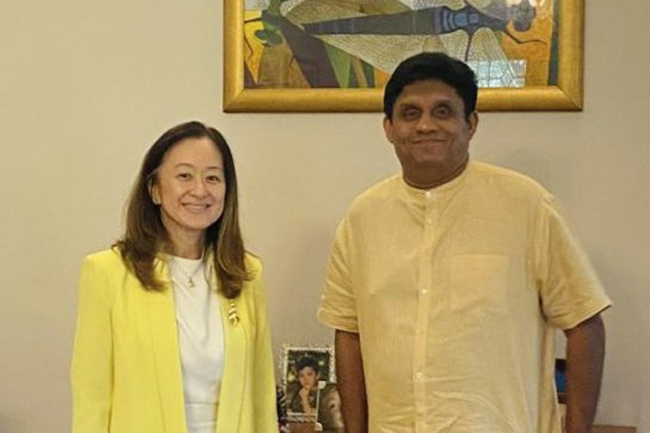
In a meeting with Opposition Leader Sajith Premadasa this morning (15 Dec), Chung discussed the country’s current political and economic landscapes.

She noted that in its process to address the country’s current concerns and challenges, it is important that all parties and voices within Sri Lanka contribute their respective expertise towards furthering the reform process.

Chung also highlighted the relevance and impact this would have on bettering the country’s governance.

Sri Lanka’s economy shrinks 11.8% in second-worst quarterly performance

Sri Lanka’s economy shrank 11.8 per cent in the July-September quarter from a year ago, government data showed on Thursday, the second-worst quarterly contraction ever for the country going through a severe financial crisis.

Economic mismanagement and the impact of the COVID-19 pandemic have left Sri Lanka short of dollars for essential imports including food, fuel, fertilisers and medicine.

The state-run Census and Statistics Department said that agriculture sector shrank 8.7 per cent in the third quarter and industries 21.2 per cent, while services dropped 2.6 per cent, from a year earlier.

“This is the second-worst contraction Sri Lanka has experienced in a quarter after a 16.4 per cent contraction in the second quarter of 2020,” said Dimantha Mathew, head of research at First Capital.

“Our projection was that it would be much worse – possibly a contraction of about 20 per cent but now overall contraction for the year could be about 9 per cent.”

Sri Lanka’s central bank estimates the economy will contract by about 8 per cent in 2022.

The government said several factors including high inflation, power cuts, high interest rates, import shortages and fuel and fertiliser shortages impacted growth in the last quarter.

“A decrease in the demand of essential and non-essential goods and services due to the reduction of the real income of the people have directed the economy towards this decline,” it said.

Economic hardships earlier this year had sparked widespread protests, which led former President Gotabaya Rajapaksa to flee the country and then resign as thousands of protesters occupied his office and official residence.

The economy had contracted 8.4 per cent year-on-year in the second quarter, one of the worst performances in the island of 22 million people. It contracted 1.6 per cent year-on-year in the first quarter.

President Ranil Wickremesinghe, elected by a parliamentary vote to replace Rajapaksa in July, has pledged to restore the economy but has warned tough reforms are needed.

In September, Sri Lanka reached a staff-level agreement for a $2.9 billion bailout with the International Monetary Fund (IMF), but it has to restructure its debt with private bondholders and bilateral creditors before getting disbursements.

The island is expecting as much as $5 billion in loans next year from multilateral agencies besides the IMF deal, while the government is aiming to raise up to $3 billion via restructuring of state assets, Foreign Minister Ali Sabry told Reuters on Wednesday.

Source: Reuters

Posted in Uncategorized

China acts as impediment to Sri Lanka’s IMF deal

The uncertainty and lack of clarity regarding the extent and time frame of China’s restructuring of its debt to Sri Lanka is delaying Sri Lanka’s bailout package from the IMF, according to Asian Lite.
Debt restructuring is one of the prerequisites of the IMF’s bailout package for Sri Lanka. The process is, however, getting delayed due to Sri Lanka’s dire situation and a delay in concrete commitment from China, the island nation’s largest bilateral lender. Sri Lanka seems to be missing its December deadline.

According to the Opposition legislator from the Tamil National Alliance, Shanakiyan Rasamanickam, China is acting as an impediment to Sri Lanka’s IMF deal and has been paying bribes to force down unnecessary projects.

“If China is truly Sri Lanka’s friend, ask the Chinese to help with the [debt] restructuring and the IMF programme.” Referring to Rajapaksa-era mega infrastructure projects in Hambantota and Colombo funded by the Chinese, the Batticaloa MP, as quoted by Asian Lite, said: “That is not China being Sri Lanka’s friend, that is China being Mahinda Rajapaksa’s friend.”

The Chinese Embassy refuted the allegations and claimed that bilateral negotiations are on after working teams of different Chinese banks visited the island nation. Rasamanickam’s allegations are incorrect, said the embassy.

The Chinese investments under the BRI and bilateral projects with other countries have always been seen with suspicion for their lack of economic feasibility as well as debt-creating potential. Now as Sri Lanka is negotiating with China for debt restructuring and China has claimed to have shown readiness for restructuring its debt to Sri Lanka, “It will be the first time a major Asian Belt and Road Initiative borrower is going through the process… China’s approach to Sri Lanka’s debt restructuring and the extent of debt relief offered will set a precedent for China’s role and behaviour in other countries as well,” said the research report, according to Asian Lite.

Another country, Djibouti, at the heart of China’s multibillion-dollar “Belt and Road Initiative,” is struggling under mounting financial pressure and has suspended debt repayments to China, its main bilateral creditor, reported European Times.

Djibouti, a tiny nation at the intersection of the Red Sea and the Gulf of Aden, owed a total of USD 2.68 billion to external creditors at the end of 2020, according to the World Bank.
The African country struggling to repay Chinese loans has brought criticism to the Chinese model of project financing for creating dept traps for developing countries.

In its latest report on Djibouti, the World Bank stated that in 2022, Djibouti’s debt servicing costs tripled to USD 184 million from USD 54 million in 2021. A further increase to USD 266 million has been predicted for 2023.

The International Monetary Fund (IMF) after considering the sharp projected increase in Djibouti’s external debt servicing, in late 2021, declared Djibouti’s debt as being unsustainable.

(ANI)

Posted in Uncategorized

Sri Lanka expects up to $8 bln more in loans, asset restructuring

Sri Lanka is expecting as much as $5 billion in loans next year from multilateral agencies besides an IMF deal, while the government is aiming to raise up to $3 billion via restructuring of state assets, its foreign minister told Reuters on Wednesday.

The island nation’s worst economic crisis in more than seven decades has resulted in widespread unrest due to shortages of food and fuel. Its then-president Gotabaya Rajapaksa was ousted in July.

Additional funds are critical for the country that is already saddled with a public external debt of $40.6 billion, of which it owes 22% to Chinese creditors.

In September, the country of 22 million reached an agreement with the IMF for a loan of $2.9 billion, which could be approved for disbursal next year.

“Apart from what we get from the IMF, we are looking at all others, the multilaterals put together another $4-$5 billion …,” Ali Sabry said in an interview.

“The president is interested in restructuring some of the (state) institutions, so through that if we can raise $2-$3 billion, our treasury and reserves become strengthened.”

Sri Lanka was expecting to seek IMF board approval for the loan in December but that has likely been pushed to January, the minister said, as the government works to lock in financing assurances from countries including China, Japan and India, as well as private creditors.

Sabry said Sri Lanka was still waiting for “letters of assurance” for debt restructuring from its largest bilateral creditor China, as well as India.

The two countries have backed the restructuring efforts and Sri Lanka has shared documents and data with them, he said.

“We have made it very clear to the IMF, to our multilateral partners and to our bilateral friends that patience is running out and it is urgent for the sake of Sri Lankans and the good health of the world economy,” Sabry said.

Overall, Sri Lanka’s economy has improved with essential imports such as fuel and food becoming regular, Sabry said.

Inflation, which edged above 70% earlier this year, eased to 61% at the end of November but the economy is expected to contract by about 8.7% this year.

“Some stability is taking place. Then growth can return,” Sabry said. “So that should start in the next quarter of next year with the IMF loan coming in, other multilateral agencies coming in. But for growth to take place, it is going to be 2024.”

Reuters (Source)

Those who worked to defer PC polls, talking on 13A is hilarious, says Namal

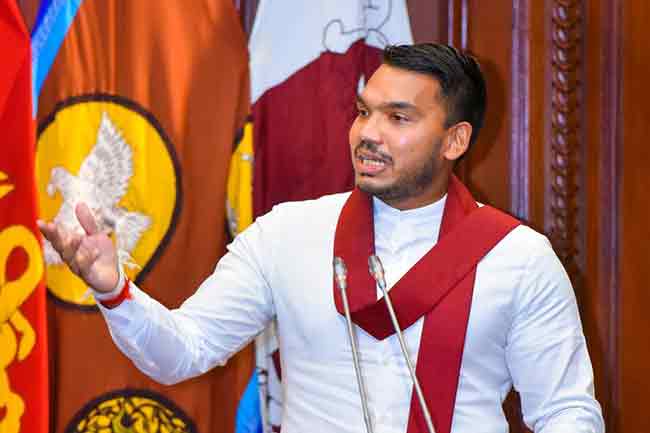
It is hilarious that the same people who worked to postpone the Provincial Council (PC) elections are talking about a 13th Amendment to the Constitution today, Parliamentarian Namal Rajapaksa said.

Addressing the media, he stated that the PC election had been postponed for many years.

“If this meant people were interested in the 13th Amendment and the PC elections, they would have taken that action two years ago,” he said.

“The economic stability of the country is a priority. A long discussion about the road ahead should be developed, and the decisions taken from it should be implemented. As a party, we need to reorganize.

“We might have made mistakes, and we should take corrective action. We have to move forward with the party members, and we should not think about getting positions. We should prioritize the political stability of the country,” Rajapaksa said.

“When it comes to the election, we will have lengthy discussions to determine who we will support and who we will not support. We are now separated from those from whom we never thought we would be separated for life and that is what usually happens in politics,” he said.

“We must stand by the people and pave the way for a stable Government.” We know that the President is also working to establish a stable Government, stabilize the country’s economy, and consolidate democracy. We will see how we align politically in the future,” Rajapaksa added.

GL claims AG has no power over LG poll

Claiming that it was an extremely erroneous course of action for the Election Commission (EC) to seek the opinion of the Attorney General (AG) regarding the holding of the Local Government (LG) election, Sri Lanka Podujana Peramuna Chairman and Opposition MP Prof. G.L. Peiris said that the AG has no authority to make a decision regarding the said election.

Speaking to The Morning, he said: “The EC had recently sought the opinion of AG President’s Counsel Sanjay Rajaratnam, regarding the holding of the LG election. There is no need to seek the AG’s opinion in this matter, and it is very wrong for the EC to do so. The AG’s opinion is merely an opinion and not compellable. He has no authority to make a decision with regard to the elections, and there are many instances where the Supreme Court (SC) has ruled out the AG’s opinions.”

He also pointed out that the Government’s attention has been suddenly focused on reducing the number of LG representatives from 8,000 to 4,000, adding that although this is a progressive proposal, this will not be allowed to result in the postponement of the LG elections. Noting that there were 8,000 representatives in LG bodies since 2018, he said that it is problematic that the Government’s attention is focused on reducing that number suddenly when the LG election is due.

“The Government is using various tactics such as appointing select committees to postpone the LG election. There is absolutely no need for the consent of Parliament to hold elections. The necessary provisions are clearly mentioned in the Constitution and the relevant laws. If Parliament can postpone such elections, the Parliamentary Election can also be postponed as per their wishes. That’s why we filed a petition in the SC. We will continue to take every possible step in Parliament, among the people, in the judicial process, and at the international level to defeat this Government’s attempt to postpone the elections,” added Prof. Peiris.

Speaking further, he said that the people of this country had not forgiven any government that postponed, or attempted to postpone elections, and that all such governments were defeated in subsequent elections. In 1970, he said that then-Prime Minister Sirimavo Bandaranaike’s Government, which came into power for a period of five years, introduced the new Constitution in 1972, which included provisions for it to remain in power for another two years, but that in the General Election held in 1977, that government suffered a defeat to the extent it could not even secure the leadership of the Opposition.

The EC recently stated that it had sought the opinion of the AG regarding the holding of the LG election. EC Chairman Attorney Nimal Punchihewa had however told The Morning last week that the EC was unable to reveal the opinion given by the AG. Meanwhile, a group of Opposition MPs including Prof. Peiris had filed two writ applications in the SC on Monday (12) seeking an order directing the EC to immediately hold the LG election.

Posted in Uncategorized

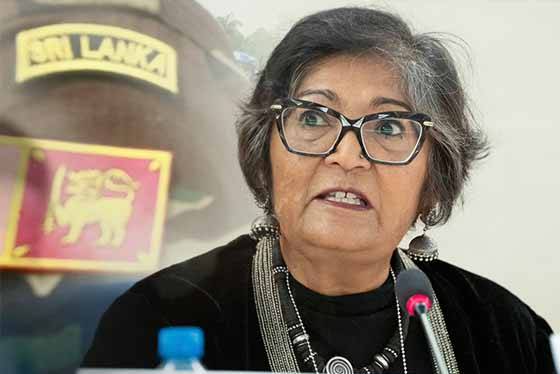
Yasmin Sooka wins case against Sri Lankan lawyer in UK

South African human rights lawyer and activist, Yasmin Sooka has won a case against Jayaraj Palihawadana, a UK based Sri Lankan lawyer.

Jayaraj Palihawadana, until recently the UK representative of the political party of former Sri Lankan President, Gotabaya Rajapaksa, has apologised unreservedly in court to Sooka for making false statements against her.

Sooka initiated a data protection claim in the UK under the Data Protection Act 2018, challenging the publication of inaccurate personal information detrimental to her reputation.

Jayaraj Palihawadana published a report which he sent it to 47 diplomatic missions in Geneva in 2021 falsely claiming that Sooka was biased in favour of a proscribed terrorist group.

In her witness statement to the High Court King’s Bench Division, Sooka said: “Naturally these allegations are completely false and appear to be a calculated attempt to discredit me in my work as a human rights defender in Sri Lanka. The Court will probably be aware that it is well-worn tactic of repressive regimes around the world to denounce human rights defenders as terrorists, or supporters of terrorists, smearing them by association.”

A solicitor himself, Palihawadana failed to delete all the offending remarks or apologise at the outset, and instead attempted to file a counterclaim against Sooka, which the court dismissed.

Eventually he agreed not only to pay substantial legal costs and compensation to Sooka but also agreed to retract his comments and publish an apology online in English and Sinhala.

Additionally, as the defendant, Palihawadana agreed to make a Statement in Open Court today which said: “The Defendant unconditionally retracts and apologises unreservedly for the aforementioned untrue allegations made against the Claimant in the Reports.To indicate the sincerity of this apology, the Defendant has agreed to pay the Claimant a substantial sum to compensate her for distress and harm to her reputation arising from the Reports. The Defendant has also agreed to bear the Claimant’s reasonable costs.”

Under the terms of the judgement, Palihawadana agreed to publish on his website a full apology.

Sooka’s legal team also established an important precedent by gaining permission for the first time from the UK High Court to make a Statement in Open Court in a Data Protection case.

“This brings to an end a long-running debate among practitioners about whether Statements in Open Court are available for other causes of action than libel, slander, malicious falsehood and misuse of private or confidential information,” said Sooka’s counsel, Guy Vassall-Adams KC.

While the precedent will have implications for future data protection cases, the legal team hope the wider value will be to support human rights activists against repeated onslaughts.

“We are delighted to have upheld the reputation of our client against these sort of slanders that so many human rights activists around the world have thrown at them, attempting to silence them and prevent them from speaking the truth. It’s important that this court process acts as a deterrent and that’s why the financial penalties help drive home the point,” said Daniel Machover of Hickman and Rose, the solicitors for Sooka.

Yasmin Sooka says she is in discussions about establishing a scholarship fund for the children of political prisoners and families of the disappeared in Sri Lanka with her compensation money when she receives it.