IMF chief Georgieva cites ‘fruitful exchange’ with China on debt issues

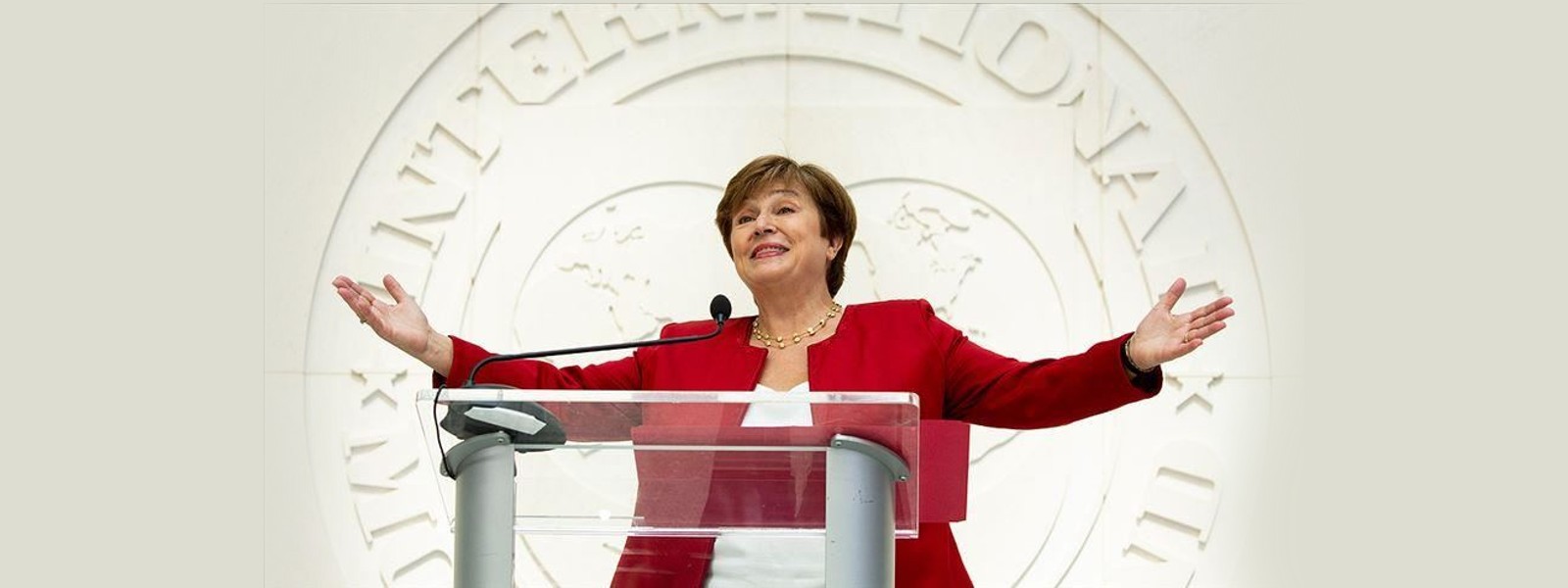
International Monetary Fund chief Kristlina Georgieva said she had a “fruitful exchange” with her Chinese counterparts this week on her repeated calls for accelerating debt treatments for countries like Zambia and Sri Lanka.

Georgieva, World Bank President David Malpass and other financial leaders met in person in China’s Anhui province this week with officials from the People’s Bank of China, China’s finance ministry and its EXIM Bank and China Development Bank.

Georgieva said the discussions touched on the common framework for debt treatment set up in late 2020 by China, the United State and other Group of 20 major economies, as well as some specific cases of countries seeking debt relief.

Implementation of the common framework process has been halting, with only one country, Chad, having completed the debt treatment process, and its agreement not resulting in any actual reductions of the country’s debt.

Zambia is pushing hard to finish its debt restructuring in the first quarter of 2023.

“We need to build on the momentum of the agreement on Chad’s debt treatment and accelerate and finalize the debt treatments for Zambia and Sri Lanka, which would allow for disbursements from the IMF and multilateral development banks,” Georgieva said in a statement.

Georgieva said other countries also faced mounting debt distress given tightening global financial conditions.

“We talked about how we can prevent individual cases of debt distress from triggering a global debt crisis,” she said, calling again for quicker, more predictable progress on debt treatments and expansion of the framework to more countries.

Malpass, in his remarks at the meeting, said the discussions focused on the urgent need for more rapid progress on debt issues, adding, “Changes in China’s positions are critical in this effort.”

He welcomed support voiced by Premier Li Keqiang for a “systematic engagement on debt” during the meetings, and underscored the need for transparent disclosure of China’s loan contracts, and removal of non-disclosure and non-restructuring clauses and hidden collateral and escrow arrangements.

“Greater transparency will help investors make informed decisions, build trust, and accelerate the debt reconciliation and restructuring processes,” he said.

Georgieva said she saw “space for a platform for more systematic engagement on debt issues, where China can play an active role,” but gave no further details.

Source: Reuters

Sri Lanka bans beef, mutton transport after cold shock death wave

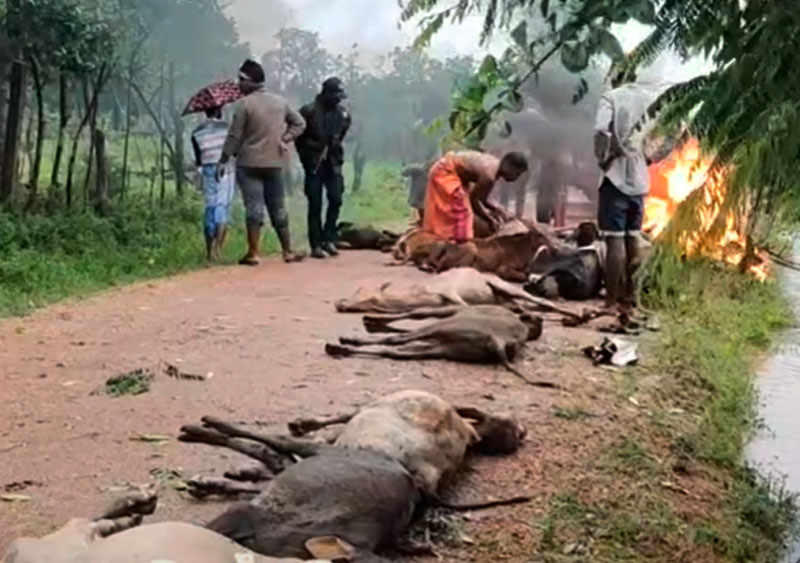
Sri Lanka President Ranil Wickremesinghe has banned the transport of beef and mutton between districts his office said, after hundreds of cattle and goats died amid unusually cold weather from suspected hypothermic shock.

“Taking into account public health, transport of beef and cattle in between districts and provinces has been banned with immediate effect,” the President’s office said in a statement.

“This was after the sudden death of cattle, buffalo and goats in Kilinocchio, Mullativu, Trincomalee, Baticaloa and Ampara.”

On the 08 and 09, 358 cattle and 191 goats had died in the Northern Province and 444 cattle, 34, buffalo and 191 goats had died in the Eastern Province.

The animals are suspected to have died from hypothermic shock, based on preliminary investigations the statement quoted Hemali Kothelawala, the Director of Animal Production and Health as saying.

Further investigations are being done at several laboratories.

Sri Lanka has experienced unusually cold weather and air pollution from a tropical Cyclone Mandous which drew air from India.

Cyclone Mandous kills hundreds of livestock in Sri Lanka’s northern farms

Veterinary officials have said most of the animals that died seemed to have been in the open and exposed to the weather.

Hypothermic shock of cold stress can be worsened due to wind chill.

Tamil parties to propose federal solution at talks with president

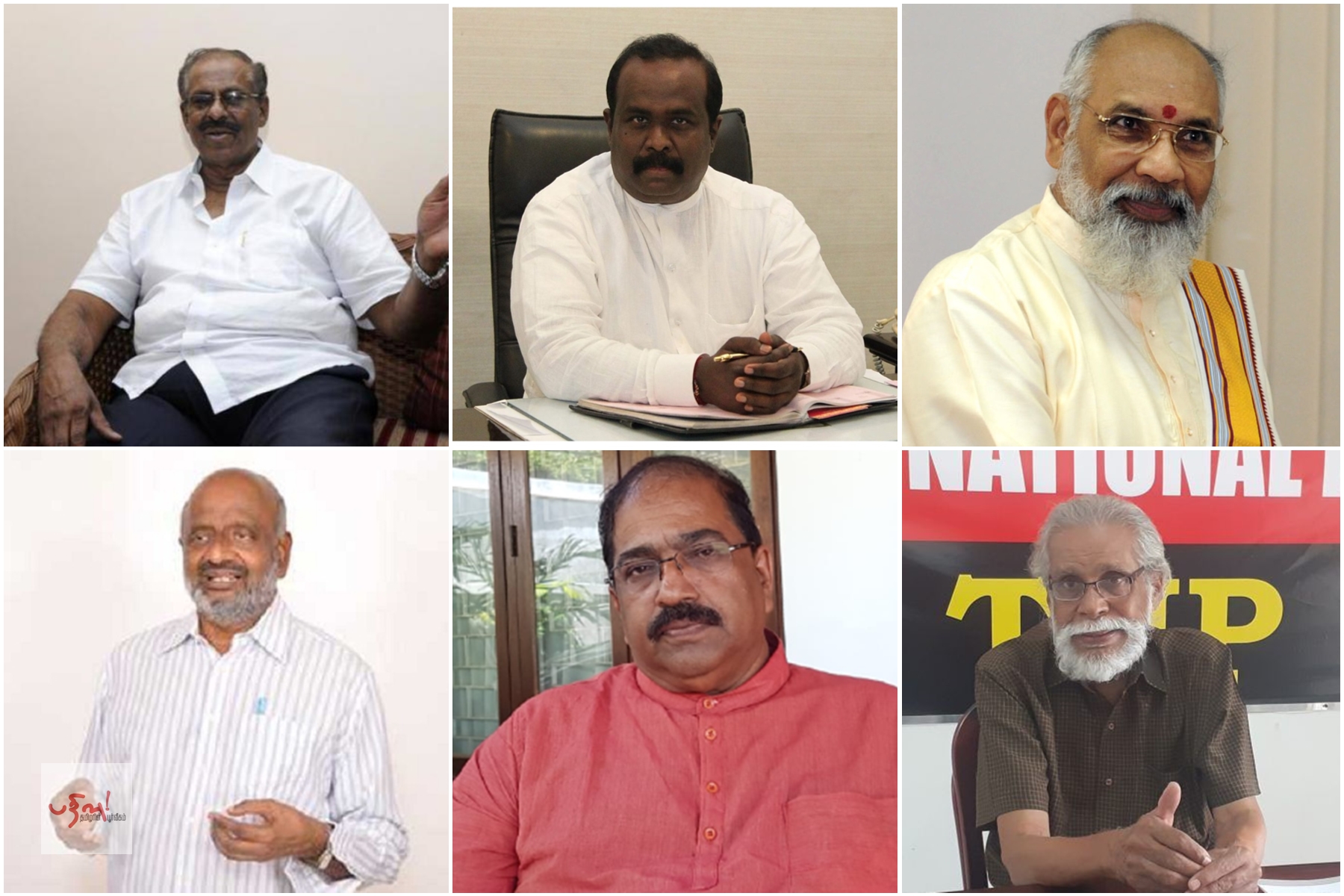
Tamil leaders have decided to propose a federal solution based on self-determination rights at talks proposed by the president to resolve the ethnic issue.

TNA chief R. Sampanthan has spoken about this in an interview with India’s ‘Frontline’ magazine.

He said he was against a division of the country in any form, adding that the situation cannot continue despite their support for an undivided Sri Lanka.

Spokesman for the TNA M.A. Sumanthiran said that they would not lay down any condition for the discussion tipped to take placed in Colombo December 11.

Changes to the constitution for maximum devolution of powers, a federal solution with self-determination rights, holding the provincial council polls and a halt to the takeover of private land in the northeast will be among the matters to be raised, he said.

However, EPRLF ledader Suresh Premachandran called for solutions to issues in Tamil civilian life before the commencement of the talks. Seventy-five years of talks, agreements etc. brought nothing, he noted.

No to unitary state & call for third party involvement

TPA leader C.V. Vigneswaran said the president should be informed in writing before the talks that constitutional amendments or a new constitution were not possible within a unitary state.

TNA MP S. Sritharan stressed the need for a third party involvement to minimize attempts at deception.

Secretary of the Association of relatives of victims of enforced disappearances K. Rajkumar accused the president of deceiving Tamils, Sinhalese and the rest of the world by his call for talks.

He said Tamil leaders should be ashamed of themselves for continuing to be cheated for 75 years.

EPDP leader and minister Douglas Devananda said the Tamils wanted provincial councils empowered through the 13th amendment since they rejected the district development councils (DDCs) introduced in 1981.

Ex-president Maithripala Sirisena has backed the DDCs system, and his sentiments were echoed by incumbent Ranil Wickremesinghe.

MP Govindan Karunakaran said the president could set up DDCs for the south, but that Tamils should be given a federal solution with power devolution.

Speaking along similar lines, both TNPF leader Gajendra Kumar Ponnambalam and TULF secretary V. Anandasangaree said it was pointless to discuss Tamils’ issues with a president rejected by the majority. The final say lies with India, said the latter.

TELO leader Selvam Addaikkalanathan said attempting DDCs was not a solution as it has already been rejected by his community.

Posted in Uncategorized

MR and several others issued notice to appear in Court in June

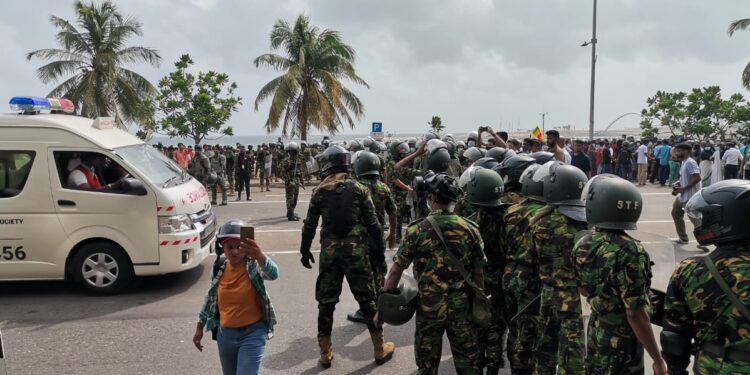
The Supreme Court today granted leave to proceed with five fundamental rights petitions filed by five individuals part of the people’s struggle claiming their rights were violated during the attack on the protest site in Galleface on the 9th of May.

Accordingly, notice was issued to former President Mahinda Rajapaksa, MPs Namal Rajapaksa, Sanath Nishantha, Johnston Fernando, Prasanna Ranathunga, Senior DIG in Charge of the Western Province Deshabandu Tennakoon, the Inspector General of Police and several others who have been cited as respondents in the petitions to be present in Court on the 22nd of June 2023.

The petitions were taken up for consideration before justices Vijith Mallalgoda and Janak de Silva.

Following lengthy considerations the bench ordered the petitions to be taken up for examination.

The petitioners charge that affiliates of the respondents carried out the attack on the protest site on the 9th of May and violated their rights.

The petitions call for an order to be issued to the IGP to compile a guideline to prevent such attacks on peaceful protests.

Attorneys representing the petitioners today (9) informed Court that they do not intend on continuing to include former Army Commander Shavendra Silva as a respondent and he was therefore released from the case.

Impoverished Sri Lankans are selling assets, eating less: WFP

Sri Lankans thrown into poverty in the worst currency collapse in the history of its central bank are selling assets acquired in better times and are eating less, Rome-based World Food Program has said.

Three in 10 households were ‘food insecure’ in a household food security survey conducted by the agency in October 2022.

“Over seven in ten households are adopting food-based coping strategies such as eating less preferred food, continuing the alarming trend observed since June,” the WFP said in a Sri Lanka situation report issued in December 2022.

“Meanwhile, a staggering eight in ten households are turning to livelihood- based coping strategies such as selling productive assets, the highest observed since June.”

Sri Lanka’s central bank printed money for two years and collapsed the currency from 200 to 360 to the US dollar in 2022 putting food out of reach of the people.

According to a World Bank report Sri Lanka’s central bank was among the top 10 in the world driving up food prices by October 2022.

Reserve Bank of Zimbabwe which its deadly ‘RTGS dollar’ created 321 percent rise in food prices. Lebanon’s central bank created 203 percent food inflation and Venezuela’s central bank created 158 percent.

Central Bank of Turkey another notorious central bank which had been under pressure from the country’s President to print money to keep rates down created 99 percent inflation.

Banco Central de la República Argentina, the archetypical Latin America central on which American money doctors modelled Sri Lanka’s central bank in 1949 bank generated 92 percent food inflation.

Iran’s central bank created 84 percent inflation.

Coming in 08 place overall Sri Lanka’s central bank generated 81 percent food inflation by October.

The central bank of Sri Lanka has hiked policy rates, allowed market rates to go up and has largely stopped creating new inflation and traded goods prices are starting to ease.

The WFP said it had given relief to 1.1 million since the currency crisis began and 556,929 schoolchildren have received school meals prepared with rice supported by the agency.

Another 101,568 people had been given in-kind food assistance.

Sri Lanka farmers were hit by shortages chemical fertilizer despite a ban on agrochemicals being lifted and poultry farmers also faced shortfalls of feed and high prices amid forex shortages.

Food supplies and prices are starting to stabilize after the central bank raised rates to stop money printing but prices are almost double after the fall of the rupee.

Posted in Uncategorized

Rs. 10 Billion – The cost for the local government election

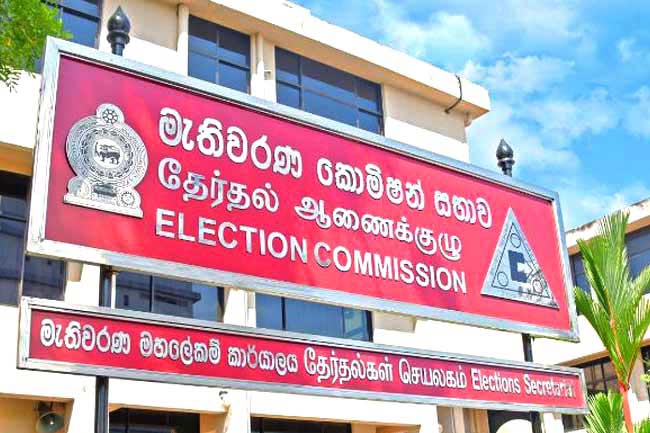
The National Election Commission (NEC) says that it will cost approximately Rs. 10 billion to conduct the local government elections.

The Commissioner General of the NEC Saman Sri Ratnayake said the cost was approved via the budget that was passed in Parliament.

The Commission announced on Thursday (8) the nominations for the Local Government Elections will be called for during the final week of December.

The NEC in a statement said that the nominations will be called for as per the provisions of the Local Authorities Elections (Amendment) Act.

The Election Commission said that the preparation of the 2022 voter list at the local government level is complete.

Accordingly, the Election Commission said that voter lists were prepared for 341 local government bodies.

Posted in Uncategorized

India recommences e-visas for Sri Lankans

India has resumed the issuing of electronic visas (e-visas) for Sri Lankan nationals.

Accordingly, Sri Lankans seeking to visit India for leisure, business, conferences and other purposes, are now once again able to apply for travel visas in an entirely virtual environment, the Indian High Commission in Colombo assured in a Tweet.

Travellers have been requested to visit indianvisaonline.gov.in/evisa/tvoa.html to apply for their visas.

Posted in Uncategorized

LG Poll gazette will be issued soon, says NEC

The Chairman of the National Election Commission Nimal Punchihewa says the gazette notification for the local government polls will be issued soon.

According to the Local Government Polling Act, to hold the election on 20th March 2023, the relevant gazette notification must be issued before January 5th 2023.

Therefore, several rounds of discussions have been held regarding the upcoming elections.

The Chairman of the NEC further said the related discussions will also be held in the coming days.

Posted in Uncategorized

Sri Lanka virtually let down by China in securing a $2.9 billion IMF loan in December

The 20th Communist Party Congress of China may put a hold on the Chinese restructuring talks with Sri Lanka to secure the $2.9 billion facility to revive the ailing economy.

The deadline was set for December, but it may be extended to January, according to the Central Bank of Sri Lanka. China is the main bilateral debtor, and the party congress may hinder December talks aimed at restructuring.

The next meeting of the IMF executive board is scheduled for March 23.

Hence, Sri Lanka will probably miss the December deadline for securing an IMF loan as its main bilateral debtor, China, was involved in the 20th Party Congress and had little time to hold debt restructuring talks with Sri Lanka. The next meeting of the IMF executive board is in March 2023.

Meanwhile, NIKKEI Asia reported in its latest dispatch that dollar-strapped Sri Lanka is hoping for a still-elusive $2.9 billion IMF bailout before beginning to rebuild usable foreign reserves, according to the head of the country’s central bank in a recent exclusive interview.

“Once the IMF starts disbursing their commitments following the IMF board’s approval, it will be the point at which we will start building our foreign reserves,” Gov. Nandalal Weerasinghe said.

The bankrupt South Asian nation reached a staff-level bailout agreement with the IMF in early September, subject to board approval. But Sri Lankans will soon be welcoming a new year amid continued economic hardship. For now, limited imports are being paid for with export earnings, remittances from migrant workers, and a trickle from the tourism sector as the authorities cling to paltry remaining funds.

Usable coffers slumped to historic lows of $20 million by April and have now inched up to $300 million. Officially, reserves hover at $1.7 billion, but this includes a $1.4 billion swap from the People’s Bank of China that cannot be tapped because of restrictive conditions. For example, Sri Lanka would have to save up its reserves to finance three months of imports, an estimated $5.1 billion, before China’s central bank approves access.

The two-step approach to restoring the reserves is part of the recovery program Sri Lanka is pursuing with the IMF’s blessings, said Weerasinghe, 61, a veteran central banker who was called out of retirement in April. “The gradual buildup of reserves is one of the key objectives of the IMF program going forward,” he said.

Until the IMF money starts flowing, he added, “we will not get any external financing from anyone.”

Crossing that threshold, however, depends on the island nation’s three largest foreign bilateral creditors: China, Japan, and India. Colombo has been forced to plead with them for restructuring after the government of former President Gotabaya Rajapaksa confirmed in May that Sri Lanka had run out of dollars to pay its foreign lenders, precipitating its first sovereign default since independence from the U.K. in 1948.

NIKKEI Asia, quoting well-placed government sources, said President Ranil Wickremesinghe’s administration is focused on securing “creditor assurances” in behind-the-scenes talks with these lenders. Wickremesinghe, who doubles as the finance minister, was chosen by the Sri Lankan parliament to finish Rajapaksa’s term after the latter fled the presidential palace in July in the wake of unprecedented public rage triggered by scarcities of food, fuel, and pharmaceuticals in the import-dependent country.

At the end of 2021, as the economic crisis began to bite, total external debt stood at $47 billion in what was an $81 billion economy. According to Sri Lanka’s Finance Ministry, China accounts for 52% of the total bilateral debt, followed by Japan at 19.5% and India at 12%.

Meanwhile, the Hindustan Times said Sri Lanka has headed for major political turbulence ahead as it will not be able to secure the much-needed IMF loan in December for its main ally and debtor China, which was involved in the 20th Party Congress and is still to initiate a dialogue on debt restructuring with the island nation.

According to financial analysts based in Washington, Sri Lanka likely will miss the December IMF deadline and will have to wait until March 2023 to secure a USD 2.9 billion loan from the lending institution in eight equal tranches. In the meantime, the Sri Lankan debt has increased further due to forex depreciation, a deep recession, and a burgeoning fiscal deficit. Since the end of 2021, inflation has considerably eroded the real value of domestic debt.

While debtors India and Japan have already initiated a dialogue with Colombo on debt reconciliation and restructuring, China has yet to engage in the dialogue, as Beijing was involved in the 20th National Party Congress and had little time for client state Sri Lanka. The total debt of the island nation was USD 36 billion at the end of 2021. Of this, Sri Lanka owes USD 7.1 billion to China or 20 per cent of its debt. The total public debt, which was 115.3 per cent of the GDP at the end of December 2021, has now gone up to 143.7 per cent of the GDP by the end of June 2022. Of this, the bilateral debt has climbed from 12.7 per cent of the GDP to 20.4 per cent of the GDP. On October 31, 2022, Sri Lankan President Ranil Wickremesinghe went on record stating: “Now, this is the process; we had to move.” If we can move forward and come to an agreement by December, which means coming to an agreement by mid-November and going up to the IMF Board in mid-December, we will gain a big advantage. However, I’m not sure we can do it because, in China, the focus has already begun following the party conference. However, we must aim to have it by January.

Sri Lanka is in need of a bridge loan of USD 850 million to survive until the next IMF board meeting in March and avert burgeoning public discontent with the Ranil Wickremesinghe administration.

Delays by the government in providing the essentials for the consumption of the general public may give some leverage for the leftist JVP (Janatha Vimukthi Peramuna) and Front Line Social Party (FSP) to gain political mileage. It may create havoc with public protests akin to the Aragalaya in July 2022. The main opposition party, SJB, seems more responsible and less likely to rouse public protest when the government is going through a historically difficult period.

The pertinent question that remains to be answered is who would grant the USD 850 million bridge financing facility to help the government survive.

The economic fallout in Sri Lanka is mainly due to mismanagement, poor fiscal discipline, and corruption by the previous Gotabaya-Mahinda Rajapaksa regime, which secured a massive Chinese loan to construct the 900-megawatt Norochcholai Coal Power Plant apparently at 11 per cent interest. The projects undertaken by Sri Lanka have created an economic black hole with no signs of recovery, at least for the next five years.

Besides, India has already had two rounds of talks in respect of debt restructuring, while China has been dragging its feet for reasons best known to itself. India is also in discussion with Japan to explore an early solution.

Sri Lanka owes nearly USD 1.7 billion in bilateral debt to India, with another USD 4 billion in emergency assistance, as the Modi government has gone out of its way to keep the island nation afloat, the Indian media said.

It also said this is even though Sri Lanka is still playing around with India’s adversaries, China and Pakistan, in the Indian Ocean region. Perhaps Sri Lanka is waiting for China to lift its “zero-corruption” policy and allow Han Chinese tourists to spend money in the island nation to revive its economy. The political and economic future of Sri Lanka is very bleak.

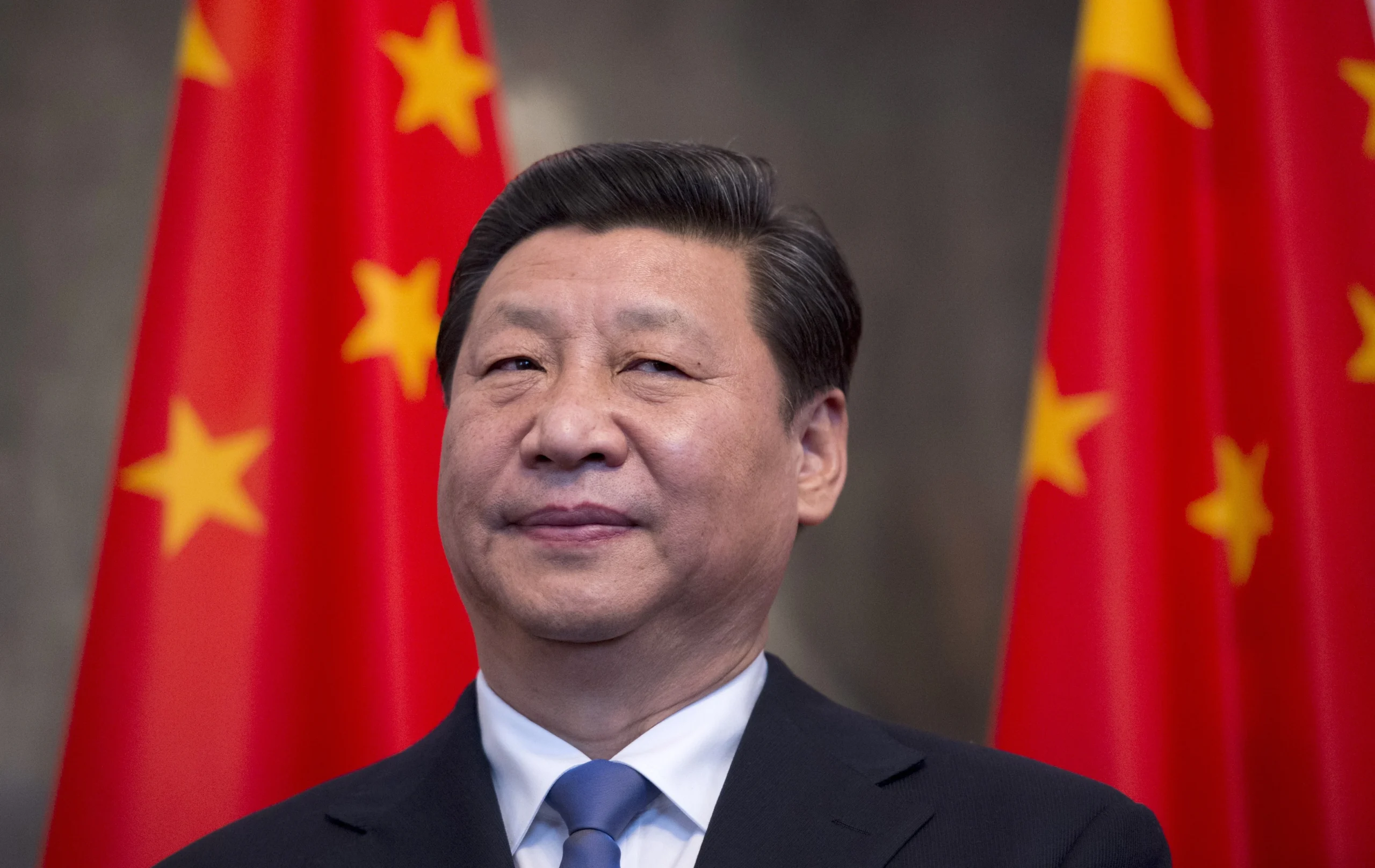
Meanwhile, the Hindustan Times reported that because Sri Lanka has yet to initiate talks with the Xi Jinping regime, the chances of the IMF executive board approving a USD 2.9 billion extended fund facility to the deeply indebted island nation this month are virtually nil.

Putting equal onus on the rich global north and the developing global south, the Paris Club creditor nations are proposing a 10-year moratorium on Sri Lankan debt and another 15 years of debt restructuring as a formula to resolve the current financial crisis in the island nation.

While the Paris Club is still to formally reach out to India and China, two of Sri Lanka’s biggest creditors, with Beijing holding near 50 percent of external debt, Colombo on its part is still to initiate a formal dialogue with the Xi Jinping regime, and the chances of getting an extended fund facility of USD 2.9 billion approved from the IMF executive board this month range from very low to non-existent. This means that Sri Lanka will have to wait for the March IMF meeting before any aid is extended by the Bretton Woods institution.


Parents in Sri Lanka forced to admit kids to childcare institutions

More parents in Sri Lanka are seeking to admit their children to childcare institutions due to increasing food insecurity, poverty and internal and external labour migration, the United Nations (UN) said.

UNICEF said that child protection issues increased significantly in 2022, especially in rural and estate areas.

“Children face protection challenges, with more parents seeking to admit them to childcare institutions due to increasing food insecurity, poverty and internal and external labour migration,” UNICEF said.

Sri Lanka is in the middle of an acute economic crisis that is expected to continue throughout 2023, with an estimated 6.2 million people, including 2.9 million children, in urgent need of humanitarian assistance in 2023.

In a context of soaring inflation, heightened income insecurity and scarce availability of essential products (e.g., food, fuel, fertilizers and medicines), families are unable to meet their basic needs, UNICEF said.

Throughout 2022, recurring and frequent natural hazards continued to affect the agriculture sector, contributing to low yields.

According to UNICEF, with the forecast 40 per cent reduction in food production compared with previous years, food insecurity could further deteriorate from October 2022 to February 2023.

UNICEF says while 5.3 million people were already skipping meals as a coping strategy, this number is expected to increase drastically in the coming months with the combined impact of climate-induced natural hazards and a political impasse.