Cabinet yet to discuss offering East Container Terminal to Japan: Bandula

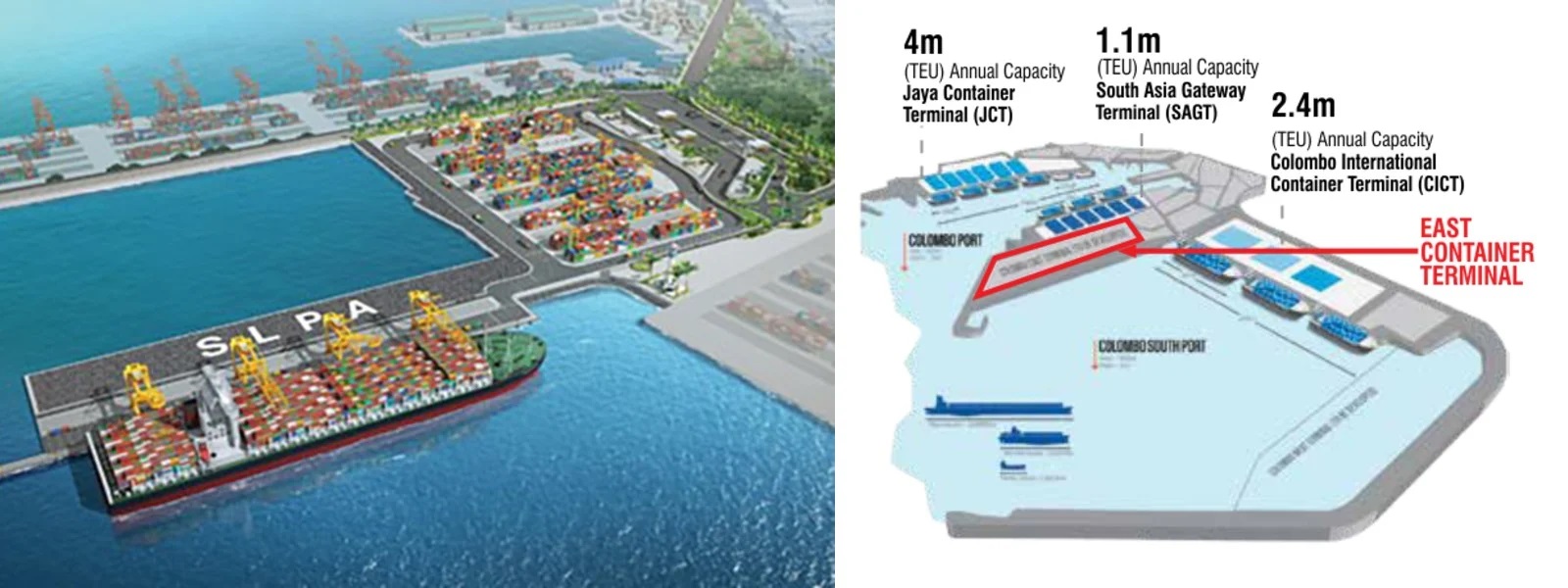
While acknowledging the need to divest certain State-owned assets to re-build the country’s foreign reserves, Cabinet Spokesperson and Minister of Transport and Highways and Minister of Mass Media Bandula Gunawardana said the Cabinet is yet to discuss on offering Colombo Port’s East Container Terminal (ECT) to Japan.

The President Ranil Wickremesinghe on Monday announced that ECT had been offered to Japan. “We have given the first offer to Japan. If Japan does not take it will be open to others, Wickremesinghe said.

However, Gunawardana noted that no decision or discussion has so far taken place at the Cabinet on the matter.

During Yahapalanaya regime, the government entered into a US$ 500 million tripartite agreement with India and Japan to develop and operate the ECT. However, the agreement was terminated by former Prime Minister Mahinda Rajapaksa in 2021 amid mounting opposition by trade unions affiliated with the Sri Lanka Port Authority (SLPA). Later, the West Container Terminal (WCT) was handed to India’s Adani Group-led consortium.

Meanwhile, Gunawardana stressed that the country needs to divest some of the State assets to attract foreign investments. Otherwise, he cautioned the country could yet again not be able to finance essential imports such as fuel, LPG and other goods.

“If we don’t dispose state assets, we would remain out of the international payment system and we would not be able to sustain essential imports. Most foreign suppliers don’t accept letter of credit facilities opened with our banks. That’s the reality. We need to rebuild our foreign exchange reserves at least to US$ 3 billion in order regain access to the international payment system,” he went on to say.

At the end of October, the country’s foreign exchange reserves slipped to US$ 1.70 billion from US$ 1.77 billion the previous month. However, the usable foreign reveres were around just US$ 50 million.

Posted in Uncategorized

Lankan envoy and Indian Finance Minister discuss multi-faceted economic integration

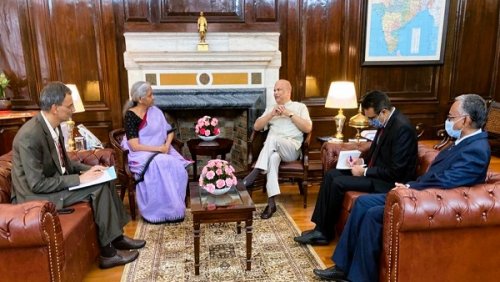
The High Commissioner of Sri Lanka to India, Milinda Moragoda, met the Finance and Corporate Affairs Minister of India Smt. Nirmala Sitharaman on Tuesday at the latter’s office in North Block, New Delhi.

This was the latest of a series of meetings High Commissioner Moragoda has had with Minister Sitharaman since November last year on Indian economic cooperation and assistance to Sri Lanka in the context of the present crisis.

At the outset, High Commissioner Moragoda briefed Minister Sitharaman on Sri Lanka’s ongoing discussions with the International Monetary Fund and the present status of the country’s debt restructuring process. He also briefed her on the drastic impact the present economic contraction is having on the poor and vulnerable segments of the population of Sri Lanka.

The High Commissioner once again thanked Minister Sitharaman for the unprecedented emergency assistance that India has extended to Sri Lanka and her personal interventions with bilateral and multilateral partners throughout this challenging and difficult period.

High Commissioner Moragoda and Minister Sitharaman also reviewed the status of bilateral economic cooperation, and the High Commissioner emphasized that India could play a critical role in Sri Lanka’s economic revival through multi-faceted economic integration between the two countries by enhancing investments, tourism and trade.

US provides 9,300 tons of fertiliser to paddy farmers in Sri Lanka

The United States officially handed over 9,300 tons of urea fertiliser to the Agriculture Ministry to distribute among 193,000 smallholder paddy farmers in Jaffna, Mullaitivu, Mannar, Vavuniya, Anuradhapura, Trincomalee, Batticaloa, and Monaragala districts.

The US Embassy in Colombo in a statement noted that the handover ceremony was attended by US Ambassador to Sri Lanka Julie Chung, Agriculture Minister Mahinda Amaraweera, USAID Deputy Assistant Administrator Asia Anjali Kaur, FAO Representative for Sri Lanka and the Maldives Vimlendra Sharan and USAID Mission Director Sri Lanka and Maldives Gabriel Grau.

The fertiliser, procured by FAO with funding from the US Agency for International Development (USAID), is the first shipment of USAID-supported fertiliser assistance, with additional supplies anticipated in the coming months that will reach close to one million farmers across the country.

“This fertiliser, provided by the American people, will help Sri Lankan farmers to keep countless Sri Lankan families fed in the months ahead,” US Ambassador Chung, speaking at a handover event held at the Port of Colombo said.

“I know that fertiliser alone will not meet all of Sri Lanka’s needs, but this assistance is just one aspect of the United States’ much greater investment in and support for the people and government of Sri Lanka at this challenging time. In total, we have announced over $ 240 million in new assistance and additional loans for small businesses over the last year and we will keep at it. Assistance like the fertiliser demonstrates America’s goodwill and true commitment to the people of Sri Lanka.”

Minister Amaraweera said: “Sri Lankan paddy farmers are capable of feeding the country and we are working to ensure that they have the inputs needed to support their livelihood and strengthen the food security of the country. We thank the US Government and FAO for their support in ensuring that vulnerable farmers receive essential fertiliser free of charge.”

The US, through USAID, has provided $ 46 million in funding to procure essential fertiliser to increase paddy production and avert a food crisis – a portion of which arrived yesterday. This funding will also provide cash assistance to small-holder farmers who have suffered due to low yields over the last two agricultural seasons and on account of the prevailing economic crisis, the statement noted.

USAID and its partners have mechanisms in place to monitor and evaluate their work, ensuring that assistance reaches its intended recipients and benefits vulnerable farming households.

USAID Deputy Assistant Administrator Kaur, who is currently visiting Sri Lanka, said: “We are delivering on a commitment we made to reach small-holder paddy farmers with much-needed fertiliser during the planting season to increase their yield and harvests. This is part of our support to Sri Lankans during this complex emergency to ensure they lead healthier and more productive lives.”

FAO Country Director Sharan said: “As FAO, we believe that saving livelihoods saves lives. The 9,300 tons of urea procured through USAID will ensure smallholder farmers take to productive agriculture practices and are able to meet their food and nutrition requirements in these extremely difficult days the country faces. We thank the US Government for its support in this endeavour and look forward to working with USAID in taking Sri Lankan agriculture forward.”

Desultory search for a solution to the Sri Lankan ethnic issue By P.K.Balachandran

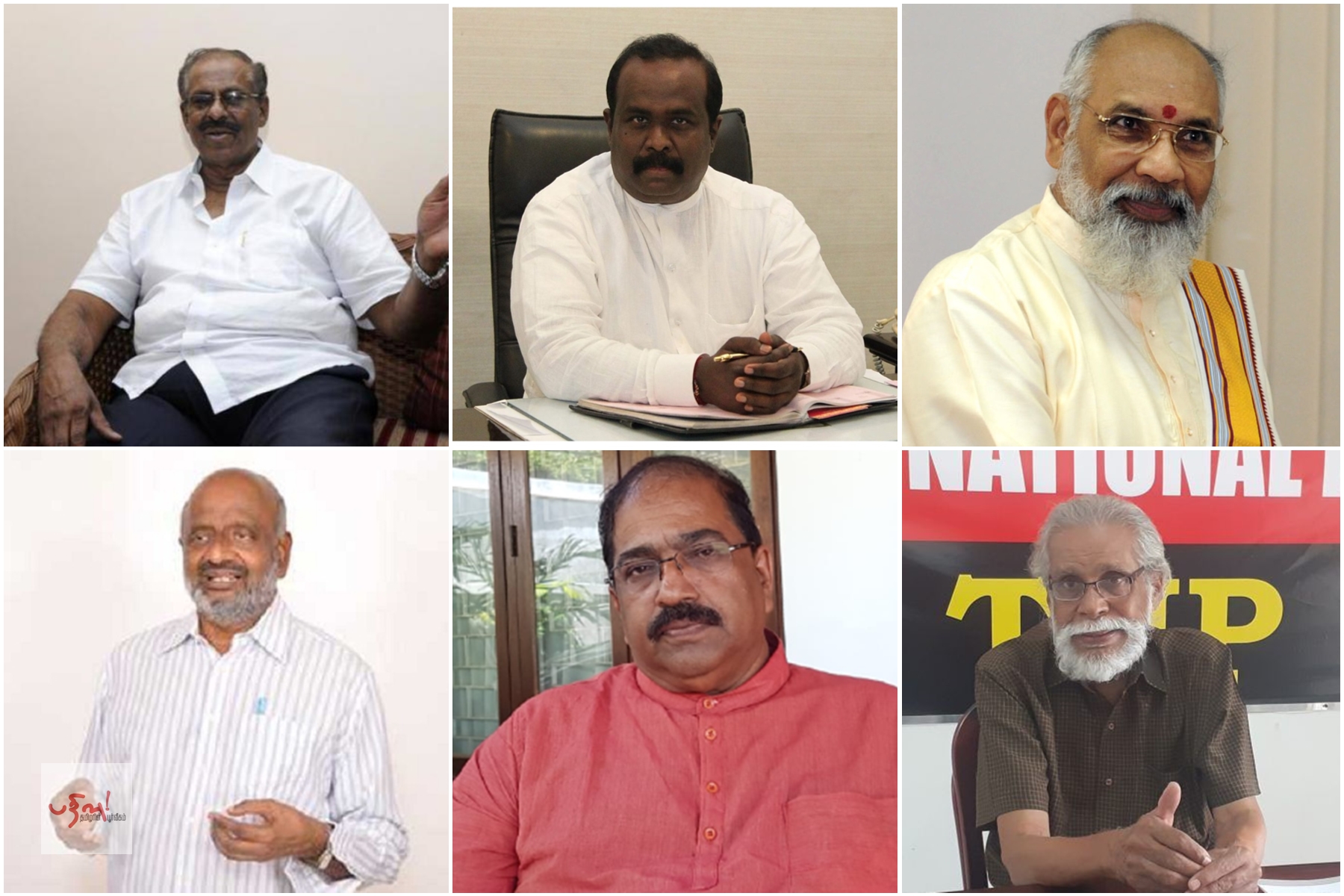
Sri Lankan President Ranil Wickremesinghe will be meeting the Tamil parties of the North and Eastern Provinces on December 11 to find a solution to the longstanding Tamil issue.

Perhaps due to pressure from India and the West, plus the grave economic crisis in the country, the government and the Tamil parties are going for talks once again, despite the utter failure of past attempts. But the chances of reaching an understanding this time round appear as dim as before.

While the Tamil parties insist that they will not agree to anything other than a federal setup, preferably in the form of a new constitution, President Wickremesinghe has indicated that he is only willing to consider something less than a federal setup. He has also indicated that he prefers devolution to districts rather than the provinces.

Devolution to provinces is anathema for the majority Sinhalese. But it is a must for the Tamils because they see the consolidation of their places of habitation as essential for their survival as a political entity. Devolution to districts will break Tamil unity, they fear. The Tamils also see the Sinhalese as a political “block” and would like to face them as a “block”. Therefore, if Wickremesinghe proposes the District as the unit of devolution and offers District Councils in place of the present Provincial Councils, the Tamil parties will reject it.

But still, there is sense in keeping the dialogue going. And that is for two reasons: Firstly, the Western nations and India consider dialogue as necessary for geopolitical stability and keep pressing for it. While India is interested in keeping its southern flank peaceful and secure, the West is interested in co-opting Sri Lanka into its anti-China Indo-Pacific axis. This is besides the West’s human rights predilections in regard to Sri Lanka.

Secondly, in the past, talks had brought good and workable ideas to the table. But these were abandoned due to an ensemble of primordial ethnic fears, crass political competition, the rise of Tamil militancy and the hardening Sinhalese majoritarian ethos. If these factors are moderated, and if commitment on the part of the leadership to find a solution is shown, talks could end in ethnic reconciliation.

B-C Pact

The Bandaranaike-Chelvanayagam Pact (B-C Pact) of July 1957 had provided for “Regional Councils” (RCs) with delegated power over a wide range of subjects like agriculture, co-operatives, lands and land development, colonization, health, education, industries and fisheries, housing and social services, electricity, water schemes and roads. The RCs were given powers to tax and borrow. The Northern Province would constitute one region and the Eastern Province would contain two or more regions.

Tamil was recognized as a ‘national minority language’ with provision for its use as the language of administration and courts in the North and East. Colonization would not be used to convert the Northern and Eastern Provinces into Sinhalese-majority areas. Regional Councils were to have powers of land alienation, and to select personnel to work on such schemes.

The Federal Party responded positively to RCs idea, but the opposition United National Party (UNP) agitated against it on the grounds that it would destroy the unity of Sri Lanka. As a consequence, Prime Minister SWRD Bandaranaike tore-up the pact.

DDCs

In 1980, the J.R.Jayewardene government introduced the District Development Councils (DDC) Act to devolve powers to Districts instead of the Provinces. Though not satisfied, the Tamils accepted the DDCs because it was a step forward in devolution. The DDC consisted of Members of Parliament from the District and members elected directly to the DDCs. Each DDC had an Executive Committee consisting of the District Minister, the Chairman of the DDC, and not more than two other members appointed by the District Minister in consultation with the Chairman.

Elections to the DDCs in Jaffna were scheduled to be held on June 4, 1981. But on March 31, a Tamil militant group fired at a TULF meeting at Nachimarkoviladi in Jaffna, in which two policemen were killed. Supported by the ruling UNP, the army went on a rampage. Nevertheless, the elections were held and the TULF won.

But the TULF found that the DDC had little or no power. Whatever there was, was in the hands of the District Minster and the Finance Minister in Colombo. The DDCs collapsed like a house of cards.

Indo-Lanka Accord

Then came the Indo-Sri Lanka Accord of 1987 negotiated not by the Sri Lankan Tamils and the Lankan government, but by the governments of Sri Lanka and India. The Accord devolved powers to elected Provincial Councils through the 13 th. Amendment (13A) of the Constitution. The Northern and Eastern Provinces were merged temporarily.

But the Accord was signed amidst stiff all-round opposition. Indian Prime Minister Rajiv Gandhi, who had signed the Accord, with President Jayewardene, was assaulted during a Guard of Honor.

However, the Tamil moderates and militants other than the Liberation Tigers of Tamil Eelam (LTTE) accepted the Accord even if only as an ‘interim solution’. While the armed uprising by the Janatha Vimukthi Peramuna (JVP) in South Sri Lanka was put down with force, the LTTE could not be put down, even by the Indian Peace Keeping Force.

However, despite the turmoil and violence, the 13 th. Amendment (13A) was enacted devolving a modicum of powers to elected Provincial Councils. There were ‘Reserved’ and ‘Provincial’ lists of powers. A ‘Concurrent’ list outlined shared powers, though ultimate authority over the concurrent subjects was given to parliament. Financial provisions for the Provinces were also to be allocated by Parliament. The Provincial Councils could be over-ruled by the President under the Public Security Ordinance.

Experts point out that the powers of Provincial Councils could be “controlled, reduced or abolished by the Central government unilaterally.” There was no subject over which Provincial Council could claim exclusive jurisdiction, they point out.

The Sinhalese majority and the LTTE opposed the Accord and the 13A tooth and nail. For the Sinhalese, the 13A amounted to dividing the country as per the diktat of a foreign power. The LTTE opposed it as it was already engaged in a full-scale war to establish an independent Tamil Eelam.

The 13A was implemented but only partially because of a lack of commitment on the part of the majority Sinhalese, the government and also the Tamils. While the Sinhalese considered the Provincial Council to be a White Elephant and divisive, the Tamils considered the devolution grossly inadequate. Their aim, since 1948, has been a federal constitution. But for the Sinhalese, federalism is a stepping stone to secession.

However, in the 1990s, President Chandrika Kumaratunga took up the threads of constitutional reform even as she continued the war against the LTTE. She was keen on winning over the Tamil moderates. She went through the process of drafting an entirely new constitution. But the draft, devolving power to the Provinces, was opposed by hardline Sinhalese and the opposition UNP. The exercise was abandoned.

Another attempt was made by Kumaratunga in 2000. The government’s proposal said that legislative and executive powers be distributed between the Centre and the Regions, while keeping the “unitary” character of the Constitution. But hardline Tamil and Sinhalese opinion prevailed over the moderates and the idea of constitutional reform was again abandoned.

When a government led by President Maithripala Sirisena and Prime Minister Ranil Wickremesinghe came into being in 2015, work began on a new constitution. The Public Representations Committee, the Subcommittees of the Constitutional Assembly, and the Steering Committee were productive. But the process had to be abandoned because of a lack of commitment on the government’s part.


China invites IMF & World Bank to discuss aiding Sri Lanka

China has reportedly invited the Chief of the International Monetary Fund (IMF), Kristalina Georgieva and the President of the World Bank David Malpass to discuss helping Sri Lanka.

Accordingly, the duo has been invited to Beijing, China, to discuss helping Sri Lanka and other countries to overcome the ongoing difficulties and ease the debt burden, thus realizing sustainable development, the Chinese Foreign Ministry reported.

During a regular press conference, Chinese Foreign Ministry Spokesperson Mao Ning told reporters that China attaches high importance to Sri Lanka’s difficulties and challenges.

She stated that China supports the financial institutions in working out ways with Sri Lanka to properly resolve the debt issue.

Mao said China is hopeful that relevant countries and international financial institutions will work with China and continue to play a constructive role in helping Sri Lanka overcome the current difficulties, ease the debt burden and realize sustainable development.

Posted in Uncategorized

Sri Lanka offers East Container Terminal to Japan: President

Sri Lanka has offered the East Container Terminal (ECT) of the Colombo Port to Japan, President Ranil Wickremesinghe said.

Colombo Port’s West Terminal has been given to India’s Adani group to develop as a joint venture after the the government of previous president cancelled the ECT deal with India and Japan through a tripartite agreement .

“If we really want to do it, we have to give the East Terminal,” President Wickremesinghe told the Sri Lanka Economic Summit of the Ceylon Chamber of Commerce.

“We have given first offer to Japan.”

If Japan does not take it will be open to others, he said.

Posted in Uncategorized

Chinese Govt asked Sri Lanka to speak to Exim Bank on debt, says Ranil

President Ranil Wickremesinghe, addressing the inauguration of the Sri Lanka Economic Summit yesterday (5) in Colombo, said that China has requested Sri Lanka to speak to the Export-Import (Exim) Bank of China in connection with ongoing debt restructuring process for the purpose of accessing the International Monetary Fund’s (IMF) bailout programme.

He reiterated that Sri Lanka has commenced debt restructuring talks with China.

The President also noted that it is not easy to carry out business activities with high interest rates, but added that a meeting is likely to be held in early 2023 with regard to strengthening the economy.

“Small and medium-scale enterprises are a major concern, as we cannot allow them to collapse,”he said.

Sri Lanka to resume flights from Jaffna to India next week

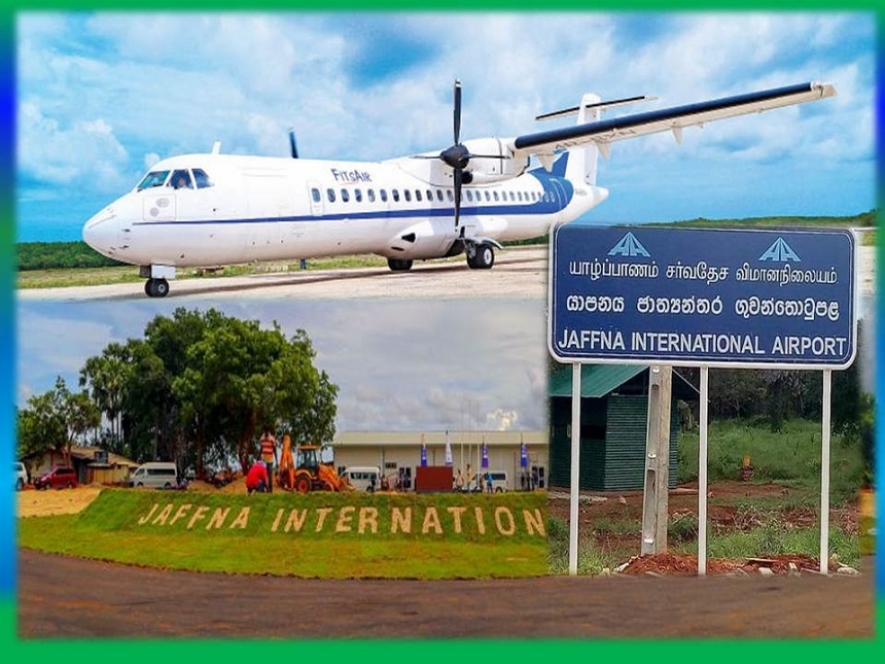
Sri Lanka will resume flights from the northern Jaffna peninsula to Chennai by next week, a senior minister has said, a move that will help the cash-strapped country’s tourism sector and provide a fillip to its beleaguered economy. The tourism sector is the main source of foreign exchange earnings for Sri Lanka.

However, the onset of the pandemic in 2020 severely crippled the tourism sector and was one of the major reasons for Sri Lanka’s economic travails.

The island nation’s earnings from international tourist arrivals for November touched USD 107.5 billion, with the cumulative tally in the first eleven months of the year notching up a whopping USD 1129.4 million, according to the Central Bank of Sri Lanka.
recommended by

“The flights to India from Palaly will resume soon, most probably by December 12,” Sri Lanka’s Aviation Minister Nimal Siripala de Silva told Parliament on Monday.

Flights will be operational between Jaffna and Chennai, the minister said.

“There are still some improvements to the runway that are needed,” he added.

The present runway can only accommodate 75-seater flights.

The airport was named the Jaffna international airport in October 2019.

The first international flight to land there was from Chennai.

The 2019 redevelopment of the airport was funded by both Sri Lanka and India.

Earlier, India’s Alliance, a wholly-owned subsidiary of Air India, operated three weekly flights from Chennai to Palaly.

However, after the government changed in Sri Lanka in November 2019, flight operations were halted.

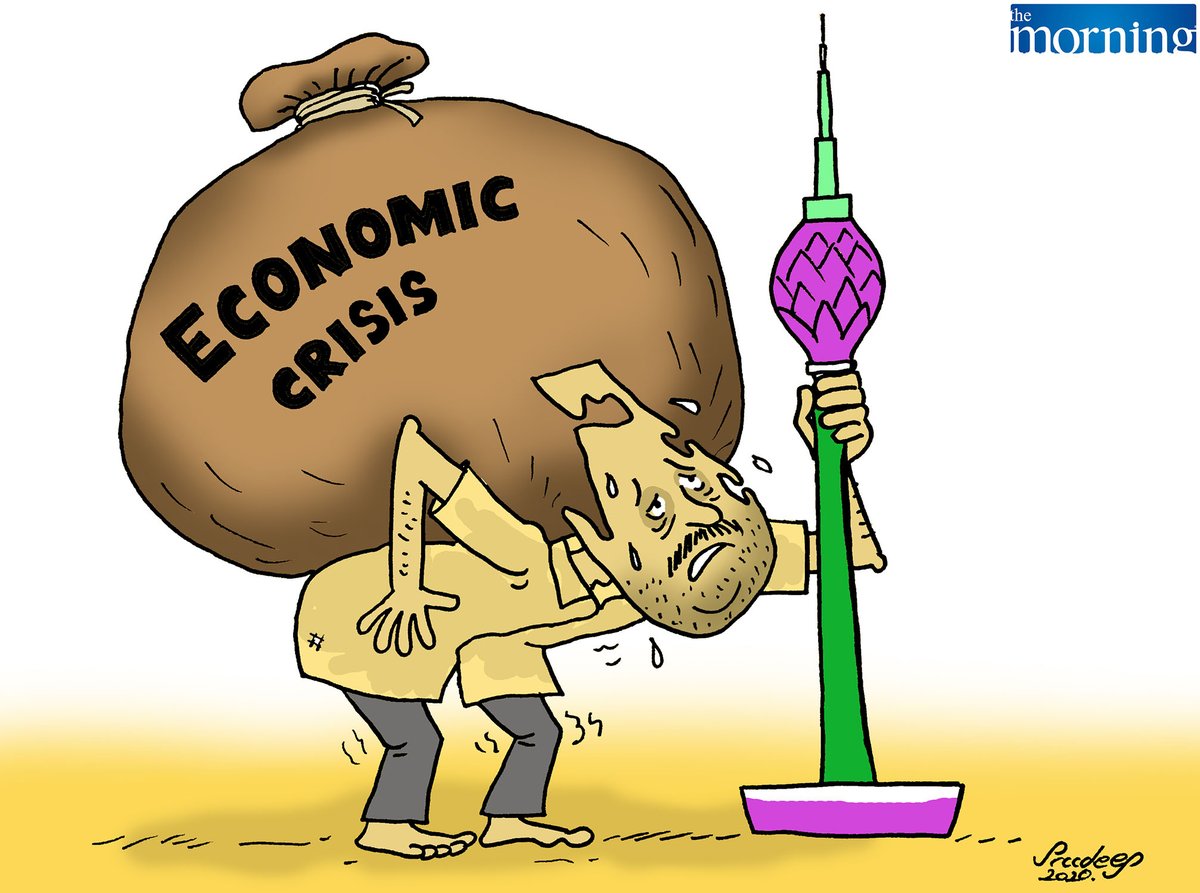
Sri Lanka is currently facing its worst economic crisis since its independence from Britain in 1948.

There have been street protests in Sri Lanka against the government since early April due to its mishandling of the economic crisis.

In September, the IMF announced a USD 2.9 billion bailout package to help the country tide over its worst economic crisis.

A crippling shortage of foreign reserves has led to long queues for fuel, cooking gas, and other essentials while power cuts and soaring food prices have heaped misery on the people.

Economic hardships force poor families to sell kidneys, racket busted

The Colombo Crimes Division (CCD) uncovered a massive human organ trafficking racket operating at a private hospital in Borella deceiving people from poor families during the ongoing economic crisis.

The CCD launched investigations into the racket after complaints were lodged by five persons including a woman to the Borella Police Station in connection with the non-payment after selling kidneys at a leading hospital in Borella. The kidneys had been sold by people belonging to poor families who were suffering to make ends especially during the ongoing economic crisis.

Accordingly, the police arrested a suspect involved in the racket after he surrendered himself at the Colombo Crime Division on Monday evening.

The arrested suspect is a 41-year-old resident of Kajimawatta, Colombo 15,

He was remanded till 13 December by the Colombo Magistrate’s Court. The Magistrate also ordered a travel ban to be imposed on six directors of the private hospital.

It has been revealed that this suspect has acted as a broker by coordinating between the person who sold the kidney and the receiving party.

In addition, apart from the brokerage fees, the suspect has also defrauded a part of the money given by the management of the hospital to those who sold the kidney.

Sources said that the victims who complained about the racket were presented before a Judicial Medical Officer (JMO) and it was revealed that one of those people’s kidneys had been removed.

They were promised a large amount of money for donating the kidneys, but they claimed that they have not received the money.

Meanwhile, it was reported that a kidney removed from a poor person has been transplanted to a foreigner.

Following the uncovering of the racket, the Health Ministry has appointed a seven-member committee to investigate the incident and has taken steps to temporarily suspend organ transplants at the concerned private hospital.

Posted in Uncategorized

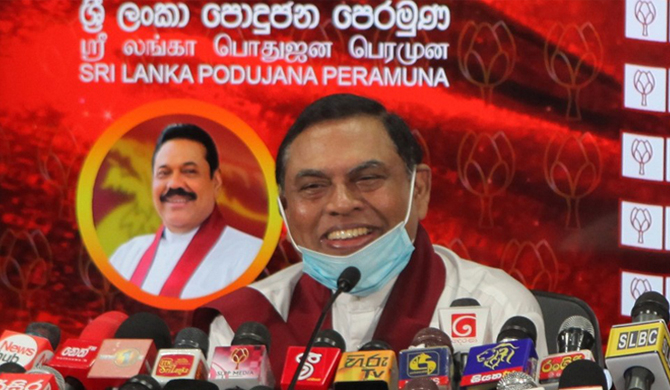
Time right for elections, Sri Lanka Podujana Peramuna ready to face any poll: Basil

The time has come for an election in Sri Lanka and the ruling Sri Lanka Podujana Peramuna (SLPP) is ready to face any election, SLPP national organiser Basil Rajapaksa said, dismissing claims that the party has come to fear elections in the face of growing unpopularity and increased factionalisation.

Speaking to reporters at an event held in Colombo Monday December 05 morning to mark the fourth anniversary of the party’s media centre, Rajapaksa handwaved off assertions that the SLPP has splintered in the wake of the mass protests that ousted his brother and former President Gotabaya Rajapaksa.

“No, our party hasn’t fragmented, not the way this cake was cut,” he said, pointing to the cake that was cut to celebrate the media centre’s anniversary.

“There may be some [dissenters], but we are with the people,” said Rajapaksa.

Political analysts, however, note that the once mighty SLPP has indeed fractured to at least four or five distinct factions. One group, according to party sources, is with President Ranil Wickremesinghe who is keen to involve younger SLPP legislators in his economic reform agenda. The second is with former Media Minister Dullas Alahapperuma who launched an unsuccessful bid for the presidency and was roundly defeated by Wickremesinghe at the July 19 presidential vote in parliament. The third group now sits as independent MPs in parliament, while a fourth faction are with former President Mahinda Rajapaksa, the SLPP patriarch.

There is another group that remains loyal to Basil Rajapaksa, though all but one SLPP legislator voted for the 21st amendment to the constitution that prohibited dual citizens from entering parliament. Rajapaksa, a dual citizen with US passport, recently returned to the island after a private visit to his second home.

The former finance minister, who resigned after a wave of protests that demanded his departure along with that of his presidential brother, for their alleged role in Sri Lanka’s prevailing currency crisis, the worst in decades, was in a jovial mood at the anniversary event on Monday and was seen heartily indulging reporters who were throwing loaded question after loaded question at him.

Asked about future plans of the SLPP, Rajapaksa quipped that they couldn’t be revealed to the media at this stage.

“However, time has come for an election. It’s difficult to say how it will be at present, but as a party, we’re ready to face any election,” he said.

Rajapaksa’s apparent confidence in facing an election is in direct contrast to speculation that the SLPP is banking on President Wickremesinghe’s refusal to dissolve parliament anytime soon. Opposition lawmakers have accused Wickremesinghe of providing sanctuary and promising security to the deeply unpopular party by not calling early elections.

“We have won every election we faced so far. We are thankful to the Sri Lankan people for that. If we were unable to meet their expectations 100 percent, we regret that. We will correct any shortcomings and will work to fulfill the people’s aspirations,” said Rajapaksa.

Asked if he is going to remain in active politics despite the blanket ban on dual citizens, the former minister said, again with a chuckle: “Active politics… well, I’m not in governance anymore. Governance [for me] has been banned by the 21st amendment. So no, I’m not in governance, but I am in politics,” he said.

Pressed about possibly entering parliament again, he said: “How can I?”

Nor is Rajapaksa saddened by the development, he claimed. “No, I’m happy about it,” he said.

The former two-time finance minister, noted for his clash of views with Wickremesinghe when the latter was invited by then President Gotabaya Rajapaksa for a round of discussions on economic recovery, was cautiously complimentary when asked about the new president. It was the SLPP’s backing that guaranteed Wickremesinghe his lifelong ambition.

“I think that selection was the correct one. We have maintained from the start that all of us in government or opposition must be able to freely engage in politics,” he said, referring to assurances that the president has purportedly given SLPP parliamentarians that they will not face the kind of retaliatory mob violence that engulfed the nation on May 09 after alleged SLPP goons attacked peaceful anti-government protestors in Colombo.

A reporter asked if Rajapaksa believes the incumbent president is capable of taking the country on the right path to recovery?

“The first task was accomplished, by allowing us to engage in politics and to get on the streets. There are economic and other issues, and we have high hopes that they will be resolved,” he said.