Sri Lanka: Drop terror charges against student leaders detained for 90 days

In response to the detention for over 90 days of student leaders Wasantha Mudalige and Galwewa Siridhamma Thero, under the draconian Prevention of Terrorism Act (PTA), Thyagi Ruwanpathirana, Amnesty International’s South Asia Regional Researcher, said:

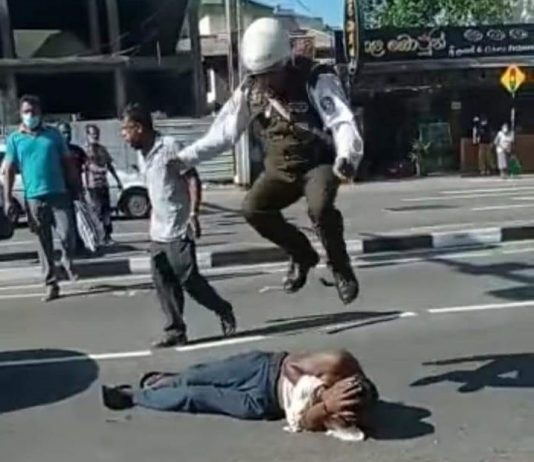
“The continued targeted persecution of student leaders in Sri Lanka has a chilling effect on civil society and the right to protest. The baseless terror charges against Wasantha Mudalige and Galwewa Siridhamma Thero must be immediately dropped and any extension of the detention order must be stopped.”

The baseless anti-terror charges against Wasantha Mudalige and Galwewa Siridhamma Thero must be immediately dropped and any extension of the detention order must be stopped.

Thyagi Ruwanpathirana, Amnesty International’s South Asia Regional Researcher
“The use of counterterrorism charges against protesters is excessive and disproportionate, yet they have time and again been used by the Sri Lankan authorities against critics and minorities to silence dissent. Detaining protesters under counterterrorism charges is a clear violation of the rights to freedom of expression and peaceful assembly guaranteed by the Constitution of Sri Lanka and the International Covenant on Civil and Political Rights, to which Sri Lanka is a state party. International human rights law requires that counterterrorism laws must not be used to criminalize those who either organize or participate in peaceful assemblies.”

“The Sri Lankan authorities must repeal the PTA, which does not meet international human rights standards, and must uphold their already stated commitment to end its use. The authorities should immediately review the detention of all those held under the PTA, ensuring adequate access to fair bail hearings. They should also release all protesters facing similar charges that do not meet international standards.”

International human rights law requires that counterterrorism laws must not be used to criminalize those who either organize or participate in peaceful assemblies.

Thyagi Ruwanpathirana
Background:

Sri Lankan student leaders Wasantha Mudalige, the convener of Inter University Students’ Federation and Galwewa Siridhamma Thero, the convener of Inter University Bhikku Federation have been detained by the Sri Lankan authorities since 18 August 2022. They had their detention extended for 90 days on 21 August 2022 under the draconian Prevention of Terrorism Act (PTA) amidst an ongoing crackdown on protesters by the authorities.

Their family members and lawyer have raised concerns about their safety and deteriorating health while in detention. Amnesty International has issued an Urgent Action on the arbitrary detention of the student leaders.

Amnesty International has previously documented the crackdown by the Sri Lankan authorities on protesters who now face intimidation, harassment and arrest. The suppression of protest and the rights to freedom of peaceful assembly, movement and expression must stop and the government must protect the right to protest.

Posted in Uncategorized

TELO Leader and TNA Joint leader Selvam MP says his faction will vote against the defence allocation

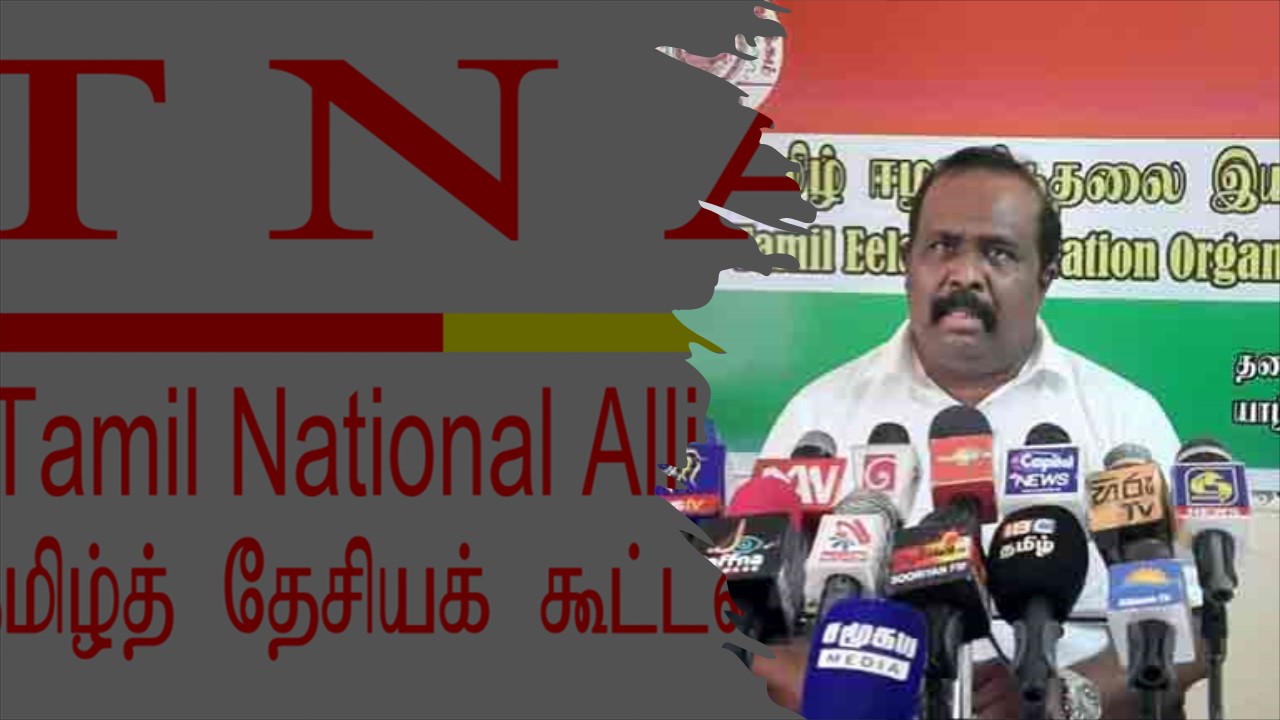
Tamil National Alliance joint leader and TELO Leader Selvam Adaikalanathan MP says his faction will vote against the budgetary allocations for defence is taken up in Parliament.

Speaking during the debate on the second reading of the 2023 Budget in Parliament this morning, MP Selvam Adaikalanathan said it its unacceptable that the defence allocation has continuously increased.

He said therefore they will vote against the defence allocation.

MP Adaikalanathan stressed that the President as the Minister of Finance should review the allocations made for defence through next year’s budget.

He said at a time when the country is facing a massive food shortage and financial crisis, focus should’ve been on addressing such matters.

MP Adaikalanathan added that allocations for Ministries of Agriculture and Fisheries have not been increased although the two ministries will be able to provide sustainable long-term solutions to the food security issue.

Bishop of Mannar and President discuss land issues in Mannar

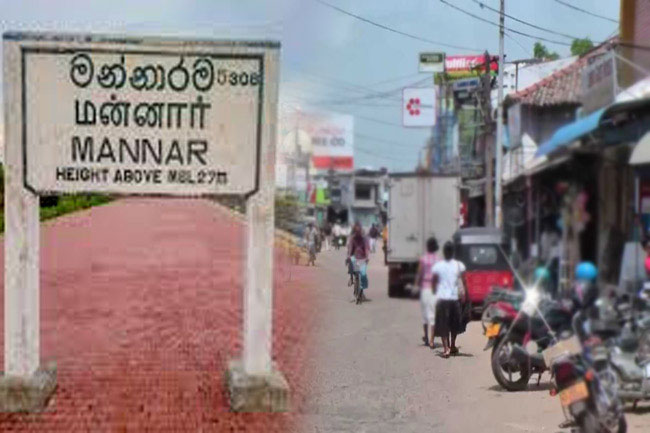
The Bishop of Mannar Most Reverend Dr Fidelis Lionel Emmanuel Fernando and several others met with President Ranil Wickremesinghe at the Presidential Secretariat today (16).

President Wickremesinghe was briefed on several issues in Mannar including land issues.

The President having paid attention to the concerns raised, assured prompt action to resolve them.

Discussions also focussed on providing required facilities for pilgrims visiting the Madu Shrine.

Rev. Fr. Joyce Peppi Sosai Santia, Rev. Fr. Antony Sosai and several others including MP – (Dr.) Kavinda Jayawardhana participated in the meeting.

EC Chair assures Opposition of LG polls by 20 March

Election Commission (EC) Chairman Attorney Nimal Punchihewa has assured all Opposition political parties that the Local Government (LG) elections will be held prior to 20 March 2023, in response to a letter signed and submitted by the said parties.

Opposition and Samagi Jana Balawegaya (SJB) Leader Sajith Premadasa told the media outside the Election Commission in Rajagiriya yesterday (15) that Punchihewa and all the Members/Commissioners of the Election Commission are working towards holding the LG elections on time despite efforts by the Government to delay the same.

“This is an election required by the law, and we have been assured that by 20 March 2023, the new LG authorities will be established. This is good news for the public, as this election will win back the public’s power to vote, their sovereignty, and their right to democracy,” said Premadasa.

Sri Lanka Freedom Party (SLFP) General Secretary and “independent” Opposition MP Dayasiri Jayasekara stressed that the Government should not hinder the Election Commission’s actions to expedite this election.

“Punchihewa is doing all that he can, carrying out the necessary steps to defeat the efforts of the Government to delay the election. He will definitely schedule it before 20 February 2023, because it takes about a month to sort out appointments, which means that we will have nine weeks to nominate names. By the first week of December 2022, the decision will be announced. He pointed out that the Government might bring up the issue of funds, so I ask the Government not to obstruct any of their actions, because this is important for the democracy of this country,” he said.

Sri Lanka Podujana Peramuna (SLPP) Chairman and “independent” Opposition MP Prof. G.L. Peiris affirmed the same, stating that all LG bodies will be ready by 20 March 2023.

“Punchihewa is in a very clear position. According to the law including the Constitution, it is a mandatory duty of the Election Commission to schedule an election. This is in no way a trustee Commission. Even though the 21st Amendment to the Constitution was passed, the interim clause says very clearly that the Election Commission has the duty of taking necessary action to hold an election. They cannot function according to anyone else’s instructions, as they must make independent decisions,” he stated.

Pivithuru Hela Urumaya Leader and “independent” Opposition MP Udaya Gammanpila similarly expressed his confidence in Punchihewa’s assurance.

“All the parties of the Opposition jointly asked the Election Commission today to defeat the effort by the Government to postpone this election and to hold the election at the right time. They will definitely announce their decision between 6 December 2022, and 9 January 2023,” said Gammanpila.

Condemning the Government’s alleged plans to postpone the Local Government (LG) elections and resolving to fight the same collectively, a meeting organised by the Freedom People’s Congress was held on 20 October with the participation of all Opposition parties except the Janatha Vimukthi Peramuna (JVP)-led National People’s Power (NPP), which however has agreed to back the Opposition’s push to conduct the LG polls.

The country’s key Opposition parties alleged last week that the recently appointed National Delimitation Committee chaired by former Election Commission Chairman Mahinda Deshapriya is a ploy by the Government to postpone the LG elections, and therefore, urged Deshapriya to not be a “partner” to such a conspiracy, while Deshapriya responded by stating that he does not wish to comment on the matter, as it would be unethical to do so.

This was after Prime Minister Dinesh Gunawardena, in his capacity as Minister of Provincial Councils and Local Government, issued an extraordinary gazette appointing a five-member National Delimitation Committee for the demarcation of wards for Local Authorities. J.R.V. Dissanayake, W.M.M.R. Adikari, Dr. K. Thavalingam, and I.A. Hameed serve as members of the said committee along with Deshapriya. The National Delimitation Committee is effective from 1 November 2022 to 28 February 2023, as per the gazette notification.

Posted in Uncategorized

Parliament committee says government trying to restructure domestic debt

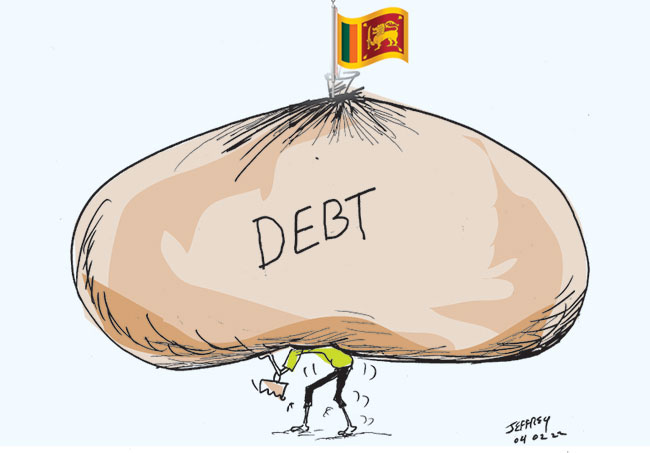
It has been reported that the Sri Lankan government had taken a decision to restructure domestic debt.

This was revealed in the first-ever report produced by the Sub-Committee in identifying short and medium-term programmes related Economic Stabilization of the National Council.

Appointment of the Sub-Committee:

The Resolution to constitute the National Council, moved by Dinesh Gunawardena, the Prime Minister was approved by Parliament on 20th of September 2022.

According to the above Resolution, the National Council shall have general responsibilities and jurisdiction over three main areas. One of them is to agree on short and medium-term common minimum programmes in respect of the stabilization of the economy.

At the first meeting of the National Council which was held on 29th of September 2022, the Secretary-General of Parliament, presenting the way forward of the Council, suggested to appoint a Sub-Committee to recognize short and mediumterm programmes for the stabilization of the economy.

The members of the SubCommittee were announced as per the preferences indicated by them at the Second meeting of the National Council which was held on 6th of October 2022.

The committee is chaired by Patali Champika Ranawaka and includes MPs Naseer Ahamed, Tiran Alles, Sisira Jayakody, Sivanesathurai Santhirakanthan, Wajira Abeywardana, A. L. M. Athaullah, Rishad Bathiudeen, Palani Thigambaram, Mano Ganesan, and M. Rameshwaran.

Findings on Domestic Debt & Recommendations:

The need has arisen to change the legal and undeveloped systems, radically in every sector. It is a necessary condition for economic growth and a prime condition for building public confidence. Although financial stability is essential at this time, there is a danger of collapsing the economy in an attempt to establish strict financial stability. Therefore, a balance must be struck between financial and economic stability.

* A collaboration of both the diplomats and the officials to accelerate the process of debt restructuring is essential.

* The changing of the maturity periods of loans, the loan interest and the initial loan payments by paying attention to the factors such as the total debt amount compared to the GDP, the Gross Financial Need (GFN) rate to the GDP, foreign debt repayment to the GDP in keeping with the international standards on the debt and debt repayment ability of Sri Lanka at least during the next three years and the next decade is necessary in restructuring the debt.

* The income and expenditure, foreign exchange earnings, control of balance of payments and a full financial and managerial restructuring of the public sector is mandatory to Sri Lanka in order to fulfill the difficult task of obtaining the concurrence of the creditors for the debt restructuring.

* It has been reported that the government had taken a decision to restructure domestic debts. The liquidity of domestic debt had been contracted by over 60% due to the inflation. If the debt restructuring is continued in spite of the above situation, it is emphasized to reach a collective agreement among the depositors of the local banks and of the Employees’ Provident Fund and the local investors after having formal negotiations whereby the trust will be built up among the foreign creditors on the restructuring of the foreign debt.

* It is necessary to amend existing laws and bring new laws to establish responsibility and accountability in the financial sector to prevent the recurrence of the economic bankruptcy that occurred.

* A new Public Finance Management Law must be adopted immediately, which binds the responsibility and accountability of the Ministry of Finance and its authorities for the stability of income, expenditure and debt, and the provision for debt management and Fiscal Management (Responsibility) Act (2003)) should be updated.

* A new Financial Regulation Act (Monetary Law Act 1950) which ensures accountability of inflation and financial supply should be prepared in line with the old Act and thus the independence of the Central Bank should be assured. The Monetary Board and the Governor of the Central Bank and the top management should be made responsible and accountable for the financial situation.

* A new independent agency should be set up for public debt management. The Central Bank and the Treasury can work together in its front office and back office functions and the debt management strategy should be managed by the middle office.

* A new strong Act should be introduced to prevent corruption and it should ensure:
 Professionalism for investigations.
 The confidentiality of the complainant.
 Efficiency and impartiality of investigations and litigation.
 Independence, impartiality, and non- partisanship in litigation.
 Active relationships with international parallel organizations.

* The assets and liabilities of politicians and higher-ranking officials in Ministries should be declared to the public.

* An independent, impartial, and efficient National Procurement Commission should be appointed for regulation and appeal with regard to procurement. It should consist of professionals who have experience in every field.

* An independent, impartial, and efficient National Procurement Commission should be appointed for regulation and appeal with regard to procurement. It should consist of professionals who have experience in every field.

* The prices of all food items, essential services, medicine and health care should be brought to a digital platform and any service supplier and consumer should be given the facility to access it. The consumer will receive the best service for the lowest cost and market competition.

* The public entities should be restructured to gain the public’s confidence.

* 2200 number of public entities audited by the Auditor General should be subjected to a proper management audit.

* The nominal institutions should be closed.

Patali Champika Ranawaka, the Chairman of the Sub-Committee to recogniz programmes for stabilization of the economy said that “As per expert opinion from the World Bank, Sri Lanka delayed approaching the IMF. Sri Lanka is the only country that sought financial help after its reserves dropped to zero.”

Sri Lanka has currently defaulted on its bilateral and open-market debt and rests its hopes on the US & 2.9 Billion Extended Fund Facility offered by the International Monetary Fund.

Although Sri Lanka has reached a Staff Level Agreement with the IMF, in order to tap the US $ 2.9 Billion is needs to prepare a program on defaulted debt to secure approval from the IMF Executive Board.

The IMF is hoping for a certain portion of the debt to be slashed.

However, Sri Lanka’s largest bilateral creditor China is yet to announcement its position to cut its debt to Sri Lanka.

Sri Lanka has already started discussions with India, and Japan, however there is still no proper position with regard to China’s debt to Sri Lanka.

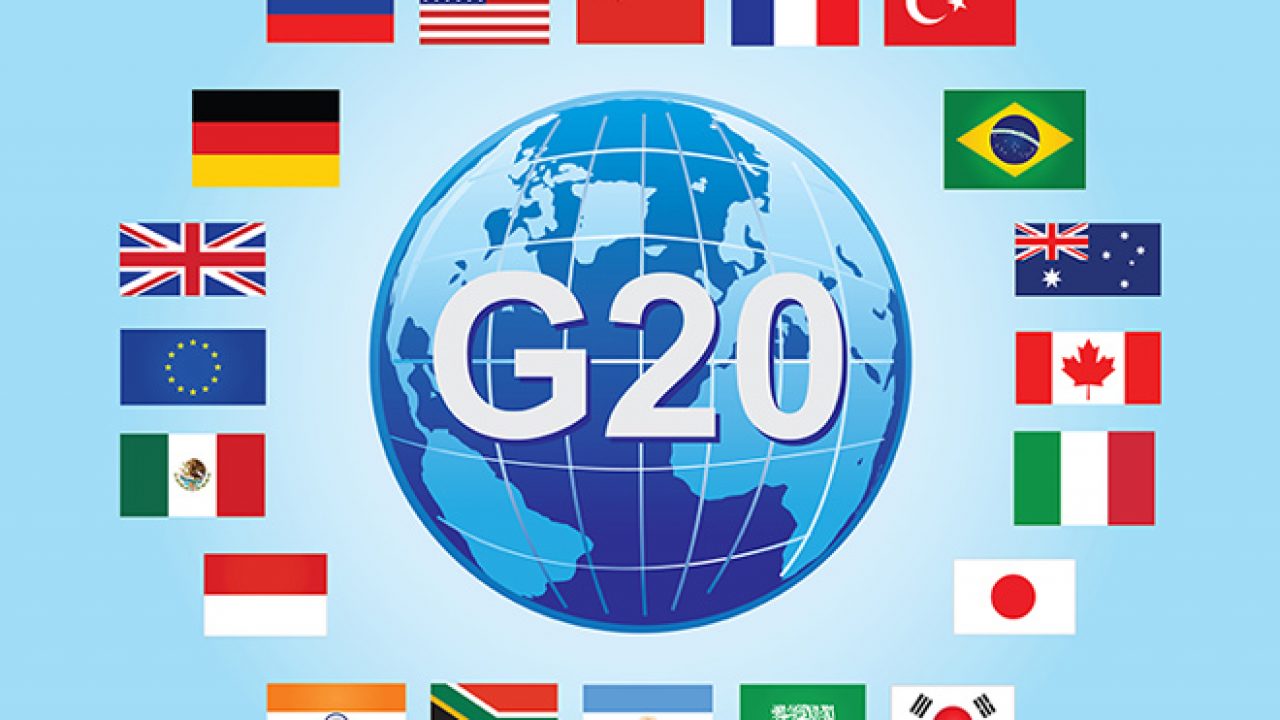
Leaders of the Group of 20 major economies expressed concern about the “deteriorating debt situation” facing some vulnerable middle-income countries, and called on all official and private creditors to respond swiftly to requests for debt treatment.

A draft of the G20 leaders declaration seen by Reuters includes far stronger language about debt issues and acknowledges that the problems extend far beyond just the poorest nations.

The leaders said they would step up efforts to implement the Common Framework for debt treatments in a “predictable, timely, orderly and coordinated manner,” according to the draft.

The framework was created by the G20 and the Paris Club of official creditors in late 2020 to help low-income countries weather the COVID-19 crisis.

However, results have proven elusive and only three countries – Chad, Zambia and Ethiopia – have formally applied for debt treatment under the framework.

According to the Reuters report, the IMF and World Bank leaders, along with officials from the United States and other Western powers, have pushed unsuccessfully to expand the G20 framework to include vulnerable middle-income countries, but that effort has been blocked by China, now the world’s largest sovereign creditor.

The draft declaration acknowledges, for the first time, the severity of the debt problems facing middle-income countries, in what experts said was a clear reference to Sri Lanka, which reached a staff-level agreement with the IMF in early September but needs to get financing assurances from multiple creditors, including China and Japan, to secure disbursements.


Posted in Uncategorized

G20 likely to note impact of debt on countries like Sri Lanka

The Group of 20 major economies are likely to take note of the impact debt issues was having on countries like Sri Lanka.

Reuters reported that the leaders of the Group of 20 major economies will express concern about the “deteriorating debt situation” facing some vulnerable middle-income countries, and call on all official and private creditors to respond swiftly to requests for debt treatment.

A draft of the G20 leaders declaration seen by Reuters includes far stronger language about debt issues and acknowledges that the problems extend far beyond just the poorest nations.

The draft declaration acknowledges, for the first time, the severity of the debt problems facing middle-income countries, in what experts said was a clear reference to Sri Lanka, which reached a staff-level agreement with the IMF in early September but needs to get financing assurances from multiple creditors, including China and Japan, to secure disbursements.
The draft stressed the importance of all official and private creditors participating in debt relief and shouldering a fair burden. But it did not mention China, which has been criticized by Western countries and international financial institutions for delaying debt restructuring efforts.

The leaders said they would step up efforts to implement the Common Framework for debt treatments in a “predictable, timely, orderly and coordinated manner,” according to the draft.

The framework was created by the G20 and the Paris Club of official creditors in late 2020 to help low-income countries weather the COVID-19 crisis. However, results have proven elusive and only three countries – Chad, Zambia and Ethiopia – have formally applied for debt treatment under the framework.

IMF and World Bank leaders, along with officials from the United States and other Western powers, have pushed unsuccessfully to expand the G20 framework to include vulnerable middle-income countries, but that effort has been blocked by China, now the world’s largest sovereign creditor.

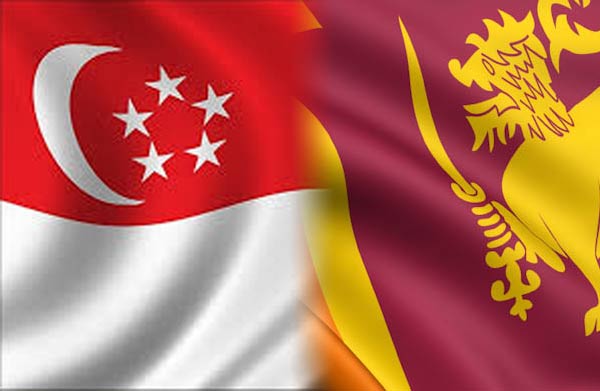
President instructs to expeditiously implement Singapore-Sri Lanka FTA

President Ranil Wickremesinghe has instructed relevant officials to implement the Singapore-Sri Lanka Free Trade Agreement (FTA) immediately.

The Head of State gave these directives during the discussion held at the Presidential Secretariat this morning (Nov 16) on the implementation of the Singapore-Sri Lanka FTA.

The existing problems in this regard were discussed at length and the President highlighted the need to provide quick solutions to all the existing problems.

President’s Secretary Saman Ekanayake, Senior Economic Advisor to the President Dr. R.H.S. Samaratunga, Attorney General Sanjaya Rajaratnam, Secretary to the Ministry of Trade, Commerce and Food Security S.T. Kodikara, and Heads of Line institutions were present at this discussion.

Posted in Uncategorized

Wigneswaran says Ranil ignored North-East

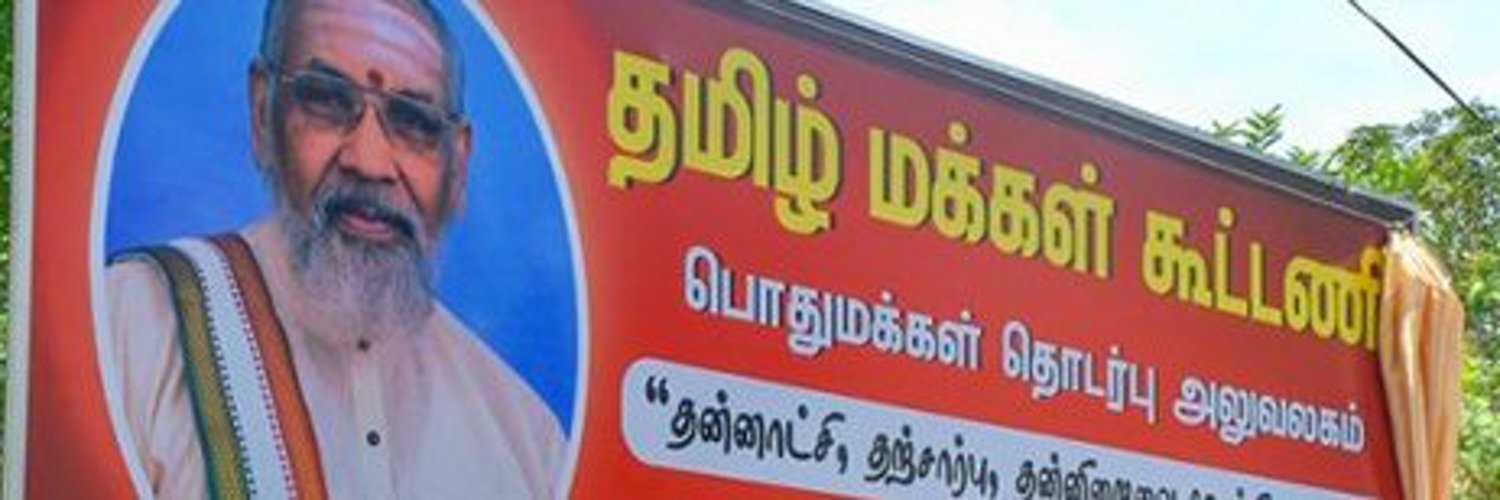
Thamil Makkal Thesiya Kuttani (TMTK) Leader MP C.V. Wigneswaran yesterday (15) claimed that President Ranil Wickremesinghe had ignored the North and the East in Budget 2023, adding that proposing an economic zone in the North and asking the diaspora to invest would have been one of the easiest ways by which he could have brought about reconciliation.

Speaking to The Morning, Wigneswaran noted that from the point of view of the Tamil people, there is nothing worthwhile to talk about in the Budget.

“There are ways by which the Government does not allow the Tamil people to prosper. I don’t see the benefits in this Budget. In fact, they are very much against our interests, especially due to not proposing an economic zone for the Northern Province. As an MP for the Jaffna District, it is from the point of view of the Tamil people that I would be looking at the Budget. I must say that I am frankly disappointed, because there is increased revenue, but how is it going to be spent?”

He also noted that the most glaring error in the Government’s thinking has been the defence as well as the public security expenditure, which had risen from Rs. 427 billion to Rs. 539 billion even after 14 years since the end of the war.

“I just can’t understand why, 14 years after the end of the war, we go on building up our expenditure on defence. Is that what the people want? The people certainly will not be wanting such things; they want benefits for their day-to-day lives. There is so much taxation. They would like these taxes to be decreased, and one of the ways in which taxes could be decreased is by bringing down defence expenditure. The defence expenditure had even gone beyond what was spent during the era of the war. The currency had come down in value and therefore the amount had gone up. But then, that is not the point. Why should it be so much more? What are we trying to do?”

He also said that from the point of view of the Tamil people, the North has not been identified as an economic zone, whereas Trincomalee, Hambantota, Kurunegala, and the Western Province have been identified as such.

“Trincomalee has been identified because they are going to give jobs to the Sinhalese to drive away the Tamils. Making Trincomalee an economic zone together with Hambantota and other places, and forgetting the Northern Province is irking me, because the Northern Province could have been identified as an economic zone. We could have brought the diaspora to help us. They would have most gladly come and invested,” he added.

He charged that President Wickremesinghe continues to maintain an ethno-centric philosophy, because he is not being very fair to the Tamil people.

“He is not interested. He is ignoring the North and the East. This casts him in poor light. At the moment, that is one of the easiest things that he could have done, where even more economic activities could have been initiated in the Northern and Eastern Provinces, and he could therefore have made the people of these areas feel at home with the Government. When you go to Colombo and other areas, you see a lot of modernisation taking place but when you come up to Vavuniya and then go up to Jaffna, there is no modernisation.

“An absolutely primitive type of environment is what we are experiencing. The youth want more job opportunities, but there are no new industries and enterprises brought into the North. When I started an enterprise in the Northern Province when I was the Chief Minister, the Government sabotaged it,” he added.

However, he welcomed the retirement prospects with regard to the Army that have been mentioned in the Budget.

“I do welcome the retirement prospects with regard to the Army that have been mentioned in the Budget, where, instead of the earlier 22 years of service, if they engage in 18 years of service, they are entitled to retire. We have 331,000 soldiers in our military, and that is about the 14th largest in the whole world. It is the 14th biggest Army. Great Britain comes after that, because they have only 90,000 soldiers.

“Giving retirement prospects for these people to bring the number of soldiers down is to be welcomed. But they have made it optional. Now, with no jobs available, people will not like to leave the Army, because at least the amount they get there will be worthwhile. They could have made this compulsory, and that is one way by which they could have brought the expenditure of the Army down,” he added.

President Wickremesinghe in his capacity as the Minister of Finance presented Budget 2023 to Parliament on Monday (14), aimed at creating long-term, stable economic growth.

Opposition hands over letter to EC calling for PC election

16 opposition political parties and groups met with officials of the National Election Commission to inquire into the conduct of the Provincial Council Election.

The group of Parliamentarians who were present at the occasion handed over a letter to the Commission calling for the prompt conduct of the election.