TNA talks with President postponed indefinitely

The talks between several Tamil political parties in Sri Lanka with President Ranil Wickremesinghe have been postponed indefinitely. The group including the Tamil National Alliance (TNA) were set to engage in a marathon round of talks with Wickremesinghe commencing yesterday and continuing till 13 January.

Instead, the parties have submitted three demands to President Wickremesinghe calling on him to provide solutions to these within a week’s time. They are demanding the full implementation of the 13th amendment to the constitution, the release of all lands belonging to Tamils in the North and East occupied by the military or other government agencies and the release of all Tamil political prisoners.

However, the talks have now been indefinitely postponed as the President is yet to respond to these demands. According to TNA party insiders, the President has assured them he will provide a response within one week and therefore the meeting was postponed till that time.

Posted in Uncategorized

Fitch downgrades 10 Sri Lankan banks’ ratings

Fitch Ratings has downgraded the National Long-Term Ratings of 10 Sri Lankan banks, Ceylon Electricity Board (CEB), Sri Lanka Telecom PLC (SLT) and Sri Lanka-based Lakdhanavi Limited.

Accrdingly, Fitch Ratings has downgraded the National Long-Term Ratings of 10 Sri Lankan banks following the recent sovereign downgrade and recalibration of the agency’s Sri Lankan national rating scale.

The recalibration is to reflect changes in the relative creditworthiness among Sri Lankan issuers following Fitch’s downgrade of Sri Lanka’s Long-Term Local Currency Issuer Default Rating (IDR) to ‘CC’ from ‘CCC’/Under Criteria Observation on 1 December 2022. Fitch typically does not assign Outlooks or apply modifiers to sovereigns with a rating of ‘CCC+’ or below.

National scale ratings are a risk ranking of issuers in a particular market designed to help local investors differentiate risk. Sri Lanka’s national scale ratings are denoted by the unique identifier ‘(lka)’. Fitch adds this identifier to reflect the unique nature of the Sri Lankan national scale. National scales are not comparable with Fitch’s international rating scales or with other countries’ national rating scales.

The National Ratings of the Sri Lankan banks consider their creditworthiness relative to other issuers in the country. The recalibration of the Sri Lankan National Rating scale has resulted in downgrades of the National Long-Term Ratings of the following banks:

Bank of Ceylon (BOC) to ‘A(lka)’/Rating Watch Negative (RWN) from ‘AA-(lka)’/RWN

People’s Bank (Sri Lanka) (PB) to ‘A(lka)’/RWN from ‘AA-(lka)’/RWN

Commercial Bank of Ceylon PLC (CB) to ‘A(lka)’/RWN from ‘AA-(lka)’/RWN

Hatton National Bank PLC (HNB) to ‘A(lka)’/RWN from ‘AA-(lka)’/RWN

Sampath Bank PLC (Sampath) to ‘A(lka)’/RWN from ‘AA-(lka)’/RWN

Cargills Bank Limited (CBL) to ‘A(lka)’/RWN from ‘A+(lka)’/RWN

DFCC Bank PLC (DFCC) to ‘A-(lka)’/RWN from ‘A+(lka)’/RWN

National Development Bank PLC (NDB) to ‘A-(lka)’/RWN from ‘A(lka)’/RWN

Seylan Bank PLC (Seylan) to ‘A-(lka)’/RWN from ‘A(lka)’/RWN

Nations Trust Bank PLC (NTB) to ‘A-(lka)’/RWN from ‘A(lka)’/RWN

A full list of ratings is at the end of this commentary.

Other Sri Lankan banks’ national ratings, which are not mentioned in this commentary, have not been affected by the recalibration exercise.

Also, Fitch Ratings has downgraded Ceylon Electricity Board’s (CEB) National Long-Term Rating to ‘B(lka)’ from ‘AA-(lka)’. The Outlook is Stable. Fitch has simultaneously downgraded the National Long-Term Rating of CEB’s outstanding senior unsecured debentures to ‘B(lka)’, from ‘AA-(lka)’.

The rating action follows the downgrade of the Sri Lankan sovereign’s Long-Term Local-Currency Issuer Default Rating (IDR) to ‘CC’ from ‘CCC’ on 1 December 2022, and the subsequent recalibration of Sri Lanka’s National Rating scale to reflect changes in the relative creditworthiness among the country’s issuers.

CEB’s ratings are equalised with that of its parent, the Sri Lankan sovereign, in line with Fitch’s Government-Related Entities (GRE) Rating Criteria. This is based on our assessment of a very strong likelihood of support from the state. CEB is the country’s monopoly electricity transmitter and distributor and accounts for around 75% of power generation.

Meanwhile, Fitch Ratings has downgraded Sri Lanka-based Lakdhanavi Limited’s National Long-Term Rating to ‘A(lka)’, from ‘AA-(lka)’. The Outlook is Stable.

The downgrade follows Fitch’s downgrade of the Sri Lankan sovereign’s Long-Term Local Currency Issuer Default Rating (IDR) to ‘CC’ from ‘CCC’ in December 2022, and the recalibration of our Sri Lankan National Rating scale to reflect changes in the relative creditworthiness among the country’s issuers. For details, see “Fitch Downgrades Sri Lanka’s Long-Term Local-Currency IDR to ‘CC’; Affirms ‘RD’ Foreign-Currency IDR” and “Fitch Ratings Recalibrates Sri Lanka’s National Rating Scale”.

The rating action reflects the heightened counterparty risk stemming from Lakdhanavi’s key counterparty – Ceylon Electricity Board (CEB). Fitch downgraded CEB’s National Long-Term Rating to ‘B(lka)’/Stable from ‘AA-(lka)’/Stable on 12 January following the downgrade of the parent, the Sri Lankan sovereign’s Long-Term Local-Currency IDR.

Further, Fitch Ratings has downgraded Sri Lanka Telecom PLC’s (SLT) National Long-Term Rating to ‘A(Ika)’ from AA-(lka). The Outlook is Stable. Fitch has also downgraded the National Long-Term Rating on SLT’s senior unsecured debentures to ‘A(lka)’ from ‘AA-(lka)’.

The rating action follows the downgrade of the Sri Lankan sovereign’s Long-Term Local-Currency Issuer Default Rating to ‘CC’ from ‘CCC’ in December 2022, and the subsequent recalibration of our Sri Lankan National Rating scale to reflect changes in the relative creditworthiness among the country’s issuers.

SLT’s ratings are influenced by parent Sri Lankan sovereign’s weak credit profile, under Fitch’s Parent and Subsidiary Linkage (PSL) Rating Criteria. SLT’s Standalone Credit Profile (SCP) is stronger than that of the state, reflecting the company’s market leadership in fixed-line services and second-largest share in mobile, its ownership of an extensive optical fibre network and a strong financial profile.

New SL Govt. fails to reverse damaging policies of its predecessor-HRW

The change of presidents of Sri Lanka in 2022 did not lead to any improvement in the country’s human rights record, Human Rights Watch said today in its World Report 2023.

During 2022, thousands of Sri Lankans took to the streets after years of misrule, impunity, and corruption undermined the rule of law and contributed to a severe economic crisis that threatened millions. President Gotabaya Rajapaksa, long implicated in grave rights violations, stepped down in July. However, the new president, Ranil Wickremesinghe, cracked down on largely peaceful protests, imprisoned activists, and disregarded calls for justice for past violations.

“President Ranil Wickremesinghe responded to calls for reform and accountability with repression,” said Meenakshi Ganguly, South Asia director at Human Rights Watch. “The foreign partners that Sri Lanka needs to help address its economic crisis should insist on fundamental human rights reforms and respect for the rule of law.”

In the 712-page World Report 2023, its 33rd edition, Human Rights Watch reviews human rights practices in close to 100 countries. In her introductory essay, acting Executive Director Tirana Hassan says that in a world in which power has shifted, it is no longer possible to rely on a small group of mostly Global North governments to defend human rights. The world’s mobilization around Russia’s war in Ukraine reminds us of the extraordinary potential when governments realize their human rights obligations on a global scale. The responsibility is on individual countries, big and small, to apply a human rights framework to their policies, and then work together to protect and promote human rights.

Sri Lanka’s economic crisis deepened when the country defaulted on foreign loans in April. On September 1, the International Monetary Fund (IMF) announced a staff-level agreement to provide a US$2.9 billion bailout, but the funds cannot be disbursed before Sri Lanka reaches a debt restructuring agreement with international creditors. Food price inflation reached 85 percent in October. The United Nations said that 6.3 million people faced food insecurity and that the poverty rate had doubled.

President Wickremesinghe’s government has cracked down on dissent, including by using the notorious Prevention of Terrorism Act (PTA) to arbitrarily detain student activists. Although superficial amendments were made to the law in March, following years of domestic and international pressure, the government continued to stall on repeated commitments to repeal the law.

The European Union played an important role urging the Sri Lankan government to comply with its human rights obligations under the EU’s Generalised Scheme of Preferences Plus (GSP+), but pressure needs to be intensified to secure concrete progress, Human Rights Watch said. Calls by the United States and others to respect the right to peaceful protest were largely ignored.

In October, the United Nations Human Rights Council adopted a resolution expressing concern for the human rights situation and mandating enhanced UN monitoring, as well as renewing a mandate for the UN to collect and analyze evidence of past human rights violations, including attacks on Tamil civilians during and since the civil war, which ended in 2009, for use in future prosecutions. The government has rejected calls for truth telling and accountability, including by the group Mothers of the Disappeared, which passed 2,000 days of continuous activism in August, demanding to know the fate of their missing loved ones.

No action was taken on then-Justice Minister Ali Sabry’s call for parliament to legalize abortion, which Sri Lanka has long banned, in rape cases. The government also failed to reform the Muslim Marriage and Divorce Act, which permits child marriage and includes numerous discriminatory provisions. The government uses colonial-era laws to persecute same-sex activity and transgender people.

Delimitation Committee report likely to be delayed; No impact on LG Election – Deshapriya

Chairman of the National Delimitation Committee Mahinda Deshapriya said that the final report of the Committee on the delimitation of the country’s local government bodies could be further delayed.

However, he said the delay in issuing the report will not impact the upcoming local government election.

Chairman of the National Delimitation Committee Mahinda Deshapriya said the delay in issuing the report was due to multiple reports including the promotion of three District Secretaries, the retirement of four District Secretaries, transfers given to seventeen Statistics Officers, transfers given to nine Senior Superintendent of Surveys, as well as the busy schedule of the Assistant & Deputy Election Commissioner.

He said the National Delimitation Committee was to produce its final report to the government on the 28th of February, however, given the existing situation it could be delayed to late March.

He said that a request will be made next week to the respective officials to extend the tenure of the National Delimitation Committee.

Mahinda Deshapriya stressed that the delay in producing the Final Report of the National Delimitation Committee will in no way impact the upcoming Local Government Election.

Posted in Uncategorized

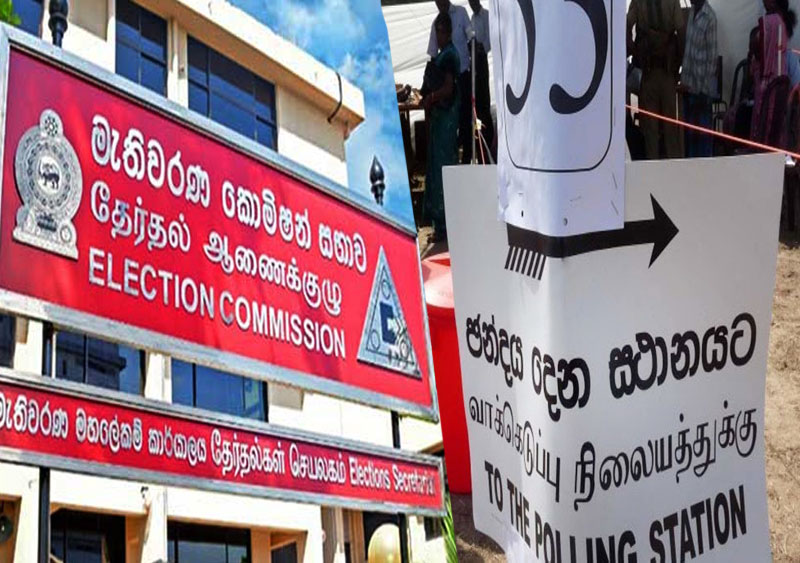
Treasury assures funds for election

The Treasury has agreed to provide the funds necessary for the election without any disruption, said the Commissioner General of Elections on Thursday (12).

Commissioner General of Elections Saman Sri Ratnayake speaking to News 1st said officials from the Treasury were summoned to the National Election Commission on Wednesday (11) to make inquiries regarding the views that were being expressed claiming that the funds for the election will not be available.

The Treasury officials have noted that as the election is a constitutional matter, the funds will be provided without any disruption.

The Chairman of the Election Commission and its members, the Commissioner General of Elections, and the Chief Financial Controller of Election had also attended this meeting.

Posted in Uncategorized

President holds talks with China’s Exim Bank Chief

President Ranil Wickremesinghe has held a discussion on matters related to Sri Lanka’s debt with the Chairman of the Export-Import Bank of China, Wu Fulin via video call.

The Chinese Embassy in Colombo stated that the “fruitful” virtual discussion was held on Tuesday (10).

The Embassy further stated that during the discussion, President Ranil Wickremesinghe had exchanged views on bilateral cooperation and Sri Lanka’s current debt issues.

“The two sides agreed to further strengthen exchanges and collaboration on the resolution of Sri Lanka’s debt issues, and help the island’s economic recovery and sustainable development,” the Chinese Embassy added.

Sri Lanka given six more months to repay Bangladesh’s $200 million loan

Bangladesh Bank today granted Sri Lanka six more months to repay the $200 million loan after the Island nation requested to extend the repayment period due to its prolonged economic crisis.

A senior official of the central bank, on condition of anonymity, said the board of directors of Bangladesh Bank has extended the repayment tenure.

The Island nation, which has been facing an acute greenback shortage for months, borrowed $200 million from Bangladesh in May 2021.

The country was scheduled to repay the loans by April last year, but it failed to do so.

In April last year, Sri Lanka announced defaulting on its entire $51 billion of external debt.

As per the agreement between the two countries, Sri Lanka was supposed to repay the loan by March.

But the Island nation is still facing an acute shortage of foreign exchange reserves, which has compelled it to request BB to extend the repayment period.

BB has extended the deadline at a time when its foreign exchange reserves are depleting at a faster pace.

As per the new deadline, Sri Lanka will have to repay the loan by September this year.

Bangladesh has already sought credit support from several multilateral lender agencies, including the International Monetary Fund.

The reserves of Bangladesh stood at $32.52 billion on January 11 in contrast to $44.92 billion in the same period a year ago, according to data from the central bank.

Posted in Uncategorized

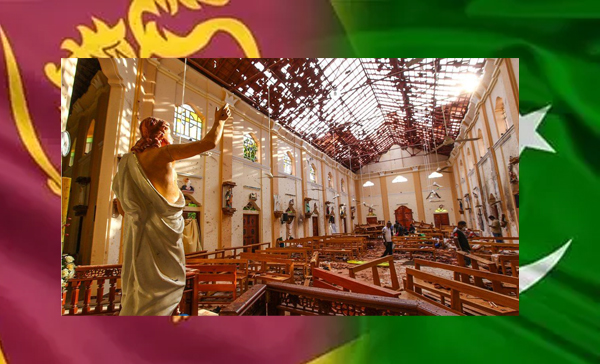
Sri Lanka Supreme Court orders former President Maithripala Sirisena and others to pay compensation to victims of Easter Sunday bombing

Sri Lanka’s Supreme Court today ruled that the former President Maithripala Sirisena and four other former officials had violated fundamental human rights by failing to prevent the Easter Sunday attack in April 2019 despite receiving prior intelligence information.

The apex court ordered the respondents and the State to pay compensation totaling 311 million rupees to victims of the 2019 Easter Sunday bombings that killed 269 people.

Accordingly, the court ordered former President Maithripala Sirisena to pay 100 million rupees, former Inspector General of Police Pujith Jayasundara and former Chief of State Intelligence Service Nilantha Jayawardena each to pay 75 million rupees, former Defense Secretary Hemasiri Fernando to pay 50 million rupees, and former National Intelligence Chief Mr. Sisira Mendis to pay 10 million rupees from their personal funds.

In addition, the government should pay one million as compensation, the judgment said.

In addition, the Supreme Court also ordered to take disciplinary action against the former head of the State Intelligence Service, Mr. Nilantha Jayawardena.

The seven-judge bench headed by Chief Justice Jayantha Jayasuriya and comprising justices Buwaneka Aluwihare, LTB Dehideniya, Murdu Fernando, S. Thurairajah, A.H.M.D. Navaz and Shiran Guneratne issued the verdict after considering the considered the fundamental right petitions.

The petitions were filed by 12 parties including the Bar Association of Sri Lanka (BASL), Catholic priests, a father who lost his two children in the attack, businessman Jagath S. Vithanage and many others.

The terrorist attack on Easter Sunday, April 21, 2019, killed 267 people, including 45 foreigners, injured over 500 and damaged churches, hotels and property.

New TNA alliance is set to emerge in Sri Lanka ahead of the Local Government elections-TELO Leader Selvam MP

A new Tamil political alliance is set to emerge in Sri Lanka ahead of the Local Government elections after coalition partners of the TNA met yesterday and ITAK decided to contest the upcoming Local Government polls separately.

Selvam Adaikalanathan, leader of the Tamil Eelam Liberation Organization (TELO) said the party will form an alliance with C. V. Vigneswaran’s Tamil People’s National Alliance (TPNA).

He said this while speaking at a media conference held today (11) at the Tamil Eelam Liberation Organization (TELO) office in Vavuniya.

Adaikalanathan confirmed that another constituent of the TNA, the People’s Liberation Organisation of Tamil Eelam (PLOTE) led by D. Siddarthan will also join the new alliance. In addition to this former TNA coalition partner, Eelam People’s Revolutionary Liberation Front (EPRLF) led by Suresh Premachandran is also expected to follow suit.

This will leave the Illankai Tamil Arasu Kachchi (ITAK) to contest the polls separately and alone.

People will be on our side. Now there is an election. Elections are not our goal. After this election, we are going to do activities that will create a legally registered structure, have continuous leadership, and take people’s advice.

There will be no favoritism of individual parties here. It is a combination. Leadership will be maintained in rotation. We should not be divided and people’s trust will not be wasted, we should act firmly and put forward the people’s welfare.

New coalition “‘Freedom People’s Alliance”‘ launched

The ‘Nidahas Janatha Sandhanaya’ (Freedom People’s Alliance), a new coalition with the combined participation of 10 different political parties, was launched a short while ago.

The novel party was ceremonially launched today (11 Jan.), at the Headquarters of the Sri Lanka Freedom Party (SLFP) in Colombo 10.

Accordingly, 10 political parties, including the SLFP, the ‘Uttara Lanka Sabhagaya’ (Supreme Lanka Coalition) and the Freedom People’s Congress, collated to form the ‘Freedom People’s Alliance’, with the aim of jointly contesting for the upcoming Local Government elections.

A total of 35 MPs who entered Parliament under the Sri Lanka Podujana Peramuna (SLPP), including former President Maithripala Sirisena, Wimal Weerawasna, Dullas Alahapperuma and Anura Priyadarshana Yapa are already part of the newly-formed alliance.