Cancel Sri Lanka’s debt, global economists tell creditors

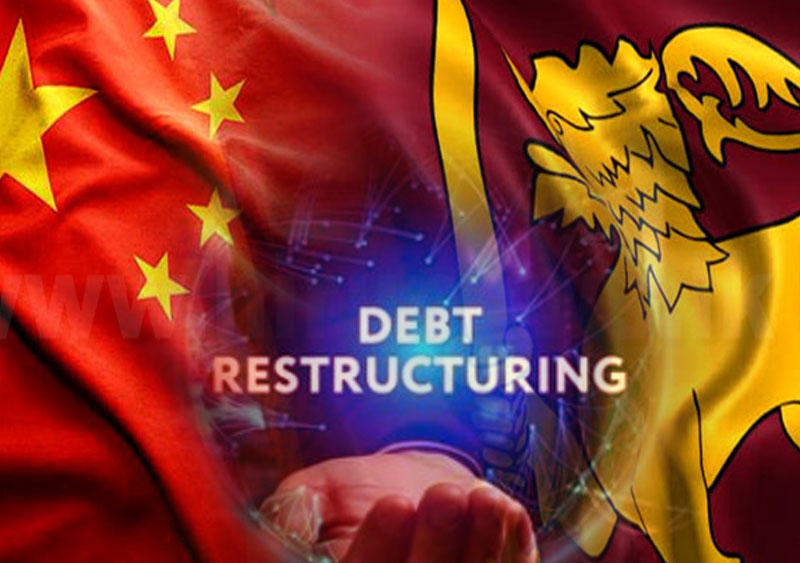
Sri Lanka’s recovery from last year’s devastating economic crisis will need its creditors to “share the burden” of debt restructuring, leading global economists have said, calling all lenders to cancel the debt of the cash-strapped island nation.

In a statement issued on Sunday, eminent economists and scholars world over observed that amid Sri Lanka’s crucial debt negotiations, “all lenders — bilateral, multilateral, and private — must share the burden of restructuring, with assurance of additional financing in the near term.”

However, Sri Lanka own cannot ensure this on its own, they noted. “It requires much greater international support. Instead of geopolitical manoeuvring, all of Sri Lanka’s creditors must ensure debt cancellation sufficient to provide a way out of the current crisis,” the statement said.

The nearly 200 signatories to the statement included economists Jayati Ghosh, Thomas Piketty, Yanis Varoufakis, Prabhat Patnaik, Utsa Patnaik, Jean Drèze, Ha-Joon Chang, Jomo Kwame Sundaram, and writer Amitav Ghosh.

Their call comes months after Sri Lanka embarked on debt restructuring talks with its diverse group of creditors, including China, Japan and India, its three major bilateral lenders. Their financing assurances are crucial to Sri Lanka obtaining a $2.9 billion package from the IMF.

As the import-reliant island nation’s Balance of Payments crisis spiralled and led to a painful economic crash last year, the government opted for a preemptive default on its $51 billion foreign debt in April 2022.

The senior academics held Sri Lanka’s private creditors responsible for the country’s first ever default, arguing: “Such lenders charged a premium to lend to Sri Lanka to cover their risks, which accrued them massive profits” and contributed to the default. Private creditors own nearly 40% of Sri Lanka’s external debt stock mostly in the form of International Sovereign Bonds (ISBs), but higher interest rates mean that they receive over 50% of external debt payments, they pointed out.

The default move came while crippling shortages sparked mass street protests across the island. The agitations spanned months and ousted former President Gotabaya Rajapaksa in July 2022. President Ranil Wickremesinghe was elected in his place, through a Parliament vote. In September 2022, Sri Lanka reached a staff level agreement with the IMF for a provisional bailout package, that the Fund made contingent on adequate financing assurances from Sri Lanka’s creditors. His government has pinned its hopes on IMF support, mainly to qualify for more credit that it deems necessary for reviving its battered economy.

However, Sri Lanka missed the December deadline to obtain the IMF Board’s approval, and is still in talks with creditors to obtain assurances. Governor of the Central Bank of Sri Lanka Nandalal Weerasinghe told The Hindu in December 2022, that Colombo had provided “all information possible” to its bilateral creditors” and was awaiting assurances from India and China.

Source – The Hindu

Posted in Uncategorized

GL denies EC split, says poll gazette was signed by all

Sri Lanka Podujana Peramuna (SLPP) Chairman and incumbent Opposition MP Prof. G.L. Peiris claimed that the Government is attempting to postpone the Local Government (LG) election by propagating an opinion that there is a division among the members of the Election Commission (EC) regarding the holding of the LG election, and also engaging the Attorney General’s (AG’s) Department for LG election-related work.

Speaking at a media briefing today (9), he said: “Now, news is being published that the EC is divided over the holding of the LG election, and that EC members are holding differing views regarding it. Representatives of the Government are propagating an idea that the EC members should first come to a common position on the LG election. If not, they say that there is a serious issue regarding the conduct of the said election. This is completely false and there is no such division among the EC members.”

Presenting the gazette notification issued by the EC in December 2022 regarding the conduct of the LG election, he said that it is evident through it that there is no division among the EC members. He said that the relevant gazette notification, which is the official declaration of the LG election, has been signed by all EC members including its Chairman and Attorney Nimal G. Punchihewa, S.B. Divaratne, M.M. Mohamed, K.P.P. Pathirana, and P.S.M. Charles, and added that the same confirms that the EC members are of one view.

Speaking further, Prof. Peiris said: “The next misconduct of the Government is involving the AG in this matter. The AG does not have any regular powers to cross examine the members of the EC and to examine documents, etc. Simply, the AG has no role in this entire process, and has absolutely no ability to express a binding opinion.

“There are countless cases where the AG’s opinion was completely rejected by the Supreme Court. If an impression is created in the minds of the people that the AG is being used as a pawn, it is unfortunate. We don’t have a problem with individuals, but it will cause great damage to the post of the AG.”

While several Opposition parties have charged that the Government is attempting to postpone the LG election, and have even gone to court over the same, the EC is currently making necessary arrangements for the holding of the said election.

However, it was recently reported that the EC members hold differing views regarding the conduct of the said election, and that President Ranil Wickremesinghe had, during a recent meeting with the EC members, told them to reach a common decision concerning the same.

Sri Lanka out of intensive care, but still in the trauma ward

If you think your New Year hangover was bad, spare a thought for Sri Lanka. In 2022 what was once a dynamic economy on its way to high middle-income status became a cautionary tale of how rotten politics, and the bad policy it produces, can trump otherwise promising economic prospects.

As Dushni Weerakoon writes in this week’s lead article, a continuation of our Year in Review series on the major developments of the year across the region, Sri Lanka has set out on a hard road to recovery in a political environment not conducive to the structural reforms the country needs to achieve its potential.

In the short term, ‘Sri Lanka is banking on an IMF bailout to facilitate access to bilateral and multilateral financial support to get the economy back on track.’ Progress is being made in securing a deal, with the IMF agreeing access to US$2.9 billion under its Extended Fund Facility and the World Bank confirming Sri Lanka has ‘reverse graduated’ to be eligible for concessional finance under the International Development Association. But with Sri Lanka having an unwieldy mix of private and official creditors, the IMF program will require financing assurances and a good faith effort from creditors to restore debt sustainability before Sri Lanka is able to get the support it seeks.

Further bad news, Weerakoon says, is that ‘the standard IMF policy prescription that demands stringent financial discipline means that adjustment costs will be front-loaded, preventing the government from spending its way out of recession. Accordingly, taxes are being hiked and expenditures are being cut’ to get the Fund’s money in the door.

From the IMF’s perspective, this is a feature of the Extended Fund Facility, rather than a bug. The IMF program is intended to help Sri Lanka restore macroeconomic stability and implement necessary reforms, including anti-corruption reforms, to address medium-term balance of payments challenges — rather than subsidising the government’s day-to-day expenses. ‘Even if everything goes according to plan, it will be another two or three years before the Sri Lankan public feels any real improvement in economic conditions.’

That timeframe could be of great importance. As Weerakoon notes, ‘[w]ith all the uncertainties, next year will be crucial for Sri Lanka as it gears up for the all-important presidential elections in 2024.’ Until then President Ranil Wickremasinghe — an ally of the ousted Rajapaksa brothers who was installed by parliament after they fled the country in July 2022 — will navigate both the international debt restructuring negotiations and the domestic policies they entail without any electoral mandate.

For this reason, as Weerakoon says, ‘[a]n economic crisis can sometimes be the catalyst of a major economic overhaul, but in the absence of political stability the downside risks are significant. Governments have far fewer resources in hand to compensate those who are bound to lose out from reforms.’

The Sri Lanka situation occurs against the backdrop of the need for new modes of global debt governance as the international landscape of sovereign creditors becomes more diverse, with China, the Gulf states and India, and private and state-owned creditors based in these countries, all claiming larger roles as development financiers abroad.

As the role of non-traditional creditors grows, governance frameworks for global debt need to change. Recent controversies over the role that Chinese lenders have played in the debt crises afflicting Tonga and Tanzania haven’t substantiated the ‘debt trap’ narrative — nor has China’s role in Sri Lanka’s current problems. Rather, they’ve obscured a more mundane but equally concerning reality: that Chinese lenders got out over their skis in extending loans abroad, driven by a complex mixture of domestic commercial and bureaucratic interests. It’s in everybody’s interest, including China’s, that its overseas lending practices are guided by more clearly-articulated policy principles and are executed with more transparency that has been the case so far.

The impulse to make the developing-world’s debt problem the object of geopolitical rivalry shouldn’t distract from a more worthwhile goal: to fold China, as well as the other emerging non-traditional leaders into fit-for-the times coordination — and, if necessary, adapting those frameworks to the reality that business as usual is increasingly an anachronism. As the World Bank’s chief economist warned in a recent interview, ‘we are applying a restructuring model that was devised for another time’, when Western governments or multilateral lenders were dominant. The Paris Club creditors’ coordination group no longer reflects the creditor mix in emerging economies.

Change is in the interests of all the stakeholders in this mix. The need for multilateral economic coordination through bodies like the G20 couldn’t be clearer. The beleaguered G20 Common Framework for Debt Treatments beyond the DSSI has had only one country achieve debt restructuring in two years. One significant improvement could be expanding eligibility to middle-income countries: until its December ‘reverse graduation’ under the World Bank, Sri Lanka was ineligible — as alluded to in the 2022 Bali G20 Leaders Declaration which noted that members were ‘concerned about the deteriorating debt situation in some vulnerable middle-income countries’.

Sri Lanka will likely face economic pressures for much of the decade ahead, but it would do well to take inspiration from the experience of the region in moving past the Asian Financial Crisis. Indonesia was forced to ‘reverse graduate’ in 1999 in order to access concessional finance but proceeded to graduate again in 2008 and is now a powerhouse economy in the region, whose sustained run of sound macroeconomic management can in no small part be put down to the memories of the traumas of the crisis and its aftermath.

If there’s a silver lining to the hard years ahead for Sri Lanka, it is to be found in the hope that its elites will never allow a repeat of the abysmal policymaking that its people are now paying for with their economic livelihoods.

EAF (Source)

Indian rail company’s track rehabilitation work between Maho and Omanthai inaugurated

On January 8 (Sunday), the Sri Lankan Minister of Transport of Sri Lanka Dr. Bandula Gunawardane and High Commissioner of India to Sri Lanka, Gopal Baglay ceremonially launched track rehabilitation work at Medawachchiya for upgrading the railway line and ancillary works from Maho to Omanthai (128Km) being undertaken by an Indian Public Sector company, IRCON, under an existing Indian Line of Credit (LOC) of USD 318 million at a cost of USD 91.27 million.

The Minister of Fisheries Douglas Devananda, State Minister of Finance Shehan Semasinghe, State Minister of Highways Sirapala Gamlath and senior officials from the Sri Lankan Ministry of Transport were present at the event.

In his remarks, the Minister of Transport thanked India for the support extended to Sri Lanka, especially in the transport sector. Appreciating the work done by IRCON in Sri Lanka in the past few years, he called for greater cooperation in railways between the two countries.

The High Commissioner highlighted that India has executed projects of over USD 1 billion in the railways sector under 5 Indian LOCs. In addition, projects of about USD 180 million are either ongoing or in the pipeline under existing LOCs. He underscored the importance of modernization of the railways in enhancing mobility of goods and services in Sri Lanka thereby boosting economic activity.

The High Commissioner also stressed the importance of strengthening connectivity internally as well as with India for enhancing pilgrimages, tourism, trade and economic benefits for the people of both countries. He stated that India will work with Sri Lanka to introduce green and sustainable transport solutions.

As a long-standing development partner of Sri Lanka, the Government of India has executed several projects in Sri Lanka under its concessional loans and grant schemes. Of the different sectors of cooperation under these facilities, the upgrading and modernization of the Sri Lankan Railways have been one of the priority areas.

IRCON started its operations in Sri Lanka in March 2009 and has contributed to the modernization of the Sri Lanka Railways by reconstructing the entire railway network in th Northern Province (253 Km) and upgrading the Southern line (115 km). It has also contributed to ensuring safety and reliability through a modern signaling & telecommunication system on a 330 km stretch of the railway line.

India’s support to Sri Lanka under various LOCs has continued even after April 2022. Recently, 125 out of the 500 India-made Mahindra SUVs being supplied under an LoC were handed over to Sri Lanka Police. Similarly, 75 out of the 500 Ashok Leyland buses being supplied under an LoC were handed over to the Sri Lanka Transport Board last week.

Posted in Uncategorized

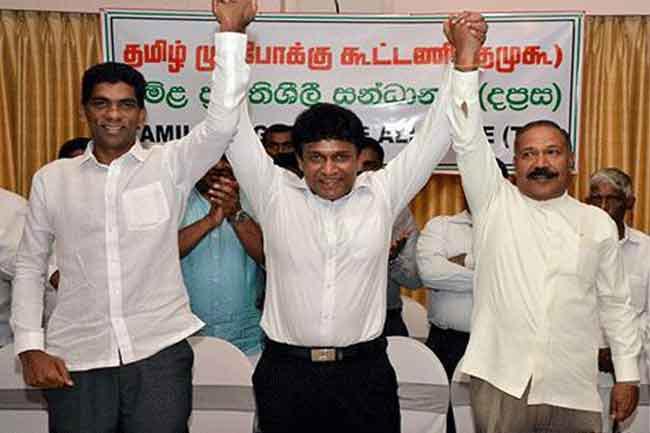
UNP, SLPP may contest Local Government elections together- UNP General Secretary

United National Party Secretary General Palitha Range Bandara said that the United National Party and the ruling party, Sri Lanka Podujana Peramuna have considered contesting the Local Government elections together under a common symbol.

The UNP General Secretary said that the two parties will contest together with the elephant symbol for some local government institutions and the Pohottuwa (lotus bud) symbol for some others and mentioned that they will contest with a common symbol for some of the local government institutions.

Mr. Range Bandara said a decision on which institutions will contest under which symbol will be taken at a discussion to be held Tuesday (10) with the participation of the high level leaders of the two parties

The top officials of the two parties have held a discussion in Colombo today (8) to make a decision on how to contest in the local government elections and contesting under a common symbol was also discussed at the meeting today, the UNP General Secretary said.

On behalf of the United National Party, Deputy Leader Ruwan Wijewardena, Deputy Leader Akila Viraj Kariyawasam, Chairman Vajira Abeywardena, Vice Chairman Sagala Ratnayake, General Secretary Palitha Range Bandara and Ravi Karunanayake participated in the discussion.

On behalf of the Sri Lanka Podujana Peramuna chairman Basil Rajapaksa, General Secretary of the party Sagara Kariyawasam, MPs Sanjiva Edirimanna, Johnston Fernando, and Mahindananda Aluthgamage participated.

Posted in Uncategorized

India wants humanitarian approach to fishermen issue with Sri Lanka

India is seeking a humanitarian approach to resolve the fishermen issue with Sri Lanka, the Indian High Commissioner to Sri Lanka Gopal Baglay said.

He also said that India will try to assist the Sri Lankan fishermen in every way possible.

The Indian High Commissioner expressed these views while speaking to the Buddhist clergy at the Jaya Sri Maha Bodhiya in Anuradhapura.

The High Commissioner was in Anuradhapura to take part in religious activities ahead of the commencement of renovation work on the Maho-Omanthai stretch of the Northern railway line.

The Buddhist clergy thanked India for all the assistance it has provided to Sri Lanka during the time of crisis.

The clergy had also noted the concerns raised on Indian fishermen poaching in Sri Lankan waters.

Baglay said that India’s approach was to address the issue in a humanitarian manner.

“For Sri Lanka’s fishermen there have been a number of difficulties in the past year or so. We have tried to help whether it is kerosene supply or food. We will continue to help,” he said.

Upgrading of the railway tracks of the Maho-Omanthai stretch of the Northern railway line is being handled by India’s state-run Indian Railway Construction International (IRCON), under an Indian credit line of USD 91.27 million.

CBK holds special meeting with several MPs

A special discussion has been held at former President Chandrika Bandaranaike Kumaratunga’s official residence in Torrington this evening (Jan.08).

Future political activities were reportedly taken up for discussion during the meeting.

National Organizer of the Sri Lanka Freedom Party (SLFP) Duminda Dissanayake, Ministers Nimal Siripala de Silva, Mahinda Amaraweera, Parliamentarians Jagath Pushpakumara and Lasantha Alagiyawanna were also present at the meeting, the political sources said.

Posted in Uncategorized

Rs.10 billion allocated for election is sufficient – Elections Commissioner General

Commissioner General of Elections Saman Sri Rathnayake states that the Rs.10 billion allocated for the Local Government polls is sufficient.

“The previous election cost an estimated Rs. 8 billion due to the COVID-19 pandemic, but we managed to spend only Rs. 5.8 billion,” he added.

The Commissioner General of Elections believes that the final cost for the election will be less than the estimated cost. “We initially asked for Rs. 11 billion, then we estimated it at Rs. 9.3 billion, but Rs. 10 billion was allocated in the budget,” he explained.

Canada offers $3 million to help vulnerable communities in Sri Lanka

Canada has offered $3 million to help the most vulnerable communities in Sri Lanka.

The Canadian High Commission in Sri Lanka said that in response to the humanitarian appeals launched by the United Nations (UN) and the International Federation of Red Cross and Red Crescent Societies (IFRC), Canada is providing $3 million (approx. LKR817 million) to help address the needs of the most vulnerable communities in Sri Lanka.

This contribution will be delivered through the UN and the IFRC, in collaboration with their local partners, to support the provision of emergency food assistance, health and nutrition services, access to safe water and other essential services to those who need it the most, the High Commission said in a statement today.

In addition, Canada has pivoted ongoing international assistance projects to address immediate needs and help respond to the economic crisis in Sri Lanka, including the procurement of essential medical equipment and supplies.

Canada says it continues to stand with all Sri Lankans in these difficult times and remains committed to supporting an inclusive and prosperous Sri Lanka.

14 YEARS ON, LASANTHA’S KILLERS STILL ROAM FREE

A badly damaged white car with broken glass windows, a seriously injured man being rushed to hospital and a scene of carnage and destruction is still etched in the minds of all those who were at the scene on that fateful day – 8 January 2009.

This was the day that Editor-in-Chief of the Sunday Leader Newspaper Lasantha Wickrematunge was assassinated in broad daylight on Attidiya Road while on his way to office at Katukurunduwatte Road, off Templers Road, Mount Lavinia.

His eldest son Avinash was 19, his daughter Ahimsa 17, and his younger son Aadesh 10 when he passed away at the Kalubowila Hospital on that fateful day.

It has been 14 years since the brutal assassination of Lasantha, but sadly his killers still roam free. Justice is yet to be served for the murder of an Editor who sacrificed his life to tell it all.

In her book ‘And Then They Came For Me’ – the Lasantha Wickrematunge story, written by his ex-wife, journalist Raine Wickrematunge his lifestory unravels.

The book states: “One day, Harris, ever on the lookout for some part-time employment for ‘Malli,’ brought home a copy of the SUN newspaper and pointed to an advertisement. It was an in-house ad calling for trainee reporters and sub-editors. “This might be good for you,” he remarked, pointing out that the newspaper office, located as it was on Hulftsdorp Hill, wasn’t too far away from home either.”

First job

“Harris then proceeded to type out an application on his trusty Remington and, instead of posting it to the Independent Newspapers office, took it to No. 5, Gunasena Mawatha and handed it in personally. That act on the part of a determined father was the beginning of a completely new chapter in Lasantha’s life, unleashing as it were, the full force of the remarkable destiny that lay before him,” the book states.

“At this time, I was already working at Independent Newspapers which published the English language SUN and WEEKEND, Sinhala language Dawasa and Riviresa, Tamil language Dinapathi and Chinthamani and a few other periodicals. I had joined the company soon after my Advanced Levels and was a sub-editor on the daily SUN’s Sunday edition, the WEEKEND. I also conducted the women’s and children’s pages and wrote feature stories under the by-line Raine Amarasinghe.”

“The Editor of the SUN was the dashing Rex de Silva whose creative talent took the paper to great heights. Lasantha, a couple of years older to me, joined Independent Newspapers in July 1981, just as I was completing two years there. Within half an hour, Rex came up to my desk followed by two young men. He introduced them as Damodaran Sivalingam and Lasantha Wickrematunge. Rex told me they were new recruits to the subs desk and asked me to train them in the art of sub-editing,” the book says.

The story goes on – on Sundays I would go through the newspaper at home, circling any typos on the pages that Lasantha had overseen. I would take these pages to the office on Monday morning and brandish these in his face, pulling him up for missing a typographical error,” Raine explains.

Tribute

Damo who wrote a tribute article in The Nation newspaper many years later, seems to remember much more than I do, she says. He wrote, “I first met Lasantha when we started our working life on the same day at the WEEKEND Newspaper sub-desk as trainee journalists. We were trained by no other than Raine, his wife-to-be, though she did not know that just then. I think it was love at first sight for Lasantha as he plotted away to win her heart almost immediately. We became good friends right from the beginning as I became his ‘golaya’ in promoting his advances much to the annoyance of Raine who often said, ‘I am NOT interested in you.’ I guess all of you know she had to eat her own words. I remember them as a happy and devoted couple. This story tells you a lot about Lasantha. He always knew what he wanted in life and pursued it with all his heart.”

“During lunchtime each day, many of us would gather in the modest lunch room and everyone eagerly waited for Lasantha’s lunchbox to be opened; his mother packed some tasty morsels for him and we girls would get bits to savour. One day as we sat for lunch, Lasantha opened his lunch box and grinned to himself. When we asked him what he was smiling about, he said, “I only have plain rice today. I had a fight with Chandra (his mother) this morning and she seems to have punished me.” Of course, all of us in the room laughed our heads off and proceeded to share with him whatever we had in our lunches,” Raine said.

After many years at the Sun newspaper, Lasantha’s change to another media institution came when due to a political issue the SUN newspaper management decided that Lasantha was to be suspended.

“The moment the words about the suspension were out, Lasantha retorted, “In that case, I’m quitting this newspaper,” and stomped out of the room. The very next day he was hired by Vijitha Yapa, Editor of The Island and The Sunday Island newspapers. It was here at The Island newsrooms that Lasantha fully unleashed his reporting brilliance,” Raine explains.

Recalling memories

She says consequently, when he investigated a scandal, it wasn’t surprising that he uncovered its every detail, however trivial. “That was the strength of his work: he convinced you not just by making extravagant accusations against the powerful, but by the weight of the detail of his reporting. At his best, Lasantha convinced you that there couldn’t be another side to the story,” the book states.

Gamini Weerakoon, Deputy Editor of The Island recalled, “In the 80s, there were a few rough diamonds around and I was surprised to be introduced to a young man who had left the SUN newspaper for The Island. …. He looked too young to be among ruffians, some of them veterans with 20 to 30 years’ experience who dominated the news desk and the sub-editors’ desks and I had my doubts whether he would last long. However, I was soon to realise that he was a serendipitous find for the newspaper.”

Recalling her memories in those early days when the Sunday Leader was just about to get off the ground Raine says one day in January 1994, Lasantha’s brother Lal arrived at our home bursting with the exciting news about a tentative idea to launch a new newspaper.

“Lal worked for Multi-Packs, a company that printed Sinhala cartoon periodicals among other things and he and Haris Hulugalle, Chairman of Multi-Packs, were considering starting a national, English language newspaper,” Raine said.

No whip-cracking boss

She added, Lasantha was seen as an essential element in the venture, both from the editorial and business aspects. “His journalistic credentials were formidable – as a newsman, he was one of the best the country had produced. From a business standpoint, his vast pool of wide and varied contacts would be an invaluable asset to a new company. Lasantha however was adamant about one thing. He would come on board, he said, only if he was afforded full editorial autonomy with no whip-cracking boss breathing down his neck. No censorial stifling of his pen nor that of other journalists working on the newspaper would be tolerated, he insisted. That assurance given, Lasantha and I threw ourselves into the planning of the project with Lal and Haris and slowly the formative bones of Leader Publications began taking shape,” Raine explained.

Initially, the aim was to publish a Sunday paper which would be called The Sunday Leader she says. “Down the road, they would consider starting a Sinhala edition, and later, if everything went well, even a mid-week. Lasantha and I were to be involved in all the initial planning of the format of the newspaper and be responsible for recruiting staff, steering the editorial department and the newspaper’s content,” she said.

On 5 April 1994, Lasantha’s 36th birthday, we said our fond goodbyes to the Times staff, ………. to see us off. As Lasantha and I drove from the Times building to Ward Place where our new offices were located, there were mixed feelings. There was some diffidence and yet, a spirit of great adventure and excitement bubbled.

The Ward Place office looked like somebody’s abandoned home. The garden – complete with clumps of grass, sand and straggling weeds – was a favourite haunt of stray dogs, one of which was adopted later as part of the Leader family and christened ‘Steffie.’

Designing the paper

“Right from day one – together with Lal and Haris Hulugalle – Lasantha and I rolled up our sleeves and got down to the business of developing the format and design of the newspaper. Haris’ daughter Shani was an asset with her knowledge of computer technology and her design and layout skills. We brainstormed for a catchy slogan, one that encapsulated the essence of the newspaper and the ideals it would champion. Lasantha suggested ‘Unbowed and Unafraid’ which everyone agreed was an excellent motto,” Raine explained.

She added in that first week at the office there was just Lasantha, me, an office helper, driver and a couple of production staffers who had been sourced from Multi-Packs, the parent company, a couple of weeks later Rukshana, a young trainee reporter, a few typesetters and paste-up artists, joined the ranks. The office was equipped with two Apple Mac computers, a Macintosh Quadra and an A3 printer.

“At the outset, Lasantha wanted me to take on the role of Features Editor continuing what I had done at the Times. I however yearned for a break from titles. While applying for media accreditation cards however, it appeared applicants were required to provide their designations and I had none. Defence Analyst Iqbal Athas who had joined the Leader ranks as Deputy Editor, hurriedly conjured the title ‘Features Consultant’ and that remained my designation throughout my Leader life,” she explained.

All of us went about our tasks at a frantic pace in preparation for the first issue due to come out on 19 June 1994, she says and Lasantha and I put in so much back-breaking work in those early days that one desk-head was to quip, “If it ever came to a crunch, Lasantha and Raine can easily run this paper by themselves.” That was a huge exaggeration, in fact an impossibility, but in a sense it encapsulated the simplified version of how the rest of the staff viewed us – Lasantha brought in the news, Raine put it together,” Raine explained.

It was hard, that first year. I remember all I wanted at that stage was to complete our first year in circulation. I was terrified the Leader would be just a three-month wonder, a flash in the pan.

Victory in The Hague

Internal issues notwithstanding, Lasantha at the helm as Editor-in-Chief, was turning the Leader into a much sought after, if somewhat controversial, newspaper. With his investigative journalism, credibility grew and the public was riding the wave with us, egging and encouraging us on. The Sunday Leader was emerging as the standard-bearer of journalistic excellence.

He was also completely fearless in ‘naming and shaming the devil’ whoever it was and whatever office he or she held. He was driven by the principle of the public’s right to know and the knowledge that a good newspaper was not just an agent of change but the upholder of democracy itself.

Lasantha was a journalist and a brilliant one at that, but he was also a political animal wading knee-deep in murky political waters. He and The Sunday Leader were in a sense what gave the Opposition the courage and the drive, in many instances, to take the Government head-on.

“It’s hard to believe that 14 years have passed since Lasantha’s death. Just like every year since 2009, once again all we can do is lament about the fact that the investigation has stalled and the killers roam free. This is not just true with Lasantha’s murder but that of all other journalists killed in Sri Lanka. That such impunity exists isn’t shocking any longer in a country where violence is endemic and murder is routine. So, until the day dawns when a clean, upright administration is installed – one with no hidden agendas nor interference into investigations, we can hope for little more than laughable red herrings and pathetic eyewash,” Raine explained.

She says, anyway this year we got internationally what we never got in SL and that was the victory in The Hague which found the Government of Sri Lanka guilty of Lasantha’s murder.

“All I can wish for at present is that Lasantha’s vision that his murder will ‘galvanise forces that will usher in a new era of human liberty,’ comes to fruition. We had a glimpse of that during the Aragalaya,” Raine said.

By Risidra Mendis