Ranawaka asks MR to retire

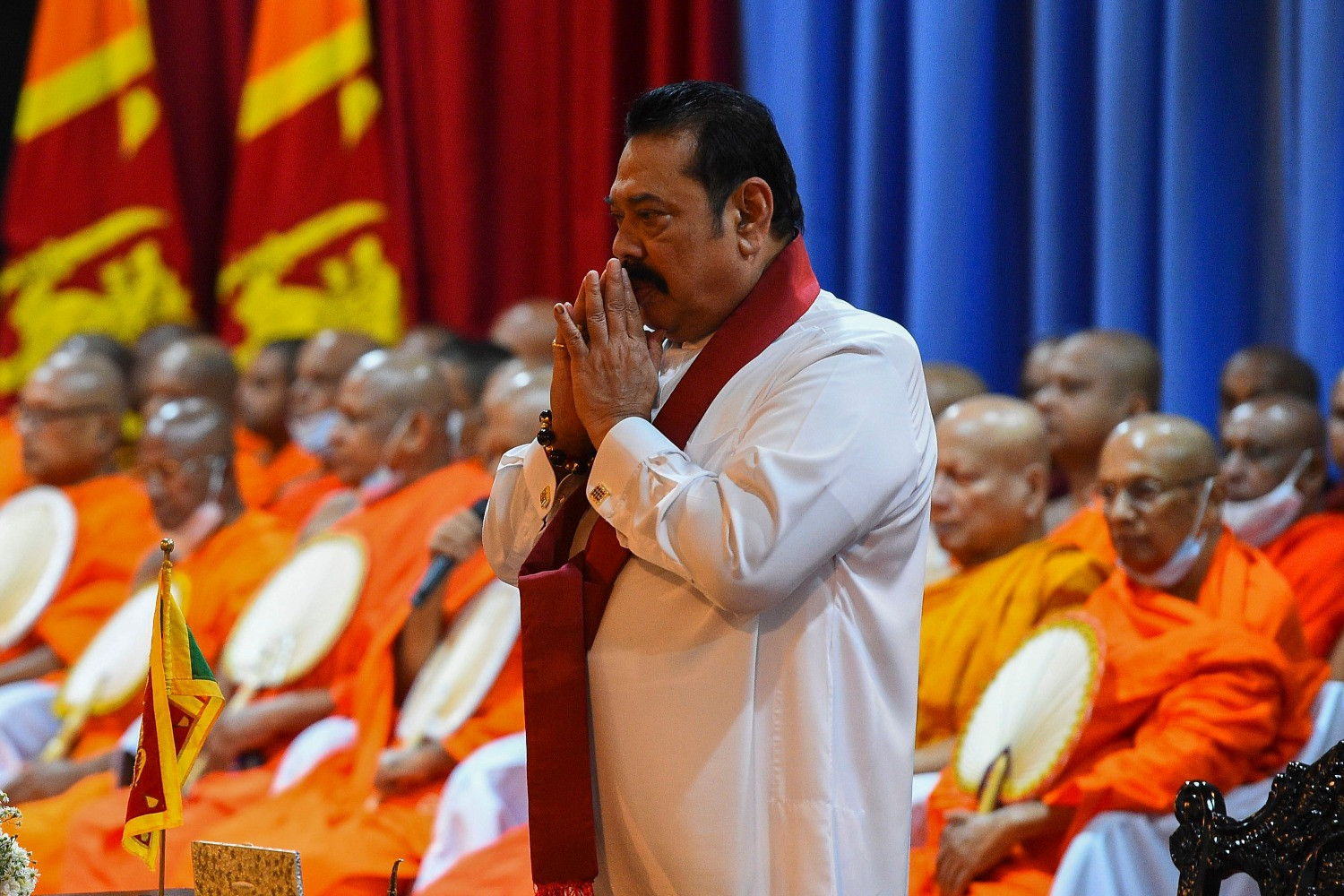
Leader of the 43 Brigade and SJBP MP Patali Champika Ranawaka has called on former President Mahinda Rajapaksa to retire from politics.Speaking at a meeting in Colombo, on Thursday, Ranawaka said: “I request Mahinda Rajapaksa not to enter politics again or at least say he will do so. Many people have already left the country. We have a social capital that has been created by years of hard work. That is one of the remaining assets we have. Now that social capital is being drained. Each time they see the Rajapaksas trying to make a comeback, people leave this country.

Ranawaka said that people abhor the Rajapaksas. “As long as the Rajapaksas stay out of politics it is good for the people and this country. Whenever a Rajapaksa makes a public appearance and states that they would come back in power, people leave the country. The social capital that we have was built spending years for free healthcare and education. People, especially the younger generation, would no longer put up with the idea of living under Rajapaksas again. They would surely leave the country.

“People in this country need a hope to consider staying here. They are in frustration. People no longer would be duped by eyewash solutions. We need solutions against poverty, hunger and unemployment. Their problems cannot be solved by distributing handouts taking their political affiliations into consideration,” Ranawaka said.

The government must think of a bold alternative to the IMF bailout package. “Sri Lanka’s future is secure to the extent that it would not depend on IMF assistance. We are better off as much as we do not depend on IMF assistance to obtain further loans,” he said.Among those present were Prof Prasanna Perera of the Department of Economics of the Peradeniya University, 43 Birigade’s coordinator Dr Ajith Amarasinghe, former Speaker Karu Jayasuriya and MP Dr Sudarshini Fernandopulle.

Posted in Uncategorized

Army says no LTTE fighters surrendered during war’s end

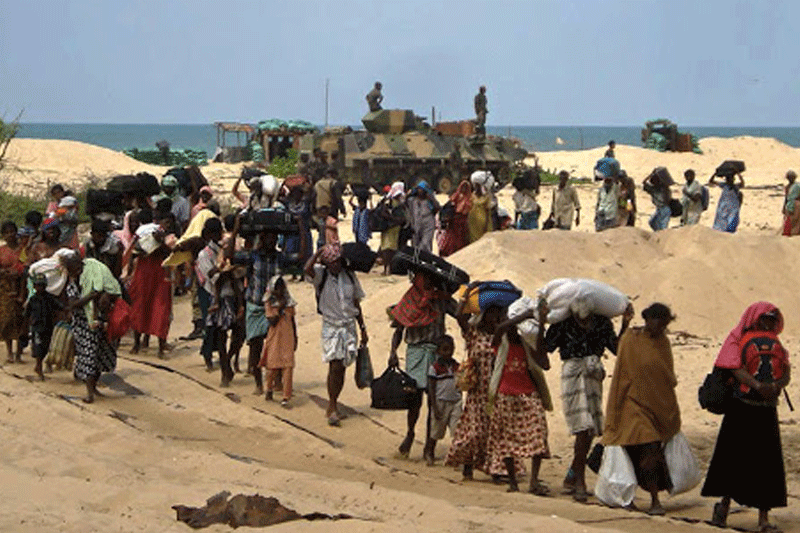
Contrary to the statements made earlier by several parties, including the Sri Lanka Army, that Liberation Tigers of Tamil Eelam (LTTE) fighters had surrendered to the Army during the last stage of the war, Army Designated Officer under the Right to Information (RTI) Act told the Right to Information Commission of Sri Lanka (RTICSL) last week that no LTTE fighters had surrendered in this manner.

Journalist D. Nirosh Kumar had made a request under the RTI Act seeking information pertaining to the number of LTTE fighters who surrendered to the Army, officials who supervised such incidents, number of LTTE fighters who were arrested during the last period of the war, and officials who supervised such arrests.

As the Information Officer of the Army had not provided him with the information, Kumar had later filed an appeal with the RTICSL, and the relevant appeal was taken up last Thursday (3).

The Army had previously informed Kumar in writing that those who surrendered during the last period of war surrendered not to the Army, but to the Government. However, the Army’s Designated Officer under the RTI Act Brigadier N.K.N.K. Nagahawatte, when the appeal was taken up before the RTICSL, stated that LTTE fighters did not surrender to the Army, but that Internally Displaced Persons (IDPs) did.

He informed the RTICSL that it was the Army that transported such IDPs to IDP camps, and that such camps were under the purview of the Bureau of Commissioner General of Rehabilitation. He subsequently claimed that certain persons who were among them had told the said bureau that they were LTTE cadres.

In response to his statement, Attorney-at-Law Swastika Arulingam, who appeared for the appellant, submitted to the RTICSL three documents that contained statements made by Ministers Sivanesathurai Santhirakanthan alias Karuna Amman, Douglas Devananda, and a former Army Media Spokesman that LTTE fighters had surrendered to the Army.

When the Commissioners queried Brigadier Nagahawatte regarding the relevant documents, he said that there was no change in his position on the matter.

Accordingly, the RTICSL informed journalist Kumar to make written submissions before 17 November if there exist any facts to prove that LTTE fighters surrendered to the Army, and gave the Army two weeks of time to respond to such. The appeal is to be taken up again on 4 January 2023.

The appeal was taken up before RTI Commissioners, Attorneys Kishali Pinto-Jayawardena, Jagath Liyanaarachchi, and A.M. Nahiya on Thursday (3). Brigadier. Nagahawatte appeared for the Army, while Arulingam and journalist Tharindu Iranga Jayawardana appeared for Kumar.

Funds available for LG polls : EC Chairman

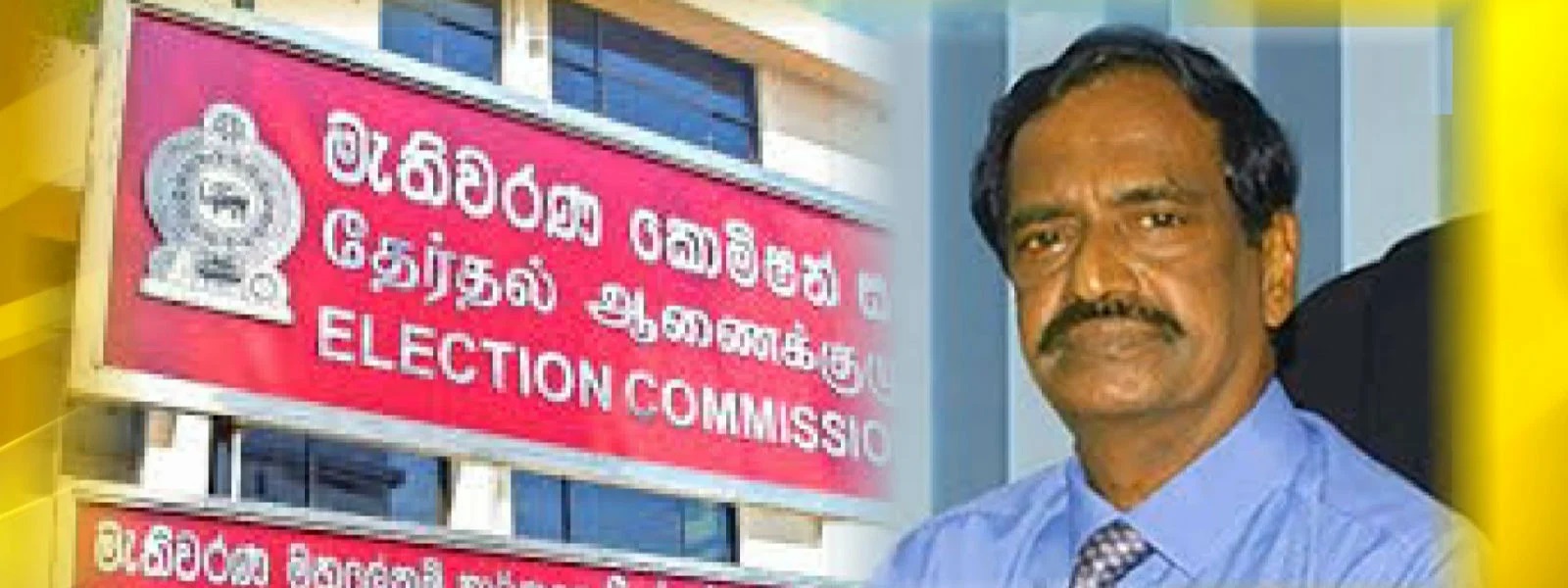
The interim budget 2022 has allocated Rs.10 billion for the Election Commission (EC) and as such the commission carries out its day to day operations as usual with the target of conducting much delayed Local Government (LG) polls in early 2023, Chairman of the EC, S.g.punchihewa said yesterday.

“With the ample budgetary allocations, we have no financial issue at all to hold LG polls soon after the preliminary works for the election are concluded,” Punchihewa added.

Punchihewa said that chairman and members of the board of Directors of all independent commissions were ceased to be in office with the Speaker putting his signature to the 21st Amendment to the Constitution on October 31st.

“But, independent commissions are mandated to continue normal work on an interim basis as long as the new chairman and directors are appointed by the Constitutional Council according to the Constitution,” Punchihewa told Daily Mirror.

The EC has certified and completed the 2022 electoral register at the end of last month. The EC is attending to the preparation of the supplementary list that carries the names of those who have completed 18 years of age by September 30th right now. The Electoral Register of 2022 will be completed by midnovember enabling the EC to hold LG polls in early 2023,” Punchihewa said.

Whether it is a newly constituted election commission or the existing one, all 340 LG bodies have to be established by March 20th of 2023 after conducting the polls under the provisions of the Local Government Election Ordinance.

Meanwhile, Mahinda Deshapriya, the chairman of the 5 member ‘National Delimitation Committee’ for LG bodies appointed by the Prime Minister on Saturday, and former head of the EC, said activities of his committee will not affect the conducting of the LG polls in any way.

“We have been given time until February 28, next year to submit our report on the demarcation of local government wards with the aim of bringing the number of members of LG bodied to around 4,000 from the current 8,000. We try our best to complete the job within the time frame given or before that. However, works of our committee will not affect the EC.

Prime Minister Dinesh Gunawardene appointed a 5-member ‘National Delimitation Committee’ on demarcation of wards of local authorities on Saturday (5), chaired by Mr. Mahinda Deshapriya.

President Ranil meets UN Secretary-General in Egypt

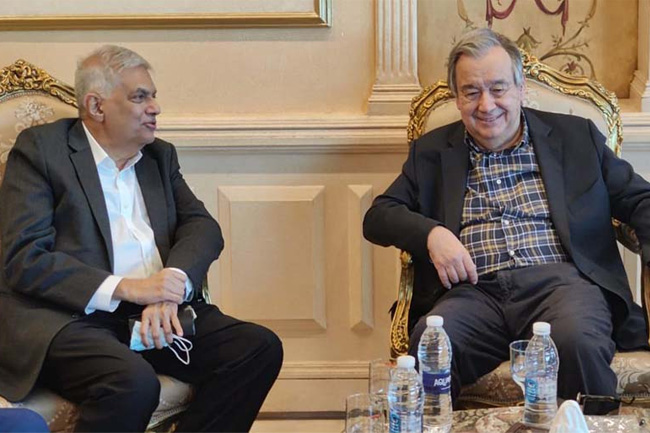
President Ranil Wickremesinghe has met the United Nations Secretary-General, António Guterres, upon his arrival in Egypt, Cairo.

The President briefed the Secretary-General on the Government’s plans on the National Environmental Policy.

The Secretary-General recalled memories of his first visit to Sri Lanka in 1978.

The President left the island this morning (06) for Egypt to attend the UN Climate Change Conference COP 27.

At COP 27, countries come together to take action towards achieving the world’s collective climate goals as agreed under the Paris Agreement and Convention. Building on the outcomes and momentum of COP 26 in Glasgow last year, nations are expected to demonstrate at COP 27 that they are in a new era of implementation by turning their commitments under the Paris Agreement into action.

Minister of Environment Mr. Naseer Ahamed, Senior Advisor to the President on Climate Change Mr. Ruwan Wijewardene, President’s International Affairs Director Dinouk Colambage and President’s Private Secretary Sandra Perera will be accompanying the President.

Posted in Uncategorized

UPCOUNTRY TAMIL POLITY SHOWS THE WAY?

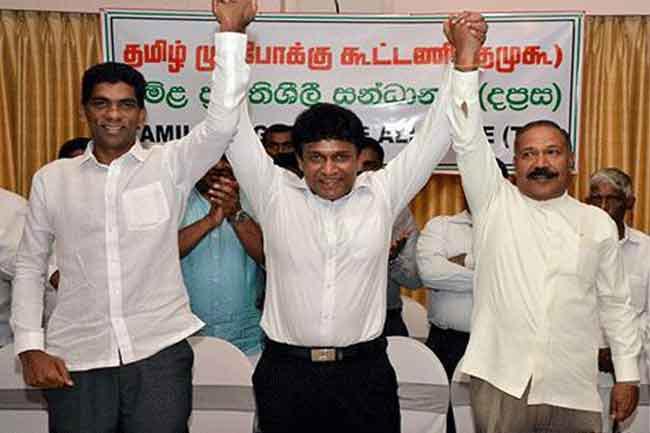
Seeking to bury past differences, two main Tamil political parties have come together. Veteran leader Mano Ganesan has declared that the Tamil Progressive Alliance (TPA) under his leadership and the Ceylon Workers’ Congress (CWC), now headed by third-generation leader, Jeevan Thondaman, would work like a double-barrelled gun for the benefit and betterment of the community.

The occasion was provided by the inauguration of the TPA’s Headquarters, attended by both leaders and other community politicos like former minister, Palani Thigambaram, apart from SJB Leader of the Opposition, Sajith Premadasa, and Indian High Commissioner, Gopal Baglay.

Of course, one of the TPA’s allies, former minister V. Radhakrishnan has since expressed unhappiness over Mano making such ‘unilateral declarations’ without prior consultations in the matter. Yet, if Mano and Jeevan decide to work together, that is saying a lot – and sends out a message to other Tamil-speaking communities in the Sri Lankan Tamils (SLT) and Muslims.

If such reformist thinking comes across in the other two, then all three ‘minority’ communities can work together, providing for healthy politics also at the national-level. Of course, all of it takes time, yes, but remember, time and tide wait for none, and not certainly, eternally.

Low-profile attempt

To set the record straight, a low-profile attempt was made to unify the ever-divisive Upcountry polity in the post-war scenario, with academics and others close to respective party leaderships meeting a few times, to see how far and how best could their leaders work together, towards a common cause. The credit for initiating the process should go to former minister P.P. Devarajan, who stayed in the background for most parts.

There were no ideological differences, but only personality clashes. Hence, once the leaders were ready to subsume the latter, a unified approach could at least be attempted at that time. Or, that was the thinking. Yet, the intervening presidential polls of 2010, followed by parliamentary elections, put paid to those efforts. Revival of the attempts were not initiated.

Of course, there were approach-based differences, too. Under the late Arumugan Thondaman, the CWC, for instance, insisted on continuing with founder and grandfather Savumiamoorthy Thondaman’s ‘non-confrontationist approach’ viz the government of the day. They felt that Mano Ganesan & Co was ‘too demonstrative and confrontationist’ for their comfort.

Mano Ganesan did not have any such reservations, it would seem. Today, he is the senior-most of Upcountry Tamil leaders with a substantial base. When approached, Jeevan Thondaman, son of Arumugan, did not seem to have stood on ‘family pride’ and personal ego like the previous generations, to stall the much-needed unity efforts in the polity of his community, also known as ‘Indian Origin Tamils’ (IOT).

As coincidence would have it, between Mano Ganesan’s 62 years and Thigambaram’s 55, Jeevan at 28 is well poised to possibly take over the leadership of a united/unified community polity in his time. Anyway, he too needs greater exposure and experience as his cousin and party leader Senthil Thondaman, a former Uva Province Minister, guides him through the difficult days.

Delayed mainstreaming

What settled the issue for the Upcountry Tamil parties, for them to think in terms of working together? The continuing economic crisis has hit the community harder than any section of the Sri Lankan society. It was always hard on the Upcountry Tamils even in the best of times, as their joining the national mainstream was delayed by decades after their disenfranchisement and statelessness imposed by the rest of the nation, post-Independence.

The irony was that the vociferous and self-serving Sri Lankan Tamil (SLT) polity of the time joined hands with the Sinhala-centric ruling UNP to divest the Estate Tamils of their citizenship. So forced out of the mainstream have they been that even in neighbouring India, their country of origin, starting with native Tamil Nadu, the IOTs did not get the same attention and care as the SLT community and polity got after Pogrom-‘83.

Yet, a unified approach among IOT parties is not going to be as easy as being made out. By inviting SJB’s Premadasa to the function, Mano has sort of shown his unwillingness to move away from the mainline Opposition, towards a more moderate middle path. Ideologically, the CWC may feel more comfortable there. Yet, in these trying times, their people want ‘change’ – but they need relief, even more.

Plantation economy

Accepting medicines from India, handed over by CWC’s Jeevan Thondaman at a separate function, President Ranil Wickremesinghe said the Government would appoint a ‘committee to further integrate Tamils of Hill Country Origin’ into the Sri Lankan society – a sad, if not sadistic acknowledgement of the community’s plight decades after Independence.

The President said steps will now be taken to review the plantation economy as more and more people are leaving the region and also the sector after getting educated. The Government has to find jobs for them as well as for other Sinhalese and Muslims who leave their areas to settle elsewhere, he added. That would still be a beginning, but a good beginning, delayed already.

Specifically, the President offered to look into the social sector needs of these people, and promised special attention to the schools there, adding that the Health Ministry would take over the hospitals for those people, to ensure better quality and services. The Government was also granting lands to the plantation people for them to build their own houses, like the rest of the Sri Lankan society.

This is a new thinking, possibly influenced by a group of Upcountry Tamil elite and intellectuals who have seen through the possibilities and the worst-case scenarios. Yet, the fact that President Wickremesinghe had to say that much needed to be done for the estate people is a clear indication that they have not been integrated and mainstreamed as much as they should have been.

It also underscores the need for the divided polity to work together and work as a pressure group, to ensure that the incumbent President’s promises do not remain only as promises. This applies to his successors, too, for years and decades – but it should not be allowed to hit a half-century or wait for a century!

About the writer:

The writer is a policy analyst & political commentator, based in Chennai, India. Email: sathiyam54@nsathiyamoorthy.com

(The views and opinions expressed in this column are writer’s own and do not necessarily reflect the official policy or
position of Ceylon Today)

By N. Sathiya Moorthy

Posted in Uncategorized

Met police say Sri Lankan suspect ‘released’ but still under investigation

A Sri Lankan arrested in the UK in February this year in connection with the killing of Mylvaganam Nimalarajan, who contributed to the BBC’s Tamil and Sinhala services, is under investigation, though released from custody there.Jack Griffith of Metropolitan Police Service’s Directorate of Media and Communication said that the arrested person had been released but was under investigation. Griffith said so early this week responding to The Island queries.

Nimalarajan was killed at his Jaffna residence in an area held by the governmentThe spokesperson said that law enforcement officers want to hear from anyone who may have information that could assist the ongoing investigation, particularly members of the Sri Lankan community who emigrated to, and now reside in, the UK. For those willing to cooperate, ‘war crimes team’ could be contacted at SO15Mailbox. WarCrimesTeam@met.police.uk

There hadn’t been a previous case of a Lankan war crimes suspect taken into custody in the UK, other sources said, adding that Nimalarajan was killed over 20 years ago in the Jaffna peninsula.The British police earlier said that the arrest was made at an address in Northamptonshire on February 22 “as part of a proactive operation”.

“He was arrested on suspicion of offences under Section 51 of the International Criminal Court Act 2001,” the Metropolitan Police said.

The media quoted Commander Richard Smith, who leads the Met’s Counter Terrorism Command as having said: “This is a significant update in what is a sensitive, complex investigation,”

“There will still be people who may have information, particularly in relation to the murder of Nimalarajan, and we would urge those people to come forward and help achieve justice for Nimalrajan’s family.”

India watching stand Sri Lanka will take on Chinese ship

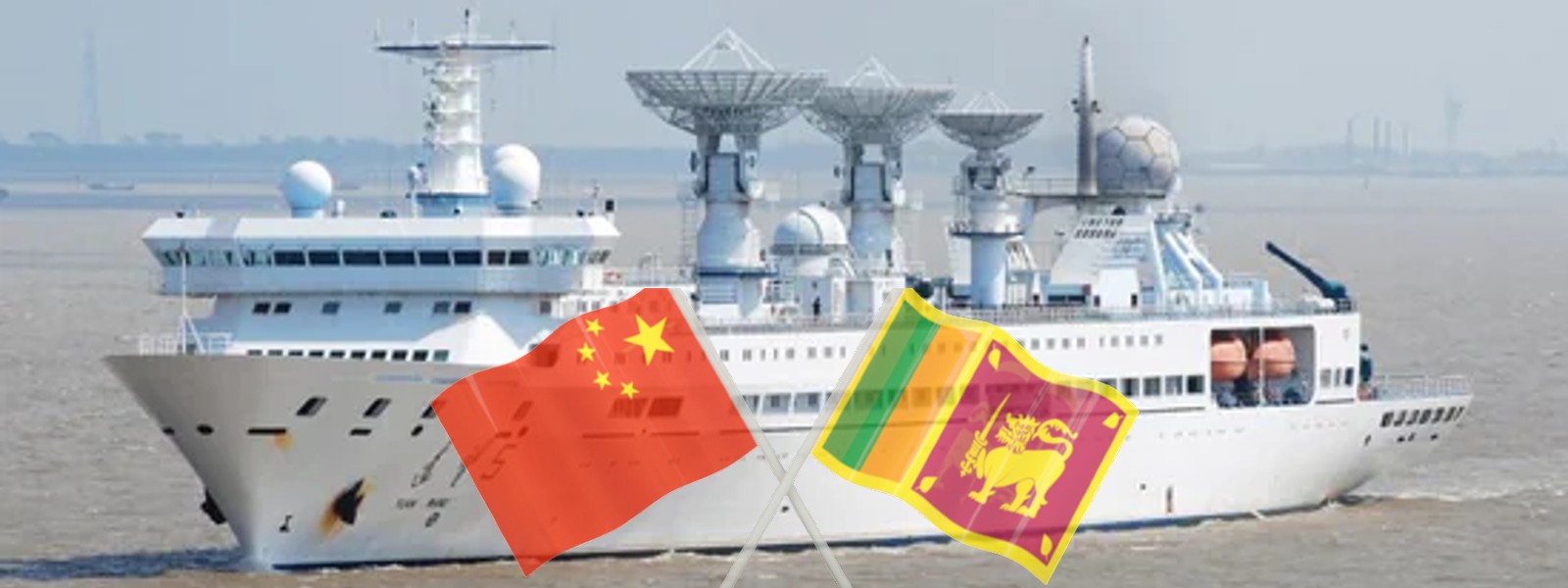
India is closely watching the stand Sri Lanka will take on a Chinese ship, Yuan Wang-6, which India says will not be given permission to enter the country’s Exclusive Economic Zone (EEZ).

According to IANS, the Indian Navy will not allow the Yuan Wang-6 to enter the country’s Exclusive Economic Zone that extends up to 200 nautical miles into the sea.

Though it is known fact that the Yuan Wang-6 is a spy ship of the People’s Liberation Army Navy (PLAN), sent to the Indian Ocean Region to track India’s missile tests from the APJ Abdul Kalam Island off the Odisha coast, she is officially registered as a research and survey vessel.

While foreign vessels, including warships, can freely sail through the EEZ, Indian law forbids any survey, research or exploration there by a foreign nation without permission.

In 2019, the Indian Navy had forced the Chinese research vessel Shi Yan 1 out of India’s EEZ after it was found lurking near Port Blair.

The Shi Yan 1 is also considered a PLAN spy ship masquerading as a research vessel. That move by the Indian Navy had led to a diplomatic row with China but India had put her foot down.

According to sources, the Indian Navy will do the same this time round if the Yuan Wang-6 attempts to enter India’s EEZ. The destination of this vessel is not marked to any port but to ‘open sea’ and that is where she will have to remain, a senior official said.

“We are constantly monitoring her every movement. Our surface and sub-surface assets are tracking the Yuan Wang-6. So are our Unmanned Aerial Vehicles (UAVs) and long-range maritime surveillance aircraft. In fact, we are also in a position to find out what this ship is tracking. Though we can’t do anything till she is in the open seas, action can be taken once she attempts to enter our EEZ. Had she been a normal PLAN warship, we could have done nothing due to the international right to passage laws.

“However, a foreign survey and research vessel can’t be allowed to operate in our EEZ. She won’t be able to get close to our coastline. We know that Yuan Wang-6 has powerful equipment on board that can track from hundreds of nautical miles away, but there is nothing anybody can do so long as she is in international waters,” the official said.

India’s Territorial Waters extend to 12 nautical miles from the nearest low tide mark on shore.

No foreign warship or submarine can enter this zone without permission from the Government of India. Even if permission is granted, foreign submarines have to traverse these waters on the surface with their countries’ flags flying.

It is the same for warships. There are no restrictions on other foreign vessels. As the Yuan Wang-6 is not registered as a naval vessel, she may attempt to enter India’s Territorial Waters, if not prevented from entering the EEZ. This could land India on a sticky wicket.

“The only problem is if the Chinese vessel receives permission from any one of our maritime neighbours to enter their territorial waters. We share our maritime boundary with Bangladesh and Sri Lanka. Near these countries, we can’t enforce our EEZ laws as the sea is contiguous. That is why we have International Maritime Boundary Lines to demarcate territory. Now, if Bangladesh allows the Yuan Wang-6 to dock at Chittagong or Sri Lanka grants permission to her at Hambantota Port, she will be lying extremely close to our coastline and tracking everything,” another official said.

Sri Lanka is neck deep in debt and has been forced to lease away the Hambantota Port to China. In August this year, the Yuan Wang-5, another spy ship from China, docked at Hambantota despite India’s reservations.

But then, Sri Lankan authorities could do little, except defer the arrival of the ship for some time, as much of Hambantota Port is in Chinese hands.

Source:IANS

Posted in Uncategorized

Lankan crisis embedded into political system with leaders playing Sinhalese Buddhist card and catering to majoritarian sentiment

A recent Democracy Forum seminar highlighted the dire political and economic problems overwhelming Sri Lanka, and what other South Asian nations might learn from its experience.On July 14th, Sri Lankan President Gotabaya Rajapaksa resigned, as his country faced economic ruin and civil unrest. Protestors demanded that the interim government probe allegations of corruption against Rajapaksa and his family, who have dominated Sri Lankan politics for much of the past two decades.

To analyze what lies behind the Rajapaksas’ fall and Sri Lanka’s economic collapse, and discuss what lessons other South Asian nations might learn from the country’s predicament, London-based NGO The Democracy Forum invited a panel of experts to address the central theme: ‘Sri Lanka: Lessons for South Asia’.

In his opening comments, TDF President Lord Bruce spoke of the plight of Sri Lanka, a country traumatized by its political shortcomings, exacerbated by a combined balance of payments and sovereign debt crisis, which betrays many of the systemic problems that continue to beset countries throughout South Asia.The Sri Lankan government’s reckless pursuit of unsustainable foreign borrowing has propelled the country into the midst of a proxy tug-of-war between China and India, he said, and although Beijing has long courted the Rajapaksa family with loans for huge infrastructure projects, it has been slow to respond to Colombo’s evolving crisis.

In contrast, the Indian government earlier this year offered a package of credit, loans, and humanitarian assistance worth USD 3.8bn. The outcome of this hegemonic rivalry is far from clear, but the machinations reflect the shifting sands of allegiance in South Asia, concluded Lord Bruce, with Beijing still wielding the most significant clout in the region.

Focusing on deep-rooted, long-term economic vulnerabilities that led to sovereign default in Sri Lanka – the first time in the country’s history – Umesh Moramudali, a Lecturer at the University of Colombo and Researcher on Public Debt and Development, pondered why Sri Lanka had come to this.

While some observers believe China, the Russian war, and Covid are key external culprits in Sri Lanka’s economic decline, Moramudali pointed to three long-term internal vulnerabilities: Sri Lanka’s declining tax revenue, a much reduced exports-to-GDP ratio, and very low foreign direct investment.On Sri Lanka’s path to becoming a middle-income country, he argued, it had failed to fix the structural weakness of its economy, and core political weaknesses. Heavy borrowing from China for infrastructure projects, as well as increasing domestic and external debt, had also left their mark.

Dr Neil DeVotta, Professor of Politics and International Affairs at Wake Forest University, discussed the proximate causes of the crisis facing Sri Lanka, juxtaposing that with mal-governance over the decades and linking the island’s current problems with its ethnocentric trajectory. The hardship that Sri Lanka continues to face is almost invisible, he said, as the protest movement is now less vigorous, yet malnutrition, poverty, dipping agricultural output and lack of medicines are among growing problems.

DeVotta also drew attention to exogenous causes (Covid, the war in Ukraine), although he believed the long-term explanation was rooted in Sri Lanka’s ethnonationalism and its dynamics, with decades of ethnocentric governance having eroded meritocracy, leading to poor governance, corruption and lack of transparency. This is embedded into the political system, he said, with leaders playing the Sinhalese nationalist Buddhist card and catering to majoritarian sentiment.

The political roots of the crisis were also at the forefront for Jonathan Spencer, Regius Professor of South Asian Language, Culture & Society at the University of Edinburgh, who specifically focused on the gap between the political class and the people. He underscored the essentially non-violent nature of most protests, but also the limitations of what has been achieved by the protestors, who initially focused their ire against Gotabaya and Mahinda Rajapaksa, but are now also directing it at the other 225 current members of parliament.

Spencer called the existing political system ‘sealed’, and asked why there have been no new forces and voices entering it – for example, there are only 12 women MPs in parliament out of 225, in a country that had the first democratically elected female prime minister, and young people and those from poorer communities are also blocked from participation. So there is a long-term structural crisis though a crisis of representation in the current Parliament.

The good news, concluded Spencer, is that the aspirations of the young protestors who want to see post-ethnic, post-corruption politics have not been crushed by the repression of recent months; but the bad news is it is very hard to see how they can find expression in the mainstream political realm.

Broadening the focus to a more regional viewpoint, Dr. Ali Cheema, Associate Professor of Economics, Lahore University of Management Sciences and Research Fellow, IDEAS, looked at Pakistan’s domestic political economy challenges and development, in light of what might be learned from Sri Lanka’s recent experiences.

He drew parallels between Sri Lanka and Pakistan, given their structural weaknesses, and how these have been worsened within the context of the global economic crisis. But Cheema cautioned against being reductive, as each South Asian nation has a different set of fragilities, underpinned by growth models that are themselves fragile.

Dr Deepa Ollapally, Research Professor of International Affairs & Director of the Rising Powers Initiative at the Elliott School of International Affairs, George Washington University, also addressed the regional repercussions of the Sri Lankan crisis, especially what it means for India’s role vis-a-vis Colombo, and in the region.

She spoke of how the region is being redefined, as are regional roles and expectations, with Quad member Japan now a major player, seen as an honest broker able to develop, along with other Quad members, restructuring packages and provide alternatives to the China option, especially the BRI.

Ollapally said that, previously, India had watched helplessly as Sri Lanka fell into Beijing’s arms. But, with the Ukraine war diverting most of the international community’s attention, China then vanished from the scene and India appeared as a first responder with a huge aid package, far outstripping China’s. Sri Lanka, she added, had been overly optimistic in its expectations of China, which is a tough customer when it comes to bailouts, as it is more concerned with its own economic situation.

Many countries are in debt to China (eg Pakistan, African nations), and the upshot is a slowing down of the BRI, which had been speeding up. At the same time, Sri Lanka has underestimated India – despite the island nation begging for global help, only India came good.

India’s expectations of Sri Lanka have also increased, as the crisis has given India the opportunity to push back China. Prime Minister Narendra Modi government has been much quicker than its predecessors to realize that, in order to project itself globally, India needs to take care of its immediate neighborhood – otherwise there are others waiting in the wings, like China, to play that role. So Sri Lanka, concluded Ollapally, is a test case in India’s journey towards being a global power.

Barry Gardiner MP, Chair of the Forum, closed the event by considering some of the elements of a useful rescue package for Sri Lanka. More money would need to be channelled to the bottom of society, and fuel and fertilizer would have to reach farmers for healthy harvests next year. Regarding lessons the region could learn from Sri Lanka’s situation, Gardiner stressed the importance of borrowing to invest, not to consume, and putting funds into the hands of the people, who will help drive growth, tackle corruption, and fostering transparency within the polity.


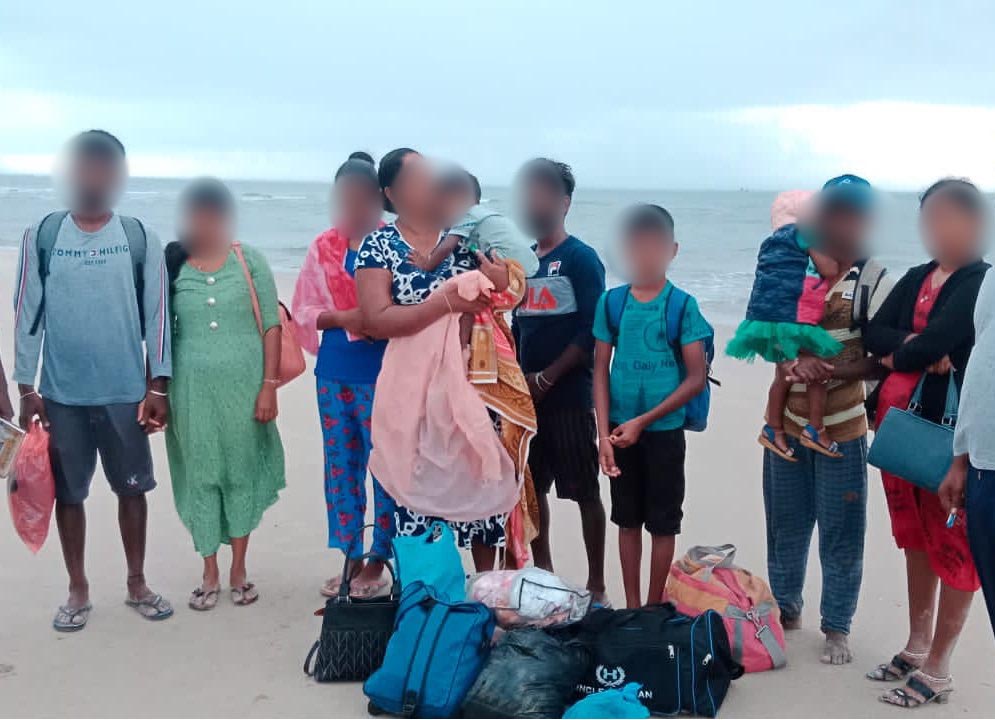
10 Sri Lanka Tamils, including 3-month-old, arrive in Tamil Nadu

RAMANATHAPURAM: Unable to bear the punishing economic distress in Sri Lanka, 10 more Tamils, including a three-month-old boy, fled the island nation and landed at Naduthurai islet near Dhanushkodi in Ramanathapuram district early on Saturday after undergoing a perilous journey for hours braving rough sea, lashing wind and pounding rain.

According to sources, M Jeyakumar (45), his wife J Yogeshwari (42) and daughters J Tamilmathi (22) and J Kanimathi (15) of Mannar; R Pushpam (64) and her son R Prabhakar (43) of Mullai Theevu; and R Justin (42) his wife J Ausiya (31), daughter J Ansika (3) and three-month-old son J Anjithan of Yazhpanam commenced their journey on a fibre boat from Mannar on Friday night.

Speaking to reporters in Dhanushkodi, R Pushpam, a daily-wage labourer, said surviving in the island had become difficult for her, particularly with a son with a mental condition.

“The price of sugar has skyrocketed to 300 Sri Lankan Rupee (SLR) per kg and price of rice per kg is 250 SLR. There is also a shortage of medicines in government hospitals in Sri Lanka,” she said.

“Our boat ride in the dark was scary because of the rough sea and we were continuously battered by rainfall. We risked our lives thinking it is better to die on the boat than to live there. It was quite difficult to protect the three-month-old baby amid the heavy rain and strong winds, she said.

“Each of us paid around 50,000 SLR to one lakh SLR for the boat ride,” Pushpam said. Upon information, the Rameswaram Marine Police reached the spot early on Saturday and took the refugees to the marine police station for interrogation.

Following inquiries by security officials, the refugees would be lodged at the Mandapam refugee camp. With this, the total number of Sri Lankan Tamils who reached Tamil Nadu seeking refuge since March 2022 has increased to 198.

Another SJB bigwig to crossover?

A bigwig of the Samagi Jana Balawegaya (SJB) is preparing to cross over to the government soon, ‘Lankadeepa’ reports.

Quoting highly placed sources in the party, the newspaper says that the politician in question was a minister in several governments and has continuously stated that the SJB should join the government.

The report says that the politician’s son is in the centre of the coordination activities behind the crossover.