Is Sri Lanka on track to access funds from the IMF?

Sri Lanka, which is under an ongoing economic crisis, is headed for another major turbulence as the country will not be able to secure the much-needed IMF loan in December as its ally and debtor China is yet to initiate a dialogue on debt restructuring with Colombo.

A report in the Hindustan Times quoting financial analysts based in Washington said that Sri Lanka will miss the IMF deadline and will have to wait till March next year to secure a loan of $2.9 billion, as Beijing was involved in the 20th National Party Congress.

The next meeting of the IMF executive board is in March 2023, Sri Lanka will most likely have to wait until then for IMF Board approval, and access to the funds.

Why is China’s involvement so important to access IMF funds?

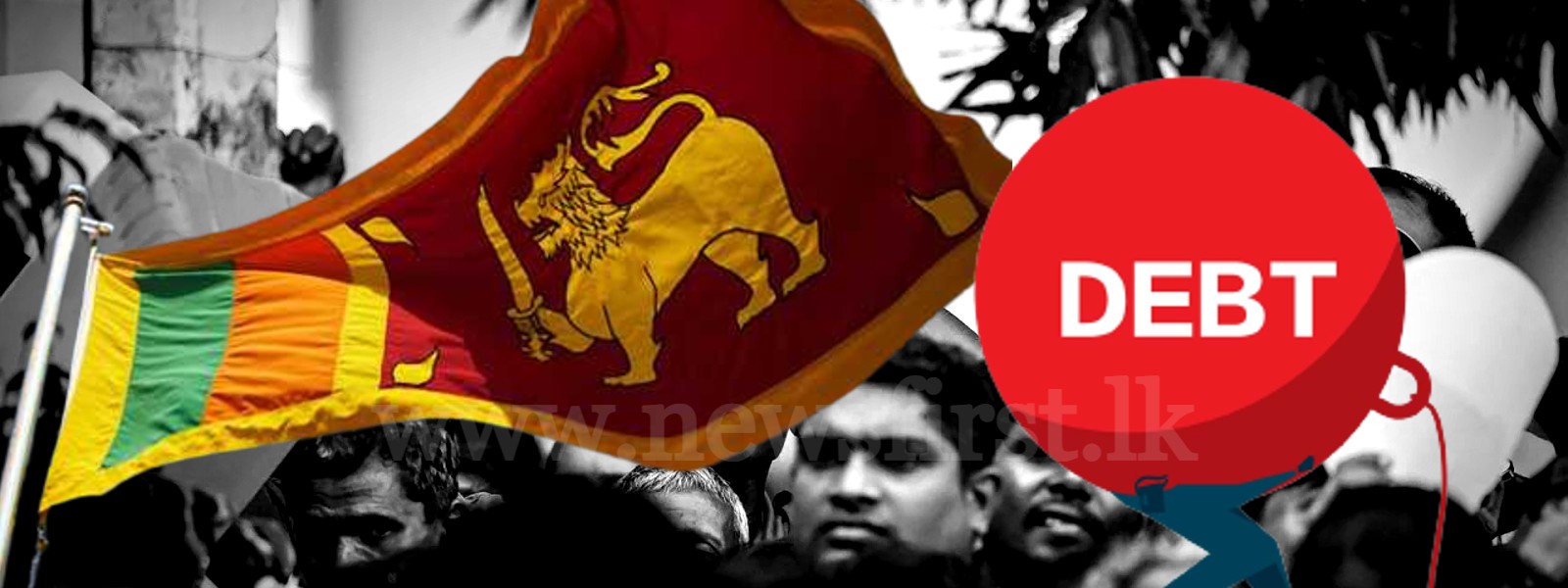
Sri Lanka is now considered a country that defaulted on its external debt because the island nation lacked foreign reserves for debt servicing.

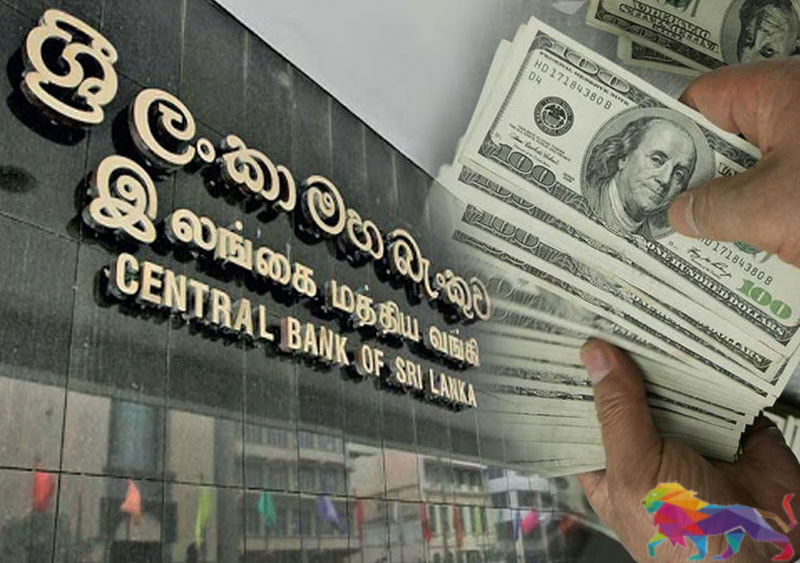
According to the Central Bank of Sri Lanka and the Finance Ministry, Sri Lanka’s total debt was $36 billion at the end of 2021.

Of this total debt, Colombo owes some 52% in bilateral credit to China, 19.5% to Japan, and 12% to India.

One of the main conditions for Sri Lanka to tap the USD 2.9 Billion funding from the International Monetary Fund is debt reconciliation and restructuring.

Bilateral means transactions between two countries, and there is an institution that operates with the support of the International Monetary Fund to talk about bilateral debt, and this is called the Paris Club.

Sri Lanka has obtained a large number of loans from Japan, India, and China, and among them, only Japan is a member of the Paris Club.

India is openly supporting Sri Lanka’s engagement with the IMF, and avenues are open for Sri Lanka to discuss debt reconciliation and restructuring with its neighbour.

However, the issue lies with China.

Sri Lanka has to engage with China on how to restructure the debt given by China.

What has Sri Lanka done with Chinese loans?

Sri Lanka used loans from China to invest in the Hambantota Port, Mattala Airport, Lotus Tower in Colombo, and Expressways.

Unfortunately, the return on investments was not enough to service the Chinese debt.

Some of these projects have been handed over to China labelling them as investments, however, the debt is yet to be settled.

The IMF has informed Sri Lanka to boost its revenue streams so that the debt can be serviced.

The IMF also looks at cutting down state expenditure and eradicating corruption to consider releasing funds to Sri Lanka.

According to Former Foreign Minister G. L. Peiris legitimacy of the government is also crucial.

Three major factors influence the approval of the IMF Executive Board for Sri Lanka to access the funds.

Debt relief from China

Taking necessary measures to prevent corruption and

A legitimate government that represents the true mandate of the people.
Posted in Uncategorized

Chinese vessel: Yuan Wang 6 enters Indian Ocean

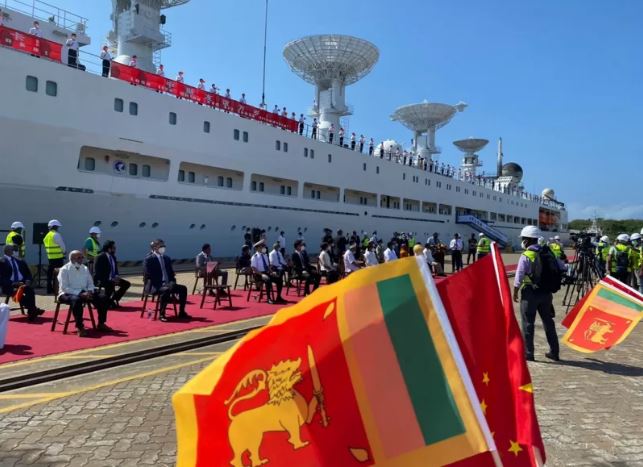
The Yuan Wang 6 (YW6), the sister vessel of the controversial satellite tracking vessel Yuan Wang 5 (YW5), which docked at Hambantota Port in August, entered the Indian Ocean region via the Lombok Strait in Indonesia on Wednesday (2), it is reported.

The Yuan Wang 5 caused controversy and a diplomatic spat between India and Sri Lanka when the regional giant raised concerns with the island regarding the Chinese State-owned vessel docking at the Hambantota International Port (HIP).

It is understood that Sri Lanka, following pressure from India and the US, decided to rescind the permission granted to YW5 to replenish at HIP. However, Sri Lanka later approved the vessel to call port at HIP following consultation with the parties concerned.

President Ranil Wickremesinghe, following the incident, commented that HIP was open to all commercial traffic, stressing that the Sri Lanka Navy and local law enforcement agencies were responsible for the security of the Chinese-funded port, which is now managed by a Chinese firm through a 99-year lease agreement.

According to open-source intelligence analysts and the MarineTraffic ship tracking platform, the YW6 (IMO registration: 9439527) entered the Indian Ocean with no destination port listed as of last evening (5).

This is not the first time that the Yuan Wang 6 has voyaged into the Indian Ocean, with one visit reported early in 2020 that lasted nearly three months.

News reports from India indicate that the Indian Government is keeping a close eye on the vessel.

Meanwhile, some Indian defence commentators have claimed that the YW6’s visit has been scheduled to coincide with a planned Indian test fire of an advanced ballistic missile in its nuclear arsenal.

However, last week China launched the last of the three modules that will comprise its space station into orbit and is expected to launch a number of satellites this month. The Yuan Wang 6’s journey into the Indian Ocean may be linked with its space programme.

Neither India nor Sri Lanka have officially commented on the arrival of the Yuan Wang 6 vessel in the Indian Ocean.

Sri Lanka India discuss common maritime challenges faced by their navies in Indian Ocean

The navies of India and Sri Lanka have discussed ways to strengthen bilateral cooperation and actions to overcome common maritime challenges faced by the navies and coast guard personnel of the two countries in the Indian Ocean.

The 32nd international maritime boundary line (IMBL) meeting between Sri Lankan and Indian navies was held here on board SLNS Sayura off the coast of Kankesanthurai in the north on Friday, the Sri Lanka Navy said in a press release.

The talks between the navies of the two countries was held to mainly discuss common maritime challenges in the Indian Ocean region.

The objective of the IMBL meeting is to strengthen relationships between the two neighbouring countries and discuss actions to be taken pertaining to the navies and Coast Guard personnel to overcome maritime challenges.

“At this year’s meeting delegates from both sides discussed matters pertinent to the security of maritime borders of both countries and exchanged views on the progress of previous meetings”, the release said.

The IMBL meeting is held to strengthen relationships and exchange views on actions to be taken by the navies and coast guard personnel of the two countries, the release added.
The Indian High Commission here termed the discussion on matters of common concern as “fruitful”.

“Fruitful discussions on matters of common concern and effective surveillance between India and Sri Lanka at the 32nd International Maritime Boundary Line Meeting held onboard SLNS Sayura yesterday,” it tweeted.

The Sri Lankan delegation at the IMBL meeting was led by Commander Northern Naval Area, Rear Admiral Aruna Tennakoon, while the Indian delegation was headed by Flag Officer Tamil Nadu and Puducherry Naval Area, Rear Admiral S Venkat Raman, the release said.

Defence Adviser to the High Commission of India in Colombo, Captain Vikas Sood was also present at the meeting.

(This story has not been edited by THE WEEK and is auto-generated from PTI)

UK House of Commons to debate situation in Sri Lanka

The UK House of Commons is to debate the situation in Sri Lanka next week.

A Backbench Business Committee debate on the UK response to the human rights and economic situation in Sri Lanka is scheduled for Wednesday 9 November 2022 in the House of Commons chamber.

The Backbench Business Committee gives opportunities to backbench Members of the UK Parliament to bring forward debates of their choice.

Posted in Uncategorized

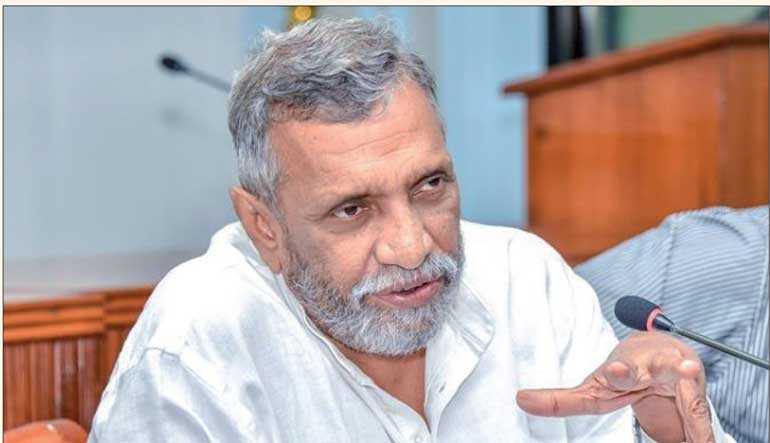
Mahinda Deshapriya to chair 5-member National Delimitation Committee

A five-member National Delimitation Committee has been appointed for the demarcation of wards for local authorities.

The appointment of the committee was announced in an extraordinary gazette issued by Prime Minister Dinesh Gunawardena, in his capacity as the Minister of Public Administration, Home Affairs, Provincial Councils and Local Government.

The National Delimitation Committee is effective from November 01, 2022, to February 28, 2023, according to the gazette notification.

It is headed by former Election Commission chairman Mahinda Deshapriya.

Meanwhile, Mr. Jayalath R.V. Dissanayake, Mrs. W.M.M.R. Adikari, Mr. K. Thavalingam and Mr. I.A. Hameed will serve as the members of the committee.

Posted in Uncategorized

Parliamentary course introduced in Jaffna Uni

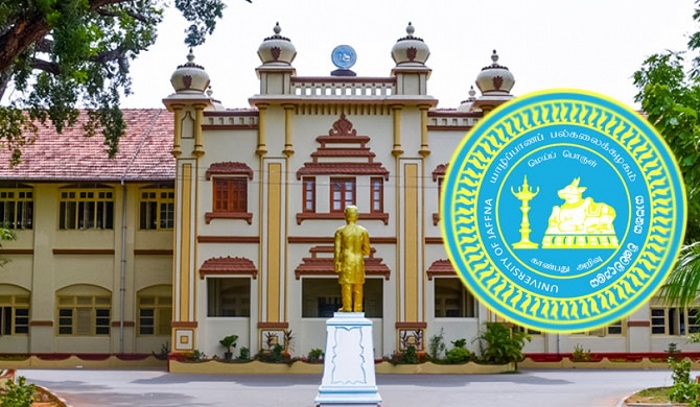
The recently initiated short course on parliamentary functions and procedures by Parliament for Universities was introduced to undergraduates of the University of Jaffna. The inauguration was held on 31 October at the University of Jaffna.

Vice-Chancellor of the University of Jaffna, Professor S. Srisatkunarajah thanked Parliament for arranging such a course and spoke to undergraduates on the importance of taking such course.

Senior officials of the Parliament Secretariat provide the material to resource persons from the Department of Media Studies – Faculty of Arts, University of Jaffna. Director of Legislative Services and Acting Director of Communications, Janakantha Silva, Director Administration, G. Thatchanarany and Manager Media Nimmie Hathiyaldeniya were present at the inauguration.

The Dean of the Faculty of Arts, Prof. K. Suthakar who addressed the gathering requested that the course be conducted for Political Science undergraduates.

Dr. S. Raguram, Professor of Media Studies and Head of Department of Media Studies, Lecturers of the Media Faculty, Poonkulali Sreesangithanan, Anutharshi Gabilan, Jude Dinesh Koduthor were also present.

The course intends to cover Democracy and Parliamentary System, Legislative Process of Parliament, Evolution of the Parliamentary System, Parliamentary Committee System, Parliament and the Public, Code of Conduct for the Members of Parliament, Standing Orders, Correlation for Public Service Process and Women’s Representation.

It includes four lectures and a study tour around Parliament.

Meanwhile, Parliament in collaboration with the University of Colombo initiated the Course in Colombo University to educate final year students of the Department of Political Science and Public Policy of the University, and give them an insight into the working of Parliament.

Sri Lanka keen to enhance trade with Pakistan

Consul General of Sri Lanka in Karachi, Pakistan Jagath Abeywarna says Sri Lanka and Pakistan have good trade and diplomatic relations, which can be enhanced with joint efforts of both the countries.

Consul General in Karachi Jagath Abeywarna highlighted that the total trade volume between Sri Lanka and Pakistan is $400 million and encouraged Pakistan exporters to make business delegations in order to expand exports to Sri Lanka.

Exchanging views at a meeting with Pakistan Yarn Merchants Association (PYMA), the Consul General stressed that collaboration between businessmen of both countries is the need of the day.

Consul General Jagath Abeywarna noted that major items of exports tea and coconut were exported by Sri Lanka to different countries, and $11 million were exported to Pakistan in 2021.

He said however the income from the tourism sector was only $3 million.

Meanwhile, Vice Chairman PYMA Sohail Nisar said Pakistan stands as Sri Lanka’s second-largest trading partner in South Asia.

He therefore stressed the need to promote air and sea connectivity between the two countries to strengthen cooperation in trade and industry.

Sohail Nisar added that Pakistani products especially pharmaceuticals, rice, fruits, vegetables, cement and garments have a wide scope in the Sri Lankan market.

Similarly, Sri Lankan tea, wall tiles, floor tiles etc. have a wide scope in Pakistan

Posted in Uncategorized

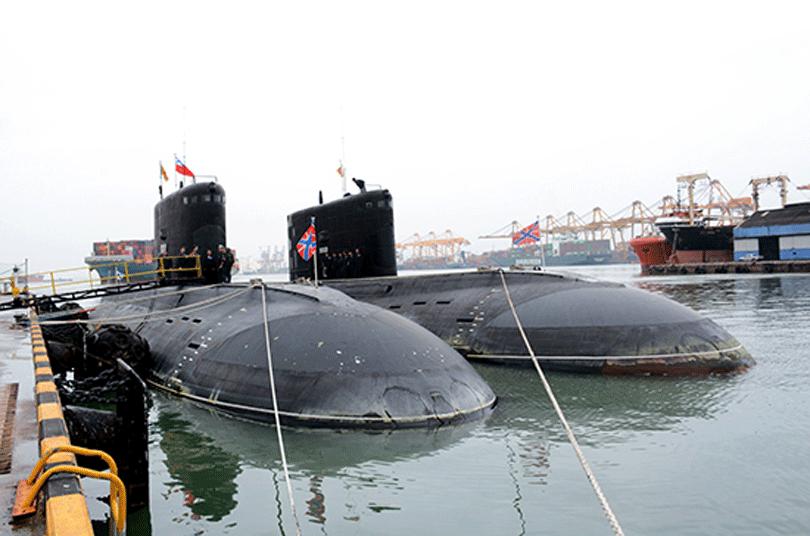
Two Russian warships enter Sri Lankan waters

Two Russian warships have entered Sri Lankan waters, the Russian Defence Ministry said.

A detachment of Pacific Fleet ships led by the flagship of the Nakhimov Guards missile cruiser Varyag, the large anti-submarine ship Admiral Tributs and the large sea tanker Boris Butoma have entered the responsibility zone of the TOF south of Sri Lanka.

The detachment of ships is making an inter-fleet transition from the Mediterranean Sea to the point of permanent deployment in Vladivostok after completing tasks in the far maritime zone.

In the area of Sri Lanka Island, the Pacific Fleet took operational control of the ships’ detachment on the crossing from the Black Sea Fleet, whose area of responsibility they successfully traversed. The detachment of ships is currently making the crossing across the Indian Ocean.

Admiral Tributs is a Project 1155 Large Anti-Submarine Ship (Большой Противолодочный Корабль, BPK) of the Russian Navy. The ship was laid down on 19 April 1980 and launched on 26 March 1983.

The vessel is 163 m (534.8 ft) long with a beam of 19.3 m (63.3 ft) and a draught of 7.8 m (25.6 ft). Displacement was 6,200 t (6,102 long tons) standard and 7,900 t (7,775 long tons) full load.

Power is provided by four 23,000 kW (31,000 hp) hp GTA M-9 propulsion complexes, each comprising a 6,300 kW (8,500 hp) M-62 and a 16,800 kW (22,500 hp) hp M-8KF powering two fixed pitch propellers. which gave a maximum speed of 29.5 knots (55 km/h; 34 mph).

To combat submarines, Admiral Tributs mounts two quadruple launchers for eight missiles in the Metel Anti-Ship Complex along with two RBU-6000 12-barrel rocket launchers for close in defence.

Sri Lanka Rs1,310mn dollars in arrears up to June

Sri Lanka’s central government and state enterprises were up to 1,368 billion US dollars in arrears in foreign and domestic debt and suppliers credits, up to June 2022, an official statement has shown.

Sri Lanka defaulted on April 2022 despite ending a 30-year civil war, after running up foreign debt rapidly through several years of monetary instability, while operating a highly discretionary ‘flexible inflation targeting’ regime as the country lost the ability to make foreign payments freely.

By end June 2022, Sri Lanka had 40.6 billion dollars of foreign borrowings made up of 35.5 billion US dollars in central government debt, 1.9 billion in state enterprise guaranteed debt and 3.1 billion US dollars, while the central bank had borrowed another 3.1 billion US dollars.

Of that 1.4 billion in swap from China was unused. Sri Lanka also owed another 1.9 billion US dollars to the Asian Clearing Union. However there are also inflows from the ACU to Sri Lanka.

The central government was in arrears up to 1,068 million dollars to foreign borrowers up to June 2022.

Sri Lanka had arrears of 211.8 million US dollars in interest to international sovereign bond holders, who were the largest creditor with 12.55 billion US dollars of debt. In July Sri Lanka defaulted on the principle of a bond.

China Development Bank which had lent 2.652 was owed 102.5 million US dollars in arrears by June.

Japan which had lent 2.57 million dollars was owed 1.4.6 billion in arrears.

Separately domestic Sri Lanka Development Bonds were in arrears up to 242 million US dollars.

Ceylon Petroleum Corporation was listed as owing 577.6 million dollars in payables.

The petroleum utility borrows heavily and runs up supplier’s credit whenever forex shortages emerge from liquidity injections made to suppress interest rates under flexible inflation targeting.

Ceylon Petroleum Corporation separately had loans of 1.577 billion US dollars from Bank of Ceylon and 1,089.7 billion dollars in monetary instability loans from People’s Bank in addition the 577 million US dollars in payables.

From around September 2014 to 2023 Sri Lanka only had monetary stability in the year 2017 and a part of the year 2019 allowing the country to make external payments freely, leading to a steep run up in sovereign bonds, bailout borrowings from China and CPC supplier credits.

S&P cuts Sri Lanka bonds ratings to ‘D’ after missed payments

Global ratings agency S&P Global on Thursday cut Sri Lanka’s bonds by two notches to its lowest rating ‘D’ from ‘CC’, pushing it deeper into junk territory, following missed interest payments due on Sept. 14 and Sept. 28, 2022.

“We do not expect the government to make payments on the ISBs within 30 calendar days after their due dates,” the agency said.

The agency affirmed its ‘CCC-’ long term and ‘C’ short term local currency sovereign ratings. S&P’s outlook on the long-term local currency rating remains negative.

S&P Global Ratings affirmed its ‘SD’ long-term and ‘SD’ short-term foreign currency sovereign ratings on Sri Lanka. At the same time, it affirmed the ‘CCC-’ long-term and ‘C’ short-term local currency sovereign ratings. The outlook on the long-term local currency rating remains negative.

Sri Lanka’s external public debt moratorium prevents payment of interest and principal obligations due on the government’s ISBs. This would have affected interest payments due Sept. 14, 2022, and Sept. 28, 2022, on its ISBs maturing 2024, 2029, and 2030.

S&P Global lowered the ratings on the following bonds from ‘CC’ to ‘D’:

US$1.0 billion, 6.85% bonds due March 14, 2024.
US$1.4 billion, 7.85% bonds due March 14, 2029.
US$1.5 billion, 7.55% bonds due March 28, 2030.

S&P foreign currency rating on Sri Lanka is ‘SD’ (selective default). The negative outlook on the local currency rating reflects a high risk to commercial debt repayments over the next 12 months in the context of Sri Lanka’s economic, external, and fiscal pressures, S&P said.