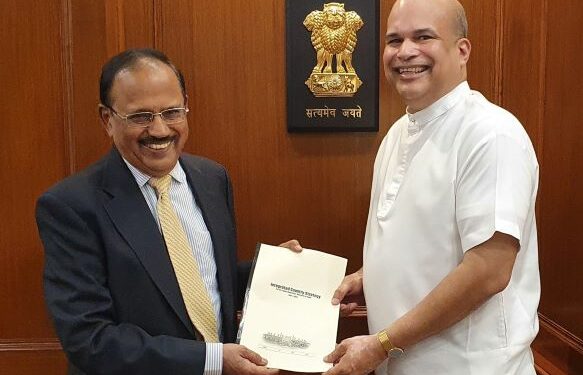
Over 150 illegal Sri Lankan migrants return from Viet Nam

Over 150 Sri Lankan migrants who were rescued from a boat off the coast of Viet Nam last month, returned to the country on a chartered flight from Ho Chi Minh City late last night (Tuesday).

The Ministry of Foreign Affairs of Sri Lanka and the International Organization for Migration (IOM) facilitated the voluntary humanitarian return of 152 Sri Lankan migrants through a chartered flight from Ho Chi Minh City, Viet Nam following their rescue when a boat capsized off the coast of Viet Nam on 8 November 2022.

“Addressing the issue of irregular migration requires a multi-agency effort and IOM records its appreciation to the Ministry of Foreign Affairs for facilitating the return process and considers this to be a good example of teamwork involving the Governments of Sri Lanka and Viet Nam, the Sri Lanka Embassy in Ha Noi and IOM missions in Colombo, Ha Noi and Ghana,” said Sarat Dash, Chief of Mission to IOM Sri Lanka and Maldives.

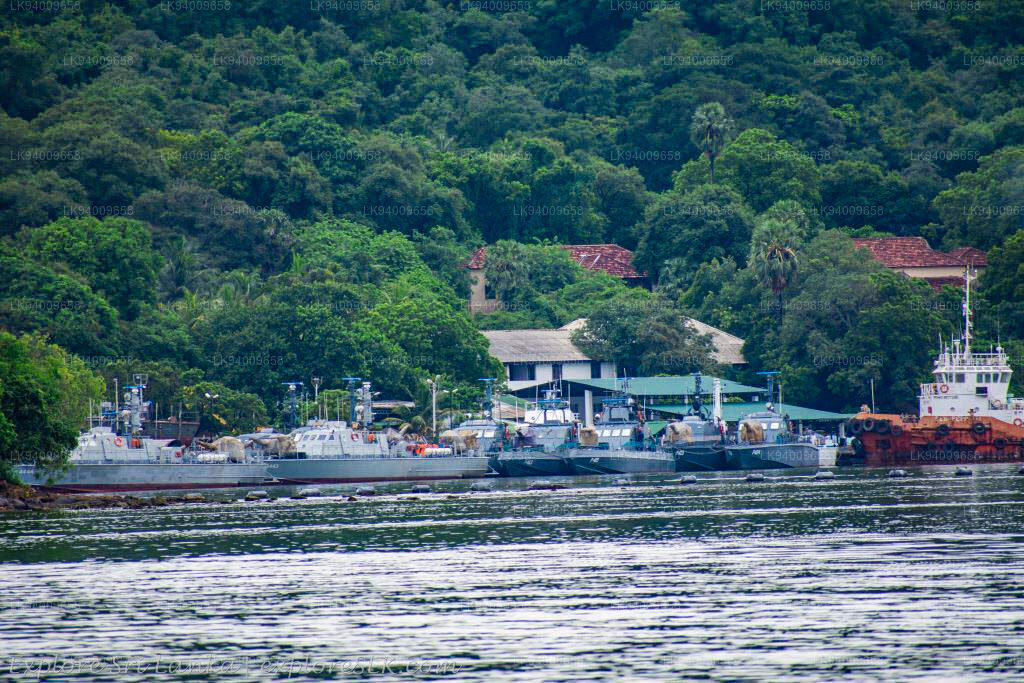
The Ministry of Foreign Affairs, in coordination with the Sri Lanka Navy and the Sri Lanka Missions in the Philippines, Singapore and Viet Nam, together with the regional Maritime Rescue Coordination Centers (MRCC) based in Singapore, coordinated rescue efforts for the migrants. Since 8 November 2022, a total of 302 migrants were accommodated in three different Viet Nam military accommodation facilities situated in the city of Vung Tau.

For over a month, IOM in coordination with the Government of Vietnam and the Sri Lanka Embassy in Ha Noi ensured the provision of basic necessities, including food, medical aid, hygiene kits and counselling support for all the migrants. A team of officials attached to the Protection Unit of IOM Sri Lanka travelled to Vietnam to undertake protection screenings/vulnerability assessments of all rescued migrants in collaboration with IOM Vietnam. The Honorary Consul of Sri Lanka in Ho Chi Minh City, under the guidance of the Embassy of Sri Lanka in Ha Noi provided the migrants with initial Consular assistance, basic food and facilitation of other disposables and required items for the children.

The Ministry of Foreign Affairs and IOM appreciates the Government of Viet Nam’s willingness to offer a place of safety for over a month and assist the 302 vulnerable Sri Lankan migrants rescued at sea while repatriation work was being coordinated from Sri Lanka’s end.

The Ministry of Foreign Affairs convened a stakeholder meeting on 2 December 2022 with representatives from government agencies and IOM to make necessary arrangements for the smooth and safe return of the migrants.

The special charter flight organized by IOM Sri Lanka which brought back 152 rescued migrants was coordinated with the Ministry of Foreign Affairs and relevant Government authorities in Sri Lanka, the Embassy of Sri Lanka in Viet Nam, and the Vietnamese authorities.

IOM’s assistance addressing the immediate needs of the stranded migrants, repatriation through a special charter flight, onward transportation to their homes and comprehensive reintegration assistance in Sri Lanka totals over USD 600,000.

Minister of Foreign Affairs, Ali Sabry thanked IOM for its generous support in the process of repatriation and reintegration of Sri Lankan migrants who are attempting to cross borders in irregular ways.

India makes inroads into Sri Lanka under China’s long shadow – report

When Sri Lanka slid into its worst economic crisis in seven decades leading to deadly riots and alarming shortages of fuel, food and medicines earlier this year, its giant northern neighbour stepped into the breach.

India provided about $4 billion in rapid assistance between January and July, including credit lines, a currency swap arrangement and deferred import payments, and sent a warship carrying essential drugs for the island’s 22 million people.

Now, as Sri Lanka closes in on a $2.9 billion loan deal from the International Monetary Fund (IMF) and its economy stabilises, India is seeking to land ambitious long-term investments, with an eye on countering the influence of regional rival China, a government minister and three sources said.

“What we are looking at right now is investment from them,” Sri Lankan Foreign Minister Ali Sabry said in an interview this month, referring to a range of projects worth over $1 billion currently under discussion that would help bolster India’s presence in Sri Lanka. “They’re willing to invest as much as it takes.”

“India is probably strategically looking at that…because of their security concerns,” Sabry said.

India’s foreign ministry did not respond to questions from Reuters on its plans and strategic aims in Sri Lanka.

Regional security would always be a focus for New Delhi, a source with knowledge of the matter told Reuters, at a time of persistent friction with China along their Himalayan frontier.

“There are no two ways about security concerns,” the source said, asking not to be named because of the sensitivity of the issue. “In terms of long-term engagement, it is investment that is being focused on.”

Besides seeking Indian investments to set up renewable energy and power projects in the north of the island, Sri Lanka is also keen to work with New Delhi on expanding and developing the harbour at Trincomalee in the northeast into a major port, several officials said.

Taking advantage of northern Sri Lanka’s proximity to India, these projects could help New Delhi balance China’s extensive infrastructure projects in the south of the island that have been built up over the last 15 years.

Sri Lanka’s Tamil-dominated north also shares ethnic ties with southern India’s Tamil Nadu state.

CONCERN ABOUT CHINA

The talks, and the scale of Indian aid this year that far exceeds other donors, underline New Delhi’s efforts to claw back influence in the island located just a few miles off its southern tip along busy waterways linking Asia to Europe.

In late June, a fortnight before tens of thousands of angry Sri Lankans took to the streets and forced President Gotabaya Rajapaksa to flee the country, India’s top diplomat flew into the island nation’s main city of Colombo for meetings.

Foreign Secretary Vinay Kwatra, who was accompanied by officials from India’s finance ministry, met Rajapaksa and Prime Minister Ranil Wickremesinghe, among others.

In their conversations with the Sri Lankan leadership, Kwatra and other Indian officials flagged China’s position as a key geopolitical concern, according to a Sri Lankan government source with direct knowledge of the discussions.

The source, who declined to be named because he was not authorised to speak to the press, said China’s huge role in the island’s economy, which had mushroomed under previous Rajapaksa administrations, was troubling India more than anything else.

Details of the June meeting have not previously been reported.

Kwatra and the Indian and Sri Lankan foreign ministries did not respond to questions from Reuters on the June meetings.

In a statement released immediately after Kwatra’s visit, the Indian foreign ministry said that talks had mainly focused on economic issues, including deepening investments. It made no mention of China.

New Delhi has long been concerned about China’s clout in its neighbourhood, including Nepal, Bangladesh and Sri Lanka. Sensitivities have been heightened, and diplomatic relations frayed, since Indian and Chinese troops clashed along a remote Himalayan border in 2020, leaving dozens of soldiers dead.

“We understand that it is their prerogative to look after their security,” Sabry said, referring to India. “And as far as Sri Lanka is concerned, we don’t want to contribute to any escalation of tension between any countries.”

China, meanwhile, has engaged with the Sri Lankan government on debt restructuring that is required for the IMF deal to go through, besides sending shipments of medicine, fuel and rice.

The World Bank estimates Beijing’s lending stands at around $7 billion, or 12% of Sri Lanka’s $63 billion external debt.

“We are willing to work with relevant countries and international financial institutions to continue to play a positive role in helping Sri Lanka,” China’s foreign ministry said in response to written questions from Reuters.

The ministry said it did not have details of India’s assistance and investment in Sri Lanka and that its own support of Sri Lanka was “not targeted at third parties”.

PERFECT STORM

Sri Lanka sank into a financial crisis after the COVID-19 pandemic decimated tourism and remittances from citizens working abroad fell. The war in Ukraine pushed prices for imports, particularly fuel, sharply higher.

Rajapaksa’s administration also resisted help from the IMF, meaning foreign exchange reserves dwindled, worsening fuel and medicine shortages.

Violent protests broke out as tens of thousands of people took to the streets and stormed government buildings.

The president fled the country in July, and resigned. By then, Sri Lanka finally engaged with the IMF and the two sides have since struck a preliminary $2.9 billion loan deal.

But it was Indian assistance that helped Sri Lanka buy time.

“Without India, Sri Lanka would have unravelled as Lebanon did,” said Uditha Devapriya, chief international relations analyst at Factum, a Colombo-based foreign policy think-tank.

“Sri Lanka has clearly benefited from being the closest neighbour to the most powerful country in the region. It is also in India’s interest to ensure stability in its backyard.”

In October, Wickremesinghe – who took over as president in July after Rajapaksa quit – unveiled a blueprint for Trincomalee, which has a natural deep-water harbour, including a proposal to work with India to develop a strategic port there besides setting-up a new industrial zone and an energy hub, according to details released by his office.

India and Sri Lanka are also in preliminary discussions on an undersea cable to connect the power grids of both countries and a fuel pipeline from southern India’s mainland to northern Sri Lanka – projects that could together cost at least $4 billion, according to officials on both sides.

In the energy sector, India’s state-run NTPC is working on a 100-megawatt solar power plant in Sampur in Trincomalee district after the two countries signed an agreement in March.

In the northwest of Sri Lanka, India’s Adani Group is awaiting regulatory approvals for two wind power projects worth $500m in Mannar region, Sri Lanka’s Power Minister Kanchana Wijesekera said in August.

Off the northwestern coast, ONGC Videsh Limited (OVL), the overseas arm of Delhi’s state-run Oil and Natural Gas Corporation, has set its sights on exploration licences, and has had multiple discussions with Sri Lankan authorities who are finalising regulations ahead of inviting bids from global companies, two Sri Lanka energy ministry officials said.

Both asked not to be named because discussions were ongoing.

Adani, NTPC and OVL did not respond to questions from Reuters on their projects in Sri Lanka.

The push for oil and gas exploration was part of the discussions in June, the source with knowledge of the talks said.

YUAN WANG 5

Foreign Minister Sabry said the Sri Lankan government was keen on capitalising on India’s growing economic prowess, particularly through renewable energy and infrastructure projects, while maintaining key relationships with other major allies, including China and Japan.

Despite India’s recent goodwill in Sri Lanka, New Delhi remains wary of China’s presence.

In July and August, the regional rivals became embroiled in a diplomatic spat over a Chinese military survey ship, Yuan Wang 5, that stopped at southern Sri Lanka’s Hambantota port.

At that time, Indian Foreign Ministry Spokesman Arindam Bagchi said that although India had given “unprecedented” support to Sri Lanka during the economic crisis, New Delhi would not back down from its security needs.

Despite India’s crucial help during the financial crisis this year, Sri Lanka still needs China – one of its biggest creditors – to agree to a debt restructuring plan, along with India and Japan, to clinch the IMF loan deal, Sri Lankan officials said.

“Chinese investment is very important, Chinese relationship is very important,” Sabry said.

“So I don’t think even India or anybody expects Sri Lanka not to work with China. To be fair by them, none of them have asked us.”

Source – Reuters

Posted in Uncategorized

Economic crisis worsens Sri Lanka’s food insecurity levels – Report

Sri Lanka’s economic crisis has deepened the risk of food insecurity, a report released by the World Food Programme (WFP) revealed.

Accordingly, while 36% of households are food insecure, 76% have resorted to food-based coping strategies, WFP stated.

Despite having remained at relatively stabilized levels over the past three months, food security levels still remain concerningly high the report indicated, with nearly eight in ten households regularly turning to food-based coping strategies and over five in ten households pawning items or formally borrowing money in order to eat.

Food prices also remain a primary concern for nine out ten households.
“With limited purchasing power, over 50% of households are purchasing food on credit. Consumption of adequate diets remains low.

Thirty five percent of households are facing insufficient food consumption, with many consuming far less diverse and nutritious diets”, the report read, emphasizing that the crisis continues to disproportionately impact different segments of society.

Female-headed households (44%) are faring worse than male-headed households, while those in the estate areas (43%) consistently experience higher levels of acute food insecurity than those in urban and rural areas.

Food insecurity saw an increase of 4% in October, compared to the figures seen in September, with almost half of the households (48%) in the Southern province being deemed food insecure, followed closely by Sabaragamuwa province (45%).

Those in the East and the North recorded the lowest food insecurity scores in October, with the former having recorded a score of 26%, and the latter coming in just a percentage lower at 25%.

Six out of nine provinces saw a rise in food insecurity between September and October, namely Uva, Southern, North Central, Central, North Western and Eastern provinces, while there was a reduction in food insecurity in the Northern province of 8 percentage points from September.

SJB charging full steam ahead in preparation for LG polls

MP Tissa Attanayake says the Samagi Jana Balawegaya (SJB) is now in full preparation mode for the Local Government elections that are expected to take place in early 2023.

Attanayake who is also the national organiser of the party said the Government is attempting various tactics to delay polls while Ministers are claiming there is no need for an election at this juncture. He also pointed out that the rival United National Party and its members are also claiming the Government does not have the necessary funds to hold a vote.

“This is because they are in fear. A Government must be able to face the mandate of the people fearlessly. But the SJB is ready to face an election at any given moment,” the MP said.

Attanayake made these comments during a press conference held yesterday at the office of the Opposition Leader in Colombo.

The MP said the party expects the Election Commission of Sri Lanka to release a Gazette announcing the date for nominations as well as other necessary instructions. He said the Samagi Jana Sandhanaya, consisting of several supporting political parties, are currently in discussion to face the polls as an alliance.

“This week a meeting between the party organisers will be held and interviews will also be held for those who requested nominations,” he added. According to Attanayake, the party has already received a large number of applications.

He said the SJB will focus on giving more representation for youth and women which will reflect in its nominations list.

“We are not afraid to face an election. We want to see the people’s decision and their opinion through this poll. Therefore we warn the Government to refrain from attempting to delay it. We have already gone to court over this. We are awaiting the decision of the courts and we are also preparing to hold public protests.

“We will bring together all parties of the opposition to form a people’s movement pushing for elections. Therefore we ask the Government to not give various excuses to avoid a vote. We challenge the Government to hold elections as scheduled,” he said.

Posted in Uncategorized

SL-born hedge fund manager Raj Rajaratnam in Sri Lanka

Sri Lankan-born Galleon hedge fund founder Raj Rajaratnam, alleged of being the mastermind of the largest hedge-fund insider-trading rings in US history, is presently in Sri Lanka and will meet some Sri Lankan politicians in the coming days, the Daily Mirror learns.

The founder of Galleon Group Hedge Fund, Sri Lanka-born Raj Rajaratnam was arrested by the FBI and charged with criminal offenses of insider trading securities frauds in 2009.

Rajaratnam had also been accused of giving more than US$3.5 million to the Tamil Rehabilitation Organization (TRO) whose assets were frozen by the US Treasury Department in Nov. 2007 because of its alleged ties to the Tiger terrorists.

Rajaratnam was also linked to the controversial US$ three million which was deposited at the Standard Charted Bank Branch in Kirillopane without the authority of the Central Bank in 2006.

Former UNP MP Ravi Karunanayake’s name was linked in the illegal transaction but in 2015, Karunanayake was acquitted by court on charges of money laundering in violation of the Exchange Control Act.

Posted in Uncategorized

SriLankan defaults on Rs. 71,600 M loan from state banks

The SriLankan Airlines has defaulted on the repayment of a Rs. 71,621 million loan it had obtained from two state banks, says the National Audit Office in a report.

The national carrier received a treasury bond credit facility of USD 200 million in 2016-17.

Without paying it back, it obtained Rs. 29,440 in 2017-18 and a further USD 75 million in 2020-21, noted the report.

Meanwhile, SriLankan has sought a 12-month suspension from its creditors for the payment of interest in lieu of a sovereign bond credit that matures in 2024.

For the USD 175 million loan obtained at seven per cent interest, it repaid a USD 6.13 million interest in July, with two more due at December 25, 2022 and June 25, 2023.

SriLankan obtained this maintenance purpose loan after it annulled its management pact with Emirates Airlines during Mahinda Rajapaksa’s presidency.

Posted in Uncategorized

We face the repercussion of handing over the country to politicians: Prelate

What we are experiencing now is the consequence of handing over everything in the country to politicians, the Chairman of the National Movement for the Protection of the Nation Ven. Elle Gunawansa Thera said.

“We have never heard of an era where the people of our country are suffering as much as they do these days,” he lamented.

He told the media yesterday that the people of the country did not rule the country, but only two parties. The people do not have sovereignty, he said.

“Now I am hearing several opinions being discussed about the issues in the Northern and Eastern Provinces of the country.
“The Government should not do that. It will be creating more national problems at a time when people are worried over their next meals,” he said.

“Political parties are pre-occupied with issues in the North and East, but the people of the country are not,” he said.

“The Constitution says that it shall give the foremost place to Buddhism while protecting and nurturing it, and it shall be the duty of the State to protect and foster the Buddha Sasana. But it has not mentioned a proper definition of how to protect and foster Buddha Sasana. That means the Constitution has misled us.”

Prime Minister Dinesh Gunawardana was present at the event. Ven. Gunawansa Thera said The foreigners used to visit Sri Lanka to admire our culture, ancient temples, and many other sights. The Government was nurtured by the revenue from foreign tourists because of the cultural monuments in the country. But the Government has forgotten that.”

“We are unable to switch on the lights due to the recent increase in the electricity tariff. Do not attempt to do anything to force us to come to the streets,” Ven. Gunawansa Thera cautioned.

“I’ve heard some Ministers speak arrogantly. Those are not the people who go to temples or are devout. There are some people and monks who always favoured in this country. As we used to say, we lose all the time. As monks, we don’t mind losing, but we want to remind this Government not to work in a way to undermine Buddhism,” he added.

Posted in Uncategorized

We requested Rs.11 billion to conduct elections in 2023 -Election Commission

Commissioner-General of Elections Saman Sri Ratnayake says the National Election Commission requested Rs.11 billion to conduct elections in 2023.

Speaking during an event in Nuwara Eliya this morning, Saman Sri Ratnayake noted that through the Budget Rs.10 billion have been allocated.

He said similarly in 2022, they requested Rs.10 billion to conduct elections.

Commissioner-General of Elections Saman Sri Ratnayake noted that they have been informed that the required allocations have been made by the Treasury.

He said the Treasury has not informed them that allocations have not been made for elections.

Saman Sri Ratnayake noted that therefore they are making preparations to conduct the election.

He said despite various claims, they will discharge their duties within their mandate.

The Commissioner-General of Elections also said all Members of Parliament are aware that the Local Authorities Election process must be completed by the 19th of March 2023.

Pakistan accused of trying to revive the LTTE

The Pakistani intelligence agency, the Inter-Services Intelligence (ISI), has been accused of trying to revive the now defunct Liberation Tigers of Tamil Eelam (LTTE) in Tamil Nadu, an Indian media report claimed.

Republic World said that Pakistan’s ISI has been trying to push the revival of the LTTE in the southern Indian state. Notably, this comes after the National Investigation Agency (NIA) arrested nine persons earlier last week in connection with illegal drugs and arms cases pertaining to the revival of the LTTE.

According to the NIA, the case was related to activities of the Sri Lankan drug mafia controlled by Gunashekaran and Pushparajah in association with Haji Salim– a drugs and arms supplier based in Pakistan.

Republic World quoted reports as saying the module has been operating in India as well as Sri Lanka and has been smuggling drugs and arms in an attempt to revive the LTTE, an outfit designated as a terrorist organisation by 32 countries, including the European Union, Canada, the United States, and India.

With NIA busting that module at the roots, the ISI is now allegedly trying to revive the LTTE in Tamil Nadu and Sri Lanka to derail the peace and security in the region.

The NIA had earlier arrested former LTTE operatives and found that they were linked to individuals in Europe. It was later learnt that these operatives based in European countries– Denmark and Switzerland were trying to withdraw money to use for the LTTE’s revival.

Pakistan is yet to respond to the claims.

Missing persons’ families to file habeas corpus

Welcoming the recent order issued by the Vavuniya High Court (HC) to the security forces to produce a person who was handed over to them in Mullaitivu by his relatives during the end of

war, the Association for the Relatives of Enforced Disappearances in the North and the East

yesterday (26) noted that they too would file habeas corpus petitions to identify the whereabouts

of their loved ones if the authorities take necessary steps to produce the relevant person before

court.

Speaking to The Morning, Association Secretary Leeladevi Ananthanadarajah yesterday said

that the order was a positive move by the Vavuniya High Court, and that if the relevant

authorities take necessary steps to produce the relevant person before court, the other families

of missing persons would similarly file petitions to ascertain their loved ones’ whereabouts.

“On an earlier occasion, we filed a few habeas corpus petitions with the Vavuniya and Mullaitivu

courts in order to ascertain the whereabouts of our missing relatives, but due to the lack of

certain evidence, they were rejected. Now, the recent order by the Vavuniya High Court seems

positive, and if this particular person is produced, we would follow the same procedure,” she

added.

She further said that when the relatives of missing persons filed the same petition earlier to find

the whereabouts of their loved ones, they faced difficulties because the cases kept dragging on.

Meanwhile, recently, in response to a habeas corpus petition filed with the Vavuniya High Court,

an order was made to the Sri Lanka Army to produce a person who was handed over to the

security forces during the end of the war.

Posted in Uncategorized