IMF to expand donor coordination for Sri Lanka

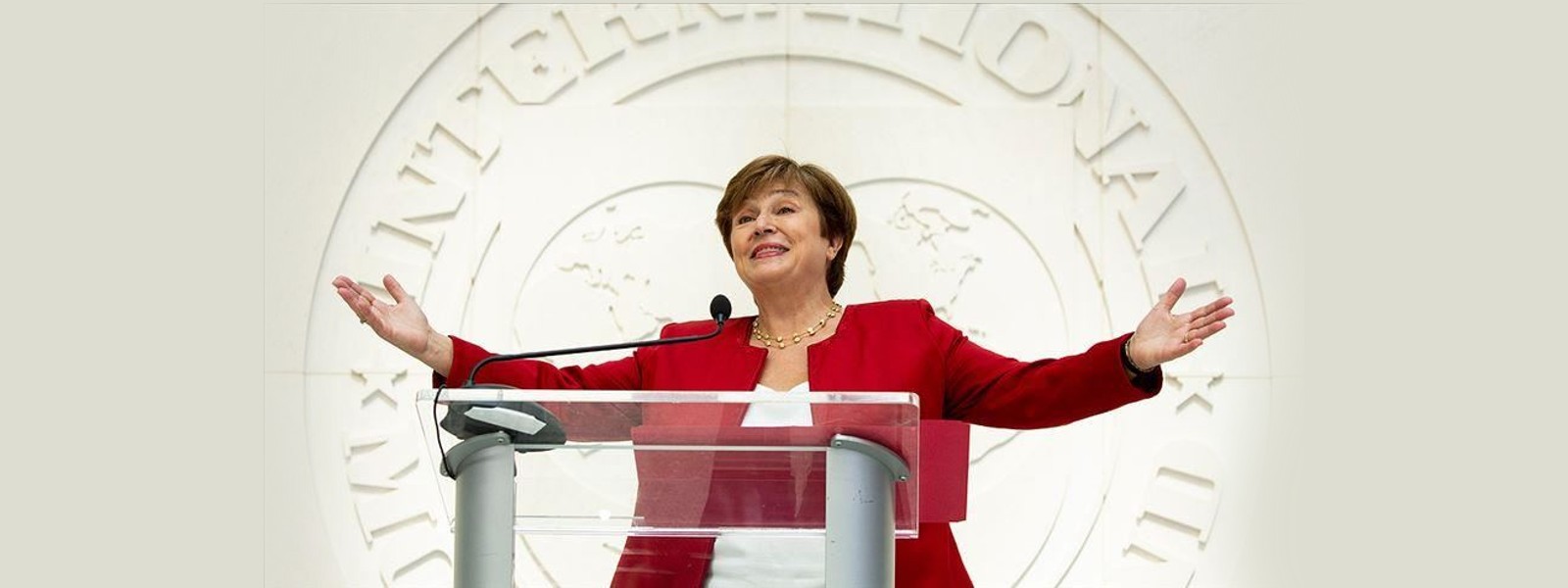
IMF Managing Director Kristalina Georgieva says that the IMF is pressing for a more effective debt resolution mechanism.

“We want the Common Framework to become more predictable with guidelines and able to bring equality of treatment for all creditors, public and private,” she told a news briefing.

She said that the IMF is also looking for ways in which it can expand that kind of donor coordination to middle-income countries, such as Sri Lanka.

“So, we have a lot to do during this week. And it is so important that we do demonstrate we understand the urgency to act, and we understand that acting together makes a difference to the lives of hundreds of millions of people,” she added.

Posted in Uncategorized

Sri Lanka has to improve governance, do transformational reforms to overcome crisis

Sri Lanka has to do transformational reforms and improve governance to come out of the current crisis a senor World Bank official said, as the island suffers the worst currency crisis in the history of its intermediate regime central bank.

Sri Lanka’s gross domestic product is expected to shrink to 9.2 percent in 2022 according to World Bank projections after a collapse of the rupee following two year of money printing to support a tax cut, which ended in import controls and default.

Sri Lanka has reached a deal with the International Monetary Fund for a reform program and a loan of 2.9 billion US dollars.

“To come out of the crisis, really fundamental and transformation reforms are needed, because in the past, a lot has gone wrong under difficult circumstances,” Hans Timmer the World Bank’s Chief Economist for South Asia said.

“Sri Lanka came into the crisis because of a lot of external shocks, because some of some internal shocks also but also because of macro-economic management mistakes.”

Sri Lanka is reforming is tax system to boost revenues, and is also trying to trim government spending. With the IMF program Sri Lanka is in talk with creditors to res-structure its debt.

Improving Governance

An important reform was for Sri Lanka to improve governance to make sure that the “system works there is a level playing field and there are fewer opportunities for a mis-use of the system or even corruption,” Timmer said.

“The first priority is to set up a very efficient social safety net and put in place some measures so that a large part of population can become more productive and have access to markets and to finance,” Timmer said.

Before new funding came the Sri Lanka had to do the required reforms, improve governance and also make progress on debt sustainability alongside the IMF program.

Governance of spending, procurement and governance of the financial sector were areas Sri Lanka had to improve, Timmer said.

State enterprise reforms are also required.

Sri Lanka ongoing import controls and permits also have negative effects.

“Anytime you have this kind of restriction and you start introducing a permit system – whether you can import or not – you create opportunities for mis-using that system also,” he said.

Some critics date the corruption that gripped the public sector in the island to the import and exchange controls of the 1970s, where the economy was closed as the Bretton Woods collapsed and money was printed triggering forex shortages.

Sri Lanka has systematically tightened exchange and import controls since an intermediate regime central banks was set up in 1950.

Improving Opportunities

The World Bank played a key role in previous crises in Sri Lanka including in war affected areas and Covid-19 pandemic.

For many year the agency supported education reforms across the country, and focused on improving access to markets.

Helping women participate more in economic activities was an important change that was needed, Timmer said.

New funding could come after the IMF program and required reforms and governance improvements are made.

Sri Lanka’s government has said it is requesting the World Bank to reverse graduate the country from the current more market based lending under the World Bank’s International Bank for Reconstruction and Development to the International Development Association loans given to poorer countries.

“The current situation is difficult for lending and we are discussing with the government all kinds of options on how we can resume lending including whether under certain conditions there could be access to more conditional lending that IDA countries can benefit from,” Timmer said.

“And those are ongoing discussions.”

Though the World Bank has stopped new funding until the required reforms and debt sustainability is reached, it has played a key role in supporting the ordinary public with the procurement of liquefied gas, fertilizer and other emergency relief.

“There is a lot of hardship in Sri Lanka,” Timmer said. “For that reason we reprogramed some of our lending programs that were in the pipeline to provide immediate relief.

“And that focus on the people should also be central when we work together in reforming the economy. Ultimately it is about the people. And give people more opportunities.”

Opposition to oppose any moves to postpone LG polls

The opposition has reached a collective decision to oppose any moves to postpone the Local Government (LG) elections.

The decision was reached at a meeting organised by the Freedom Peoples Congress.

Party leaders or representatives from the opposition political parties represented in Parliament attended the meeting.

Former President Maithripala Sirisena, Samagi Jana Balawegaya General Secretary Ranjith Madduma Bandara, former Minister Professor G.L Peiris and TNA MP M.A Sumanthiran were among those present.

The opposition political parties said that they will oppose the postponement of the election on the basis of first conducting electoral reforms or for any other reason.

A collective decision was also reached to gather support inside and outside Parliament to oppose moves to postpone the LG elections.

The LG elections are scheduled to be held by March next year.

Navy vessel on ‘intelligence’ mission disappears with several personnel

A multi-day fishing craft carrying several Navy personnel has disappeared off Sri Lanka early this week. Sources said that the Navy lost contact with the men onboard and efforts to locate the missing vessel had so far failed. Six personnel are believed to have been on patrol at the time communications were lost.Sources said that they had been on a routine patrol. It is also speculated that the unit was looking for a vessel carrying narcotics.

The Island learns that before its disappearance, the patrol alerted Colombo that it was going to investigate a suspicious boat movement. The missing trawler assigned to the Navy Intelligence and was deployed south of Sri Lanka. Sources said that the disappearance happened about four days ago.

The missing vessel had been operating alone, sources said, adding that it probably found it difficult to cope up with bad weather.Over the past several years, the Navy has carried out a spate of operations targeting international narcotic smugglers. Indian agencies, too, are engaged in operations against narcotic smugglers.

Posted in Uncategorized

Paris Club ready for close coordination with China, India on Sri Lanka debt talks – source

The Paris Club creditor nations last month reached out to China and India seeking to coordinate closely on Sri Lanka’s debt talks, but is still awaiting a reply, a source with direct knowledge of the matter told Reuters on Thursday.

Paris Club officials reached out to two of Sri Lanka’s biggest bilateral creditors after the crisis-hit nation reached a staff-level agreement with the International Monetary Fund board for a $2.9 billion loan in September.

The Paris Club still hasn’t received a reply from either country, the person added, asking not to be named because the talks are private. Officials also met with Indian officials in Washington on the sidelines of the annual meetings of the International Monetary Fund and World Bank. Chinese officials were not present in person.

Sri Lanka is grappling with the worst economic crisis in more than seven decades, with more than a quarter of its population struggling with food shortages, according to United Nations estimates.

The island nation of nearly 22 million people, is seeking an ad-hoc coordination platform to obtain financing assurances from bilateral lenders, which also include Japan.

As a middle-income country, Sri Lanka is not able to apply for relief under the Group of 20 common framework for debt treatments. Its total foreign currency debt of $38.7 billion amounted to 48.2% of GDP, the latest IMF report showed in March.

The person added that India and China might be at odds on who should take the first step to engage in close coordination with the Paris club on Sri Lanka.

The country owes close to $14 billion to a wide range of bilateral creditors, of which 66% is owed to non-Paris Club members, according to Sri Lankan government data.

The country also needs to renegotiate around $12 billion with overseas bondholders after defaulting on its international debt earlier this year.

While the country is promoting the ad-hoc common framework, it is still unclear which country would chair a creditor committee.

Posted in Uncategorized

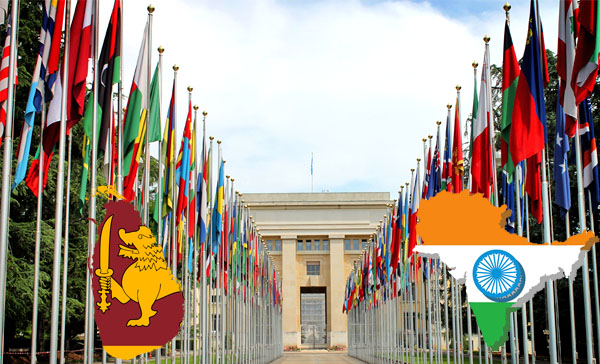
Geneva 2022 meltdown and the coming contradiction with India By Dr Dayan Jayatilleka

A young mother and her little daughter were walking away hand in hand, at a measured pace, from Galle Face, having participated in the protest on 9 October. The mother was taking a selfie while walking, her other hand holding her daughter. Suddenly the Police bellowed that she should be caught, and both she and her kid were grabbed, the mother being pushed to the ground with the child wailing while a crowd yelled at the police and tried to rescue the mother and daughter. All of it was on TV news. Life under the Ranil Presidency. Ranil has effectively ruled out a parliamentary election in March 2023 when he is constitutionally empowered to hold one. With no mandate whatsoever to do anything of the sort, he declared that elections have to be held under a new electoral system, for which purpose he would appoint a Parliamentary Select Committee and declare a referendum by June-July if it hadn’t arrived at a consensus. He also said that the long-postponed and promised Local Authorities elections would be held only after the system of local government –including the Pradesheeya Sabhas, the innovative 1991 grassroots legacy of President Premadasa—was drastically altered.

System suicide

The implementation of Ranil’s bucket-list of unmandated and therefore illegitimate changes would take years. This is a deadly dangerous attempt to defer elections, our sole systemic safety-valve, at all levels, perhaps open-endedly. (President announces raft of amendments to electoral system | Daily FT)

Meanwhile the Rajapaksas’ Rottweiler pet political party the SLPP, urges that the promised 22nd Amendment intended to partially reverse the tyrannical 20th Amendment—the symbol of which remains the catastrophic lunacy of the fertiliser ban and its continuing consequences—should be replaced on the agenda by Gotabaya’s draft Constitution (authored by the Romesh de Silva committee) enshrining the hyper-centralist 20th Amendment, dissolving devolution and bearing the explicitly Trumpian Alt-Right spirit of 2019-2020.

The brutal shrinking of space for peaceful protest, the blocking of democratising Constitutional reform and extinguishing hope of early electoral change – or any election at all on schedule—may be a strategy of polarisation aimed at goading the Aragalaya and Left youth into violent resistance, which would furnish the pretext to unleash the military as baying hounds are in a fox-hunt. A cold, cynical ploy at any time, in the context of a constricting IMF package and imminent global recession, it could be systemically suicidal.

Turfed out prematurely by two Presidents, CBK and Sirisena, for behaving as if he was the President while he was only the PM, Ranil Wickremesinghe now behaves as if he is an elected President with a popular mandate, when he is an unelected, stand-in, stop-gap President. There’s no President to turf him out, though. Only the sovereign people.

Colombo’s Geneva collapse

A pithy Sinhala expression notes that “when they can’t dance, they say the dance-floor is lop-sided”. Foreign Minister Sabry is wrong to depict the UN Human Rights Council as a dice loaded against Sri Lanka and in favour of the West. A few hours after Sri Lanka crashed and burned in Geneva, China won a vote in the same forum on a resolution moved against it on Xinjiang.

When the Institution-Building (IB) package, the UNHRC’s constitution as it were, was gavelled through on 18 June 2007 in a dramatic session where the chair, Mexico’s ambassador Luis Alfonso de Alba, stopped the clock because there was a deadlock (which the Council’s Asian Group helped resolve), I was the head of the Asian group and elected a Vice-President of the UNHRC the next day. The UNHRC is built on the principle of proportional representation. Every region gets a number of representatives in accordance with its proportion of the world’s population. This gives a built-in majority to Africa, Latin America and the Asia-Pacific, not the collective West (including its East European allies).

If as Minister Sabry alleges, Sri Lanka crumbled in Geneva on his watch chiefly because ‘the powerful West’ lobbied the capitals, how to explain the votes for the resolution by three governments of the democratic Left in three major countries of Latin America, prominent propellants of Pink Tide 2.0, namely Mexico, Argentina and Honduras, the leaders of which warmly congratulated Brazil’s Lula on his Round 1 victory over Jair Bolsonaro and are cheering him on for the run-off on 30 October? They never take their cue from the US-UK.

Consider also the Resolution of the US Senate Foreign Relations Committee. One of the signatories/drivers is Senator Patrick Leahy, hardly a hawkish advocate of an imperialist foreign policy. He is the leading and senior-most voice in the US legislature and American politics of normalised relations with Cuba. He also moved to restrict US military assistance to Sri Lanka. Cuba has accumulated considerable soft power, while Sri Lanka has been driven by successive governments into bankruptcy in that domain too.

Abstentions mean the countries concerned did not wish to vote for you or the other side—not that they tacitly support you. Most relevant is where those abstentions came from. Did they come from states that used to vote for us, or against us, or always abstained? In which direction did the shift take place?

Go back to the 2009 vote-count and you can see the trend beginning 2012, of states, indeed parts of continents, regions, that voted heavily for Sri Lanka, starting to peel off, even vote against, and hitting a nadir this year under the Ranil presidency. The critical consensus on Sri Lanka clearly transcends the Left/Right, liberal/conservative and North/South divides.

Since 2012 when we first lost a vote after our resolution was decisively carried in 2009, Sri Lanka in peacetime has either been losing in Geneva (2012, 2013, 2014, 2021, 2022) or capitulating in Geneva (2015, 2017, 2019) and losing elections at home. Not since the UNHRC May 2009 has a Sri Lankan policy stance been equally acceptable internationally and nationally.

Returning to the Ranil-Mangala ‘hybrid courts-foreign judges’ co-sponsorship of 2015-2017 is politically suicidal. A Georgia Meloni-type hyper-nationalist backlash will burn through that administration’s popularity.

Geneva paradox

Ponder the Geneva paradox: a week after a decisively massive use of hard power in May 2009 climaxing 30 years of civil war, Sri Lanka generated enough soft power to win more votes at the UNHRC than the West has ever secured for any of its Sri Lanka resolutions, but has voided itself of that soft power in peacetime.

Over the years, international scholars critically researching the dramatic, unexpected 2009 outcome identify and attribute it to Sri Lanka’s ‘discourse strategy’ at the UNHRC in 2007-9. This confirms Ernesto Laclau and Chantal Mouffe’s insistence on the strategic decisiveness in the final analysis of “a complex set of discursive-hegemonic operations” on the intellectual plane. (HSS, Laclau & Mouffe, 1985, p. 174-5)

However, the covert postwar agenda of the hawks in the military, Gotabaya and Basil Rajapaksa and currently Ranil-Rajapaksa-MoD rule, was and is the exact antipode of the fulfilment of President Mahinda Rajapaksa’s and the GR-BR-Lalith troika’s wartime pledges on devolution made to India, reiterated in Mahinda’s immediate postwar pledges to India and the UN Secretary-General.

Transposed to the UN-Geneva arena, the hawkish postwar project was contrary to the international consensus undergirding Sri Lanka’s broad bloc constructed by our ‘diplomacy of discourse’ in 2007-2009.

Thus, I was sacked six weeks after we won the Geneva vote, the successful ‘discourse-construction’ discontinued, the coalition-building strategy abandoned, the politico-diplomatic positioning displaced, the team dispersed and structures dismantled (notably Prof. Rajiva Wijesinha and the Peace Secretariat). Even when the defeats started piling up in Geneva from 2012, we were never re-deployed.

If as Minister Sabry alleges, Sri Lanka crumbled in Geneva on his watch chiefly because ‘the powerful West’ lobbied the capitals, how to explain the votes for the resolution by three governments of the democratic Left in three major countries of Latin America, prominent propellants of Pink Tide 2.0, namely Mexico, Argentina and Honduras, the leaders of which warmly congratulated Brazil’s Lula on his Round 1 victory over Jair Bolsonaro and are cheering him on for the run-off on 30 October? They never take their cue from the US-UK

Abrogating accord: Existential threat

The rollback of devolution, the 13th Amendment, Provincial Councils and the Indo-Sri Lanka Accord, constitutes the main axis of the postwar project of Sinhala-Buddhist hegemonism.

India is a pivotal power. For Sri Lanka, the support of India and China is both insufficient and imperative. ‘Insufficient’ because (thankfully) India, China and Russia cannot swing a victory for Myanmar at any UN forum. ‘Imperative’, because without both India and China, Sri Lanka can’t defend itself successfully in any global forum.

Sri Lanka didn’t lose India’s support; it forfeited it. The reason is clear from India’s explanation in Geneva this year. Sri Lanka hasn’t implemented the 13th Amendment and held elections to the Provincial Councils as pledged. Non-implementation of the 13th Amendment and continued freezing of elections to the Provincial Councils means that India is unlikely to vote for us, still less exercise its omni-directional influence to swing votes our way or neutralise the West. Many states take their cue from India in Asian matters.

Sri Lanka is teetering on the edge of a precipice of its relationship with India, a relationship ever more vital to this country at this moment of economic catastrophe. President Wickremesinghe is engaging in the high-risk gamble that he can trade-off chunks of economic real estate to Indian corporate interests while allowing the Sinhala hawks to carve out chunks of the historical habitat of the Tamil people in the North and East and unilaterally alter the area’s demography.

On 14 September 2022 the doyen of Tamil politics, R. Sampanthan, wrote to President Wickremesinghe on the dangerous designs being put into practice. Extracts follow:

“…I am also informed that certain proposals have been discussed to change District Secretaries and Divisional Secretaries areas in such a way as to severely distort historical habitation of land for generations and centuries by Tamils.

Under the Indo Sri Lanka Agreement, an international treaty, the Northern and Eastern provinces were accepted as areas of historical habitation of Tamil and Tamil speaking people.

I am now informed that in the Northern extremity of Trincomalee a larger chunk of land is said to be withdrawn from the Trincomalee District and replaced by a large piece of land from the Anuradhapura District in the North Central Province. Primary purpose of this is to rupture the linguistic contiguity of the Northern and Eastern Provinces.

A similar proposal is to be implemented in the south of the Trincomalee District bringing into the Eastern Province a large portion of land from the Polonnaruwa District whilst at the same time removing and attaching to the Polonnaruwa District a large block of land from the Trincomalee District Eastern Province.

This will result in the disruption of the maritime boundaries both to the North and South with the possibility of grave repercussions and grave consequences to the Trincomalee Harbour said to be the second best in the world.

Neither the Tamil speaking residents living in these areas nor our neighbor or closest countries would approve of this step. The whole objective of this is to extinguish the linguistic contiguity between the North and Eastern provinces on both North and South of Trincomalee District.

…The new proposal to bring land on the North from Anuradhapura from the North Central Province and on the South from Polonnaruwa in the North Central Province are all intended make the Sinhala people the majority in the Eastern Province, particularly a majority in the Trincomalee District. …Every one of the districts in the Northern and Eastern provinces is majority Tamil-speaking, and not a single District is majority Sinhala…”

Last week, M.A. Sumanthiran and Gajan Ponnambalam elaborated on this information in parliament. Sumanthiran’s sounds the siren:

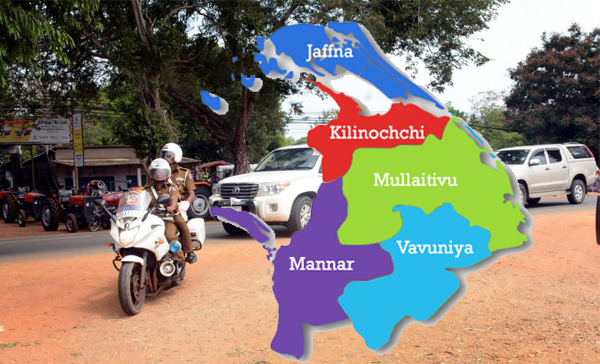
“…I am going to table a document marked “Confidential – for official purposes only”, but I have a copy with me and I am placing it responsibly here, by the Ministry of Irrigation dated 26th September 2022, signed by Roshan Ranasinghe – Minister of Irrigation, in which you are tampering with the divisions. How the villages in the South of Mullaitivu district are going to be dealt with, how you are changing the administration in such a way that you are meddling with the ethnic composition and seeking to change the ethnic composition.

You have been trying to do this for several decades, you actually changed substantially the population of the East, now you are concentrating on the North of the Eastern Province, the North of Trincomalee district, and the South–East of the Northern District, the South of Mullaitivu district, and you are trying to bifurcate that natural linguistic contiguity by which the North and East are connected, it’s one region, there’s a natural contiguity.

But by these efforts – gerrymandering, changing administrative boundaries – you are trying to break that contiguity. Now this has very serious repercussions and I am asking that the government immediately halt these efforts using special laws such as Mahaweli, special laws such as forest ordinance, special laws such as archaeology…to suppress an ancient community merely because we are smaller in number, to deprive us of the areas of our historic habitation, and that area in the joined North and East, and if you don’t stop it’ll be a further disaster for this country.”

Neither the President, the PM nor Minister has contradicted these serious charges levelled by parliamentarians Sampanthan and Sumanthiran. If true, it poses nothing less than an existential threat to the Tamil community of the area—under the ‘liberal’ President Ranil Wickremesinghe.

It also signals the deliberate de-facto abrogation of the Indo-Sri Lanka Accord of 1987 and the rollback of the entire Indian diplomatic effort on the Tamil issue since G. Parthasarathy Sr. India’s Foreign Minister, Dr. Jaishankar, an old Sri Lanka hand like his Cabinet colleague Hardeep Puri, will spot the ‘creating demographic facts-on-the ground’ strategy from the Israeli-inspired Lalith Athulathmudali playbook of the 1980s when Jayewardene was President and Ranil was in Cabinet.

Perhaps as in 1983, the regime’s plan is to provoke ethnic/ethno-regional/ethno-religious tensions, thereby sundering or marginalising the inclusive, pluralist anti-regime movement for democracy, human rights and socioeconomic fair-play.

However, the result may be that the largely Sinhala south will agitate against the economic selloffs while the Tamils of north and east will protest against cartographic subtraction, finally joining the Aragalaya or backing it with a second ‘P2P’.

Realism suggests that Tamil politics pragmatically adopts the terminology of the UNHRC resolution and the statements of India at the October 2022 session as the parameters of the possible.

Wickremesinghe or Premadasa?

Instead of the scheduled 22nd Amendment, Ranil presented his perspective on the economic situation to Parliament. The myth of his mastery of economic policy was shot full of holes—20 to be exact—by Opposition leader Sajith Premadasa.

Explicitly re-committing to a social democratic policy framework and a social market economy, Premadasa listed 20 lacunae/errors in Wickremesinghe’s economic framework, for each of which he presented his counter-policies. Criticising the reliance on economic shrinkage, he cautioned against its consequences and sketched a growth strategy with an equity component.

Sajith’s 20-point speech showcased a pragmatic, progressive-centrist macroeconomic intervention in the crisis, conceptually and intellectually superior to that of Ranil anyone on either side of the parliamentary aisle. It implicitly answered the question: “given the economic crisis, if not Ranil, who?”

In Hambantota, the Rajapaksa fiefdom, Sajith Premadasa’s SJB swept the Multi-Purpose Cooperative Society election, shrinking the SLPP to double-digits last week.


2,500 Jaffna families want to meet Prez over land issues

Over 2,500 families from Valikamam-North, Jaffna, in the Northern Province, have sought a discussion with President Ranil Wickremesinghe before January 2023, appealing to the President to take necessary steps to release their ancestral lands in Myliddy and Palaly.

Speaking to The Morning yesterday (12), Valikamam-North Resettlement Committee President Arunasalam Gunabalasingham noted that around 3,500 acres of lands under the control of the Security Forces are yet to be released to the public in Myliddy and Palaly.

“We appeal to President Wickremesinghe to provide us with the opportunity to meet him in person to explain our grievances. There are 700 fisherfolk families from Myliddy and around 2,000 families from Palaly to be resettled,” he added.

Gunabalasingham said that around 6,500 acres of land is under the control of the Security Forces since 1990, and that while around 3,500 acres were released during the period of the United National Front-led “good governance” Government, another 3,000 acres are yet to be released to the residents of Myliddy and Palaly. Gunabalasingham also noted that although 3,500 acres of lands are already released, some 500 acres out of it are still utilised by the Security Forces in Kankesanthurai, Keerimalai, Varuthalavilan, and Kattuvan.

“The Myliddy Harbour can be utilised by the fisherfolk for livelihood, and lands in Palaly can be utilised by the families who engage in agriculture, but only if the lands are released for resettlement. We appeal to the relevant authorities to release these lands to us in order to survive, since the economic crisis that has hit the entire country has affected us as well. We believe that we can strengthen our livelihoods if these lands are released,” he added.

He also noted that he had initiated a series of discussions with Minister of Fisheries Douglas Devananda in this regard.

“We have spoken to Devananda on various occasions, and now we hope to meet President Wickremesinghe along with the Northern Province MPs,” he added.

Posted in Uncategorized

9.6 million in Sri Lanka suffering from poverty?

A study has revealed that 9.6 million people of Sri Lanka are currently suffering from poverty, Prof. Wasantha Athukorala of the Department of Economics and Statistics at the University of Peradeniya says.

Commenting further, Prof. Athukorala pointed out that nearly 3 million people in the country lived below the poverty line in 2019, meaning that they were suffering from poverty.

“But it is clear to us that the figure has now increased to 9.6 million.”

The professor further emphasized that their study has revealed that 42 percent of the people living in Sri Lanka are currently suffering from poverty.

Recently a study carried out by the World Bank revealed that the poverty rate in Sri Lanka is about 26%, but it is clear that many more are actually living in poverty in the country, he added.

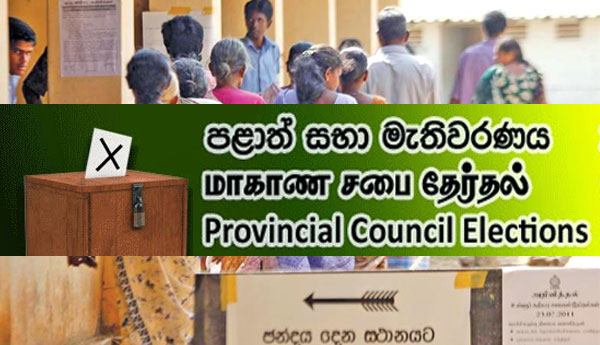
Election Commission slams moves to postpone PC Polls

The Election Commission yesterday (12) condemned the Government’s subtle attempts to postpone the Provincial Council (PC) elections and stated that it would soon take a decision on conducting the said polls before March of next year.

Election Commission Chairman Attorney Nimal Punchihewa, addressing the media yesterday, asserted that this has led to the public believing that the PCs are not operational, and that they yet receive resources allocated by the Government. He stated that the postponement of elections has led to a situation where the duties of public representatives are executed by officials of the PCs.

“PCs do exist and there are ministries that are regulated under them. The Government accordingly allocates financial and other resources to them. All these occur under the jurisdiction of one individual and that is the Provincial Governor. We do not approve of officials executing duties that have to be performed by public representatives. The PCs have not disappeared, but have been made to disappear by postponing the PCs elections, which were to be held in March this year, to 21 March of next year. The commission is entirely against postponing elections as such,” said Punchihewa.

Furthermore, he stated: “The commission has the legal authority to hold the elections, six months after the due date and accordingly, the commission has gained the right to announce the elections after 20 September. We are now confirming our electoral registry. If we do not confirm this, then it would contain the same names as the voter register from 2021 and if so, close to 250,000 youth voters would not be provided with their rightful opportunity to vote and the commission is therefore not willing to do that.

“Thus, considering all these factors, the commission will decide regarding holding these elections soon. Either way, the commission is determined to hold these elections before March of next year.”

In addition to this, the members of the “Nidahasa Janatha Sabha” engaged in a special discussion with Punchihewa at the commission premises yesterday. Addressing the media prior to the discussion, the group criticised the Government’s shortcomings in not holding the elections by the due date.

“These days, discussions regarding the elections are prevalent, so we came to discuss regarding the regulations of presenting oneself to these future elections,” said MP Prof. Charitha Herath who is a member of the said group.

Meanwhile, MPs Dr. Nalaka Godahewa and Prof. G.L. Peiris concurred with Prof. Herath. “Under the law, elections have to be held. We hope to conduct a thorough discussion regarding these elections with the Election Commission,” they stated.

IMF downgrades growth projections for Sri Lanka

The International Monetary Fund (IMF) yesterday announced a downgrade in Sri Lanka’s growth projections for 2023, expecting gross domestic product (GDP) to contract, as opposed to the previous expectation of the economy witnessing positive growth.

The IMF, in the World Economic Outlook report that puts the spotlight on countering the cost of living crisis, stated that Sri Lanka is expected to see its real GDP contract by 3 percent in 2023. By 2027, the country is expected to have a growth of 3.7 percent.

Earlier this year, the IMF projected the island nation’s GDP to grow by 2.7 percent.

The World Bank in its outlook earlier this month projected Sri Lanka’s real GDP to fall by 9.2 percent this year and a further 4.2 percent in 2023.

In its forecast, the Central Bank of Sri Lanka said that the economy is expected to dip by 8 percent in 2022 and growth is not likely to be witnessed until the second half of 2023.

The latest comprehensive Economic Outlook report did not show the breakdown of the forecast for Sri Lanka.

Certain projections for the country, for 2023-2027, were excluded from the publication, due to the ongoing discussions on sovereign debt restructuring, following the recently reached staff-level agreement on an IMF-supported programme.

For the emerging and developing Asian region, the IMF has projected the overall GDP to expand by 4.9 percent in 2023 and by 2027 to grow by 5.1 percent.

Global growth is forecasted to slow from 6.0 percent in 2021 to 3.2 percent in 2022 and 2.7 percent in 2023.

The IMF pointed out that this is the weakest growth profile since 2001, except for the global financial crisis and the acute phase of the COVID-19 pandemic and reflects significant slowdowns for the largest economies: a US GDP contraction in the first half of 2022, a euro area contraction in the second half of 2022 and prolonged COVID-19 outbreaks and lockdowns in China, with a growing property sector crisis.

“As storm clouds gather, policymakers need to keep a steady hand … More than a third of the global economy will contract this year or next,” said IMF Economic Counsellor Pierre-Olivier Gourinchas in the report. The three largest economies—the United States, European Union and China—will continue to stall. “In short, the worst is yet to come and for many people 2023 will feel like a recession,” he added. As crisis-stricken nations have been quick to adopt policies to help brave through the challenges and minimise the impact, Gourinchas pointed out that countries need to be careful in the decisions they take. While price controls, untargeted subsidies or export bans are fiscally costly and lead to excess demand, undersupply, misallocation, rationing and black-market premiums, he stressed that history has shown that they rarely work. “Fiscal policy should instead aim to protect the most vulnerable through targeted and temporary transfers,” said Gourinchas.