Difficult to compete with powerful nations in UNHRC – Ali Sabry

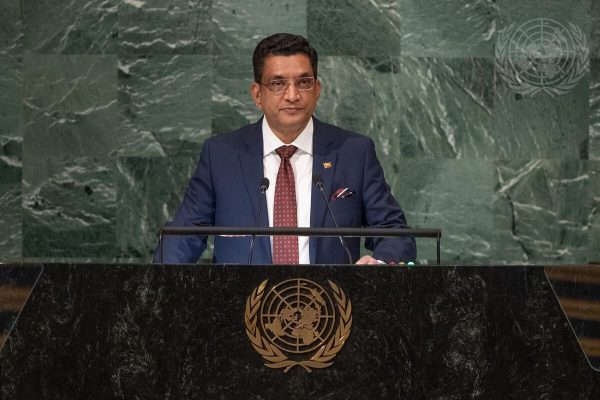
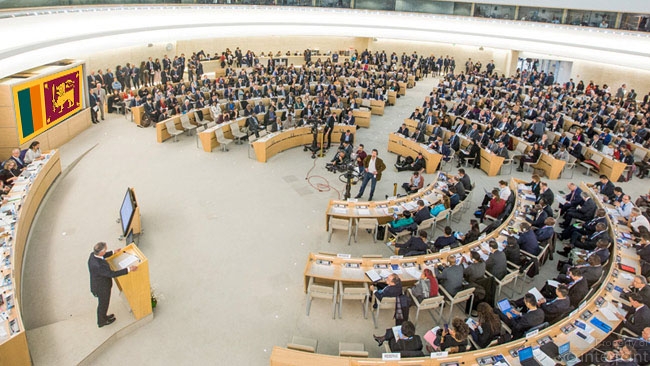
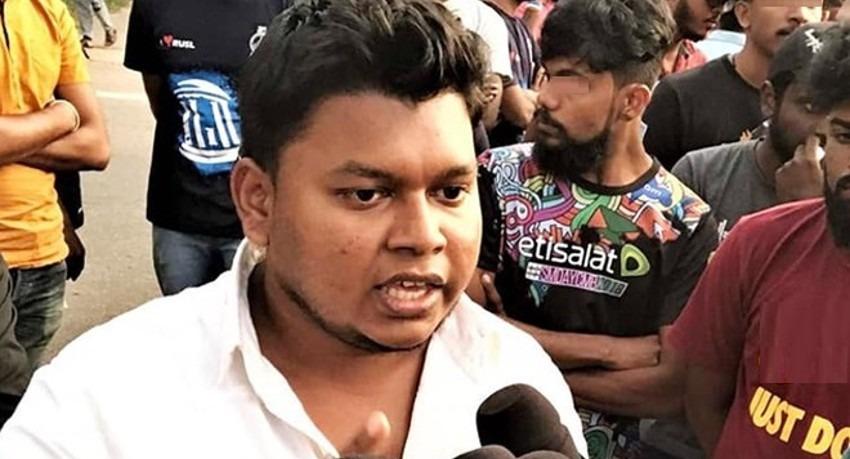
Ahead of the vote on the new UN resolution on Sri Lanka, Foreign Minister Ali Sabry says it is difficult to compete with powerful nations in the UN Human Rights Council (UNHRC).

However, whatever the vote result Sri Lanka will stand firm against the new UNHRC resolution, he said speaking to the media from Geneva.

The final draft of the new resolution on Sri Lanka was submitted to the 51st UNHRC session in Geneva today (05) along with the UN Human Rights High Commissioner’s report on the human rights situation in Sri Lanka.

The draft resolution, titled ‘Promoting reconciliation, accountability and human rights in Sri Lanka’ was initially sponsored by the Core Group on Sri Lanka including the UK, US, Germany, Canada, Malawi, Montenegro and North Macedonia.

It has now been signed also by Albania, Australia, Austria, Belgium, Canada, Czechia, Denmark, Estonia, Finland, France, Germany, Iceland, Ireland, Latvia, Liechtenstein, Lithuania, Luxembourg, Marshall Islands, the Netherlands, New Zealand, Norway, Slovakia and Sweden.

The resolution, Promoting reconciliation, accountability and human rights in Sri Lanka, will be voted this week at the UN Human Rights Council in Geneva.

The draft requests the Office of the High Commissioner for Human Rights to enhance its monitoring and reporting on the situation of human rights in Sri Lanka, including on progress in reconciliation and accountability and on the human rights impact of the economic crisis and corruption.

The office has also been requested to present oral updates to the Human Rights Council at its 53rd session and 55th sessions and a written update at its 54th session and a comprehensive report that includes further options for advancing accountability at its 57th session in 2024.

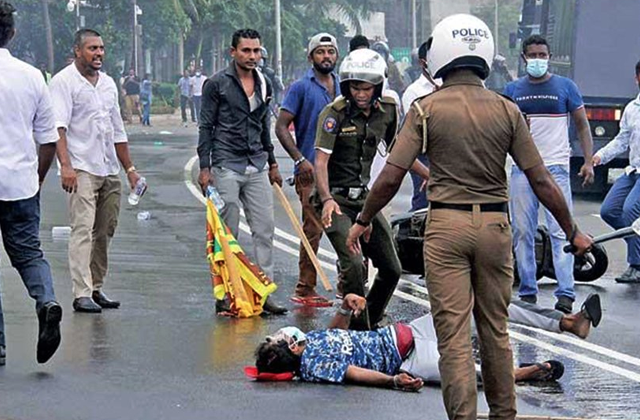
The new resolution also expresses concern over the human rights developments since April 2022 including violence against and arrests of peaceful protesters as well as violence against government supporters, resulting in deaths, injuries, destruction and damage to houses of MPs.

The resolution has also sought to extend and reinforce the capacity of the Office of the High Commissioner to collect, consolidate, analyse and preserve information and evidence and to develop possible strategies for future accountability processes for gross violations of human rights or serious violations in Sri Lanka.

On October 6, there will be a vote in the UN Human Rights Council (UNHRC) on the resolution on the human rights situation in Sri Lanka. However, Sri Lanka is expected to lose the vote as it did in March 2021.

Posted in Uncategorized

Sri Lanka is expected to lose the UNHRC vote but the resolution will be pointless By P.K.Balachandran

On October 6, when there is voting in the UN Human Rights Council (UNHRC) on a resolution on the human rights situation Sri Lanka, the island nation is expected to lose the vote as it did in March 2021.

But, as seen earlier, the resolution is expected to be infructuous with no follow-up action taking place.

The reason for the continuous stalemate in regard to the implementation of UNHRC resolutions is that the issues taken up by Council and the forces ranged against each other in the Council, reflect geopolitical impulses rather than a genuine interest in the establishment of human rights in Sri Lanka (or any other country for that matter).

Indeed, the UNHRC appears to be just another international arena for playing big-power politics. The teams put together by the big powers reflect existing geopolitical lineups. While the West (the US-led “Core Group”) arm-twists Sri Lanka to tow its geopolitical line (vis-à-vis China), China, Russia and other countries that are at odds with the US, support Sri Lanka. India has its own complex geopolitical axe to grind. It tries to achieve its aims by “abstaining”. Abstention sends out mixed signals to Sri Lanka. On the one hand, India gives a lot of financial and material aid to Sri Lanka, but on the other hand, by not voting for it at the UNHRC, it conveys the message that Sri Lanka should abide by New Delhi’s political and geostrategic wishes viz., implement its plan for devolution of power to the Tamil areas and keep China at bay.

The balance of power in the UNHRC is generally in favor of the West. But this does not really matter to Sri Lanka because no follow-up action ensues from its resolutions. It was only once, in 2010, that the EU withdrew its GSP Plus trade concession. But even that was restored in 2017 supposedly because Sri Lanka had “ratified and implemented measures contained in a number of international conventions on human and labor rights, environment protection and good governance.” But the fact was that there had been no improvement in the rights situation by the yardstick of the UNHRC. The real reason for the restoration was to prevent Sri Lanka from going closer to China.

Sri Lanka lost the March 2021 vote. Out of the 47 members, 22 voted in favor, 11 against and 14 abstained on a resolution empowering the UN to collect and store information that could lead to international criminal proceedings. India, Nepal and Japan abstained while China, Russia, Pakistan and Bangladesh supported Sri Lanka. Currently, Bangladesh is not a member.

The October 2022 draft resolution has been sponsored by 26 countries including ten Council members. It has the same objective of empowering the UN to collect and store information that could lead to international criminal proceedings. It calls for the extension and reinforcement of the Office of the High Commissioner “to collect, consolidate, analyze and preserve information and evidence and to develop possible strategies for future accountability processes for gross violations of human rights or serious violations of international humanitarian law in Sri Lanka.”

However, Sri Lanka is belligerent and will ask for a vote. One of its aims is to show the futility of censure. Sri Lanka’s Foreign Minister Ali Sabry told the Council that the draft resolution providing for an external judicial process is against the Lankan constitution. He also said that “economic crimes”, included in the list of charges this time, are outside the purview of the UNHRC and therefore inadmissible.

Sabry said that Sri Lanka cannot agree to “an outside evidence gathering mechanism and the long-term prosecution of the Sri Lankan armed forces outside Sri Lanka.” He added that if crimes were committed, they must be prosecuted in Sri Lanka (though the domestic commissions and judicial mechanisms to ensure accountability have proved to be ineffective). “Whether we win or lose, there are things on which we cannot compromise,” he declared.

UNHRC resolutions are non-binding. The Council cannot impose any sanctions. However, the UN will have an office with an annual budget of US$ 2.8 million to collect information about war crimes and crimes against humanity committed in Sri Lanka, which is expected to be the Sword of Damocles hanging over its head.

Carrot and Stick Policy

Even as they bring resolution after resolution condemning Sri Lanka, Western nation have not flinched from helping Sri Lanka and supporting its governments. Recently, USAID said that it will provide an additional US$ 65 million in assistance over a five-year period. The assistance falls under the Development Objectives Assistance Agreement (DOAG). This funding is in addition to over US$ 60 million of new humanitarian and fertilizer assistance that Administrator Samantha Power announced in response to the current economic and political crises in Sri Lanka.

At the G7 Summit in June 2022, President Biden announced US$ 20 million in additional assistance to strengthen food security in Sri Lanka. Building on other recent funding announcements from the United States, this newly posted assistance will target Sri Lankans most in need during the current economic crisis. The funding aims to support a school nutrition program that will feed over 800,000 Sri Lankan children and provide food vouchers for over 27,000 pregnant and lactating women over the next 15 months. The U.S. government also announced a third tranche of new funding to address the immediate needs of people hardest hit by the economic crisis in Sri Lanka. This humanitarian assistance, totaling US$ 5.75 million, will provide cash assistance, short-term jobs, and agriculture supplies such as seeds directly to crisis-affected people to meet their basic needs.

US is also collaborating with Sri Lanka in the field of defense. The Offshore Patrol Vessel P 627, which was formally handed over to the Sri Lanka Navy by the US Coast Guard in October 2021, recently departed for Sri Lanka from the Port of Seattle.

The UK too is helping Sri Lanka manage the economic crisis. The UK is providing £3 million of lifesaving support to the most vulnerable and will continue to work with international partners to help crisis-ridden Sri Lanka.

The West is expected to carry on with its carrot and stick policy to bring Sri Lanka under its control so that the island nation stops its lurch towards China.

China too has adopted the carrot and stick policy to keep Sri Lanka under its thumb. Realizing that Sri Lanka needs its money, Beijing closed the financial tap during the 2022 financial crisis to punish Sri Lanka for approaching India and the IMF for help without taking it into confidence. But China has now come back with some aid if only to counter Indian aid of US$ 4 billion and the possibility of an IMF bailout following the conclusion of a Staff level agreement between Sri Lanka and the IMF.

The Chinese government has announced that it will provide a total of US$ 74.2 million in emergency humanitarian aid to Sri Lanka to help the country cope with its current difficulties. In July, 1000 tons of rice arrived. China has now said it would supply 70% of uniforms for school kids.

Given Sri Lanka’s critical geopolitical location, neither the West, nor India nor China, can afford to lose its goodwill and cooperation. And the method adopted to achieve this objective is also the same, namely, using the carrot and the stick.

Final draft of resolution on Sri Lanka submitted to UNHRC

The Core Group at the United Nations Human Rights Council has produced a 19-point resolution on Sri Lanka.

This is a draft resolution and it has received the support of thirty other countries Albania,* Australia,* Austria,* Belgium,* Bosnia and Herzegovina,* Bulgaria,* Canada,* Croatia,* Cyprus,* Czechia,* Denmark,* Estonia,* Finland, Germany, Greece,* Iceland,* Ireland,* Italy,* Latvia,* Liechtenstein,* Lithuania, Luxembourg, Malawi, Malta,* Montenegro,* Netherlands, New Zealand,* North Macedonia,* Norway,* Portugal,* Romania,* Slovakia,* Slovenia,* Sweden,* Switzerland,* United Kingdom of Great Britain and Northern Ireland and United States of America.

The draft resolution noting with appreciation the work of the Office of the United Nations High Commissioner for Human Rights towards the promotion and protection of human rights and truth, justice, reconciliation and accountability in Sri Lanka, has made the following 19-points.

1.Welcomes the oral update presented by the United Nations High Commissioner for Human Rights to the Human Rights Council at its forty-ninth session and the report of Office of the United Nations High Commissioner for Human Rights presented to the Council at its current session;

2.Also welcomes the engagement of the Government of Sri Lanka with the Office of the High Commissioner and the special procedures of the Human Rights Council, encourages the continuation of such engagement and dialogue, and calls upon Sri Lanka to implement the recommendations made by the Office and to give due consideration to the recommendations made by the special procedures;

3.Expresses concern at the human rights impact of the economic crisis, including as a result of increased food insecurity, severe shortages in fuel, shortages in essential medicines and reductions in household incomes, while stressing the need to promote and protect the rights of the most marginalized and disadvantaged individuals, including daily wage earners, women, children, older persons and persons with disabilities;

4.Also expresses concern at other human rights developments since April 2022, including violence against and the arrests of peaceful protestors, as well as violence against government supporters, resulting in deaths, injuries, destruction and damage to the houses of members of Parliament, and stresses the importance of independent investigations into all attacks and that those found responsible be held to account;

5.Stresses the importance of protecting civilian government functions from militarization and of addressing the independence of the judiciary and key institutions responsible for the promotion and protection of human rights and fundamental freedoms; the grievances and demands of Tamil and Muslim populations; prolonged internal displacement; land disputes; the surveillance, intimidation and harassment of journalists, civil society activists, human rights defenders, families of disappeared persons, and persons involved in memorialization initiatives; and of combating sexual and gender-based violence;

6.Also stresses the importance of a comprehensive accountability process for all violations and abuses of human rights committed in Sri Lanka by all parties, including those abuses by the Liberation Tigers of Tamil Eelam;

7.Notes the persistent lack of independent, impartial, and transparent domestic mechanisms, and stresses the importance of ensuring investigations into, and accountability for, grave violations of human rights;

8.Recognizes the importance of preserving and analysing evidence relating to violations and abuses of human rights and related crimes in Sri Lanka with a view to advancing accountability, and decides to extend and reinforce the capacity of the Office of the High Commissioner to collect, consolidate, analyse and preserve information and evidence and to develop possible strategies for future accountability processes for gross violations of human rights or serious violations of international humanitarian law in Sri Lanka, to advocate for victims and survivors, and to support relevant judicial and other proceedings, including in Member States, with competent jurisdiction;

9.Notes the initial outreach of the Government of Sri Lanka to overseas persons of Sri Lankan origin encompassing all communities and generations, and encourages the Government to engage further in a broad-based consultative process with stakeholders from all affected communities and to provide remedies to achieve meaningful reconciliation, devolution of political authority, an improved situation of human rights, and lasting peace;

10.Urges the Government of Sri Lanka to foster freedom of religion or belief and pluralism by promoting the ability of all religious communities to manifest their religion, and to contribute openly and on an equal footing to society;

11.Also urges the Government of Sri Lanka to take measures to address the marginalization of and discrimination against persons from the Muslim community, and to ensure that Muslims and members of other religions are able to continue to practice their own religious rites, including burial rites;

12.Calls upon the Government of Sri Lanka to ensure the prompt, thorough and impartial investigation and, if warranted, prosecution of all alleged crimes relating to human rights violations and serious violations of international humanitarian law, including for long-standing emblematic cases, with the full participation of victims and their representatives;

13.Also calls upon the Government of Sri Lanka to address the ongoing economic crisis, including by investigating and, where warranted, prosecuting corruption, including where committed by public and former public officials, and stands ready to assist and support independent, impartial and transparent efforts in this regard;

14.Stresses the importance of the effective and independent functioning of the Office on Missing Persons and the Office for Reparations, while noting that the tangible results expected by victims and other stakeholders are yet to be achieved, including resolving the many cases of enforced disappearance so that the families of disappeared persons can know their fate and whereabouts, and also the importance of the effective and independent functioning of the Human Rights Commission of Sri Lanka;

15.Calls upon the Government of Sri Lanka to protect civil society actors, including human rights defenders, to investigate any attacks and to ensure a safe and enabling environment in which civil society can operate free from hindrance, surveillance, insecurity and threat of reprisals;

16.Notes the introduction in March 2022 of amendments to the Prevention of Terrorism Act, that detentions under that law continue, and the expressed intention of the Government of Sri Lanka in this regard to introduce new legislation on combating terrorism, and encourages the Government to engage in consultations with civil society, the Office of the High Commissioner and relevant special procedure mandate holders in the preparation of new legislation, in order to ensure that any legislation on combating terrorism complies fully with the State’s obligations arising from international human rights law and international humanitarian law;

17.Notes with appreciation the continued engagement of the Government of Sri Lanka with the special procedures of the Human Rights Council, and encourages the Government to continue that cooperation, including by responding formally to outstanding requests from them;

18.Encourages the Office of the High Commissioner and relevant special procedure mandate holders to provide, in consultation with and with the concurrence of the Government of Sri Lanka, advice and technical assistance on implementing the above-mentioned steps;

19.Requests the Office of the High Commissioner to enhance its monitoring and reporting on the situation of human rights in Sri Lanka, including on progress in reconciliation and accountability, and on the impact of the economic crisis and corruption on human rights, and to present an oral update to the Human Rights Council at its fifty-third and fifty-fifth sessions, and a written update at its fifty-fourth session and a comprehensive report that includes further options for advancing accountability at its fifty-seventh session, both to be discussed in the context of an interactive dialogue.


Over Rs. 300 b in value wiped out of Colombo stock market

An about-turn in investor sentiment forced the Colombo stock market to suffer continuous setbacks yesterday including a trading halt, though turnover improved.

In the first two days of trading, CSE has seen Rs. 324 billion in value wiped out, increasing the year-to-date dip in market capitalisation to 27% to Rs. 4.01 trillion from Rs. 4.34 trillion (down 21%) as of Friday last week.

The active S&P SL20 Index finished the day losing 5.7% or over 173 points whilst the benchmark ASPI dipped by over 4% or 413 points which NDB Securities described as the highest-day-loss in 23 weeks.

On Monday the intraday loss hit a five-month high of 281 points reflecting an “ominous” start for October after the CSE had enjoyed three consecutive months of gains.

Turnover improved to Rs. 4.5 billion from Rs. 2.5 billion on Monday. Share volume was 188.2 million as against 125 million on Monday.

Asia Securities said the market continued to witness heavy retail selling pressure leading to a sharp drop in both key indices. The decline in the S&P SL20 index triggered the 5% circuit breaker for a second consecutive session, resulting in a 30-minute trade halt in early trading. After the halt was lifted, the market saw an immediate pickup, however recovery momentum fizzled out subsequently as retail selling returned in heavyweight stocks.

EXPO ended as the biggest dragger on the ASPI (-47 points), followed by LIOC (-44 points), VONE (-32 points), HAYL (-25 points), JKH (-21 points), and SAMP (-19 points).

Turnover was led by LIOC (Rs. 1,412 million), EXPO (Rs. 448 million), ACL (Rs. 273 million), and DPL (Rs. 259 million). Among actively trading counters, LIOC (-13.7%), EXPO (-11.4%), ACL (-8.4%), LOFC (-6.0%), CICN (-4.2%), CICX (-7.1%), HAYL (-6.1%), and RICH (-6.2%) closed with sharp losses for the day.

Asia also said foreigners recorded a net inflow of Rs. 21.5 million with net buying most in MELS at Rs. 9.9 million and selling in BIL at Rs. 4.9 million.

First Capital said negative sentiment extended yet another day as the market plunged further into red amidst major panic selling which dragged down the overall investor sentiment.

As a result, the market halted within the first few minutes of the trading as the S&P SL20 index fell by 5.0% from the previous close. After the resumption, index witnessed a gradual recovery yet failed to hold its position as profit booking lingered.

NDB Securities said high net worth and institutional investor participation was noted in Dankotuwa Porcelain, LOLC Finance and CIC Holdings. Mixed interest was observed in Lanka IOC, Expolanka Holdings and ACL Cables whilst retail interest was noted in SMB Leasing (voting and nonvoting), Browns Investments and Renuka Agri Foods.

Energy sector was the top contributor to the market turnover (due to Lanka IOC) whilst the sector index lost 13.03%. The share price of Lanka IOC decreased by Rs. 37.50 (13.70%) to close at Rs. 236.25.

The Capital Goods sector was the second highest contributor to the market turnover (due to ACL Cables) whilst the sector index decreased by 4.90%. The share price of ACL Cables moved down by Rs. 9.05 (8.36%) to close at Rs. 99.20.

Expolanka Holdings, Dankotuwa Porcelain and LOLC Finance were also included amongst the top turnover contributors. The share price of Expolanka Holdings lost Rs. 22.50 (11.41%) to close at Rs. 174.75. The share price of Dankotuwa Porcelain recorded a gain of Rs. 1.50 (5.79%) to close at Rs. 27.40. The share price of LOLC Finance declined by 50 cents (6.02%) to close at Rs. 7.80.

Posted in Uncategorized

India’s ICRA exits Sri Lanka

The second largest credit rating agency in Sri Lanka, ICRA Lanka Limited (ICRA Lanka), has decided to cease operations, a senior company official told Finance Today.

“We will cease operations within the next month” he said. He claimed that the poor state of Sri Lanka’s economy is primarily to blame.

ICRA Lanka is a fully owned subsidiary of ICRA Limited (ICRA) of India. The company was granted a license by the Securities and Exchange Commission of Sri Lanka (SEC) in May 2011.

The ultimate parent company of the international credit rating agency, Moody’s Investors Service, is ICRA’s indirect majority shareholder.

It is also claimed that the parent company’s ownership shift in India also resulted in the shutdown of its activities in Sri Lanka. Moody’s Investors Service also expressed concerns about the company’s activities in Sri Lanka, citing the country’s unpredictable economic environment.

Around 75 leading corporates in Sri Lanka, including Hayleys PLC and Softlogic Holdings PLC, were obtaining credit and debt rating services from ICRA Lanka. Commercial banks such as Bank of Ceylon, People’s bank and NSB and non-bank financial institutes were among them.

According to reports, Lanka Rating Agency Limited (LRA), a local credit rating agency, is attempting to regain their clients following the closure of ICRA Lanka. ICRA Lanka was also supported by a Technical Services agreement with ICRA, wherein the parent company provides operational support and resources.

Fitch Ratings is Sri Lanka’s leading credit rating agency.

Posted in Uncategorized

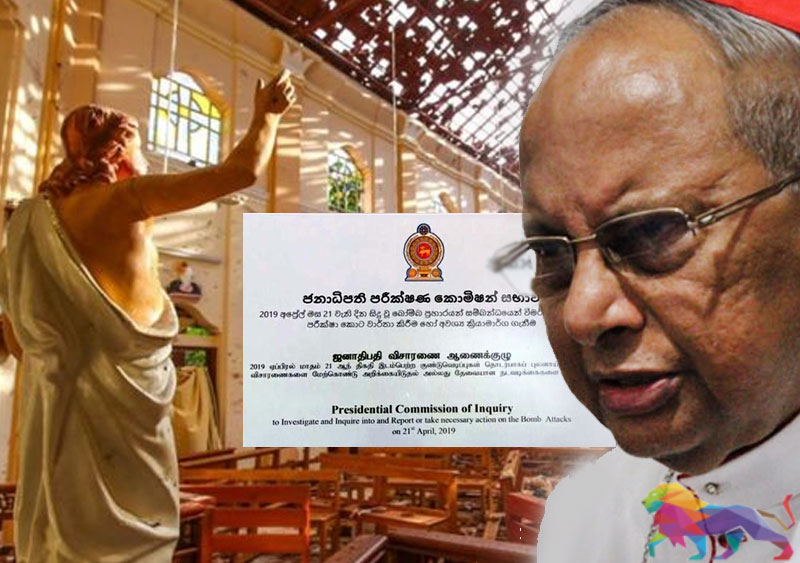
Concerns over security of Sri Lanka’s Cardinal Ranjith

A Catholic parliamentarian has expressed concern over the security cover provided to Cardinal Malcolm Ranjith amid claims of a renewed threat.

State Minister of Defence Premitha Bandara Tennakoon said he was not aware of any threat to the head of the nation’s Catholic Church but assured to look into the matter in response to a question raised by the opposition in Parliament on Oct. 3

The issue was raised by Kavinda Jayawardane, a Catholic parliamentarian belonging to the Samagi Jana Balawegaya (SJB) party.

He alleged that the government has reduced the security of Cardinal Ranjith and demanded an investigation into the matter.

A group of commandos and army personnel provide security to the cardinal ever since the Easter Sunday attacks on churches and hotels in 2019.

A senior priest from the archdiocese of Colombo said there could be a renewed threat to Cardinal Ranjith’s life as he has been vocal on investigations into the Easter Sunday attacks and justice for the victims.

The priest said that a sub-unit of the army under a captain and trained commandos were deployed for his protection.

“It seems to us that the security of the commandos is currently not available at the Archbishop’s house,” he said on the condition of anonymity.

The priest said about six army soldiers continue to be deployed at the main gates of the Bishop’s House in Colombo. In addition, military personnel also provide cover around the premises, he added.

There was tighter security earlier, in 2019 and 2020, with even the employees kept under a strict watch, their entry and exit movements monitored carefully

“A separate security team with a vehicle is deployed for the cardinal’s security for the public events he participates in regularly,” the priest said.

Cardinal Ranjith has been lending his voice to the resolution of the social and economic woes of Sri Lankans. He has been particularly vocal on behalf of the Easter attack victims.

Just last week, the prelate urged the Elections Commission to hold the local council elections by March 2023.

Speaking at a religious event at the Sacred Heart Church in Ragama, Cardinal Ranjith said that an election would give the people an opportunity to send a message to the government democratically.

If India wants to support SL, it must back UN probe – Human Rights Watch

Human Rights Watch said that If India wants to support Sri Lankans, it must back extension of UN panel probing rights violations.

Meenakshi Ganguly, the South Asia Director for Human Rights Watch said that the recent protests, although sparked by the economic crisis, reflected a more united call for good governance and accountability.

She noted that many Sri Lankans seek constitutional reform and steps to address corruption. But this will need international support and action.

A resolution currently before the United Nations Human Rights Council extends the mandate of a UN project to gather and analyse evidence of war crimes and other crimes under international law that have been committed in Sri Lanka and to prepare the evidence for use in possible future prosecutions.

It also mandates the United Nations to continue monitoring and reporting on the country’s economic and social rights crisis.

The Human Rights Watch said that in order to support Sri Lankans who are calling for change and accountability, it is essential for India and other members of the Council to support the resolution.

Posted in Uncategorized

Sri Lanka: Human Rights Compliant Recovery Measures Critical

Amnesty International says that human rights compliant recovery measures are critical to stop spiraling hunger and poverty in Sri Lanka.

Amnesty International said in a new report on Tuesday (4) that the Sri Lankan authorities and the international community must fully incorporate human rights into their responses to the country’s economic crisis, as people in the country face serious concerns around access to healthcare while being driven to the brink of starvation, widespread malnutrition, and deep poverty.

The report, “We are near total breakdown”: Protecting the rights to health, food and social security in Sri Lanka’s economic crisis, explores the catastrophic impact of the crisis on the economic and social rights for the people of Sri Lanka.

It added that the Sri Lankan authorities and donor States must ensure that they meet their obligations under international human rights law by safeguarding the rights to health and adequate food in all aid agreements.

The government of Sri Lanka and international financial institutions must also conduct human rights impact assessments before implementing economic reforms; it remains unclear as to whether these have been or will be conducted.

SJB fears for life of IUSF convener taken out of prison at night

The main Opposition Samagi Jana Balavegaya yesterday, in Parliament, said that the life of Inter University Students’ Federation Convenor, Wasantha Mudalige, in custody, was in danger.

Chief Opposition Whip and Kandy District MP Lakshman Kiriella said that Mudalige had been taken out of the prison by the law enforcement authorities stating that he could lead them to show the locations he had mentioned during interrogations. “We have information that Mudalige has been taken out of the detention centre several times at night.

We know what happened to the inmates taken out by the police. Most of them were shot dead and some lame excuses were trotted out. We fear that Mudalige, too, will suffer the same fate.”

State Minister of Defence Pramitha Bandara Tennakoon responded saying that investigations conducted under the Prevention of Terrorism Act (PTA) could not stop.

Tennakoon said that suspects had been detained on a court order and they were taken to some places as part of the investigations.

Chief Opposition Whip Kiriella said Mudalige, the Inter University Bhikkhu Front Convener Galwana Siridhamma Thera, and student activist Hashan Gunatilake, had been in detention for over 45 days.

Another Peradeniya University student goes missing

Peradeniya Police stated that another fourth -year undergraduate of the Engineering Faculty of the Peradeniya University had gone missing since 2 October.

An officer from the Peradeniya Police stated that the student concerned, who had resided at the University Hostel, had gone out of the Campus premises at around 8 p.m. on the said date and since then his whereabouts had become unknown.

Police added that the missing student, indentified as 25-year-old Pulasthi Perera, had even written a letter before leaving the University premises and had mentioned that he was leaving the Campus for a certain period due to depression.

The student is a resident of the Ganemulla area and the University authorities had lodged a complaint with the Police on his disappearance yesterday.