SL debt to China close to 20% of public external debt-Study

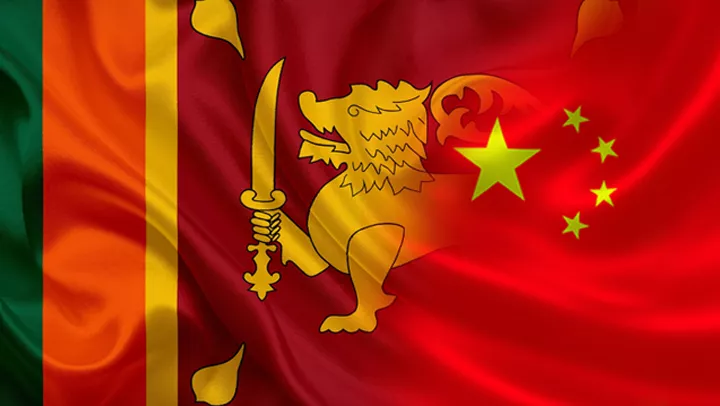
Sri Lanka owed Chinese lenders USD 7.4 billion – nearly a fifth of its public external debt – by the end of last year, calculations by the China Africa Research Initiative (CARI) published on Wednesday showed, an estimate higher than many others.

The figure was above the “often-quoted 10 to 15 percent figures,” the study said, adding a “significant portion” of the country’s debt to China had been recorded under lending to state-owned enterprises rather than central government.

Crisis-hit Sri Lanka is in the midst of a debt restructuring after years of economic mismanagement combined with the COVID-19 pandemic saw the country plunge into the worst economic crisis since independence from Britain in 1948 and tip into default.

Export-Import Bank of China (EximBank) and China Development Bank are the two largest Chinese lenders, accounting for $4.3 billion and $3 billion respectively, according to the data collected by CARI at the Johns Hopkins University School of Advanced International Studies.

China is Sri Lanka’s largest bilateral creditor and, with India and Japan, part of official creditor talks to restructure the country’s debt.

“China will have to play a major role in Sri Lanka’s debt restructuring process,” CARI researchers Umesh Moramudali and Thilina Panduwawala wrote in the report.

The island nation kicked off talks with bilateral creditors in September after securing a staff level agreement of $2.9 billion with the International Monetary Fund. But financing will not flow until the fund’s board approves the deal, a step that requires financial assurances from bilateral lenders.

The latest talks initially expected earlier this month were postponed, casting doubt over how fast the debt rework can progress.

The island nation’s total external debt is $37.6 billion, according to the report. Adding central bank foreign currency debt, including a $1.6 billion currency swap with China, public external debt rises to $40.6 billion, of which 22% is from Chinese creditors.

CARI’s total debt numbers differ from the $46.6 billion tally published by the government in September as it excludes local hard-currency debt and loans to some state-owned enterprises.

The CARI study also identified six different loans to the deep water port in Hambantota from EximBank between 2007 and 2013 for around $1.3 billion. The loan agreements have clauses that “submit the loans to Chinese governing law and arbitration before the China International Economic and Trade Arbitration Commission”.

Reuters
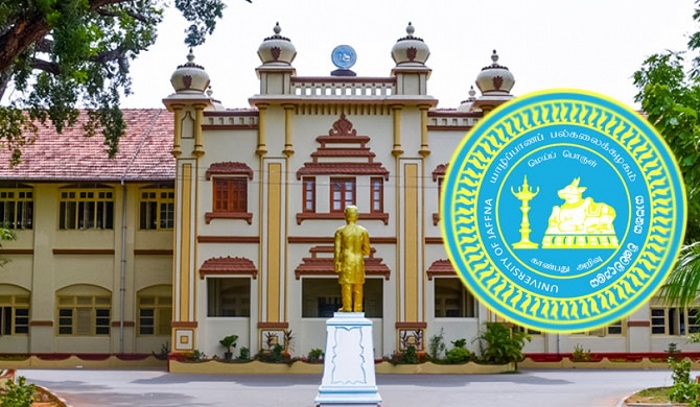
Jaffna Uni VC refuses to sign Chinese MoU

Jaffna University Vice Chancellor Sivakolundu Srisatkunarajah has refused to sign a Memorandum of Understanding (MoU) between China’s State Agricultural University and University of Jaffna on 25 November, saying that the MoU has the hidden agenda of China to grab fertile lands under the pretext of development projects in the North and East, and the Students’ Union of University of Jaffna has appealed to the Government not to sign MoUs with China against the will of the people.

In an official statement on 28 November, the Students’ Union expressed shock that a “secret arrangement was made to sign an MoU strongly supported by the Government of Sri Lanka.”

The Students’ Union expressed gratitude to their Vice Chancellor for refusing to sign the MoU.

The statement further notes that China directly and indirectly grabbed large chunks of sea areas under the pretext of promoting sea cucumber farms and created divisions among their fishermen.

“Now, China is eyeing to grab the fertile agricultural lands in the North and East with a malicious calculation to manage a severe food crisis which seems imminent in China in ten years. China allegedly supplied faecal matter with harmful bacteria as fertiliser to Sri Lanka and compelled Sri Lanka to pay millions of rupees. This is a classic example of how China will grab our fertile agricultural lands and enslave us to manage the upcoming food crisis in China.”

It further notes that it is clear that Sri Lanka has fallen into the present situation through non-transparent and unsustainable Chinese loans. Even in present negotiations for resettlement of loans, though Japan and India have supported Sri Lanka’s IMF plans, China has been persistent in its proposal for refinancing rather than restructuring with hidden agendas resulting in disaster later on has been clearly visible in Sri Lanka’s recent history with China.

Based on the approach of China, they said, they suspect that the Sri Lankan Government has already made secret deals with China to sell the fertile agricultural lands and the seas in the North and East to China.

By Sulochana Ramiah Mohan

SLPP backs devolution for economic growth, not ethnicity, religion

The ruling Sri Lanka Podujana Peramuna (SLPP) noted that it, as a party, is pro-devolution, but that power should be devolved to the people for the economic development of their locales, and not for the purpose of, nor based on, their ethnicity or religion.

Speaking to The Morning, SLPP General Secretary MP Sagara Kariyawasam emphasised yesterday (29) that his party has always been pro-devolution, but that the said devolution should be provided for development, and not for ethnicity or religion-based purposes.

“We have always been a party that is pro-devolution. What we say is that devolution should be given to the people for their development. The units have to be identified not based on their ethnicity or their religion, but based on the economic development of their areas,” he added.

When queried by The Morning as to whether his party would support 13-plus (a reference to going beyond the 13th Amendment to the Constitution in terms of the devolution of power) as agreed to by MP Mahinda Rajapaksa in Parliament last week, Kariyawasam noted: “If President Ranil Wickremesinghe invites us, we will certainly be participating. Former President Rajapaksa is the party leader. He will not say anything against the party’s stance.

“The party has still not met on this. We have to meet on this and have a discussion once we receive an invitation from the President. As a party, our stance has been even when we were in the Sri Lanka Freedom Party, to support devolution. We are the party that has always said that devolution should carry forward until the lowest unit. Devolution should be there and it should go to the grassroots level, not to a particular ethnic or religious group. We have been very clear about that right from the beginning.”

Kariyawasam also said that each Local Authority consists of small electoral units and that power should be given even to such units.

“If somebody is trying to devolve power based on the language that they speak or the religion that they practice, that is something that has never been done anywhere in the world. Such may lead to economic or social development, but will alos create more problems,” he added.

When queried regarding the SLPP’s stance on the Police and land powers being devolved under the already existing 13th Amendment to the Constitution, he added: “That has to be discussed very deeply. The situation varies. Earlier, we were a country where a separatist group waged war against the Government to divide the country. In such a situation, it cannot be condoned. But currently, we have to assess and analyse the present situation in order to make a decision.”

Meanwhile, the Tamil National Alliance and certain other Tamil political parties aligned with similar political ideas had taken up the stance that a federalism-based solution to the national ethnic issue would be suitable through a new Constitution.

Accordingly, President Wickremesinghe last week invited all political parties in the Parliament for discussions to solve the ethnic issue following the Budget.

Posted in Uncategorized

How the economic crisis has hurt the Hill Tamils

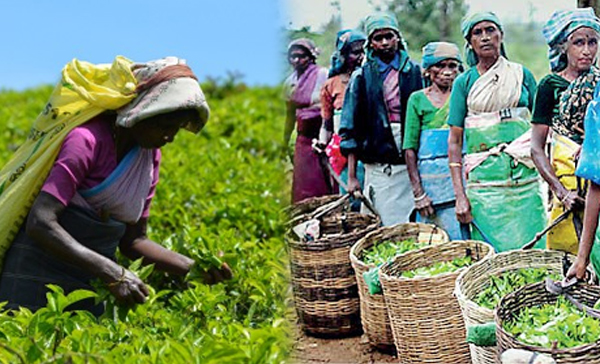
Meera Srinivasan in Sri Lanka and Kanishkaa Balachandran in Bengaluru have put together a video report for The Hindu on the plight of the Malayaha Tamils or Hill Country Tamils who work on the tea plantations of Central Sri Lanka.

As the poorest community in Sri Lanka, these workers of Indian origin have had to put up with harsh deprivations during the COVID-19 pandemic and the economic crisis that followed.

Two FRs from PAFFREL over delays in polls

The People’s Action for Free and Fair Elections (PAFFREL), a polls monitor, will file two Fundamental Rights (FR) petitions at the Supreme Court (SC) against the relevant authorities for not holding the Provincial Council (PC) elections, and for not declaring the Local Government (LG) election within the required timeframe.

Speaking to The Morning on Tuesday (29), PAFFREL Executive Director Rohana Hettiarachchi noted that the fundamental rights of the people are being infringed when both the said elections are not held or declared within the required time period.

“When it comes to the LG election, it seems like it will not be declared on time, while the PC elections have not been held for the past three years now. Therefore, we have decided to take legal action within the next two weeks,” he added.

He further noted that even though the United National Front-led “yahapalana” (good governance) Government initially brought about an amendment on the women’s quota for nomination with a two-page document, when the Bill reached the second reading stage, it had increased up to 32 pages, with a completely new electoral system that the Delimitation Commission had to complete, which, however, it did not. Even the relevant Minister at that time did not agree with these delimitation-based amendments.

“The current Government led by President Ranil Wickremesinghe is the third government that came to power after the ‘yahapalana’ Government. So far, all of the politicians have failed to proceed with the PC elections. They had to complete the delimitation and reverse the previous electoral system. That is why we have decided to file a FR petition for the PCs elections as well. There is evidently no preparation and intention to hold elections. Some PCs’ terms expired five years ago, while others expired three years ago. There are no elected representatives; they are operated by the President’s representatives,” he added.

Meanwhile, PAFFREL wrote to the Election Commission (EC) on Monday (28 November) claiming that it is unnecessary to seek the Attorney General’s (AG) opinion with regard to whether the EC can declare the conduct of the LG poll following the enactment of the 21st Amendment to the Constitution which holds that the EC should be reconstituted, but also provides for transitional provisions to be operative in the interim period, and pointed out that EC Chairmen in the past have held elections in such interim and transitional periods. Hettiarachchi queried as to why incumbent EC Chairman Nimal Punchihewa cannot hold elections when former EC Chairmen Dayananda Dissanayake and Mahinda Deshapriya had held major elections in the past during such periods.

Also, the EC stated on Tuesday that while it had received the legal advice sought from the AG’s Department on whether it has the power to declare the LG election following the adoption of the 21st Amendment to the Constitution, it is however not in a position to reveal the advice received, noting that a decision will be taken following internal discussions. Speaking to The Morning, Punchihewa emphasised that although the EC had sought advice from the AG’s Department, the advice received cannot be revealed even under the Right to Information Act, while adding that the EC would hold internal discussions to make the relevant decisions.

He also told The Morning earlier that a declaration regarding the date of the LG election will be made by the EC, in early next year (2023). He noted: “Our expectation is to hold the LG election before 20 March 2023.”

Posted in Uncategorized

PMD rejects reports that President is planning to establish District Development Committees

The President’s Media Division (PMD) today rejected the media reports claiming the President is planning to establish District Development Committees instead of Provincial Councils.

Recent media reports attributing a quote to the President stating that the Provincial Councils will be replaced with the District Development Committees is incorrect, the PMD said.

Issuing a statement, the PMD said President Ranil Wickremesinghe’s response in Parliament yesterday (29) has been reported by several media in such a way that the meaning is distorted.

During the ongoing Parliamentary budget debate responding to a statement by MP Maithripala Sirisena the President stated that the District Development Committees (DDCs) will be established within the Provincial Councils. The DDCs will provide a platform for coordination between the Government, the Provincial Councils and the Local Governments for all executive decisions. This will ensure the process is not duplicated and will reduce financial wastage.

Apart from that, the President has not made any statement about the dissolution of provincial councils, the PMD stressed.

Posted in Uncategorized

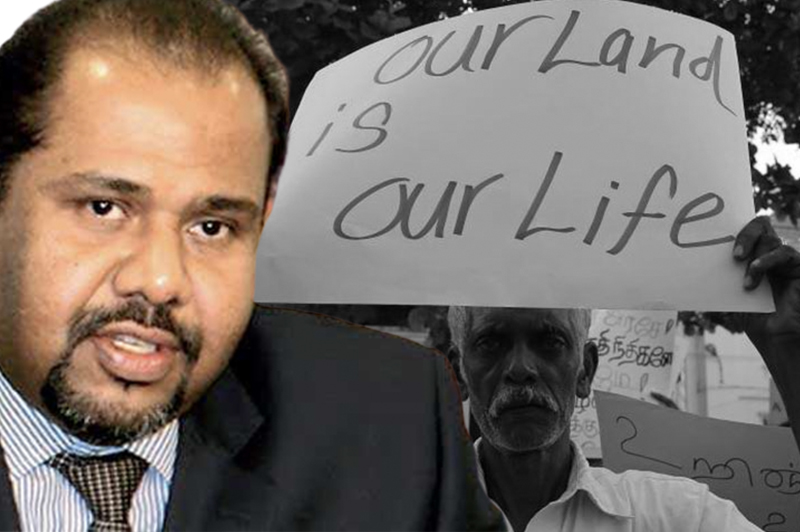
President invites for talks & orders land grabbing at the same time – TNPF

President Ranil Wickremesinghe speaks about a dialogue to resolve the national question, but at the same time orders the military’s acquisition of lands owned by the Tamils, charges Tamil National People’s Front (TNPF) leader Gajendra Kumar Ponnambalam.

The president has invited Tamil parties for talks that are expected next month.

MP Ponnambalam questioned if Tamils could expect solutions from a racist, Sinhala-Buddhist supremacist regime.

He also said public life and the economy would continue to slide under the present administration in the absence of rule of law and justice.

Posted in Uncategorized

Wimal’s first meeting in N’eliya attacked

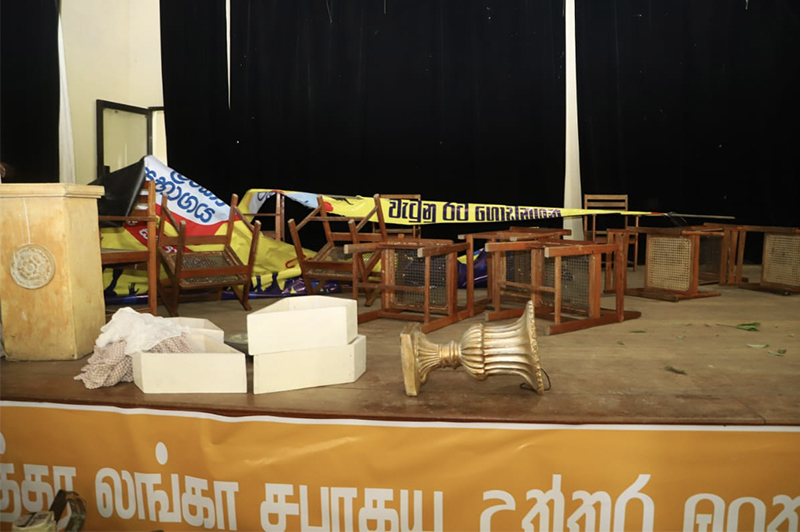
A seminar to mark the advent of the Supreme Lanka Council in Nuwara Eliya yesterday (27) came under attack hours before it was due to begin.

In the early hours of the morning, a group had come to the venue and destroyed the display boards for the event.

Organisers lodged a complaint with Hanguranketha police which accuses the SJB organiser for the area Jayalath Dissanayake, who is also the brother of SLPP MP S.B. Dissanayake, of being responsible.

Despite the incident, the SLC held the meeting with its chairman Wimal Weerawansa presiding.

Posted in Uncategorized

Free Chinese diesel for farmers, fishermen

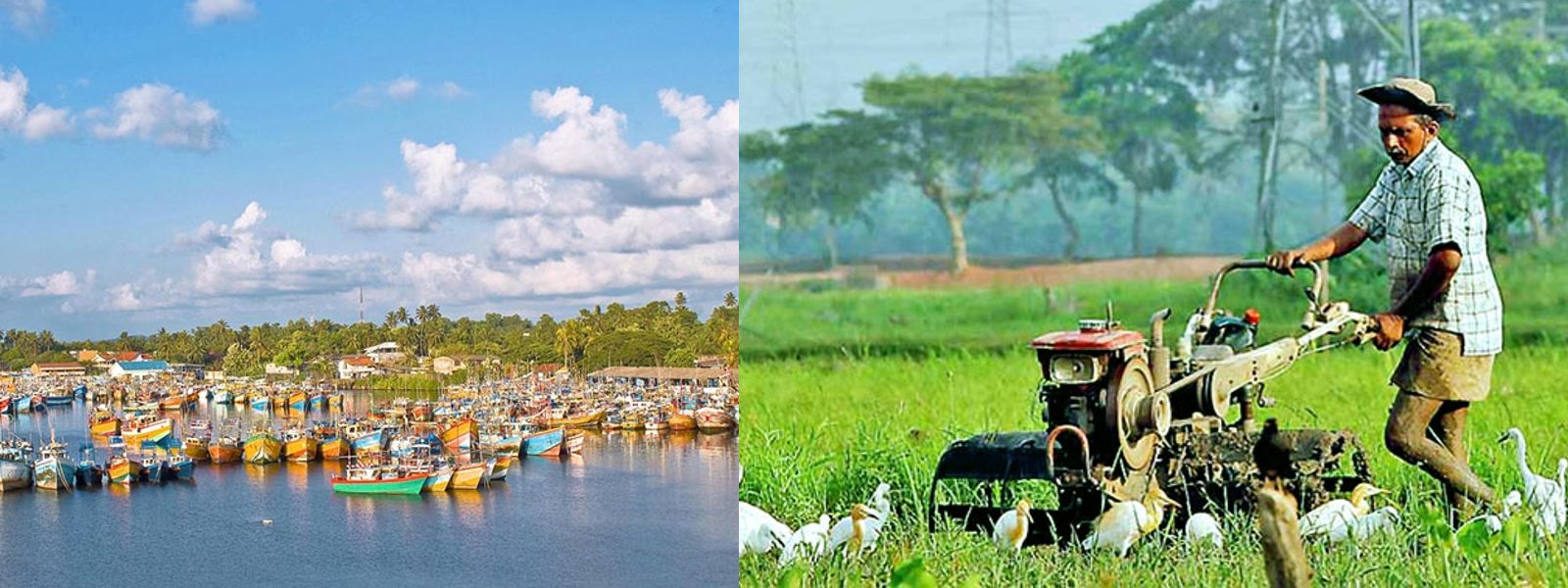
The 10.6 million liters of diesel donation by China will be provided free of charge, said the Chinese Embassy in Sri Lanka.

Fuel will be given free to 232,749 farmers for harvesting 342,266 hectares paddy fields across Sri Lanka in Maha season 2022/23 (20L/hectare)

In addition, the 3,796 fishing vessels below 40 feet in Sri Lanka (1,000L/vessel) will also be given free diesel courtesy from China.

Sri Lanka opposition leader vows to bring millions to the streets

Sri Lanka opposition leader Sajith Premadasa has vowed to bring millions to the streets in defiance of a controversial statement by President Ranil Wickremesinghe that he would use the military to block another uprising.

Speaking at an event organised by the main opposition Samagi Jana Balawegaya (SJB) in Negombo on Saturday November 26, Premadasa said the SJB under his leadership would defeat efforts by the Wickremesinghe government to quell protests.

“The president and government groups are saying in parliament that if another people’s struggle comes, they will suppress it using the military. That they will use the Prevention of Terrorism Act (PTA) to suppress the struggle. We’re not prepared to be cowards,” said Premadasa.

“We’re told to obtain permission to go on a political march on the road. If this is a challenge, the SJB and the SJB alliance under the leadership of Sajith Premadasa, [are prepared] to come out to the road in the millions. We will defeat these hollow boasts of the government using the power of the people,” he said.

Addressing parliament last week, President Wickremesinghe said the authorities will block any unlawful protests aimed at toppling the government. The state forces and a state of emergency would be used for this purpose, he said. However, peaceful protests may continue as long as permission is obtained from the police, he said.

President Wickremesinghe, who had long maintained the image of a democrat and a statesman, has been under fire both locally and internationally ever since he assumed the presidency for an alleged intolerance of protest.

He has been courting controversy since his ascend to Sri Lanka’s all powerful executive presidency, with activists, civil society groups, human rights defenders and opposition legislators critcising him for what they claim has been a crackdown on peaceful protest – the same series of youth-led peaceful protests that unseated his predecessor Gotabaya Rajapaksa, landing him the highest seat of power in the land.

His recent pronouncements on human rights activists have not helped matters.

Wickremesinghe and his defenders, however, claim that he is still a liberal democrat who respects the right to free speech and peaceful assembly, and that he only wants to stop the more extremist elements that they claim have hijacked the protests with a view to toppling the government through a violent revolt. These groups, government spokesmen and other backers of the president claim, are attempting to destabilise the country at a time when stability is crucial to economic recovery.

Government members and other critics of the SJB, meanwhile, argue that the main opposition party is using the Aragalaya to their own political ends and are criticising Wickremesinghe in bad faith. They claim that Premadasa and his party have forgotten or are pretending to have forgotten how the opposition leader was almost ambushed and attack by more violent elements within the protest movement on May 09.

Critics of the SJB also question the purported popularity of the party and its leadership with the public. Analysts question the party’s capacity to bring millions out on to the streets as claimed by the SJB leadership.

The party, however, is prepared to show its strength at an upcoming election, whichever one comes first.

The president, meanwhile, has said he has no plans to dissolve parliament anytime soon. A parliamentary election, according to him, may have to wait till Sri Lanka’s economy has sufficiently recovered.

The SJB and opposition parties have condemned this announcement as an undemocratic attempt at suppressing the people’s rights.