PTA reform is needed not to please the West but to be fair to Sri Lankans By P.K.Balachandran

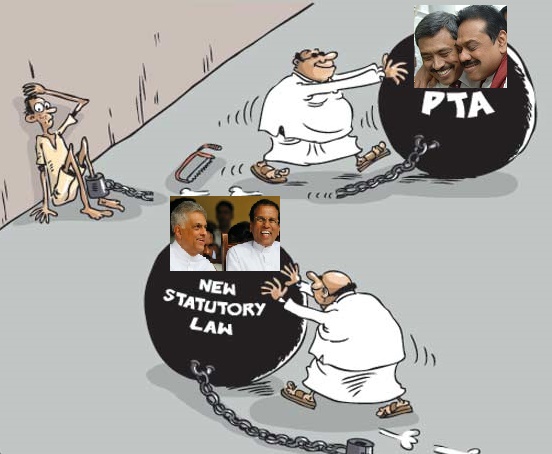
An examination of the Prevention of Terrorism Act (PTA) from the point of Sri Lanka’s own interest, would suggest that it is time the act was either drastically amended or replaced by a more just law that will help tackle the scourge of terrorism without riding roughshod over human rights and other constitutionally guaranteed freedoms. The PTA’s catch-all definition of terrorism and draconian provisions have enabled Lankan governments to abuse the Prevention of Terrorism Act to suppress opponents and minorities.

The Act, brought into being in 1979 as a temporary measure to tackle Tamil militancy, has stayed put in the statute book till date, stubbornly resisting international calls for change. Even threats of crippling trade sanctions by powerful Western nations have failed. Solemn promises to change it have been reneged upon regularly.

Definition of Terrorism

In the PTA a “terrorist” is any person who (a) causes the death of any specified person, or kidnaps or abducts a specified person, or commits any other attack upon any such person, which act would, under the provisions of the Penal Code, be punishable with death or a term of imprisonment of not less than seven years; (b) or causes the death of any person who is a witness to any offence under this Act, or kidnaps or abducts or commits any other attack upon any such person, which act would, under the provisions of the Penal Code, be punishable with death or a term of imprisonment of not less than seven years; (c) or commits criminal intimidation of any specified person or a witness referred to in paragraph (b); or commits the offence of robbery of the property of the Government, any Department, Statutory Board, Public Corporation, Bank, Co-operative Union or Co-operative Society; (d) or commits the offence of mischief to the property of the Government, any Department, Statutory Board, Public Corporation, Bank, Co-operative Union or Co-operative Society or to any other public property; (e) or without lawful authority, imports, manufactures or collects any firearms, offensive weapons, ammunition or explosives or any article or thing used, or intended to be used, in the manufacture of explosives; (f) or possesses without lawful authority, within any security area, any firearms or any offensive weapon, ammunition or explosives or any article or thing used, or intended to be used, in the manufacture of explosives; (h) or by words either spoken or intended to be read or by signs or by visible representations or otherwise causes or intends to cause commission of acts of violence or religious, racial or communal disharmony or feelings of ill-will or hostility between different communities or racial or religious groups; (i) or without lawful authority erases, mutilates, defaces or otherwise interferes with any words, inscriptions, or lettering appearing on any Board or other fixture on, upon or adjacent to, any highway, street, road or any other public place; (j) or harbors, conceals or in any other manner prevents, hinders or interferes with the apprehension of, a proclaimed person or any other person, knowing or having reason to believe that such person has committed an offence under this Act.

This overly broad definition of terrorism includes crimes that can be tackled easily by other milder laws. The PTA is but a sledgehammer used to swat a fly.

Contrast this with the definition of terrorism given by the UN: The UN Security Council Resolution 1566 (2004) defined terrorism as “criminal acts, including against civilians, committed with the intent to cause death or serious bodily injury, or taking of hostages, with the purpose to provoke a state of terror in the general public or in a group of persons or particular persons, intimidate a population or compel a government or an international organization to do or to abstain from doing any act.”

In the light of this UN definition, the Sri Lankan state appears to be bent on using a sledgehammer to swat flies, exposing it to international censure.

Objectionable Clauses

The objectionable clauses in the PTA are: Section 6 (1) which empowers the police ( notwithstanding anything in any other law to the contrary) to arrest any person without a warrant; enter and search any premises; stop and search any individual or vehicle, and to seize any document or thing. Section 7(1) says that a magistrate will remand persons until the completion of their trial, if requested by the police. There is no provision for bail, unless approved by the Attorney General. Section 9 (1) says that if the Defense Minister suspects “any person is connected with or concerned in any unlawful activity,” he can be detained for up to 18 months. Section 10 states that “an order made under Section 9 shall be final and shall not be called in question in any court or tribunal by way of writ or otherwise.”

Section 15(a) gives discretion to the Secretary of Defense to order that a PTA suspect “be kept in the custody of any authority, in such place and subject to such conditions as may be determined by him having regard to such interests (of national security or public order).” This provision does not set out any criteria for making this determination, and the decision is not subject to judicial oversight, says the Human Rights Watch (HRW) in its February 2022 document: In a Legal Black Hole: Sri Lanka’s Failure to Reform the Prevention of Terrorism Act.

Section 16 puts the burden of proof on the accused. This, along with other provisions of the act, has contributed to convictions based on confessions obtained under torture, HRW alleges.

Section 17 makes it clear that provisions of the Evidence Ordinance, which make confessions given to a police officer inadmissible, do not apply in PTA cases. Section 26 grants immunity to officials “for any act or thing in good faith done or purported to be done in pursuance or supposed pursuance of any order made. Section 28, says that “the provisions of this Act shall have effect, notwithstanding anything contained in any other written law, and accordingly, in the event of any conflict or inconsistency between the provisions of this Act and such other written law, the provisions of this Act shall prevail.”

According to the Human Rights Commission of Sri Lanka (HRCSL), as of January 7, 2022, 392 people were being held on remand under the PTA and another 92 people were held on PTA detention orders.

Contours of Reform

HRW says that any new Act should employ a definition of terrorism that complies with international norms. It should ensure precision and legal certainty, especially when the legislation may impact the rights to freedom of expression, opinion, association and religion or belief. It should ensure that preventive measures are in place to prevent and halt arbitrary detention and deprivation of liberty. Preventive measures must be put in place to prevent torture and enforced disappearances.

Be that as it may, going by past record, the September session of the UNHRC will make precious little difference to Sri Lanka as regards the PTA. Colombo will trot up the excuse that it is doing its best under trying economic circumstances, and that it needs more time to reform the PTA. And for geopolitical reasons (faced with competition from China), the Western nations will let Sri Lanka off the hook.

Many Sri Lankans hate to be dictated to by outsiders, especially when the latter’s rights record is not that clean and the island nation had had a major terrorist problem for three decades. Nevertheless, it is time Sri Lanka realized that, as an avowedly democratic country, it ought to reform the PTA to be fair to its own people.
IMF staff meets President, next discussion on 26th

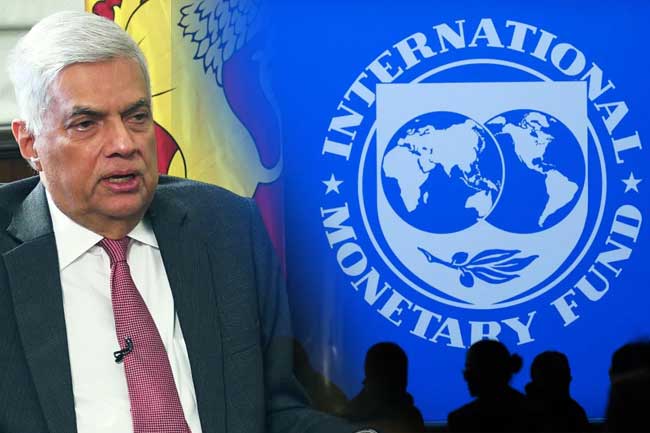
The International Monetary Fund delegation which arrived in Sri Lanka, met with President Ranil Wickremesinghe on Thursday (24).

The President’s Media Division stated that the delegation discussed the current situation of the economic crisis faced by Sri Lanka during the meeting.

Accordingly, it was decided to hold another round of discussions on 26th August and discuss technical issues with Central Bank officials in the near future.

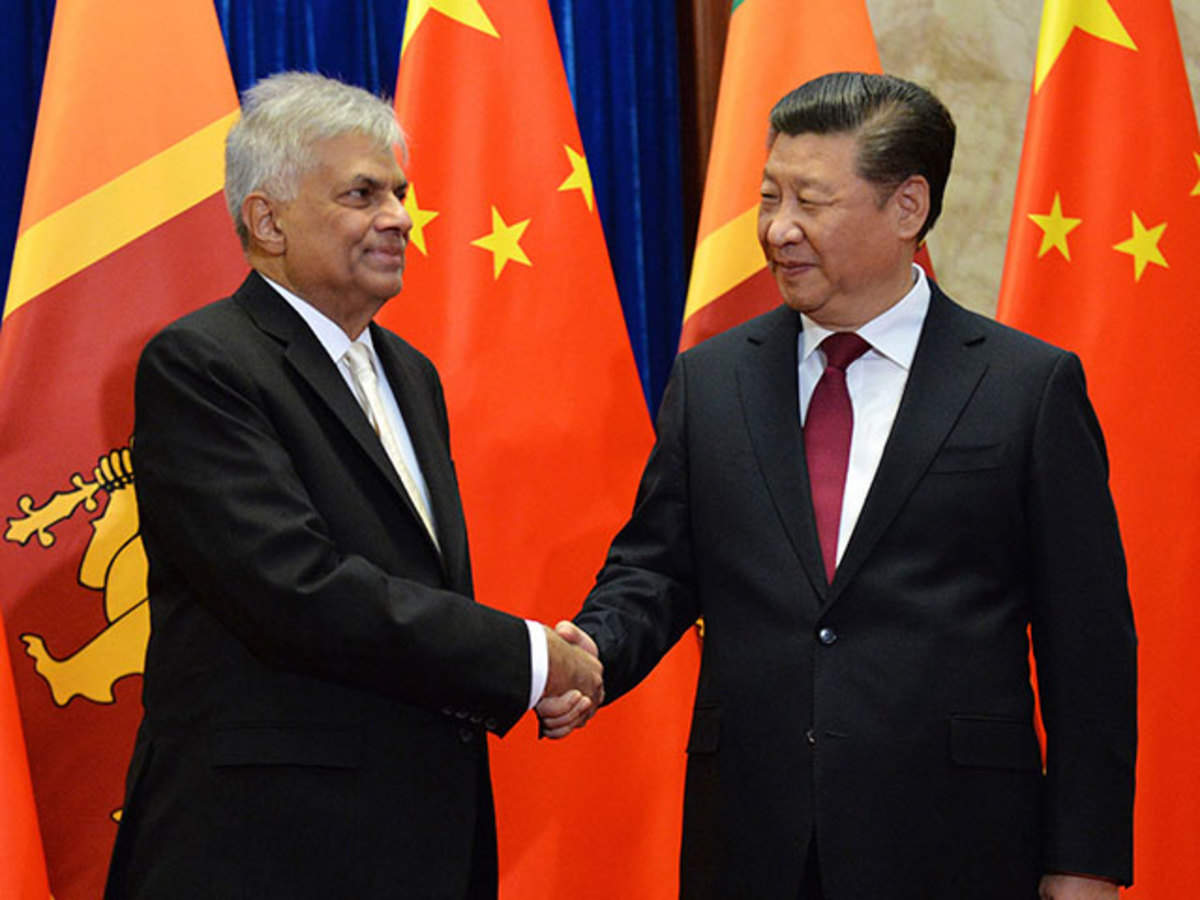
Sri Lanka urges China to change tune on debt

Sri Lanka is urging China to dramatically change its stance on debt relief, President Ranil Wickremesinghe told Nikkei Asia in an exclusive interview, conceding that reaching a deal will be no simple task.

The appeal to China, the bankrupt Indian Ocean nation’s largest bilateral lender, has emerged as a formidable challenge to Wickremesinghe, who is leading the country’s financial team as it attempts to rebuild an economy starved of foreign reserves and mired in misery. The effort is likely to feature prominently in a fresh round of discussions between Colombo and International Monetary Fund representatives arriving Wednesday.

“We have informed the Chinese government [of] the need to restructure [the debt] and the need for all the creditors to sing from the same hymn sheet,” Wickremesinghe told Nikkei.

But the six-time prime minister, who won a parliamentary vote for the presidency and began his term on July 21, sees a complex path to spurring a change of heart in Beijing, hinging partly on Sri Lanka’s other lenders.

“China, of course, has adopted a different approach, so it is a question of what is the agreement that the [other creditor] parties can reach with China,” he said during a 40-minute conversation in his wooden-paneled office at the Presidential Secretariat, a colonial-era building that faces Colombo’s seafront.

Wickremesinghe was responding to a question about China’s preferred route of refinancing its loans or deferring the repayment dates for countries in debt to Chinese banks — rather than restructuring the loans and settling for a loss-making “haircut.”

An IMF statement on the eve of its visit highlighted, albeit obliquely, that the China factor is set to shape Sri Lanka’s economic fortunes.

On the prospects for giving Sri Lanka a multibillion-dollar bailout, the fund said: “Because Sri Lanka’s public debt is assessed as unsustainable, approval by the IMF Executive Board of the [Extended Fund Facility] program would require adequate assurances by Sri Lanka’s creditors that debt sustainability will be restored.”

The Washington-based fund’s team is scheduled to be in Colombo until the end of this month. Seasoned observers see it pushing the Wickremesinghe administration to persuade the Chinese ahead of any staff-level agreement with the IMF.

“Sri Lanka will have to convince the Chinese to come on board with a haircut,” said Murtaza Jafeerjee, managing director of JB Securities, a financial consultancy in Colombo. “Chinese debt [to Sri Lanka] is in dollars … and it would not be in China’s interest to be a spoiler.”

The list of creditors in the $81 billion economy ranges from Western sovereign bondholders, who together account for the largest $14 billion slice of debt, to bilateral players such as China, Japan and India. Then there are the multilateral lenders — the Asian Development Bank and the World Bank.

The country’s outstanding foreign debt is a staggering $51 billion, with some independent economists estimating that China’s lending to Sri Lanka from 2001 to 2021 amounted to nearly $9.95 billion.

Sri Lanka had a foreign debt bill of $6.9 billion that it had to service in 2022 but defaulted in April after it ran out of foreign reserves, a first in the South Asian nation’s history.

The country of 22 million currently has $300 million worth of usable foreign reserves, not enough to ensure a steady flow of food, fuel and pharmaceutical imports. The latest figures from the Department of Census and Statistics show that food inflation in July soared to 82.5% on the year.

The crisis has swept away previously comfortable lives for tens of thousands and, in April, sparked months of anti-government protests that forced out Wickremesinghe’s predecessor, the hawkish President Gotabaya Rajapaksa.

“People have a right to be concerned about the economy which affects their lives,” Wickremesinghe said. “There has been a drop in living standards … a drop in their purchasing power. What we are witnessing now is the fast contraction of the economy.”

But Wickremesinghe has inherited more than a tattered economy from Rajapaksa. The previous administration, once viewed as pro-China, strained diplomatic ties with Beijing over multiple spats. They involved Colombo rejecting a shipload of Chinese fertilizer and giving a cold shoulder to a Chinese company’s role in building a highway.

The Rajapaksa government also did an about-face on the fate of a cluster of islands in Sri Lanka’s northern waters, which were given to India after being initially offered to China. The islands are close to India, which is locked in a geopolitical tussle with China for influence in the Indian Ocean.

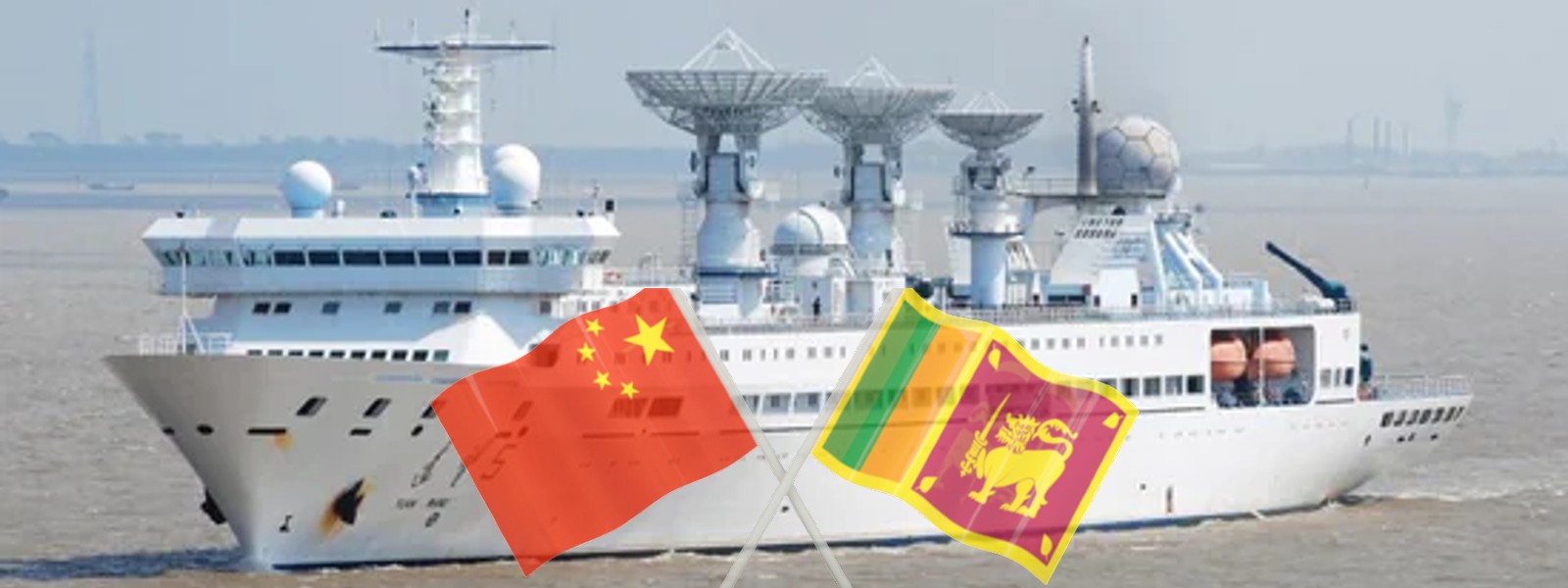
Pleasing China will test Wickremesinghe, a foreign affairs veteran, as he courts Beijing over the debt. This was all too apparent earlier this month when Sri Lanka asked China to defer a port call by a military survey vessel due to protests by India. The move prompted a furious response from Beijing and raised concerns that it could affect the debt restructuring talks.

In the end, Sri Lanka agreed to let the ship dock.

“The geopolitical situation [in the Indian Ocean] is heating up, but so far we have been able to keep it out and look at our [debt problem] in a purely economic manner,” Wickremesinghe said. “But there will be issues [with] how the debt is being treated and how the debt relief is to be treated. They will have some geopolitical implications.”

Source: Nikkei Asia

Posted in Uncategorized

China ‘spy vessel’ reinforces its attempt to exploit Sri Lanka

Beijing [China], August 24 (ANI): China’s unswerving manoeuvre to dock the Yuan Wang 5, missile and satellite tracking ship at Hambantota port in Sri Lanka despite the country’s request to defer the visit of the ship amid security concerns raised by India and the United States might seem like a victory for Beijing in this strategically important island nation but in fact, it reinforces the image of China as a predatory imperial power that is trying to exploit Sri Lanka for its own purposes, a media report said.

The Yuan Wang 5, China’s missile and satellite tracking ship which had berthed at Hambantota port in Sri Lanka departed on Monday.

There were grave concerns that the ship could conduct satellite research in the northwestern part of the Indian Ocean region, prompting security concerns from India.

India had expressed its security concerns over the docking of the vessel at the Sri Lankan port as it was touted as a research vessel with the capability of mapping the ocean bed, which is critical to the anti-submarine operations of the Chinese Navy.

However, China claimed that the docking of its Yuan Wang 5 ship at Hambantota port in Sri Lanka does not affect any country and termed it a normal exchange between the two countries.

Sri Lanka’s Foreign Affairs Minister confirmed that the Chinese vessel ‘Yuan Wang-5’, widely believed to be a spy ship, has been given clearance to arrive at Hambantota Port on August 16.

“Having considered all material in place, on 13 August 2022, the clearance to the Embassy of the People’s Republic of China was conveyed for the deferred arrival of the vessel from 16-22 August 2022,” Foreign Affairs Ministry said in a statement.

Giving details about the process, the foreign affairs ministry said that they were informed by China via a diplomatic note on June 28 regarding Yuan Wang 5 arrival.

The Sri Lankan government was requested to provide necessary assistance and positive consideration to the request by the Embassy of the People’s Republic of China.

China’s strategy to lure countries into its debt trap beguiled Sri Lanka to be dependent heavily on China for economic support, and military equipment. Sri Lanka also took loans in bulk for various development projects.

But during the recent crisis in the country, when for months, Sri Lanka has been pleading with China for more support, but to no avail, Channel News Asia reported.

Beijing has done little to help the country through its devastating economic meltdown, providing far less aid than India.

India moved in to alleviate Sri Lanka’s desperate food and fuel shortages with over USD 3.8 billion of assistance. Beijing, by contrast, provided a relatively paltry USD 74 million.

SJB, CPA condemn PTA use to detain protestors

The main Parliamentary Opposition, the Samagi Jana Balawegaya (SJB), yesterday (24) condemned the use of the Prevention of Terrorism (Temporary Provisions) Act, No. 48 of 1979 as amended (PTA) to detain peaceful protestors, including Inter-University Students’ Federation (IUSF) Convenor Wasantha Mudalige.

“Is it necessary to arrest peaceful protestors? We are completely against using the PTA for this. The PTA should not be used against peaceful protestors, including against Mudalige,” SJB MP Eran Wickramaratne questioned at a media briefing held yesterday (24).

Commenting on the violence unleashed by pro-Government supporters on 9 May, Wickramaratne questioned as to why those who addressed the pro-Government supporters at the Temple Trees, moments before they attacked the “GotaGoGama” protest site at the Galle Face Green, are not being arrested.

“Shouldn’t they be arrested too?”, he questioned.

Meanwhile, the Centre for Policy Alternatives (CPA), in a statement issued in this regard yesterday, raised concerns about President Ranil Wickremesinghe’s decision to issue detention orders for Mudalige, Kelaniya University student activist Hashan Jeewantha, and the Inter-University Bhikkhu Federation (IUBF) Convenor Galwewa Siridhamma Thera for a period of 90 days.

“This move to detain the three suspects for their alleged involvement in the recent protests is yet another example of the abuse of the PTA by the Executive, regarding which there have been persistent calls for the repeal of, for several decades. Moreover, this detention for the apparent involvement in the ‘aragalaya’ (struggle) appears to be yet another effort by the United National Party-Sri Lanka Podujana Peramuna (SLPP) Government to target protestors, and create a chilling effect in order to silence dissent,” said the CPA.

Further, the CPA noted that in 2017, when President Wickremesinghe was the Prime Minister, the Government announced a moratorium on arrests under the PTA.

“The then-Prime Minister also acknowledged that ‘the State is mindful of the need to ensure that counter terrorism legislation is not abused in a manner that would impair the lawful exercise of Fundamental Rights, which would be contrary to the principles of democracy and good governance, and would defeat the purposes of justice’ as a policy statement when presenting the proposed Counter Terrorism Bill which was never passed. Such a statement is contrary to how the PTA is now being used, including the most recent moves to target protesters and prevent dissent,” the statement continued.

Cabinet Spokesman Dr. Bandula Gunawardana said this week that the Government hopes to bring in the “National Security Act” to replace the PTA.

Responding to this, SLPP Chairman Prof. G.L. Peiris questioned whether the present Minister of Justice, Prisons Affairs and Constitutional Reforms Dr. Wijeyadasa Rajapakshe PC is aware that a great deal of work has already been done in this regard.

“The Cabinet of Ministers previously appointed two committees, including the senior officials’ committee, which consisted of officials from the highest levels from the Ministries of Defence, Foreign Affairs and Justice, the Attorney General’s Department, and the Police. A great deal of dedication went into that work for about four months, after which they produced an insightful report.

“Why is it necessary to reinvent the wheel, if this is a sincere exercise, when you can draw upon the material that is in that report? The urgent Amendments were enacted in the Parliament earlier this year. In stage two, it was decided to undertake a comprehensive review using the said report. That exercise was underway when the Government fell,” said Prof. Peiris.

Earlier this year, the PTA (Amendment) Bill was passed in the Parliament. However, the Opposition and many civil and human rights activists said that the said Amendments were just an attempt to “pull wool over the eyes of the people”, as they provided no proper change to the draconian anti-terror law in the country.

“The Government gave a categorical assurance to the international review, that pending the entire review of the PTA and the introduction of a fresh piece of legislation, the PTA, in its existing form, will not be applied, with the full blessings of the then President Gotabaya Rajapaksa. We are now using these draconian provisions against those who participated in public protests.

“At the same time, the Central Bank of Sri Lanka (CBSL) has said that they are confident of getting funds from the International Monetary Fund (IMF) by the end of the year. Meanwhile, other things have happened which are not helpful in the discussions with the IMF,” said Prof. Peiris.

He explained that Special Rapporteurs from the United Nations and international organisations have raised concerns about the human rights situation in Sri Lanka and questioned whether that is helpful or detrimental to the country’s access to financial support expected from the IMF and other institutions.

Posted in Uncategorized

Probe reveals ‘Green Eco Lodge’ owned by MR’s son

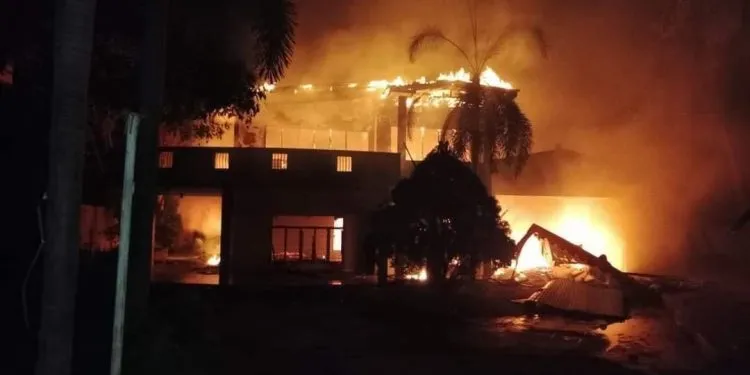
Four suspects have been arrested by the Kolonna police over setting ablaze a luxury hotel owned by former President Mahinda Rajapaksa’s youngest son Rohitha Rajapaksa on May 10.

Police said the suspects were arrested on Monday and Tuesday for stealing items and setting on fire to the ‘Green Eco Lodge’ Hotel on May 10 situated at Gongalakanda in Kolonna, Embilipitiya, close to Sinharajah.

The suspects aged 25 and 50 years were identified as residents of Kolonna.

Soon after the luxury hotel was set on fire by angry protestors on May 10, reports surfaced that the hotel belonged to one of Mahinda Rajapaksas’s sons. Some media reported that the hotel belonged to Yoshitha Rajapaksa which was immediately denied by him. However police investigations have revealed that the hotel belonged to Rohitha Rajapaksa, the third son, who remained tight lipped when reports surfaced that the hotel belonged to his brother.

Rohitha did not hold any official position during his father’s tenure as the Prime Minister although he was often seen in Temple Trees and has often been questioned on his source of income. There are no reports of him being employed.

Investigations are ongoing to arrest more suspects connected to the arson attack.

Posted in Uncategorized

Police storm IUSF Press conference

The Police raided a press conference called by the Inter University Student Federation at the CSR in Maradana yesterday (23).

The press conference was called to mark the united opposition of political parties, trade unions, public organisations and social activists against the detention of the three student leaders, Wasantha Mudalige, Galwewa Siridhamma Thera and Hashan Jeevantha, using the Prevention of Terrorism Act.

When Ceylon Today inquired about the situation from the Educational Secretary of Frontline Socialist Party (FSP), Pubudu Jagoda, he said the Police forcefully stormed the place saying that they wanted to arrest Eranga Gunasekara, National Organiser of the Socialist Youth Union. However, the Police officers did not have any valid documents related to the arrest, he said.

He said the Police had to retreat due to strong opposition from the representatives who came to the press conference.

“By breaking into press conferences like this, it is sure they are trying to create fear and terror in society. From that point of view, we can see that the terrorists are Ranil Rajapaksa and the gang that hides behind him. Not the people fighting for their lives, for their fair rights,” he said.

Posted in Uncategorized

22A threat to Judiciary’s independence – Nagananda

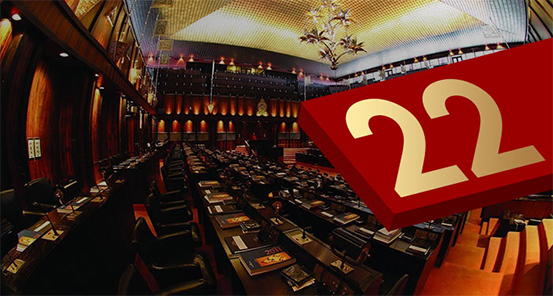
The 22nd Amendment to the Constitution abolishes the independence of the Judiciary and the powers vested in the Auditor General and the Commission to Investigate Allegations of Bribery or Corruption (CIABOC) will be limited as well, said Attorney-at-Law Nagananda Kodituwakku.

The Supreme Court commenced hearing of the nine petitions challenging the 22nd Amendment to the Constitution yesterday (22) before the three-judge bench consisting of Chief Justice Jayantha Jayasuriya, Justices Buwaneka Aluvihare and Arjuna Obeysekera.

The hearings adjourned until today (23). The petitions were filed in Supreme Court on 18 August, challenging certain provisions of the 22nd Amendment to the Constitution. Secretary of the ‘Vinivida Peramuna,’ Kodituwakku, who was among the petitioners, filed a Special Determination Petition with the Attorney General named as the respondent.

Other petitioners are G. Sooriyaarachchi, Captain Anil Sumesha Amarasekara, Tissa Bandara Ratnayake, H.S. Kumara, Herath Dissanayake, Jayantha Kulatunga, S.M. Thushan Devinda, Attorney-at-Law Nuwan Bellantudawe, Gunadasa Sooriyaarachchi Amarasekara, D.B. Dahanayake and Ven. Ananda Sagara Thera. It was stated in the petition of Nagananda Kodituwakku that according to Article 41A (1) of the 22nd Amendment of the Constitution, there shall be a Constitutional Council comprising the Prime Minister, the Speaker, the Opposition Leader, an MP appointed by the President, two MPs nominated by both the Prime Minister and the Opposition Leader, a professional nominated by the Organisation of Professional Associations of Sri Lanka, a person nominated by the Ceylon Chamber of Commerce, a professor of a State University nominated by the University Grants Commission, appointed by the President.

The petitioner further stated that the 22nd Amendment provides that the appointment of Judges to the Supreme Court and the Court of Appeal could only be done upon the recommendations made by the President to the said Constitutional Council and upon the approval of the Constitutional Council which is an interference with judicial independence and would subject the Judiciary to be under the Executive.

Thereby, he sought an order declaring that the relevant provision is in contravention to Article 3 and 4 of the Constitution regarding sovereignty of the people and the exercise of the sovereignty and affects judicial independence, while requesting for notice to be issued on the Attorney General. The Petition was filed in accordance with Article 121 of the Constitution.

Posted in Uncategorized

Sri Lanka Inflation hits 66.7%

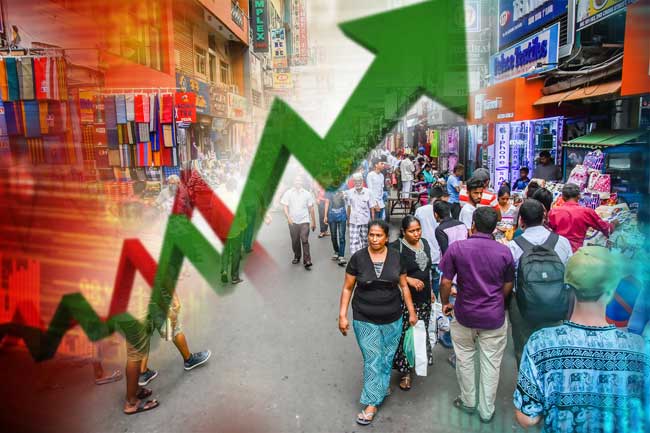
Headline inflation, as measured by the year-on-year (Y-o-Y) change in the National Consumer Price Index (NCPI, 2013=100)1 increased to 66.7% in July 2022 from 58.9% in June 2022.

This increase in Yo-Y inflation was mainly driven by the monthly increases in both Food and Non-Food categories.

Accordingly, Food inflation (Y-o-Y) increased to 82.5% in July 2022 from 75.8% in June 2022, while Non-Food inflation (Y-o-Y) increased to 52.4% in July 2022 from 43.6% in June 2022.

The monthly change of NCPI was recorded at 5.57% in July 2022 due to price increases observed in items of both Food and Non-Food categories which were 2.42% and 3.15%, respectively.

Accordingly, within the Food category, increases were observed in the prices of milk powder, rice, fresh fish, biscuits, and chicken.

However, prices of vegetables, coconut oil, and coconut decreased during the month.

Further, within the Non-Food category, increases were observed in prices of Transport (Bus fare, petrol, and diesel), Furnishing, Household Equipment and Routine Household Maintenance (Washing soap), and Housing, Water, Electricity, Gas, and Other Fuels (Materials for maintenance) sub-categories during the month.

Meanwhile, annual average inflation rose to 25.9% in July 2022 from 20.8% in June 2022.

The core inflation (Y-o-Y), which reflects the underlying inflation in the economy increased to 57.3% in July 2022 from 49.3% in June 2022, while annual average core inflation increased to 21.3% in July 2022 from 16.8% in June 2022.

Indo-Lanka ferry service to be launched this year

The proposed ferry service between India and Sri Lanka is expected to be launched this year, Puducherry Chief Minister N. Rangasamy said.

He told the Assembly the Indian Government hopes to launch the ferry service between the Karaikal Port and Kankesanthurai Port this year.

Presenting the Budget for 2022-23, Rangasamy also said that under the Sagarmala scheme, it was proposed to commence commercial cargo handling operation at the Puducherry Port, in association with Chennai Port Trust this year.

“It is proposed to invite Expression of Interest (EoI) from firms for operating passenger and cargo ship and promoting other allied activities in the Puducherry Port,” he said.