Has UNHRC outlived its utility? By N Sathiya Moorthy

The upcoming visit of UNHRC chief Volker Türk to Sri Lanka has revived limited interest in media discourses – and from expected quarters. Not all of them are Tamil, who have their litany of unaddressed woes, woes unaddressed not only by the government but also the UNHRC, on which they had counted the most, when the ethnic war ended 15 years back.

Most Tamils in the country have given up on it. Their politicians alone seem to talk to them, especially every March and September, when the UNHRC’s bi-annual sessions are held. This time, they were all busier with the local government elections first, and the complexities of individual mayoral elections in the Tamil areas of the North and the East.

Hence, they will take time to re-focus their energies and time on UNHRC-related issues. High Commissioner Türk’s visit could not have come at a better time, for the Tamil leaders to re-direct their energies back to war crimes and accountability issues. Needless to say, the government leadership will be concerned, meeting with the visitor, but they are not going to be overly worried.

Ours and theirs

At least the Sri Lankan State, independent of the party or ruler in power, has come to conclude that the UNHRC is a tool of the elite West to divide nations as ‘ours’ and the unknown ‘theirs’. And unfortunately for the victims of war crimes – and there were at least some, definitely – the last UNHRC resolution that provided for expanding the scope of the probe to the present has only helped dilute the cause, if there was genuinely one, to begin with.

Many in the Sinhala South especially believe that ridding them of the LTTE terrorism and the economic cost that it entailed was the greatest and possibly the only service that the Sri Lankan state had done for them since Independence. But victimised Tamils disagree. No one is defending the LTTE anymore, not in public, not in parlour discourses.

Yet, every one of them wants the ‘guilty’ from the other side, namely, the armed forces, identified and punished. It may be fair from their perception, yes – and so with those who have been moving and voting for the UNHRC resolutions, time and again. But neither side is even vaguely suggesting that ‘LTTE escapees’ from the country, and their Diaspora sponsors, including those that funded the LTTE, too, should be brought to book.

Rolling probe

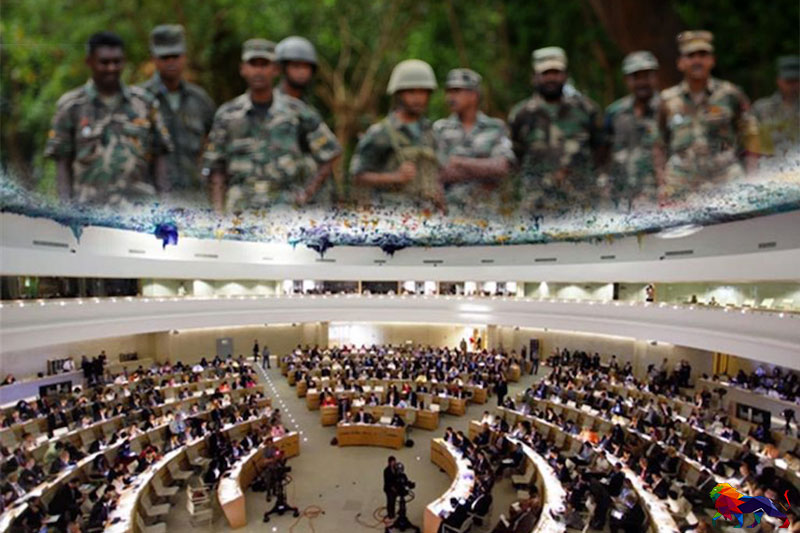
Today, when the UNHRC in its upcoming Council meeting is going to discuss and debate Sri Lanka and possibly a new resolution to replace the one that is running out its term, the very authority flows from the three-man Darussman Report, commissioned for ‘personal information / education’ by then UN Secretary-General Ban Ki-moon.

Now, we have a new group of ‘nationalists’ in the country wanting the Darussman Report withdrawn, as they, like those in their ilk, dub it as ‘illegal’. Like the ‘Rolling Plan’ that some national governments have for their development, the current phase of the UNHRC resolution has become a ‘rolling probe’ but with nothing substantial achieved.

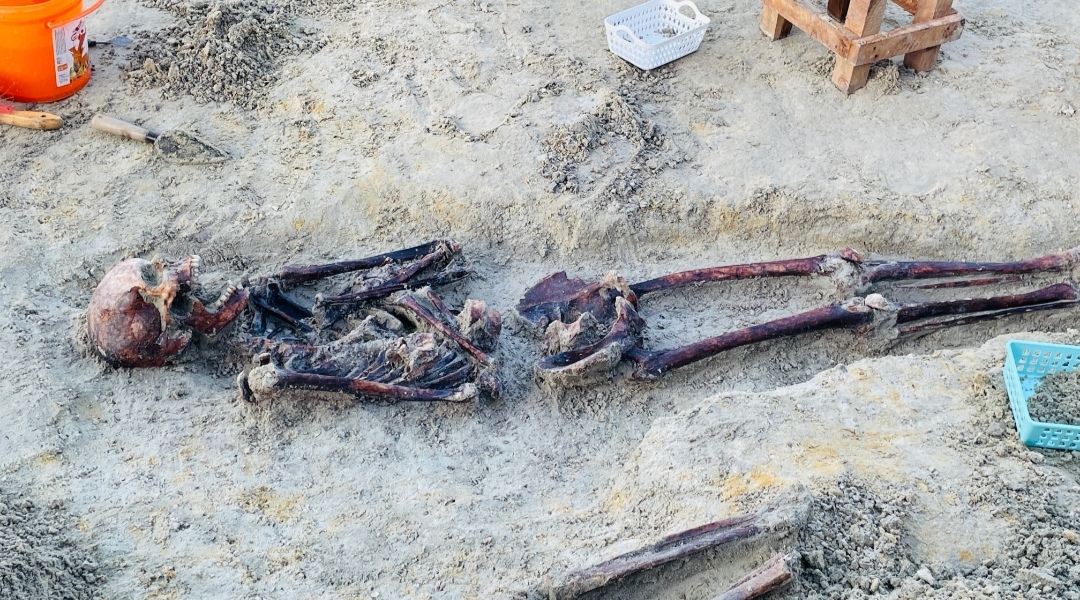
Over and above all these, the Tamils now want the recent ‘Chemmani grave dig-outs’ too to come under the UNHRC probe. The chances are that they are the skeletal remains of Tamil victims of the war – innocent people or LTTE cadres – but the age of the skeletons and their past as living humans, too, has to be proved.

Yet, Tamil leaders in the country have been demanding that the UNHRC boss visit the site. He is now scheduled to visit only Trincomalee. His meetings with government leaders, and possibly with some human rights groups, apart from self-styled intellectuals can be expected to go through tiringly past procedures.

The question is if he will be meeting Colombo Archbishop, Malcolm Cardinal Ranjith, who has now begun criticising the incumbent government of President Anura Kumara Dissanayake, too, for failure in bringing the ‘real culprits’ behind the Easter blasts, to book. Whether or not he has been doing his theological work with a missionary zeal, he has been doing so on the Easter blasts front, no doubt.

Religious profiling

There is a widespread demand for the withdrawal of the controversial Prevention of Terrorism Act (PTA). The debate within the country is if it should have an alternate to the PTA, with adequate checks and balances – or, not. At a time when the ugly face of terrorism has shown its face across the world, there is general acceptance over the need for some kind of a ‘preventive’ detention by the state.

There may not be many member-nations in the UNHRC or the larger UNGA that do not have a preventive detention law, especially post-9/11. For a nation of its size, Sri Lanka has experienced almost all forms of terrorism – ideological, ethnic / linguist, religious and socio-political.

The ruling JVP was a prime example for ideological terrorism, though in its time as a ‘militant, insurgent group’, the term was not as popular as it is now. The LTTE’s face was that of ethnic terrorism. Likewise, the Easter blasts were a product of ‘religious terrorism’.

Then you have all the violent acts during the Aragalaya protests, in which coordinated arson attacks were staged on the properties of ruling party politicians across the Sinhala-Buddhist South. The properties belonging to then President Gotabaya Rajapaksa, Prime Ministers Mahinda Rajapaksa and Ranil Wickremesinghe were in the list.

There are any number of individual cases where PTA misuse has come to light. The latest is that of Mohamad Liyaudeen Rusdi, who was detained under PTA, for displaying stickers on Israel and Palestine. Thankfully, the Human Rights Commission of Sri Lanka (HRCSL) intervened, as Rusdi’s detention was obviously based on pre-meditate and biased ethnic and religious profiling.

Truth be told, if a Sinhala-Buddhist holding similar views as Rusdi on the issue in question had displayed those stickers, he might not have been arrested. The police would have simply ignored or overlooked him, and no one would have been wiser.

Semantics, optics

The Sri Lankan State’s position on the UNHRC front is predictable and well-known. Under President Dissanayake, it is not going to change. Needless to recall, no western government has seriously sought the UNHRC probe to cover non-military personnel allegedly involved in those reported episodes of war-crimes.

It is unlikely that this session will have such requests, not certainly forming a part of a new resolution – if the present one is modified and extended for a further period. To put it all in perspective, the UNHRC process has lost its relevance to new-generation Sri Lankans, Tamils, Muslims and Sinhalas.

Even if the Tamil polity and INGOs made their people believe in the process, today, it has out-lived its utility, if the original idea itself was only to pull wool over their collective eyes – at least pending a decision on what to do with the State actors and majority / majoritarian Sinhala sections. That is saying a lot.

Politicising the process

All of it has boiled down to semantics on the one hand and optics on the other. The UNHRC, like all UN institutions including the International Court of Justice (ICJ) decide not always on merits. Instead, they do so in terms of the political mood of individual nations that are in a position to decide.

This in turn has politicised the entire process. For instance, the original idea for a UN probe into allegations of war-crimes in Sri Lanka flowed from the western perception that Colombo was excessively siding with a China that was growing in geo-political and geo-strategic ambitions. They could not – or, did not – punish China. Or, their early attempts, like the Tiananmen Square failed.

So, the next best was to target China’s prospective ‘client states’. Sri Lanka fitted the bill. Leave aside the yearnings of the victimised Tamil community in the country, for the West, the UNHRC route was the best to ‘discipline’ Colombo. After all, Sri Lanka too needed to be taught a lesson, for the temerity of ‘insulting’ western leaders and nations that tried to argue the LTTE’s case for secured exit from the war zone and the country.

This in turn only pushed Sri Lanka into the waiting hands of China, whose veto-vote in the UNSC, the country knew it would badly need, as and when pushed to the wall. Their attempts at successive ‘regime-changes’ only helped alter domestic politics and election results in Sri Lanka, but their friends till the previous day, too, showed that they had a mind of their own, priorities of their own.

Down the years and UNHRC sessions, the West has learnt its lesson – or, so it seems. Sri Lanka is yet to be taught one. It is difficult for Sri Lanka to be taught a lesson without dividing the island-nation, but that comes with its bag of geo-strategic and geo-political risks that the West cannot stomach, now or ever. The question is if the UNHRC has at all served the purpose of the West.

That is to ask, who will represent the nation at the UNHRC, and who may represent Sri Lanka at the UNGA for the annual address later this year. Will President Dissanayake appear in either or both of them – to put a finality to speculation from his presumed international sponsors on his government’s position on war crimes, et al, and also matters of geo-strategic and geo-political importance, when in the Sri Lankan context, they all should be discussing geo-economics and geo-economics alone.

(The writer is a Chennai-based Policy Analyst & Political Commentator. Email: sathiyam54@nsathiyamoorthy.com)

Posted in Uncategorized

Sri Lanka to turn to Nigeria for fuel imports amid global uncertainty

In the midst of escalation of tension in the Middle-East and concerns over further disruption in fuel supply chain , Sri Lanka has decided to explore the possibility of importing petroleum products from Nigeria, an official said yesterday.

During the period ending June 20, 2025, crude oil prices rose due to concerns over potential supply disruptions amidst escalating Israel-Iran tensions. However, gains were capped to a certain extent as investors remained cautious due to mixed signals from the US regarding the involvement in the conflict.Overall, Brent and WTI crude oil prices increased by US $ 1.99 and US $ 1.91 per barrel, respectively, the Central Bank said in its weekly economic update said last Friday.

However, fresh uncertainty has emerged over fuel supply because of U.S. involvement in the conflict.

Commenting on the situation, Chairman of the Ceylon Petroleum Corporation (CPC) D.A. Rajakaruna told Daily Mirror that he instructed his officials to obtain sample products from Nigeria and some other oil producing countries to be tested in local labs for viability here.

He said that this step would be an attempt to stave off any impact on Sri Lanka from disruption to the traditional supply chain.

The CPC accounts for nearly 60 percent of fuel supply whereas Sinopec , Lanka Indian Oil Company (LIOC) and RM Parks contribute the rest, according to him.

Asserting that there would not be any immediate impact in the local market , he said the effect of current global disruption would be felt by August or September, this year.

Nigeria is a key oil producing country in the African continent.

Meanwhile, Russia has offered oil trading with Sri Lanka. However, Rajakaruna ruled out purchases from Russia because of economic sanctions and political issues involved though Sri Lanka is agreeable in principle.

Jaffna to lead first phase of coconut pest eradication program

The Coconut Cultivation Board has announced the launch of a special program titled “Coconut Fortnight” (‘Pol Desathiya’) as an immediate measure to combat pests, particularly whiteflies, which pose a significant threat to coconut cultivation.

The first phase of the program is scheduled to commence on July 14, with initial operations focusing on the Jaffna district, according to the Chairman of the Coconut Cultivation Board, Dr. Sunimal Jayakody.

“We have decided to declare a Coconut Fortnight across all districts and implement it as an urgent response to the whitefly infestation,” Dr. Jayakody stated.

“Accordingly, it will be implemented on July 14. We will start from Jaffna. As a solution to the whitefly issue, all the coconut trees in the Jaffna district will be sprayed with water and washed. This is a large-scale operation, but we are currently preparing the necessary manpower and machinery for it,” he added.

Govt. asks for two weeks to respond to a query on MoU with India

The ruling side has asked for a two-weeks period to respond to a question raised in parliament with regard to the MoU signed by Indian premier Narendra Modi with president Anura Kumara Dissanayake during his Sri Lanka visit.

SLMC’s Nizam Kariyappar directed the question at prime minister Harini Amarasuriya.

Leader of the House Bimal Ratnayake on 19 June requested time as per a request by the PM’s office.

Kariyappar inquired about the details of all approved projects to be carried out in the eastern province with Indian assistance as per the MoU.

The same details were previously sought under right to information from the Presidential Secretariat, which responded that it didn’t have the details.

After it transpired the details were with the foreign affairs ministry, another request under right to information had the response the details cannot be revealed without Indian government permission.

India to support Sri Lankans to evacuate from Iran

The Sri Lankan Ministry of Foreign Affairs, Foreign Employment & Tourism has announced that the Indian government has extended its support to facilitate air travel for Sri Lankans who are willing to leave Iran.

According to the Ministry, any Sri Lankan currently in Iran and wishing to depart can contact the Indian Embassy in Iran through the official Telegram channel or via the following phone numbers:

+98 901 014 4557

+98 912 810 9115

+98 912 810 9109

In addition, further information can be obtained by contacting the Sri Lankan Embassy in Iran using the following phone numbers:

Sri Lankan Embassy in Iran:

+98 939 205 5161

+98 991 205 7522

+98 936 636 0260

Posted in Uncategorized

Namal Hits Back at Bimal’s Expressway Lease Claim

Sri Lanka Podujana Peramuna (SLPP) MP Namal Rajapaksa has rejected a statement made by Transport Minister Bimal Rathnayake, who claimed that the Rajapaksa administration had leased a service area on the Southern Expressway for 99 years at just Rs 10,000.

Responding via a post on his official X (formerly Twitter) account, Rajapaksa clarified that the service area in question was leased by the Road Development Authority (RDA) to Sri Lanka Insurance Corporation (SLIC)—both of which are State-owned entities.

He urged Finance Minister Anura Kumara Dissanayake to verify the facts from the SLIC, which operates under the purview of the Ministry of Finance, and confirm the legitimacy of the arrangement.

The allegation by Rathnayake was made in Parliament yesterday (20), where he stated that a service area established in the Walipenna region along the Southern Expressway had been granted by the Rajapaksas for an extended lease of 99 years at a nominal fee of Rs 10,000.

Rathnayake made the statement while responding to a question raised by MP Rohitha Abeygunawardena regarding the proposed construction of the Pelpola Interchange in the Millaniya area.

Posted in Uncategorized

Southern Expressway service area leased for Rs. 10,000 for 99-years: Bimal

In a startling revelation made in Parliament, Transport, Highways, Ports and Civil Aviation Minister Bimal Rathnayake yesterday alleged that the service area of the Southern Expressway was leased for a mere Rs. 10,000 for a 99-year period during the tenure of the Rajapaksa administration.

Addressing the House, he asserted that because the Southern Expressway was the first of its kind in the country, initial designs and feasibility studies were vulnerable to alterations, many of which he claimed were made by officials aligned with Rajapaksa for personal or political gain.

Minister’s revelations came in response to questions raised by Opposition MPs Rohitha Abeygunawardena and Ajith P. Perera.

Rathnayake claimed that key associated linked to the Rajapaksa not only benefitted from the undervalued leader agreements, but also actively obstructed the development of other officially approved service areas along the expressway.

“There were several discrepancies during the contraction of the Sothern Expressway with many decisions going against the original feasibility studies. Billions of rupees have been wasted through this project,” he charged, citing what he describes as politically motivated interference is one of the country’s largest infrastructure projects.

Among the irregularities, he pointed to the construction of two expressway interchanges, Kapuduwa and Bedigama which he said were not part of the original expressway design to facilitate east access to politicians.

“Kapuduwa interchange, located just 5 kilometres from Godagama in Matara facilitates travel only to and from Colombo, while Bedigama interchange is 6 kilometres away from Beliatta. Both of these were included due to political influence of the regime at the time,” he added.

According to the Minister, each interchange cost the State over Rs. 1 billion or a normal one at least Rs. 600 million.

New domestic airline given greenlight for Colombo–Jaffna passenger operations

David Peiris Aviation (Pvt) Ltd, a newly established domestic airline and a subsidiary of the David Peiris Group, has officially received its Aircraft Operator Certificate (AOC) and operations specifications (Ops-Specs) from the Civil Aviation Authority of Sri Lanka (CAASL) to operate scheduled domestic passenger flights after obtaining the Airline License.

As part of the certification process, the airline recently conducted a proving flight to demonstrate its operational readiness and capability for launching commercial services on the Colombo–Jaffna route. This flight marked the fourth phase of the AOC certification process as a critical step in assessing an operator’s capability prior to final authorization.

Following a successful evaluation, the Director General of Civil Aviation (DGCA) authorized that the David Peiris Aviation to commence regular schedule flights, Charter Flights, Private Flights and Aerial Works subjected to full compliance with all applicable aviation safety and security regulations.

The application and inspection process were thoroughly reviewed by CAASL’s Civil Aviation Inspectors, under the guidance of Air Vice Marshal Sagara Kotakadeniya (Retd.), DGCA & CEO, and the leadership of Capt. Daminda Rambukwella, Deputy Director General (Flight Safety Regulations) and Actg. Director (Air Operations). The comprehensive inspection covered flight safety standards, airworthiness of aircraft, organizational structure, qualified personnel as post holders, operational readiness ground handling and security arrangements, and compliance with documentation requirements.

The AOC was officially handed over to AVM O. D. N. L. Perera (Retd.), Accountable Manager of David Peiris Aviation (Pvt) Ltd by AVM Sagara Kotakadeniya (Retd.), DGCA & CEO. Capt. Daminda Rambukwella, Deputy Director General (Flight Safety Regulations) and Actg. Director (Air Operations), Mahilal Dushantha Rathnayake, Director (Aircraft Registration & Airworthiness), and other senior officials from David Peiris Aviation also attend to this event.

All aviation service providers including AOC holders are reminded to uphold the highest standards of air safety and security and operate strictly within the approved regulatory framework to develop a sustainable development in Civil Aviation.

Government refuses to act on mass grave allegations based on hearsay

The Government says it will not act on mass grave allegations in the North based on hearsay, but is willing to investigate the claims.

Justice Minister Harshana Nanayakkara said that investigations are ongoing over some mass graves in the North.

However, he said there are no complaints regarding some graves and no basis for an investigation to be carried out.

The Minister was responding to concerns raised by Illangai Thamil Arasu Katchi (ITAK) MP S. Sritharan over the mass graves in the North.

Nanayakkara said that investigations have been launched regarding some graves based on a court order.

Posted in Uncategorized

Govt rejects UN request to allow research vessel visit to SL

Sri Lanka has rejected a UN request to allow a research vessel into its waters from July 15 to August 20, which will assess the long-term food security in Sri Lankan seas, citing delays in finalizing Standard Operating Procedures (SOPs) for foreign research vessels as the reason for the refusal, a UN document revealed.

“The Food and Agriculture Organization (FAO) received a letter dated 19 May 2025 from the Ministry of Fisheries, Aquatic and Ocean Resources cancelling the F. Nansen’s visit pending the development of standard operating procedures for foreign research vessels,” the document stated adding that stated it “could result in over $1 million in losses, undermine Green Climate Fund programmes relying on the vessel’s data, and delay any future visit until after 2030.”

“The cancellation of the visit by the research vessel F. Nansen, prompted by the lack of approved Standard Operating Procedure (SOP) to accommodate foreign research vessels, could not only result in direct financial losses but also undermine the effectiveness of upcoming climate adaptation projects financed by the Green Climate Fund, which rely heavily on the data expected from the survey, a UN document has stated.

According to the UN document sent to the government stated that it would also deprive the government of vital data for decision-making in a key economic sector. The UN has urged the Ministry to reconsider and allow the mission to proceed under the UN flag.

“The Office of the United Nations Resident Coordinator would therefore request the esteemed Ministry’s consideration to allow the visit to proceed under the United Nations flag, on the basis of the formal request from the Government. The Resident Coordinator remains available for a meeting at the earliest convenience to discuss the way forward and provide any additional information required.”

It also said that “the Office of the United Nations Resident Coordinator avails itself of this opportunity to renew to the Ministry of Foreign Affairs, Foreign Employment and Tourism of the Democratic Socialist Republic of Sri Lanka the assurances of its highest consideration”.

It also stated that the Office of the United Nations Resident Coordinator in Colombo that the Food and Agriculture Organization (FAO) has coordinated the deployment of the ‘Dr Fridtj of Nansen’ (F. Nansen), a state-of-the-art vessel to Sri Lanka from 15 July to 20 August 2025, following the request by the Government of Sri Lanka to the United Nations dated 24 November 2023.

Highlighting the urgency of the mission, the UN noted that “against the backdrop of declining fishing yields, the vessel’s visit will play a vital role in helping Sri Lanka’s marine institutions gain critical insights into the health of the marine ecosystem and ensure long-term food security from the sea.”

“Sri Lankan fisheries experts and scientists from the National Aquatic Resources Research and Development Agency as well as officers from the Sri Lankan Navy will be closely working with the F. Nansen technical team in implementing activities in full adherence with all pertinent national legislation. All data collected will be published only with the Government’s prior clearance. This is the fifth visit of such a vessel, the last one visiting Sri Lanka in 2018,” it stated.