Mullivaikkal commemoration in Wellawatta disturbed

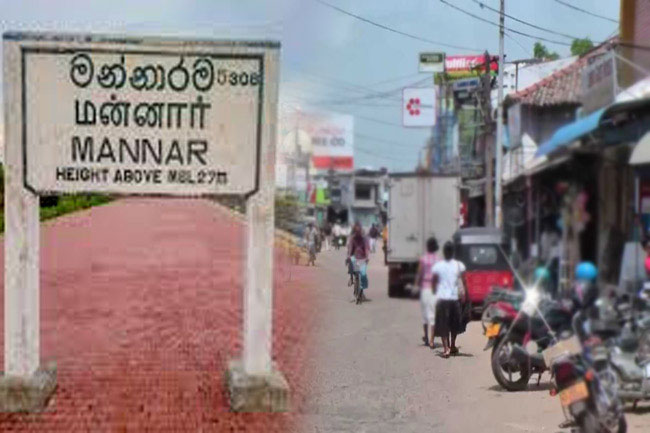
A tense situation prevailed in Wellawatta yesterday 18-05-2025 morning when a commemoration to mark the deaths of the Tamil civilians during the last phase of the war themed as the ‘Mullivaikkal Commemoration’ was disturbed by a group of people.

A group of civil society activists named ‘May 18 Committee’ led by Aragalaya members conducted its third Mullivaikkal Commemoration on the beach along the Marine Drive in Wellawatta today.

The activists were seen engaged in peaceful vigil lighting candles, oil lamps and releasing flowers to the sea in remembrance of the deceased in the war.

However, the situation turned into a tense atmosphere when a gang of persons crashed into the area shouting slogans against the commemorators as terrorist supporters and LTTE sympathisers.

The police intervened and brought the situation under control where the peaceful commemorators left the area after the completion of their programme.

Civil society activists including Swasthika Arulingam, Tharindu Uduwaragedara, Rajkumar Rajivkanth, Siritunga Jayasuriya, Attorney Nuwan Bopage and former ITAK Parliamentarian M.A. Sumanthiran were present at the event.

Operation Sindoor not yet over, it is now India’s established policy against terrorism -Indian High Commissioner

We have clearly conveyed that India will not be subjected to nuclear blackmail and would not allow terrorism to be perpetrated under this cover by the Pakistani establishment.

Terrorism is a global scourge and all countries must act together to deal with it. It is also noteworthy that when Sri Lanka suffered from the Easter terror attacks, Prime Minister Modi was only global leader who visited Sri Lanka to express India’s solidarity with the victims of the attack.

Q High Commissioner, could you tell us the reasons why India launched the recent military operation against Pakistan, called the ‘Operation Sindoor’? Was it solely in response to Pahalgam attack? There have been many terrorist attacks in India earlier. Could you explain why India responded the way it did?

On 22 April, Pakistani and Pakistan-trained terrorists belonging to the Lashkar-e-Taiba (LeT) murdered 26 tourists, 25 Indians and one from Nepal, in Pahalgam, Jammu & Kashmir, India. The victims were innocent tourists. Men were targeted, profiled on communal lines and shot at close range in front of their wives and children in one of the most barbaric and brutal terrorist attacks in history.

This was the biggest terrorist attack on civilians in India since the 26th November 2008 attacks in Mumbai. It should not be seen as just another terrorist attack in Kashmir. It was an attack not only on innocent civilians, but on the very essence of our country, its secular fabric and its developmental trajectory. The attack was aimed at spreading communal discord and to disrupt the sense of normalcy that had returned to the Union Territory of Jammu & Kashmir as reflected in the fact that over 23 million tourists had visited this most beautiful part of India in 2024. We also had intelligence reports that many more such attacks were on anvil.

We responded initially through a set of diplomatic measures announced on 23 April including to hold the Indus Waters Treaty in abeyance, and suspending cross-border mobility and trade, amongst others.

As Pakistan took no demonstrable steps against the terrorist infrastructure it so proudly harbours, India launched “Operations Sindoor” on May 7 launching focused strikes on nine terror bases in Pakistan and Pakistan Occupied Kashmir (PoK). These included headquarters of UN proscribed terror organisations, including the Jaish e Mohammad (JeM) and the Lashkar e Taiba (LeT) in Bahawalpur and Muridke respectively. Altogether more than 100 terrorists were eliminated at these global universities of terror.

India had targeted only the terrorist strongholds and carefully ensured that military and civilians were not targeted. Our response was non-escalatory, measured, and proportionate. The same was communicated to the Pakistani side, with the clear intention not to escalate the hostilities.

Instead of cooperating to wipe out terrorist hideouts, unfortunately Pakistan chose to side with the terrorists and attacked India the next evening – targeting Indian military facilities, schools, colleges, places of worship and homes. India was then forced to respond in equal measure but it was still proportionate and limited to Pakistani military facilities. Pakistan’s continued escalatory posture led India to respond on May 10 by targeting Pakistani military installations causing significant damage to 13 of their airbases. This substantial and definitive damage to Pakistan’s military infrastructure, forced Pakistan to reach out to India and consequently both sides reached an understanding to stop hostilities.

Our message has been loud and clear. We do not see any distinction between Pakistan’s establishment and Pakistan sponsored terrorists attacking India. Through our response, we have clearly conveyed that India will not be subjected to nuclear blackmail and would not allow terrorism to be perpetrated under this cover by the Pakistani establishment. Prime Minister has declared that in future any terrorist attack on India from Pakistan will be regarded as an act of war by Pakistan on India and will be responded to accordingly.

Q Following the Pahalgam attack, India accused that Pakistan is backing the terrorists. How did you arrive at that conclusion?

Right after the Pahalgam attack, a terrorist group named The Resistance Front (TRF), which is known to be a front for the Lashkar-e-Taiba (LeT), claimed responsibility for the attack. Investigations after the attack, pointed to clear connections with Pakistani establishment. It clearly revealed that the communication nodes of terrorists were in and to Pakistan. Identification of the attackers, based on eyewitness accounts and electronic intercepts clearly indicate to connections leading to the army in Pakistan.

Recently, Pakistan’s Defence Minister Khwaja Asif has admitted in an interview to Sky News that Pakistan has funded and supported terrorists for many decades. This has been corroborated by Pakistan’s former Foreign Minister, Bilawal Bhutto. Pakistani Army Chief Asim Munir and known terrorist organizations in Pakistan, too, indulged in blatant communal rhetoric calling for violent intervention in Kashmir just days prior to the Pahalgam attack. Such deplorable exhortations led to the attack carried out in Pahalgam.

The nature of the attack, religious profiling, and location of the attack, all align with Asim Munir’s call for violence in Kashmir. It is well known that terrorists nurtured and supported by Pakistan act on behalf of Pakistan and vice-versa. Visuals of brazen participation of senior Pakistan military leaders in the funeral of slain internationally recognised terrorists, which were held with State honours, clearly indicates that these proscribed elements are openly courted and supported by Pakistan.

Q In the wake of the Pahalgam terrorist attack, President Anura Kumara Dissanayake expressed solidarity. What are your thoughts on this?

India is thankful to Sri Lanka and President Anura Kumara Dissanayake for expressing solidarity with the victims of the Pahalgam terror attacks and condemning terrorism in the strongest terms.

President also spoke to Prime Minister of India to convey these sentiments immediately after the terrorist attacks in Pahalgam. As a country which has recently faced the devastating consequences of terrorism, Sri Lanka understands the pain and destruction it causes to communities, societies and their economies.

Terrorism is a global scourge and all countries must act together to deal with it. It is also noteworthy that when Sri Lanka suffered from the Easter terror attacks, Prime Minister Modi was only global leader who visited Sri Lanka to express India’s solidarity with the victims of the attack.

Q India has held in abeyance the Indus Water Treaty that provides for water haring with Pakistan. This has raised concerns in some quarters here since Sri Lanka is seeking connectivity with India in the energy sector. If India blocks water which is a basic humanitarian need, what is it about others? How do you allay such concerns?

The two issues are clearly not comparable. Our relations with Pakistan and Sri Lanka are built on different premises. Sri Lanka is a centrepiece of India’s Neighbourhood First policy. Our relations today is marked by unprecedented trust and goodwill at all levels. Not just with Sri Lanka but we have energy connectivity projects with our other neighbours such as Bhutan, Nepal and Bangladesh.

Pakistan on the other hand is a country that has consistently maintained a hostile posture towards India not least through the implementation of terrorism as state policy. Pakistan is globally recognised as an epicentre of terrorism. There has hardly been a terrorist incident in the world in the last three decades without Pakistan’s fingerprint or direct involvement. The largest number of UN proscribed terrorists are either in Pakistan or have received training in Pakistan – Osama Bin Laden, Masood Azhar or Hafiz Saeed, to name a few. When a country is sending terrorists to bleed and kill your citizens, there cannot be normal trade relationship or good-will projects between them.

As far as the Indus Water Treaty is concerned, it was signed with a view to promote friendship and cooperation between India and Pakistan. Decades of terrorism perpetrated by Pakistan on India demonstrates that this good faith has been outrageously violated by Pakistan. Further, ever since the signing of the treaty, Pakistan has continued to wilfully obstruct every effort by India to exercise its legitimate rights under the treaty, including by actively promoting terrorism in Jammu & Kashmir. In addition, the Indus water Treaty was signed in the 1960s.

Since then, fundamental changes to the topology, hydrography, demography etc. of the region warrant changes to the Treaty. Further climate-change and availability of new technologies as well as the imperative of renewable energy underscore the need for a review of the Treaty. For these reasons, India had earlier proposed such a review. However, for the past two years, Pakistan has been stone-walling these requests. Clearly, Pakistan has been in violation of both the spirit and purposes of this Treaty. More important, as Prime Minister Modi has mentioned, blood and water cannot flow together.

Q Pakistan said that six of your war planes including three Rafales were downed. Rafale is one of the most advanced fighter aircrafts you had. Pakistan used a fighter jet manufactured in China to shoot down yours. This is a major setback. What do you feel?

Pakistan has made many preposterous claims during this conflict. Spreading lies and disinformation seems to be embedded in Pakistan’s DNA. Pakistan had made similar claims of having struck the Adampur air base in India. However, the whole world witnessed that this base was unharmed and fully functional when Prime Minister Modi flew into Adampur air base on May 13. Most media reports have also highlighted that Pakistan’s claims regarding inflicting damage on Indian military facilities is part of the falsehood that Pakistan is known for spreading, for decades. This is most visible in its pathological denial of the existence of terrorism infrastructure within its territory.

On the other hand, visual evidence, including satellite imagery of significant damage inflicted on Pakistan’s terrorism infrastructure and its military installations are available publicly. We are also aware that the Indian Air Force bypassed and jammed Pakistani air-defence systems when targeting 13 of its military bases on May 10, irrespective of the origin of such air defence systems. From air defence systems to drones, from counter-UAS capabilities to net-centric warfare platforms, India’s indigenous technology was at the fore-front during Operation Sindoor and it has delivered when it mattered most.

Q US President Trump announced that India and Pakistan have declared a ceasefire and he thus indicated that the ceasefire was mediated by the US Could you explain this ceasefire? Is the military action against Pakistan over? And more importantly, will the ceasefire hold?

Let me clarify that India and Pakistan have reached an understanding through direct bilateral contacts to stop hostilities on land, air and sea. This was through direct engagement between DGMOs of the two sides on May 10. Operation Sindoor is not over; it is now India’s established policy against terrorism. As long as Pakistan maintains tranquility and takes irrevocable steps to abjure terrorism against India, there will be no hostilities. The onus and responsibility for any hostility in the region lies squarely with Pakistan. Any act of terrorism will be seen as an act of war and befitting response will be delivered.

Q Indian Prime Minister Modi in an address recently declared that such military action, like Operation Sindoor is now India’s established policy against terrorism. What are the implications of this strategy? Should Sri Lanka be worried that tensions will flare up again?

Yes, Prime Minister Modi has declared on May 12 that Operation Sindoor is now India’s established policy in the fight against terrorism; it has also established a new benchmark and a new normal in our fight against terrorism. Broadly, there three key elements of this approach.

Firstly, any terrorist attack on India will be met with a befitting response; there will be decisive retaliation on India’s terms. Second, any attempt to use nuclear blackmail as a shield for terrorism will not be accepted by India. India will strike precisely and decisively at the terrorist hideouts developing under the cover of nuclear blackmail. And thirdly, there will be no distinction between terrorists and the government sponsoring terrorism. This new doctrine marks a significant shift in India’s approach to national security and lays the ground for a firm and resolute stance aimed at zero tolerance for terrorism. Further, there will be no talks with Pakistan except regarding they vacating the illegal occupation of POJK or on Pakistan abjuring cross-border terrorism.

Q India is now an ambitious nation. Engagement in war with another country will hamper your path in the realisation of economic, political and international objectives. What are your thoughts?

Please understand that we are not engaged in a war with another country; we are waging a war against terrorism emanating and supported from another country. India seeks peace. India is the land of the Buddha, the epitome of peace. We are indeed focused on peace and prosperity for India and the rest of our region. But, we cannot allow terrorism to flourish with impunity. We cannot ignore when state sponsored terrorists carry out barbaric attacks on our citizens with an aim to destabilize our growth and prosperity. For decades, India acted with restraint against continued and persistent provocation by Pakistan. Unfortunately, despite all efforts, the world, too, has been unable to enforce a change of behaviour from Pakistan. Regrettably, this leaves India with only the military option to deter Pakistan and to safeguard its citizens from terrorism across the border. If Pakistan abjures terrorism directed at India, there will be no need for such actions by India.

Q High Commissioner, what would be the impact of this conflict on Sri Lanka and its economy? Many Sri Lankans were also discussing the security implications of the conflict for our region. How do you intend to cooperate with Sri Lanka in countering terrorism in future under the current regional developments?

Pakistan’s posture, coupled with its internal dynamics and proclivity to use terrorism as a state policy, should be the principal concern for the international community, not India’s counter-terrorism response. The underlying principle of ‘Operation Sindoor’ is zero tolerance for terrorism. Sri Lanka has itself been a victim of terrorism and shares the principle of zero tolerance.

India militarily intervened to destroy terror camps, of course with the objective of delivering justice to the victims of Pahalgam, but also to deter and prevent more such cross-border attacks. The region’s economic stability, especially for countries like Sri Lanka with its mainstay being tourism, is contingent on security after all.

India’s firm and strong counter-terrorism posture is aimed at building long-term peace and stability in the region and serves the larger interest of building peace and prosperity in the entire South Asian region in the long term. As my Prime Minister stated, this is not an era for war, but also not an era for terror.

Posted in Uncategorized

‘Accountability issues’: Successive govts. failed armed forces: Shavendra

Former GOC of the 58 Division General Shavendra Silva yesterday (18) found fault with successive governments since 2009 for failing to counter unsubstantiated war crimes accusations. The failure on the part of them led to punitive international measures against senior officers who spearheaded the offensive against the LTTE, the Gajaba veteran said.

Appearing on Derana 24/7 with Chathura Alwis, the former Chief of Defence Staff (CDS) declared his angst at the country’s failure at political level to address the issues at hand. The most decorated soldier was commenting on the 16th anniversary of the eradication of the LTTE’s conventional military capacity.

Sri Lanka brought the war to a successful conclusion on May 18, 2009, by bringing the entire northern province under government control. LTTE leader Velupillai Prabhakaran was killed in the banks of the Nanthikadal lagoon on the following morning.

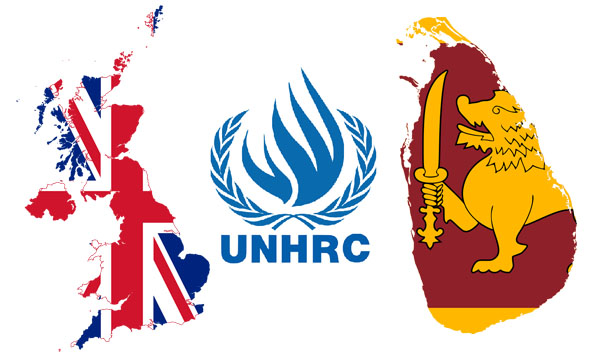
Referring to the US travel ban imposed on him, his wife and two daughters in February 2020 and the British sanctions declared in March this year, Gen. Silva said the US and British action had effectively restricted his overseas travel to south Asia.

The UK sanctioned Admiral of the Fleet Wasantha Karannagoda, former Army Commander Jagath Jayasuriya as well as former LTTE battlefield commander Vinayagamoorthy Muralitharan alias Karuna.

Gen. Silva highlighted the protests carried out by pro-LTTE activists in London in February this year targeting Yohani de Silva whose father served as the GOC of 55 Division engaged in the Vanni offensive.

The protest was organised by the Tamil Youth Organisation of the UK.

Responding to another query, Gen. Silva, in his first interview since retirement as CDS on Dec 31, 2024, said that GoCs Gen Jagath Dias (57 Division), Gen. Kamal Gunaratne (53 Division), Maj. Gen. Nandana Udawatte (59 Division), Maj. Gen. Prasanna de Silva (55 Division) and Chagie Gallage as well as those who commanded Task Forces faced punitive international action.

Gen. Silva’s retirement coincided with the abolition of the Office of CDS by the NPP government.

At the onset of the interview, Gen. Silva strongly emphasised the need to celebrate the eradication of terrorism and liberation of the people. The outspoken ex-soldier said that the armed forces and police paid a very heavy price to bring the war to an end, a war that many believed couldn’t be brought to a successful conclusion. Gen. Silva pointed out the absurdity in doing away with military celebration as Sri Lanka still marks the end of WW I and WW 11.

On behalf of all Division and Task Force commanders on the northern front, I take this opportunity to thank officers and men and families of those who paid the supreme sacrifice and the wounded.

Gen. Silva asserted that the armed forces as a whole suffered as a result of their failure to conduct post-war examination of operations undertaken by fighting formations deprived of the opportunity to correctly establish their roles. The former Army Commander said that the other countries always undertook such examinations immediately after the end of operations.

Gen. Silva said that since the end of war the country never made an honest attempt to record the events thereby setting the record straight.

The Yahapalana government co-sponsored the US accountability resolution against the war-winning armed forces in Oct 2015.

Gen. Silva explained that failure on the part of political and military leaderships to reach consensus on a common narrative contributed to the growing international pressure on the country.

Appreciating the NPP government summoning Canadian High Commissioner Eric Walsh over the recent unveiling of so-called Tamil genocide memorial in Ontario, Gen. Silva said that before his retirement he briefed President Anura Kumara Dissanayake regarding the challenges faced on the Geneva front.President Dissanayake promised to look into this matter and take appropriate measures, Gen. Silva said. “I believe the President as promised will address the issues at hand.”

By Shamindra Ferdinando

MULLIVAIKAL REMEMBRANCE DAY – MAY 18

Tamils all over the world pay homage to those who were killed in the brutal, final stage of Eelam War IV in 2009, the Tamil nation marked 16 years since the massacre of tens of thousands at the end of the armed conflict on May 18th 2009. IN 2009 OVER 40,000 KILLED 146,679 TAMILS UNACCOUNTED

IN 2009 OVER 40,000 KILLED
146,679 TAMILS UNACCOUNTED FOR
25,000 CHILDREN ORPHANED
80,000 TAMIL WIDOWED UP TO END OF WAR

Freedom is our birth right and Autonomy is our demand

Posted in Uncategorized

115-member Chinese business delegation to visit Sri Lanka

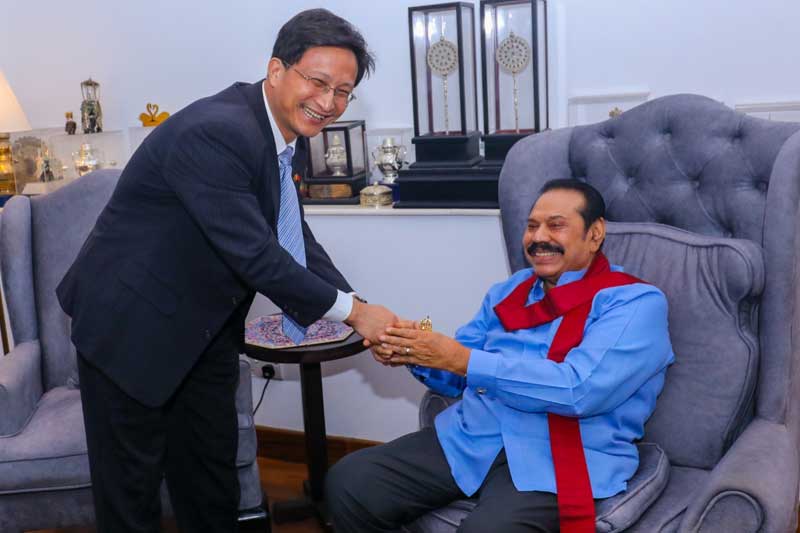
A high-level Chinese delegation will attend the Sri Lanka-China Trade and Investment Forum to be held in Colombo on May 30, hosted by The Ceylon Chamber of Commerce and the Department of Commerce of Sri Lanka.

Minister of Commerce of the People’s Republic of China Wang Wentao will head the 115-member business delegation representing 77 Chinese companies, to engage with potential Sri Lankan business and investment partners, at the forum organized by the chamber’s Sri Lanka–China Business Council and the China Chamber of Commerce for Import and Export of Machinery and Electronic Products.

The Forum will offer “a platform to strengthen bilateral commercial ties, facilitate business matchmaking, and identify new trade and investment avenues, in a diverse range of sectors,” the chamber said.

“The visiting delegates will represent four major chambers in China: the China Chamber of Commerce for Import and Export of Machinery and Electronic Products, the China Chamber of Commerce of Import and Export of Foodstuffs, Native Produce and Animal By-Products (CFNA), the China International Chamber of Commerce for the Private Sector (CICCPS), and the China Chamber of Commerce for Import and Export of Textiles.

“The delegation has expressed interest in imports from Sri Lanka including black tea, spices such as nutmeg and cloves, seafood including crab, fruits like papaya, pineapple, guava, and mango, as well as other food and agricultural products.

“Chinese businesses are looking to introduce garlic, cumin seeds, fennel seeds, various agricultural products, nuts, potatoes, vegetable items, textiles, and home textile products into the Sri Lankan market.

The services sector will also be a key focus, with potential collaboration in areas such as water treatment, clean energy, environmental protection technologies, engineering, and construction, CCC said.

Investment discussions are expected to focus on the automotive industry chain and tea plantation, and tea enterprise development.

Posted in Uncategorized

Training Program Launched for Newly Elected Local Government Members

The Ministry of Public Administration and Management has decided to launch a training course for newly elected members following the local government elections.

The Sri Lanka Institute of Local Governance stated that the training will begin after the Election Commission gazettes the names of the new members.

Separate training sessions will be held for members of Municipal Councils, Urban Councils, and Provincial Councils, depending on the current legal framework.

The course will cover topics such as legal powers, fund management, participation in council activities, and interaction with government institutions and the public.

Posted in Uncategorized

Four-Member Committee Appointed to Review Batalanda Commission Report

A four-member committee has been appointed by the Attorney General to review the Batalanda Commission Report.

The committee is headed by Senior Additional Solicitor General Rohantha Abeysuriya. The other members include Deputy Solicitor General Dilip Peiris, Senior State Counsel Jayani Wegodapola, and State Counsel Shakthi Jagoda Arachchi.

The committee has been tasked with studying whether the evidence contained in the Batalanda Commission Report is sufficient to initiate criminal prosecutions.

The report was recently forwarded to the Attorney General by the Presidential Secretariat, following instructions from the President.

Posted in Uncategorized

Sri Lanka looks to deepen ties with China in energy sector: Minister

Minister of Energy Kumara Jayakody has reaffirmed Sri Lanka’s commitment to expanding the energy partnership with China, describing China as a “close friend” and outlining ambitious plans for collaboration across petroleum and renewable energy projects.

In an interview with Xinhua, Minister Jayakody emphasized Sri Lanka’s eagerness to accelerate key energy projects in cooperation with Chinese partners. “We have a refinery project in Hambantota, and we are in a hurry to start this project,” he said.

“Not only in petroleum, but we also want to start some projects in the electricity sector, especially in using solar and wind power. We are very likely to call for the support of China in these sectors,” Minister Jayakody noted.

The Energy Minister has also highlighted that Sri Lanka is particularly interested in leveraging China’s advancements in battery storage technology to improve the reliability and sustainability of its electricity sector.

“We like to have those partnerships to develop these areas,” he said, pointing to a broader vision of modernizing the nation’s energy infrastructure with Chinese expertise.

The minister’s remarks came as Chinese state-owned energy giant Sinopec marked its first “Clean Sri Lanka” Open Day at a newly upgraded filling station. The event was attended by senior government officials, the Chinese Ambassador to Sri Lanka Qi Zhenhong, and community leaders.

Source: Xinhua

Over 15% Sri Lankans lost their jobs due to economic crisis, new data suggests

A total of 15.1% of Sri Lankans lost their jobs due to the impact of the economic crisis in 2023, according to the Department of Census and Statistics.

The data from the Department also indicated a higher percentage of males lost either their main and/or secondary jobs due to the economic crisis compared to females.

Meanwhile, the Census Department highlighted that during this period, 60.5% of households in the country experienced a decrease in their monthly income.

These findings were revealed in the final report of the Household Survey conducted by the Department of Census and Statistics regarding the impact of the 2023 economic crisis.

According to the report, 91.1% of households experienced an increase in their average monthly expenses while 5.3% of households’ expenditures remained unchanged.

Due to the economic crisis, 22% of the households in the country fell into debt, and 7% of the population did not receive proper healthcare treatment, the report by the Department of Census and Statistics revealed further.

Hambantota oil refinery: Tax tug-of-war stalls $ 3.7 b Chinese deal

The long-awaited $ 3.7 billion mega-scale oil refinery project in Hambantota, led by Chinese energy giant Sinopec, is facing further delays as an agreement on tax concessions between the Government and Sinopec is yet to be finalised.

Ministry of Energy Secretary Prof. Udayanga Hemapala, confirming the delay of the project, said: “The Government called for Requests for Proposal (RFPs) and only four were received. Ultimately, only Sinopec was retained and the rest were rejected.”

“Sinopec submitted its proposal under the Board of Investment (BOI) law, which limits foreign market equity to 20%. However, it is now asking for a greater stake and more tax concessions. We are currently in negotiations, but we have made it clear we cannot violate the original RFP,” he told The Sunday Morning.

While questions remained on the land lease agreement with Sinopec, Prof. Hemapala dismissed the notion as an impediment to the future of the project.

The requested land allocation of over 500 hectares has been agreed to in principle under the BOI framework, but no formal lease has been signed.

“It has requested more land and we have agreed to this in compliance with the BOI law. We cannot lease the land until everything is finalised. However, this is not a problem,” Prof. Hemapala stressed.

Environmental compliance also remains a critical barrier. Prof. Hemapala confirmed that the Environmental Impact Assessment (EIA) would only become a concern once the project received the green light to proceed.

However, the Central Environmental Authority (CEA), when contacted, could not provide details on the matter immediately.

“There is an RFP, which includes conditions in compliance with the BOI law. We have communicated this requirement to Sinopec and it is aware, but it is negotiating for more. In any case, we plan to submit a report to the Cabinet within two to three weeks,” he added.

Ceylon Petroleum Corporation (CPC) Managing Director Dr. Mayura Neththikumarage also acknowledged that discussions with Sinopec were ongoing, particularly concerning local supply chain integration.

“Sinopec wanted to fight for its part as a supply chain, but this is still under negotiation,” he said. “It submitted a revised proposal after a meeting last Friday and it is also exploring alternative solutions, including the possibility of engaging in other refinery projects.”

While Dr. Neththikumarage stopped short of making any claims, he suggested that it was possible that Sinopec was preparing a new Expression of Interest (EOI) for the Sapugaskanda refinery.

“While a proposal was finalised earlier based on the EOI, Sinopec is now seeking further commitments, particularly in terms of operational logistics and local partnerships,” he added.

He also clarified that the originally proposed investment amount of $ 3.7 billion remained unchanged: “There has been no indication from Sinopec about altering the investment figure. Perhaps if they introduce a new EOI, it may indicate something. Their focus is possibly on structuring local operations and developing a broader refinery strategy.”

Interestingly, the 500-hectare land allocation has not been a prominent issue in the latest rounds of negotiation, according to Dr. Neththikumarage.

If the negotiations are annulled owing to disagreements, Prof. Hemapala indicated that fresh agreements may be initiated based on a new RFP and the search for new investment partners.

Posted in Uncategorized