13 ruling party MPs cross over to the Opposition

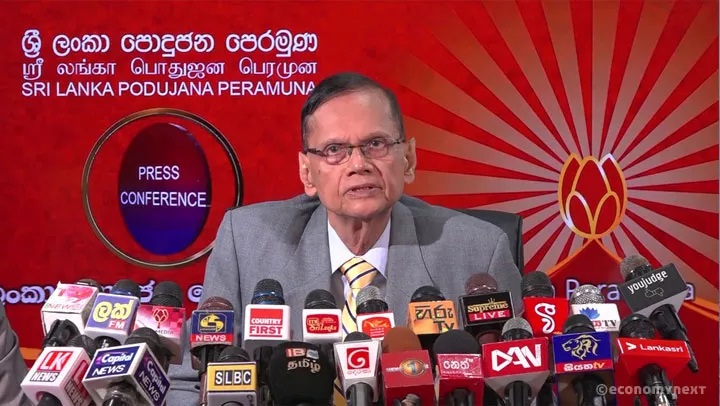
Thirteen parliamentarian of the ruling Sri Lanka Podujana Peramuna (SLPP) party including the party’s chairman Prof. G.L. Peiris have crossed over to the Opposition in Parliament today.

In a special statement the MPs said from today (August 31) they will take the seats in the opposition benches as an independent group.

The lawmakers said the decision was taken to oppose the actions taking place at this time violating the mandate given by 6.9 million people and also, to protect the aspirations of the voters of the SLPP and move forward.

Sri Lanka Podujana Peramuna Member of Parliament Prof. GL. Peiris said that he could not fulfill the promises made to the people during the 2020 general election. Accordingly, the people should be allowed to elect a parliament of their choice.

In addition to SLPP Chairman Professor. G. L. Peiris, MPs Dullas Alahapperuma, Dilan Perera, Dr. Nalaka Godahewa, Prof. Charitha Herath, Prof. Channa Jayasumana, K. P. S. Kumarasiri, Dr. Gunapala Ratnasekara, Udayana Kirindigoda, Dr. Upul Galappatti, Dr. Thilak Rajapaksa, Wasantha Yapa, and Lalith Ellawala, have decided to sit in the Opposition.

President’s Full Interim Budget Speech 2022

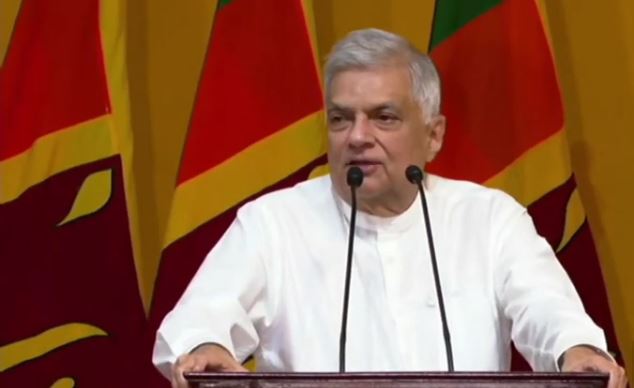
Delivering the Interim Budget Speech for 2022 in Parliament today (30), President Ranil Wickremesinghe stated that the government’s aim is to create a surplus in the primary budget by the year 2025.

“Our effort is to stabilize the economic growth rate. Our aspiration is to establish a solid economic foundation by the year 2026,” he said, in his final remarks during the speech.

He said as at end 2021, Sri Lanka’s public debt is about 110 percent of the Gross Domestic Product (GDP). “Our target is to bring this down to less than 100 percent in the medium term.”

“If we build the nation and its populace based on the National Economic Policy, we would be able to become a fully developed country by the year 2048, when we celebrate the 100th anniversary of independence.”

The President said that Sri Lanka can no longer be a nation dependent on loan assistance. “We can also no longer be used as a tool of interference by other countries with strong economies. All of our collective vision should be to make our country strong and stable, in order to stand independently.”

“We must strive to bring business entities of our country to a competitive level in the global market. We must pursue to capture a share of the global market on agricultural exports. We should seek to create a disciplined, knowledgeable society, that provides right opportunities to maintain social justice.”

Wickremesinghe said all this can be achieved, only if they work together in unity with common consent.

He reiterated the invitation to all the parties represented in Parliament to join an All-Party Government, “since this unprecedented situation is the responsibility of us all, and therefore need to prioritize the necessities of the country and the nation.”

“I request all of you in this House and all the citizens of the country, to put aside your personal political goals and unite in the context of the national cause of rebuilding the country and the nation.”

“If we all come together, we will be able to uplift our Motherland, and create a nation that competes and moves forward with the ever-changing world.”

“If we miss these opportunities, we will be marginalized globally,” he said.

Interim Budget Speech – 2022

Amendment to the Appropriation Act, No. 30 of 2021

Approach

Honorable Speaker,

The Interim Budget is being presented today to the Parliament, in order to prepare the basic foundation for changing the economic trajectory of our country. This is basic to the formulation of a national economic policy in accordance with the new world order. Based on this foundation, the Budget for the year 2023, will initiate the process of creating a new economy. For the process of creating a new economy, I plan to present a comprehensive set of proposals in the Budget 2023.

In presenting the Interim Budget, I wish to draw your attention to four aspects.

Economic Crisis

On many occasions, I have pointed out the extent and depth of the economic crisis that we are facing. We have not fallen into such an economic abyss in our recent history. Some people in our country do not yet have a real understanding of its severity. When pointing out the difficulties and hardships, they are viewed with sarcasm. They think like crabs that happily lay in the water that is on the fire, until it reaches boiling point. However, there are also those among us who think in a more responsible manner, having understood the gravity of this situation, and resolutely seek to battle in dousing the fire.

Causes of the Economic Crisis

It is a widespread slogan these days to claim that the country has deteriorated for 74 years after independence. Those who engage in chanting these slogans, earlier said that it was the colonial rulers who destroyed the country. This is the reality of slogan-led politics, they put forward slogans at different points in time for their own benefit. Engaging in rhetoric and politicalized economic policies for their own benefit rather than the country, are the main reasons for the collapse of our economy.

Due to these short-sighted economic practices, the country’s progress has been hampered from time to time. Many of those setbacks occurred in the name of the citizens who also accepted those policies without any criticism.

From the time the Government nationalized businesses, most of the tax revenue of our country has been spent to cover their losses. Funds which have to be utilized for the necessities of the community, are being wasted on keeping these companies afloat. Government should be formulating policies and implementing them. However, presently the Government does everything and the people also expect such from the country’s administration.

We have not been following appropriate policies, not only in relation to state enterprises, but also in attracting foreign investments. Continuously there has been no proper use of the nation’s resources, that too in the guise of seeking to protect state assets.

Solution to the Economic Crisis

In order to solve this economic crisis, one of the basic tasks that we need is to extricate from our traditional political perspectives and impartially appraise the reality of the ground situation in the context of the global environment.

I wish to quote a recent statement made by Mr. Sunil Handunneththi of the JVP “The Government should make policies. The Government does not have a role to engage in commercial ventures.”
If we can nourish our minds with creative thoughts, according to the current trends of the modern world, then we can solve the economic crisis.

Method of Solving the Crisis

This crisis will not be solved by accusing one another, nor by faulting the past. It can only be solved by adopting short- and long-term plans.

In this context, we are now adopting the short-term measures. Negotiations with the International Monetary Fund (IMF) have successfully reached its final stage. Discussions on debt restructuring will be held with the main countries that provide loan assistance to our country. The United Nations in collaboration with leading international organizations, is launching a programme to ensure food security. The process of providing daily needs like gas, electricity and fuel without a shortage has been initiated. Schools have opened, and the universities are commencing their academic activities.

All this reflects that, we are on the correct course in the short term for recovery.
However, we cannot be complacent. We should prepare a National Economic Policy for implementation continuously at least over a period of 25 years. As I mentioned at the beginning, this Interim Budget forms the basic foundation for the National Economic Policy, which is envisaged to be established through the 2023 Budget.

This Interim Budget speech, the IMF agreement and the Budget 2023 will set the framework for Economic Stabilization and Revival. Within it, we will set the Road Map.
Once the discussions with the IMF are concluded, I expect to provide the information on the same to the Parliament.

We briefly discussed the economic crisis, the cause of the economic crisis, the solution to the economic crisis and the method of solving the economic crisis. Now, I would like to present the Interim Budget and its proposals for your attention.
Macro-fiscal Framework
Our fiscal stabilisation programme envisages government revenue increasing to around 15 percent of GDP by 2025 from the 8.2 percent of GDP as at end 2021.
The government is targeting a primary surplus more than 2 percent of GDP in 2025 and expects to improve upon this level thereafter.
We aim to reduce public sector debt from around 110 percent of GDP as at end 2021, to no more than 100 percent of GDP in the medium term.
It is expected that inflation will be brought back under control to a mid-single digit level in the medium term.
In line with this, interest rates are also expected to reach a moderate level gradually.
Once macroeconomic confidence is re-established and foreign exchange reserves are replenished through foreign financing, the adverse pressure on the exchange rate is also expected to abate.
With the implementation of a series of growth enhancing structural reforms, the medium-term economic growth is expected to return towards 5 percent.

Main items in the Interim Budget

The Interim Budget includes the provisions to accommodate the policy package introduced in January 2022, provisions for strengthening social safety net programmes, additional cost due to increased interest payments in 2022, receipts of foreign assistance through repurposed projects by the World Bank and the Asian Development Bank (ADB), provisions for financing obtained through the Indian Line of Credit and increased cost of fertilizer subsidy, among others.
As I promised earlier, we have directed around Rs. 300 billion out of capital expenditure and less priority spending allocated in the original budget 2022 for above purposes, including the provision of relief to those who are affected by the economic crisis.

Revenue Proposals

A number of tax reforms pertaining to Income Tax, Value Added Tax (VAT), Telecommunication Levy and Betting and Gaming Levy have been already approved to be implemented. Some of these tax proposals have already been implemented.

In addition, the VAT rate will be increased to 15 percent from the current rate of 12 percent with effect from 1st September 2022.
Most revenue proposals introduced in May 2022 will be effective from 1st October 2022.
The implementation of these proposals will help increase the revenue. It will enable to gradually reduce the quantum of monetary financing for government expenditure.
The revenue from the above proposals is also included under the revenue estimates presented in the amendments to the 2021 Appropriation Act.
In addition, it is expected to present new revenue enhancing proposals aiming at Budget 2023.

Tax Administration

In our efforts to increase the revenue, tax administration must play a pivotal role in enhancing the tax collection efficiency, strengthening tax compliance and preventing tax avoidance.
In addition to the already existing requirements, I propose to introduce compulsory tax registration for all residents who are above 18 years of age without considering their annual income and tax-free thresholds.

The government is committed to implement the recommendations in the Final Report of the “Presidential Commission of Inquiry into Sri Lanka Customs”. This will strengthen corporate, administrative, and operational processes of Sri Lanka Customs to discharge its responsibilities effectively and efficiently.

Non-Tax Revenue

Measures will be taken to enhance non-tax revenue, including royalties received for government assets. I also propose to take actions to attract foreign investors and/or technology holders to establish joint ventures with Sri Lankan partners for industrial investments with advanced technologies to ensure better utilization of our mineral resources and increase value addition without jeopardizing the interests of the national economy and the sustainable use of resources.


Expenditure Management

At present, measures are being taken to develop a more prudent and evidence-based prioritisation mechanism for capital expenditure projects. Funding will be channelled to priority sectors such as education, healthcare, public transport, public service digitisation, and social protection.
The effective expenditure management needs better and strong supervision as well. Hence, I propose to introduce required laws to establish a system like Inspector General (IG) in the USA, tasked with making sure government expenditure system is working well and in the way it is intended. The IG will be strongly empowered and will actively engage in protecting the integrity of the government by detecting and preventing fraud, waste, and abuse in government institutions.
A comprehensive study of movable and immovable properties, including government owned buildings, lands and vehicles will be conducted with a view to optimise the utilisation and to identify potential real estate for income generating activities.
Consolidation of identified Local Government Authorities
There are 341 Local Government Authorities currently operating in the country consisting of 24 Municipal Councils, 41 Urban Councils and 276 Pradeshiya Sabhas. While there are local government authorities which have ample revenue streams, there are also local government authorities which do not have sufficient sources of revenue. Therefore, in order to provide a more efficient public service and to facilitate efficacies in administration, I propose to merge selected Pradeshiya Sabhas with a Municipal Council or an Urban Council adjacent to them. 22 Pradeshiya Sabhas have been selected for this programme as the initial step. Details are given in the Annexure VII.
In order to making services to be efficient and easier to the public, all the local government authorities should arrange to offer online services to collect the related revenues without any delay. Accordingly, the online revenue collection programme should be implemented in all local government authorities before the end of 2022.
It is important to review the activities of the project offices and project units that have been established for various purposes as these involve significant number of staff and high amounts of payments. Hence, I propose to appoint a committee to review whether the intended purposes of such offices and units have been met and whether it is necessary to continue such entities and submit recommendations to the Cabinet of Ministers within a period of 3 months.

Public Sector Reforms

As a part of efficient expenditure management, I propose to rationalize the number of government employees. Already, we have allowed those who are willing to take no pay leave for 5 years or so and go abroad or engage in educational activities in the country.
It has been observed that there has been increasing unrest among unemployed youth as the government had decided to raise the mandatory retirement age of public sector employees to 65 years and that of semi-governmental employees to 62 years. Besides, it has also been reported that the increase in the retirement age has restricted the promotional opportunities available for many public sector and semi-governmental employees.

Accordingly, it is proposed to reduce the retirement age of public sector and semi-governmental employees to 60 years. Those who have been employed beyond 60 years of age at present in the government and semi government sectors will be retired as of 31.12.2022.

The Director General of Management Services will be tasked to conduct a work study covering the entire public service for the purpose of optimally obtaining services of the primary level employees in the government entities and to submit the report to the Cabinet of Ministers within three months.

The purchase of fossil fuel-based vehicles for public sector will be suspended from hereafter as a government policy.

As per this policy, only electric-powered vehicles will be purchased for the use of the public sector in the future and the private sector will also be encouraged to use electric vehicles.

In purchasing vehicles for the public sector, suitable categories of vehicles are decided on the basis of the efficiency and prices of the vehicles. This proposal will be implemented step by step and will be completed by 01st January 2026.

National Security – 2030

As a geo-politically important country, Sri Lanka should work with everyone and design our defence policies accordingly to face the emerging realities.
Hence, I propose to have a review on our defence strategy called “National Security – 2030” to achieve these objectives and to develop capabilities and knowledge of our security forces that would be required in the modern and evolving world.

State Owned Enterprises

Another critical area of reform is the management of state-owned enterprises (SOEs). The major fiscal risks arise from a few key SOEs, particularly in the transportation (SriLankan Airlines) and energy sector (CEB and CPC). These entities face significant losses, negative equity (SLA/CPC), and large volumes of debt that is predominantly owed to the state banks, creating significant financial sector risk.

Some of the state-owned enterprises have been making losses on continuous basis due to issues of structural nature existed for some time. As these losses cannot be met endlessly from the General Treasury, attention should be paid to find alternative mechanism make them effective. Accordingly, it is proposed to establish the “State-Owned Enterprise Restructuring Unit” to facilitate restructuring of government owned business entities. I propose to allocate Rs. 200 million to implement this proposal.

In addition, I propose to re-activate the Statement of Corporate Intent (SCI) process for key 50 SOEs, excluding CEB, CPC and Sri Lankan Airlines, as they are under different efforts to restructure, to closely monitor the set targets.
These difficult but necessary measures pertaining to SOEs will no doubt be challenging to address, but failing to do so would create catastrophic risks, particularly for financial sector stability, and will entail even higher taxation burdens on the public in the future.
Fiscal legislative/oversight framework
The fiscal reforms that have been set out are not alien to us. These issues have long been recognized and until 2019, Sri Lanka was embarking on a path of fiscal stabilisation where many of these reforms were put in place. Unfortunately, these reforms were rolled back, putting the economy on a downward spiral to where we are today. We don’t have any alternative. We must undertake these reforms for the benefit of the future and the betterment of the presently young people.
Therefore, it is essential that whatever reforms we put in place today are shielded from myopic and stubborn decision making that derails the economic recovery that we all hope to see. Towards this end, we will introduce new legislation under a Public Finance Management Act (PFM Act) that will include stronger Fiscal Rules.

A “Parliamentary Committee on Ways and Means” will be established to closely deal with issues and make proposals in raising government revenue.
Disposal of scrap materials accumulated in public sector institutions
It is found that a large amount of scrap material are piled up in many government institutions due to non-removal/disposal of the same for a long time. Besides, the government is losing a lot of revenue that could be obtained by selling the scrap material.
Accordingly, a committee consisting of three government officials including Comptroller General of the General Treasury, will be appointed to supervise and implement the entire process of the disposal of scrap.

Establishment of a National Debt Management Agency (NDMA)
The government debt management related activities are carried out by the Central Bank of Sri Lanka, External Resources Department, National Budget Department and the Treasury Operations Department at present. As it is important to pay special attention to the management of public debt, an independent National Debt Management Agency (NDMA) will be set up under the General Treasury in lieu of current arrangement in this respect.
Establishment of National Agency for Public Private Partnership (NAPPP)
A national agency will be established for the purpose of identifying and facilitating investment to be undertaken in partnership with the public and private sector. I propose to allocate Rs. 250 million for the implementation of this proposal.

Monetary and financial sector

The new Central Bank Act will be implemented as a key legislation to strengthen the monetary sector in the country. This legislation would provide the framework for effective implementation of inflation targeting and prevent monetary financing of the budget deficit – what is commonly known as money printing.

The new law insulates the Central Bank of Sri Lanka from politicisation of monetary policy decisions.

Given the weak government revenue and lack of net foreign financing of the budget, it is inevitable that a limited level of monetary financing would continue until tax policy measures help improve the government cash flow and the IMF programme unlocks foreign financing for the budget.
Allotment of 20 percent shareholding in state banks to the depositors and staff of those banks
In order to meet recapitalization requirement borne out due to increase in interest rates, rising NPLs, loan settlement issues faced by businesses due to economic crisis, and liquidity issues faced by the state banks, it is proposed to allow 20 percent of shareholding of the Bank of Ceylon and People’s Bank by their depositors and staff.

It is noted that government’s ability to provide additional capital at this stage to the state banks is very limited given the lack of fiscal space.

Social welfare

The Welfare Benefits Act became law in 2002, but it has not properly implemented thus far. The Welfare Benefits Board has now been activated and the data collection to establish the database or the social registry is progressing. A new mechanism for identifying beneficiaries through objective and verifiable criteria has also been established. It will ensure that transparent laws and systems are in place. With the completion of this work, the welfare programmes will be better targeted and cash transfers will be made directly to bank accounts of beneficiaries.
I am well aware of the difficulties faced by many due to the ongoing crisis. That’s why I decided to cut some of the capital expenditure and find room to provide enhanced support for vulnerable communities.
As you are aware, the government spent additional amount of about Rs. 31,000 million approximately from May to July 2022 to provide an additional monthly allowance as urgent assistance to those who have affected due to loss of employment, decline in agriculture output and inability to cultivate due to many reasons.
I propose to continue this programme for further four months to reduce the pressure of the economic crisis on the affected people mentioned above.
I also propose to provide additional monthly allowance of Rs. 2,500 for pregnant mothers in addition to Rs. 20,000 already provided for them.
It has been reported that there are about 61,000 food insecure families, which need urgent assistance. I will provide Rs. 10,000 per family for a period of further four months.
For all the above programmes, I will allocate Rs. 46,600 million for a period of 4 months.
The recent increase in the kerosene prices has created difficulties for the owners of small boats which are used for fishing industry and for those who in the plantation areas that has no electricity services. I will provide a subsidy for these areas.
133 billion has been allocated under the World Bank loan assistance for the implementation of programs with the view of reducing the impact of the current economic crisis and restoring social stability.
Accordingly, I have obtained approval through the Supplementary Estimate presented to Parliament before presenting this budget to provide immediate relief to around 3.2 million people affected by the current economic situation.
Under this, monthly Samurdhi allowance has been increased to an amount ranging between Rs. 5,000 to Rs. 7,500 per month for approximately 1.7 million currently Samurdhi receiving families. Apart from that, an assistance of Rs. 5,000 was provided per month temporarily to around 726,000 families who were in the waiting list for expecting Samurdhi benefits.
Also, the allowance paid for the elderly, disabled, and kidney patients was increased to an amount ranging between Rs. 5,000 to Rs. 7,500. Further, the temporary assistance of Rs. 5,000 was arranged for the people who are in the waiting lists in anticipation of receiving this assistance.
In addition to the above concessions provided under this project, US dollars 110 million (Rs. 40 billion) has been allocated for the import of Urea required for paddy cultivation in the 2022/2023 “Maha” season, and fertilizer procurement is already underway. I believe that this will enable the paddy farmers to get a good harvest in the coming season and thus will be able to get rice at a reasonable price for the rice consumers.
Further, under this loan facility, domestic cooking gas was imported and distributed in the country during a short time duration to overcome the domestic gas shortage that had arisen in the country due to the current shortage of foreign exchange. Also, we are working to meet the domestic gas requirement without shortage in the future as well. It is intended to spend about US dollars 70 million (Rs. 25 billion) from this loan assistance for that.
That is in addition to the concessions mentioned in Section 19.3 above.
Introduction of new laws / revision of laws
In order to stabilize the economy and facilitate the growth process, it is proposed to make appropriate revisions and introduce new laws to make reforms expeditiously in a short period of time as given below.
New Laws
Food Security Bill
Public Asset Management Bill
Economic Stabilisation Bill
Offshore Economic Management Bill
Public Service Employment Bill
Public Finance Management Bill
The Recovery of Possession of the Premises Given on Lease (Special Provisions) Bill
Contributory National Pension Fund Bill
Agency for Overseas Sri Lankans Bill
(b). Revision of Laws

Amendments to Agrarian Development Act
Amendments to Excise Ordinance
Amendments to Finance Act
Amendments to Foreign Exchange Act
We will discuss with all stakeholders to introduce a more realistic mechanism than Termination of Employment of Workman Act (TEWA) to handle employees who lose their jobs due to the crisis.
Chapter 11 of the Bankruptcy Code of the United States and introduction of similar provisions to Sri Lanka Chapter 11 of the US bankruptcy Code of the United States contains provisions on how to reorganize businesses in distress due to indebtedness. Bankruptcy alone is not a reason to close the business and there are ways to reorganize the business by restructuring the assets and liabilities and by getting rid of the indebtedness while staying alive in the business. New laws in similar lines should be enacted for Sri Lanka as well.

Agriculture

The number of paddy farmers with 2 hectares or less who are in repayment arrears of cultivation loans given by the state banks as of 31.05.2022 due to the decrease in harvest, lack of fertilizers, agro-chemicals and inputs, abandonment of cultivation, etc., was 28,259. Aimed at strengthening of the farmers and freeing them from debt burden, actions are being taken to write off the outstanding loan amounting to Rs. 688 million (excluding interest) which is currently in default to the state banks. The money to be writing off will be paid back to the respective banks in two years in a phased manner so as not to put added pressure on the cash flow of the General Treasury. Accordingly, the respective banks should arrange to write off the interest relating to such loans. I propose to allocate Rs. 350 million for the implementation of this proposal.

We must ensure that agriculture and entrepreneurship are fused together. We should make sure we understand problems and rethink to promote our agriculture. The youth are quick to adopt new technologies. They can use innovative tools and improve efficiency across the value chain. In this context, I propose to establish Youth Agriculture Companies and link them with 331 Divisional Federation of Youth Clubs to get maximum results. Rs. 250 million will be allocated for this proposal.

It is important to develop agriculture value chains as well. For this purpose, I propose to strengthen the Domestic Agriculture Development (DAD) Value Chain Programme. The DAD pilot phase (DAD PP) is being implemented by CBSL with its own funds (Rs. 1 billion) and it is expected to expand the program in 2023 with the assistance of the development partners, while encouraging the production for the overseas market.

There is a strong need to enhance domestic dairy production. Therefore, it is prudent to implement a National Programme with the support of all stakeholders through a project that will be funded by government or a development partner. Since the productivity in the highland climate is higher, the unutilized or low productivity lands of plantations could also be utilized for this project. I propose to allocate Rs. 200 million for this initially.

Since there is a shortage of seeds and planting material due to the decrease in the cultivated area and yield in the past, the Department of Agriculture and government farms should implement an urgent programme to supply the necessary seeds and planting material to the farmers. Accordingly, I propose to allocate Rs. 400 million to the Department of Agriculture to produce the necessary seeds and planting materials.

Utilizing unemployed youth for the productive use of the existing government lands.
With the aim of efficiently and productively using government land for agriculture and livestock under the strategy for encouraging export-oriented agriculture, the government lands will be used efficiently and unemployed youth will be directed for that purpose.

Accordingly, it is expected that 20 acres of land will be allotted to currently unemployed youth groups (groups of about 10 members) in the area where the identified lands are located for the purpose.

I propose to allocate Rs. 50 million to implement this proposal.

I also propose to introduce a “National Food Security Programme” covering broad areas, including the enhancement of production, collection, storage, and distribution of food, as well the provision of food to those who do not have the capacity, to ensure food security and implement the same as a national priority.

Revision of Agricultural Insurance Programme

Although the farmers have actively contributed to the program by providing insurance premiums from the beginning of the implementation of the agricultural insurance program, it appears that the government currently bears all the funds related to this insurance.

Accordingly, it should be reviewed whether it is necessary to continue the present system or whether it is possible to provide the relevant facilities to the farmers under another convenient system.

Research and Development (R&D)

Improving R&D is important to improve Sri Lanka’s global competitive ranking in order to be successful.
I propose Rs. 100 million to establish a mechanism to promote R&D and commercialize the same, particularly with the startup culture, with the assistance of local universities and technological institutes.

Promotion of local packaging products

There is a need to reduce wastage of agricultural produce by way of improving the marketing and storage time. Therefore, food packaging industries using local raw materials should also be promoted to preservation and marketing of agricultural produce.

Accordingly, 50 percent import duty concession is offered on import of advanced new technology equipment/accessories for food packaging. Apart from this, the Palmyra Development Board, National Design Center and Export Development Board should jointly introduce new packaging programme and contribute to the promotion of the export market through innovative packaging.
I propose to allocate Rs. 250 million to implement this proposal.

Promotion of tourism industry

In order to attract more tourists from September this year, the Ministry of Tourism should organize special programmes with the support of the Tourist Board and other institutions related to the tourism industry. Here, it is necessary to target the cultural /religious events that are unique to different races to be held in Sri Lanka in the future. Considering the importance of this industry, by the end of 2023, the number of tourist arrivals per year should be increased to more than 25 lakhs as the target.

In addition, special attention should be paid to attract high-end tourists.
Also, a five-member committee, representing various sectors, should be appointed to present a report focusing on the identification of new places of tourist attractions and the improvement of related facilities and a report containing their recommendations to be presented in a month for onward actions. I propose to allocate Rs. 300 million to implement these proposals.

Facilities from the Climate Fund

As there is a trend of increasing accidents, disasters and property damage due to weather and climate related effects in Sri Lanka, suitable measures should be taken urgently to reduce the climate effects.

For that, the Ministry in charge of the subject of environment should prepare a suitable program and obtain necessary support from the Climate Fund and implement a mitigation program accordingly.

Expanding higher education opportunities

Many countries in the world have opened educational opportunities to foreign students in a manner to build their foreign reserves. In the South Asian region, Bangladesh, India and Nepal have already opened up their countries to foreign students to build up their foreign reserves. Accordingly, Sri Lanka also needs to encourage private investment to provide educational opportunities to foreign students.
Hence, I propose to facilitate the establishment of branch campuses in Sri Lanka, particularly focusing on Science, Technology, Engineering and Mathematics (STEM) subjects as well as finance, information technology and medicine. For this purpose, the government will provide all facilities through the Board of Investment (BOI) to establish such branch campuses as per the provision laid down in the Companies Act and Universities Act and other applicable legal provisions subject to amend them when and where necessary.

The creation of space for private investment in higher education will free up government resources that will enable the state to ensure that free education is preserved and in fact expanded beyond present levels. Scholarships will also be provided to Sri Lankan students to study in these universities.

I also propose to open a branch campus of the Kotalawala Defence University (KDU) in Kurunegala.
Facilitating new jobs based on skills

In the Sri Lankan labor market, there are a large number of people who are employed without any previous training and are employed by getting skills through work.

There is a need to provide more training and qualification to this group, including relevant theoretical knowledge. Through this, the productivity of work will grow, and businesses will be able to gain a competitive position in the global context by having skilled staff. Also, the job seekers will be able to find more effective employment opportunities as well as foreign employment opportunities.

As a result of the negative impact of the COVID-19 pandemic and the economic recession, there are people who are losing their jobs, so there is a need to train them for new job opportunities. Support level staff working in free trade zone factories from rural areas tend to return to the countryside after working for about five years. Here, women often lose job opportunities and men are engaged in informal jobs.
Accordingly, it is necessary to provide further training to be able to get a new job based on the skills acquired in the jobs engaged in free trade zones.
Accordingly, it will be possible under this system to train and provide NVQ certificates from the selected vocational training institutes (Youth Corps, VTA, NAITA,) and TVEC, which is the regulatory body in the vocational training sector.
I propose to allocate Rs. 200 million to implement this proposal.
Ensuring the employment security of the community engaged in Micro-scale self-employment / Livelihood occupations
Many people in the community living in urban and rural areas are engaged in micro-scale self-employment / livelihood occupations. By providing part-time or short-term formal training in technology and innovation for life occupations to this community, the productivity, safety and health of those jobs will increase, and the quality of products will also improve. For this purpose, it is proposed to establish a community unit in every Vocational Training Center operating under the government to empower the community and the technical services that are not available in the training center will be obtained from outside and training facilities will be provided to the community.

Accordingly, work is being done to provide formal training in food and beverage preparation, fish drying and vegetable dehydrating, sewing knitting, beeralu weaving, brass industry and Black Smithing as livelihood around the training center, online self-employments based on the Gig economy and other life occupations. After the training, a certificate is also being provided.
After formal training, the currently engaged profession can be done effectively and efficiently, so food and other products can be provided in quality. Through that, it is possible to confirm their job security and improve their businesses.

I will allocate Rs. 200 million to implement this proposal.

Use of railway facilities for vegetable and fruit transportation to make the supply chain more efficient.
The transport of vegetables, fruits, flowers and tea products from the upland areas to Colombo and urban areas is important to the farmer, the producer, the trading community as well as the consumer while preserving the freshness. Hence, it is necessary to encourage the transportation of these goods by railway. Through this, waste, delays and costs can be minimized and an additional revenue will come to the Sri Lanka Railways.

As a starting point, a train with relevant facilities should be deployed to transport vegetables, fruits and other products from Hali Ela Railway Station to Colombo Fort Railway Station. Cargo loading facilities should be improved in relevant railway stations for this purpose, a system should be implemented with the participation of cooperatives and private entrepreneurs to establish cargo collection centers and provide transport facilities from those centers to the respective railway stations.
Sri Lanka Railways should work to implement a suitable program to encourage wholesalers to transport goods from Colombo to Badulla.
I propose to allocate Rs. 200 million to implement this proposal.
Private investment to improve quality and efficiency of the railway
Since providing efficient and high-quality transport service to the people is a priority task of the government, it is expected that private sector investments will be used for the development of the railway transport service using the existing infrastructure under this program.
Accordingly, it is expected to develop the Kelaniweli train service as a pilot project. The selection of investor/s will be based on competitive bidding process.

Trade and investment

The government’s macroeconomic reform programme will focus on re-engaging with the global economy to tap into regional and global value chains to enhance exports and export oriented FDI.
Accordingly, the government will gradually phase out the high trade barriers in the form of para-tariffs. This will be done in conjunction with a Trade Adjustment Programme to support industries and workers adversely affected by such tariff liberalization.

The government will provide renewed support to the National Export Strategy, a well thought out framework of export support that was developed through broad stakeholder consensus in 2018.
We will resume efforts towards engaging broader regional trade agreements in order to link into regional value chains which have been the driver of export growth in the South East Asian region in particular.

The Government will facilitate the expansion of renewable energy sources to enhance availability and reduce the cost of energy generation in Sri Lanka by allocation of necessary land and through the necessary operational restructuring of the CEB.

The government being the owner of around 80 percent of land will take measures to facilitate access to land with suitable utilities for domestic and foreign investment. We will implement a programme to award title deeds for lands previously handed over under numerous grants.
I also like to propose to establish an “Office for Overseas Sri Lankans”, which will act as a central point of coordination to obtain the support of Sri Lankans who are living abroad to the country. This office will encompass various organisations of the Sri Lankans across the globe and focus mainly on attracting investments, promoting tourism and similar matters. In order to support this, an “Overseas Sri Lankan’s Fund” will also be established. It is expected to get the support of all Sinhala, Tamil, Muslim, Burgher and other Sri Lankans who live abroad for this programme.
Manufacture of electric bicycles Manufacturing of electric bicycles should be encouraged as a local industry with a view to reducing fossil fuel consumption.

Therefore, tax concessions will be provided for imported accessories/parts required in the manufacture of electric bicycles locally with more than 50 percent value addition.
Strengthening governance and fighting corruption
A comprehensive legal framework will be established to strengthen governance and fight corruption. This framework will strengthen the asset declaration system and increase independence of the Commission to Investigate Allegations of Bribery or Corruption. Further, I propose to promote technology infused systems to eliminate grounds for corruption and create transparency.
The End

We will prepare the foundation for the journey of creating a revitalized economy through these proposals. I would like to draw your attention to another particular issue.
As I have mentioned on several previous occasions, our aim is to create a surplus in the primary budget by the year 2025. Our effort is to stabilize the economic growth rate. Our aspiration is to establish a solid economic foundation by the year 2026. As at end 2021, public debt is about 110 percent of the Gross Domestic Product (GDP). Our target is to bring this down to less than 100 percent in the medium term.

If we build the nation and its populace based on the National Economic Policy, we would be able to become a fully developed country by the year 2048, when we celebrate the 100th anniversary of independence.

We can no longer be a nation dependent on loan assistance. We can also no longer be used as a tool of interference by other countries with strong economies. All of our collective vision should be to make our country strong and stable, in order to stand independently. We must strive to bring business entities of our country to a competitive level in the global market. We must pursue to capture a share of the global market on agricultural exports. We should seek to create a disciplined, knowledgeable society, that provides right opportunities to maintain social justice.
All this can be achieved, only if we work together in unity with common consent. I reiterate the invitation to all the parties represented in this Parliament to join an All-Party Government, since this unprecedented situation is the responsibility of us all, and therefore need to prioritize the necessities of the country and the nation.

Some parties say that they will not join an All-Party Government due to action by the Government which they cannot condone. Others express a reluctance to join due to their opposition to the policies. In this instance, I wish to emphasize that, I am not the person who decides the actions or policies of an All-Party Government. It is not an administration of a single person or a single party, and will be established according to the consent of all stakeholders of the government. Therefore, I reiterate that, if there are policies or practices which you do not condone, then you have the right and mandate to change them within an All-Party Government.

Therefore, I request all of you in this House and all the citizens of the country, to put aside your personal political goals and unite in the context of the national cause of rebuilding the country and the nation. If we all come together, we will be able to uplift our Motherland, and create a nation that competes and moves forward with the ever-changing world. If we miss these opportunities, we will be marginalized globally.

I would like to remind you, the line of the lyrics ‘Aaji Thapara Lahila’ written by Bandara Eheliyagoda for a teledrama produced for the Mahapola Scholarship Fund.
‘Apa pamanada ekathena karakenne – Apa thanikara lokaya diva yanne’

So, let’s get together for the country, without spinning in one place anymore. Let’s create a knowledgeable society with a strong economy that can run forward together with the world.
Thank you.

Posted in Uncategorized

Is Sri Lanka a Victim of a Chinese Debt Trap? Well, It’s Complicated

The recent economic crisis and political unrest in Sri Lanka prompted a soul-searching as to whether China’s actions over the previous decade trapped Sri Lanka into a debt trap, a question that needs a nuanced answer.

China’s Playbook

There are several different paths toward increasing one’s influence in global politics. Spreading values similar to what you share, democracy and free markets, via soft power is one. Brute military force is another.

A middle path most recently pursued by China relies on providing economic inducements but also establishing economic dependencies. In some cases, China has even been accused of conducting a “debt trap diplomacy” toward other countries, most notably in Sri Lanka.

The playbook is very clear. China approaches authoritarian regimes with little accountability to its people. Projects that are key to displaying visible economic growth – highways, ports, telecoms, railways, and airports – are the most preferred for priority funding. These projects usually favor the home electoral areas of the ruling class and usually have little or no return-on-investment calculations done before being undertaken.

Sure enough, when bills come due, very few if any of the governments can afford to pay. What happens next is pretty clear as well. China often ends up being the largest bilateral debtor giving Beijing a veto over sovereign debt restructurings of these highly indebted vulnerable countries, which the IMF now increasingly requires as a prerequisite for a bailout.

After a burst of initial loose lending as part of its flagship Belt and Road Initiative, China has slowed project lending in recent years. However, China has recently started lending to these very same highly indebted vulnerable countries once again, but with shorter term maturities and higher interest rates for balance sheet support to prop up their foreign currency reserve.

Effectively China has now been playing the role of both the IMF and World Bank combined but without any of the ‘cumbersome’ conditions that come attached from such institutions such as demands for a proper macroeconomic framework, fiscal discipline, tackling corruption, and respecting human rights.

Chinese Role in Sri Lanka

What happened in Sri Lanka followed a similar pattern. However, it was the actions of its ruling elite that made this scenario possible, with China becoming one of Sri Lanka’s largest bilateral debtors over one and a half decades.

Shunned by the West for the perceived war crimes committed by his regime during the last phase of the civil war, the newly elected President Mahinda Rajapaksa found a willing ally in China in 2005. China helped fund and construct many vanity projects in Rajapaksa’s southern voter base of Hambantota which accounts for a mere 2.6 percent of the overall population of Sri Lanka.

These China-funded projects included the world’s most underutilized international airport, the Hambantota port in Southern Sri Lanka, and a conference center that has only hosted one international conference since being constructed. Additionally, in Colombo, a China-funded Lotus Tower that is the tallest self-supported structure in South Asia is yet to open to the public. Even while other projects floundered, China financed its most ambitious project yet, the Colombo Port City, meant to be a finance hub to rival Dubai and Singapore in 2014.

Economic Woes

Despite being the first country in South Asia to implement economic reforms in 1977, Sri Lanka has had to seek 16 IMF bailout programs due to fiscal and monetary indiscipline tracing back to the 1950s. Despite the previous economic challenges, Sri Lanka maintained an unblemished debt repayment reputation for 74 years post-independence. Last year, however, Sri Lanka began to experience a forex crisis.

The most immediate reasons for Sri Lanka’s forex crunch were the loss of foreign exchange earned via tourism revenue due to the COVID-19 pandemic. Russia and Ukraine had replaced China, India, and others as the top tourist source countries as the pandemic spread, hence when the war in Ukraine erupted, it compounded the impact on tourism just as it was recovering post-pandemic.

Worker remittances and export proceeds, which are two of the main sources of forex for Sri Lanka, also contracted sharply due to the ill-fated decision to effectively fix the exchange rate in July 2021. The move pushed expatriate Sri Lankan workers to remit money via informal channels where they received better returns and also led to exporters delaying the repatriation of their foreign earnings.

The war in Ukraine led to a ballooning import bill for the two largest import items, crude oil, and refined petroleum products. By April 2022, faced with rapidly dwindling forex inflows, a ballooning import bill, and almost depleted forex reserves, Sri Lanka finally defaulted. The debt default led to unprecedented shortages of basic necessities as global suppliers who had in the past extended credit to the country were extremely reluctant to do so now.

Moreover, the country was also hit by a food crisis, precipitated by an ill-informed and arbitrary decision to ban all fertilizer imports in favor of organic farming by an all-powerful executive president lacking government experience.

As noted by the new Central Bank Governor, the inordinate delay and stubbornness in not approaching the IMF was the final nail in the coffin that resulted in running out of reserves completely, resulting in the shortages of essential items and political unrest.

The catastrophic state of the Sri Lankan economy ignited the protests that brought about the resignation of, first, Mahinda Rajapaksa as Prime Minister, and later his brother, Gotabaya Rajapaksa, from the powerful role of Executive President. This was an inglorious downfall as both of them were elected by super majorities only a couple of years before.

China’s Responsibility

China is now Sri Lanka’s leading bilateral debtor holding ten percent of the country’s outstanding debt, by the government’s estimates. Moreover, many sources claim official statistics do not fully reflect Sri Lanka’s debt figures including what is owed to China. However, what is clear is that the projects dubbed “white elephants” have been almost exclusively funded by China. Moreover, Chinese-funded projects in Sri Lanka have been accompanied by a troubling lack of transparency which stands in contrast to, for example, Japanese-funded projects where the terms are publicly disclosed and costs are challenged by the media.

Does this make China responsible for Sri Lanka’s economic and debt crisis?

This is where it gets complicated. The unsustainable costs of foreign debt were mainly comprised of international sovereign bonds (ISB) which Sri Lanka became addicted to in the post-civil war period. Coming in at a staggering $12.55 billion outstanding, these ISBs make up the largest share of Sri Lanka’s foreign debt. Unlike the borrowings from multilateral agencies like the IMF, World Bank, or ADB, where the interest rates range between 0.25 percent and 3 percent, interest rates for the current ISBs issued by Sri Lanka vary from a low of 5.75 percent per annum to a high of 7.85 percent.

Was China responsible for the debt default per se? Again – probably not.

Arrogance on part of the ruling elite of the Rajapaksa family and a few trusted government officials was the main reason. China often claims it is the host countries that choose projects for Chinese funding, and it was indeed so in Sri Lanka’s case. While unproductive assets are a drain on economies and divert capital from more productive assets, the nature of Sri Lankan politics in the post-2005 Rajapaksa era meant that some of these white elephant projects would probably have been undertaken irrespective of Chinese funding, even if not necessarily in the same grand and unsustainable scale.

Nevertheless, that does not absolve China of blame completely, as its irresponsible lending helped the Rajapaksa regime win elections, allowing the debt situation to drag on much longer than it needed to without IMF intervention.

The outcome of this economic crisis has effectively given China possibly the most important voice in determining Sri Lanka’s future direction. According to the Sri Lankan Finance Ministry’s data from August, Sri Lanka’s total bilateral debt stands at $10 billion. At the end of 2021, some 44 percent were borrowings from China, with loans from Japan and India representing 32 and 10 percent of the bilateral debt burden respectively.

As the lead bilateral debtor, China will play an outsized role in setting the direction and pace of how Sri Lanka emerges from its debt malaise and ultimately, its economic crisis. If anything, China will use its leverage to further its political interests. The most recent example of the controversy related to the docking of the Chinese ‘spy ship’ Yuan Wang 5 at the Hambantota Harbour, despite hesitation by the Sri Lankan Government to let it in, demonstrates the real costs to Sri Lanka are yet to be seen.

Source:chinaobservers.eu

Tokyo will coordinate with other Sri Lanka creditors on debt: Japan FM Shunichi Suzuki

Japanese Finance Minister Shunichi Suzuki said on Tuesday it was important for all creditor nations of Sri Lanka to gather to discuss Colombo’s debt issue, adding that Tokyo would coordinate with other creditors on the matter.

Sri Lanka’s President Ranil Wickremesinghe told Reuters last month that Sri Lanka would ask Japan to invite the main creditor nations to talks on restructuring bilateral debts.

Earlier on Tuesday, Japanese Foreign Minister Yoshimasa Hayashi said his country was not in talks with Sri Lanka to hold such a meeting.

“We are having various interactions with the Sri Lanka side, but no preparation is going on with Sri Lanka for holding such talks,” Hayashi told a regular news conference.

Posted in Uncategorized

Visiting IMF delegates call on Opposition Leader

The visiting delegation of the International Monetary Fund (IMF) called on Sri Lanka’s Opposition Leader Sajith Premadasa this morning (Aug 30).

The delegation consisted of Mission Chief Peter Breuer, Deputy Chief Masahiro Nozaki and IMF’s Resident Representative Dr. Tubagus Feridhanusetyawan.

The two sides held a discussion about solving the island nation’s ongoing financial crisis.

The IMF delegation is in Colombo from August 24 to 31 to finalize a staff-level agreement for a possible USD 3 billion bailout package for Sri Lanka, including restructuring debt of about USD 29 billion.

Last week, the delegation held several rounds of talks with President Ranil Wickremesinghe and the officials of the Central Bank of Sri Lanka.

Posted in Uncategorized

Lanka needs to reform Prevention of Terrorism Act ahead of UNHRC session

The demand in the UN Human Rights Council (UNHRC) for the repeal of Sri Lanka’s Prevention of Terrorism Act (PTA) and its replacement by a law consistent with international norms has been persistent. In the September 2022 session of the council, it is likely to get top billing, given the recent events related to the civil disturbances in the island.

In February, the Gotabaya Rajapaksa government had drafted a ‘Counter-Terrorism Bill’ (CT bill) to be in conformity with international standards. But the CT bill was not substantively different from the PTA. The Ranil Wickremesinghe government has said that it is working on a new “National Security Act” deleting the “undesirable” parts of the PTA.

Opinion in Sri Lanka is divided on the nature of PTA reform. At one end of the spectrum is the notion held by Tamil National Alliance MP M.A. Sumanthiran, who says that in the absence of a threat of “terrorism” now, Sri Lanka does not need a PTA. The many crimes listed as ‘terrorist’ under PTA could well be tackled by existing laws. The definition of a terrorist act in the PTA and CT bill is so vague that any criminal act could be deemed a ‘terrorist’ act and the perpetrator subjected to very harsh treatment and denied relief given under the normal criminal law and the constitution.

At the other end of the spectrum is the opinion that while Tamil militancy has been crushed, the 2019 East Sunday blasts showed that new threats of great magnitude are possible, requiring a stringent anti-terror law.

However, given the unenviable economic situation in which Sri Lanka is presently, abjectly dependent on Western trade concessions, it has no option but to please the West by reforming the anti-terror law. Any new anti-terror law should get rid of the flaws mentioned in the Human Rights Watch (HRW) document of February 2022 entitled: In A Legal Black Hole.

The HRW said that the CT Bill did not provide a definition of terrorism as called for by UN experts. The bill did not alter the sweeping powers given to authorities to charge people. It did not change the status of confessions given to the police as evidence in PTA cases. While such evidence is inadmissible under other Sri Lankan laws, it is admissible under the PTA. This has led the police to routinely use torture and other ill-treatment to extract confessions from PTA prisoners.

Other proposed amendments merely replicated existing provisions of Sri Lankan law that have done little to date to prevent abuses, HRW says. Magistrates had made no visits to Criminal Investigation Department and Terrorism Investigation Division detention centers, HRW said. The Human Rights Commission of Sri Lanka (HRSL) has to be informed of an arrest, but the police often ignore it.

The HRW quotes a 2020 report by the HRCSL which said that, as of September 2018, at least 29 PTA prisoners had spent 5 to 10 years on remand (pretrial detention), and 11 had spent 10 to 15 years on remand. The HRCSL said that the longest period a person had been in remand before trial was then 15 years. The longest period a trial had been ongoing was 16 years. The study also found that about 84% of PTA prisoners were tortured after their arrest.

In September 2021, the Committee for Protecting Rights of Prisoners, a Sri Lankan human rights organization, wrote to the UN High Commissioner for Human Rights, Michelle Bachelet, listing 11 PTA suspects they said had been in detention for 12 to 14 years, and were facing trials that have so far lasted between seven and nine years without reaching a verdict. On January 7, 2022, the HRCSL told HRW that it had recorded 109 arrests under the PTA in 2021.

UN Benchmarks

UN experts had set out five benchmarks for PTA reform. These are: (1) Employing definitions of terrorism consistent with international norms. (2) Ensuring legal certainty, especially where it may impact rights to freedom of expression, opinion, association, and religion or belief. (3) Including provisions to prevent and halt arbitrary deprivation of liberty. (4) Including provisions to prevent torture and enforced disappearance. (5) Guaranteeing due process and fair trials, including judicial oversight and access to legal counsel.

In the existing PTA and the CT Bill, the definition of terrorism is too wide. A terrorist is (1) any person, who commits any act with the intention of (a) intimidating a population; (b) wrongfully or unlawfully compelling the government of Sri Lanka, or any other government, or an international organization, to do or to abstain from doing any act; (c) preventing any such government from functioning; or (d) causing harm to the territorial integrity or sovereignty of Sri Lanka or any other sovereign country, shall be guilty of the offence of terrorism.

Additionally, an act will be “terrorist” if it is (a) a murder, attempted murder, grievous hurt, hostage taking or abduction of any person; (b) endangering the life of any person other than the person committing the act; (c) causing serious damage to property, including public or private property, any place of public use, a State or Governmental facility, any public or private transportation system or any infrastructure facility or environment; (d) causing serious obstruction or damage to essential services or supplies; (e) committing the offence of robbery, extortion or theft, in respect of State or private property; (f) causing serious risk to the health and safety of the public or a section thereof; (g) causing obstruction or damage to, or interference with, any electronic or automated or computerized system or network or cyber environment of domains assigned to, or websites registered with such domains assigned to Sri Lanka; (h) causing obstruction or damage to, or interference with any critical infrastructure or logistic facility associated with any essential service or supply; (i) causing destruction or damage to religious or cultural property or heritage; and (j) causing obstruction or damage to, or interference with any electronic, analog, digital or other wire-linked or wireless transmission system including signal transmission and any other frequency based transmission system.

UN and UK Definitions

The UN’s definitions of terrorism are more narrow. Violence and large-scale disruptions to bring down governments seem to be critical. In 1994, the General Assembly’s Declaration on Measures to Eliminate International Terrorism stated that terrorism includes “criminal acts intended or calculated to provoke a state of terror in the general public, by a group of persons or particular persons for political purposes.”

Ten years later, the Security Council, in its resolution 1566 (2004), referred to “criminal acts, including against civilians, committed with the intent to cause death or serious bodily injury, or taking of hostages, with the purpose to provoke a state of terror in the general public or in a group of persons or particular persons, intimidate a population or compel a Government or an international organization to do or to abstain from doing any act”.

Later that year, the Secretary-General’s High-level Panel on “Threats, Challenges and Change” described terrorism as any action that is “intended to cause death or serious bodily harm to civilians or noncombatants, when the purpose of such an act, by its nature or context, is to intimidate a population, or to compel a Government or an international organization to do or to abstain from doing any act”

In the General Assembly proposed definition the following characteristics were identified: (a) injury to personal (b) serious damage to public or private property, including a place of public use, a State or government facility, a public transportation system, an infrastructure facility or the environment; or (c) damage to property, places, facilities, or systems…, resulting or likely to result in major economic loss, when the purpose of the conduct, by its nature or context, is to intimidate a population, or to compel a Government or an international organization to do or abstain from doing any act.”

In the UK, the Terrorism Act 2000 defines terrorism as the use or threat of violence for the purpose of advancing a political, religious, racial or ideological cause. However, most importantly, in the UK, terrorism crimes and terrorist-related offences are subject to the criminal justice system in the same way as all other crimes.

By P.K.Balachandran/Daily Mirror

Posted in Uncategorized

The retirement age of government employees will be reduced to 60

As a part of efficient expenditure management, President Ranil Wickremesinghe as Finance Minister has proposed to rationalize the number of government employees.

Accordingly, the interim budget has proposed to reduce the compulsory retirement age of public sector employees to 60 years.

Already, the government has allowed those who are willing to take no pay leave for 5 years or so and go abroad or engage in educational activities in the country.

“It has been observed that there has been increasing unrest among unemployed youth as the government had decided to raise the mandatory retirement age of public sector employees to 65 years and that of semi-governmental employees to 62 years,” the President said.

Besides, it has also been reported that the increase in the retirement age has restricted the promotional opportunities available for many public sector and semi-governmental employees.

Accordingly, it is proposed to reduce the retirement age of public sector and semi-governmental employees to 60 years.

Those who have been employed beyond 60 years of age at present in the government and semi government sectors will be retired as of 31 December 2022.

The Director General of Management Services will be tasked to conduct a work study covering the entire public service for the purpose of optimally obtaining services of the primary level employees in the government entities and to submit the report to the Cabinet of Ministers within three months.

Posted in Uncategorized

If APG is not possible, next alternative is an Election: Maithree

Former President Maithripala Sirisena says that if an All-Party Government cannot be formed, the next best alternative is to have an election.

Participating in News 1st’s ‘Ilakkaya’ program, Sirisena said that it has been a few months since Ranil Wickremesinghe was appointed, and during this period he held multiple talks with political parties on the formation of an All-Party Government.

However, the former President said that although he attended the discussions and meetings, the status of consecutive meetings remain the same.

“What was discussed on Monday was the proposal of a National Council, as a base for the All-Party Government. Some parties opined that there needs to be some form of legality for it. Unfortunately, a majority is commanded by the Pohottuwa. They were of the view that this should not be produced to parliament to give it legality, because it would reduce the powers of the Cabinet,” he said.

Accordingly, the SLPP MPs have claimed that the inclusion of a Council in between the President and the Cabinet will cause confusion.

“I am sad to say that there appears to be no intention on creating an All-Party Government, without thinking about their personal powers, and benefits” he said.

Therefore, the former President said that it is clear, that if an All-Party Government is not being formed, the alternative is to go ahead for an election

Prez has a challenge to setup credible mechanism to probe enforced disappearances: Sandya Eknaligoda

President Ranil Wickremesinghe has a challenge to introduce a credible and internationally trusted mechanism to probe the enforced disappearances and mete out justice to those who affected, missing journalist Prageeth Eknaligoda’s wife Sandya Eknaligoda said today.

Human rights activist Sandya Eknaligoda, addressing a press briefing held today to mark the International Day of the Victims of Enforced Disappearances (30) said the United Nations and the international human rights organisations are losing faith in the Sri Lankan mechanism to probe the missing persons.

“There are hundreds and thousands of humans killed or disappeared around the world in armed struggles or political conflicts that had been buried without even performing last rites. Likewise, hundreds of persons went missing in the Sri Lankan civil war,” she said addressing the event organised by Journalists for Rights.

Although, an Office on Missing Persons (OMP) was established during the previous Yahapalana Government, its credibility was lost when President Gotabaya Rajapaksa came into power as he appointed people close to him to the OMP. And the international community lost its faith in this office.

“Therefore, I request President Wickremesinghe to take this challenge and establish a credible mechanism to probe and carry out justice to the affected families of enforced disappearances, especially those who are in the North and East. Women can’t carry a photograph of their missing husband or son forever seeking justice,” Eknaligoda said.

President of Journalists for Rights K. Sanjeewa said over 20 journalists either killed or went missing during the last stages of the civil war and none of them had received justice to date.

“Journalists Lasantha Wickramatunga, Keith Noyahr, Prageeth Eknaligoda, Poddala Jayantha, Lal Hemantha Mawalage, Upali Tennekoon, T M G Chandrasekara, Dharmalingam Sivarama and Sampath Lakmal de Silva were a few who had been either killed, abducted or assaulted that justice has not being served yet,” he said.

“Ranil Wickremesinghe was known to be a democratic leader and this is the opportunity he could prove by opening a fresh probe on his friend Lasantha Wickramatunga’s assassination,” Sanjeewa said.

Case against Wimal over UN protest to continue in Dec.

The case filed against Parliamentarian Wimal Weerawansa and several others for holding a protest and obstructing the road in Thunmulla during the visit by the former United Nations High Commissioner for Human Rights Zeid Ra’ad Al Hussein in 2016, will be taken up for examination once again on the 12th of December 2022.

The order was issued by Colombo Chief Magistrate Nandana Amarasinghe today (29).

Parliamentarians Wimal Weerawansa, Weerakumara Dissanayake, Piyasiri Dissanayake, and Mohammad Muzzamil, defendants in the case, appeared before Court today.

Two other suspects in the case Parliamentarian Jayanath Samaraweera and actor Roger Seneviratne failed to appear before Court when the case was taken up.

Accordingly, the Chief Magistrate ordered the case to be taken up once again on the 12th of December and ordered that the defendants be present in Court.

The case was filed by the Cinnamon Gardens Police for disrupting public law and order during the arrival of the then-UN High Commissioner for Human Rights in February 2016.

Posted in Uncategorized