The Core Group and Sri Lanka likely to be mutually accommodative at UNHRC By P.K.Balachandran

As usual, the resolution on Sri Lanka at the September session of the UN Human Rights Council (UNHRC) is expected to list the many shortcomings in the island nation’s approach to the question of human rights since the war against the Tamil militants ended in May 2009.

Sri Lanka will face bombardment from the High Commissioner of Human Rights as well delegates from the Core Group backed by a plethora of human rights organizations. The line-up will include the Sri Lankan Catholic church which is aggrieved by the inconclusive investigations into the 2019 Easter Sunday blasts which claimed over 260 lives mostly of Catholics praying in churches.

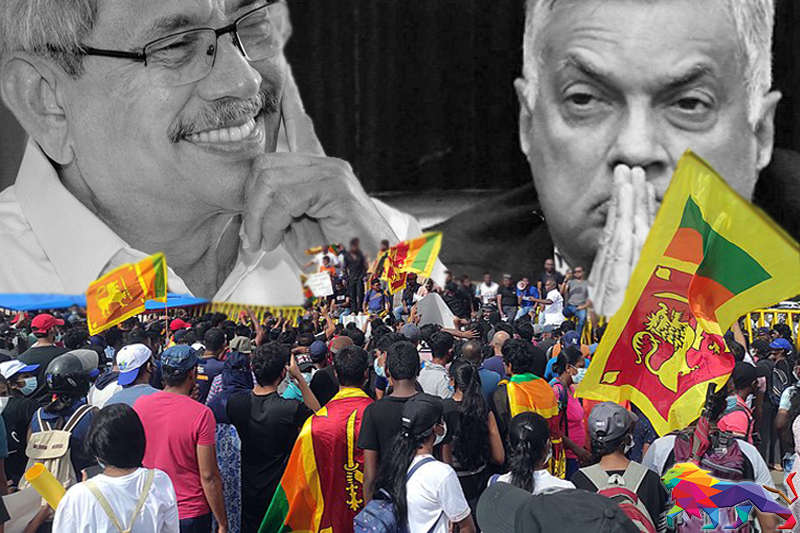
The Tamil National Alliance would be asking the UNHRC to apply external jurisdiction to try Sri Lankan military offcials deemed to be “war criminals”. Those involved in the protests to oust the Gotabaya and Wickremesinghe regimes would also be demanding punishment for suppressing dissent by force

However, the UNHRC is expected to end its discussion on Sri Lanka on a conciliatory note given the change in the political and economic situation in the country.

Though backed by the hardline, anti-West, anti-UNHRC and pro-China Sri Lanka Podujana Peramuna (SLPP), the Ranil Wickremesinghe regime has taken a U-turn from the SLPP’s foreign and domestic political and economic policies. This should please the West.

Wickremesinghe has assured the West that he would attend to some of the human rights issues bothering them, and has, in fact, taken some tentative steps, such as de-listing six formerly pro-LTTE Tamil organizations and over 300 individual LTTE supporters. This has been welcomed by the Tamil organizations both at home and overseas. On the international front, he has visibly distanced himself from China, just as China has distanced itself from Sri Lanka by refusing to extend any significant aid to help Sri Lanka tide over the current economic crisis. Wickremesinghe is manifestly leaning towards China’s pro-west rivals, India and Japan.

Initially, Western envoys in Colombo were very critical of the stern measures taken by Wickremesinghe to scatter the Aragalaya protesters. But he intelligently used the West’s own actions to curb violent protesters in their countries to silence the critics. The Wickremesinghe government is manifestly eschewing abrasive language in dealing with the West in contrast to the Rajapaksa regime. Diplomats who attended Foreign Minister Ali Sabry’s briefing noted that the government was keen on cooperating with the UNHRC and not just pooh-poohing its charges.

At the September UNHRC session, Sabry is unlikely to be as combative as G.L. Peiris was in March. While Sabry would politely but firmly state the inoperability of some of the UNHRC’s demands, such as giving permission to an UNHRC team to collect fresh evidence of war crimes independently, he would not use the combative language used by Peiris. Referring to the relevant clause in the UNHRC statement, Peiris had said: “The fundamental deficiency is its intolerably intrusive character, impinging as it does on core functions and responsibilities of organs of the Sri Lankan State, overwhelmingly mandated by the people of our country at three successive elections.”

Sabry is expected to state that a foreign inquiry of the kind envisaged will be a violation of the Sri Lankan constitution.

Economic Reforms

What must be heartening to the West is Wickremesinghe’s economic liberalization program. He told The Economist: “Company law has to be amended, a whole lot of commercial laws, we are looking at ease of doing business. So that means cutting through so many regulations. There are so many laws for how to operate even a basic item—there are so many authorities running by themselves. I’m also looking at the BOI [Board of Investment], we have to look at the overall investment effort of Sri Lanka. I’m not satisfied with it. The money we put in we haven’t gotten back. So I suppose in one way this is a disaster, but it’s also an opportunity to create something new, like we did in 1977.”

Among the institutions in line for privatization are Sri Lankan Airlines, and Telecom. The Ceylon Electricity Board and the Ceylon Petroleum Corporation, hugely uneconomical institutions, might be restructured. Some key opposition leaders are backing these measures. The State-Owned Enterprises (SOEs) are a huge drain on the resources of Sri Lanka and Wickremesinghe is aware that this sector has to be reformed to secure an IMF bailout.

In a piece on SOEs in The Diplomat Talal Rafi writes: “Sri Lanka has 527 SOEs and 55 of them are identified as strategically important. As of 2019, Sri Lanka’s SOE losses were greater than the national expenditures on education and health combined. Adding to the problem, just one in 10 SOEs have made public their financial information, raising questions of transparency.”

“SOEs in Sri Lanka are set up in general in a way that will lead them to fail. There are no budgetary constraints, with the Treasury supporting them. Many SOEs also borrow from other SOEs with no plan for paying the loans back, with the Ceylon Electricity Board borrowing from the Ceylon Petroleum Corporation as an example. Many SOEs also borrow from the two state-owned banks, Bank of Ceylon and Peoples Bank. These SOEs will not be able to borrow from private lenders due to their unprofitable structures, but with political interference, they are able to borrow from state financial institutions.”

“The monopolistic nature of SOEs also gives them little incentive to be innovative. The end result is that the consumer receives products or services that are not the best of quality. And with SOEs occupying monopolies in many industries, this shuts out these industries from the private sector and increases red tape, resulting in delays and pushing Sri Lanka down in the ease of doing business rankings.”

“The structure of state-owned entities in Sri Lanka has many problems. The labor costs of SOEs in Sri Lanka are around 70 percent higher than those of private firms, with the labor productivity of SOEs seeing a steady decline over the past decade. There is a lack of internal audits and financial disclosure, reducing the incentive to work efficiently. Mismanagement, corruption, and overstaffing by politicians are major problems faced by SOEs.”

West’s Positive Response

And the West, Japan and India are responding positively to Wickremesinghe’s reformist agenda. Despite dismay over the docking of the Chinese research and surveillance vessel Yuan Wang 5 at Hambantota port, Indian Foreign Minister S.Jaishankar has pledged to help Sri Lanka negotiate with the IMF. Japan also did so. Japan has provided a grant of LKR 761 million for the Human Resource Development Scholarship (JDS) project to enhance capacity building of public sector officials. Earlier, Japan had given US$ 1.5 million to enable UNICEF to procure medicines for over 1.2 million people, among them 53,000 pregnant mothers and nearly 122,000 children in immediate need. President Wickremesinghe is to visit to visit Japan in September.

The UK has launched a consultation on new trading rules called the ‘Developing Countries Trading Scheme’ (DCTS) which will give opportunities to grow free and fair trade with 70 qualifying countries including Sri Lanka. The proposed scheme will mean more opportunity and less bureaucracy. This includes improvements such as lower tariffs and simpler rules of origin requirements for countries exporting to the UK, allowing countries to diversify their exports and grow their economies. The British High Commissioner in Sri Lanka, Sarah Hulton, said that would enable Sri Lankan businesses to access the UK market more easily. Bilateral trade between the UK and Sri Lanka stood at GBP 1.2 billion in 2020, and there is room for growth, she said.
ECSL moots holding local government elections

The Elections Commission of Sri Lanka (ECSL) says that the local government elections should be held before March 25th.

Its Commissioner General Saman Sri Ratnayake stated that after the 20th of September, the power to announce the date of the election will be transferred to the Elections Commission.

The subject minister has already extended the tenure of the local government institutions by one year, however, that period is due to end on March 25th.

Accordingly, based on the existing provisions, the Elections Commission should elect the members for the local government bodies, and thereafter conduct an election.

ECSL Commissioner General Ratnayake said that 341 members will be elected for local government bodies accordingly.

Stop using terrorism act, Amnesty appeals from Sri Lanka

Amnesty International has urged the Government of Sri Lanka to not to use the draconian anti-terror law, the Prevention of Terrorism Act, against protestors for their acts of civil disobedience.

Amnesty International further states that the organization is deeply concerned by reports that the IUSF Convener Wasantha Mudalige is currently being held at the Terrorism Investigation Division (TID) under the PTA.

The organization emphasizes that arbitrarily detaining protesters and charging them with serious criminal offences that are not justified by their actions, such as terrorism-related charges, is against international law.

The organization has called for the Government to repeal the PTA instead.

Posted in Uncategorized

Special protection for former President Gotabaya Rajapaksa’s private residence in Mirihana

The Police authorities have given instruction to the police and intelligence officers in the area to increase the security arrangements for the private residence of former President Gotabaya Rajapaksa in Mirihana Pangiriwatta area and the surrounding area.

The police in the area have been informed to be on the alert especially over the area around the former president’s private residence.

The instructions were given at a discussion of the police officers held in that area Friday, police sources have told local media.

Responding to a media query from Lankadeepa, former President’s Secretary Sugeeshwara Bandara has said the former President Rajapaksa will return to Sri Lanka in a few days.

Meanwhile, the Minister of Foreign Affairs, President’s Counsel Ali Sabry in an interview with CNN has also confirmed that former President Gotabaya Rajapaksa will visit the island on the 24th.

Mr. Ali Sabry had further stated in the discussion that the current government has no official role regarding the return of Mr. Gotabaya Rajapaksa to Sri Lanka and that since Mr. Gotabaya is a Sri Lankan citizen, he has the ability to come and go as he pleases.

Former President and his wife are currently staying at an undisclosed location in Thailand under the sponsorship of the Government of Thailand.

Cabinet to be sworn in next week

The Cabinet and State ministers will be sworn in next week, an informed source said. According to the informed source, 30 Cabinet ministers will be appointed. Most ministers who currently hold two or more portfolios each will lose one of them for the accommodation of new comers to the Cabinet.

There will be MPs from the Opposition joining the government in their individual capacities regardless of the positions of their parties. The source said around 40 state ministers will be appointed. Once the new Cabinet is appointed, the new government is expected to change the heads of various government institutions.

Posted in Uncategorized

Sri Lanka’s ruling party asks President to facilitate Gotabaya’s return to the country

The ruling party, Sri Lanka Podujana Peramuna (SLPP) has requested President Ranil Wickramasinghe to facilitate former President Gotabaya Rajapaksa’s safe return to the island.

The Sri Lanka Podujana Peramuna (SLPP) met the President at the President’s Office yesterday afternoon (18) and held discussions in this regard.

Expressing his views here, SLPP national organizer and former minister Basil Rajapaksa has said that Sri Lanka Podujana Peramuna will fully support the President in resolving the current economic crisis and rebuilding the country.

In addition, he said that former President Gotabaya Rajapaksa should be allowed to return to Sri Lanka safely. Mr. Basil Rajapaksa has mentioned that it is the paramount request of the SLPP to the government including the President.

Prasanna Ranatunga, Sagara Kariyawasam, Rohitha Abeygunawardena, Johnston Fernando, Pavithra Wanniarachchi, Namal Rajapaksa and Sanjeewa Edirimanna participated in this discussion on behalf of Podujana Peramuna.

President’s Chief of Staff Sagala Ratnayake, UNP Chairman Wajira Abeywardena, Deputy Leader Ruwan Wijewardena, and Shamal Seneviratne participated in the meeting from the President’s side.

Posted in Uncategorized

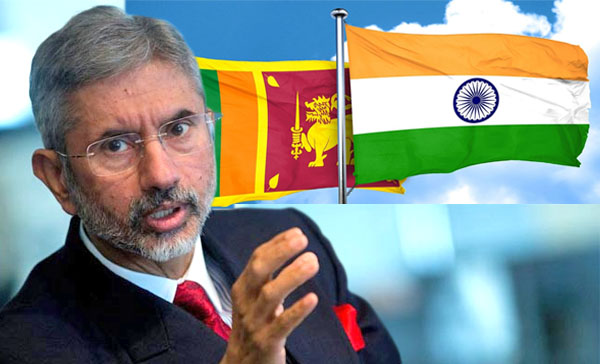
India has done its best to help Sri Lanka – Jaishankar

Indian External Affairs Minister Dr. S. Jaishankar said India has done the best of its abilities to assist Sri Lanka.

This year alone India has extended USD 3.8 billion of support to Sri Lanka, including line of credits and swap arrangements, he said.

“I think if India and China have to come together, there are many reasons to do so, not necessarily only Sri Lanka,” he said, adding that it is in India and China’s own interest to join hands.

Sri Lanka, a nation of 22 million, is in the midst of an unprecedented economic crisis that has led to severe shortages of fuel and other essentials. The Sri Lankan government is negotiating with the IMF for a bailout package.

“Any help we can give to Sri Lanka at the IMF that we will naturally do,” Jaishankar said.

Posted in Uncategorized

Four suspects linked to NTJ in Sri Lanka charged in India

Four suspects linked to the banned Sri Lankan outfit, the National Thowheed Jamath, have been charged in India.

The National Investigation Agency (NIA) filed a chargesheet against four men, including ‘Needur’ Sathik Batcha alias ICAMA Sathik, who were arrested for threatening police personnel at gunpoint in Tamil Nadu’s Mayiladuthurai earlier this year.

Investigations revealed that Sathik Batcha, a martial arts trainer, and other accused — R Ashiq alias Mohammed Ashiq Elahi of Coimbatore, A Mohamed Irfan of Karaikal, Rahamathulla alias Rahamath of Chennai — held conspiracy meetings in Thiruvananthapuram, Kerala and Chennai to recruit members to the Khilafah Party of India and other outfits floated by them on the lines of proscribed organizations like ISIS, al-Qaeda and the National Thowheed Jamaat (NTJ) of Sri Lanka, the NIA said.

Sathik Batcha owed his allegiance to an IS module and later became a member to establish the Islamic State overthrowing the democracy, according to the NIA.

The Mayiladuthurai police arrested five men in January after which the NIA took over the case for further investigation. They were lodged in the Trichy Central Prison.

After inquiring about them, the NIA conducted searches in places linked to the accused in Chennai, Puducherry in June and seized electronic devices with incriminating documents apart from pamphlets with messages of Islamic State (IS).

However, the chargesheet was filed against only four, as there was not sufficient material evidence against the fifth accused Jabahar Ali.

Posted in Uncategorized

US ambassador holds talks with opposition leader

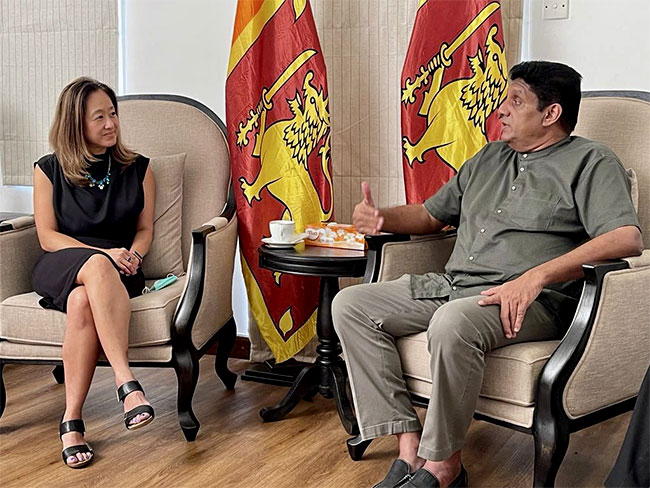
U.S. Ambassador to Sri Lanka Julie Chung has met with Opposition Leader Sajith Premadasa on Friday (19) for a wide-ranging discussion in Colombo.

In a tweet, Ambassador Chung said they discussed the current economic crisis and political situation, as well as to exchange ideas on how all sectors of Sri Lanka can work together to address both the urgent and longer-term needs of the Sri Lankan people.

India-China ties going through extremely difficult phase: Jaishankar

Asian Century would not happen if the two neighbours could not join hands, he says
External Affairs Minister S. Jaishankar said on Thursday that the relationship between India and China was going through an “extremely difficult phase” after what Beijing had done at the border and emphasised that the Asian Century would not happen if the two neighbours could not join hands.

He made the remarks while responding to a series of questions after delivering a lecture on ‘India’s Vision of the Indo-Pacific’ at the prestigious Chulalongkorn University here.

Responding to a question, Mr. Jaishankar said that the Asian Century would happen when China and India come together but it would be difficult to happen if India and China could not come together.

Also read: India envisages free, open, inclusive and peaceful Indo-Pacific built on rules-based order: EAM Jaishankar

“At the moment [the India-China] relationship is going through an extremely difficult phase after what China did at the border,” he said.

Chinese and Indian troops are engaged in a prolonged standoff in eastern Ladakh. The two sides have so far held 16 rounds of Corps Commander Level talks to resolve the standoff which erupted on May 5, 2020, following a violent clash in the Pangong Lake areas.

“I think if India and China have to come together, there are many reasons to do so, not necessarily only Sri Lanka,” he said, adding that it was in the own interest of India and China to join hands.

“We very much hope that wisdom dawns on the Chinese side,” the External Affairs Minister said while replying to another question from the audience.

Mr. Jaishankar said India had done the best of its abilities to assist Sri Lanka. This year alone India had extended $3.8 billion of support to Sri Lanka, including line of credits and swap arrangements, he said.

“Any help we can give to Sri Lanka at the IMF [International Monetary Fund] that we will naturally do,” Mr. Jaishankar said.

On the issue of Rohingya refugees, he said the issue had been discussed with Bangladesh. “What matters for them is repatriation. We have been supportive of Bangladesh,” he said.

Currently, Bangladesh is hosting more than 1 million Rohingya refugees, who fled Myanmar following a military operation against them a few years ago.

Responding to another question, the External Affairs Minister dismissed criticism for importing discounted Russian oil, saying India was not the only oil importing country.

The U.S. and European nations have imposed heavy sanctions on Russia since Moscow sent troops into Ukraine on February 24.

India has raised oil imports from Russia after the Ukraine war despite criticism from the West and continues to engage with Moscow for business.

Mr. Jaishankar, who arrived here on Tuesday, co-chaired the 9th India-Thailand Joint Commission Meeting with his Thai counterpart and Deputy Prime Minister Don Pramudwinai on Wednesday during which they discussed advancing bilateral contacts in political, economic, security and defence, connectivity and health domains.