Tamil Nadu sends another shipment of relief goods to Sri Lanka

The Tamil Nadu government dispatched the third tranche of relief material to crisis-hit Sri Lanka. With this, the total aid from MK Stalin’s government has crossed 40,000 tonnes of relief material.

Stalin had earlier moved a resolution in the Tamil Nadu Assembly to send humanitarian aid to Sri Lanka. The first tranche was sent in May and the second in June.

DMK MP Kanimozhi flagged off the third tranche on Saturday, comprising of 16,595 tonnes of the items, through the sea route from the VOC Port in Tuticorin in the presence of state ministers.

An official release in Chennai recalled Stalin earlier moving the Assembly resolution to provide 40,000 tonnes of rice, 500 tonnes of milk powder and 102 tonnes life-saving drugs to Sri Lanka. It said rfforts were made to identify the type of rice consumed by the Lankan people and the same was procured from 85 rice mills in the state.

With Saturday’s shipment, the state has sent 40,000 tonnes of rice, 500 tonnes of milk powder and 102 tonnes of life-saving drugs, with the government allocating a total of Rs 196.83 crore towards this exercise, including cost of transportation by ships.

Of this, Rs 8.22 crore was allocated from the contributions received to the Chief Minister’s Public Relief Fund and the rest was state allocation, it added.

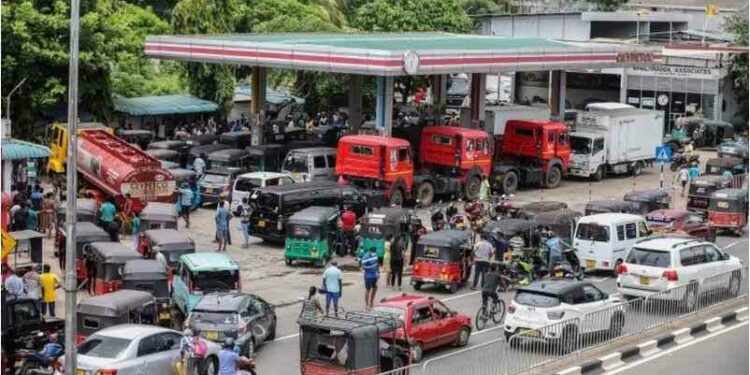
Sri Lanka has been experiencing its worst economic crisis in the country’s history. The acute foreign exchange crisis means the country cannot import even essentials, leading to acute shortage of several essentials such as foodstuff, cooking gas, vehicular fuel, medicines, etc. As there is acute shortage of items, prices have also skyrocketed in recent months.

The Union government has so far sent $3.8 billion-worth of relief material to Sri Lanka since the beginning of the current crisis. India has sent fuel shipments, foodstuff, medicines, etc. to Sri Lanka.

UK Minister calls Sri Lankan President to discuss security and economic situation in Sri Lanka

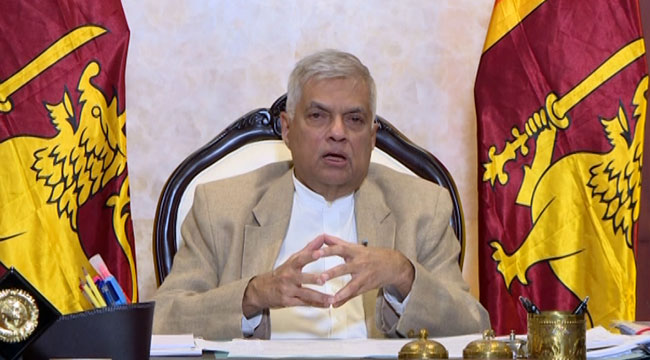
UK’s Minister for South Asia, United Nations and the Commonwealth, Lord Tariq Ahmad has spoken to newly-appointed President Ranil Wickremesinghe regarding the concerning security and economic situation in Sri Lanka.

In a tweet, the UK State Minister said he had a “constructive call” with President Ranil Wickremesinghe about the concerning security and economic situation in Sri Lanka.

He said the over the phone discussion also focused on the rights to peaceful protest, media freedom, human rights and justice.

The United Kingdom will continue to support Sri Lanka through these challenges, he said.

“Constructive call with President Ranil Wickremesinghe today about the concerning security & economic situation in Sri Lanka. Also focused on rights to peaceful protest, media freedom, human rights & justice. UK will continue to support Sri Lanka through these challenges,” the twitter message said.

Posted in Uncategorized

Economic crisis, an added burden for Northerners – Jaffna Chamber Chief

The Chamber of Commerce and Industries of Jaffna is in a constant battle with the authorities to secure fuel for the agriculture and fisheries sectors and essential commodities for people hit by the economic crisis, the Jaffna Chamber Chairman Vignesh Kularatnam told the Sunday Observer Business last week.

We have been having discussions with the Governor of the Northern Province and the Ceylon Petroleum Corporation and the LIOC to set up consumer points for fuel distribution, he said.

According to the chamber head many large scale industries have closed down due to operations coming to a standstill.

Most industries are unable to sustain operations due to cash flow issues and payment of salaries to employees for the past four months, Kularatnam said.

According to media reports there had been a surge in the number of people in the North and the East taking refuge in South India during the past months. Many had to pay a huge amount to cross the Palk Straight through boats.

Jaffna is home to a large segment of the population who earn a living either in the fisheries or agriculture sector. Around one-third of the families of the Northern province depend on agriculture including livestock and home gardening.

The Jaffna chamber is grateful to chambers in Colombo and many concerned people who always inquire about the people in the North and are willing to extend a helping hand, Kularatnam said.

The situation in the country today is nothing new to the people in the North East who had gone through enormous struggles for over three decades during the battle against terrorism but the crisis is adding on to the misery of people who had not been able to raise their head even after a decade since the end of terrorism, said the Past Chairman of the Chamber K. Poornachandran.

He said around 60 percent of businesses operate and added that if the situation worsens there would be a complete shutdown.

The tourism industry, another vital sector that provided employment to youth has been adversely affected by the crisis.

He said people in the North and East have been used to tough situations and learnt to live a simple life from the decades-long terrorist activities that forced them to such a lifestyle.

Transportation has not been an issue as young and the old cycle to work and school. Most people here neither had fuel nor electricity during the battle against terrorism.

They had to put up with either lamps or candles. Many could not afford kerosene due to the high prices and it was in short supply, he said.

However, the chamber officials said they are one with the people in the South going through unprecedented problems.

We have always been in solidarity with the rest of the country whenever there has been problems and this time to feel with them, Poornachandarn said.

Protestors again attack PM’s office and force State TV stations to shut telecasts

Protestors again attacked the Sri Lankan Prime Minister’s office and forced State TV stations to shut telecasts on Wednesday even as President Gotabaya Rajapaksa appointed Prime Minster Ranil Wickremesinghe as Acting President.

Despite the clamping of an island-wide State Emergency and curfew in the Western province on Wednesday, crowds of agitators attacked the Prime Minister’s office and occupied it. They also attacked the State TV stations Sri Lanka Rupavahini Corporation and Independent Television Network and forced them suspend telecasts. The agitators demanded that they telecast only unbiased news.

The leader of the Janatha Vimukthi Peramuna (JVP) Anura Kumara Dissanayake, has urged both the President and the Prime Minister to resign immediately.

The decisions regarding the Prime Minster were announced in the same statement issued by Gotabaya Rajapaksa from his safe haven in the Maldives.

The announcement entitled ‘Government Notice’ said: “ It is hereby notified that I, Gotabaya Rajapaksa, President of the Democratic Socialist Republic of Sri Lanka, being of the opinion that I am unable to exercise . perform and discharge the powers, duties and functions of the Office of the President, and by reason of my absence from Sri Lanka, do hereby appoint Hon Ranil Wickremesinghe, Prime Minister of the Democratic Socialist Republic of Sri Lanka, under Art 37 (1) of the Constitution of the Democratic Socialist Republic of Sri Lanka, with effect from July 13, 2022,to exercise, perform and discharge the powers,duties and functions of the Office of President during such period of my absence from Sri Lanka.”

Meanwhile the Speaker of parliament Mahinda Yapa Abeywardena announced that Gotabaya Rajapaksa had appointed Wickremesinghe as the Acting President and that Rajapaksa had informed him that he would submit his resignation “within today”

Posted in Uncategorized

President appointed PM as Acting President: Speaker

President Gotabaya Rajapaksa has informed the Speaker of Parliament that Prime Minister Ranil Wickremesinghe has been appointed as the Acting President of Sri Lanka.

Speaker Mahinda Yapa Abeywardena announced this in a brief statement made to the media today (13).

“I was informed that under article 37 (1) of the Constitution, as His Excellency the President Gotabaya Rajapaksa is away from the country, Prime Minister Ranil Wickremesinghe has been appointed to cover the duties and function of that position,” he said.

Earlier today, the PM’s Office said that Prime Minister Ranil Wickremesinghe, as the Acting President, has ordered to impose curfew in the Western Province with immediate effect and to impose emergency law island-wide.

Wickremesinghe has also ordered the security forces to arrest those engaging in unruly behaviour and to take into custody the vehicles they travel in, the PM’s Office said.

The move came as thousands of angry protesters gathered outside the PM’s office, and several other locations in Colombo this morning.

“Since the president is out of the country, an emergency has been declared to deal with the situation in the country,” Dinouk Colombage, spokesman for Prime Minister Ranil Wickremesinghe, told AFP.

Thousands of demonstrators had mobbed the premier’s office, prompting police to fire tear gas to hold them back from overrunning the compound.

“There are ongoing protests outside the prime minister’s office in Colombo and we need the curfew to contain the situation,” a senior police officer told AFP.

Asked how Mr. Wickremesinghe could invoke “powers of an acting President” when Mr. Gotabaya is still in office, PM’s spokesman Dinouk Colombage had told The Hindu: “The legal explanation will follow. We want to get the situation under control first.”

Earlier on Wednesday, the Sri Lankan Air Force said that under the provisions of the Constitution and on a request by the government it provided a plane to fly the president, his wife and two security officials to the Maldives.

“On government request and in terms of powers available to a President under the Constitution, with complete approval from the ministry of defence, the President, his wife and two security officials were provided a Sri Lanka Air Force plane to depart from the Katunayake international airport for the Maldives in the early hours of July 13,” an official announced.

On Saturday, Rajapaksa announced that he would resign on July 13 after thousands of protestors stormed his official residence and office.

Posted in Uncategorized

State owned Independent Television Network also taken off air

The state owned Independent Television Network (ITN) went off air a short while ago after a group of protestors tried to breach the security deployed at the premises and forcibly take over the channel.

The officials at ITN, it is learnt, have quickly taken the channel off air before the protestors entered the premises.

Earlier in the day, protestors forcibly entered the national television channel, Rupavahini, and took control of the telecast forcing the station to be taken off air. Rupavahini management got the channel back on air a few minutes ago after security personnel had cleared the premises.

Posted in Uncategorized

Emergency declared in entire Sri Lanka, Curfew in Western province

Sri Lanka Prime Minister Ranil Wickremesinghe has ordered to impose Curfew in the Western Province with immediate effect, Prime Minister’s Office said.

The Prime Minister’s Office states that the Emergency Law has been declared covering the entire island.

The measure comes after protesters demanding his resignation attempted to enter the Prime Minister’s Office on Flower Street this morning and police used tear gas to disperse the protesters.

Meanwhile, Inspector General of Police CD Wickramaratne and the security forces have been instructed to arrest those rioting and to seize vehicles that are transporting mobs including persons behaving in a violent manner into custody.

Posted in Uncategorized

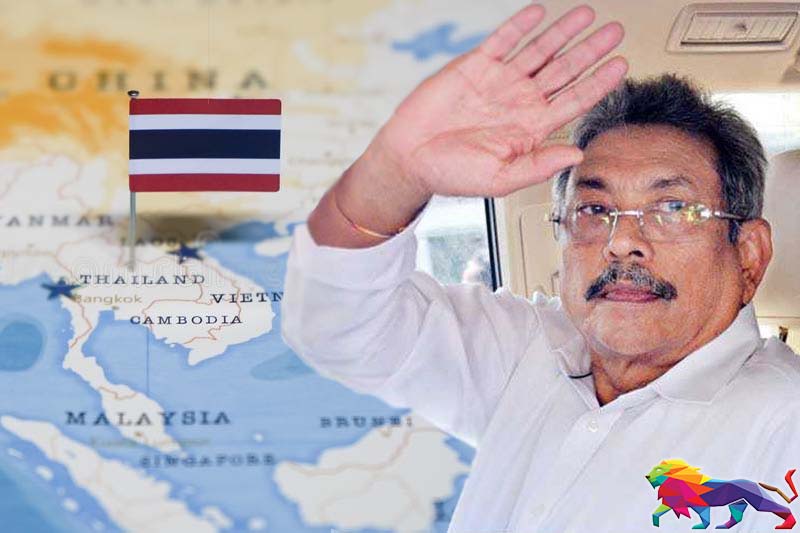
Sri Lanka: President Gotabaya Rajapaksa flees the country on military jet

President Gotabaya Rajapaksa has fled Sri Lanka on a military jet, amid mass protests over the island’s economic crisis.

The country’s air force confirmed the 73-year-old flew to the Maldives with his wife and two security officials.

In his absence, he has appointed Prime Minister Ranil Wickremesinghe as acting president.

Mr Rajapaksa’s departure ends a family dynasty that has dominated Sri Lanka’s politics for the past two decades.

The president had been in hiding after crowds stormed his residence on Saturday, and had pledged to resign on Wednesday 13 July.

A source told the BBC that Mr Rajapaksa will not remain in the Maldives and intends to travel on to a third country.

His brother, former Finance Minister Basil Rajapaksa, has also left Sri Lanka and is said to be heading to the US.

As Sri Lankans awoke to the news, thousands of people took to the streets of the capital, Colombo. Many gathered at Galle Face Green, the city’s main protest site. Some listened to fiery speeches at a makeshift stage set up for ordinary people to take the mic.

Punctuated by cries of “Victory to the struggle”, the rallying cry of the protest movement, speakers railed against a government and the leaders they feel have failed them.

Sri Lankan Prime Minister, Ranil Wickremesinghe, has declared a state of emergency across the country and a curfew has been imposed in the western province, a spokesperson in his office said.

Police have fired tear gas to disperse a group of protesters who were walking near the prime minister’s office and towards parliament.

Some demonstrators were furious about Mr Rajapaksa’s departure, seeing a lack of accountability.

“We don’t like it. We want to keep him. We want our money back! And we want to put all the Rajapaksas in an open prison where they can do farm work,” said protester GP Nimal.

But 23-year-old university student Reshani Samarakoon told the BBC that the former president’s exile offered “hope that in the future we can eventually become a developed country, economically and socially”.

Sri Lankans blame President Rajapaksa’s administration for their worst economic crisis in decades.

For months they have been struggling with daily power cuts and shortages of basics like fuel, food and medicines.

The leader, who enjoys immunity from prosecution while he is president, is believed to have wanted to flee abroad before stepping down to avoid the possibility of arrest by the new administration.

Sri Lanka: The basics

Sri Lanka is an island nation off southern India: It won independence from British rule in 1948. Three ethnic groups – Sinhalese, Tamil and Muslim – make up 99% of the country’s 22 million population.
One family of brothers has dominated for years: Mahinda Rajapaksa became a hero among the majority Sinhalese in 2009 when his government defeated Tamil separatist rebels after years of bitter and bloody civil war. His brother Gotabaya, who was defence secretary at the time, is the current president but says he is standing down.
Presidential powers: The president is the head of state, government and the military in Sri Lanka but does share a lot of executive responsibilities with the prime minister, who heads up the ruling party in parliament.
Now an economic crisis has led to fury on the streets: Soaring inflation has meant some foods, medication and fuel are in short supply, there are rolling blackouts and ordinary people have taken to the streets in anger with many blaming the Rajapaksa family and their government for the situation.

A remarkable win for protesters

What a fall from grace for President Gotabaya Rajapaksa – for so long such a major figure in Sri Lanka.

Few expected that matters would ultimately go this way.

As the former defence chief he oversaw the military operations in the controversial war against the Tamil Tiger rebels that ended in 2009. He is accused of human rights abuses during the war and also targeting those who dissented, but he has always denied those accusations.

The Rajapaksa family has dominated Sri Lankan politics for two decades, and with strong backing from the Sinhala Buddhist majority, Gotabaya became president in 2019.

His departure is a remarkable victory for the protesters who came to the streets to express their anger against the mismanagement of the economy and the escalating cost of living.

The president’s departure threatens a potential power vacuum in Sri Lanka, which needs a functioning government to help start digging it out of financial ruin.

Politicians from other parties have been talking about forming a new unity government but there is no sign they are near agreement yet. It’s also not clear if the public would accept what they come up with.

Under the constitution, it’s the prime minister, Ranil Wickremesinghe, who should act in the president’s stead if the latter resigns. The prime minister is considered the president’s deputy in parliament.

However, Mr Wickremesinghe is also deeply unpopular. Protesters set fire to his private residence on Saturday – he and his family were not inside – and he said he would resign to make way for a unity government, but gave no date.

That leaves the parliament’s speaker as the next most likely to step in as caretaker president, constitutional experts say. But Mahinda Yapa Abeywardena is an ally of the Rajapaksas, and it is unclear whether the public would accept his authority.

Whoever does become acting president has 30 days to hold an election for a new president from among members of parliament. The winner of that vote could then see out the remainder of Mr Rajapaksa’s term until late 2024.

On Monday, the main opposition leader Sajith Premadasa told the BBC he would be tilting for the presidency. But he also lacks public support and there is deep public suspicion of politicians in general.

The protest movement which has brought Sri Lanka to the brink of change also does not have an obvious contender for the country’s leadership.

Additional reporting by the BBC’s Frances Mao, Yaroslav Lukov and Simon Fraser.

India denies reports that it helped President Rajapaksa flee to Maldives

India on Wednesday categorically denied “baseless and speculative” media reports that it facilitated the travel of Sri Lankan President Gotabaya Rajapaksa who fled to the Maldives on a military jet in the face of a public revolt against his government for mishandling the country’s economy.

The 73-year-old Sri Lankan President left the country along with his wife and two security officers on a military jet on Wednesday.

“The High Commission categorically denies baseless and speculative media reports that India facilitated the recent reported travel of @gotabayar @Realbrajapaksa out of Sri Lanka,” the High Commission of India in Sri Lanka tweeted.

“It is reiterated that India will continue to support the people of Sri Lanka as they seek to realis their aspirations for prosperity and progress through democratic means and values, established democratic institutions and constitutional framework,” it added.

In a brief statement, the Sri Lanka Air Force (SLAF) said that under the Constitution granted to an Executive President, Mr. Rajapaksa was flown to the Maldives onboard an Air Force plane Wednesday morning.

“On government request and in terms of powers available to a President under the Constitution, with complete approval from the ministry of defence, the President, his wife and two security officials were provided a Sri Lanka Air Force plane to depart from the Katunayake international airport for the Maldives in the early hours of July 13,” the statement said.

On Saturday, Mr. Rajapaksa had announced to step down on Wednesday after thousands of protesters stormed his official residence, blaming him for the unprecedented economic crisis that has brought the country to its knees.

Source: PTI

Private Member Bills tabled to amend the electoral system

Parliamentarian Imthiaz Bakeer Markar has presented three Private Member’s Bills in Parliament that includes proposals to amend laws and regulations pertaining to the country’s electoral system.

Accordingly, a Bill to amend the Parliamentary Elections Act No.1 of 1981, a Bill to amend the Provincial Council Elections Act No.2 of 1988 and a Bill to amend the Local Government Elections Ordinance No.53 of 1946 were presented.

The proposals calls for the need to provide youth below the age of 35 the opportunity to represent institutions.

The proposals also include that during a General Election, a Provincial Council Election, and a Local Authorities Election when political parties and independent groups submit nominations, not less than one-fourth of the number of candidates in a relevant district should be youth.

Posted in Uncategorized