Sri Lanka hopes for $4bn in China aid ‘soon’ as envoy defends ties

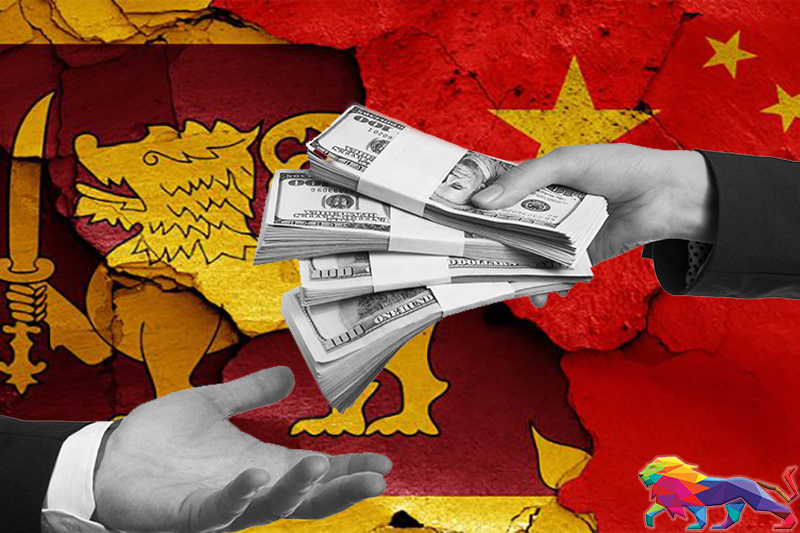
Sri Lanka hopes to conclude discussions with China “soon” on a $4 billion aid package, the country’s ambassador to Beijing told Nikkei Asia.

Ambassador Palitha Kohona said in an email that talks were progressing. “We hope that these discussions could be concluded soon, as a positive outcome would definitely assist Sri Lanka to reestablish confidence in the financial markets and recover from its unprecedented and dire financial circumstances.”

China has been a major creditor of Sri Lanka, though it remains a burning question exactly how much the latter owes the former. Since Sri Lanka plunged into a severe foreign exchange crisis this year and defaulted for the first time in May, Beijing has reportedly been reluctant to go along with debt restructuring.

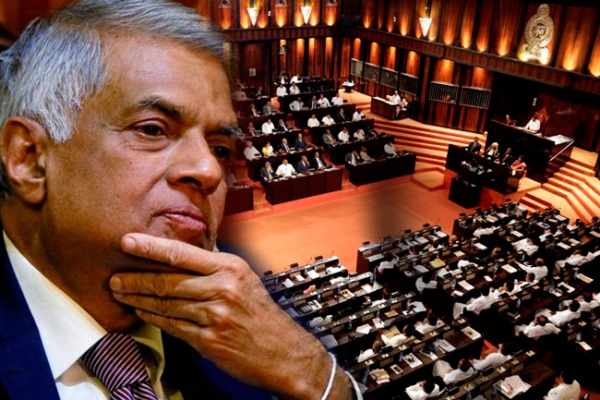
But new Sri Lankan President Ranil Wickremesinghe, who was elected by parliament on July 20 after the resignation of much-criticized Gotabaya Rajapaksa, is looking to China again as he attempts to cement his grip and quell unrest.

Since early this week, police have been rounding up frontline demonstrators and leaders of the anti-government movement. A state of emergency is to remain in effect for another month after parliament approved it on Wednesday.

Persistent resentment and protests against the new government threaten to disrupt efforts to secure a long-awaited bailout from the International Monetary Fund. Wickremesinghe, in his previous role as prime minister, had expressed optimism in June that such a deal would be in place by the end of this month, but that now appears unlikely.

IMF Managing Director Kristalina Georgieva told Nikkei shortly before Wickremesinghe became president that the fund wanted to offer aid as quickly as possible and would work with any administration — “as long as the next leader enjoys support and has the longevity to lead the country.”

In the meantime, Sri Lanka appears to be pinning hopes on the $4 billion aid package from China, which would include a $1.5 billion credit line and implementation of a $1.5 billion currency swap with Beijing.

Last Friday, the day after Wickremesinghe was sworn in, Chinese President Xi Jinping sent a congratulatory message and promised to “provide support and assistance to the best of my ability.”

Ambassador Kohona stressed that Sri Lanka had never been unable to meet its loan repayment obligations in the past. While protesters and many observers have accused the previous Rajapaksa government of economic mismanagement, the envoy said it was only an unexpected convergence of factors including the COVID-19 pandemic that led to the default.

“However, with the easing of the COVID situation and the return to constitutional governance, we hope to take our discussions with China toward positive conclusions in the near future,” he said.

Average Sri Lankans continue to deal with painful shortages of fuel, food and other essentials, as dwindling foreign reserves have left the country unable to import what it needs. The energy minister said this week that fuel imports must be restricted for the next 12 months, and that fuel would be available only through a quota system starting this month.

Kohona said he has also been holding discussions with large Chinese companies to encourage them to invest in Sri Lanka and bring in more foreign currency. His sales pitch notes that Sri Lanka’s Indian Ocean location puts it within easy air and sea access to promising markets, from Africa and the Middle East to India and Southeast Asia.

“A number of Chinese companies have already made commitments to invest in Sri Lanka and we are actively discussing potential investment options with others, including in steel, renewable energy, tire production, yacht building and infrastructure development,” the ambassador said.

He also said he expects that with a “return to normalcy,” investors in existing big-ticket projects like Colombo Port City and the Hambantota Port area will “proceed with their intended investment plans.” The Chinese government, he said, is “actively” encouraging companies to invest in Sri Lanka.

The ambassador rejected claims that Sri Lanka has fallen into a Chinese “debt trap,” arguing that only around 10% of external debt is owed to China, though some observers have questioned whether that number covers everything.

“Much more is owed to multilateral institutions like the World Bank and the Asian Development Bank,” he said. “Similarly, a considerable amount is owed to institutional investors, mainly from the West, including Wall Street. The interest rates charged by the Chinese lenders have also been favorable.”

Suggestions that Sri Lanka’s financial situation has been caused by the debts owed to China are “inaccurate and misplaced,” he said.

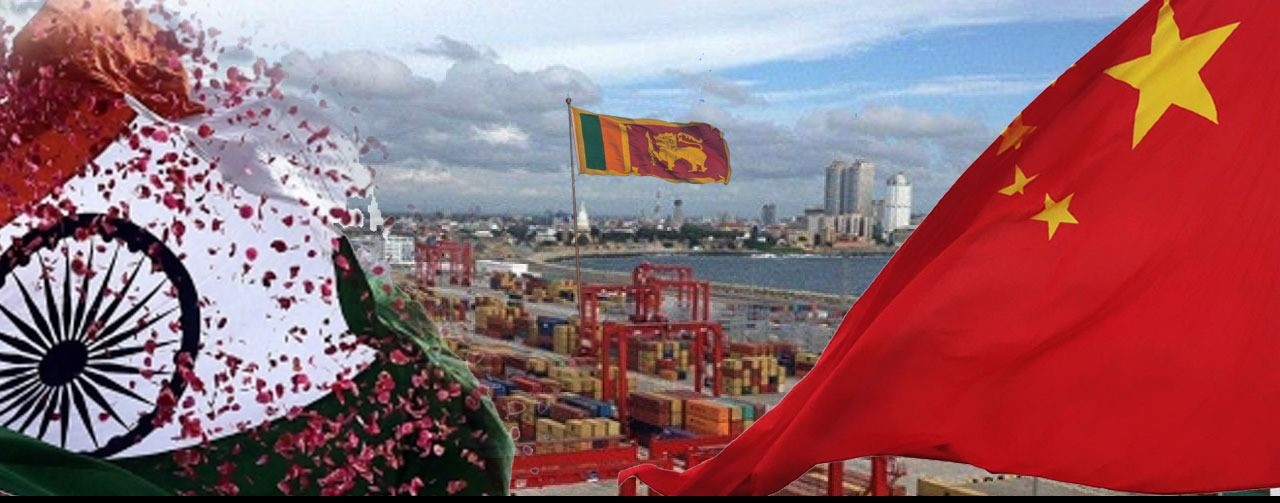
Kohona was also quick to deny that China had abandoned Sri Lanka while India stepped in with around $3.8 billion in financial assistance.

“India, also a long-standing friend, did in fact come to Sri Lanka’s assistance very early and promptly, and we are indeed grateful to India for what it has done,” he said. “But it is an unfair exaggeration to say that China deserted Sri Lanka during its time of need.” According to the ambassador, since 2021, China and Chinese banks have made available almost $1.2 billion worth of assistance in various forms.

Kohona pointed to China’s provision of a 500 million yuan ($74 million) emergency assistance package that included rice, medicines, fertilizer and fuel.

The ambassador suggested that over the longer term, exports to the lucrative Chinese market could help ensure a sustainable recovery. He said that Beijing was encouraging this as well, and that free trade talks were underway.

Not to be outdone, Indian Prime Minister Narendra Modi made it clear this week that his government also remains willing to help. “India will continue to be supportive of the request of the people of Sri Lanka for stability and economic recovery, through established democratic means, institutions and constitutional frameworks,” Modi said in a congratulatory message to Wickremesinghe on Monday.

Source: Nikkei Asia
Posted in Uncategorized

Sri Lanka faces political risks over Rajapaksa links of new govt: Fitch

Sri Lanka is still facing political risks in recovering from a currency crisis and default, tough a new government has been formed under President Ranil Wickremesinghe with a large majority, Fitch, a rating agency said.

“The new president was confirmed by a large majority in parliament, and his government has drawn in some opposition members,” Fitch said in a statement.

“This gives some hope that it will have sufficient support to negotiate and carry out difficult reforms as part of efforts to restore macroeconomic stability and debt sustainability. Such reforms could unlock funding support from the IMF, which we view as important for Sri Lanka’s emergence from default.”

Members of the Rajapaksa family were driven out by protests. However the administration has little public support since it is linked with the ousted Rajapaksa family.

“The government’s parliamentary position appears strong, but public support for the government is weaker,” the rating agency said.

“President Wickremesinghe was prime minister in the previous administration under President Gotabaya Rajapaksa, who was brought down by protests.

“Parliament and the government also remain dominated by politicians from the Sri Lanka People’s Freedom Alliance, which is closely affiliated with the Rajapaksa family. This may increase the risk of further destabilising protests if economic conditions do not improve and/or reforms generate public opposition.”

Political Risks Still Challenge Sri Lanka’s Emergence from Default

Thu 28 Jul, 2022 – 12:37 AM ET

Fitch Ratings-Hong Kong-28 July 2022: The successful formation of a government under the new president, Ranil Wickremesinghe, is an important precondition for resolving Sri Lanka’s debt default, but many challenges remain as the country seeks financing support from the IMF and debt restructuring from private and official bilateral creditors, says Fitch Ratings.

The new president was confirmed by a large majority in parliament, and his government has drawn in some opposition members. This gives some hope that it will have sufficient support to negotiate and carry out difficult reforms as part of efforts to restore macroeconomic stability and debt sustainability. Such reforms could unlock funding support from the IMF, which we view as important for Sri Lanka’s emergence from default.

The government’s parliamentary position appears strong, but public support for the government is weaker. President Wickremesinghe was prime minister in the previous administration under President Gotabaya Rajapaksa, who was brought down by protests. Parliament and the government also remain dominated by politicians from the Sri Lanka People’s Freedom Alliance, which is closely affiliated with the Rajapaksa family. This may increase the risk of further destabilising protests if economic conditions do not improve and/or reforms generate public opposition.

We expect any reform package agreed with the IMF by the government to include elements such as higher taxes, expenditure rationalisation and a commitment to a greater degree of exchange-rate flexibility. There is a significant risk that such reforms could cause public opposition that might impede their implementation. In the absence of an IMF deal, we expect Sri Lanka to face a very strained external position in the near term. The country has little foreign exchange to pay even for essential imports such as fuel, food and medicines, with official reserve assets at just USD1.9 billion (just over one month of imports) as of end-June.

In a statement on 30 June, the Fund noted that it assessed Sri Lanka’s public debt as unsustainable, and confirmed that it would require adequate financing assurances from Sri Lanka’s creditors that debt sustainability would be restored.

Debt negotiations could be complicated by debt owed to China. This amounted to USD5 billion at end-2020, including bilateral official lending and loans from the China Development Bank and Export-Import Bank of China, accounting for around 13% of Sri Lanka’s external debt, according to the IMF. China has traditionally preferred to offer relief for large loans through deferrals such as maturity extensions, payment rescheduling or grace periods, rather than through write-downs.

However, this approach could increase challenges for Sri Lanka to successfully negotiate debt restructuring with other creditors, including private creditors, that delivers the debt sustainability sought by the IMF.

Fitch rates Sri Lanka’s Long-Term Foreign-Currency (LTFC) Issuer Default Rating (IDR) at ‘RD’ (Restricted Default). The Long-Term Local-Currency IDR is ‘CCC’, and is Under Criteria Observation following our introduction of +/- modifiers in the ‘CCC’ category.

A default on local-currency debt could erode local banks’ capital positions, possibly leading to government capital injections into the banking sector that would erode the net benefits of such a restructuring, and when we affirmed the Long-Term Local-Currency IDR in May we assumed that the government would continue to service local-currency debt. Nonetheless, the ‘CCC’ rating reflects a high risk that local-currency debt will be included in debt restructuring, as the stock and interest costs are large, and omitting it could increase the restructuring burden on holders of foreign-currency debt.

Fitch may move Sri Lanka’s LTFC IDR out of ‘RD’ upon the sovereign’s completion of a commercial debt restructuring that we judge to have normalised the relationship with the international financial community.

India Says Will “Safeguard Interests” As China Vessel Heads To Sri Lanka

India said on Thursday it was aware of reports about the planned visit of a Chinese vessel to a Sri Lankan port built with money from Beijing.
Shipping data from Refinitiv Eikon showed research and survey vessel Yuan Wang 5 was en route to the southern Sri Lankan port of Hambantota and was expected to arrive on August 11.

“The government carefully monitors any developments having a bearing on India’s security and economic interests, and takes all necessary measures to safeguard them,” foreign ministry spokesperson Arindam Bagchi told a weekly media briefing.

“I think that should be a clear message.”

He did not say what measures India was taking and who the message was addressed to.

China’s foreign ministry did not immediately respond to a request for comment. Sri Lankan officials could not immediately be reached for comment.

A Sri Lankan government official told Reuters on condition of anonymity that Indian diplomats in Colombo had lodged a verbal protest with the Sri Lankan foreign ministry on Monday.

‘Space Tracking’

A Sri Lankan consulting firm, the Belt & Road Initiative Sri Lanka, says on its website that Yuan Wang 5 would be in Hambantota for a week.

“The vessel will conduct space tracking, satellite control and research tracking in the north-western part of the Indian Ocean region through August and September,” it says, without citing a source.

Sri Lanka formally handed over commercial activities in its main southern port to a Chinese company in 2017 on a 99-year lease after struggling to repay its debt. The port is near the main shipping route from Asia to Europe.

US and Indian officials have been concerned that the $1.5 billion port could become a Chinese military base.

A Sri Lankan official told Reuters on Monday Beijing was welcome to pour more money into vast China-backed projects in Hambantota and Colombo.

China is one of Sri Lanka’s biggest lenders and has also funded airports, roads and railways, unsettling India.

As Sri Lanka now battles its worst economic crisis in seven decades, India this year alone has provided it support of nearly $4 billion.

Responding to a tweet on the proposed Hambantota visit, Indian security analyst Nitin A. Gokhale invoked Sri Lanka’s decision to allow a Chinese submarine and a warship to dock in Colombo in 2014, a move that angered India at the time.

“2014 redux?,” Gokhale said on Twitter. “Harmless port call or deliberate provocation?”

India’s concerns over Chinese influence in Sri Lanka come as US President Joe Biden and China’s Xi Jinping held their fifth call as leaders on Thursday amid tensions over a possible visit to Chinese-claimed Taiwan by U.S. House Speaker Nancy Pelosi.

PromotedListen to the latest songs, only on JioSaavn.com

Also on Thursday, Taiwan’s military fired flares to warn away a drone that “glanced by” a strategically-located and heavily fortified island close to the Chinese coast that was possibly probing its defences, the Taiwanese Defence Ministry said.

(Except for the headline, this story has not been edited by NDTV staff and is published from a syndicated feed.)

China defends loans offered to Sri Lanka

China has defended the loans it has offered to Sri Lanka following concerns raised by the United States.

Chinese Foreign Ministry spokesman Zhao Lijian said that the cooperation between Sri Lanka and China has always followed the principle of being Sri Lanka-led.

“All cooperation projects have gone through scientific planning and thorough assessment and are never attached with any political strings. The cooperation has contributed to Sri Lanka’s economy and brought tangible benefits to the Sri Lankan people,” he said.

The Chinese Foreign Ministry spokesman said that Sri Lanka’s foreign debt is made up of multiple components.

He said the share of China-related debts is far lower than that of the international capital market and multilateral development banks.

Besides, he says China mostly extends to Sri Lanka preferential loans with low interest rates and long-term maturity, which have helped improve Sri Lanka’s infrastructure and livelihood.

“Shortly after Sri Lanka’s announcement to suspend international debt payments, Chinese financial institutions reached out to the Sri Lankan side and shown full readiness to find a proper way to handle the matured debts concerning China and help Sri Lanka to overcome the difficulties,” the spokesman said.

The Chinese spokesman also said that the global economic and financial markets have suffered enormously as a result of the US’s recent sudden interest rate hike and balance sheet reduction.

He says this has rapidly siphoned off dollars on top of the US’s long-running quantitative easing policy and irresponsible massive stimulus.

“The US’s wayward unilateral sanctions and tariff barriers have undermined the security of global supply and industrial chains, and worsened the price surge of energy, food and other bulk commodities. This has further aggravated the economic and financial condition of developing countries including Sri Lanka. US and other Western capital speculation in Sri Lanka and manipulation of the credit rating of the country seriously undermined Sri Lanka’s financing credibility and channels,” he added.

The Chinese official said that the US should ask itself what it has done for the sustainable development of developing countries like Sri Lanka.

“We hope the US will genuinely help Sri Lanka overcome the current difficulties, ease debt burden and realize sustainable development, instead of unscrupulously latching onto every opportunity to shift the blame, smear other countries and advance geopolitical contests,” he added.

Popular South Indian Actor Kamal Haasan discusses Sri Lanka

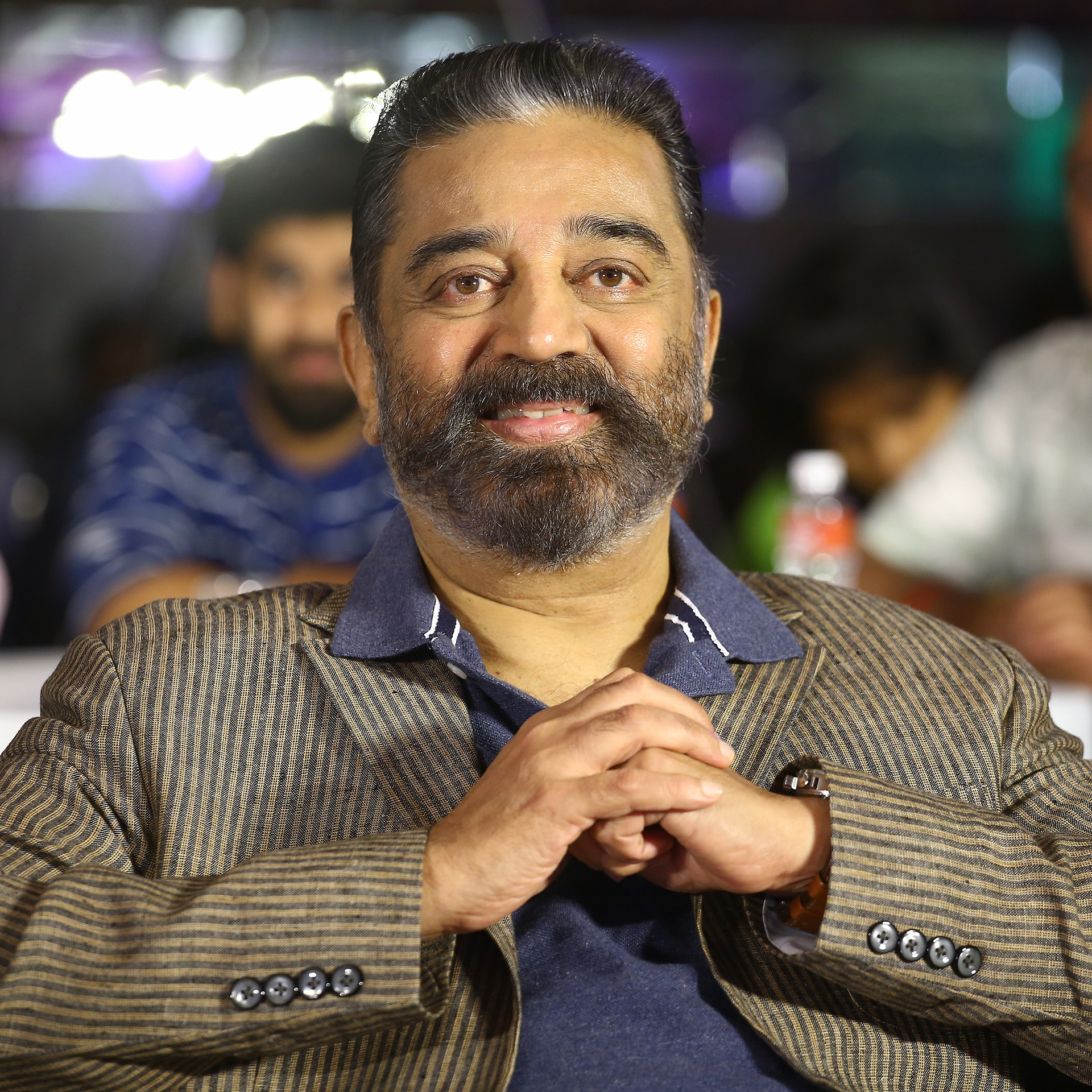
On the invitation extended by Dr. D. Venkateshwaran, the Deputy High Commissioner of Sri Lanka to Chennai, famous South Indian Cinema actor Kamal Haasan and director, visited the Sri Lanka Deputy High Commission of Chennai for the first time in the Mission’s History on July 24.

In this visit, Mr. Haasan had a discussion with Deputy High Commissioner where they discussed the natural beauty of Sri Lanka as well as the cinema industry.

In his speech, Deputy High Commissioner requested Mr. Kamal Haasan to visit Sri Lanka along with members of the film fraternity and the theatre group, which would boost Tourism sector in the country.

Further, Mr. Haasan expressed his interest to ‘Support Sri Lanka’ through his Welfare Association. After the discussion, this veteran actor had a friendly interaction with all the staff members of the Mission.

Posted in Uncategorized

Sri Lanka Parliament approves state of emergency

Proclamation on the state of emergency declared by the then Acting President under the Public Security Ordinance approved in Parliament of Sri Lanka by majority vote.

The Proclamation on the state of emergency declared by then Acting President under the Public Security Ordinance was approved in Parliament today (27) by a majority of 57 votes with 120 voting in favour and 63 voting against it.

Parliament convened today at 10.00 am and the debate started after the Leader of the House, Minister Susil Premajayantha, presented to the Parliament the resolution regarding the declaration of state of emergency announced by the Acting President under the Public Security Ordinance.

At the end of the debate, which continued until 5.20 pm, Chief Opposition Whip Lakshman Kiriella asked for a division and accordingly the voting was held.

Then Acting President Ranil Wickramasinghe had declared that the provisions of Part 2 of the Public Security Ordinance shall come into operation throughout Sri La:nka from July 18, 2022 through the Proclamation dated 17.07.2022 under Section 2 of the aforesaid Ordinance.

It further states that Parliament is duly informed in terms of Article 155(4) of the constitution that the purpose of the above Proclamation is to the protection of public order and the maintenance of supplies and services essential to the life of the community.

According to the Public Security Ordinance, this Proclamation will be valid for a period of one month if approved by the Parliament within 14 days. If the approval of the Parliament is not obtained within 14 days, it will be cancelled.

Also, the state of emergency can be extended once every 30 days with the approval of the Parliament.

It is stated in the gazette that this proclamation has been issued in accordance with the powers vested in the President in terms of the Public Security Ordinance to ensure public security and the protection of the public order and the maintenance supplies and services essential to the life of community.

Posted in Uncategorized

US – SL relations can flourish in a Sri Lanka that respects Human Rights – US Ambassador

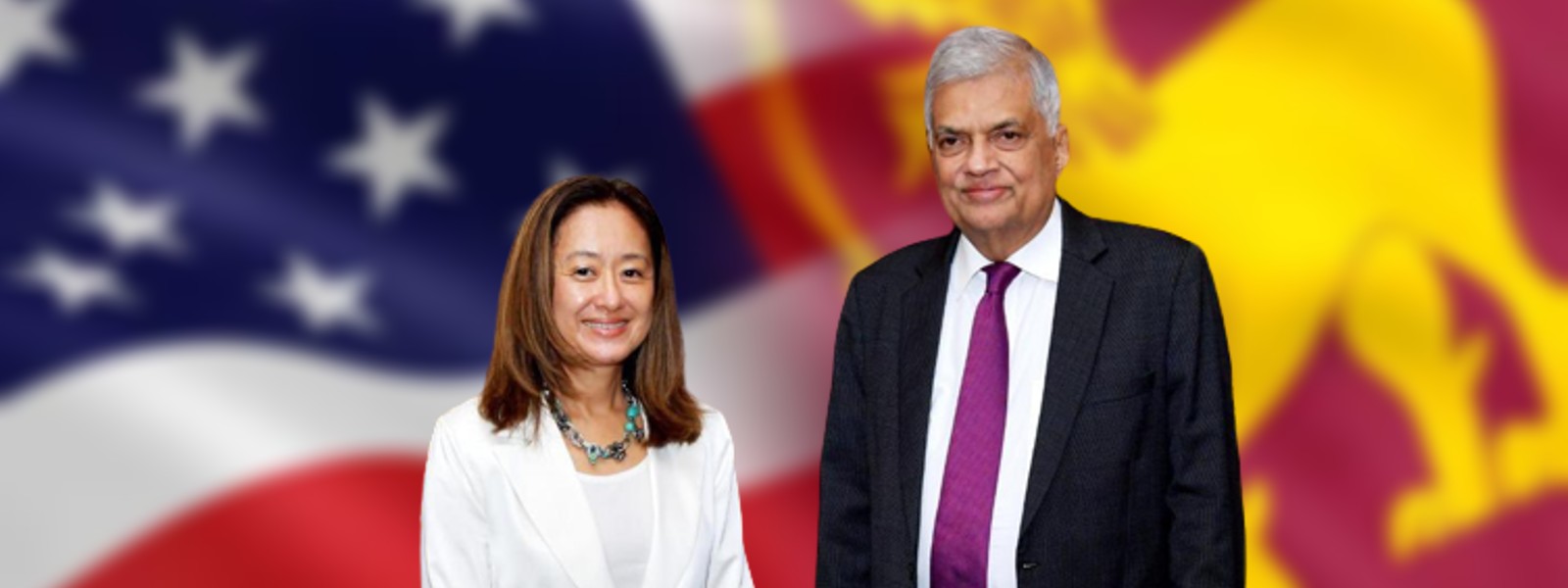
US Ambassador to Sri Lanka Julie J. Chung called on President Ranil Wickremesinghe today (27), at the President’s Office.

In a tweet, the Ambassador said that President Ranil Wickremesinghe takes office at a time when Sri Lanka stands at a crossroads.

She said they discussed how Sri Lanka arrived at this point of economic & political crisis, and how both sides can work together to navigate toward a brighter future for all.

She further tweeted “Our countries and our people have been friends and partners for more than 70 years, relationships that will flourish in a Sri Lanka that embraces good governance, respects human rights, and listens to the aspirations of its people.”.

The President’s Media Division in a statement said that the discussions were centered around strengthening ties between the country and taking forward relations, and the US Ambassador had assured support for the government’s future endeavors.

Nine Sri Lanka Navy sailors jump ship in America

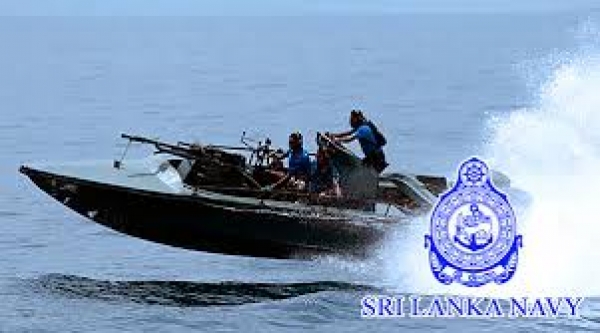
Nine Sri Lanka Navy sailors who were among personnel expected to return on a vessel gifted by the United States have jumped ship, official sources said as the country reels from a monetary meltdown which has triggered a spike in boat people.

The nine sailors are aged between 27-36 years belonging to several ranks.

The incident comes as Sri Lanka is suffering the worse currency crisis in the history of the island’s intermediate regime central bank. Many people had been arrested by the authorities attempting to leave the country and heading to India and Australia in fishing boats.

“A big crew went to the USA to bring in a ship that was donated to the Sri Lanka Navy,” an official source said.

“From that crew 9 people have gone missing.”

The U.S. embassy said a group of Sri Lankan sailors traveled to the United States to train alongside their U.S. counterparts before returning to Sri Lanka on the P-627, a former U.S. Coast Guard cutter gifted to the Sri Lanka Navy.

“We understand that several sailors have absconded from the training, a matter that has been referred to U.S. law enforcement,” a US Embassy Spokesman told Economy Next.

“Individuals who break U.S. immigration laws can be subject to arrest, detention, and deportation, and those who accrue unlawful presence in the United States can be prevented from returning to the U.S. for up to 10 years.”

“The U.S. values our continued partnership with the government, military, and people of Sri Lanka, and will continue to provide generous humanitarian assistance, ongoing development assistance, and military training during this difficult time.”

The former U.S. Coast Guard Cutter Douglas Munro, re-named P-627 after its handover to Sri Lanka could house over 180 personnel on board. It was undergoing a re-fit before coming to Sri Lanka.

Sri Lankan military personnel had been travelling to the US with increased co-operation between the two countries.

The missing sailors were part of a 50-member Navy contingent to take part in the Rim of the Pacific (RIMPAC) Exercise 2022, hosted by the US Pacific Fleet and they left on June 4 for Australia from the Bandaranaike International Airport by a special flight arranged by Royal Australian Air Force, another defence source said.

In Australia they underwent underwent a two weeks acclimatization program before they left to the US, . The RIMPAC Exercise 2022 is being held from June 29 to August 04.

IMF says Sri Lanka needs to talk with China about debt restructuring

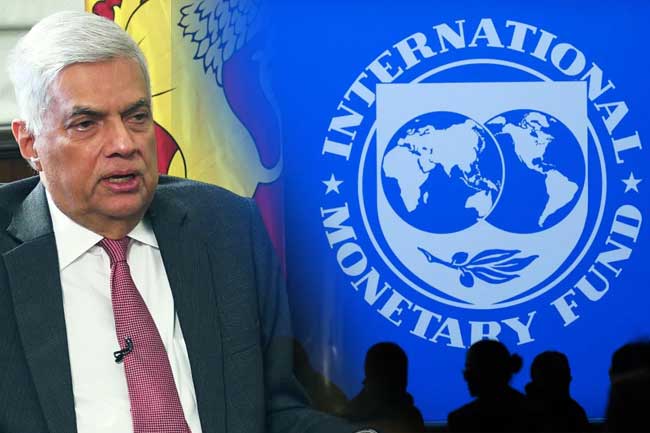
The International Monetary Fund (IMF) said Sri Lanka should kick off debt restructuring talks with its bilateral lender China, while the island state’s government seeks a financing loan from the Washington-based fund.

“China is a big creditor, and Sri Lanka has to engage proactively with it on a debt restructuring,” Krishna Srinivasan, director of the IMF’s Asia and Pacific Department, told Reuters in an interview on Tuesday.

The island of 22 million is currently engulfed by its most severe economic and political crisis in recent history.

Six-time prime minister Ranil Wickremesinghe was recently appointed as president after a popular uprising ousted his predecessor following months of severe shortages of fuel, food and medicines.

The government recently decided to restrict fuel imports for 12 months.

The country owes Beijing some $6.5 billion in financing including development bank loans and a central bank swap, according to data from the Institute of International Finance (IFF).

The world’s second-largest economy has invested in projects such as highways, a port, an airport and a coal power plant. Japan and India are also bilateral creditors to Sri Lanka.

“Sri Lanka has to engage with its creditors, both private and official bilateral, on a debt workout to ensure debt sustainability is restored,” Srinivasan said, as he pointed out that technical talks on a new IMF program are ongoing with both officials from the finance ministry and the central bank.

Sri Lanka’s foreign ministry and central bank did not immediately respond to a request for comment. China’s embassy in Sri Lanka did not immediately respond.

The South Asian nation has requested an IMF rescue plan to overcome its worst economic crisis since independence in 1948. The country defaulted on a bond payment debt earlier this year on its $12 billion overseas debt with private creditors, as it struggles to pay for imports of basic goods.

“There are some areas where we need to make further progress,” Srinivasan added, but declined to specify the top reforms Sri Lanka should address in other to reach an agreement.

An Extended Fund Facility (EFF) programme from the IMF, which would be the fund’s 17th plan for the nation, requires countries to make structural economic reforms.

Maldives and Laos are other examples of countries in the region that are facing onerous debt situations.

Srinivasan said the fund is advising countries to “spend more in alleviating the impact on the poor and vulnerable but keeping budget neutral by reducing expenditures elsewhere or raising revenues where feasible.”

“It’s not just public debt, but also corporate debt and household debt – and that has implications for policymaking,” he said. “The debt issue is very significant.”

Source: Reuters

Posted in Uncategorized

USAID chief lauds India’s swift response to help Sri Lanka, slams China for opaque loan deals

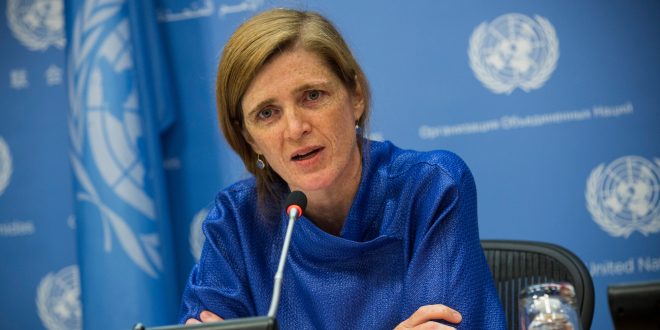
United States Agency for International Development (USAID) chief Samantha Power on Wednesday lauded India for reacting swiftly to help Sri Lanka by providing humanitarian assistance and added that China had offered opaque deals to the island nation.

“Government of India has reacted swiftly with an absolute critical set of measures. The government of India has already supplied 16 million dollars in humanitarian aid to Sri Lanka. It has exported a hundred thousand tonnes of organic fertiliser to help farmers stave off future food shortages. It has supplied 3.5 billion dollars of a line of credit to the government of Sri Lanka as it attempts to steer the economy out of default,” Power said.

The USAID chief contrasted this to the People’s Republic of China which has been an eager creditor of the Sri Lankan government since the mid-2000s.

“Indeed in the past 2 decades, China became Sri Lanka’s biggest creditor often offering opaque loan deals at higher interest rates than other lenders and financing a raft of headline-grabbing infrastructure projects with often questionable practical use for Sri Lankans including a massive port that generator little income and was barely used by ships. Equally, a massive airport dubbed the emptiest in the world because it attracted so few passengers,” Power said at IIT Delhi.

She also hoped that the important question would be whether China will restructure its debt to Sri Lanka.

“As the economic condition has soured, Beijing has promised lines of credit and emergency loans, this is critical as Beijing is estimated to hold atleast 15 per cent of Sri Lanka’s foreign debt. The cause to provide significant relief has gone unanswered. The question is whether Beijing will restructure debt to the same same extent as other bilateral creditors,” she added.

Power also highlighted, “It is essential that Beijing participate in debt relief transparently and on equitable terms with all other creditors.” She mentioned in her speech that India has helped countries around the world in times of difficulty.

Power is on a visit to India from July 25 to 27. The USAID is one of the leading aid agencies globally.