Port City, SLT, and Lotus Tower brought under new Ministry

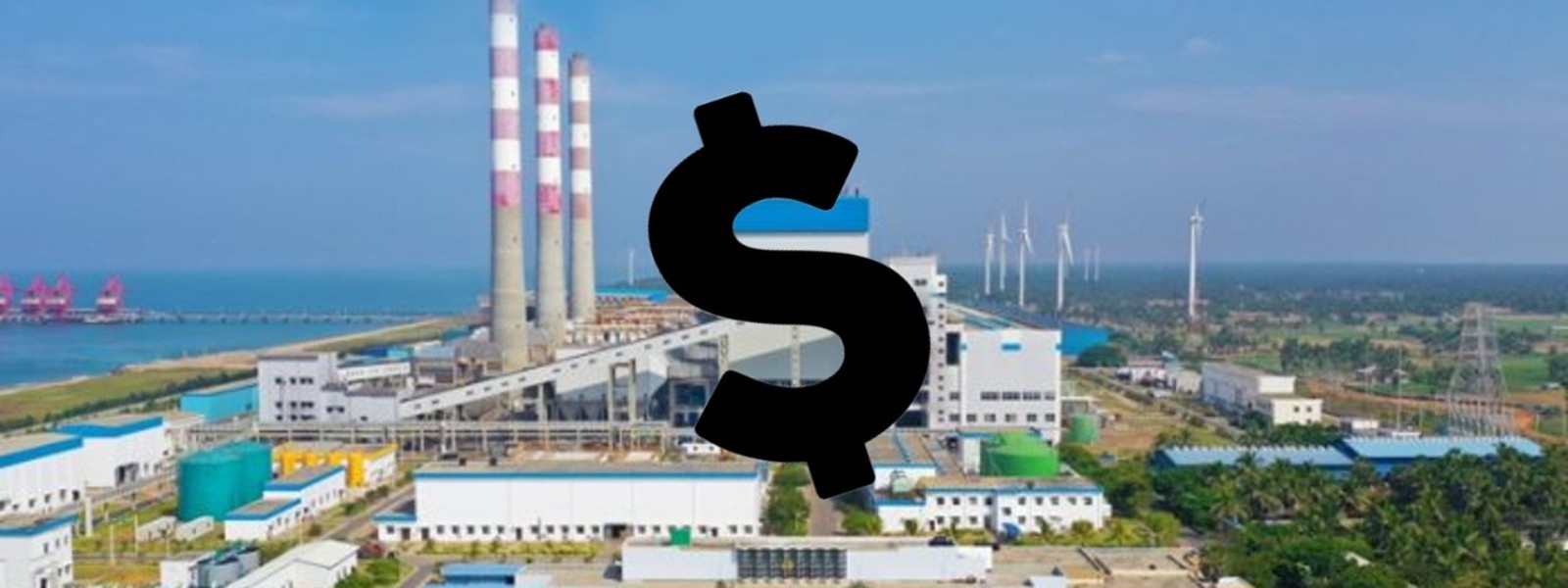
The Colombo Port City, Sri Lanka Telecom, and the Colombo Lotus Tower are among a number of institutions brought under a new Ministry.

A new portfolio for a Minister of Technology and Investment Promotion has been created.

President Gotabaya Rajapaksa has issued an Extraordinary Gazette notice amending an earlier gazette to include the new Ministry.

The departments and institutions which will fall under the Minister of Technology and Investment Promotion will include the Department of Registration of Persons, Department of Immigration and Emigration, Telecommunication Regulatory Commission of Sri Lanka and allied institutions, Information and Communication Technology Agency and allied institutions, Sri Lanka Computer Emergency Readiness Team, Sri Lanka Telecom and its
subsidiaries and allied institutions and the Colombo Lotus Tower.

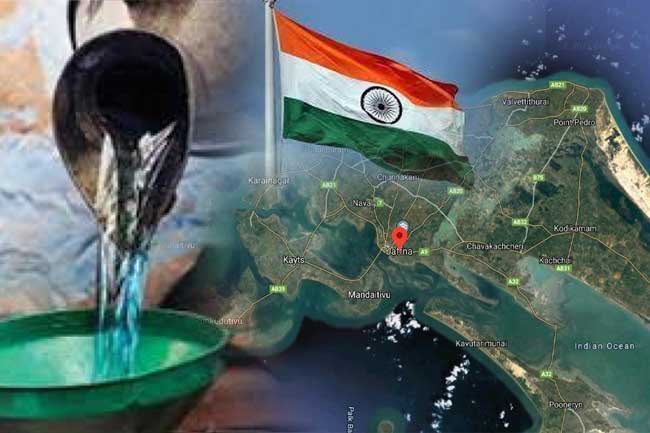
The Colombo Port City Economic Commission, Techno Park Development Company (Pvt.) Limited, Information Technology Parks (Jaffna & Mannar), Industrial Technology Institute, Sri Lanka Institute of Nanotechnology (Pvt.) Ltd., Sri Lanka Standards Institute, Sri Lanka Institute of Biotechnology (Pvt.) Ltd., and the Board of Investment of Sri Lanka have also been brought under the new Ministry.

Some of these institutions were earlier under the Ministry of Defence which fell under President Gotabaya Rajapaksa as the Minister of Defence.

Posted in Uncategorized

TUI cancels more holidays to SL amid UK Foreign Office warnings

TUI has cancelled more holidays to Sri Lanka amid political and economic instability in the country. The airline had originally cancelled all flights and holidays up to June 12 – but this has now been extended to June 30.

Bosses are in the process of contacting affected customers to discuss their options. News of further cancellations come as the Foreign Office continues to advise against all but essential travel to Sri Lanka.

The UK Government body referenced several violent incidents that have taken place across the country, which have resulted in injuries and loss of life. TUI says customers who are currently in their resort can continue to enjoy their holiday as planned.

A spokesperson for TUI said: “Due to the ongoing political and economic instability in Sri Lanka, the Foreign, Commonwealth & Development Office (FCDO) have advised against all but essential travel.

“As a result, we’ve unfortunately had to cancel all holidays to Sri Lanka departing up to and including 30 June 2022. We will be proactively contacting all impacted customers in departure date order to discuss their options. Please note this advice does not apply to customers transiting through Sri Lanka’s international airport and customers currently in resort can continue to enjoy their holiday as planned. We will continue to monitor the situation and update customers should there be any further updates. We would like to thank our customers for their understanding at this time.”

Source: Daily Record

Sri Lanka PM wants ITAK MP’s speech probed; ‘aragalaya’ has blood on its hands, says ex-PM

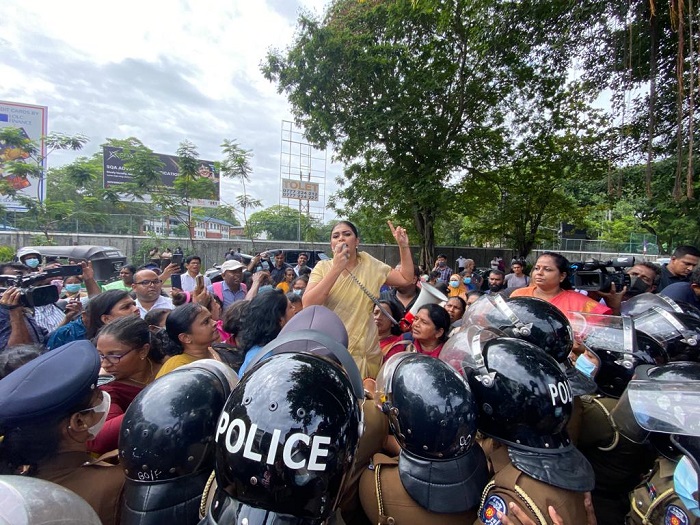
A vote of condolence on a murdered Sri Lankan government MP on Friday (10) saw Prime Minister Ranil Wickremesinghe calling for an inquiry on an opposition legislator and ex-PM Mahinda Rajapaksa claiming that the country’s protesting youth have blood on their hands.

Noting the parliamentary tradition of a vote of condolence on a deceased MP, Wickremesinghe said it was regrettable that one MP had remained silent during Friday morning’s round of speeches commemorating the life of MP Amarakeerthi Atukorale.

Atukorale was murdered by a violent mob on May 09 on his way home from Colombo after an unprovoked attack on peaceful protestors by government supporters triggered a wave of retaliatory violence islandwide. The offices and private residences of a number of MPs, predominantly government, were torched my mobs around the country.

Referring to the parliament’s Hansard record for May 20, Wickremesinghe said opposition Tamil National Alliance (TNA) and ITAK MP Shanakiyan Rasamanickam had said the houses were burnt down for voting for bills harmful to the country such as the 20th amendment to the constitution and the 2021 budgets.

“This means that the houses were burnt because of an opposing view,” said Wickremesinghe.

Wickremesinghe said opposition Samagi Jana Balavegaya (SJB) MP Kumar Welgama, an early and prominent critic of President Gotabaya Rajapaksa, had not voted for any government bill. Welgama was assaulted by a mob in Homagama, but according to Wickremesinghe the attack was carried out not by residents but by outsiders. The prime minister said many investigations have pointed to outsider involvement in the arson attacks reported across the island.

Wickremesinghe took issue with the tone of MP Rasamanickam’s impassioned speech on May 20.

“He said ‘it’s because the people’s mandate was betrayed that this happened. Remember that.’ Remember that? How can an MP say that?”

Recalling past assassinations of parliamentarians such as former foreign minister Lakshman Kadirgamar, WIckremesinghe said while those MPs had their critics outside the House, those inside were united in their condemnation of their murders irrespective of party difference.

“Now it’s happening inside.

“Is he condoning these arson attacks? Is murder being condoned? Is the attack on Welgama being condoned?”

The premier also seemed to connect Rasamanickam, a protest outside parliament, and the Frontline Socialist Party (FSP), a breakaway faction of the opposition Janatha Vimukthi Peramuna (JVP) that some government MPs have accused of being behind the violence – an allegation the party denies.

“When parliament was surrounded, they came and said ‘nothing happened to us’. The previous day there is a picture with Kumar Gunaratnam of the FSP,” said Wickremesinghe.

“No one opposes the FSP engaging in democratic work. But what about when they go beyond that?

“Is this what’s happening in this parliament?”

If Rasamanickam does not withdraw his statement by next week, said the prime minister, the Speaker must investigate his remarks and put the matter before a committee.

“Such things cannot happen in this house,” he said.

Rasamanickam has yet to respond to the PM’s speech. Since he was sworn in as prime minister, the ITAK MP has become a harsh and vociferous critic of Wickremesinghe, suggesting that the latter had stepped up not to save Sri Lanka from its worsening economic crisis but to save the Rajapaksa family.

ITAK and TNA MP M A Sumanthiran, too, has been openly critical of Wickremesinghe.

Meanwhile, former PM Mahinda Rajpaaksa, whose supporters triggered the orgy of violence on May 09, said the protestors have blood on their hands.

“It is true that the people are frustrated. It’s true that they want to protest. But there are political forces directing people to violence. I believe MP Atukorale’s murder took place as a result of this.

“Not only was he stripped and beaten. His body wasn’t allowed to be taken out either. It was also ordered to burn his body on the road,” said Rajapaksa, recalling similar public executions that took place in Sri Lanka during the 1988/’89 southern insurgency by the JVP.

“What did he do to deserve that?

“He never hurt anyone in the Aragalaya (‘the struggle’, or people’s protest) or anyone else.

“An aragalaya that killed an innocent man like that can no longer be innocent. There’s blood on their hands,” he said.

Dhammika Perera entering Parliament is unconstitutional: CPA

The Centre for Policy Alternatives (CPA) has expressed concern over reports circulated by several media outlets that the Sri Lanka Podujana Peramuna (SLPP) has appointed Mr. Dhammika Perera to fill the National List seat which became vacant by the resignation of Mr. Basil Rajapaksa, and stated that Mr Perera was not a member of the SLPP until a few days ago and that his name was not included in the list of persons qualified to be elected as Members of Parliament, noting that in terms of Article 99A of the Constitution, the National List, or any of the district lists submitted by the SLPP for the Parliamentary Election held in August 2020.

This was known via a media release by the CPA today (10).

“Mr. Dhammika Perera has business interests in several public and private limited companies covering several important sectors in the economy. Decisions made by Mr. Perera as a legislator, and possibly as a future Minister, would have a significant and direct impact on these companies and sectors, which creates a direct conflict of interest. These conflicts of interest are not resolved simply by Mr. Perera resigning from official positions held within the companies as he would nonetheless stand to gain significant financial benefits. These circumstances make it all the more important why the citizens of Sri Lanka should have known of the potential of Mr. Perera being appointed to Parliament when they voted in the Parliamentary Election held in August 2020. Additionally, if businesses in which Mr. Perera has an interest in, enter into or continue with contracts made by or on behalf of the State or a public corporation”, this could be a violation of Article 91(1)(e) of the Constitution,” the statement read.

The CPA statement further noted that in terms of the Constitution, only a person whose name was included in one of the district nomination papers, or the national list submitted by a political party or independent group, is entitled to be nominated to fill such a vacancy in the membership of Parliament.

“CPA has maintained this position consistently and has raised concerns when such appointments were made previously, including by challenging several such appointments in Court. In 2016, CPA filed a case challenging the National List appointment of Mr. Sarath Fonseka by the United National Party (UNP). In that case, the Supreme Court refused to grant leave to proceed, but no substantive order with reasons was issued. In January 2020, CPA criticised the appointment of Mr. Saman Rathnapriya and Mr. Basil Rajapaksa on a similar basis,” the statement mentioned.

Furthermore, the CPA stated that the United National Party (UNP) United People’s Freedom Alliance / People’s Alliance have on previous occasions made similar appointments to Parliament and that political parties hide behind Section 64 (5) of the Parliament Elections Act No. 1 of 1981, which authorises them to appoint “any
member” of the political party to fill such a vacancy.

“CPA states that the said provision of the Parliament Elections Act violates the clear and unambiguous provisions of the Constitution, particularly Article 99A and Article 101(H). Section 64 (5), although clearly unconstitutional,
remains valid only because the Sri Lankan Constitution does not allow the Supreme Court to review the constitutionality of legislation once passed by Parliament. The said practice of appointing “any member” of a political party, who was not nominated at the relevant election, violates the franchise of the people which is part of the sovereignty of the people. If as the Constitution suggests the people are indeed the sovereign of the Republic, then the people should know before an election who the political party intends to appoint to Parliament,” it further noted.

Additionally, the CPA statement noted that allowing political parties to appoint whomever they wish to fill vacancies that are engineered for that purpose undermines the value of the franchise of the people and unnecessarily and arbitrarily inflates the power of the leadership of political parties.

“The constitutional purpose of the National List is to ensure representation for sections of public opinion and smaller minorities that may not otherwise find parliamentary representation through the electoral process. It is not to facilitate the narrow self-interest of any political party or the ambitions of any individual,” it mentioned.

The statement concluded by calling on the SLPP and all other political parties to respect the provisions of the Constitution and the franchise of the people. CPA also calls upon all political parties representing Parliament, to take steps to amend Section 64 (5) of the Parliament Elections Act, to dispel any doubts about whether it is in line with Article 99A and Article 101(H) of the Constitution.

Dhammika Perera’s name gazetted as SLPP MP

The name of business tycoon Dhammika Perera has been gazetted as a Member of Parliament from Sri Lanka Podujana Peramuna (SLPP).

The communiqué was issued by the Election Commission today (June 10).

Earlier today, SLPP’s General Secretary Sagara Kariyawasam said Dhammika Perera’s name was proposed to the Election Commission to fill the National List parliamentary seat vacated by the resignation of former Finance Minister Basil Rajapaksa.

Thereby, the election body decided to publish the name of Dhammika Perera as a Member of Parliament from the SLPP.

Dhammika Perera meanwhile obtained the membership of SLPP from the party’s general secretary after officially submitting his consent to accept parliamentary membership.

He has also stepped down from the board memberships of all his companies ahead of taking oaths as a Member of Parliament.

Earlier this week, sources told Ada Derana that Dhammika Perera is tipped to take up a ministerial portfolio related to the investment sector after entering the parliament through the SLPP.

Last night, a special gazette notification was published by President Gotabaya Rajapaksa, creating two new portfolios titled Minister of Technology and Investment Promotion and Minister of Women, Child Affairs & Social Empowerment.

A total of 15 departments, statutory institutions and public corporations including the Department of Immigration and Emigration, Telecommunication Regulatory Commission of Sri Lanka (TRCSL), Department of Registration of Persons and Board of Investment have been listed under the Ministry of Technology and Investment Promotion.

Posted in Uncategorized

Sri Lankan people are struggling in the economic crisis Buddha statue in Mullaitivu Kurundurmalai in collaboration with the Army

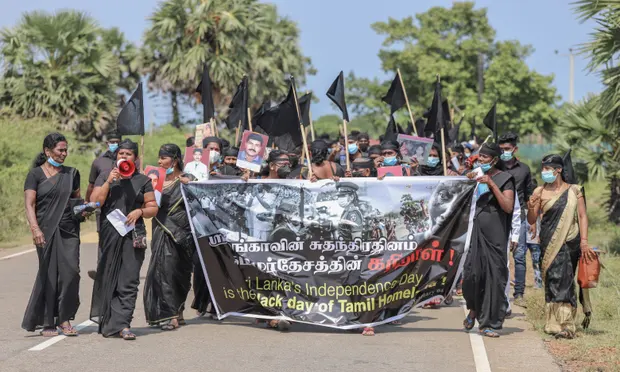
A dedication ceremony for a new Buddha statue is set to take place tomorrow with the assistance of the Sri Lankan army in Kurunthurmalai, Mullaitivu, in a further attempt to seize the site of an ancient Tamil temple.

The ceremony, where a Buddha statue carved in Kabok stone be consecrated, is expected to attract a large number of Sinhalese from the South, including senior Sri Lankan army officers, police officers and Buddhist monks.

The Athi Aiyanar temple, a native place of worship of Tamils located in the Thannimurippu area, has been targeted by intense landgrab efforts by Sinhala Buddhist monks over recent years. Their efforts have been met with fierce resistance from locals which in 2018 led to a court order decreeing that no changes could be made to the site. The court also stated that the archaeology department had abused its power in allowing Buddhist monks to survey the area.

In January 2021, Vidura Wickramanayaka, Sri Lanka’s state minister for ‘national heritage’, accompanied by army soldiers and archaeology department officers, led an event at Kurunthurmalai, in which a new Buddha statue was placed and consecrated at the site of the Athi Aiyanar temple despite the court order banning them to do so. Since then, the Sri Lankan army and the archeology department have intimidated and banned local Tamils from entering the area.

Tamil National Alliance (TNA) M A Sumanthiran and former Northern Provincial Councillor T Ravikaran have filed an interim injunction has been filed to stop any excavation work. However, the inunction has still not been granted.

In a recent report, People for Equality and Relief in Lanka (PEARL) highlight that since the end of the armed conflict in 2009, Sri Lanka’s Director General of Archaeology “has ordered excavations and instructed district authorities to put up Buddhist structures on pre-existing Tamil worship sites and private Tamil lands, regardless of any opposition to it.”

The advocacy organisation also notes how the state have justified Buddhisisation across the North-East by destroying and appropriating Tamil and Muslim places of worship to erect Buddhist shrines which in turn has provided “space and authority for Buddhist monks to influence the agenda” of the Sri Lankan government.

Posted in Uncategorized

Sri Lanka Electricity (Amendment) Bill passed in Parliament

The Sri Lanka Electricity (Amendment) Bill was passed in Parliament without amendments this evening.

The Bill was presented in Parliament by Minister of Power and Energy Kanchana Wijesekera.

Minister Wijesekera said the Bill is essential for Sri Lanka to ensure low-cost power generation in future.

Accordingly, the second reading of the Bill took place in Parliament today.

Following the second reading debate, the opposition requested for a division.

Accordingly, the bill was passed with a majority of 84 votes.

120 Parliamentarians voted in favour of the bill while 36 MPs voted against it. 13 Members abstained from voting.

The Speaker of House is required to ratify the bill to become a law.

Meanwhile, several trade unions including the Ceylon Electricity Board Engineers’ Union vehemently opposed the move to pass the bill.

The CEB Engineer’s Union also decided to stage an indefinite strike yesterday.

However, following talks with the President, the strike action was called off.

In that backdrop, Minister of Power and Energy Kanchana Wijesekera reiterated that he will not be deterred by the unions’ threats and will take forward the bill which will pave the way for the introduction of low-cost renewable energy projects in future.

Cannot go for an election until economic crisis is addressed: ECSL Chairman

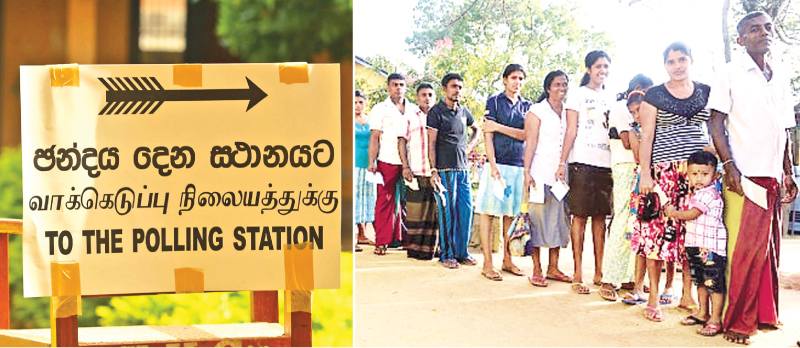
If an election is held, it will be free and fair only if there is an environment to support that, says the Chairman of the Elections Commission, Attorney-at-Law Nimal G. Punchihewa.

The ECSL Chairman further stated that although the commission currently has only Rs. 5 billion now, the amount will likely increase two to three times.

However, he pointed out that money is not the issue, but there is a question whether those in queues for gas and kerosene can make a decision according to their conscience.

Therefore, he said that Sri Lanka will have to go for an election after the economic crisis is addressed.

“The people are emotional now. We don’t know how it will affect the outcome of the election. This may lead to various groups of thugs emerging apart from political parties, and it may create security issues at filling stations,” he stated.

Punchihewa said that if an election is to be held now, it will be similar to the district elections in 1982 and the provincial elections in 1999, which is not needed at the moment.

Basil leaves: Sri Lanka’s former finance minister quits parliament ahead of 21st amendment

Cash-strapped Sri Lanka’s former Finance Minister Basil Rajapaksa vacated his parliamentary seat on Thursday (09) downplaying his role in the country’s worst ever forex crisis, without ruling out a comeback, and likening the Rajapaksa family to India’s RSS.

Exactly one month after his older brother and then Prime Minister Mahinda Rajapaksa resigned against a backdrop of bloody violence, the younger Rajapaksa announced his departure from the legislature Thursday morning at the Sri Lanka Podujana Peramuna (SLPP) headquarters where he fielded questions from reporters eager to press him on his part in the ongoing calamity.

Rajapaksa appeared to be in a beaten-but-not-defeated mood as he attempted to use humour to deflect questions about his responsibility and, at one point, even seemed to shift the blame to the very people who had voted for his party, the SLPP.

“No, I’m not passing the buck to the people. But yes, they do hold some responsibility for electing us to power. If, as you say, we passed the buck, then those who gave us the buck in the first place are also responsible,” said Rajapaksa, quickly recovering from a question that had visibly agitated him

It was the one moment in the hour-long press briefing in which he lost his cool.

The former finance minister’s ouster was one of the key demands of Sri Lanka’s protesting public. Among the anti-government slogans shouted at protests islandwide was the earworm “Kaputu kaak, kaak, kaak” followed by a chorus of “Basil, Basil, Basil, Basil.” The somewhat elitist meme originated from a video in which Rajapaksa was heard using the Sinhala word for crows, “kaputas”, in the plural form, at a discussion held in English, for which he was relentlessly mocked on social media.

Asked to comment on his “new brand”, Rajapaksa claimed that he had made the singsong protest slogan his phone’s ringtone.

“I mean, it’s not a bad animal, really. I hold no grudge against any being. I do not seek vengeance.

“It’s my ringtone now. The phone goes ‘Basil Basil’ when it rings.

“The first bit is played back at a lower volume,” he added with a chuckle.

On more serious matters, Rajapaksa was no less facetious. When questioned about the erosion of Rajapaksa popularity, he said: “I think we can see that our family is better at politics than at governance.”

The former minister and architect of the SLPP said that there are such cases globally.

“India’s RSS has been around for years, but they do not govern directly. The BJP has taken on that role,” he said.

However, he does not foresee an immediate end to the Rajapaksa dynasty.

“Sri Lankans elected a Rajapaksa president three times: twice with Mahinda Rajapaksa, and once with Gotabaya Rajapaksa,” he said.

As for his own plans, the youngest Rajapaksa sibling said though he has retired from governance, he will continue to play an active role in politics. His resignation from the SLPP’s national list slot, he said, was for someone the party deems suitable to take his place.

Speculation has been rife that that someone will be businessman Dhammika Perera. Rajapaksa’s answers to questions about Perera’s entry to active politics were vague, at best.

“I don’t know about that. That is a decision that’s up to the party.”

However, he did say later on that if Perera wishes to implement some of the plans he had proposed for the country, there is no reason he should not be given an opportunity to do so. The same is true, he said, for anyone from the ‘aragalaya’, Sri Lanka’s youth-led protest movement.

“I invite anyone from the Aragalaya to take my place,” he said.

Regarding the economic crisis and the immense hardships imposed on the public, apart from a hurried “apology” at the end of the press briefing for any mistakes made during his tenure as Finance Minister, there was no heart-rending mea culpa from the former MP.

He brushed aside any suggestion from the journalists present that he and the Rajapaksa administration had been the authors of the agony the people were now feeling.

“I’m no longer finance minister.

“Since 1951, this country has been run the same way, on debt. No government has tried to change this. After my appointment, I tried to some extent enable the people to stand on their own feet.

“It may or may not have worked, but if there is something this country is getting now [in terms of financing], it is only what I was able to secure as finance minister,” he said.

Pressed for more honesty, Rajapaksa claimed the crisis was already there when he came on board as finance minister. He forcefully rejected suggestions by journalists that his government was responsible for the erosion of Sri Lanka’s foreign reserves which had stood at seven billion US dollars in late 2019 when his brother President Gotabaya Rajapaksa was sworn in.

“There was no seven billion dollars when I came on. I do not accept that reserves went down to zero under me. There were no reserves when I was appointed,” he said, adding that fertilizer and other essentials were being purchased today with loans that he had helped secure.

Rajapaksa said the government had been divided on approaching the IMF for assistance, and that reconciliation between two pro and anti-IMF camps had to be achieved.

“I sent the first letter to the International Monetary Fund (IMF). It was after that that two IMF officials came and met me and President Rajapaksa,” he said.

President Rajapaksa had earlier said in a televised address to the nation that it was a mistake to not go to the IMF. Former Finance Minister Rajapaksa, however, in some apparent revisionism said that the president had in fact said the IMF should’ve assisted Sri Lanka sooner.

There has been speculation that the proposed 21st amendment to Sri Lanka’s constitution is being delayed due to machinations by Basil Rajapaksa against a provision to ban duel citizens from entering parliament. Rajapaksa is a US citizen and visits that country regularly. Some former influential government ministers who now function as independent MPs in parliament famously called him the “Ugly American” and accused him of carrying out a US agenda, a claim which Rajapaksa rejects.

“Personally I’m opposed to the 21st amendment,” he said, but added quickly that it was not due to personal reasons.

A constitution must serve the public interest, he said. “We can’t take the power given by 6.9 million voters to one leader and confer that on someone who only managed over 250,000 votes,” he said, referring to Sri Lanka’s newly sworn in Prime Minister Ranil Wickremesinghe.

“I definitely support certain aspects of the 21st amendment, such as the provisions on independent commissions.

“I don’t know if the amendment will pass,” he said, adding however that decentralisation of power to benefit the public is important.

If the executive presidency is to be abolished, Rajapaksa said, Sri Lana’s provincial council system – a legacy of the 1987 India-Sri Lanka Accord – must be reformed in the interest of maintaining the island nation’s sovereignty and unitary character.

Though he would personally have voted against it, he said, the decision to vote for the amendment or not remains with the party, which he says he will continue to work with.

Basil Rajapaksa leaves parliament, which he entered as an unelected MP via the national list, with Sri Lanka’s economy freefalling around the hapless and increasingly desperate citizenry.

He, however, believes he did his best.

“I think I did [do something] to the best of my ability. But I couldn’t do everything the people had expected,” he said.

Asked if his resignation was a permanent one, Rajapaksa said: “If the people decide so, perhaps; but if they want me back, I’m ready for that too.”

“I know it’s going to be even more difficult going forward. We must all work together. We’re ready to extend any help to the present administration and whoever may be coming next,” the former minister said.

He expressed hope that global conditions will also improve, facilitating Sri Lanka’s recovery.

“I hope the Ukraine crisis is resolved and tourism will pick up again.

As he stood up to leave the briefing he said: “I would also like to express my sincere apologies to the people if there were any mistakes made.”

Posted in Uncategorized

Pay in foreign currency if you want to perform Hajj, Govt. tells SL Muslims

The Sri Lankan government has announced that Muslims would be allowed to perform Hajj this year provided they pay their travel costs in foreign currency, as the country faces its worst economic crisis in recent memory.

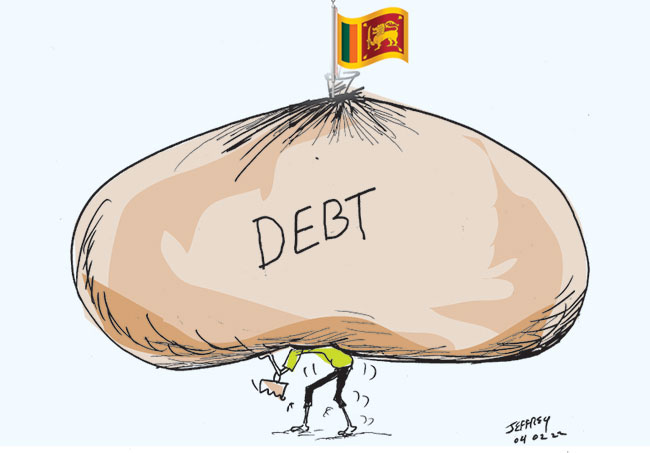
Last month, Sri Lanka’s umbrella association of pilgrimage organizers said its members would suspend operations because the cost of sending worshippers to Makkah — estimated at $10 million — would be too high for the country to bear when it is struggling with the worst financial downturn since independence in 1948, and has already defaulted on its foreign debt repayments.

The suspension was conditionally lifted by Religious Affairs Minister Vidura Wickremanayake on Tuesday, following consultations with Muslim parliamentarians and Environment Minister Naseer Ahamed, who also oversees Middle Eastern affairs.

“At the request of the Muslim groups led by Minister Ahamed, we have decided to fulfil the quota of pilgrims by requesting them to pay for their Hajj package in foreign currencies, which will not affect our national economy,” Wickremanayake told Arab News.

“I have requested the Central Bank to work out the modalities of working out this pilgrimage and they would help them find an easy passage to and from Makkah this year.”

Muslims make up almost 10 percent of the country’s population of 22 million, which is predominantly Buddhist.

This year, the country has been allocated a quota of 1,585 pilgrims to perform the Hajj, after Saudi Arabia announced it would allow 1 million foreign and domestic Muslims to travel to the holy sites in Makkah.

While it is unlikely that Sri Lanka would fill the entire quota, Ahamed, who discussed the issue with Wickremanayake, said that even sending a reduced number of pilgrims this year would help the country keep its allocation. This year’s number is already lower than in 2019, before the coronavirus pandemic upended Hajj travel.

“Since the pilgrims have been asked to pay for their package in foreign currencies, we cannot expect to make use of the full quota this year. But it’s good to take some pilgrims to keep Sri Lanka’s quota intact for next year too when things would get eased,” Ahamed told Arab News.

“Three years ago, we got a Hajj quota of nearly 4,000 and this year we do not want to miss this 1,585 quota for Lankan pilgrims.”

One of Islam’s five main pillars of faith, the Hajj was restricted over coronavirus fears to just 1,000 people residing in Saudi Arabia in 2020. Last year, the Kingdom allowed 60,000 domestic participants, compared with the pre-pandemic number of 2.5 million.

Prospective Sri Lankan pilgrims have to file their applications with the Ministry of Religious Affairs by Friday.

“I have asked those interested to make the necessary applications to the department of Muslim Religious and Cultural Affairs on or before June 10,” said Ibrahim Sahib Ansar, director of the ministry’s department overseeing the logistics.

“There are 86 Hajj travel operators and some 15 reputed agents will be selected from them and the operations will be streamlined through them,” he added.

Source: Arab News